An advanced course in the practice of chaos magic written by one of its most respected practitioners―in a newly revised and expanded edition.Peter J. Carroll―renowned writer and practitioner of chaos magic―offers a remarkably clear presentation of the practice of chaos magic. His approach combines methods from shamanism, paganism, and chaos science.Liber Kaos selection of extremely powerful rituals and exercises for committed occultists instructions that lead the reader through new concepts and practices of chaos magic a magical training course for the individual or for groups, with details of the author’s magical order instructions for carrying out the essential rituals of chaos magic a fresh look at aeonics, cosmogenesis, auric magic, and shadow time, as well as the technical aspects of spells and equations Originally published by Weiser Books in 1992, this new edition is substantially revised and updated and includes new, previously unpublished material.
Peter Carroll began his career in Magic at London University where the Chemistry proved so tedious that he settled on a pass degree in that and an unauthorized first in Magic, with Liber Null & Psychonaut emerging as his postgraduate thesis over the next several years whilst teaching high school science.
He then set off around the world wandering in the Himalayas, building boats in India and Australia and seeking out unusual people.
Then after a stay in Yorkshire, he headed back to the Himalayas for a while again before returning to settle in the west of England to found a family and a magical order. Appalled by the compromises made by so many magi to make a living out of their writing or teaching, Carroll decided to make his fortune with a natural products business so that he could write and teach only what had value and interest for him.
Past Grandmaster of the Magical Pact of the Illuminates of Thanateros
Chancellor of Arcanorium College
Acting Marshall, Knights of Chaos
A Bard of Dobunni Grove
*Whilst Carroll derides the very low predictive power of natal astrology he nevertheless looks forward to his Uranus return.
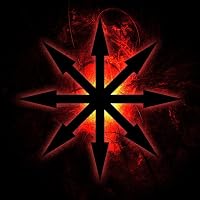
Liber Kaos elaborates on many concepts introduced in the essays of Liber Null & Psychonut. The first portion of the book textbookily answers the question: "How does magic actually work?" and how it has evolved since the dawning of shamanism. It pulls explanations from chaos theory and some other scientific models, which paradoxically adds and subtracts to the existential nature of it's predecessor. The middle portion of the book introduces a color magic system that corresponds to the eight points of the chaos star. It may contradict the anti-dogmatic themes of Liber Null, but I feel like it is made understood that this is Carroll's system and you may apply it as you see fit. The final portion of the book is instruction to the reader on how to start your own local chaos temple, and also rituals for the initiate. The book does feel like more of a "manual" than any other of Peter J. Carroll's books, but that doesn't mean that it doesn't hold to psychologically freeform ideas.
This book is in parts truly excellent - and should be essential reading for students of the 'arte magickal'. The descriptions of mechanism and process are outstanding - although they will appeal most to people with a physics / maths inclination. Some other parts of the book (perhaps less important ones, really) are much weaker - and make lots of sense but probably are only really useful if you already know what the author is talking about ... otherwise they are likely to be seen as either uninformative or superficial. However - well worth reading for the good bits - and there are some very good bits.
I like his move of trying to justify CMT on grounds of theoretical physics-- his math is woefully underdone here, but the math on his website carries onward where this book fails.
The book had some interesting points to be made once you make it past some nonsensical blather in the early pages. It puts a name to a lot of concepts you likely already work with intuitively. Two things troubled me- the concept of Kkk- which seemed to be insinuating that magic can and has been used to oppress targeted groups. The second point had to do with sex magic and how to control women and use them as sexual pawns in your power plays. There were a number of distasteful things regarding oppressing and manipulating others and the environment but was glad to read. Ultimately the world and reality is very malleable, especially when we free ourselves from conceptions of self and belief systems. And how our consistent thoughts and accompanying actions can create our most desired universe when working in harmony with the natural elements
If you’re curious about chaos magic or magic in general, start with Liber Null and Psychonaut, then give this a read through. This book is intensive and goes into great detail about the inner workings and specifics about magic, reality and the nature of existence. Definitely not something for a casual reader, but I thoroughly enjoyed it. I’ll absolutely be revisiting this in the future.
One of the best technical manuals on magick yet created. Carroll is one of the minds behind the rise of Chaos Magick. This book is a refreshing dose out of the standard mythic embedded occult offerings.
El ensayo "Liber Kaos" de Peter J. Carroll ha suscitado en mí una reacción matizada y ambivalente. Mi experiencia con esta obra se puede dividir en varias partes que reflejan su contenido diversificado. La primera sección del libro se adentra profundamente en las explicaciones vinculadas a la física cuántica, un enfoque que, aunque puede haber sido revelador en su momento, se presenta hoy en día como un tanto desfasado debido al rápido avance de la ciencia. Este enfoque en aspectos científicos no resultó particularmente atractivo desde mi perspectiva, ya que mi inclinación no gravita hacia las matemáticas y la física. Es importante señalar que, si bien esto puede no haber sido de mi interés personal, es probable que resulte fascinante para aquellos con una mentalidad más afín a estas disciplinas. Sin embargo, las secciones posteriores del ensayo despiertan un mayor interés. En particular, la porosa ambigüedad que define la magia del caos, parte fundamental de la esencia del libro, genera una mezcla de atracción y desconcierto en el lector. Esta ambigüedad es un elemento intrigante, que, al mismo tiempo, puede resultar desafiante y enigmático. A pesar de mis reservas y ambigüedades en relación con ciertos aspectos del libro, reconozco que "Liber Kaos" sigue siendo un clásico en el campo de la Magia del Caos. Su capacidad para explorar paradigmas que aún hoy son considerados radicalmente revolucionarios en el ámbito de la magia es un testimonio de su relevancia continua. En contraste con la marea de textos sobre magia wicca o pagana (o similares con otros nombres rocambolescos) que a menudo son meros refritos de los clásicos de las décadas de 1960 y 1970, esta obra destaca por su capacidad de seguir siendo un faro de innovación y exploración en el terreno de la magia contemporánea.
Okay so this was a bit of a different scoop in comparison to liber null! Peter Caroll tries to be fully rebellious in Wilsonian humour while trying to pin point his radical theories with surprising level of certainty while talking of the power of uncertain dogmas. I really liked his mathematical views of principia mathematica (Eris would be happy) I did used his maths analogy for my own calendar system, as seeing this before I stumbled over a few magical dogmas myself and syncrocities that collided heavily with this book. But except the quantum mechanics part and time theory, which was really fascinating btw , I believe half of the book feels like he's just trying, but hey it's not bad! Could be more better The rituals here seems more advanced Including the final temple system one , which felt unnecessary for me to read. The rituals were more precise to the point with their explanations, however they could have been more specific.
If you are new to Carroll's books, then this book is a good introduction and has some nice information in it to catch your interest.
If you have read other works by Carroll, then you realise that every single book is a plagiarism of his other books. Literally, every book is almost identical, says the same things on the same subjects with the same advice, just in sort of different words. It feels like "limbo" for books. Also, every single one of the books is an entry-level information, and the rituals mentioned in this one are ridiculous!
Only gave it 3 stars because it would be a good starting point for a beginner and due to the fact that it has 3-4 paragraphs that are good food for thought.
I wrote a review recently, regarding my thoughts on Liber Null and Psychonaut. I enjoyed that book a lot and found a lot of value in the concepts Carroll presented. However, Liber Kaos was not something I found particularly helpful.
A large portion of the book is focusing on quantum mechanics and it's relationship with chaos magick, something that is difficult to grasp for the average magician. I enjoyed Liber Null's focus on the practical aspect of magick, but the emphasis on theory and mathematics was something I found myself wading through with a lot of effort.
This is Carroll getting much deeper into his own machinery, aeonics, magical equations, shadow time, cosmogenesis and enough theory to make you wonder whether youve accidentally enrolled in occult physics. Some of it is fascinating and some of it feels like Carroll built an elaborate machine just because he could, but the practical material and the way he tries to model magic instead of leaving everything mysterious still gives me plenty to argue with. I dont use his whole system and probably never will, but ive stolen pieces from it for years which is more useful than agreeing with the book.
I found this to be a great continuation of the theories set out in Liber Null & Psychonaut; the theoretical physics of magic as presented in the first part of this book were especially enlightening and helpful.
This book serves to provide greater clarity to Chaos magic as a concept compared to Liber Null and provides a great overview of the methodology behind the practice. A fascinating read.
Definitely the most comprehensive and up to date book I've read about magic so far. Outlines rituals and practices clearly. I actually read the whole thing, which also says something about it.
Building upon the foundations of chaos magic, Liber Kaos: Chaos Magic for the Pandaemonaeon presents an advanced and comprehensive exploration of its theories and practices. Peter J. Carroll combines elements from shamanism, paganism, and chaos science to create a dynamic and flexible system that pushes the boundaries of magical thought and application.
The book delves deeply into the principles of chaos magic, offering powerful rituals and exercises designed for committed occultists. Carroll provides clear instructions that guide readers through innovative concepts, such as aeonics, cosmogenesis, auric magic, and shadow time. His approach to magical training is suitable for both individual practitioners and groups, with detailed insights into the workings of his own magical order.
One of the standout features is the integration of scientific concepts with esoteric practices, bridging the gap between the mystical and the rational. Carroll challenges readers to reconsider their perceptions of reality and the mechanisms of magic, presenting a unique framework that is intellectually stimulating.
While the book is intellectually rigorous and offers groundbreaking ideas, it may be daunting for those new to chaos magic or occult studies. Some sections delve into complex theoretical models that require a solid foundational understanding to fully appreciate. The mathematical components, though innovative, might be inaccessible to readers without a background in such disciplines.
Liber Kaos is a compelling and thought-provoking work that solidifies Peter J. Carroll's role as a leading figure in the chaos magic movement. For dedicated practitioners seeking to deepen their understanding and expand their capabilities, this volume is an invaluable resource.
Carroll's attempt to convince the world - and, perhaps, himself - that he was still at the cutting edge of chaos magic does not quite ring true. Whereas his Liber Null presents techniques still widely recommended and utilised by chaos magicians, few have followed him down this particular metaphysical cul-de-sac, with the result that the book is rather inessential to anyone studying chaos magic (either as an actual practice or as a cultural phenomenon) unless they're trying to follow Carroll specifically. Full review: https://fakegeekboy.wordpress.com/202...
As far as I can see the main difference between this version and the previous edition is the chapter on the gnostic pentagram ritual, which has been thoroughly revised and improved with addition of a gnostic chaosphere ritual. This is probably the best chapter in the book in an otherwise above average book (it is not like Liber Null and Psychonaut). The parts about progression path in terms of rituals to do and when is somewhat useful although I don't completely agree the order is right. Then there is a lot of theoretical content and classification of different types of magic according to colours. So worth buying for the revised chapter!
And yet again, you try to explain something that ontologically, doesn't need an explanation And yet again, you try to summon, speak and use it ¿For what exactly? I was mad after reading it, before, it just makes my soul crumble unimaginably God selfs, but higher gods than God selfs ¿Is that even logical? Cycles, hierarchy, beginnings and endings I thought this book had found me, to teach me something and indeed it was this way I learned that even the selfs proclaimed "awoken" are the most lethargic, what a waste of knowledge
(Out of the Chaos system self, interesting reading again)
After a lively and well attended discussion of Peter Carroll's Liber Null & Psychonaut for last month's Weiser Book Club - the members have voted to carry on with Liber Kaos. We will be meeting on Twitter, Facebook & www.weiserbooksblog.com on Wednesday June 1st (noonish ET) using the hashtag #WBC8! Join us!
When I read it, it blew my mind. I've read a lot since tho, so it's hard to remember my first impression. There's not enough out there about mathemagics tho, so I think it still holds it's place as an important read.