I loved the first book in this series, The Streel, and I have been a long time fan of Mary Logue’s brisk yet poetic writing style. This installment, which finds her heroine Brigid Reardon headed to Cheyenne, Wyoming, in 1881, is as lively, disturbing and memorable as the first. Brigid made the crossing from Ireland with her brother Seamus and a friend, now perhaps more than a friend, Padric, and the three of them ultimately ended up in Deadwood. Seamus had fled to Cheyenne after some trouble in the last book and is now working as a cowboy. Having sold a mine in Deadwood, Brigid and Padric are headed out to Cheyenne to meet Seamus and share the proceeds.
That’s the set up, covered, in brief Logue style, in the first chapter or two. Arrival in Cheyenne finds many hurdles: the money can’t be claimed without Seamus, and they have yet to find him; their new town seems as lawless and violent as Deadwood; and there’s a new social order to adjust to. Brigid, hoping to feel at home somewhere at last, is not sure she will find it either in Cheyenne or with Padric. They have been travelling as brother and sister but there seems to be more between the two.
Brigid and Padric nevertheless manage to establish a homestead after a tip from the man who owns their hotel – he’s Irish as well and wants his countrymen to succeed in the new land. Brigid and Padric obtain a tract of land which has a sod house and attempting to make it feel like home brings Brigid to the brink of loneliness and despair. One bright note is her closest neighbor Ella, a tough as nails woman who runs cattle about a half hour’s walk from their homestead.
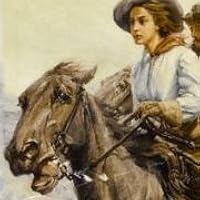
There are two things that make this novel a memorable standout. One is the lynching of Ella (it opens the book, so this is not a spoiler), and the other is Brigid’s horse, Grian. When Brigid visits the ranch of Seamus’ employer (the “Big Sugar” of the title), she sees his men attempting to “break” a horse and knows they are doing it wrong. She ends up with the horse and, through kindness and patience, builds trust with her. It’s by far the sweetest relationship in the book.
Ella’s lynching is another matter altogether. Brigid demands the sheriff look into it, and when she finds another body, he wonders what is up with her. It comes out in the book that Brigid is a mere 18 years old, but she’s far more mature and practical in some ways than many 18 year olds are today. She’s certainly smart, brave, and persistent – a perfect mystery heroine.
Logue paints a portrait of life on the frontier that illuminates the loneliness but also the beauty and wildness of the land. Brigid herself is figuring out what she wants – Padric? Town? The mystery part of the novel is straightforward, but the actual lynching is heartbreaking, and as Logue mentions in a postscript, sadly accurate. I will definitely tune in to see what’s next for Brigid.