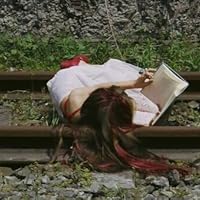
Le « Champ du gitan »... Michael avait tout de suite aimé la beauté sauvage de cette propriété. C'était décidé : sur les ruines de l'ancien manoir, il construirait sa maison. Une maison de rêve, bien entendu. Et il s'y retirerait, loin de tout, avec Ellie. Mais le « Champ du gitan » avait mauvaise réputation et la lande était maudite. On racontait que les romanichels lui avaient jeté un sort, que d'étranges accidents s'y produisaient... Pourtant, Michael n'était pas superstitieux, lui. Les menaces de la vieille bohémienne ne lui faisaient pas peur. Personne ne croit plus à ces choses-là, de nos jours...
Dame Agatha Mary Clarissa Christie, Lady Mallowan, DBE (née Miller) was an English writer known for her 66 detective novels and 14 short story collections, particularly those revolving around fictional detectives Hercule Poirot and Miss Marple. She also wrote the world's longest-running play, the murder mystery The Mousetrap, which has been performed in the West End of London since 1952. A writer during the "Golden Age of Detective Fiction", Christie has been called the "Queen of Crime". She also wrote six novels under the pseudonym Mary Westmacott. In 1971, she was made a Dame (DBE) by Queen Elizabeth II for her contributions to literature. Guinness World Records lists Christie as the best-selling fiction writer of all time, her novels having sold more than two billion copies.
This best-selling author of all time wrote 66 crime novels and story collections, fourteen plays, and six novels under a pseudonym in romance. Her books sold more than a billion copies in the English language and a billion in translation. According to Index Translationum, people translated her works into 103 languages at least, the most for an individual author. Of the most enduring figures in crime literature, she created Hercule Poirot and Miss Jane Marple. She atuhored The Mousetrap, the longest-running play in the history of modern theater.
I usually read Agatha Christie to unwind, and although they always guarantee a highly enjoyable hour filled with chuckles and gasps, there is an element of 'lightness' and dismissal involved.
Well, that serves me right. This book smacked the patronizing smirk right off my face and I'm drooling on the floor, well and truly humbled. Written lightly, as always, but for the first time, the weight of evil - the kind of evil that wears perfume, goes shopping and is grumpy in the morning - makes its presence softly, sweetly known.
Yours truly is humbled, chilled and very impressed.
Endless Night was one of Agatha Christie's own favourite novels, and one which received the most critical acclaim on its publication in 1967. It is her 58th detective novel. The title is a reference to William Blake's "Auguries of Innocence",
"Every night and every morn, Some to misery are born, Every morn and every night, Some are born to sweet delight. Some are born to sweet delight, Some are born to endless night."
One of the characters sings and plays this at pertinent points during the book, and it becomes evident that it refers to two of the characters. Endless Night has been filmed, adapted as a play and also a graphic novel. It featured in a TV series about Miss Marple (in 2013), although the character of Miss Marple does not appear in the novel. The novels featuring Miss Marple have quite a different feel, so this is an odd inclusion.
Unusually for Agatha Christie, Endless Night has a single viewpoint character, who has a heavy presence in the novel as its narrator. Michael Rogers is a working-class lad whose origins seem to be from a "poor but proud" family with a strong work ethic - which he does not share. He cheerfully admits that he cannot stick to anything. He is unsettled and lazy, having had a variety of jobs. He also appears to the reader to have a chip on his shoulder, and is quite a many-layered character.
Very early on in the story, we learn that he has fallen in love with a painting of a house, and has idealised this in his mind to be a "perfect house" which he dreams of owning. He also finds the perfect location for his house in a (fictitious) village called Kington Bishop, near the town of Market Chadwell. In one of his jobs he had worked for an architect, Rudolf Santonix, who has now become a friend. He imagines Santonix designing his perfect dream house, although he knows that acquiring it it is an impossibility. Santonix knows of Michael's strange fantasies and his passion for the imaginary house,
"When I was in a fanciful mood I used to think that piece of land had laid a spell upon you. You were a man in love with a house that you might never own, that you might never see, that might never even be built."
The other main character in the story is almost Michael's complete opposite; a rich American heiress, Funella or "Ellie" Guteman. The two fall in love... but it is as well to remember that this is Agatha Christie, and not her romantic novelist alias "Mary Westmacott", so the course of true love is unlikely to run smooth.
This is better written than some of Agatha Christie's novels. The two main characters have far more depth, which the reader learns as the story develops. Sometimes Agatha Christie piles on the characters in order to increase the complexity of the plot, and they inevitably come across as flat stock "types". She will describe their appearance, maybe name their job and a detail or two about their history and feel that she has done enough. She tells us about them. This novel is different, and far better than her average fare, as she reveals Mike and Ellie's characters through their experiences, as told by Mike.
Also, to some extent, the characters of Ellie's close companion, Greta Andersen, his mother, the lawyer and guardian "Uncle" Andrew Lippincott, and the terminally-ill architect Rudolf Santonix are more fully fleshed out than usual. But there are secondary characters - the step-mother Cora van Stuyvesant, a friend Claudia Hardcastle, a local bigwig "God" Major Phillpot, the local "witch" Esther Lee and others, who are more akin to Christie's usual cardboard cutouts.
The plot itself is satisfying with at least two neat twists near the end, to make the reader gasp. Agatha Christie's strength as a writer is based almost entirely on her ingenious plots. On publication, the newspaper "The Guardian" commented, "the crashing, not to say horrific suspense at the end is perhaps the most devastating that this surpriseful author has ever brought off." And the novelist Robert Barnard calls it, "The best of the late Christies... A splendid late flowering."
However the literary critic James Zemboy, in his analysis of Agatha Christie's detective novels in 2008, says she was "by then seventy-seven years old and clearly in steep decline as a writer... "Endless Night" is a silly story filled with unlikely events and dull characters... not typical of Agatha Christie... [it is] rather embarrassing."
Strong words indeed, about quite an enjoyable read. There are deliberate gothic overtones, with the cursed land of "Gipsy's Acre" and the old woman Mrs Lee, with her muttered premonitions of doom. The land is thought to be unlucky, because several accidents have taken place there, particularly on the dangerous curved road approaching the house.
The talk of superstitious villagers, resentful gypsies, Mrs Lee, with her dire warnings, who, "Doesn't like the insides of houses. Them as has got gipsy blood don't", the young couple never being happy, the threats against them and "their kind", the evil site which should never be built on; all these are themes which run throughout the story, unsettling the reader and underpinning the story with a feeling of threat. It is all pure hokum, and the reader feels this is the author's deliberate intention, but it is entertaining and fun.
"I'd always known that I'd meet one day a beautiful woman. I had met her. I'd seen her and she'd seen me. We'd come together. A wonderful woman. I'd known the moment I saw her that I belonged to her, belonged to her absolutely and for always. I was hers."
After reading A LOT of Agatha Christie novels in the past, ENDLESS NIGHT- I would have to say- is one of her best, and very different from her others...
The story is narrated by Michael Rogers- a charming attractive young man- who is a bit of a loner. Michael is unsure about quite a few things in his life, but there are two things he knows for certain. He wants to be rich, and he wants to find a lady and settle down. Out for a walk one day he spots a Sale Bill for a house being auctioned off nearby -Gipsy Acre- and after exploring the property, he adds another thing to his list. This is where he wants to live. There are a few small problems with his "perfect" plan. The house is in shambles, he has no money, and he has been warned Gipsy Acre is cursed- quite few who have lived there...have also died there. The curse Michael dismisses right away...
The house is also not a problem- Michael's only close friend -Rudolf Santonix- is an architect, and Santonix has always promised that if money, love and property ever became a reality in Michael's life- he would build him the house of his dreams.
As luck would have it, Michael meets Fenella "Ellie" Guteman- a lovely, wealthy heiress from America- and everything else falls into place. He has the girl, more money than he could have imagined, and as Santonix promised- a breathtaking house on Gipsy Acre.
...but as the lovebirds settle into wedded bliss- strange and frightening things start to happen, and Michael starts to wonder if he will ever get his "happily ever after".
ENDLESS NIGHT is a eerie little tale, with a splendid twist, and an unsettling conclusion. If you are a Christie fan this is a must read!
A working-class man, Michael Rogers, tells the story of how he met his wife Ellie, and became the master of the cursed estate called Gipsy's Acre. And the less said about all of that, the better.
Endless Night has a different tone than most of the Agatha Christie books that I've read. Kinda spooky and tragic. Gothic? And apparently, this was one of her favorites. I can see why. It's clever. I'm not saying you can't guess the ending, but it was very well done.
This one was a lot of fun to try and pick apart. Definitely recommended to anyone who is looking for an unusual Christie mystery.
Every night and every morn, Some to misery are born, Every morn and every night, Some are born to sweet delight. Some are born to sweet delight, Some are born to endless night. -William Blake
I am always sad when I think of this book. Dame Agatha was already in decline due to dementia when, in six short weeks, she flowered this novel. It is the last true Christie novel in the sense that it demonstrates her strengths more clearly than her diminishing powers would ever allow again. That is why I give it four stars.
The story is unremarkable, and in lesser hands would be a tedious oft-told tale. But stop a moment when you feel your eyes start to roll and hold this thought: One of mystery fiction's greats (like her work or not, she was indeed a great writer) wrote this, her last lucid writing, before sliding down a slope we all hope we'll never see up close.
Join The Guardian's group read if you have never read this tale before. It is an experience best shared with fellow Agathans.
And I watched the Marple version again...AWFUL BAD TERRIBLE BAD STOOPUD BAD
For a book that is only 303 pages long, why did this feel endless?
I went into this expecting a classic Agatha Christie murder mystery, the kind where a body appears early, suspects multiply, and Poirot or Miss Marple calmly untangles the chaos. Instead, what I found was something much closer to a psychological thriller. I didn’t know Christie wrote in that mode, and while it was interesting to see her try something different, it also made me realise that I prefer her traditional mysteries.
For most of the book, not very much actually happens. We spend a long time inside the narrator’s head as he tells the story of how he meets Ellie, a young heiress, and quickly falls in love with her. Together they decide to build their dream house on a piece of land known as Gypsy’s Acre, which is rumored to be cursed.
From there the novel becomes less about action and more about atmosphere and unease. The problem is that this slow psychological build takes a long time to get going.
Then, around 68%, the murder finally happens and the story gloriously spirals into something disturbing.
The characters reveal new sides of themselves, the tone shifts into something much darker, and I guess in a way, the slow burn pays off. The final section of the book is easily the most engaging part, and it reframes many of the earlier events in a way that is quite clever. I do admire the ambition of Endless Night.
But if you ask me, I’ll still take a cleverly plotted puzzle-like murder mystery with Poirot raising one eyebrow over a slow-burning psychological spiral any day.
The last fifth of Endless Night was really good! The other fifths? Not so good.
This novel reads like a gothic romance horror soap opera...so, a little like the old Dark Shadows tv show. Only the gothic horror isn't particularly scary. Hell, it's not really even spooky. Soap Opera though? Yeah, I'm feeling that!
Here's the deal. This lacks the razor-sharp writing of Agatha Christie's earlier work, where a premium was placed on word economy. It meanders. For instance, the narrator is very chatty. Dialogues contain unnecessary exchanges. Sort of like...
"A equals B." "Oh really?" "Yeah, really." "Okay then." "So, as I was saying, A equals B."
I wanted to say that Christie was looking to bend the old romance genre. You see, in her day, the dime store novel was all about the poor-girl-meets-rich-guy love story. It feels like Endless Night is trying to turn that on its head. That would be great! And perhaps that was the intent, but the publication date puts this past the point where this idea would've been cutting edge.
My other theory was that Christie was trying to get with the times and create more meaningful characterization. Let's face it, some of her early mysteries are almost entirely plot-driven and have little room for character development. Endless Night certainly spends a lot of time in the mind of the narrator. However, I'm not sold that this was her intent.
I suppose what it comes down to is, Endless Night is Christie's attempt at a psychological thriller and it didn't quite work.
Szkoda, że przewidziałam (chyba pierwsza książka Christie, w której coś odgadłam), ale i tak bardzo mi się podobała i miałam ochotę słuchać dalej.
Bez wpływu na ocenę: dawno nie słuchałam gorzej nagranego audiobooka. Jakiś dziwny dźwięk na początku, jakby płaski? Bardzo było słychać dogrywane fragmenty- miałam wrażenie, że zostały nagrane innym mikrofonem.
Michael Rogers is a man who dreams of settling down in his dream house with his dream woman. But at the start of the story he’s quite poor. And he’s still very much single.
One day, he meets Ellie. She’s a young, sweet and rich American heiress. They fall in love, get married, buy some land and build Michael’s dream house on top of it. She makes all his dreams come true.
But once they actually move in the place, it’s clear someone doesn’t want them there. They think about the silly warnings they ignored. About a gypsy curse that supposedly haunts the land. And then something happens that turns their dream into a nightmare.
It’s interesting to note that Agatha Christie described Endless Night as one of her own personal favorite stories. And it’s very different from the murder mystery stories she’s most known for, even though there is a mystery to unravel here. It just takes a long time for the plot to get going. We’re like two thirds into the story before the plot actually starts. Because the focus is on the characters from the very beginning. But the seeds that spawn the plot do get planted at the start. So we do have an idea where this is all leading us to. And while we focus on the characters, it’s the rather tense atmosphere surrounding the story that very subtly hints at what is to come.
A very interesting stand alone Agatha Christie novel that isn’t the kind of murder mystery story she’s known for. It’s a very slow but suspenseful ride towards the climax of the story. And the characters and the twist at the end make it worth the slow ascent.
This book proved to me beyond doubt that I could never like psychological thrillers written by Agatha Christie. Don't get me wrong. This is a well-written story. Great indeed, for those who enjoy her thrillers. But I fell in love with her murder mysteries, and can only see her as the "Queen of Mystery". Although I managed to like one or two of them, Christie's thrillers are not for me.
I'm in the minority here, for I can see that the book has earned higher ratings. It's not surprising given that it is a good Christie thriller for those who enjoy them. But being a non-Christie thriller fan, I had quite a struggle with the book. I couldn't understand what the story was about for a good part of it. It just dragged senselessly. The narrator says that this is a love story, and it was. But don't be fooled. This is an Agatha Christie love story. That means it can be awfully awry. A penniless couple plots together to catch a rich woman and she accidentally dies after a time. Sounds familiar? I can easily recall another instance in her more famous work Death on the Nile. But to do justice to Christie, I must say that the plot twist was done quite well. I never saw it coming. Also, my sense of justice was appeased knowing the criminals were punished.
I think this book is a result of Christie's need to write a character-driven story. Most of her novels are plot-driven, so she might have wanted to experiment a new mode. The characters were explored well, but were they developed was the question.
I was very much surprised at Christie's choice of the narrator. How could she allow to be the narrator of the story? And in my view, the use of such a narrator severely undermines the credibility of the story. I didn't know whether what I read was the true happenings of the story or an imaginary account of the narrator! Was it reality or fantasy? I'll never know.
In any case, I've made a note to avoid Christie thrillers at all costs in the future. I know there are many fans out there who enjoy her thrillers, and I don't want to irritate them with my negative tirades.
Michael Rogers,a working class man,meets Ellie Guteman,a heiress.They get married,and live at Gypsy's Acre,a country house.There isn't any happily ever after for them.
There is supposedly a curse at Gypsy's Acre.And then,things go very wrong.The book gets bogged down in the middle,before working its way to a violent climax.
A dark and sinister tale,with a total surprise of an ending.
Still a great read second time around. Cannot add much to my previous review.....
In chapter one of Endless Night Agatha Christie sets up a wonderfully atmospheric mystery & this has to be my favourite opening to any of her novels. Endless Night tells the story of Mike Rogers, a penniless man, who meets & falls in love with Ellie who has more money than she knows what to do with. After Mike survives meeting her rich American family they settle down to live a happy life & build a house in idyllic Gipsy's Acre. And of course a warning from an old woman saying that the land there is cursed couldn't possibly be true....could it ? Christie wrote this novel at the age of 76 & it's an incredibly brilliant, character driven story. What a treat to find such a great book. ONE FINAL BIZARRE NOTE: I bought Endless Night while staying at Agatha Christie's holiday home of Greenway House last week. One morning, before Greenway opened to the public, I was sitting alone at the front of the house reading the book in the glorious sunshine. Then a voice said "Which one are you reading ?" I looked up & it was comedian Alan Carr!! Turns out he was making an Agatha Christie documentary around Devon & was filming at Greenway for the day. He was a really nice bloke, with no ego at all, & we had a lovely chat about how much we loved Christie's writing before he began filming. What a bizarre morning!
This novel is quite different from any other work of Agatha Christie. The beginning is slow and the reader has to make too much effort to stay glued. It becomes increasingly difficult till first half of the novel to make sense of what is happening. Then Christie's brilliance kicks in. The last few pages are the best that I have ever read in any of Christie's novels. A blockbuster novel Incidentally Bollywood flick Aar Ya Paar was loosely based on this novel
Why am I not surprised of the fact that I enjoyed this book. Even though her books and who the culprits are can be predictable, but the way of telling the stories and the executions are too good!
************************************** I haven’t read an Agatha Christie book in a (long) while and it’s the perfect time to do so. Plus this is one of her favorite books that she has written, which is making me more eager to read this.
Absolutely loved my re-read of this book!!! I've considered it my favorite Christie read for years now, but was long overdue for a re-read. Happy to report it's just as brilliant (and chilling) as I remember it.
Late last year my goodreads friend Theresa encouraged me to join her in reading one Agatha Christie per month. I hadn’t read a lot of the Queen of crime in a few years because, as much as I love Hercule Poirot and Miss Marple, I found her books getting stale, almost formulaic. Then, Theresa introduced me to the vast library that Dame Christie penned outside of her two most famous sleuths. Expanding my horizons and learning about the depth of Dame Christie’s writing seemed right up my alley, that one book per month appearing easier than originally thought. I learned about Endless Night when I read Hayley Mills’ memoir just before the end of last year. This stand alone novel of Christie’s transferred well to the silver screen, and Mills starred as the female lead. Needless to say, all these factors whetted my interest to explore this gothic novel as my Christie book of the month.
Some people live in the sweetness of day whereas others experience an endless night. That is what Michael Rogers pens in his testimony as he recounts the events in this book. One would think that Rogers lives an idyllic existence. One day he journeyed to an out of the way moor named Gipsy’s Acres and encountered a beautiful girl named Ellie. Endless Night is supposedly the story of their courtship and marriage, at least that is what Christie wants readers to believe from the outset. Michael or Mike comes from a poor station in life and is incredibly greedy. He does not want to work but he wants money. By a chance encounter, he meets Ellie Guteman, who happenes to be one of the richest women in the world. The two fall in love at first sight, and Ellie employs her personal assistant, a German domestic named Greta Anderson to create a ruse between Ellie and her family. After turning twenty one and rightfully inheriting her fortune, Ellie marries Michael at a justice of the peace. The two choose to live in the same Gipsy’s Acres where they first met, and they embark on a storybook life together. As readers soon find out, things aren’t exactly as they seem.
From the first time the new Mr and Mrs Rogers set their eyes on Gipsy’s Acres, they find out that the land is cursed. The previous home named The Towers was home to a tragic ending featuring another unlucky couple. A gypsy woman named Esther Lee warns the Rogers’ off the land, saying that it belongs to her people and not to them. No good could come of them because their dream home does not officially belong to them. Ellie, known to have a fragile countenance, is easily spooked. The Towers reminds me of an anecdote from Hayley Mills’ own life. She and her first husband found a dream home on the English countryside. The land appeared stunning, and Mills deemed this location and the home on it that eerily resembled the towers to be perfect for her to raise her children on. Mills husband was not abusive but he made her feel nervous and planned every aspect of their lives, in essence a dominating person that Hayley Mills did not want to spend the rest of her life with. When she read the part of Ellie, she could relate; it appeared as though the role was written with her in mind. Even though Christie created a dreamlike existence for the new Mr and Mrs Rogers, tensions existed, and Ellie lived in fear due to the gypsy woman’s warnings. It is here that I noticed the depth of Christie’s writings. She may have warned of evil under the sun before, but she never created an atmosphere with a foreboding feeling before. This standalone is therefore categorized as thriller, a departure from her bread and butter detective novels.
Some readers have noted that Endless Night is gothic in nature. I have a runaway imagination so I tend to stay away from anything too scary, but I can see how this novel can be labeled as such, with multi-layered characters and a plot where no one can trust anyone else. I would not go as far to say that Christie’s writing is a pure thriller. She started as a detective writer and playwright, and, aside from And Then There Were None, tended to stay away from anything too scary. I wonder if Christie had it in her to be downright gothic and scary. As the person who brought Miss Marple into the world, I tend to think not. Ellie does appear as a sweet girl after her. She sang accompanied by guitar and made the conniving Michael fall in love with her. Despite the couple being warned to leave Gipsy’s Acres if they knew what was good for them, this book did not give across a gothic feel. Perhaps, that is my runaway imagination at work; it would take a premise more graphic and gory to scare me away from both Gipsy’s Acres and a Christie novel.
Whereas Endless Night was a departure from her usual writing, the novel did not scare me the way it gave a gothic feel to other readers. Perhaps I should see the film to visualize the entire scope of the location and personae vitae in the novel. There were definitely some cruel, backstopping secondary characters who added to the eerie feel permeating throughout the novel. After completing Endless Night, I am curious about Christie’s forays into other genres and characters aside from her normal. Even if I do not enjoy these novels, I can come away from a greater appreciation of Christie as a writer. Poirot will always be my favorite but there is more to the Queen of crime than meets the eye.
This is a chilling stand alone novel by Agatha Christie. Endless Night is quite different than Agatha Christie's Poirot or Marple series. The story is narrated by the main character, Micheal Rogers, a young man with grandeur ideas but with no obvious means of attaining it. He is fascinated with Gipsy's Acre - a plot of land in rural England that is said to be cursed by the Gypsies who once lived there and who were driven away.
While walking around the property that has come up for sale, he meets an attractive young American woman, Ellie. A whirlwind of romance results in him marrying the very lovely and the rich heiress to a fabulous fortune. They hired an architect to build their dream house at Gipsy's Acre. But the land is cursed and soon a chain of tragedies struck the newlyweds like a very black cloud. .
I quite enjoyed the inner monologue and the first person narration and about halfway through I was held in the grip of the most uneasy sense of creepiness that started colouring the story. There were points in the book where I actually looked over my shoulder. The suspense, character development and smattering of clues that only made sense as such at the end all make for a superb, edge of your seat portrayal of the inner workings of a mind gone horribly wrong.
If you enjoy character development over plot happenings, glimpsing into a personality driven by darkness and a book that will have you thinking about it days after you've finished, then this is the novel for you. Most of Agatha Christie's books can best be described as cracking thrillers. But Endless Night almost has the feel of a ghost story or a horror tale.
‘look here,’ i said, ‘people like to collect disasters. that’s the way stories build themselves up about a place.’
another murder mystery standalone involving a love story and a possibly cursed property. buddy read with shannon :)
there’s a couple of things in endless night that felt distinctly different from the usual in a agatha christie murder mystery. first up, the setting and imagery: it’s reminiscent of gothic horror, putting a strange but grand house at the forefront of the story; an architectural wonder dampened by an intense sense of foreboding.
secondly, the characters: mike, our narrator, is a bit of a working class drifter, whose voice sounds appropriately cavalier and casual. he’s much more characterized than the usual standalone narrator in a christie novel; even more so thanks to the meandering style the story takes.
he’s the perfectly rational guy for a spooky mystery, and we spend a lot of time getting to know him before we meet the love of his life: ellie. she’s a rich girl from america, who falls for this handsome stranger who’s enchanted by her rather than her money.
it all seems like a straightforward love story in which mike and ellie deal with the aftermath of a poor-guy-marries-rich-girl conflict. various family members of ellie run to england to needle and judge mike, who feels like a fish out of water when confronted with ellie’s intricate business dealings. meanwhile, the sense of dread remains -- and it isn’t until relatively late in the story when Things Start Happening.
if i had to label it as anything, i’d have to say that this is more of a modern psychological thriller with gothic elements than a usual cozy murder mystery. it’s an interesting angle to take, though i did like christie’s writing in this a bit less than usual; it feels overly wordy and repetitive, another complete opposite from what i usually expect from her.
the reveal at the end -- because of course there is one -- is good, and very well-executed.
however... coming off of having read many agatha christie books in a row, i can’t help but feel i’ve seen elements of this story before, albeit used or presented in a different way. considering the amount of decades her career spans, that’s not very strange -- and i think being your own best competition is a compliment in and of itself.
also, a brief caveat of this book showing its age: the house that plays a big part in this is built upon a property called ‘g*psy acre’, which is apparently haunted. the book leans a lot into old and unfortunate stereotypes concerning the romani people, which was very grating.
bottom line: entertaining, and i had a good time reading it. but it didn’t necessarily pop for me, and it’s not one that i’m liable to remember when someone asks me about my favorite christie stories.
I've mentioned several times before that I just adore the Old Dear (that's how I refer to Agatha Christie in my mind, with deep affection). I became obsessed with her mystery novels at the age of 9, particularly the ones featuring Hercule Poirot, which is why I perhaps missed reading this one. It's a standalone mystery with no sleuth at all, a fairly rare occurrence in her impressive oeuvre.
I was drawn to reading Endless Night because it was recently featured on the Backlisted podcast. The hosts and guests were so enthusiastic about it, audaciously claiming it might be her BEST ONE EVER, and they bolstered their enthusiasm by mentioning it was one of the Old Dear's favourites, as well as her grandson's (Matthew Pritchard, who manages her estate). I thought, my god, what an oversight of mine! I must read it immediately and see the brilliance that I have missed all these years.
Well... let's just say that Endless Night did not impress me as much as it did the Backlisted crew. I found it first of all to be a little bit derivative of Daphne du Maurier's Rebecca, what with the newlyweds, the focus on the house, and the untrustworthy housekeeper/friend. The Old Dear also beat us over the head with the lines from William Blake's poem, from which she got the title, to clownish proportions. She mentions it at least half a dozen times, which was about five times too many for me. And when I got to the end, I realized that she had recycled a few important plot points from different books of hers (Death on the Nile and The Murder of Roger Ackroyd), and those points worked much more successfully in those books, than here.
Despite all of these complaints I did enjoy myself, because there's such a comfort reading Agatha Christie. Maybe because it takes me back to when I was nine and reading was a very natural thing - I wasn't identifying flaws (see: above) or worrying about how we got from a to b, I just knew in a general, instinctive sense whether I was having a good time.
I did admire the experimental nature of the book. This is a little off the beaten path for the Old Dear. It was gothic, for one, and it was more psychological suspense than whodunnit, for another. I think she shines brightest at the puzzle format, however. My top 5 favourites still remain unchanged: The Murder of Roger Ackroyd, Cards on the Table, Curtain, And Then There Were None, and Death on the Nile.
I am quite a fan of Christie's book but somehow missed this one............and I am so glad that I found it. It is a stand-alone from her usual Poirot/Marple series and it is right up there with the best.
It is written in the first person (the male character) and starts slowly as we get some insight into his life and needs. But it is not dry since the backgrounds of those involved in the story are important to the plot.
It is almost impossible to write a detailed review without revealing the twists, turns, and amazing conclusion of this story. I never guessed for a minute how this would end and it is one of Christie's most stunning denouements. Highly recommended.
This is a stand -alone novel by Agatha Christie and is one that I had not read before. I have to admit that Christie is undoubtedly my favourite author of all time and, whether re-visiting favourite characters such as Poirot, or coming to one of her books for the first time, it always feels as though you are reading something familiar. In fact, immersing yourself in a Christie novel is rather like slipping into a warm pool and being taken effortlessly on a journey – she is the most capable plotter and absolutely joyous to read.
In this book we meet Michael Rogers; a rather shiftless young man, whose aimless lifestyle is about to change when he comes across the beautiful young Ellie outside a ruined house called ‘The Towers’, but known to local as Gipsy’s Acre. Michael had the area in mind for the house of his dreams, but does not have the means to build or buy it. However, Ellie turns out to a wealthy heiress and, before long they have married secretly with the help of Ellie’s companion Greta. Soon, Ellie has commissioned the building of their dream house on Gipsy’s Acre – even though both Michael and Ellie have been warned off by old Mrs Lee, who insists that the land has been cursed by gypsies, who were turned off the land.
From the beginning, you feel that something terrible will happen and this is a dark novel, with many plot twists and turns and a surprising ending. I am delighted that I finally got around to reading it and that, as always, Agatha Christie did not disappoint.
I got to say, this one is different from the others. The events are slow and boring at the first half of the book. for a while, I thought this is just a drama book. The exciting events happened at the second half when the crime is committed. And just like other Agatha’s book, the murderer is unpredictable
I want to start by saying I love Agatha Christie, I have read pretty much all of her books and Poirot is on my list of fictional characters I would love to have dinner with.
But
I have to say that I really did not enjoy this story nearly as much as I hoped I would. The story is told by Michael, a young man with little money and big expectations who marries Ellie (an innocent young rich girl). The story surrounds 'Gipsy Acre', a large house and plot of land in the English countryside which is supposedly under a Gypsy curse. Well of course this young married couple buy the land and build their dream house. So why was I disappointed? Well the story was slow, the actual crime doesn't take place until page 163 of a 224 Page book (I was so shocked I actually took a mental note of the page number). The majority of the book is the courtship of Michael and Ellie and their family matters with the occasional crazy gypsy lady appearing to warn them of the curse and to tell Ellie that she predicted bad things. I have to say by about page 140 I was pretty much begging the gypsy lady (or anybody really) to DO something, but I persevered as I know that Agatha Christie is famous for her twists and turns. Finally as I say a crime is finally committed and the rest of the book is actually pretty good. It is written with Christie's usual level of suspense and wrong turns so it gives plenty of opportunity for guessing and thinking.
I have to say that although I didn't like the story much, I loved the writing. The imagery was brilliant, and I could envision the setting perfectly. The characters were well written and their characters were easily definable (although you do have 163 pages to sort this out).
As I said before I love Agatha Christie's work and will not let this little disappointment stop me from reading more of her books. I just wish that this story had a little more opportunity for thinking, I do like to exercise 'The little grey cells'.
Esta novela de Agatha Christie es diferente. El crimen a resolver sucede casi al final del libro. Intuyes la verdad pero a la vez te despista. Christie entretiene y nunca defrauda. Me ha gustado bastante el estudio de los personajes, sobre todo de los protagonistas.
This was a completely different type of book from Agatha Christie. When I started it I wasn't sure about it. I did get hooked though and had to find out what happened. Hard to say anything about it without giving things away. It's what I would call a book based on psychology and this was very well done. The murderer is definitely a surprise at the end though there are one or two pointers along the way. An uncomfortable read is the best way I can describe my feelings on it.