Corre o ano de 1940, ano de grandes vitórias dos exércitos alemães, ano da queda da França. Em terras brasileiras, o Estado Novo assume plenamente suas simpatias pelo regime nazista: é tempo de repressão e tortura.
Em meio a essa atmosfera de guerra, amorte do poeta Antônio Bruno, em Paris, abre uma vaga na Academia Brasileira de Letras. E esse acontecimento desencadeia na cidade do Rio de Janeiro uma batalha tão ou mais acirrada que aquela travada do outro lado do Atlântico pelos exércitos europeus.
Em 'Farda Fardão Camisola de Dormir', seguindo a tradição inaugurada no final doséculo XIX por Alphonse Daudet com Dimmortel, Jorge Amado nos conta, em formade folhetim e com moral de fábula, a luta por esse raro lugar entre os imortais. Essa "fábula para acender a esperança", como indica o subtítulo original, é permeada pela ironia e pelas opiniões políticas características da obra do escritor baiano, e nela transparecem as experiências do próprio Jorge Amado com a prestigiosa Academia que o acolheu, bem como personagens cuja semelhança com pessoas reais não deixa dúvidas.
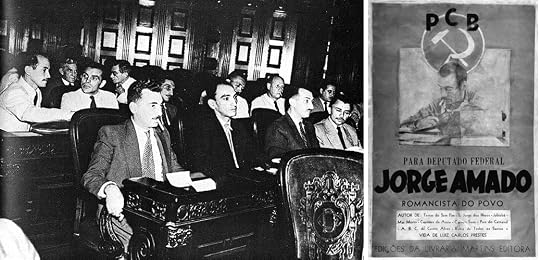
Jorge Amado was a modernist Brazilian writer. He remains one of the most read and translated Brazilian authors, second only to Paulo Coelho. In his style of fictional novelist, however, there is no parallel in Brazil. His work was further popularized by highly successful film and TV adaptations. He was a member of the Brazilian Academy of Letters from 1961 until his death in 2001. In 1994, his work was recognized with the Camões Prize, the most prestigious award in Portuguese literature. His literary work presents two distinct phases. In the first, there is a clear social critic and political focus, with works such as Captains of the Sands and Sea of Death standing out. In his more mature phase, he adopts an aspect of good-humored and sensual chronicler of his people, abandoning ideological motivations, with works such as Gabriela, Clove and Cinnamon, The Double Death of Quincas Water-Bray and Dona Flor and Her Two Husbands.
Rio de Janeiro - 1940. War is raging in Europe, and Paris has fallen into the hands of the enemy. Brazil displays a certain neutrality vis-à-vis the conflict but is subjected to the Estado Novo's authoritarian regime, which is sympathetic to European fascist regimes. In the world turmoil, another battle will be fought here, apparently relatively futile, since it is a question of filling the vacancy of the chair of an "immortal" of the Brazilian Academy of Letters. Yet, this battle will be the bearer of hope. Because the place occupied during the lifetime of the poet Antonio Bruno is coveted neither more nor less by Colonel Agnaldo Sampaio Pereira, head of the special police of Estado Novo, the master of censorship, a brutal, arrogant being, uneducated to the opposite of the delicate poet, author of an essay on the reconciliation of Aryanity and "Brazilianness," and of a few bland verses, Colonel Pereira makes a point of being elected unanimously, because who would dare to stand before him or vote against him? However, this is the challenge that two old academics, friends of the poet Bruno and Republicans at heart, will launch. Since the vacant chair seems promised to a soldier, they will find another, just as uneducated and imbued with himself as Sampaio, but Republican! And since it is necessary to rally the ways of the majority of immortals in place, they will establish a strategy, create alliances, plot, and use more or less avowed means in a word fight! The light tone, specific to the fable announced by the subtitle and to the comedy, sometimes gives way to a more lyrical or nostalgic style when the author provides us with the portrait of Antonio Bruno, a humanist and Francophile poet, celebrating the love and women, an uncommitted poet, until the fall of Paris, which made him write his only political poem "the love song for an occupied city." This battle is one of democratic values against totalitarianism and intellectual resistance against obscurantism. It is a war in the name of friendship and love, in homage to the poet Bruno's freedom of thought and the world he embodies.
I found this novel utterly charming. Apparently amongst the more stringent 'personnes d'une persuasion littéraire' it is considered a slight work but for me it is the sort of 'slight' work that would be a work of genius from anyone else. I adored it on an almost visceral level because its belief in goodness, the complexity of goodness, its humor, love of life, love of love, is almost too lovely to bear. Maybe I am simply old and sentimental, but I don't apologise for it.
The story of 'Pen, Sword, Camisole' is there on GR and elsewhere but what it doesn't tell you is the spirit of the story. What is that spirit? If you remember the scene in the film 'Casablanca' when the customers in Rick's Cafe stand up and sing the banned "La Marseillaise" in defiance of the presence of their Nazi overlords then you have the visual equivalent of the literary presentation in this novel'. In 1940 The poet Antonio Bruno an author with a broken heart and in despair after writing 'Song of Love for an Occupied City' to the city of Paris now under Nazi occupation kills himself thus freeing up a seat in the Brazilian Literary Academy which Colonel Pereira, the Nazi loving, security/torturer-in-chief of Brazil's repressive Estado Novo is determined to fill. Two elderly liberal academicians and four women who loved the poet are determined to prevent this.
Jorge Amado called 'Pen, Sword, Camisole' a 'A Fable to Kindle a Hope' and anyone reading it when it came out in 1979 wouldn't have needed to be reminded that Brazil was at that time again a dictatorship and its author in exile. That his tale of how the powerless defeat the powerful is both wish fulfilment and also an affirmation that the powerless are not entirely without weapons and the powerful are mighty but have feet of clay. It is a novel redolent of the history of the battle against fascism and the subtitle might just as well have been La Pasionaria's rallying cry 'No pasaran!'
Despite saying at the start that aside from the 'Estado Novo' dictatorship and its National Security Law everything novel is fiction that is not quite true. The Brazilian Academy of Letters, its petit trianon HQ and its elaborate Stambouline inspired uniform with tricorn hat, gold chain and sword as well Paulistas, Bandeirantes, Emiliano Di Cavalcanti and Gregori Warchavchik all existed and are there in this wonderful novel.
Finally I can't help mentioning that when my paperback from 'Dell' of the English translation of this novel was published in 1985 they also published paperback editions of another eleven of his novels. When was the last time any living foreign writer had twelve of his novels available in English language popular paperback editions? Jorge Amado had more than twelve, that was the total from one paperback publisher. How things change, I don't say for the worst, but it is hardly for the better.
Finally I can only hope that the optimism that Jorge Amado had in exile about the triumph of good over evil still holds true.
This is the 4th novel I've read from Brazilian author Jorge Amado. Like always, his books are very well and interesting; however, I found this novel more entertaining than anything else with a zest of morales to follow.
Upon the death of romantic poet and member of en elite Academy, elections to nominate his successor are under way with 2 candidates from the Brazilian army under a dictatorship during WWII. 2 old members of the Academy are launching a battle against the worst candidate, a known ruthless faschist, by promoting the candidacy of a retired general. This election turns a little war between good and evil, liberals against fascists at all cost by any means necessary.
The story is both about the life of the deceased poet and the battle for his successor in the Academy. Thus there are no leading characters, but several ones each portraying part of the elite society within the dictatorship. It is an entertaining way to describe the battle of the elite against fascism, against militarism, and pursuing self-interest for the sake of freedom as the deceased poet lived his entire life living in Paris prior to WWII and in Brazil accumulating romantic affairs with all kind of woman and never getting married.
Questo è il quarto libro di Jorge Amado che leggo e, ogni volta, mi chiedo quante vite abbia vissuto.
La politica, l'amore, la satira e il sogno sono tutti temi che Amado attraversa con la sua poetica, in ogni libro in modo diverso ma con una grazia pazzesca. Amado più di altri non si ripete mai.
Questo libro riesce a essere sempre incredibilmente divertente. Non è frivolo o leggero, anzi. Semplicemente non si prende troppo sul serio, anche se di serio c'è tantissimo.
C'è la politica: lo Stato Nuovo in Brasile che simpatizza per il nazismo (e io che non ne so niente, che vergogna). C'è l'amore: si parla della vita di un uomo e dei suoi amori; sono tutti amori pieni e complessi, ricchi. Non c'è giudizio nel parlare delle relazioni di Bruno, ma solo sensibilità. C'è la satira: davvero non vorreste andare a cena da Afrânio e dona Rosarinho assieme a Evandro a sentirli sparlare e analizzare il mondo attorno a loro? La satira è lo strumento che ci fa conoscere il Brasile degli anni Quaranta e ci immerge nelle sue contraddizioni.
Come è riuscito Amado a raccontare un mondo così eterogeneo e ricco senza sbagliare mai?
Che cosa non avrei dato per sentirti parlare Jorge, davvero.
It isn't what we are used to associate to Jorge Amado's work. Finding out that a writer can reinvent his style to the point of making something entirely new is quite refreshing. It's a narrative about politics and how scheming and plotting are necessary in every institution even the most poetic/cultural of them. I've read a review here that said it's an endemic case of corruption: boo you, not endemic and most definitely not corruption. It's a battle against the regimen, against egomaniacs and for traditions of old scholars and poets. It's also the story of a poet and the many women he seduced and made whole.
“Cizme, robă, cămașă de noapte“, cartea brazilianului Jorge Amado apărută în colecția Globus a editurii Univers, m-a prins destul de greu, motiv pentru care am fost tentată să urmez sfatul lui Jorge Luis Borges din “Borges la 80 de ani. Conversații. Cărțile și noaptea” și anume: “dacă o anumită carte vă plictisește, lăsați-o din mână!“. M-am încăpățânat însă să descopăr ceea ce promitea titlul ei reușit și am citit-o (mai greu, recunosc) până la capăt.
Subiectul nu mi s-a părut deloc incitant – lupta acerbă pentru ocuparea unui loc vacant în Academia Braziliană de Litere – iar felul de a povesti, ușor costeliv, nu prea e pe gustul meu (o să-mi iau, probabil, bobârnace de la cei care iubesc romanele acestui important scriitor modernist:)). Sunt, însă, multe alte detalii care m-au cucerit: inteligența cu care este construit textul, cu povești din prezentul și din trecutul personajelor, cu multe subtitluri, extrem de picturale, care explică fiecare subcapitol în parte, cu umor și ironie care dublează, ca un sufleur, toată povestea.
Genialul poet Antonio Bruno moare și cineva trebuie să-i ia locul la Academia de Litere, Micul Trianon, cum o numește scriitorul. E important ca propunerile să vizeze nume din armată, care, se spune, a avut tot timpul un fotoliu rezervat în această instituție, cu excepția perioadei în care a fost ocupat de poetul Bruno, “civil și boem” – “… o greșeală, o inexplicabilă neglijență din partea clasei militarilor” -. Așa încât, doi dintre “nemuritori”, cum își spun academicienii, Afrânio Portela și Evandro Nunes dos Santos, se ambiționează să demonstreze că la Academie nu există locuri rezervate unei categorii anume și pornesc o adevărată bătălie. (continuarea cronicii: http://www.bookaholic.ro/cizme-roba-c...)
ماتفعله الفاشيه العسكريه في المجتمعات، ما يمثله القمع والبطش في حياة الشعوب. اللواء والعقيد في صراع علي مقعد الاكاديميه البرازيليه للاداب في مواجهة التيار المدني ..كواليس يتم كشفها عن قرب.
“إنها الظلمات مجدداً، الحرب ضد الشعب، التسلّط. لكنْ، كما يتأكد في هذه الخرافة، من الممكن دائماً زرع بذرة، إضاءة أمل.”
The internecine machinations of a cadre of elderly liberal Brazilian academicians, celebrating the power of art (or at least, artists) to oppose fascism. Fun but slight.
I'm surprised to see so few reviews of this book on Goodreads. It looks like Jorge Amado is not very well-known, although I'm not sure why.
I've been a fan of his for a while now and I'm lucky he's one of the few Brazilian authors than gets translated into Romanian. I've always been attracted to South American literature, as I feel it has an edge that European literature does not. It's most likely due to the particular history that shaped the ides and literary style of most South American writers.
It took a good few pages to get me into this novel's mood, but once I got there, nothing could stop me from finishing it. It's a roller-coaster of events, stories, moments, all leading to an unpredictable end. I love how politics are placed into an environment that one may not see as political - literature, the Brazilian Academy. The romantic reader may look at all this and feel cheated - do politics really get a say in what happens in what is supposed to be a cultural environment?
I got so evolved in the antics of the two elderly gentlemen that shaped the fate of Antonio Bruno's vacant seat in the Academy! It's a war held without weapons, or, more accurately, with the most powerful weapon of all - words. Entertaining from beginning to end, showing all aspects of this particular war for recognition, this novel keeps bouncing from character to character, finally ending happily - for some.
And, although it looks like it's a dispute for a vacant seat, ultimately it's a war against fascism, against dictatorship, against militarism, against arrogance. A war won by literature, in the end.
I think what I most liked about this novel - other than it being a good vs evil essay - is the care taken by Amado in building all characters. Something quite difficult to do in a book so short. Every one of them is memorable, every one gets a say in the outcome, each being pencilled with just enough attention to detail to make them part of the reader's life.
In the end, good - morale, culture, liberalism - wins, and the two artisans keep us entertained until the very end. Give me more, senhor Amado!
Not quite finished, but not enjoying this as much as Gabriela, Clove & Cinnamon. Set in 40's Brazil with the literatia taking on fascist government sympathizers. Interesting, not a compelling read
The Brazilian Academy of Letters crowns its forty members Immortals, a boast Amado punctures with a small epidemic of heart attacks. A vacant chair opens when the poet Antonio Bruno collapses over a love poem titled The Camisole, felled by grief for a fallen Paris and by desire for the many women in his long roll of romances. The seat he leaves behind becomes the prize in a grubby contest, and two aging liberals resolve to wage it as a war.
A preening colonel with a swastika in his heart and the dictatorship at his back covets the chair, championed by the oiliest careerist in Rio, the jurist Lisandro Leite. Against him rise Afranio Portela and Evandro Nunes dos Santos, two octogenarian men of letters, one liberal in temper and one leaning anarchist, armed with gossip, ruse, and a moral spine.
Their weapon of choice becomes eros. They enlist the women Bruno adored, among them Maria Manuela, a Portuguese diplomat's wife and secret socialist, alongside the salon beauties he once bedded, all rallying so that a chair of Letters turns on lace and longing. They also float a harmless retired general, Waldomiro Moreira, as a decoy candidate to bleed votes from the colonel. The title spells out the arsenal. Pen for the poets, sword for the fascists in braid, camisole for the bedroom diplomacy that outguns both. Amado relishes the Academy as a nest of vanity, where spelling reform and seating charts inflame grown men, and where literary talent ranks far below political usefulness.
The colonel obliges the plotters by dying of his own heart attack before the ballot, a stroke of luck that elevates the general to sole candidate and to giddy certainty of a coronation. Vanity does the rest.
The general bankrupts his savings on designer gowns and enlists a former orderly turned numbers runner to wax the floors for a reception that becomes his wake. The count returns sixteen votes for him, four short of the majority, alongside a heap of blank ballots and abstentions the two conspirators had quietly arranged… Amado's novels typically blend hedonistic pursuits with social critique. While sex, food, and drink are plentiful, underlying these pleasures often lies a serious examination of power dynamics. In "Pen, Sword, Camisole," the author shifts focus to the stark realities of political oppression, using a literary academy to expose the insidious influence of fascism.
By relocating the action to Rio de Janeiro, Amado offers a scathing critique of both the literary establishment and the authoritarian government. The novel becomes a potent indictment of the "New State" regime, exposing its fascist tendencies and the suppression of intellectual freedom. Through sharp wit and satirical flair, Amado crafts an uneventful narrative that is as entertaining as it is thought-provoking, leaving readers to ponder the enduring legacy of oppression.
The fable dates from 1979, and Amado aims his 1940 tale straight at the generals ruling Brazil in his own present. His morals stay cheerful with a black comic tilt. Tyranny spreads, yet a stubborn pair of elders can plant a seed and kindle a hope, even when the planting requires two funerals. For a book about the deathless, the body count climbs, and Amado grins the entire way. The pen outlasts the sword here, though the camisole does the real damage.
(PT) Estamos no final de 1940. Os nazis dominam a Europa ocidental, Paris é alemã, a cruz gamada ondeia na Torre Eiffel e a Grã-Bretanha resiste, única, ao invasor, nos céus e nas praias, com Chrurchill a prometer que não se rende. No Brasil, que vive a ditadura do Estado Novo (até nisso nem são originais...), o poeta Antônio Bruno, amante de tudo que é francês, faz um soneto de homenagem à nação abatida... e morre, fulminado por um enfarte.
A partir dali, desencadeia-se um inesperado duelo: Bruno era membro da Academia Brasileira de Letras, considerado um "Imortal", e a vaga que se abre tem de ser preenchida. Só que o candidato único... é um coronel, diretor da policia secreta. Os escritores e demais intelectuais acham isso uma afronta e procuram por um opositor, que encontra na figura de outro militar, um general. A partir daqui, vêm-se as aventuras de como conquistar a alma dos Imortais da Academia, numa ilha democrática num mar de ditadores e totalitarismos.
"Farda, Fardão, Camisola de Dormir" é um romance de Jorge Amado publicado no final dos anos 70, curiosamente, numa altura em que o Brasil sai da ditadura, e Amado já era "Imortal", fazendo parte da Academia desde há um tempo - a sua mulher, Zélia Gattai, também será imortal após a sua morte, em 2001.
O seu estilo irónico e saboroso está ali presente, mas apresar de não ser "Gabriela" ou "Dona Flor", porque isto acontece no Rio de Janeiro e não na Bahia, é um livro esplendoroso de se ler, e ali é que se pode ver como é que as pessoas são escolhidas, e mais do que a qualidade dos livros que escrevem, sejam eles de prosa ou poesia, fição ou realidade, na realidade ser "Imortal" é mais uma aparência do que algo do qual mereça lá estar. E essas aparências saltam à vista, numa critica mordaz e deliciosa.
It is 1940. The Brazilian Academy of Letters has lost one of its 40 "immortals," the poet Antonio Bruno. Pen, Sword, Camisole: A Fable to Kindle a Hope by Jorge Amado tells of the politicking between two military officers to fill Bruno's seat.
I am a great fan of Amado's work, but this is not his best, though it is still worth reading. There is an inherent problem in giving details of the approach by the two candidates to the 39 surviving immortals. At the same time, a number of influential women, deeply influenced by Bruno, play a vital role in the surprises to come.
One of the candidates, a Colonel Campaio Pereira is chief of security of the Brazilian military government and a great admirer of Adolf Hitler and the Nazis. His opponent, General Waldomiro Moreira, is a bit of an obtuse bore whose nickname is "Maginot Line" for his admiration of the French military.
My suggestion is that, if you have not previously read Amado, you should not start by reading this book. Any of the others I have read is preferable.
Engraçado, tocante, irônico, absurdamente atual mesmo se passando em 1940/1941 e, no fim, lindíssimo
“A moral? Veja: em toda parte, pelo mundo afora, são as trevas novamente, a guerra contra o povo, a prepotência. Mas, como se comprova nesta fábula, é sempre possível plantar, acender uma esperança”.
Esse final me tocou absurdamente, ainda mais no momento que estamos enquanto eu lia
------------------------------------ Funny, moving, ironic, and astonishingly current even though it is set in 1940/1941 — and, in the end, utterly beautiful. ‘The moral? Look: everywhere, all over the world, darkness has returned, war against the people, arrogance. But, as this fable shows, it is always possible to plant, to kindle a hope.’
This ending touched me profoundly, even more so given the moment we are living in while I was reading.
This entire review has been hidden because of spoilers.
Acredito ser um bom livro para entrar um pouco no mundo da Academia Brasileira de letras; achei interessante como é descrito todo o processo de eleição de um novo integrante da academia, como se fosse uma guerra mesmo. Uma guerra complexa, com vários personagens. Gostei das críticas que foram feitas às ditaduras também. Talvez a única coisa desagradável desse livro seja o fato de que as personagens mulheres eram todas associadas romântica e sexualmente a algum homem; achei que isso passou dos limites. Mas o que acredito ser a mensagem principal dessa história é algo ainda muuito atual: “é sempre possível plantar uma semente, acender uma esperança”.
O livro tem como foco uma disputa por cadeira da Academia Brasileira de Letras, com mortes, reviravoltas, suborno e traições envolvidas.
Escrito como que na época do governo do Estado Novo conta com diversas referências políticas e literárias. Conta com um final inesperado e moral libertária como mais aprecio.
A história, como qualquer outra de Jorge Amado, é fluida e prende o leitor até o final, trazendo interesse em assuntos não antes contemplados. A partir do livro já estou convencida a conhecer mais profundamente nossos acadêmicos atuais da ABL. Qualquer um que aprecie a obra do autor gostará também desse livro, eu indico.
Divertido como o resto da obra de Jorge Amado, o livro convida o leitor a sair do típico cenário baiano retratados pelo autor e conhecer o Rio de Janeiro de 1940 de Amado. A história faz referência direta ao contexto político da época mostrando como a produção cultural é influenciada pela política. Uma obra incrível que discute criticamente as formalidades e costumes da Academia Brasileira de Letras, como também, o contexto mundial e nacional durante o Estado Novo.
Caracteres sinxelos e efectivos que entran dentro dun, subtitulada como fábula, é máis unha reportaxe dun feito que pode ser ficticio tento como real, e donde a muller, presentada en función do home, vai máis aló desa función, sendo o tecido da sociedade e o que enche de sentido ó home. Moi recomendable. Como noutras ocasións, a edición presentada por Goodreads non é a que lin eu.
Decepção é a única palavra que existe para descrever essa merda. Nem parece que é do mesmo autor de Tenda Dos Miilagres.
Levanta alguns debates interessantes no início do livro, mas depois disso só existe um vácuo. Os personagens são desinteressantes, chega até ser difícil de lembrar dos nomes dos personagens.
Velhos aposentados desde a década de 30 causando. Na luta para impedir um nazista de ganhar um lugar na ABL, se perdem no egocentrismo ao derrubarem em seguida o seu próprio candidato — que também não se torna um santo por isso, militar pouco melhor que o primeiro. Apesar de toda sua soberba, coitados daqueles que se empenharam tanto no último banquete!
This entire review has been hidden because of spoilers.
Histórico, mas totalmente ficcional, assuntos sérios nessa excelente comédia, escrito na década de 1970, se passa durante a Ditadura do Estado Novo e a 2° Guerra Mundial e, mesmo assim, poderia facilmente ser nos dias de hoje. Excelente leitura, recomendo muito!
I think this might be my favorite Amado book so far. Home is the Sailor is just about there, too.
The moral feels contemporary because it is immortal. A brief moment where we (time constrained beings) get a glimpse of that which exists without constraints, without limits or boundaries.
At times tedious, at times suspenseful. Could have been more nightgown and less academy. Got lost in the amount of characters, some of which remain mere caricatures. Still a good read.