LONGLISTED FOR THE 2023 NATIONAL BOOK AWARD FOR POETRY
For fans of Diane Seuss and Victoria Chang, a coruscating collection that eloquently invokes the perseverance and myth of the Filipino diaspora in America. In 1972, after Ferdinand Marcos declared martial law, Oliver de la Paz’s father, in a last fit of desperation to leave the Philippines, threw his papers at an immigration clerk, hoping to get them stamped. He was prepared to leave, having already quit his job and having exchanged pesos for dollars; but he couldn’t anticipate the challenges of the migratory lifestyle he and his family would soon adopt in America. Their search for a sense of “home” and boundless feelings of deracination are evocatively explored by award-winning poet de la Paz in this formally inventive collection of sonnets. Broken into three parts―“The Implacable West,” “Landscape with Work, Rest, and Silence,” and “Dwelling Music”― The Diaspora Sonnets eloquently invokes the perseverance and bold possibilities of de la Paz’s displaced family as they strove for stability and belonging. In order to establish her medical practice, de la Paz’s mother had to relocate often for residencies. As they moved from state to state his father worked to support the family. Sonnets thus flit from coast to coast, across prairies and deserts, along the way musing on shadowy dreams of a faraway country. The sonnet proves formally malleable as de la Paz breaks and rejoins its tradition throughout this collection, embarking on a broader conversation about what fits and how one adapts―from the restrained use of rhyme in “Diaspora Sonnet in the Summer with the River Water Low” and carefully metered “Diaspora Sonnet Imagining My Father’s Uncertainty and Nothing Else” to the hybridized “Diaspora Sonnet at the Feeders Before the Freeze.” A series of “Chain Migration” poems viscerally punctuate the sonnets, giving witness to the labor and sacrifice of the immigrant experience, as do a series of hauntingly beautiful pantoums. Written with the deft touch of a virtuoso and the compassion of a loving son, The Diaspora Sonnets powerfully captures the peculiar pangs of a diaspora “that has left and is forever leaving.”
Oliver de la Paz was born in Manila, Philippines, and raised in Ontario, Oregon. He received his MFA from Arizona State University and has taught creative writing at Arizona State University, Gettysburg College, Utica College, Western Washington University, the College of the Holy Cross, and the Low-Res MFA Program at Pacific Lutheran University. His work has appeared in journals such as Quarterly West, North American Review, Third Coast, Asian Pacific American Journal, Poetry, New England Review, Tinhouse, in the anthology Asian American Poetry: The Next Generation.and elsewhere. Names Above Houses, a book of his prose and verse, was a winner of the 2000 Crab Orchard Award Series and was published by Southern Illinois University Press in 2001. His second book,Furious Lullaby, was published in 2007 by Southern Illinois University Press. And his third book, Requiem for the Orchard won the University of Akron Prize in 2009. Additionally he authored Post Subject: A Fable and co-edited A Face to Meet the Faces: Contemporary Persona Poetry with the author Stacy Lynn Brown. His most recent book is The Boy in the Labyrinth, published by the University of Akron Press which allegorically chronicles parenting sons on the Autism Spectrum through parable, myth, and academic questionnaires.
Okay anyone who's taken a creative writing class with me knows I love sonnets... but I fear I don't love them THIS much. I also love pantoums, and in this collection, I enjoyed those the most.
Read around twenty poems. Felt very little. I think de la Paz falls prey to melodrama. His father is God, a child is a "celestial repetition," in a poem about various forms of displacement (all written via metaphors about the narrator interacting with a river) he actually uses the verb "displace" to make it as clear as possible what it's all about. These flourishes pile up with no real sense of varied emotionality. It's all very stern and serious. It feels like a middle-brow sequence of poems dedicated to an immigrant experience defined mostly by loss and resilience. I didn't finish the whole thing though, so maybe de la Paz tries on those tones later on. But I'm currently not intrigued enough to go on.
I enjoyed this very long and very dense (in a good way) book of sonnets and pantoums. Though many of the poems were so dense that I will need to return to them to grasp the full gravity, I found most to be hauntingly beautiful. de la Paz writes so articulately about the Asian diaspora, specifically for Filipinos. His work is a gift.
I've given almost all of our sonnet books this semester 3 stars because I think that sonnets in general just aren't for me. The restriction makes things feel either very forced, or too experimental for me to grasp what the meat of the poem actually is. I know that leaves me in the dust behind a lot of more open and thoughtful minds, I'm working on it! But for now, these weren't my cup of tea, though I did find lines and voltas here and there that I thought were really moving and compelling.
Some collections just speak to you, and I found that to be the case with The Diaspora Sonnets. I found myself between the beautiful lines. I teared up, reread some poems multiple times, and found words I wanted to share with people. I'm thankful I stumbled upon this collection at my library.
A beautiful poetry collection about the authors parents displacement from the Philippines. Beautiful use of form and rhyme, but the repetitive use of the sonnet did at times feel limiting.
These highly lyrical sonnets grew on me as they built momentum. (And I liked the pantoums peppered in for variety!) Sometimes I wondered if some of the poems weren’t meant to be sonnets but were forced into 14 lines anyway, but I appreciate how cohesive the collection is overall. The poet makes wise use of patterns across the breadth of these poems.
These poems are a love letter to hardship, to alienation, to beginnings that feel like endings. Beautiful but not in flowery language or it's scenes, but in it's soft portrayal of making one's way in a world that they will never truly fit in, just for the hope of a better life for the children
The imagery in these poems is off-the-charts brilliant, but I couldn't help but think that the uniform structure and collection format was more demanding and unrelenting than the author had intended.
It’s interesting to consider how de la Paz fits his poetic style to a book’s overarching task. Not theme. Though what I’m thinking of as “task” engages a reader with the theme. What I’m remarking on is how de la Paz’s poems (at least in the books I’ve read) are thinking through a larger topic. They have a project. And how a de la Paz poem might fit into that project is going to be applied differently. But what makes a poem, how de la Paz might style his poems, has a consistent imagistic logic. Like the surrealistic letters of Post Subject: A Fable (Akron Series in Poetry are going to have a similar way of thinking as the collaged therapy sessions of The Boy in the Labyrinth: Poems are going to have a similar formal sonnet construct as The Diaspora Sonnets. It’s an imagistic language that relates mood, as much as it does disjunction and ambiguity. So the “diaspora” is felt as a commingling. What was known. What is now known. And how the was known has such presence. And when the now known includes the United States (Oregon is the main location in the earlier part of the book), it’s laced with confusion and stress. It weighs on the poetic speaker via the nature of image and the disjunctive arrangement of those images.
And maybe thinking about the poetic speaker is an especially helpful lens. And not just because there are so many persona poems. The poet’s particular experience as a boy in all of this skews the authority he might have in describing the situations. At least as far as a child is, by nature, an unreliable narrator, or a narrator whose view of his father is going to have any number of childish distortions and a kind of truth no other person would be able to see. And yet, all of this can’t not influence what he would know of immigrating to the United States. It’s almost like the dilemma is describing a voyage that you weren’t grown enough to understand. And then trying to see it through your parents’ eyes, who would know. The poems are like acts of affection, and attempts to understand the extent of effort and purpose. And the love in that. One of my favorite sonnet series is Gwendolyn Brooks’s “Gay Chaps at the Bar,” from Annie Allen. The devotion these Black soldiers who show to a country that does not show the same devotion to them. The complicated, layered experience of military service, especially in war time. And the fraternal love of country described. How to write a love poem about a concept that shaped you like love should, but does not, or cannot, or would be ashamed to love the lover back. Diaspora as the beloved in de la Paz’s book, and how a poem or many poems might make that unfold, this is what I admire so much in de la Paz’s book.
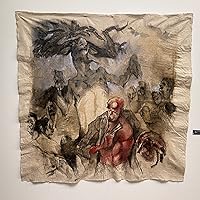
¡Qué deliciosa sorpresa! Ya desde la portada (del brillante Antipas Delotavo), este nuevo poemario de Oliver de la Paz es una pequeña joya.
De la Paz reimagina la forma cerrada del soneto (sus catorce versos tradicionalmente agrupados en la tradición angloparlante en tres cuartetos y un pareado) como una expansión íntima, donde la forma misma explota para dar cabida a la experiencia migrante. A excepción de los poemas que sirven de marco, y que me permitieron descubrir la forma del pantoum, todos los sonetos repiten un mismo patrón. Cada uno de ellos se organiza en dísticos interpolados por silencios en blanco que contrastan con encabalgamientos abruptos.
Es este uno de esos poemarios que consigue su efecto (moroso y oblicuo) a partir de la acumulación sucesiva. Quien salte de poema en poema o solo lea un puñado de textos no vivirá la experiencia que, según entiendo, el autor nos propone. En este poemario, el impacto se produce de manera incremental y sucesiva. Las imágenes del duelo migratorio, misteriosas y elusivas, van articulando progresivamente conexiones entre los distintos poemas. De ahí surge una impresión global, emotiva, pero de contención extrema.
Se trata de un poema lleno de imágenes de carretera y espacios abiertos. Pero también es un poemario de intimidades, gestos, fruncidos en la ropa, suspiros... Es un poemario que intenta decir lo que no puede y que, en la conciencia misma de esta imposible expresión, le roba espacios al silencio. La voz poética semeja estar al mismo tiempo omnipresente y sentida y extrañamente ausente, embebida en la contemplación de detalles, reacciones, paisajes en figuras donde una y otra vez resplandece la memoria de la familia, su dolor esquivo, tanteado más que reconstruido.
Es uno de esos poemarios que, como autor de poemas, he sentido como inspirador. No para escribir al modo de de La Paz, sino por la conciencia de una unidad de efecto que me transmitió. Al acabar el poemario, el lector empático, especialmente si es migrante, se sentirá visto, oído, aun cuando su experiencia vital haya sido otra.
In this collection, the rhythm of these sonnets sounds like the percussive musicality of road joints, with the occasional speed bump of a pantoum, as the road-weary poet drives to the horizon’s edge of memory and “beauty blurs by,” “the miles pile,” and his “Mother’s breath mists the glass with her sigh” (quotes from “Diaspora Sonnet Heading into the Horizon’s Edge Along I-84,” p. 102).
Favorite Poems: “Diaspora Sonnet with a Wok, a Broken Vent, and Nothing Else” “Diaspora Sonnet with My Father’s Stamped Time Card” “Diaspora Sonnet with a Cracked Windshield, a Silent Commute, and Nothing Special” “Pantoum Beginning and Ending with Thorns” “Diaspora Sonnet Gently Pushed into Dustpan” “Diaspora Sonnet with Swifts Insisting on Their Accommodations” “Diaspora Sonnet as a Photograph of Me in 1977” “Diaspora Sonnet, Again, as My Grandmother’s Fears” “Diaspora Sonnet in the Sage Desert When Grandmother Tries to Sleep” “Pantoum Beginning and Ending with an International Luggage Carousel” “Diaspora Sonnet with the Prairie Humming Through the Seams of Car Door” “Diaspora Sonnet as a Ferry and All That It Carries” “Diaspora Sonnet with Grandmother’s Nettle Tea, U.S. Citizenship Petitions, and Nothing Else” “Diaspora Sonnet as the Last Portions and Nothing Else” “Diaspora Sonnet Persistent with Ghosts While Hunting Pheasant in Alfalfa Fields” “Diaspora Sonnet with Grandmother, Her Insomnia, and Nothing Else” “Diaspora Sonnet with Creosote, Postage, and Nothing Else” “Diaspora Sonnet Heading into the Horizon’s Edge Along I-84” “Diaspora Sonnet Unwinding into the Horizon” “Diaspora Sonnet Imagining My Father I bobs Forties, Whistling Aloud with Nothing to Do”
Day 5 of The Sealey Challenge. . Oh I do love poems written in explicit poetic forms—in addition to the many sonnets, there are three pantoums, and three poems written in quatrains and prescribed rhyme schemes. I love how form pushes and challenges the poet as they write (or I love when it does it when I write) and I love reading poems written in forms and considering when / where / why / if the poet chose to break the rules they set for themselves. The first section has such a sense of time and urgency as the family migrates somewhere new. The second section feels more like the internal transition from who you were in one place to who you’ll be in another. And the third section feels like settling in to home while still shock fill of memories of the past buried in all your senses. There are lots of birds here—birds with all the freedoms the family doesn’t have. There’s a real sense of movement throughout this collection, the thumping heartbeat of people moving, moving on, and staying unsettled in their minds even if their bodies find a place to stay. . My very faves were: —Diaspora sonnet with my mother imagining herself beyond the prairie —Diaspora sonnet with swifts insisting on their accommodations —Diaspora sonnet lines in faux silk with plenty of storage space —Diaspora sonnet sent par avión with an ink blemish from a broken pen —Diaspora sonnet with our expectations, deceptions, and nothing else —Pantoum beginning and ending with an international luggage carousel
The Diaspora Sonnets is a beautiful, evocative and lyrical colleciton of sonnets. It speaks from the heart and it does so eloquently. It lays bare lives and souls of a family fleeing a beloved homeland and arriving in a vast, unfamiliar land which does not welcome them with open arms. These snippets of a family's striving to find "place" show us glimpses of nomadic lifestyle, never able to take root while traveling from field to field, state to state. And a constant yearning for the lush green landscape of home and the call of family split asunder back there. Telling the story of the anguishing experience of the author's family, it speaks of countless others whose words we have never heard. Between sections there are transitional elements in the form of Pantoums, a Malaysian poetic form consisting of quatrains. It is quite cleverly done.
The writing is sublime. Only recently have I discovered that I knew almost nothing of poetry and its forms and strictures. I find it amazing and the author has done an outstanding job with this book of sonnets and I am much enriched as a result of having read it. Not to mention a little more informed on poetry as well!
The poems in Oliver de la Paz’s Diaspora Sonnets have a lyrical and timeless quality. But this is not the purple mounted majesty above the fruited plains-this is a desert of thorns. A landscape that chafes, one of irrigation ditches and linoleum tiles, of empty pockets and lamps nearly extinguished.
We discover that even the stars, that celestial map for wayward travelers, are unbound. This sense of being lost and unmoored is part of the eternal struggle of the emigre–to forge a new life in a beguiling yet hostile world. As Robert Frost remarked in The Gift Outright “The land was ours before we were the land’s”
The sonnet format and matter-of-fact writing style allow for readability and accessibility. That doesn’t mean that the poems cannot be surprising and moving. When de la Paz reflects on his father, which he does frequently, you wonder whether what was gained was worth what was lost and you discover the difference between the price of a dream and the cost of one.
I liked the concept of this a lot, appreciated the subtle humor throughout the collection, and particularly liked a few of the poems: namely, Diaspora Sonnet with a Death in an Apartment and the Feedback from a Radio, Diaspora Sonnet Traveling Between Apartment Rentals, Diaspora Sonnet with Swifts Insisting On Their Accommodations, Diaspora Sonnet Lined In Faux Silk with Plenty of Storage Space.
I just never really got into the collection - although I did enjoy reading it and am glad that I read it. If I knew more about sonnets/poetry forms in general, I might have better been able to appreciate the craftsmanship here. Relatedly, the pantoums were very cool (especially Pantoum Beginning and Ending with an International Luggage Carousel).
Much of the content, involving de la Paz's childhood memories, was immediately recognizable to me, as a Filipino immigrant myself, so I enjoyed these sonnets on that front. The turn-of-phrase, throughout the slim book, piqued my interest - but only occasionally. Otherwise, the approach seemed 1 dimensional, and felt typical of what one would normally expect with a volume of this title. Melancholy nostalgia, handwringing about displacement and such, etc. I just wanted more out of it than it seemed willing to give.
An astonishing use of language. Oliver de la Paz writes with such a strong, evocative voice. These lines shook me, brought me clarity, and grief, and joy. What a wonderful collection. I will be sharing this with everyone I know.
“I see my father kneel in tenements and public spaces — places where he declares our decorous hungers. There, the lilies dry in the sun, breathless. Dedicating mouths tilting downward toward the red-marrow floor” (49).
Leaving a nightmarish situation (martial law had just been declared in the Philippines) for a land of dreams, Oliver and his family discover the difficult uncharted lives of immigrants in America. Naturally, the majority of the book is depressing but the writing occasionally shines in the bleakness of it all.
ohmygod this exceeded all expectations. I could read 400 pages of sonnets about damn near anything if he wrote them. the entire premise and lens of the collection speaks so deeply to me as a quiet observant kid who was always on the road. I will say, I didn't love the Chain Migration poems (common verse) but otherwise absolutely perfect
gorgeous and heartwarming. super relatable as a child of immigrants. i love the way he talks abt his father, and it reminded me of my own. i too often think abt my father in different stages of his life—living thru the civil war, immigrating to the us, his first job, and in the future. love love love my dad and this collection!
I really struggled with this collection, and it took me a while to get through. De la Paz's poems attempt to express his and his family's immigrant experience through imagery that defamiliarizes the American landscape. A few of the poems were powerful and made me want to re-read and savor them, but more frequently I felt like the ideas or images were slipping just out of reach for me.
A formally and thematically tight collection of poems. My favorites were "Pantoum Beginning and Ending with Thorns" and "Chain Migration II: On Negations and Substitutions." Read for my graduate poetry workshop.
These are poems by Oliver about his family's experience being immigrants to the US and what that was like. A lot of it takes place in LA with the family working on farms. I thought that the poems were good and easy to follow. It was a very quick read.
It took a while for me to understand the focus. I think I needed to have a clear mind. After a vacation I continued to read the poems and they were amazing. The metaphors are inspired. I look forward to re-reading the book to figure out how he defines a sonnet.
This wasn’t my favorite poetry collection. It didn’t evoke familiar feelings nor did it paint a clear picture of anything. Each poem felt like the words were selected meticulously but they didn't elicit any theme or motif overall. Perhaps I prefer poetry that is more on the nose or obvious.