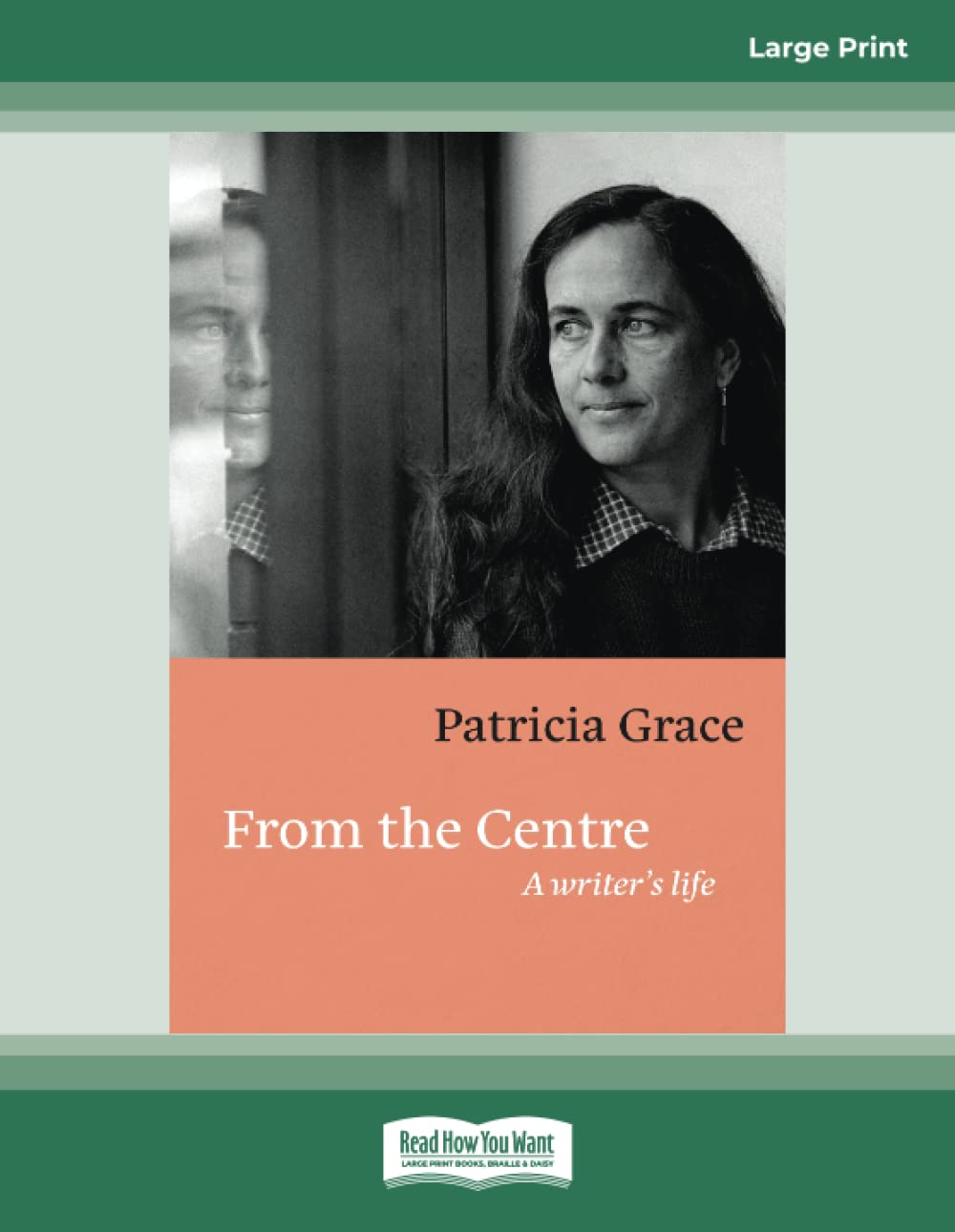
With photographs and quotes from her many, hugely loved books, Patricia Grace begins with her grandparents and parents and takes us through her childhood, her education, marriage and up to the present day in this touching and self-deprecating story of her life, the life of a writer, of a Maori woman and of a teacher. It expresses the love for family and for ancestral land; shows the prejudices she had to face and that made her stronger; and tracks her career as a writer.
Patricia Grace is a major New Zealand novelist, short story writer and children’s writer, of Ngati Toa, Ngati Raukawa and Te Ati Awa descent, and is affiliated to Ngati Porou by marriage. Grace began writing early, while teaching and raising her family of seven children, and has since won many national and international awards, including the Kiriyama Pacific Rim Book Prize for fiction, the Deutz Medal for Fiction, and the Neustadt International Prize for Literature, widely considered the most prestigious literary prize after the Nobel. A deeply subtle, moving and subversive writer, in 2007 Grace received a Distinguished Companion of the New Zealand Order of Merit for her services to literature.
I love reading about my home town in the olden days (well really the 1940s) because it is both so familiar and not. This was a great memoir and my only criticism is I was left wanting more (but hello it is her life and she doesn’t need to tell me everything as much as I want to read every detail).
A beautifully written memoir from a literary legend of Aotearoa. Like all her works, it has a quiet power and grace (not trying to make a joke here, I just can't think of a better word!).
A beautiful, generous reflection on books, writing, nature, injustice and love, filled with all the big and small details that knit together to form a life, snippets of which I was incredibly privileged to hear from Patricia Grace herself while eating egg sandwiches and cubed pineapple in her home at Hongoeka, one of the highlights of my time in Aotearoa.
Loved all the elements of this book- her childhood, marriage, reflections on literature and her own writing, the position of Māoris then and now and her and Dick’s contribution to improve recognition of Māori culture, education and language. What an interesting and fulfilling life worked around having seven children!
Seven kids and a school teacher, always involved in her community, Patricia Grace's positive and hard working attitude is so inspiring. I'm a huge fan of her books and this insight into the life of a fellow writer was so good!!
A graceful memoir that took me on a journey. I felt I was living alongside Patricia Grace during her childhood and early adulthood, and gained an excellent understanding of how her experiences influenced her writing.
I loved reading this. Absorbing and soothing.. despite the awful trials of racism and influence of colonisation.. Patricia Grace gives a lovely focus on family, community, building a life, and protecting the whenua. Also interested to hear of the inspiration for her fiction, and how each story / book came into being.
Extraordinary. I admire this writer immensely and it is great to learn the background to her work. She also gives insights into her writing, particularly characterisation, and the technique she uses gives the book its title.
One of the best books I have read this year. A blend of personal history and 20th century Māori history that brings greater depth to all of Patricia Grace’s work.
Reading this memoir helped me understand more about Patricia Grace's novels, several of which I've read and enjoyed. The book was easy to read but somehow it took me a little bit to get into it; sometimes the language seemed a bit stiff or formal, with words like "purchase" when "buy" would have seemed more natural. There was quite a contrast between the way she writes this memoir, and the way she writes her novels - short extracts of which were included at relevant points. I like her novel writing as it's flowing and she uses imaginative metaphors. Having lived in Plimmerton for a year, which is near Grace's current and ancestral home of Hongoeka Bay, I could picture the environs, and also of Wellington, Porirua and Titahi Bay. So much of this memoir is about Māori land rights, from the 1975 Land March to her own iwi and hapū's efforts to secure their land and reject attempts by Pākehā to "develop" it, or put a motorway through it. The book adds to the history of Aotearoa New Zealand, documenting 20th and 21st century racism, and the slowly changing social mores, and how Māori like Patricia Grace walk in two different cultural worlds. I wanted to know more about her children and how she and her husband brought them up - any differently from how they themselves were brought up? But she didn't write so much about her seven kids. The building of the wharenui - Te Heke-mai-raro –at Hongoeka Bay was interesting particularly in that it was the young people who wanted it to be built and decorated using traditional methods e.g. of whakairo and tukutuku panels, which led to lots of learning for the whole hapū. It was good to have lots of photos throughout.
This is not so much one memoir, but a collection of beautifully written stories, anecdotes and recollections, skillfully crafted together to form an autobiography of one of Aotearoa New Zealand's most significant writers. After reading this, I have a better understanding of the experiences, motivation and aspirations that have inspired Patricia Grace, as well as a deeper understanding and appreciation of the value of story telling itself. "Every society has its own stories - old stories, but very importantly, new stories too, that give identity to the self and explain that particular world. "
I had such anticipation the I opened this book. Writers' lives have always fascinated me as I have such admiration and envy for their talent.
This is a wonderful account of Grace's life, her unique journey to today, I loved the references to her writing and how it references points in her life and her feelings.
One thing I'd like a little more of his her discovery and details more of her Te Ao journey.
A snapshot of our country and this writer growing up. I read it cover to cover almost in one sitting.
Ka rawe! Ngā mihi nui Whaea Patricia for your beautiful candid pukapuka about your life. This book is eye-opening to the lived experience of Māori growing up in Aotearoa and the issues that people experience. Ngā mihi nui Patricia for your beautiful contribution to Aotearoa's literary journey. Your writing is a powerful way to tell stories that need to be told.
A beautiful and calming read. I really enjoyed reading about her interesting life, especially her time at Teacher’s Collage and her teaching career. Loved how nature and the landscape have impacted her life and writing.
An interesting memoir giving an insight into how Patricia Grace developed as a writer and describing life in various parts of New Zealand from the 1940s until the present. Her sections about how she and her family have had to deal with institutional racism are sobering.
A good description of Patricia's life, a bit light, this happened then this happened and I wanted more depth. Felt a bit sanitised and rise coloured glasses. Enjoyed learning about her political involvement and participation in developing connections to her marae.
What an absolutely wonderful book this is. A story gently told with so much learning for me. I am so glad someone gave us this as a gift; I’ll be recommending it to everyone
An Aotearoa must-read, especially if you have read/studied or taught any (or all) of her works. Absolutely devoured this! Tēnā rawa atu koe, Patricia Grace, for sharing this with us.
One of New Zealand's most celebrated and renowned writers has finally told her story. Centred on her traditional ancestral land of Hongoeka Bay, a little north of Wellington on the west coast, Patricia Grace tells her story, the view from her windows inspiring her own story telling, stirring her memories and letting us in to glimpse what makes a writer. Growing up in a world where her Maori and her Pakeha heritages were of equal importance in shaping the young Patricia, she nevertheless faced plenty of prejudice through her life. Bright, confident, a gifted writer from childhood, growing up in Wellington and on her family's land just north of the city, she was surrounded by love, family, strong values, books and reading from a young age. Her father was in the 28th (Maori) Battalion during WWII, absent for some years leaving Patricia and her sister in the care of strong women. Her father's experiences were the inspiration for a number of her books and stories in later years. Never handed anything on a plate, Patricia and her husband have built their own strong and loving family, her maturity and growth as a writer coming from her life experience, her commitment to her ancestral land, her commitment to Maori land and women's issues shining through. As you would expect Patricia Grace's writing is beautiful and lyrical, cementing her place in this country's literary heritage as one of it's most enduring writers.