

What do you think?
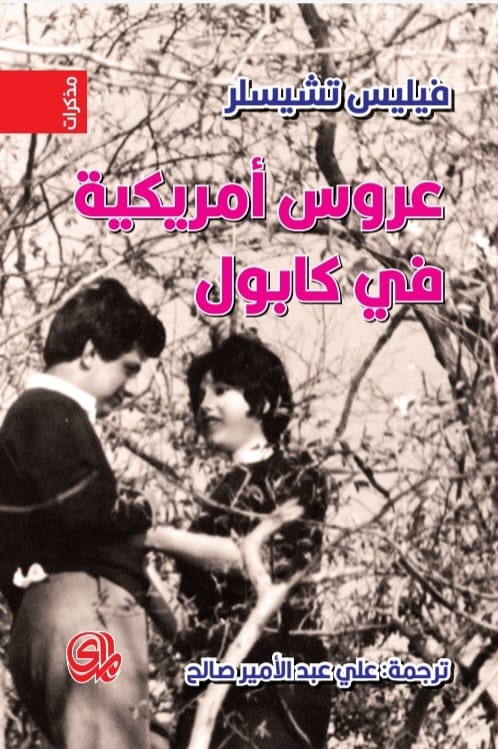
عروس أمريكية في كابول
Few westerners will ever be able to understand Muslim or Afghan society unless they are part of a Muslim family. Twenty years old and in love, Phyllis Chesler, a Jewish-American girl from Brooklyn, embarked on an adventure that has lasted for more than a half-century. In 1961, when she arrived in Kabul with her Afghan bridegroom, authorities took away her American passport. Chesler was now the property of her husband’s family and had no rights of citizenship. Back in Afghanistan, her husband, a wealthy, westernized foreign college student with dreams of reforming his country, reverted to traditional and tribal customs. Chesler found herself unexpectedly trapped in a posh polygamous family, with no chance of escape. She fought against her seclusion and lack of freedom, her Afghan family’s attempts to convert her from Judaism to Islam, and her husband’s wish to permanently tie her to the country through childbirth. Drawing upon her personal diaries, Chesler recounts her ordeal, the nature of gender apartheid—and her longing to explore this beautiful, ancient, and exotic country and culture. Chesler nearly died there but she managed to get out, returned to her studies in America, and became an author and an ardent activist for women’s rights throughout the world. An American Bride in Kabul is the story of how a naïve American girl learned to see the world through eastern as well as western eyes and came to appreciate Enlightenment values. This dramatic tale re-creates a time gone by, a place that is no more, and shares the way in which Chesler turned adversity into a passion for world-wide social, educational, and political reform.
368 pages, Paperback
First published October 1, 2013
About the author
Phyllis Chesler
36 books407 followersPhyllis Chesler is an Emerita Professor of Psychology and Women's Studies at City University of New York. She is a best- selling author, a legendary feminist leader, a psychotherapist and an expert courtroom witness. Dr. Chesler has published thousands of articles and, most recently, studies, about honor-related violence including honor killings. She is the author of 20 books, including Women and Madness and An American Bride in Kabul. Her forthcoming book is titled Requiem for a Female Serial Killer, about serial killer Aileen Wuornos.
Ratings & Reviews
Friends & Following
Create a free account to discover what your friends think of this book!
Community Reviews
Displaying 1 - 30 of 250 reviews

October 6, 2013
The blurb for An American Bride in Kabul by Phyllis Chesler is enticing -”Twenty years old and in love, Phyllis Chesler, a Jewish-American girl from Brooklyn, embarked on an adventure that has lasted for more than a half-century. Chesler found herself unexpectedly trapped in a posh polygamous family, with no chance of escape. She fought against her seclusion and lack of freedom, her Afghan family’s attempts to convert her from Judaism to Islam, and her husband’s wish to permanently tie her to the country through childbirth.” Unfortunately it is entirely misrepresented and does not live up to its potential. Instead of telling the story of a Jewish-American girl’s harrowing life in Kabul it tells the story of a self-righteous and selfish young girl who spent 10 weeks in Kabul. The rest of the book is Chesler summarizing other books on Afghanistan, name-dropping other authors and historians and building up her own ego for being a woman before her time.
An American Bride in Kabul is a memoir I was anxious to read. I sought out, and received, an ARC of this novel. I moved it to the very top of my reading list and loved it, for the first 30 pages. My Twitter feed will indicate how immediately I loved Phyllis' story; however my love affair with her memoir ended up being shorter than her love affair with Abdul-Kareem and Kabul. Chesler honestly states that she was young, naïve and foolish when she fell in love with, married, and travelled to Kabul with her Afghan husband, Abdul-Kareem. He was wealthy, highly-educated and presented himself as a westernized foreigner who wanted to whisk her away and travel the world. Instead, they married and travelled to his home in Kabul where almost immediately Chesler began behaving as a spoiled, arrogant, self-righteous American brat.
She spent 10 weeks, yes 10 weeks, in Kabul and yet to read the book blurb, the marketing pitch or her own details of her time there it was as though she wasted away the best years of her life confined away from society. I had expected to read about a young woman who was forced to spend months or years living in a polygamous harem held against her will in a foreign country. I read a completely different story.
Chesler had a very ethnocentric attitude when she arrived in Kabul. She never presented herself as ever being willing to consider their perspective, point-of-view, customs or different way of life. She was very much an egotistical American brat who wanted everyone else to submit to her way of wanting to do things. She didn’t like what they ate so they should cook or buy special food for her. She sunbathed in a “skimpy bikini” (her words) despite knowing that their culture expected women to be covered up. She snuck out of the house to explore alone even after being informed it could bring shame to their family. Her husband began to beat her – or not – she writes that she cannot remember. Her mother-in-law was trying to kill her (this she claimed because she told the cook that Chesler was an Afghan wife and not to cook her special foods). The depiction through the memoir is that Chesler was unwilling to compromise and unwilling to give a new culture a chance. It was her way or it was wrong and that was simply the way it was. She complains about the very few times that she was “allowed” to go out yet she was there for 10 weeks; a foreign woman who did not know the language, would not submit to following the customs of the local culture, was arrogant, rude, self-righteous, demanding, and rebellious.
After her return to the United States (using a passport and a plane ticket given to her by her Afghan father-in-law) her husband, Abdul-Kareem, writes her letters begging for her return. She describes his tone as “ironic, sarcastic, self-pitying, pompous and utterly heart-breaking.” I chuckled. Aside from the “utterly heart-breaking” description it was exactly how I felt about her writing. There are so many problems with this book. The only polygamy is on the part of her father-in-law who has three wives. The “harem” is only that she shares a home with the other female members of the family. The “memoir” part of the book is very short as she spends so much other time talking about her education and referencing other books and quotes. The timeline is jarring as she will move forward two or three years and then backtrack to discuss something that happened only six months after her starting point. All in all, this is an utter disappointment.
An American Bride in Kabul is a memoir I was anxious to read. I sought out, and received, an ARC of this novel. I moved it to the very top of my reading list and loved it, for the first 30 pages. My Twitter feed will indicate how immediately I loved Phyllis' story; however my love affair with her memoir ended up being shorter than her love affair with Abdul-Kareem and Kabul. Chesler honestly states that she was young, naïve and foolish when she fell in love with, married, and travelled to Kabul with her Afghan husband, Abdul-Kareem. He was wealthy, highly-educated and presented himself as a westernized foreigner who wanted to whisk her away and travel the world. Instead, they married and travelled to his home in Kabul where almost immediately Chesler began behaving as a spoiled, arrogant, self-righteous American brat.
She spent 10 weeks, yes 10 weeks, in Kabul and yet to read the book blurb, the marketing pitch or her own details of her time there it was as though she wasted away the best years of her life confined away from society. I had expected to read about a young woman who was forced to spend months or years living in a polygamous harem held against her will in a foreign country. I read a completely different story.
Chesler had a very ethnocentric attitude when she arrived in Kabul. She never presented herself as ever being willing to consider their perspective, point-of-view, customs or different way of life. She was very much an egotistical American brat who wanted everyone else to submit to her way of wanting to do things. She didn’t like what they ate so they should cook or buy special food for her. She sunbathed in a “skimpy bikini” (her words) despite knowing that their culture expected women to be covered up. She snuck out of the house to explore alone even after being informed it could bring shame to their family. Her husband began to beat her – or not – she writes that she cannot remember. Her mother-in-law was trying to kill her (this she claimed because she told the cook that Chesler was an Afghan wife and not to cook her special foods). The depiction through the memoir is that Chesler was unwilling to compromise and unwilling to give a new culture a chance. It was her way or it was wrong and that was simply the way it was. She complains about the very few times that she was “allowed” to go out yet she was there for 10 weeks; a foreign woman who did not know the language, would not submit to following the customs of the local culture, was arrogant, rude, self-righteous, demanding, and rebellious.
After her return to the United States (using a passport and a plane ticket given to her by her Afghan father-in-law) her husband, Abdul-Kareem, writes her letters begging for her return. She describes his tone as “ironic, sarcastic, self-pitying, pompous and utterly heart-breaking.” I chuckled. Aside from the “utterly heart-breaking” description it was exactly how I felt about her writing. There are so many problems with this book. The only polygamy is on the part of her father-in-law who has three wives. The “harem” is only that she shares a home with the other female members of the family. The “memoir” part of the book is very short as she spends so much other time talking about her education and referencing other books and quotes. The timeline is jarring as she will move forward two or three years and then backtrack to discuss something that happened only six months after her starting point. All in all, this is an utter disappointment.

July 22, 2013
Repetitive. Her entire experience lasted 10 weeks & was in 1961. The rest of the book is the author's selective excerpts of her successes & her opinions. I admit, she lost me early in the book when she congratulated herself for knowing the term "patriarchal" in 1961 before the women's movement had popularized the word. Are you kidding me?

October 22, 2013
For Phyllis Chesler, a feminist who helped trailblaze the Second Wave Feminism, the personal is political. In this memoir of events that took place over fifty years ago, Prof. Chesler extracts understanding of pluralism and its limitations when it comes to women’s place in society.
In 1961, thirty years before Betty Mahmoody’s story was released in a 1991 film “Not Without My Daughter,” the 20-year-old Phyllis Chesler found herself in similar circumstances. In love for three year with an Afghan man who had been educated in Europe and the USA, whose conversations about literature, film and culture made them soulmates, this naïve Jewish American woman agreed to marry him before a visit to his family in Afghanistan. She expected this visit to be the first stop of glob-trotting adventures and travels for the intellectually curious girl who grew up in Brooklyn to a family with modest means but who dreamed big.
In hindsight, both the Western feminist movement and millions of Muslim women benefited from the fact that a budding feminist like Chesler found herself a prisoner in her husband’s polygamous family compound, where she did not know the language, and where the man she had loved and trusted changed so completely into a misogynist, controlling Muslim husband. Within days, the educated, sharp-witted young Jewish American was expected to behave like an obedient, silent and mindless Muslim wife, living in a world of submissive women, lacking any privacy or a moment of solitude for reading. Not only the travel plans were quashed, but her husband decided to settle in the country which he hadn’t visited since he was a child, and refused to hear what his Jewish American wife had to say in the matter. In the meantime, unused to the food, and her body unable to tolerate the local water, she became deathly sick, but received no medical help.
She was released from captivity after five long months by her father-in-law who might have viewed her as a liability, especially if she died, although Prof. Chesler attributes to kindness his sending her back to the USA for medical care on a temporary Afghan visa—surprising and not credible attitude on this man’s part given his callous treatment of his first two wives and his horde of younger children.
Years later, Prof. Chesler used her intimate, inside view of the Muslim world and culture, and of Muslim families and their dynamics to research and publish numerous studies in articles and books. Specifically, she has brought the subject of “Honor Killing” to public consciousness and to Western authorities when her analysis demonstrated that this deliberate, group-orchestrated murdering of a daughter who showed the most minor sign of veering from the strict Muslim dictates of modesty, did not fall under “domestic violence” label. (The latter actions tend to be committed in a fit or rage by the boyfriend or husband rather than deliberately planned and executed by a few members of the family.)
And then 9/11 happened, and once again Prof. Chesler’s attention became riveted to terrorism within Islam and outside of it against “infidels.”
In this memoir, Prof. Chesler has used the advantage of decades of research into the writings of those who traveled to Afghanistan and other Muslim countries. She also brings the history of this country, ravaged by both internal conflicts and outside invaders. Most importantly, she is able to look at every aspect of her personal experience though the political and cultural eyeglasses that affect women in Muslim countries—and our Western reaction (or lack of thereof) to it. She has examined terrorism fueled by ideology and religious fanaticism and not shied away from “politically correct” views that all too often cripple otherwise open, unadulterated thinking.
Interestingly, now in her 70s and still suffering the results of the illnesses brought upon her body in Afghanistan, she is very close to her former husband and his new family as well as her former in-laws. Now a refugee himself in the USA, Abdul-Kareem is still incapable of seeing how he had wronged his young bride or to criticize his country and the backward traditions which he had once exploited to tie her down. Prof. Chesler’s inability to persuade this Western-educated, intelligent man after so many decades of long conversations, makes her doubt our ability as Westerners to affect the culture or change the fate of millions of Muslim women everywhere.
In 1961, thirty years before Betty Mahmoody’s story was released in a 1991 film “Not Without My Daughter,” the 20-year-old Phyllis Chesler found herself in similar circumstances. In love for three year with an Afghan man who had been educated in Europe and the USA, whose conversations about literature, film and culture made them soulmates, this naïve Jewish American woman agreed to marry him before a visit to his family in Afghanistan. She expected this visit to be the first stop of glob-trotting adventures and travels for the intellectually curious girl who grew up in Brooklyn to a family with modest means but who dreamed big.
In hindsight, both the Western feminist movement and millions of Muslim women benefited from the fact that a budding feminist like Chesler found herself a prisoner in her husband’s polygamous family compound, where she did not know the language, and where the man she had loved and trusted changed so completely into a misogynist, controlling Muslim husband. Within days, the educated, sharp-witted young Jewish American was expected to behave like an obedient, silent and mindless Muslim wife, living in a world of submissive women, lacking any privacy or a moment of solitude for reading. Not only the travel plans were quashed, but her husband decided to settle in the country which he hadn’t visited since he was a child, and refused to hear what his Jewish American wife had to say in the matter. In the meantime, unused to the food, and her body unable to tolerate the local water, she became deathly sick, but received no medical help.
She was released from captivity after five long months by her father-in-law who might have viewed her as a liability, especially if she died, although Prof. Chesler attributes to kindness his sending her back to the USA for medical care on a temporary Afghan visa—surprising and not credible attitude on this man’s part given his callous treatment of his first two wives and his horde of younger children.
Years later, Prof. Chesler used her intimate, inside view of the Muslim world and culture, and of Muslim families and their dynamics to research and publish numerous studies in articles and books. Specifically, she has brought the subject of “Honor Killing” to public consciousness and to Western authorities when her analysis demonstrated that this deliberate, group-orchestrated murdering of a daughter who showed the most minor sign of veering from the strict Muslim dictates of modesty, did not fall under “domestic violence” label. (The latter actions tend to be committed in a fit or rage by the boyfriend or husband rather than deliberately planned and executed by a few members of the family.)
And then 9/11 happened, and once again Prof. Chesler’s attention became riveted to terrorism within Islam and outside of it against “infidels.”
In this memoir, Prof. Chesler has used the advantage of decades of research into the writings of those who traveled to Afghanistan and other Muslim countries. She also brings the history of this country, ravaged by both internal conflicts and outside invaders. Most importantly, she is able to look at every aspect of her personal experience though the political and cultural eyeglasses that affect women in Muslim countries—and our Western reaction (or lack of thereof) to it. She has examined terrorism fueled by ideology and religious fanaticism and not shied away from “politically correct” views that all too often cripple otherwise open, unadulterated thinking.
Interestingly, now in her 70s and still suffering the results of the illnesses brought upon her body in Afghanistan, she is very close to her former husband and his new family as well as her former in-laws. Now a refugee himself in the USA, Abdul-Kareem is still incapable of seeing how he had wronged his young bride or to criticize his country and the backward traditions which he had once exploited to tie her down. Prof. Chesler’s inability to persuade this Western-educated, intelligent man after so many decades of long conversations, makes her doubt our ability as Westerners to affect the culture or change the fate of millions of Muslim women everywhere.
January 21, 2014
Actual rating: 3.5 stars. Partly because, yes, I think some of this was poorly edited, and partly because I don't feel right giving a full four stars to any book that needs a warning label. Like the one I'm giving it right now: Do NOT read this if you're already bummed out. It was stupid of me to pick this up right now. But it's an important book, so I'm glad I read it. And, yes, I'm glad I'm done.
If you're already familiar with Phyllis Chesler -- author of vitally important books such as Women and Madness, Mothers On Trial, and Women, Money, and Power -- you may be as startled as I was to learn that when she was still a teenager, she married a man from Afghanistan. On his insistence, she went with him to his native country to live with his family. She almost died there before managing to escape.
The man she fell in love with in America became her captor and abuser in Afghanistan. And yet she now considers him a friend, dotes on his children from his second marriage, and mourns the death of his second wife, whom she considers a sister.
An American Bride in Kabul is the story of how this can all be true. Probably the most compelling aspect of it is that Chesler doesn't try to rationalize how one of the founding feminists of American second-wave feminism can feel genuine fondness for a man she acknowledges is "a misogynist, a charming misogynist, an educated and seemingly assimilated misogynist, but awful where wives and feminism are concerned." Emotions are irrational, or this world wouldn't be such a mess.
This book is at its strongest -- is spellbinding, in fact -- when Chesler focuses on her own story. She quotes from a diary she kept while still a prisoner. She explains to her Western readers what a harem truly is (it's not about sex and it's definitely not sexy). She compares her own experiences to those of other Western women who have ventured into similar marriages (she did a lot of research before writing this book). And she is ferociously commanding when she addresses Western feminists and their failings when it comes to sexism in the Middle East.
I think the tenth and eleventh chapters needed some editing. It's startling that anyone writing about 9/11 could be less than compelling, but Chesler's chapter on that very topic felt like something from a different book than the one she'd started. And, yes, all right, I'm shallow; but it was hard for me to switch gears and go from a gripping personal story to a twenty-page chapter about the history of Jews in Afghanistan. Chesler manages to weave this history into her own story with a surprising twist, but before she got there, I felt myself drifting.
Nevertheless, this book ought to be required reading if only for the parts where Chesler addresses the Western tendency toward moral relativism and our fear of looking racist if we tackle Middle-Eastern sexism.
Read this early in the morning on a summer's day so you'll have a long afternoon of sunshine in which to recover.
If you're already familiar with Phyllis Chesler -- author of vitally important books such as Women and Madness, Mothers On Trial, and Women, Money, and Power -- you may be as startled as I was to learn that when she was still a teenager, she married a man from Afghanistan. On his insistence, she went with him to his native country to live with his family. She almost died there before managing to escape.
The man she fell in love with in America became her captor and abuser in Afghanistan. And yet she now considers him a friend, dotes on his children from his second marriage, and mourns the death of his second wife, whom she considers a sister.
An American Bride in Kabul is the story of how this can all be true. Probably the most compelling aspect of it is that Chesler doesn't try to rationalize how one of the founding feminists of American second-wave feminism can feel genuine fondness for a man she acknowledges is "a misogynist, a charming misogynist, an educated and seemingly assimilated misogynist, but awful where wives and feminism are concerned." Emotions are irrational, or this world wouldn't be such a mess.
This book is at its strongest -- is spellbinding, in fact -- when Chesler focuses on her own story. She quotes from a diary she kept while still a prisoner. She explains to her Western readers what a harem truly is (it's not about sex and it's definitely not sexy). She compares her own experiences to those of other Western women who have ventured into similar marriages (she did a lot of research before writing this book). And she is ferociously commanding when she addresses Western feminists and their failings when it comes to sexism in the Middle East.
I think the tenth and eleventh chapters needed some editing. It's startling that anyone writing about 9/11 could be less than compelling, but Chesler's chapter on that very topic felt like something from a different book than the one she'd started. And, yes, all right, I'm shallow; but it was hard for me to switch gears and go from a gripping personal story to a twenty-page chapter about the history of Jews in Afghanistan. Chesler manages to weave this history into her own story with a surprising twist, but before she got there, I felt myself drifting.
Nevertheless, this book ought to be required reading if only for the parts where Chesler addresses the Western tendency toward moral relativism and our fear of looking racist if we tackle Middle-Eastern sexism.
Read this early in the morning on a summer's day so you'll have a long afternoon of sunshine in which to recover.

October 7, 2013
I was instantly attracted to this book, although I'll admit that I've not heard of Phyllis Chesler before now. I am fascinated by different cultures and this memoir is particularly relevant at the moment, with debates raging in the media regarding Muslim women's rights to wear the niqab and the burqa.
This is not just a memoir, this is an examination of women and their freedom; of culture and of history and Chesler's passion for human rights shines through in her writing.
Phyllis Chesler was an ordinary American, aged eighteen, she fell in love with the dark and handsome Abdul-Kareem. They adored each other, discussing music and literature for hours, watching exotic foreign films, sharing the all-American hamburger and eventually sleeping together. Theirs was a modern romance, between them they believe that they can conquer the world, their love will see them through. Phyllis is Jewish, Abdul-Kareem is Muslim, from Afghanistan - they don't discuss religion.
When they marry and travel to Afghanistan, Phyllis is excited. She can't wait to see his country, to discover new things, to eat different food, they have their whole life ahead of them. Once on Afghan soil however, things change. Abdul-Kareem changes, he is no longer the Westernised young man that she married. Returning to his homeland has meant a return to a culture where women have no rights, cannot walk about alone, and must do as their husbands tell them.
Phyllis rebelled. Used to her freedom and having choices, she did everything she could to keep her identity. There were times when her decisions were obviously very wrong; sunbathing in a skimpy bikini was not a good choice! Phyllis wanted to learn about her new home, she wanted to explore, she was happy to wear the beautiful silks, but she wanted to do it on her terms.
There were times whilst I was reading this book when I felt like shouting at Phyllis, I wanted to tell her to give them a chance, to appreciate that she was no longer living in free America. But let's face it, she was badly let down by her new husband, not once did he warn her what would be expected of her, not once did he give any sign that he was anything other than a regular guy, living the American dream, just like her.
Phyllis's experience was awful. Luckily, she managed to flee, and today she has a fairly good relationship with Abdul-Kareem, but her experiences in Afghanistan have clearly moulded her into the woman that she is today.
This is an engaging and well-written memoir that is powerful in it's message and often very emotional.
This is not just a memoir, this is an examination of women and their freedom; of culture and of history and Chesler's passion for human rights shines through in her writing.
Phyllis Chesler was an ordinary American, aged eighteen, she fell in love with the dark and handsome Abdul-Kareem. They adored each other, discussing music and literature for hours, watching exotic foreign films, sharing the all-American hamburger and eventually sleeping together. Theirs was a modern romance, between them they believe that they can conquer the world, their love will see them through. Phyllis is Jewish, Abdul-Kareem is Muslim, from Afghanistan - they don't discuss religion.
When they marry and travel to Afghanistan, Phyllis is excited. She can't wait to see his country, to discover new things, to eat different food, they have their whole life ahead of them. Once on Afghan soil however, things change. Abdul-Kareem changes, he is no longer the Westernised young man that she married. Returning to his homeland has meant a return to a culture where women have no rights, cannot walk about alone, and must do as their husbands tell them.
Phyllis rebelled. Used to her freedom and having choices, she did everything she could to keep her identity. There were times when her decisions were obviously very wrong; sunbathing in a skimpy bikini was not a good choice! Phyllis wanted to learn about her new home, she wanted to explore, she was happy to wear the beautiful silks, but she wanted to do it on her terms.
There were times whilst I was reading this book when I felt like shouting at Phyllis, I wanted to tell her to give them a chance, to appreciate that she was no longer living in free America. But let's face it, she was badly let down by her new husband, not once did he warn her what would be expected of her, not once did he give any sign that he was anything other than a regular guy, living the American dream, just like her.
Phyllis's experience was awful. Luckily, she managed to flee, and today she has a fairly good relationship with Abdul-Kareem, but her experiences in Afghanistan have clearly moulded her into the woman that she is today.
This is an engaging and well-written memoir that is powerful in it's message and often very emotional.

April 12, 2014
Oh I didn't expect to have such conflicted feelings about this book.
As the blurb states: Twenty years old and in love, Phyllis Chesler, a Jewish-American girl from Brooklyn, embarked on an adventure that has lasted for more than a half-century." You have expectations that Phyllis was tricked and held captive in an Afghani harem for years and years, having to bide her time in order to break free at last and return to her homeland.
If only that was the story, you'd be at least a little bit justified in feeling sorry for her and her plight. Unfortunately this book perhaps doesn't allow you to take up the cause of Phyllis' feministic ideals as much as she would have liked.
Here's the truth, she was "captive" in Afghanistan for 10 weeks! NOT YEARS! Her father in law gave her the methods in which she was able to "escape"! She lived in a marble palace! Oh how terrible!
This book took me by surprise. I wanted to learn more about purdah, living in Afghanistan and Islamic families. I was not expecting to be swayed in opinion, and indeed expected to be partly ambivalent towards the injustices that Phyllis spoke of. Instead I was moved to be offended on behalf of the Afghani family that she spoke of. Phyllis comes across as the great knowledge owner, the American born Jew who has superior understanding of feminist rights and women's ability to be liberated from patriarchal society. She is also naive in expecting that she could roam the streets of a conservative Islamic society as an Afghani wife, with the same nonchalance as that which she had in America.
Anyone stupid enough to assume that the cultural differences between East and West are so minimal really shouldn't be allowed to judge the lifestyles that others live by.
I was offended by her language, her shock tactics and her disdain for Afghani women and their placidity in living in purdah. The angle she takes with their lives is that they are completely oppressed and they are living like second class citizens in their households. However in the same breath she speaks of the power of her mother in law, who makes the decisions, almost kills her and plots to destroy her marriage. I don't think you can argue it both ways. When she's crying that the mother in law is trying to kill her, surely a second class citizen can't wield that much power in such a male dominated household?
My end conclusion about this book is that she's not fair to the women or society in which she lived. They are living in a way that is comfortable, known, and accepted as being culturally correct in their land. As an "other", Phyllis has a right to comment on it, but she has no right to judge them so harshly and certainly her criticisms of Islam as a whole are unreasonable.
I agree that there are issues such as honour killings, the arranged marriages of young women to older men etc that need to be spoken about. But I don't think that Western readers should take the notion that our culture, our ways of living are so far superior to those of another culture.
If you're looking for a book that was written to appeal to the masses and their islamophobic nuances, then this is the book for you.
I'd much prefer to read something that is open, honest and less inflammatory (if you've got any suggestions please send me a message!)
As the blurb states: Twenty years old and in love, Phyllis Chesler, a Jewish-American girl from Brooklyn, embarked on an adventure that has lasted for more than a half-century." You have expectations that Phyllis was tricked and held captive in an Afghani harem for years and years, having to bide her time in order to break free at last and return to her homeland.
If only that was the story, you'd be at least a little bit justified in feeling sorry for her and her plight. Unfortunately this book perhaps doesn't allow you to take up the cause of Phyllis' feministic ideals as much as she would have liked.
Here's the truth, she was "captive" in Afghanistan for 10 weeks! NOT YEARS! Her father in law gave her the methods in which she was able to "escape"! She lived in a marble palace! Oh how terrible!
This book took me by surprise. I wanted to learn more about purdah, living in Afghanistan and Islamic families. I was not expecting to be swayed in opinion, and indeed expected to be partly ambivalent towards the injustices that Phyllis spoke of. Instead I was moved to be offended on behalf of the Afghani family that she spoke of. Phyllis comes across as the great knowledge owner, the American born Jew who has superior understanding of feminist rights and women's ability to be liberated from patriarchal society. She is also naive in expecting that she could roam the streets of a conservative Islamic society as an Afghani wife, with the same nonchalance as that which she had in America.
Anyone stupid enough to assume that the cultural differences between East and West are so minimal really shouldn't be allowed to judge the lifestyles that others live by.
I was offended by her language, her shock tactics and her disdain for Afghani women and their placidity in living in purdah. The angle she takes with their lives is that they are completely oppressed and they are living like second class citizens in their households. However in the same breath she speaks of the power of her mother in law, who makes the decisions, almost kills her and plots to destroy her marriage. I don't think you can argue it both ways. When she's crying that the mother in law is trying to kill her, surely a second class citizen can't wield that much power in such a male dominated household?
My end conclusion about this book is that she's not fair to the women or society in which she lived. They are living in a way that is comfortable, known, and accepted as being culturally correct in their land. As an "other", Phyllis has a right to comment on it, but she has no right to judge them so harshly and certainly her criticisms of Islam as a whole are unreasonable.
I agree that there are issues such as honour killings, the arranged marriages of young women to older men etc that need to be spoken about. But I don't think that Western readers should take the notion that our culture, our ways of living are so far superior to those of another culture.
If you're looking for a book that was written to appeal to the masses and their islamophobic nuances, then this is the book for you.
I'd much prefer to read something that is open, honest and less inflammatory (if you've got any suggestions please send me a message!)

September 8, 2013
The pacing is 'interestingly' fantastic, although, and irrespective of how one might view the subjects covered... a lot of patience may be required to get through reading this book.
Starting out things definitely read comfortably memoirish. Phyllis contains the rebellious spirit; breaking away from her parents like many young girls have done, and may continue to do, to fall in love with, and marry a young man who models a Prince. The thing is, this isn't any Prince, but a man of means not only native of a country the new bride knows little about, but a man with a social agenda that is as far removed from the brides' knowing and understanding, as the foreign country she's about to loaf off to.
Off she goes, euphorically arm in arm with her Prince to this far off country where her dreaming is awaken by the reality of her situation. The recall of this memory reads incredibly sincere, despite parts of her recall I found challenging to read. Technically, even by U.S. law (as Phyllis learns), and certainly by international law, she was not held captive; a looming misjudgment on both hers and her Prince's part. Arguably however, and largely due to the honesty in retelling this story, it is questionable about whether or not she was mistreated as well... thus here is where the reading challenge mounts; becoming more of a consortium of selective research built into the story to support the memoirist's views.
What I really respected was Phyllis coming to terms with what her Prince was trying to achieve, and in coming to those terms understanding how she could better align her support of women. Overall I highly recommend reading An American Bride in Kabul. It is a quite illuminating read.
Starting out things definitely read comfortably memoirish. Phyllis contains the rebellious spirit; breaking away from her parents like many young girls have done, and may continue to do, to fall in love with, and marry a young man who models a Prince. The thing is, this isn't any Prince, but a man of means not only native of a country the new bride knows little about, but a man with a social agenda that is as far removed from the brides' knowing and understanding, as the foreign country she's about to loaf off to.
Off she goes, euphorically arm in arm with her Prince to this far off country where her dreaming is awaken by the reality of her situation. The recall of this memory reads incredibly sincere, despite parts of her recall I found challenging to read. Technically, even by U.S. law (as Phyllis learns), and certainly by international law, she was not held captive; a looming misjudgment on both hers and her Prince's part. Arguably however, and largely due to the honesty in retelling this story, it is questionable about whether or not she was mistreated as well... thus here is where the reading challenge mounts; becoming more of a consortium of selective research built into the story to support the memoirist's views.
What I really respected was Phyllis coming to terms with what her Prince was trying to achieve, and in coming to those terms understanding how she could better align her support of women. Overall I highly recommend reading An American Bride in Kabul. It is a quite illuminating read.

July 11, 2013
The story is fascinating: the author married an Afghan student she went to college with in New York in the early 1960s. They both loved French New Wave films, New York theater, and other intellectual, highbrow stuff. She married him when she was 20 so she could travel with him to Afghanistan and meet his family, see his country, etc. But she didn't do her research. Her passport was taken at the airport in Kabul and she became an Afghan wife. Not an Afghan citizen, not an American citizen. Her stories of life in the "gilded cage" of upper-class female life and her husband's refusal to acknowledge anything surprising about it are disturbing and fascinating, and clearly led to her later career as a well-known feminist activist and academic. However, the author's writing style in this memoir is rambling and repetitive, and does not muster a coherent set of arguments, especially where she gets into politics and the US war in Afghanistan. It's worth slogging through some of the "Ah, how could I have known then..." for the sake of learning about this experience, but the book could have used some more editing.

December 31, 2025
عالمة النفس الأميركية في أفغانستان، تزوجت وعاشت لأكثر من خمسين عاماً هناك، وفى هذا الكتاب، قدمت رؤيتها خلال الفترة التى عاشتها في أفغانستان، باعتبارها أجنبية، وغير مسلمة، تعيش في مجتمع ذي طابع خاص. ففي هذا الكتاب يتعرف القارئ على فيليس تشيسلر الأمريكية من بروكلين، ومغامراتها حيث تروي تشيسلر محنتها، وطبيعة الفصل العنصري بين الجنسين - وشوقها لاستكشاف هذا البلد الجميل والقديم والغريب وثقافته
Read
July 29, 2013The premise of this memoir was intriguing to me. The actual book, not so much. Phyllis Chesler marries Abdul Kareem, who she met in college in the early 60s. Abdul Kareem and Chesler move to Afghanistan to live with his family.
Upon moving to Afghanistan, Chesler is surprised at how women are treated and how she is kept as a prisoner in her own home.
Chesler's time in Afghanistan was extremely short. During this part of the book, Chesler refers to a diary written during that time and for some of the events she quotes, she admits to having no memory of them happening. The details of her time in Afghanistan are vague and peppered with numerous quotes and references from books by authors who have written about life in Afghanistan.
After Chesler returns to the U.S., the book turns almost completely to a reference book about the Afghanistan government and history.
I abandoned this book over halfway through and after many chapters had passed without any discussion of the subject referred to in the title. I felt that Chesler would have produced a memoir had she written this book after her time in Afghanistan when she was able to recall the events that took place.
This book would most likely be interesting to someone who has little interest in a memoir about an American Bride in Kabul but who has a great interest in a reference book about history, religion and life in Afghanistan through the years.
Upon moving to Afghanistan, Chesler is surprised at how women are treated and how she is kept as a prisoner in her own home.
Chesler's time in Afghanistan was extremely short. During this part of the book, Chesler refers to a diary written during that time and for some of the events she quotes, she admits to having no memory of them happening. The details of her time in Afghanistan are vague and peppered with numerous quotes and references from books by authors who have written about life in Afghanistan.
After Chesler returns to the U.S., the book turns almost completely to a reference book about the Afghanistan government and history.
I abandoned this book over halfway through and after many chapters had passed without any discussion of the subject referred to in the title. I felt that Chesler would have produced a memoir had she written this book after her time in Afghanistan when she was able to recall the events that took place.
This book would most likely be interesting to someone who has little interest in a memoir about an American Bride in Kabul but who has a great interest in a reference book about history, religion and life in Afghanistan through the years.

April 13, 2014
This was a very interesting book, which is why I finished it. But the writing is terrible. One of my biggest pet peeves is when a writer randomly switches between tenses, or uses past and present interchangeably while talking about the past. I'm still not sure when some key events in the book happened, because of tense changes and an almost stream-of-consciousness way of writing history.
That said, this book gives a view into how life was for a Western woman who married what she thought was a Westernized Afghan man but ended up in the isolating, brutal, dehumanizing purdah that is the life of an Afghan woman. She barely escaped with her life, back to the freedom of America. And yet she kept in contact with her ex-husband, especially after he also escaped Afghanistan - though he got away from the Soviets, not the culture.
The author also talks about how hard it has been, is, and will continue to be to change the way Afghan culture devalues and dehumanizes women. And that the Arab Spring did not bring about Westernization and democracy to the countries that successfully revolted, but rather brought stricter, more fundamentalist regimes. It is sobering.
That said, this book gives a view into how life was for a Western woman who married what she thought was a Westernized Afghan man but ended up in the isolating, brutal, dehumanizing purdah that is the life of an Afghan woman. She barely escaped with her life, back to the freedom of America. And yet she kept in contact with her ex-husband, especially after he also escaped Afghanistan - though he got away from the Soviets, not the culture.
The author also talks about how hard it has been, is, and will continue to be to change the way Afghan culture devalues and dehumanizes women. And that the Arab Spring did not bring about Westernization and democracy to the countries that successfully revolted, but rather brought stricter, more fundamentalist regimes. It is sobering.

August 6, 2013
This book has much to teach us about how women are valued in much of the world and about Afghanistan's history of treatment of women in particular. It took 50 years before the author felt she could write of her experiences, and while her story is fascinating, she makes it more than that by delving into this history of the country. It slows down the book a bit, and some might find that makes it not worth finishing, but since we are still mired in Afghanistan, I found it helpful.
Here's a synopsis, so don't read it if you want the book to totally surprise you:
Phyllis Chesler is apparently a well-known writer on women’s rights, but this book takes us back 50 years, back to the transformative experience that put her on the path to being a feminist leader.
As a college coed (yeah, that’s what they called them in those days), Chesler, a Jewish American, fell in love with a foreign student from Afghanistan. They married, intent on seeing the world and making a difference in it. Instead, she ended up in Afghanistan, living practically as a prisoner in the home of her husband’s family, including his father and his three wives. She had no passport, no rights, no choice and almost no time with her husband, a man who instantly melded back into a life where wives were simply property, not partners. She had never felt so invisible.
Sick with hepatitis, Chesler manages to use a family squabble to her advantage so she can escape back to the United States. Her brief captivity spurred her on to research and understand the culture of Kabul and of Islam. She goes on to become a psychotherapist, write 14 books, and speak out to help Islamic women threatened by honor killings. She has lived the life of a woman in a culture where women have no personal value—protected, yes, but because they are property, not because they are equal persons with much to offer the world.
Here's a synopsis, so don't read it if you want the book to totally surprise you:
Phyllis Chesler is apparently a well-known writer on women’s rights, but this book takes us back 50 years, back to the transformative experience that put her on the path to being a feminist leader.
As a college coed (yeah, that’s what they called them in those days), Chesler, a Jewish American, fell in love with a foreign student from Afghanistan. They married, intent on seeing the world and making a difference in it. Instead, she ended up in Afghanistan, living practically as a prisoner in the home of her husband’s family, including his father and his three wives. She had no passport, no rights, no choice and almost no time with her husband, a man who instantly melded back into a life where wives were simply property, not partners. She had never felt so invisible.
Sick with hepatitis, Chesler manages to use a family squabble to her advantage so she can escape back to the United States. Her brief captivity spurred her on to research and understand the culture of Kabul and of Islam. She goes on to become a psychotherapist, write 14 books, and speak out to help Islamic women threatened by honor killings. She has lived the life of a woman in a culture where women have no personal value—protected, yes, but because they are property, not because they are equal persons with much to offer the world.
April 28, 2014
I had hoped and expected that this book might allow me a glimpse of another culture from the eyes of an individual who is not familiar with that culture. I had hoped that I could journey with the author in better understanding her life immersed in a culture different from my own. However, I was truly disappointed with this book. I do not mean to diminish and disregard Ms. Chesler's obviously traumatic experiences, but really, she did not really tell a story. Unfortunately, the psychological trauma she experienced tainted her writing such that I really did not gain anything from this recounting. Most of her writing about her experiences were too much from her own perspective. Even though she stayed in Afghanistan for a short time, the readers don't really know much about what happened because the author was too much inside her own head. At times it was bogged down in nostalgia. At others, it was clearly a delayed retaliation against experiences from forty years ago. She would only recount what she thought/felt/etc while being in Afghanistan. With the exception of her first husband, we really don't get to know any other Afghans. And one gets the impression that her perception of her husband is greatly prejudiced. As she mentions in her book, Chesler was very self-conscious about how her writings are interpreted, and she takes great strides to cover up bias by overloading the work with historical facts and quotes from others who have written about Afghanistan and other predominantly Muslim countries with whom she has hob-knobbed. For a book titled, "An American Bride in Kabul", I did not expect that for most of the book she would be talking about her life in America during and after 9/11 and about Jews (not herself, but others) in Afghanistan. Those seemed to be topics for other books.

May 4, 2019
This title is deceiving. Only the first third of the book documents the author's time in Kabul, and it's not as detailed as one would hope. She claims in her prologue that the information is tragic and devastating, but as one who has experienced actual tragedy and devastation, this doesn't qualify, imo. Her "Afghan family" were as kind to her as they knew how to be. But she was in a foreign land, so feelings of fear and hopelessness are still warranted.
The second third of the book felt more like the author was just promoting herself and patting herself on the back, and it got really boring and irrelevant in places. At this point I was imagining I would give this book 2 stars.
Then, the last third was informative and intriguing - in an educational and academic sense (and just slightly less about the author's accomplishments) - so I decided to give this book a chance for what it actually is: an academic paper about the history of Afghanistan inspired by personal events (and a resume, apparently). So in that context, she gets a 3 - but just barely. I think I'm being generous.
Therefore, I would not reccommend. For a much better book that covers the history this author was attempting to convey, I suggest reading Games Without Rules instead. For a better Kabul-based memoir, I suggest reading The Broken Circle.
The second third of the book felt more like the author was just promoting herself and patting herself on the back, and it got really boring and irrelevant in places. At this point I was imagining I would give this book 2 stars.
Then, the last third was informative and intriguing - in an educational and academic sense (and just slightly less about the author's accomplishments) - so I decided to give this book a chance for what it actually is: an academic paper about the history of Afghanistan inspired by personal events (and a resume, apparently). So in that context, she gets a 3 - but just barely. I think I'm being generous.
Therefore, I would not reccommend. For a much better book that covers the history this author was attempting to convey, I suggest reading Games Without Rules instead. For a better Kabul-based memoir, I suggest reading The Broken Circle.

November 19, 2013
I had heard of Phyllis Chesler, but I did not know she went to Afghanistan as a young bride. My surprise plus the great cover and blurb inspired me to buy it.
It's part memoir, part description of others' (particularly women's) books about Afghanistan, and it spans not only her brief Afghani marriage but her continued relationship with her first husband and his family. The descriptions of her short time in Afghanistan, especially of her memorable first feast (and her privations thereafter), are excellent. For someone who was mostly confined to the family compound, she saw enough to give me a good picture of 1961 Kabul, from a woman's perspective at least. She underscores the rich woman's boredom without being boring herself.
What struck me about Chesler's account was her complete lack of bitterness, her ability to forgive her crazy mother-in-law and her astonishing friendship in later life with her Afghan husband. But it also struck me that she still retains an "Arabian Nights" romanticism about Afghanistan that I found a bit maddening. But good on her for exposing how ignorant American feminists can be about family collusion in culture-linked domestic abuse.
It's part memoir, part description of others' (particularly women's) books about Afghanistan, and it spans not only her brief Afghani marriage but her continued relationship with her first husband and his family. The descriptions of her short time in Afghanistan, especially of her memorable first feast (and her privations thereafter), are excellent. For someone who was mostly confined to the family compound, she saw enough to give me a good picture of 1961 Kabul, from a woman's perspective at least. She underscores the rich woman's boredom without being boring herself.
What struck me about Chesler's account was her complete lack of bitterness, her ability to forgive her crazy mother-in-law and her astonishing friendship in later life with her Afghan husband. But it also struck me that she still retains an "Arabian Nights" romanticism about Afghanistan that I found a bit maddening. But good on her for exposing how ignorant American feminists can be about family collusion in culture-linked domestic abuse.
May 24, 2014
At first I thought this book was fascinating, albeit naive and impulsive. As I read and realized the marriage and arrival in Kabul was in the early 60's, lasting only about 10 weeks and as they say "the rest is commentary" I was frustrated and disappointed. She was an American and a bride thrown into a foreign country, with little knowledge or experience about what she was getting into, but it only lasted 10 weeks! I did continue to read and finish the book, trying to understand more about 'the Muslim world' and specifically what would drive women to accept and condone the treatment they are receiving. The bottom line is the book opened my eyes to another perspective of the world, how difficult life can be, especially when you have little to no other options or even the knowledge or resources to make changes. However, the writing jumped around a lot and the marriage a pretense.

September 23, 2013
ARC through Shelf Awareness. Not what I expected, since only the first section of the book is the story of her (very short) time in Afghanistan. And even that section is filled with quotes from other books and authors. I thought there would be more from the back-cover blurb. The rest of the book is a mix of her life since returning and political/historical information and opinions. Seems like some of this part was added just to make this long enough to publish.
All that being said, her story was interesting, although one must remember that it took place in 1960.
All that being said, her story was interesting, although one must remember that it took place in 1960.

February 14, 2017
This is an interesting story of a Jewish woman who married and Afghan Muslim and lived in Kabul for a year in 1960. The first 1/2 of the book is about her marriage and subsequent sequestered life in Kabul. The second half is about her escape, life back in the USA, and what she has learned. The flow could have been a little better. All in all, a decent book.

October 31, 2013
I won a copy of this book from a goodreads giveaway!
This book is well written but didn't really hold my interest throughout. I will pass it on to someone I think might enjoy it more than I did. Thanks for the free copy!
This book is well written but didn't really hold my interest throughout. I will pass it on to someone I think might enjoy it more than I did. Thanks for the free copy!

July 26, 2013
The great feminist writer Phyllis Chesler reveals a painful time in her past in this memoir. She fell in love with an Afghanistani man while in college and married him after losing her virginity. That was the way of the early sixties. Marriage followed sex, and women blindly followed men into new lives, trusting that love and smarts would take care of everything. The two had much in common: both were secular outsiders--she as a Jew, he as a foreigner. They shared intellectual and cultural tastes that accompanied a very romantic courtship. But all that slid away when she went with him to Kabul and they entered into her wealthy father-in-law’s polygamous household. The women there lived in purdah, the equivalent of being under house arrest. Her American passport was confiscated at the border. She was no longer considered an American—certainly not by the U.S. Embassy, which did nothing to help her or other imprisoned American wives. Her five month ordeal there nearly killed her, but she learned hard lessons about tribal Islamic culture that led her to her life’s work: fearlessly identifying and describing women’s subjection.
In An American Bride in Kabul,Chesler first tells her own story, then turns to the experiences of other western travelers in the Middle East. She includes an excellent bibliography at the end that should give any armchair traveler hundreds of happy hours. The last third of the book brings things up to date, with contemporary Islamist threats against women. Islamist is not a synonym for Muslim or Islam. It refers to a violent and conquering religious/political movement that seeks to impose Sharia law upon the land. Though she finds Islamism to be particularly dangerous (women are considered property, they have no rights, they can legally be killed by their family for any reason), she is also suspicious of Islam itself.
At least one chapter is poorly integrated into the whole, and there are many who will disagree with Chesler’s view of Islam. But the book is thought-provoking on many levels. Chesler is deeply and personally engaged with her subject. Though she escaped from her husband and his home, she remains linked to him as his first wife. Told from both within and outside the culture, this is a must-read for anyone wanting to know more about women in Afghanistan both before and after the Taliban.
In An American Bride in Kabul,Chesler first tells her own story, then turns to the experiences of other western travelers in the Middle East. She includes an excellent bibliography at the end that should give any armchair traveler hundreds of happy hours. The last third of the book brings things up to date, with contemporary Islamist threats against women. Islamist is not a synonym for Muslim or Islam. It refers to a violent and conquering religious/political movement that seeks to impose Sharia law upon the land. Though she finds Islamism to be particularly dangerous (women are considered property, they have no rights, they can legally be killed by their family for any reason), she is also suspicious of Islam itself.
At least one chapter is poorly integrated into the whole, and there are many who will disagree with Chesler’s view of Islam. But the book is thought-provoking on many levels. Chesler is deeply and personally engaged with her subject. Though she escaped from her husband and his home, she remains linked to him as his first wife. Told from both within and outside the culture, this is a must-read for anyone wanting to know more about women in Afghanistan both before and after the Taliban.

September 4, 2013
Phyllis Chesler fell in love with a scion of an Afghan family in the 1960s. At 19, she left America, married him and immediately was plunged into another century in a culture foreign to her. Her mother-in-law wants her to convert from Judaism to Islam, or maybe just poison her.
Her husband quickly changes from American-educated world traveler to tribal leader's son (one of many sons) who is fighting shadows of guilt, doubt and inadequacy. He doesn't talk to her except to chide or correct her. He may (or may not) hit her. She is clear about not remembering.
All of that is fascinating. Chesler's meticulous documentation of her emotions is admirable. She refers not only to the diary she kept at that time, but also to other women's diaries--some famous, some not. She refers to others who studied women's rights and development in society--often well-known scholars.
For me (and maybe not for you), the cover of the book looks like a novel, or a memoir written like a novel. (I understand that most authors do not have any control over the cover. But seriously, editor, Chesler is a Jew from Brooklyn who repeatedly refers to herself as looking dark, like an Afghan woman. And yet, the cover image is of a blond--that was a disappointing marketing decision.)
The description of the book makes it sound much more like a memoir-novel, so I stumbled every time I came to a reference of a bigger study, or another interruption to quote another authority--all of which I took as a break in the plot line.
The story itself moves back and forth in time, the narrator is clearly past all the turmoil and trouble, and is safely back in America. She writes about the past while remaining firmly rooted in the (much safer) present. This device, while giving her research great credibility, really collapses readability. The plot starts and stops, backs up, jumps ahead to keep the theme organization solid.
It would make an excellent textbook, but it's a weak novel. Your opinion may be different, and you may well enjoy the credibility, notes included within the text and bullet-proof protection against the common memoir-problem--misdirection in the plot.
For my money, I like the way Judy Collins solved the problem in her memoir, Sweet Judy Blue-Eyes, in which she writes, in the introduction, that the memories and stories are how she remembers them now, and may be different from other people's memories. Then she tells the story, beginning to end. That works for the reader.
Her husband quickly changes from American-educated world traveler to tribal leader's son (one of many sons) who is fighting shadows of guilt, doubt and inadequacy. He doesn't talk to her except to chide or correct her. He may (or may not) hit her. She is clear about not remembering.
All of that is fascinating. Chesler's meticulous documentation of her emotions is admirable. She refers not only to the diary she kept at that time, but also to other women's diaries--some famous, some not. She refers to others who studied women's rights and development in society--often well-known scholars.
For me (and maybe not for you), the cover of the book looks like a novel, or a memoir written like a novel. (I understand that most authors do not have any control over the cover. But seriously, editor, Chesler is a Jew from Brooklyn who repeatedly refers to herself as looking dark, like an Afghan woman. And yet, the cover image is of a blond--that was a disappointing marketing decision.)
The description of the book makes it sound much more like a memoir-novel, so I stumbled every time I came to a reference of a bigger study, or another interruption to quote another authority--all of which I took as a break in the plot line.
The story itself moves back and forth in time, the narrator is clearly past all the turmoil and trouble, and is safely back in America. She writes about the past while remaining firmly rooted in the (much safer) present. This device, while giving her research great credibility, really collapses readability. The plot starts and stops, backs up, jumps ahead to keep the theme organization solid.
It would make an excellent textbook, but it's a weak novel. Your opinion may be different, and you may well enjoy the credibility, notes included within the text and bullet-proof protection against the common memoir-problem--misdirection in the plot.
For my money, I like the way Judy Collins solved the problem in her memoir, Sweet Judy Blue-Eyes, in which she writes, in the introduction, that the memories and stories are how she remembers them now, and may be different from other people's memories. Then she tells the story, beginning to end. That works for the reader.

May 29, 2014
This was another book I read in my immediate postpartum weeks, which I think made me excuse a lot of its general weirdness. I thought to myself, "Oh, I'm just sleep-deprived, so I'm not picking up on everything I'm meant to be." In hindsight, however, I feel that the narrative was disjointed, repetitive, and in the end, somewhat threadbare. It was clear that Chesler had gone through a life-changing and powerful experience as a wife of an Afghani man living in purdah (basically, at-home exile for women), but it was written at such a remove that I never felt that I was wholly into Chesler's experience. There was also plenty of meditation on Afghani culture and history, which was truly interesting but, again, written in a kind of haphazard way across chapters so that I couldn't pick up on the thread (and I don't think I would have been able to pick up on the thread even if I had been in my total non sleep-deprived "right mind"). This is a book which may have made a better long-form article; distilling it may have brought out its essence, so to speak.

June 23, 2019
This book wasn’t at all what I was expecting. While it is a memoir, it is also the author’s life long search to understand what happened to her, and the conclusions she has drawn from it.
While tragic and life-altering, her time in Afghanistan was rather short, only ten months. It informs and influences the rest of the book which is a discussion of Afghanistan’s history, politics, social structure, and religion.
I really appreciate her honesty when dealing with the facts of life that face so many women in Muslim dominated countries. She shows true courage in facing down the politically correct myths that are so popular today. I was also surprised by just how similar the author, a proud feminist, and I, a very conservative Baptist, are when it comes to supporting Israel, and our understanding of the history of the Jews in the Middle East.
She doesn’t pretend to have the answers, but she wants us to understand the true problems that are out there.
Despite the subject matter being mature at times, it was very delicately written.
While tragic and life-altering, her time in Afghanistan was rather short, only ten months. It informs and influences the rest of the book which is a discussion of Afghanistan’s history, politics, social structure, and religion.
I really appreciate her honesty when dealing with the facts of life that face so many women in Muslim dominated countries. She shows true courage in facing down the politically correct myths that are so popular today. I was also surprised by just how similar the author, a proud feminist, and I, a very conservative Baptist, are when it comes to supporting Israel, and our understanding of the history of the Jews in the Middle East.
She doesn’t pretend to have the answers, but she wants us to understand the true problems that are out there.
Despite the subject matter being mature at times, it was very delicately written.

November 18, 2014
The author does way too much quoting other authors' books. She spends very little time talking about conversations and emotions she experienced in Kabul. When she arrives, she begins to paint the picture of her surroundings, but then she focuses more on laws and rulers.
She often refers to herself as an avid reader and an intellectual, but then is completely surprised by life in Afghanistan. She seems completely taken aback that it is so different than America. I would have been embarrassed to proclaim myself an intellectual then discuss my shock.
The cover implies the book will be about being a bride in Afghanistan. A story. Very little (maybe 1/4) is her experience as a bride there. A large percent is about the government and legalities.
She judged the book by its cover! She describes how miserable she is and how she misses her life and freedom. Then you find out that it had only been 2 weeks. Honestly, life there did not stand a chance.
She often refers to herself as an avid reader and an intellectual, but then is completely surprised by life in Afghanistan. She seems completely taken aback that it is so different than America. I would have been embarrassed to proclaim myself an intellectual then discuss my shock.
The cover implies the book will be about being a bride in Afghanistan. A story. Very little (maybe 1/4) is her experience as a bride there. A large percent is about the government and legalities.
She judged the book by its cover! She describes how miserable she is and how she misses her life and freedom. Then you find out that it had only been 2 weeks. Honestly, life there did not stand a chance.

April 19, 2019
I read this book in order to complete a monthly book challenge. And reading it was, indeed, challenging…
The blurb on the inside of the book cover is enticing, and the first chapters of the book are quite interesting. A young college student in the US falls in love with and marries another student, a progressive “westernized” man from Kabul. They make a journey to Kabul to see his family, but at the airport her passport is confiscated and she is truly stranded in Afghanistan, now valuable only as the property of her husband. This happened in the early 1960’s, long before stories of such occurrences became mainstream news fodder in the USA. The rest of the book deals with how she gets back to the USA, and how she puts her life back together.
Unfortunately, much of the book consists of quotes from other books on Afghanistan, and the stories are disjointed and not in chronological order. I will, for these reasons, not recommend the book.
The blurb on the inside of the book cover is enticing, and the first chapters of the book are quite interesting. A young college student in the US falls in love with and marries another student, a progressive “westernized” man from Kabul. They make a journey to Kabul to see his family, but at the airport her passport is confiscated and she is truly stranded in Afghanistan, now valuable only as the property of her husband. This happened in the early 1960’s, long before stories of such occurrences became mainstream news fodder in the USA. The rest of the book deals with how she gets back to the USA, and how she puts her life back together.
Unfortunately, much of the book consists of quotes from other books on Afghanistan, and the stories are disjointed and not in chronological order. I will, for these reasons, not recommend the book.

February 3, 2014
I started reading this book because I wanted to learn more about Chesler's time in Afghanistan than just the glimpse I saw in an article promoting the book's release. I don't particularly care for her, her writing style, or her whiny way of recollecting the time period--don't get me wrong, she was undoubtedly mistreated and lied to, but her personality comes off as whiny, annoying, and hard to connect with/care about--however, I found her discussions about the history of Afghanistan, the politics, the inside descriptions of the plight of the women, the truthful (and thankfully TRUTHful, not washed in the waters of political correctness) relating of American relationships to Islamists vs Muslims simply fascinating. I could've skipped through the part of the book that I thought I wanted to read, and just relished reading the second half of the book.

May 11, 2015
I went to an event to hear the author speak on her life in Kabul as an American Jew, and found her talk to be very disjointed. Her talk was supposed to be inspirational, as part of a fund-raising evening for Jewish charities (not anything related to Afghanistan.) However, there was nothing inspirational. The topic intrigued me, and I had great hopes for her book, hoping it would give me a picture of her life. Unfortunately, her book was similarly disjointed; not the memoir I anticipated. It was some general limited observations with lots of references to other books, but frankly was all over the place. There was no continuity; nothing that unified anything even within the chapters. Despite sounding wonderful, I struggled to get through it.
Altho she is a professor, this is not a scholarly work. It failed for me on all levels.
Altho she is a professor, this is not a scholarly work. It failed for me on all levels.
January 11, 2018
It's clear why critics called this book Islamophobic--the last two thirds of the book are a rant, and pretty incoherent at that. I was curious to read it, though, as her first book Women and Madness was so important to me and still deserves its place as a canonical feminist text. The first third of An American Bride is actually more engaging that I had anticipated, as it's her account of herself as a young, ignorant, willful young woman, marrying an idealist and equally naive young Afghan man in the early 1960s. But it devolves pretty quickly into an angry jumble about post 9/11 life.

May 5, 2019
Wish I could give it a negative rating. Horrible self promotion and back patting. I lost interest when she named The Great Scholar Fatima Mernissi as her “colleague”. Chesler’s claim to fame and knowledge of Muslims is based on her less than one year living in Kabul with her Afghan husband. To base a career, promote herself as a expert on Muslims and the East based on that short sojourn is ludicrous. At least in part because you cannot base a view of Islam on the cultural traditions the Afghans call Islam. The book is just Orientalist megalomania at its worst.
Displaying 1 - 30 of 250 reviews