I've found that one of the best ways to learn who a person really is and how (s)he relates to others is by reading the letters the writer leaves behind. This is as true today as it was at the time of Cicero.
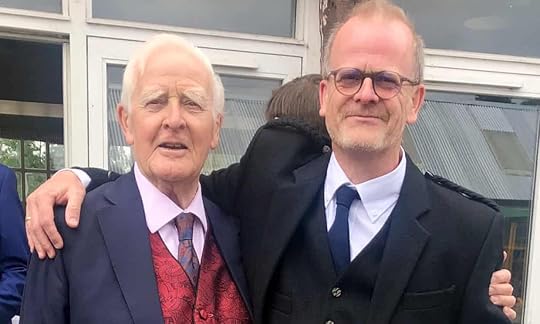
David Cornwell's letters offer the reader a view of his opinions on subjects from his love for his wife and mistresses to his total disdain of Tony Blair, Donald Trump, Brexit, and Putin (He really understood what moved each of them and distrusted Putin from the beginning in which sense he was prescient).
The letters give us a view not only of his books and movies but of his very hands-on approach to their publishing, marketing and distribution. In one letter, we learn of Cornwell's unhappiness at the cover prepared for one of his books. There are many letters regarding the completion of the movie 'Night Manager', something that never was completed (although the 'BeeB' did broadcast a series that was produced in the video) and in which Sydney Pollack who fought to produce the film ended in failure and frustration (his views adopted by le Carre', too). There is one letter where he refers rather openly to his problems with Inland Revenue over how his royalties were structured. One gets the impression he reached a resolution with the Exchequer but he doesn't say exactly what it was, although I got the impression that he paid and was displeased by the advice he received from his lawyers, accountants, agents, and publishers (can't really tell, but my nose senses this).
Le Carre' was keenly aware of the money he was making and how it was being made. He did not stand aside when it came to making money, and a lot of his earthly endeavors involved activities that were very lucrative, namely revenues from movies and TV serialization of his written product.
He never made a big deal of it, but Cornwell was a rich man.
He writes of his father, calls him a conman of the first order, and speaks of how his father essentially abandoned his family for his mistresses (David himself had a mistress or two but he was a devoted husband and father and never walked on his children, although his first marriage to Ann ended in divorce.).
His views of British and American intelligence activities were muted but not silent. He had opinions that he expressed and believed that Britain was a failed nation (not his words, but my reading). His grandmother was born in Cork and Cornwell finally applied for and received Irish citizenship based on his grandmother's Irish birthright (although there are now restrictions, Ireland permits a descendant of any person born in Ireland not more than 3 generations away from the birth to become an Irish citizen upon application) about a year or so before he died. He was very candid about it: he despised Brexit and thought Boris Johnson was an oaf. When he was notified of having received Irish citizenship, he wrote a letter to the Irish official charged with processing immigrant applications for citizenship, thanking her and her staff for the "honour" of granting him citizenship. His expression of joy was simply that: no hard feelings toward Boris or Brexit, just joy at being Irish.
Some of Cornwell's most interesting letters were directed to his collaborators and even those like Hugh Laurie who was the leading actor in the TV serialization of the Night Manager. He had a profound affection for a couple of his editors who le Carre' regarded as residing at the epicenter of his books' successes and, despite what is believed to be more than one extra-marital affair, he loved his second wife Jane almost beyond description. In his final days, they actually resided in the same Royal Cornwall Hospital, although COVID restrictions prevented them from seeing each other (He died first, and three months later, she passed away-both from cancer.)
When I state that we learn more from a person's letters than from biographies or even autobiographies, I can cite one or two of Cornwell's letters where he despairs that people misprint (unintentionally) his nom de plume, le Carre', in so many incorrect forms such as Le Carre, leCarre', le' Carre, or every variation of it. It is as though he asks 'why can't they get it right, even if they are American' acknowledging that the fictional name may not be the easiest spelling to replicate.
The book is well-edited, and we do not learn everything about the writer. But, we learn plenty about the man, who wrote with love, and courtesy (even when he was upset or distressed), saying just enough in his letters to know who he was as a person who wished well for the world and its people, and who was not hesitant about citing events and people who he believed were misdirected or evil. In one letter, which I think really offers insight into Cornwell, he writes that he has a bad habit of wanting to isolate himself from the world with his family when he's not working and really wants to act differently in that regard, but in about half of the letters, he is making excuses why he cannot meet or attend conferences or visit friends. Much like George Smiley, he will act decisively when called upon, but for all of it is quite happy left alone with his manuscripts and daydreams.
We also learn from a copy of a letter he sent to a friend named "Meire" that he was a fierce editor of his own work. The letter was not more than 150 words, but it had been worked and reworked, with entire sentences struck and rewritten. To me, this is the sign of the best of the writers among us. They welcome editing of their work and they are not afraid to deploy what we used to call the red pencil on our own writing, knowing that the more ruthless the editor, the better the final product.
There is no better letter, or for my money, no better indicator of a person's genuine interest in others than how that person addressed children. Ten-year old Nicholas Greaves wrote to Cornwell in 1988, asking him "how to be a spy". Cornwell wrote back saying (in part),
" . . . you need first to know what you think about the world, whom you would like to help, whom to frustrate. This, I am afraid, takes time. Also, you have to decide how much you are prepared to do by dishonest means [and] you are very young to decide to be dishonest. . . . But, I think and hope that if you ever find the great cause, the excitement will come naturally from the pleasure of serving it, & then you won't need to deceive anybody, you will have found what you are looking for. You will be more than a spy then. You will be a good, happy man."
Wisdom for the ages? And, this wisdom came from the man who, having given the world some of the best literature, public service, and enlightenment, acknowledged that he read very slowly because he was dyslexic. Doesn't matter. Cornwell was more than a spy. He told that we, too, can be good, happy people.