

What do you think?

Norse Mythology: The Graphic Novels #3
Norse Mythology, Vol. 3
#1 New York Times bestselling author Neil Gaiman and Eisner Award–winning comics legend P. Craig Russell breathe new life into the ancient Norse stories in this comic-book adaptation of the hit novel Norse Mythology.
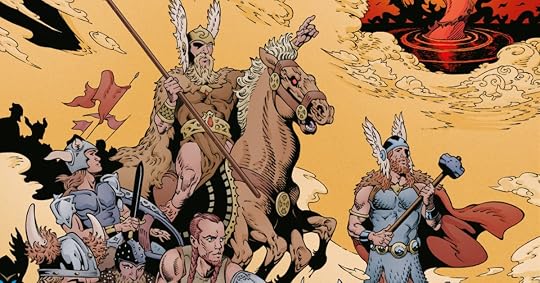
In this third volume, Gaiman and Russell once more team with a legendary collection of artists to bring more Norse myths to life, including a wild quest where Thor and Tyr face a multiheaded giantess, fire-breathing sea serpents, and more bizarre mythological creatures; the journey of Odin to the end of the world, and finally we reach the end of the world the final destiny of the gods.
Collects Norse Mythology III #1–#6, featuring art by P. Craig Russell, David Rubín, Colleen Doran, and Galen Showman.
In this third volume, Gaiman and Russell once more team with a legendary collection of artists to bring more Norse myths to life, including a wild quest where Thor and Tyr face a multiheaded giantess, fire-breathing sea serpents, and more bizarre mythological creatures; the journey of Odin to the end of the world, and finally we reach the end of the world the final destiny of the gods.
Collects Norse Mythology III #1–#6, featuring art by P. Craig Russell, David Rubín, Colleen Doran, and Galen Showman.
152 pages, Kindle Edition
First published February 28, 2023
Ratings & Reviews
Friends & Following
Create a free account to discover what your friends think of this book!
Community Reviews
Displaying 1 - 30 of 52 reviews

August 10, 2022
The epic conclusion to P. Craig Russell's adaptation of Neil Gaiman's prose adaptation of Norse Mythology!
Hymir and Thor's Fishing Expedition
The Death of Balder
The Last Days of Loki
and Ragnarok: The Final Destiny of the Gods
Russell illustrates the final chapter and it's the best thing in the series.
Great for fans of the Gaiman book that want to revisit it or just people interested in Norse Mythology. I don't think you need to have read the book (or even like the book!) to enjoy this.
Hymir and Thor's Fishing Expedition
The Death of Balder
The Last Days of Loki
and Ragnarok: The Final Destiny of the Gods
Russell illustrates the final chapter and it's the best thing in the series.
Great for fans of the Gaiman book that want to revisit it or just people interested in Norse Mythology. I don't think you need to have read the book (or even like the book!) to enjoy this.

April 12, 2023
In a surprise move, Gaiman, Russell, et al bust out the best effort in this last volume.
In my last review, of the second volume, I pointed out how silly many of the myths are. I still agree with that, but I will say I'm often shocked at how unbelievably violent and bloody they are as well. I also have to note how, in complete contrast to the Marvel version, Thor is just not the sharpest tack in the box. It's quite refreshing.
It's always a good time when P. Craig Russell offers up his own stellar linework to the proceedings as well.
And finally, this was the volume that pulled many of the threads together and wove them into the final Ragnarokian tapestry.
Well done.
In my last review, of the second volume, I pointed out how silly many of the myths are. I still agree with that, but I will say I'm often shocked at how unbelievably violent and bloody they are as well. I also have to note how, in complete contrast to the Marvel version, Thor is just not the sharpest tack in the box. It's quite refreshing.
It's always a good time when P. Craig Russell offers up his own stellar linework to the proceedings as well.
And finally, this was the volume that pulled many of the threads together and wove them into the final Ragnarokian tapestry.
Well done.

March 27, 2026
***Some material may not be appropriate for young readers or those sensitive to graphic violence***
Neil Gaiman's Norse Mythology Vol... is a collection of anthologies exploring the realm of Nordic lore in small graphic format. As a result the author is less of an author and more a compiler, which I was disappointed about.
This last volume seems to have been the shortest book of the series while covering the events that set the final stage and parties leading to Ragnarok. From there it also gives a play-by-play of that last battle and what is to follow. Some stories have more of a narrative vibe to them and others are more driven by ongoing conversations with very little action. And as a result the writing doesn't fit the style I normally relate with this author. Furthermore there are no pronunciation guides for those who may not be similar to these names.
Secondly each "episode" is illustrated by different artists and with very much different styles so some of the elements and/or characters are very different. Loki's art style was the main focal that seemed to changed with a very draq queenish appearance at the start while in later pages reverting to the more common appearance seen in earlier episodes.
The book ends with a glance into a gallery of the various covers followed by a behinds-the-desk look into the various methods of each illustrator.
All in all Volumes 3 and 1 were the best of this anthology while the one in between was rather trashy. For those wanting a shorter version of starter Nordic lore and who aren't afraid of questionable elements than this may be an okay read for them.
Neil Gaiman's Norse Mythology Vol... is a collection of anthologies exploring the realm of Nordic lore in small graphic format. As a result the author is less of an author and more a compiler, which I was disappointed about.
This last volume seems to have been the shortest book of the series while covering the events that set the final stage and parties leading to Ragnarok. From there it also gives a play-by-play of that last battle and what is to follow. Some stories have more of a narrative vibe to them and others are more driven by ongoing conversations with very little action. And as a result the writing doesn't fit the style I normally relate with this author. Furthermore there are no pronunciation guides for those who may not be similar to these names.
Secondly each "episode" is illustrated by different artists and with very much different styles so some of the elements and/or characters are very different. Loki's art style was the main focal that seemed to changed with a very draq queenish appearance at the start while in later pages reverting to the more common appearance seen in earlier episodes.
The book ends with a glance into a gallery of the various covers followed by a behinds-the-desk look into the various methods of each illustrator.
All in all Volumes 3 and 1 were the best of this anthology while the one in between was rather trashy. For those wanting a shorter version of starter Nordic lore and who aren't afraid of questionable elements than this may be an okay read for them.

January 27, 2024
4.5 Stars

December 21, 2022
4.5/5 stars
Everything ends. And everything begins again. At least, that’s how Ragnarok goes in "Norse Mythology Volume 3," the final volume in Dark Horse Comics’ adaptation of Neil Gaiman’s "Norse Mythology." While the first two volumes follow the (mostly) light-hearted, irreverent misadventures of the Norse gods, "Norse Mythology Volume 3" takes a turn toward the dark side, showcasing the end of everything and the rebirth of things anew. Adaptor P. Craig Russell once again brings Gaiman’s text to life beautifully, aided by artwork from David Rubín, Colleen Doran, and Galen Showman. And, truth be told, "Norse Mythology Volume 3" is easily the highlight of the entire series.
"Norse Mythology Volume 3" adapts the final four stories from Gaiman’s original collection. While the previous volumes primarily featured standalone stories, volume 3’s stories form a more cohesive narrative surrounding Ragnarok, the Norse apocalypse. In “Hymir and Thor’s Fishing Expedition,” Tyr and Thor try to win Hymir’s ale-brewing cauldron, encountering the Midgard serpent along the way. “The Death of Balder” explores the death of one of the most beloved gods, and the immediate aftermath. Balder’s death leads directly into “The Last Days of Loki,” a story that sees the rest of the gods finally take their revenge on Loki. And all of these stories perfectly set up the events of “Ragnarok: The Final Destiny of the Gods.” Put simply, these are my favorite stories from Gaiman’s original collection, and they’re brought to life gorgeously here.
Unlike in previous volumes, the stories in "Norse Mythology Volume 3" can’t really be judged on their own. Since each one builds off of the previous ones while setting up subsequent stories, the volume reads more like a traditional graphic novel than a collection of short stories. And honestly, that’s probably why it’s my favorite of the "Norse Mythology" series. That being said, “The Last Days of Loki” and “Ragnarok” are easily my favorite stories in this volume. I just love the way the other gods finally punish Loki for his tricks, fulfilling prophecies hinted at earlier in the volume. And then “Ragnarok” provides the perfect climax for the entire series, delivering apocalyptic bloodshed and hopeful new beginnings in equal measures. If you’re familiar with the Marvel movies, brace yourself - this ain’t the Ragnarok of the MCU, that’s for sure.
As with previous volumes, "Norse Mythology Volume 3" is a fantastic adaptation paired with some truly gorgeous artwork. Once again, Russell hews very closely to Gaiman’s original text, copying many sections verbatim while gently abridging other parts. It’s a wordy graphic novel, to be sure, but Russell leaves plenty of room for the artwork to do most of the heavy lifting. And speaking of artwork, this volume features some truly gorgeous imagery. Once again, each story features a different artist, each of whom brings their own style to the series. David Rubín illustrates “Hymir and Thor’s Fishing Expedition,” Colleen Doran illustrates “The Death of Balder,” Galen Showman illustrates “The Last Days of Loki,” and P. Craig Russell illustrates “Ragnarok”. Each artist does incredible work here, easily some of the best seen in the entire series.
While it’s hard to pick a favorite, I really loved David Rubín’s work in “Hymir and Thor’s Fishing Expedition” and Colleen Doran’s work in “The Death of Balder”. Rubín’s colors immediately evoke the ocean, and all of his art just feels otherworldly in a way that’s simply impossible to put into words. Doran brings her trademark warmth to “The Death of Balder,” and her style makes for a nice contrast to the darkness of the text. Her art adds this heartbreaking layer of humanity to what’s already a sad story, and it's simply gorgeous. Elsewhere, Galen Showman perfectly captures the melancholy of Loki’s ultimate punishment in “The Last Days of Loki” and P. Craig Russell gives “Ragnarok” the oomph it deserves, bringing the series to an explosive conclusion. On the whole, "Norse Mythology Volume 3" is an excellent adaptation that’s packed to the brim with gorgeous artwork.
Overall, "Norse Mythology Volume 3" brings Dark Horse Comics’ adaptation of Neil Gaiman’s "Norse Mythology" to an immensely satisfying conclusion. Featuring some gorgeous artwork, it’s easily the best volume of the series. It’s got the best stories, all retold with exactly the excitement, emotion, danger, and adventure they deserve. Russell does an excellent job adapting these stories as comics, marrying the poetry of Gaiman’s original text with the majesty of each artist's breathtaking illustrations. If you’ve been reading the series as it’s published, you’ll definitely want to pick this volume up. And if you’re new to the series, go back and grab the first two volumes. The entire "Norse Mythology" series is a must-read, especially given how well it ends.
Everything ends. And everything begins again. At least, that’s how Ragnarok goes in "Norse Mythology Volume 3," the final volume in Dark Horse Comics’ adaptation of Neil Gaiman’s "Norse Mythology." While the first two volumes follow the (mostly) light-hearted, irreverent misadventures of the Norse gods, "Norse Mythology Volume 3" takes a turn toward the dark side, showcasing the end of everything and the rebirth of things anew. Adaptor P. Craig Russell once again brings Gaiman’s text to life beautifully, aided by artwork from David Rubín, Colleen Doran, and Galen Showman. And, truth be told, "Norse Mythology Volume 3" is easily the highlight of the entire series.
"Norse Mythology Volume 3" adapts the final four stories from Gaiman’s original collection. While the previous volumes primarily featured standalone stories, volume 3’s stories form a more cohesive narrative surrounding Ragnarok, the Norse apocalypse. In “Hymir and Thor’s Fishing Expedition,” Tyr and Thor try to win Hymir’s ale-brewing cauldron, encountering the Midgard serpent along the way. “The Death of Balder” explores the death of one of the most beloved gods, and the immediate aftermath. Balder’s death leads directly into “The Last Days of Loki,” a story that sees the rest of the gods finally take their revenge on Loki. And all of these stories perfectly set up the events of “Ragnarok: The Final Destiny of the Gods.” Put simply, these are my favorite stories from Gaiman’s original collection, and they’re brought to life gorgeously here.
Unlike in previous volumes, the stories in "Norse Mythology Volume 3" can’t really be judged on their own. Since each one builds off of the previous ones while setting up subsequent stories, the volume reads more like a traditional graphic novel than a collection of short stories. And honestly, that’s probably why it’s my favorite of the "Norse Mythology" series. That being said, “The Last Days of Loki” and “Ragnarok” are easily my favorite stories in this volume. I just love the way the other gods finally punish Loki for his tricks, fulfilling prophecies hinted at earlier in the volume. And then “Ragnarok” provides the perfect climax for the entire series, delivering apocalyptic bloodshed and hopeful new beginnings in equal measures. If you’re familiar with the Marvel movies, brace yourself - this ain’t the Ragnarok of the MCU, that’s for sure.
As with previous volumes, "Norse Mythology Volume 3" is a fantastic adaptation paired with some truly gorgeous artwork. Once again, Russell hews very closely to Gaiman’s original text, copying many sections verbatim while gently abridging other parts. It’s a wordy graphic novel, to be sure, but Russell leaves plenty of room for the artwork to do most of the heavy lifting. And speaking of artwork, this volume features some truly gorgeous imagery. Once again, each story features a different artist, each of whom brings their own style to the series. David Rubín illustrates “Hymir and Thor’s Fishing Expedition,” Colleen Doran illustrates “The Death of Balder,” Galen Showman illustrates “The Last Days of Loki,” and P. Craig Russell illustrates “Ragnarok”. Each artist does incredible work here, easily some of the best seen in the entire series.
While it’s hard to pick a favorite, I really loved David Rubín’s work in “Hymir and Thor’s Fishing Expedition” and Colleen Doran’s work in “The Death of Balder”. Rubín’s colors immediately evoke the ocean, and all of his art just feels otherworldly in a way that’s simply impossible to put into words. Doran brings her trademark warmth to “The Death of Balder,” and her style makes for a nice contrast to the darkness of the text. Her art adds this heartbreaking layer of humanity to what’s already a sad story, and it's simply gorgeous. Elsewhere, Galen Showman perfectly captures the melancholy of Loki’s ultimate punishment in “The Last Days of Loki” and P. Craig Russell gives “Ragnarok” the oomph it deserves, bringing the series to an explosive conclusion. On the whole, "Norse Mythology Volume 3" is an excellent adaptation that’s packed to the brim with gorgeous artwork.
Overall, "Norse Mythology Volume 3" brings Dark Horse Comics’ adaptation of Neil Gaiman’s "Norse Mythology" to an immensely satisfying conclusion. Featuring some gorgeous artwork, it’s easily the best volume of the series. It’s got the best stories, all retold with exactly the excitement, emotion, danger, and adventure they deserve. Russell does an excellent job adapting these stories as comics, marrying the poetry of Gaiman’s original text with the majesty of each artist's breathtaking illustrations. If you’ve been reading the series as it’s published, you’ll definitely want to pick this volume up. And if you’re new to the series, go back and grab the first two volumes. The entire "Norse Mythology" series is a must-read, especially given how well it ends.

November 13, 2025
The Norse gods really did Loki dirty, and I can understand why he would want to bring an end to the world. This volume easily had the best story and art of the series…saved the best for last?

June 24, 2023
Az északi istenek a többiekhez hasonlóan nem jóságosak, nem kegyesek, önzőek, és ha unatkoznak nem szerencsés a közelükben lenni, éppen ezért kalandos történeteket olvashatunk róluk. Aki csak egy sztorit olvasott a mitológiákból, az tudja, hogy bővelkednek cselszövésben, öldöklésben, erőszakban, bosszúban és szerelemben. Mert mi lenne, ha jóságosak és szeretettre méltóak lennének az istenek, nem lennének érdekes történetek, esetleg unalmas leírások.
Az északi (skandináv) mitológiát Neil Gaiman ezen a címen feldolgozta egy novelláskötetben, melyet a többszörös Eisner-díjas P. Craig Russell segítségével három képregénygyűjteményben újra életre keltettek. Ez a trilógia végigvezet minket a teremtéstől a ragnarökig.
A frissen megjelent 3. kötet négy történetet tartalmaz: Hymir és Thor halászni megy; Baldur halála; Loki utolsó napjai és Ragnarök: Az istenek végzete. A kiadása gyönyörű és ismét találhatóak a végén extrák borítóvariánsokkal és karaktervázlatokkal. Eddig mindegyiket szerettem, de talán ez a kötet még inkább elnyerte a tetszésem. A rajzolás és Szinezés itt sem egységes, mert a fejezeteken más-más alkotók dolgoztak, de ezt már megszoktam a Sandman olvasásakor. Egyedül a szöveggel voltak gondjaim, néha bárgyúnak tűnt, ezt nem tudom megítélni, hogy a fordítás miatt van, vagy az eredetiben is így hangzik, azért van, mert annyira hétköznapivá akarták varázsolni a sztorit.
Érdemes elolvasni ezt a képregénysorozatot!
Ha valaki betekintést akar nyerni az északi mítoszok földjére ez sokkal nagyobb élményt ad, mint maga a novelláskötet.
Az északi (skandináv) mitológiát Neil Gaiman ezen a címen feldolgozta egy novelláskötetben, melyet a többszörös Eisner-díjas P. Craig Russell segítségével három képregénygyűjteményben újra életre keltettek. Ez a trilógia végigvezet minket a teremtéstől a ragnarökig.
A frissen megjelent 3. kötet négy történetet tartalmaz: Hymir és Thor halászni megy; Baldur halála; Loki utolsó napjai és Ragnarök: Az istenek végzete. A kiadása gyönyörű és ismét találhatóak a végén extrák borítóvariánsokkal és karaktervázlatokkal. Eddig mindegyiket szerettem, de talán ez a kötet még inkább elnyerte a tetszésem. A rajzolás és Szinezés itt sem egységes, mert a fejezeteken más-más alkotók dolgoztak, de ezt már megszoktam a Sandman olvasásakor. Egyedül a szöveggel voltak gondjaim, néha bárgyúnak tűnt, ezt nem tudom megítélni, hogy a fordítás miatt van, vagy az eredetiben is így hangzik, azért van, mert annyira hétköznapivá akarták varázsolni a sztorit.
Érdemes elolvasni ezt a képregénysorozatot!
Ha valaki betekintést akar nyerni az északi mítoszok földjére ez sokkal nagyobb élményt ad, mint maga a novelláskötet.

April 27, 2023
I'm enjoying my time diving into Norse mythology through a number of different facets - through Rick Riordan's Magnus Chase series, through Norse Mythology (graphic novels and novel), and even through Red Rising (some Norse mythology references).
In this 3rd volume, we are shown the following four different stories:
~ Hymir and Thor's Fishing Expedition
~ The Death of Balder
~ The Last Days of Loki
~ Ragnarok: The Final Destiny of the Gods
October 19, 2022
Well, this is it and what a fun ride it was! This contains the darkest tales from Norse mythology, including the Death of Baldr, Loki's Punishment and the Twilight of the Gods. Nothing is spared, yet nothing is lost, as the cycle turns once more.
As always, I must note, Gaiman shines when cooperating with amazing artists. If you have these comics, there is really no reason to read the book, especially if you know the stories.
As always, I must note, Gaiman shines when cooperating with amazing artists. If you have these comics, there is really no reason to read the book, especially if you know the stories.

June 15, 2025
Just like before, the characters stumble over themselves to do mundane task instead of simply killing each other. From this point of view, Norse myth is stupider than a children's tale. And that dry tone isn't helping anyone.

November 15, 2023
Reviewing all three volumes, not just this one.
This series was a wonderful little treat. As always with comic adaptations of prose, and certainly with P. Craig Russel's adaptations of Gaiman works, the storytelling can be a little stiff at times. But Russel has gotten much, MUCH better about this over the years, and I think this is one of his more successful efforts. The art is allowed to tell most of the story, and that aspect is what really shines here. These myths are so laden with distinct fantastical imagery and icons, and I think they were done justice. Some artists were better than others, of course, as is the nature of anthology. But none were bad.
Honestly I wish there had been more diversity of artists though. Most of them stuck pretty closely to what Russel established, but the stories by Mignola or Rubin are evidence that this was not a requirement. I feel that several more highly distinct art styles really could've elevated this project above simple adaptation.
Regardless of the art, the stories themselves are beautiful. Obviously we're dealing with mythology here, so not everything makes perfect sense. If you're looking for consistent fantasy worldbuilding, never look to real, living mythology. These stories have passed through the mouths, ears, and eyes of countless generations across the centuries, changing every time they are spoken. They reflect the stages through which they have passed. These stories contain the struggles, loves, fears, and aspirations of the people who told them, the people who still tell them, and you who read them. Do not look for simple allegory, but study the way characters look at each other. Study how they speak about the world. Study their desires and their worries. Study for long enough, and you will see people you know in this book. You will see yourself.
I am glad Neil Gaiman has found a way to embrace the absurdity of it all, and find a new way to keep these stories alive for a new generation. With the exploding popularity of Norse mythology in our television, films, and video games, it's more important than ever to remind ourselves where it all came from. This too, is another stage through which Nordic stories have passed, and future retellings will reflect it long after it has been forgotten. The cycle begins anew.
This series was a wonderful little treat. As always with comic adaptations of prose, and certainly with P. Craig Russel's adaptations of Gaiman works, the storytelling can be a little stiff at times. But Russel has gotten much, MUCH better about this over the years, and I think this is one of his more successful efforts. The art is allowed to tell most of the story, and that aspect is what really shines here. These myths are so laden with distinct fantastical imagery and icons, and I think they were done justice. Some artists were better than others, of course, as is the nature of anthology. But none were bad.
Honestly I wish there had been more diversity of artists though. Most of them stuck pretty closely to what Russel established, but the stories by Mignola or Rubin are evidence that this was not a requirement. I feel that several more highly distinct art styles really could've elevated this project above simple adaptation.
Regardless of the art, the stories themselves are beautiful. Obviously we're dealing with mythology here, so not everything makes perfect sense. If you're looking for consistent fantasy worldbuilding, never look to real, living mythology. These stories have passed through the mouths, ears, and eyes of countless generations across the centuries, changing every time they are spoken. They reflect the stages through which they have passed. These stories contain the struggles, loves, fears, and aspirations of the people who told them, the people who still tell them, and you who read them. Do not look for simple allegory, but study the way characters look at each other. Study how they speak about the world. Study their desires and their worries. Study for long enough, and you will see people you know in this book. You will see yourself.
I am glad Neil Gaiman has found a way to embrace the absurdity of it all, and find a new way to keep these stories alive for a new generation. With the exploding popularity of Norse mythology in our television, films, and video games, it's more important than ever to remind ourselves where it all came from. This too, is another stage through which Nordic stories have passed, and future retellings will reflect it long after it has been forgotten. The cycle begins anew.

November 8, 2024
Just incredibly matter-of-fact illustrations that go with the textbook narrative. Giving Loki horns on his helmet again just signifies how much the Western world really see him as a Devil analogue.
I will say it's interesting that this version had Odin's newborn son to replace Baldur kill his uncle Hod when a lot of versions have the poor blind dude beset by angry Norse deities who were having a good time until he accidentally KO'd Baldur. Not even a day old and this kid could pick up a knife & have the singular thought of AVENGE!
Also a nifty thing is that SPOILERS all the gods die except a select few with some actually getting resurrected. But bringing Baldur & Hod from the dead means a whole new body & face? Who could've seen THAT in the cards?
IF you want more entertainment tho, check out the Destripando La Historia youtube vids for Loki, Freya, and Baldur.
I will say it's interesting that this version had Odin's newborn son to replace Baldur kill his uncle Hod when a lot of versions have the poor blind dude beset by angry Norse deities who were having a good time until he accidentally KO'd Baldur. Not even a day old and this kid could pick up a knife & have the singular thought of AVENGE!
Also a nifty thing is that SPOILERS all the gods die except a select few with some actually getting resurrected. But bringing Baldur & Hod from the dead means a whole new body & face? Who could've seen THAT in the cards?
IF you want more entertainment tho, check out the Destripando La Historia youtube vids for Loki, Freya, and Baldur.

December 28, 2023
The best of the first three books in this series, in my opinion. The various stories collected in that volume culminate in a coherent narrative while being smart, engaging tales in their own right. The layouts might not exactly break the mold, and some of the illustrations are rough around the edges, but the stories themselves compelled me to read the whole book in one sitting. I might have given this book five stars was it not for the way the narration of the last story (Ragnarok) kept switching between present and future tenses. Very good book!
March 17, 2024
Volume 3 is the last part of a comic adaptation of Neil Gaiman's Norse Mythology. The highlight of this book is the end and the beginning, or more specifically Ragnarok.
I've read a lot of graphic novels and comics and this series has been OK, not amazing but OK still. Since volume 1 it felt like a slightly dummed down version of the Norse Sagas as far as the story delivery, but it was well drawn and coloured. My only gripe with the design was that some of the words were difficult to read because of the colours they stood on top of.
I enjoyed volume 3 and the rest of the books.
I've read a lot of graphic novels and comics and this series has been OK, not amazing but OK still. Since volume 1 it felt like a slightly dummed down version of the Norse Sagas as far as the story delivery, but it was well drawn and coloured. My only gripe with the design was that some of the words were difficult to read because of the colours they stood on top of.
I enjoyed volume 3 and the rest of the books.

September 3, 2024
I liked the art work in this one the best of the 3. I really enjoyed the "sketchbook" at the end and learning a bit about the processes of the artists to make this.
I haven't read Gaiman's book Norse Mythology but I wonder how much he is actually attached to this project because the Norse myths already exist and these don't seem to have much "writing" beyond breaking it down into the skeletal form.
Anyways, I enjoyed this trilogy and I didn't even know it existed until I started reading them.
I haven't read Gaiman's book Norse Mythology but I wonder how much he is actually attached to this project because the Norse myths already exist and these don't seem to have much "writing" beyond breaking it down into the skeletal form.
Anyways, I enjoyed this trilogy and I didn't even know it existed until I started reading them.

July 26, 2024
El dibujo y las portadas son geniales. La narración del guion es certera, graciosa y actual, por lo que una historia con más de mil años de antigüedad se hace ideal para todo tipo de públicos. Debido a lo que cuenta y como lo cuenta no es para pequeños pero la gente joven debería leer estas historias para conocer más sobre nuestra historia pasada y no conocer a Thor y Loki solo por las pelis de Marvel.

November 7, 2023
The final volume of the graphic novel adaptation of Gaiman’s retelling of Norse myths. These are good adaptations that capture the stories and characters well. (This volume includes Thor fishing to gain Hymir’s cauldron, the Death of Balder, the last betrayals and punishment of Loki, and the story of Ragnarok and what comes after.)

September 9, 2024
The art in the previous installment was better, but otherwise this comic is excellent.
Then again, how could you go wrong retelling Ragnarok? Massive armies of warriors, gods, fire giants and the undead all fighting it out at the end of the world. Damn, how did Norse mythology get so epic? No wonder metal bands love referencing it.
Then again, how could you go wrong retelling Ragnarok? Massive armies of warriors, gods, fire giants and the undead all fighting it out at the end of the world. Damn, how did Norse mythology get so epic? No wonder metal bands love referencing it.

September 18, 2023
I liked this third volume out of all. I think the shorter story for Ragnarok is great but I do usually still prefer these stories not in graphic novels. Good introduction to some maybe but I like the full story.

September 28, 2024
Nem volt rossz a képregény változat, de érdekes módon bennem a vicces sztorik maradtak meg, nem emlékeztem arra, hogy ennyire lehangolóan, kegyetlenül emberi szélhámosok, gyilkosok tudnak lenni az északi istenek.

January 27, 2025
My favourite of the three volumes.
All four issues are connected and lead up to the final culmination of Ragnarok. I feel like there are universal and prophetic truths contained in these stories through metaphor and symbolism.
The art is also beautiful and never left me dissatisfied.
All four issues are connected and lead up to the final culmination of Ragnarok. I feel like there are universal and prophetic truths contained in these stories through metaphor and symbolism.
The art is also beautiful and never left me dissatisfied.

April 11, 2023
Dude. So dang cool. 😄

November 29, 2023
Read the first two stories. I like the concept here, but I don't think id re-read it.
Great comics for people, young people, who haven't had much exposure to comics. A great place to start.
Great comics for people, young people, who haven't had much exposure to comics. A great place to start.

January 15, 2024
Good retellings of some classic myths with a great mix of artists. This is a really fun way to read these stories.

February 11, 2024
Hard to read the ragnarok bit without thinking of how close it really is…

February 22, 2024
So good! Hope it keeps going!

March 30, 2024
The story of Ragnarok and the end of the Norse gods.

November 22, 2024
Ragnarok ilustrado por Craig Russell, de por si es un 5

February 17, 2025
Review is for all three volumes read consecutively.
A masterpiece of storytelling and art, taking both familiar and unfamiliar tales and couching them in an accessible form for a new generation.
A masterpiece of storytelling and art, taking both familiar and unfamiliar tales and couching them in an accessible form for a new generation.
Displaying 1 - 30 of 52 reviews