

What do you think?

El Viaje Del Profesor Caritat O Las Desventuras De La Razón: Una Comedia Filosófica
El profesor Nicholas Caritat , especializado en la Ilustración, cree, por su propia condición, no tener función alguna en Militaria , estado autocrático en el que vive. Pero, tras alguna peripecia, se le encomienda una curiosa misión : encontrar el mejor de los mundos posibles. Emprende, pues, un viaje por distintas comunidades en las que sus ideas de Razón, libertad y tolerancia entran en conflicto con las de nuestro fin de siglo. Mientras visita Utilitaria , Comunitaria y Libertas , a Caritat se le van planteando cuestiones que él ya creía resueltas : ¿en qué consisten los derechos del individuo cuando, en el país de los seguidores de Bentham regido por el Ordenador, este concepto ha sido abolido ? ¿Cuál es el papel de la libertad de expresión en una sociedad multicultural políticamente correcta que no admite la crítica ni el debate ? ¿Cuál es el valor de la Historia allí donde se ha instalado el olvido ? ¿Qué hacer con los desposeídos en un comunidad donde impera el liberalismo económico radical ?
288 pages, Mass Market Paperback
First published January 1, 1995
About the author
Steven Lukes
41 books45 followersSteven Michael Lukes is a political and social theorist. Currently he is a professor of politics and sociology at New York University. He was formerly a professor at the University of Siena, the European University Institute (Florence) and the London School of Economics.
Ratings & Reviews
Friends & Following
Create a free account to discover what your friends think of this book!
Community Reviews
Displaying 1 - 30 of 56 reviews

May 26, 2019
داستان روان و جالبی داشت برای درک مکتب های سیاسی
پروفسور کاریتا که یک استاد فلسفه در یک شهر نظامی هست به این فکر میوفته که اگر قراره جنینی باهوش به دنیا بیاید بهترین جامعه برای دنیا آمدنش کجاست پس به را میوفته تا این جامعه آرمانیرو پیدا کنه:
نظام آباد
شهری که پروفسور متولد اونجاست ولی به شدت ازادی بیان سرکوب میشه و به صورت دیکتاتوری اداره میشه
فایده آباد
فقط فکر رفاه و شادکامی را به مردمانش بود و حاضر بودند اخلاق و انسانیت را زیر پا بگذارند تا به این رفاه برسند( که البته فقط قسمتی از جامعه به این آرمان رسیده بودند)
جماعت آباد
حکومت دینی که انسان هارا با رویای دین به بردگی گرفته بودند
آزاد آباد
مردمانی با آزادی بی حد ، آنها آزاد بودند انتخاب کنند در جامعه ای به شدت خصوصی سازی شده که که حتی پلیس ها هم آزاد به انجام هر عملی بودند و مردم آزاد اند جنگل هارا از بین ببرند
در اخر پروفسور ره رو مسیری میشود که در شمال آزادآباد قرار دارند که مردمان بر روی درخت ها زندگی میکنند و میخواهند جنگل را حفظ کنند و از نظر آن این جامعه که برای رسیدن به آرمامهایش روی دیگر آرمان ها پا نمیگذارد قابل ستایش است
و در آخر پروفسور اهداف جامعه ای که بتواند آینده جنین را تامین و تضمیم کند نام میبرد:
۱-باید نوعی ساختار و قالب اجتماعی برای نظم و آرامش مدنی داشته باشد
۲-باید حداکثر یک نظام منصفانه پاداش و دستمزد که حتی المقدور بیشترین رفاه را برای کم درآمدترین اقشار تضمین کند
۳-باید یک زمینه اجتماعی غنی و متنوع از کارها و سنت های مختلفی که هریک به خاطر خودش ارزشمند محسوب شود وجود داشته باشد
پروفسور کاریتا که یک استاد فلسفه در یک شهر نظامی هست به این فکر میوفته که اگر قراره جنینی باهوش به دنیا بیاید بهترین جامعه برای دنیا آمدنش کجاست پس به را میوفته تا این جامعه آرمانیرو پیدا کنه:
نظام آباد
شهری که پروفسور متولد اونجاست ولی به شدت ازادی بیان سرکوب میشه و به صورت دیکتاتوری اداره میشه
فایده آباد
فقط فکر رفاه و شادکامی را به مردمانش بود و حاضر بودند اخلاق و انسانیت را زیر پا بگذارند تا به این رفاه برسند( که البته فقط قسمتی از جامعه به این آرمان رسیده بودند)
جماعت آباد
حکومت دینی که انسان هارا با رویای دین به بردگی گرفته بودند
آزاد آباد
مردمانی با آزادی بی حد ، آنها آزاد بودند انتخاب کنند در جامعه ای به شدت خصوصی سازی شده که که حتی پلیس ها هم آزاد به انجام هر عملی بودند و مردم آزاد اند جنگل هارا از بین ببرند
در اخر پروفسور ره رو مسیری میشود که در شمال آزادآباد قرار دارند که مردمان بر روی درخت ها زندگی میکنند و میخواهند جنگل را حفظ کنند و از نظر آن این جامعه که برای رسیدن به آرمامهایش روی دیگر آرمان ها پا نمیگذارد قابل ستایش است
و در آخر پروفسور اهداف جامعه ای که بتواند آینده جنین را تامین و تضمیم کند نام میبرد:
۱-باید نوعی ساختار و قالب اجتماعی برای نظم و آرامش مدنی داشته باشد
۲-باید حداکثر یک نظام منصفانه پاداش و دستمزد که حتی المقدور بیشترین رفاه را برای کم درآمدترین اقشار تضمین کند
۳-باید یک زمینه اجتماعی غنی و متنوع از کارها و سنت های مختلفی که هریک به خاطر خودش ارزشمند محسوب شود وجود داشته باشد

March 24, 2019
What a horrific shame. This book should be everything I wanted and more. As a philosophy fanatic, a novel which is literally constructed out of philosophy to formulate a political allegory is my idea of heaven. But after 100 pages in, I surrendered. What a shame. Why? I’m afraid it as far too on the nose for my liking: the story was painfully shoehorned into philosophical concepts to a point it felt so laboured my head started to throb with boredom.
I prefer novels that show don’t tell. I was open to the blatant use of overt philosophical concepts as a humorous gag, such as the names of the cities, countries and gangs. It had the potential to be a Terry Pratchett-esque tongue in cheek play on familiar principles (which are, in turn, manipulated and toyed with for entertainment).
But as the novel progressed, my hopes were dashed. It felt as though these obvious names were not used as a playful wit, but more to hammer home and spoon feed the reader to digest the principles. It resulted in the over stressing and emphasising of points which killed any sense of logical and imaginative freedom for the reader. There was no room for interpretation, there was no room for the reader to work it out for them self - the challenge of unpicking imagery and allegory was stripped away from me because I was told absolutely everything to the point of boredom and exhaustion. I have no time for over laboured narrative, so I passed the book over in favour of literature more cleverly and literally written. It’s a shame, because the concept was wonderful, but there’s no pleasure in being told a story as if the narrator is holding your hand and doesn’t trust you to not pick up on every single clever detail they’re shoe horning in, because heaven forbid we overlook any spec of knowledge. I’ll stick to the philosophical literature of Italo Calvino and Herman Broch in future.
I prefer novels that show don’t tell. I was open to the blatant use of overt philosophical concepts as a humorous gag, such as the names of the cities, countries and gangs. It had the potential to be a Terry Pratchett-esque tongue in cheek play on familiar principles (which are, in turn, manipulated and toyed with for entertainment).
But as the novel progressed, my hopes were dashed. It felt as though these obvious names were not used as a playful wit, but more to hammer home and spoon feed the reader to digest the principles. It resulted in the over stressing and emphasising of points which killed any sense of logical and imaginative freedom for the reader. There was no room for interpretation, there was no room for the reader to work it out for them self - the challenge of unpicking imagery and allegory was stripped away from me because I was told absolutely everything to the point of boredom and exhaustion. I have no time for over laboured narrative, so I passed the book over in favour of literature more cleverly and literally written. It’s a shame, because the concept was wonderful, but there’s no pleasure in being told a story as if the narrator is holding your hand and doesn’t trust you to not pick up on every single clever detail they’re shoe horning in, because heaven forbid we overlook any spec of knowledge. I’ll stick to the philosophical literature of Italo Calvino and Herman Broch in future.

August 12, 2019
Entertaining and instructive!
A professor who studies The Enlightenment finds himself out of favor in his home country of Militaria and goes on a journey to find which country would be best to live or be born in. Each is built upon a different moral principle. The principles sound good at first, but when put into practice they can have surprisingly bad results. (Note that I say 'can'. The author isn't saying this is the only way a society could implement a certain rule. Just that it 'could' turn out this way.)
Utilitaria is based on the idea of the greatest good for the greatest number. Sounds OK, but can lead to very unpleasant outcomes for some. If 'greatest number' is all that matters, then isn't it better to keep innocent people in prison than to destroy the whole country's faith in police and courts by revealing their corruption? The next country is based on Communitarianism which requires maximum respect for all ethnicities and faiths. This turns ugly for individuals who want to reject some of their ethnic customs or find a new faith, as well as those who accidentally give offense. Finally, Libertaria is based on maximum individual freedom. Everyone is free to try to survive based on their own merit, where merit is measured by money. (This one feels very close to home.)
He also briefly visits one society, Proletaria, that really does function perfectly for all of its citizens based on Marxist/Communist ideas. But it turns out to have only been a dream! (As in real life.)
He never finds the perfect society. The closest that he comes to a conclusion is that no society should be based on one single rigid principle, but rather some balancing between competing interests.
The author is a moral philosopher, and we all know how popular they are at parties!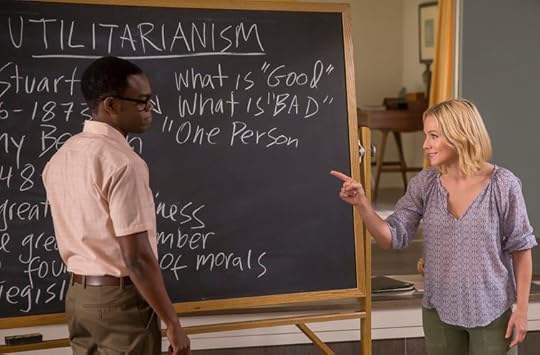
I, at least, enjoyed this! I should award extra points for an entire book about moral philosophy that never once mentions that Forking Trolley problem!
Quibbles: I'm not sure what exactly was extra in the new "expanded" edition. I hope that doesn't refer only to the glitch where, starting on page 205, about 5 pages of text is repeated verbatim. That was an odd flaw, but doesn't change the fact that I enjoyed this very much. Another oddity is the quotation marks, which are sometimes like ‘this’ and sometimes like “this”, but also very often, like ‘THIS‘. It distracted me every time I saw it. Is using an open-quote mark at the end of a quote some common British thing? It was so systematically used for titles of books and businesses that it seems intentional.
A professor who studies The Enlightenment finds himself out of favor in his home country of Militaria and goes on a journey to find which country would be best to live or be born in. Each is built upon a different moral principle. The principles sound good at first, but when put into practice they can have surprisingly bad results. (Note that I say 'can'. The author isn't saying this is the only way a society could implement a certain rule. Just that it 'could' turn out this way.)
Utilitaria is based on the idea of the greatest good for the greatest number. Sounds OK, but can lead to very unpleasant outcomes for some. If 'greatest number' is all that matters, then isn't it better to keep innocent people in prison than to destroy the whole country's faith in police and courts by revealing their corruption? The next country is based on Communitarianism which requires maximum respect for all ethnicities and faiths. This turns ugly for individuals who want to reject some of their ethnic customs or find a new faith, as well as those who accidentally give offense. Finally, Libertaria is based on maximum individual freedom. Everyone is free to try to survive based on their own merit, where merit is measured by money. (This one feels very close to home.)
He also briefly visits one society, Proletaria, that really does function perfectly for all of its citizens based on Marxist/Communist ideas. But it turns out to have only been a dream! (As in real life.)
He never finds the perfect society. The closest that he comes to a conclusion is that no society should be based on one single rigid principle, but rather some balancing between competing interests.
The author is a moral philosopher, and we all know how popular they are at parties!
I, at least, enjoyed this! I should award extra points for an entire book about moral philosophy that never once mentions that Forking Trolley problem!
Quibbles: I'm not sure what exactly was extra in the new "expanded" edition. I hope that doesn't refer only to the glitch where, starting on page 205, about 5 pages of text is repeated verbatim. That was an odd flaw, but doesn't change the fact that I enjoyed this very much. Another oddity is the quotation marks, which are sometimes like ‘this’ and sometimes like “this”, but also very often, like ‘THIS‘. It distracted me every time I saw it. Is using an open-quote mark at the end of a quote some common British thing? It was so systematically used for titles of books and businesses that it seems intentional.

September 22, 2019
خوببودنش در حدی که واقعاً خوب بود قابل انتظار نبود! فراتر از حد پیشبینیِ خودم خوب بود.
کتاب با فضایی شروع شد که من رو یاد کتاب ۱۹۸۴ انداخت. حکومت استبدادی و دیکتاتوری که جلوی بارقههای امید و خوشبینی نسبت به آینده رو میگیره و حتی به مقابله و سرکوب افرادی که چنین کارهایی میکنن میپردازه که از قضا پرفسور کاریتا شخصیت اصلی داستان یکی از همین اشخاصه که نسبت به آینده امیدوار و چنین تفکری رو تبلیغ و تایید میکنه که باعث دستگیری و زندانیشدنش میشه. داستان جایی شروع میشه که پرفسور کاریتا مامور به انجام ماموریتی میشه که در اون باید بهترین جا برای زندگی و یا بهترین جا برای به دنیا آمدن جنینی تازه بوجود آمده رو پیدا کنه. یک آرمانشهر که کاریتا در سفر و ماجراجوییش باید اون رو پیدا کنه و مکانش رو به افرادی اعلام کنه. که در این ماجراجویی به حکومتها و حزبهایی برمیخوره که آیینهی تمامنمای بشریت امروزهست. سیاستهای مکارانه و کثیفی که به ظاهر خوب به نظر میان، ولی وقتی در بطنشون فرو میری متوجه عمق فاجعه میشی.
کتاب با فضایی شروع شد که من رو یاد کتاب ۱۹۸۴ انداخت. حکومت استبدادی و دیکتاتوری که جلوی بارقههای امید و خوشبینی نسبت به آینده رو میگیره و حتی به مقابله و سرکوب افرادی که چنین کارهایی میکنن میپردازه که از قضا پرفسور کاریتا شخصیت اصلی داستان یکی از همین اشخاصه که نسبت به آینده امیدوار و چنین تفکری رو تبلیغ و تایید میکنه که باعث دستگیری و زندانیشدنش میشه. داستان جایی شروع میشه که پرفسور کاریتا مامور به انجام ماموریتی میشه که در اون باید بهترین جا برای زندگی و یا بهترین جا برای به دنیا آمدن جنینی تازه بوجود آمده رو پیدا کنه. یک آرمانشهر که کاریتا در سفر و ماجراجوییش باید اون رو پیدا کنه و مکانش رو به افرادی اعلام کنه. که در این ماجراجویی به حکومتها و حزبهایی برمیخوره که آیینهی تمامنمای بشریت امروزهست. سیاستهای مکارانه و کثیفی که به ظاهر خوب به نظر میان، ولی وقتی در بطنشون فرو میری متوجه عمق فاجعه میشی.

March 26, 2016
Benim için de harika bir aydınlanmaydı. Üniversite sıralarında öğrenmekte olduklarımı teker teker alıp yerlerine yerleştiren bir kitaptı. Çokça elden ele gezmesine vesile olduğum, bana da pek güzel bir el ile gelen .. a, 'El' demişken, kitabın ilk sayfalarında tanışacağınız 'örgüt'e de merhaba deyin.
Ben de bir kere daha okuyayım keyifle.
Ben de bir kere daha okuyayım keyifle.

August 3, 2025
پایان خوانش: 1404.05.11
کارل پوپر در کتاب «میدانم که هیچ نمیدانم» مینویسد:
«در میان همهی آرمانهای سیاسی، آنکه ادعای خوشبختکردن جامعهی بشری را دارد از همه خطرناکتر است. تلاش برای برپایی بهشت بر روی زمین همیشه به جهنم راه بردهاست. کسانی که میپندارند قادر اند بشریت را سعادتمند کنند، انسانهای خطرناکی هستند. اساسا رویای ساختن بهشت بر روی زمین رویای خطرناکی است. چرا که پس از مدتی باور میکنند که حق دارند تعداد بیشماری انسان شرور را از میان بردارند تا دیگران را به اصطلاح سعادتمند کنند.»
داستان این است که پروفسور کاریتا که استاد فلسفهی دوران روشنگری ست به دلیل امیدوار بودن به آینده در بند حکومت کشورش نظامآباد گرفتار شدهاست. نظامآباد کشور نظم بیمارگونه و استبداد امیدگریز است.
رویدادهایی رخ میدهد که پروفسور با هدف جستوجوی شهر آرمانی خودش به سفری پژوهشی میرود. به کشورهایی میرود که در هر کدام تنها یک ویژگی آرمانشهری مهم است و دیگر مسائل اهمیتی ندارند. در نظامآباد حکومت دیکتاتوری ارتشی ست. در آزادآباد مهمترین ویژگی آزادی بیمارگونه است. در جماعتآباد دین و قوم گروهها مهم است و در فایدهآباد، بیشترین سود مهمترین ویژگی ست. آدمها همگی یک ماشینحساب در جیب دارند تا همهی تصمیمهای زندگیشان را با آن بگیرند.
در پایان باید بدانیم که هر کدام از ویژگیهای مهم این شهرها به تنهایی با شکستی بزرگ روبهرو هستند. بیگمان همهی دولتملتها نیازمند ارتش، آزادی، عدالت، اقتصاد، سنت، معنویت و خیلی ویژگیهای دیگر هستند ولی هر کدام با نسبتی منطقی که به ضد خودشان تبدیل نشوند.
کارل پوپر در کتاب «میدانم که هیچ نمیدانم» مینویسد:
«در میان همهی آرمانهای سیاسی، آنکه ادعای خوشبختکردن جامعهی بشری را دارد از همه خطرناکتر است. تلاش برای برپایی بهشت بر روی زمین همیشه به جهنم راه بردهاست. کسانی که میپندارند قادر اند بشریت را سعادتمند کنند، انسانهای خطرناکی هستند. اساسا رویای ساختن بهشت بر روی زمین رویای خطرناکی است. چرا که پس از مدتی باور میکنند که حق دارند تعداد بیشماری انسان شرور را از میان بردارند تا دیگران را به اصطلاح سعادتمند کنند.»
داستان این است که پروفسور کاریتا که استاد فلسفهی دوران روشنگری ست به دلیل امیدوار بودن به آینده در بند حکومت کشورش نظامآباد گرفتار شدهاست. نظامآباد کشور نظم بیمارگونه و استبداد امیدگریز است.
رویدادهایی رخ میدهد که پروفسور با هدف جستوجوی شهر آرمانی خودش به سفری پژوهشی میرود. به کشورهایی میرود که در هر کدام تنها یک ویژگی آرمانشهری مهم است و دیگر مسائل اهمیتی ندارند. در نظامآباد حکومت دیکتاتوری ارتشی ست. در آزادآباد مهمترین ویژگی آزادی بیمارگونه است. در جماعتآباد دین و قوم گروهها مهم است و در فایدهآباد، بیشترین سود مهمترین ویژگی ست. آدمها همگی یک ماشینحساب در جیب دارند تا همهی تصمیمهای زندگیشان را با آن بگیرند.
در پایان باید بدانیم که هر کدام از ویژگیهای مهم این شهرها به تنهایی با شکستی بزرگ روبهرو هستند. بیگمان همهی دولتملتها نیازمند ارتش، آزادی، عدالت، اقتصاد، سنت، معنویت و خیلی ویژگیهای دیگر هستند ولی هر کدام با نسبتی منطقی که به ضد خودشان تبدیل نشوند.

December 26, 2019
It is an interesting book which based on the criticism of enlightenment that promises a more egalitarian, libertarian and wealthier society. The hero of the fiction is in search of the best possible world. Therefore, he takes a trip to Militaria where war of all is against all prevails.
Then, Prof. Caritat visits Communiteria where there is no friendly realtionships between religious and ethnic communities. Also, each community deals just with their own problems not the others'.
In Egaliteria, social and economic problems have been solved. People are happy. The alienation that caused by division of labour have been put an end.
People have time to get interested in literature, arts and philosophy etc... They can come true their their dreams.
After that, prof. Caritat goes Liberteria where the measure of all things is just money. Everything has been reduced to exchange value. There is no society, only individuals. There is no job guarantee, healthcare, free education or free social care. Nothing is free and there is no security.
Briefly, theory and utopia is one thing and real life is another thing.
Then, Prof. Caritat visits Communiteria where there is no friendly realtionships between religious and ethnic communities. Also, each community deals just with their own problems not the others'.
In Egaliteria, social and economic problems have been solved. People are happy. The alienation that caused by division of labour have been put an end.
People have time to get interested in literature, arts and philosophy etc... They can come true their their dreams.
After that, prof. Caritat goes Liberteria where the measure of all things is just money. Everything has been reduced to exchange value. There is no society, only individuals. There is no job guarantee, healthcare, free education or free social care. Nothing is free and there is no security.
Briefly, theory and utopia is one thing and real life is another thing.

May 18, 2019
در این کتاب برخی از مکاتب فلسفی سیاسی غرب در قالب یک روایت داستانی جذاب به بوته نقد سپرده شده اند.
ترجمه جناب مانی صالحی بسیار روان، شیوا و خلاقانه است.
نظامی گری۱، فایده گرایی۲، جماعت گرایی۳، آزادی خواهی۴ انواع مکاتبی هستند که به روایت نویسنده هر کدام در یک کشور استقرار یافته اند. و در خلال سفر پروفسور کاریتا ابعاد مختلف این استقرار به خواننده نمایانده می شود و کار تا آنجا پیش می رود که صورت تحقق یافته هر مکتب سیاسی در تعارض با نظریه های انتزاعی آن قرار می گیرد.
در نهایت نویسنده ناامید از یافتن بهترین جهان ممکن از بین این کشورها خواننده را به سمت جایی به نام مساوات آباد رهنمون می شود که هر چند هرگز هیچ کس آن را تا کنون ندیده و از سفر به آنجا باز نگشته است اما شنیده ها حاکیست که کشور آرمانی همانجاست. جایی که انسان و طبیعت -درخت، حیوان- در کنار هم خالق آن کشورند، جایی که تمام شئون فرهنگی، اجتماعی، سیاسی، اقتصادی صرفا بر اساس یک گزینش محدود از یک فلسفه سیاسی نیست بلکه همه ابعاد به مساوات در آن وجود یافته اند.
1 Militarism
2 Utilitarianism
3 Communitarianism
4 Liberalism
ترجمه جناب مانی صالحی بسیار روان، شیوا و خلاقانه است.
نظامی گری۱، فایده گرایی۲، جماعت گرایی۳، آزادی خواهی۴ انواع مکاتبی هستند که به روایت نویسنده هر کدام در یک کشور استقرار یافته اند. و در خلال سفر پروفسور کاریتا ابعاد مختلف این استقرار به خواننده نمایانده می شود و کار تا آنجا پیش می رود که صورت تحقق یافته هر مکتب سیاسی در تعارض با نظریه های انتزاعی آن قرار می گیرد.
در نهایت نویسنده ناامید از یافتن بهترین جهان ممکن از بین این کشورها خواننده را به سمت جایی به نام مساوات آباد رهنمون می شود که هر چند هرگز هیچ کس آن را تا کنون ندیده و از سفر به آنجا باز نگشته است اما شنیده ها حاکیست که کشور آرمانی همانجاست. جایی که انسان و طبیعت -درخت، حیوان- در کنار هم خالق آن کشورند، جایی که تمام شئون فرهنگی، اجتماعی، سیاسی، اقتصادی صرفا بر اساس یک گزینش محدود از یک فلسفه سیاسی نیست بلکه همه ابعاد به مساوات در آن وجود یافته اند.
1 Militarism
2 Utilitarianism
3 Communitarianism
4 Liberalism

April 22, 2017
El profesor Caritat, filósofo especializado en la Ilustración, huye de la persecución a la que se ve sometido en su país, y se embarca en una misión clandestina en la que bajo el nombre de Pangloss tratará de descubrir el mejor de los mundos posibles.
Lukes, empleando los recursos narrativos del siglo XVIII, y tomando como referentes a Swift y Voltaire, construye una sátira (el mismo texto contiene un definición de sátira que da consistencia a la novela) en las que aspectos de nuestra sociedad se ven reflejadas en un espejo distorsionador que nos deben hacer pensar en ciertos "valores" que tenemos socialmente asumidos y al que les damos una validez que se nos cuestiona en el texto.
¿Existe el mejor de los mundo posibles? Lukes lleva a Pangloss-Caritat hasta las puertas del mejor de los mundos posibles, quizás lo haga dos veces, pero en la primera se muestra cruel, arrojando un cubo de agua helada tanto a su protagonista como al lector.
El mejor de los mundos posibles es un sueño que no alcanzaremos, pero, como el profesor Caritat, debemos seguir en su búsqueda... o quizás todo sea en vano. Porque aunque el camino siga abierto a nuevas expectativas las experiencias narradas en la novela (y las de nuestra cotidianiedad) nos hace ser muy, muy pesimistas.
Lukes, empleando los recursos narrativos del siglo XVIII, y tomando como referentes a Swift y Voltaire, construye una sátira (el mismo texto contiene un definición de sátira que da consistencia a la novela) en las que aspectos de nuestra sociedad se ven reflejadas en un espejo distorsionador que nos deben hacer pensar en ciertos "valores" que tenemos socialmente asumidos y al que les damos una validez que se nos cuestiona en el texto.
¿Existe el mejor de los mundo posibles? Lukes lleva a Pangloss-Caritat hasta las puertas del mejor de los mundos posibles, quizás lo haga dos veces, pero en la primera se muestra cruel, arrojando un cubo de agua helada tanto a su protagonista como al lector.
El mejor de los mundos posibles es un sueño que no alcanzaremos, pero, como el profesor Caritat, debemos seguir en su búsqueda... o quizás todo sea en vano. Porque aunque el camino siga abierto a nuevas expectativas las experiencias narradas en la novela (y las de nuestra cotidianiedad) nos hace ser muy, muy pesimistas.

January 31, 2025
Una aventura que engancha y hace reflexionar a cerca de la dirección política de distintos estados utópicos donde se enfatizan en potenciar algunos rasgos como la libertad económica o la multiculturalidad. Me ha recordado un poco a “un mundo feliz”.
Realmente lo recomiendo como lectura conjunta para poder debatir y reflexionar sobre las distintas sociedades que plantea el autor.
Realmente lo recomiendo como lectura conjunta para poder debatir y reflexionar sobre las distintas sociedades que plantea el autor.

December 31, 2024
Love! Such a unique story with characters that absurd and interesting. So much can be learned from this novel and it’s a great way to explore political ideals.

July 26, 2010
Lukes manages to write a novel based on the major theories of contemporary political philosophy. The book follows the Gulliver-esque travels of a political science professor on a mission to find the perfect society. In his quest, he visits several imaginary countries, each one based on a different political theory—utilitarianism, communitarianism, libertarianism, etc. His misadventures illustrate the various pros and cons of each respective theory.
When I first discovered this book, it struck me as one of the most brilliant ideas ever conceived. Assuming that this was my kind of novel, and hoping that I might one day assign this book to my students if I ever taught a course on political philosophy, I eager read it as soon as I could my hands on a copy. But, reading the book, it soon became obvious how difficult the idea is to execute. If the author tries to be too faithful to the theory, then the book is tedious and the plot comes across as contrived. On the other hand, if the author wants to create an engaging story with rich characters, then liberties must be taken with the theory. Lukes does an excellent job of plotting a course between the two extremes. Unfortunately, the result is not necessarily the best of both worlds.
One particular problem with this project is that many political theories are too general or abstract to generate one particular kind of society with one specific sort of legal and political structure. The exception might be libertarianism, which does seem to yield rather narrow results in practice. (Most libertarian societies will look more or less the same.) And for this reason, the professor’s visit to “Libertaria” is probably the most successful part of the book. Communitarian political theory, by contrast, claims that the values of the community and the importance of interpersonal relations should take priority over individual rights and free choice. But different communities have different values. Thus actual communitarian societies in practice could vary from radical right-wing Islamist societies to hippy free-love communes depending on the shared values and beliefs of the members of the particular community. Too avoid this, Lukes depicts a pluralistic society made of multiple communities. But what results looks more like multiculturalism than communitarianism.
Utilitarianism is even more problematic. According to this approach to political theory, we should adopt whatever legal and political system (and whatever specific laws and public policies) would maximize aggregate happiness (in the long run). But which laws, policies, and institutional structures would best promote the overall happiness of the members of society is a matter of debate and might differ greatly among different places, peoples, and times. What Lukes actually depicts is not a utilitarian society but a society of utilitarians—which is not the same thing.
Though Lukes’s book is entertaining and will amuse anyone interested in political theory, it does not compare well with Aldous Huxley’s Brave New World (1931)—the gold standard for the genre—which depicts a very specific vision for society: a hedonistic utilitarian utopia (of the “push-pin-is-as-good-as-poetry” form of hedonism). Besides being more insightful and more entertaining, BNW also makes a stronger case both for and against hedonistic utilitarian society than Lukes manages to make for/against any of the theories treated in his novel. Lukes’s Curious Enlightenment does, however, have the significant advantage of examining several popular political theories (not just one). This makes the idea behind his novel more interesting but harder to pull off successfully.
When I first discovered this book, it struck me as one of the most brilliant ideas ever conceived. Assuming that this was my kind of novel, and hoping that I might one day assign this book to my students if I ever taught a course on political philosophy, I eager read it as soon as I could my hands on a copy. But, reading the book, it soon became obvious how difficult the idea is to execute. If the author tries to be too faithful to the theory, then the book is tedious and the plot comes across as contrived. On the other hand, if the author wants to create an engaging story with rich characters, then liberties must be taken with the theory. Lukes does an excellent job of plotting a course between the two extremes. Unfortunately, the result is not necessarily the best of both worlds.
One particular problem with this project is that many political theories are too general or abstract to generate one particular kind of society with one specific sort of legal and political structure. The exception might be libertarianism, which does seem to yield rather narrow results in practice. (Most libertarian societies will look more or less the same.) And for this reason, the professor’s visit to “Libertaria” is probably the most successful part of the book. Communitarian political theory, by contrast, claims that the values of the community and the importance of interpersonal relations should take priority over individual rights and free choice. But different communities have different values. Thus actual communitarian societies in practice could vary from radical right-wing Islamist societies to hippy free-love communes depending on the shared values and beliefs of the members of the particular community. Too avoid this, Lukes depicts a pluralistic society made of multiple communities. But what results looks more like multiculturalism than communitarianism.
Utilitarianism is even more problematic. According to this approach to political theory, we should adopt whatever legal and political system (and whatever specific laws and public policies) would maximize aggregate happiness (in the long run). But which laws, policies, and institutional structures would best promote the overall happiness of the members of society is a matter of debate and might differ greatly among different places, peoples, and times. What Lukes actually depicts is not a utilitarian society but a society of utilitarians—which is not the same thing.
Though Lukes’s book is entertaining and will amuse anyone interested in political theory, it does not compare well with Aldous Huxley’s Brave New World (1931)—the gold standard for the genre—which depicts a very specific vision for society: a hedonistic utilitarian utopia (of the “push-pin-is-as-good-as-poetry” form of hedonism). Besides being more insightful and more entertaining, BNW also makes a stronger case both for and against hedonistic utilitarian society than Lukes manages to make for/against any of the theories treated in his novel. Lukes’s Curious Enlightenment does, however, have the significant advantage of examining several popular political theories (not just one). This makes the idea behind his novel more interesting but harder to pull off successfully.
August 8, 2019
یادداشتی بر کتاب روشنگری شگفتانگیز پروفسور کاریتا
روشنگری شگفتانگیز پروفسور کاریتا، رمانی درباب مکاتب سیاسی
این یادداشت ممکن است باعث فاش شدن بخشهایی از داستان شود!
خبر گزاری ایبنا
تاریخ انتشار : پنجشنبه ۱۷ مرداد ۱۳۹۸ ساعت ۱۵:۳۳
رمان روشنگری شگفتانگیز پروفسور کاریتا داستان پروفسوری است که به دنبال اتوپیایی برای زندگی است در این یادداشت به این کتاب پرداخته شده است
خبرگزاری کتاب ایران(ایبنا)-الهه هدایتی: استیون لوکس، نظریهپرداز و نویسنده شهیر آمریکایی، در این رمان که درباره مکاتب سیاسی –نه تاریخ مکاتب سیاسی- است، به سبکی زیبا و روان، با طنزی شیرین، داستان پروفسوری را نقل میکند که در سفر تحقیقاتیاش به نظامهای مختلف، بهدنبال اتوپیایی بینقص برای زندگی است.
استیون لوکس در این رمان تلاش کرده در بستر داستانی خیلی جذاب و روان مکاتب سیاسی را برای عامه مردم، نشاندهد و تاحد زیادی موفق بوده. قصد نویسنده این نبوده که علمی و دقیق تاریخ مکاتب سیاسی را واگویی کند.
قبلاً رمان دنیای سوفی را از یوستین گرودر از انتشارات نیلوفر خواندهام که رمانی است بسیار جذاب درباب تاریخ فلسفه. یوستین گرودر، فیلسوف نروژی است که در قالب رمان، مفاهیم فلسفی و فلاسفه بزرگ را از یونان باستان تا قرن بیستم، نوشتهاست. دنیای سوفی هم برای خواننده حرفهای مفاهیم فلسفی و ادبیات داستانی جذاب است و هم برای مخاطب غیرحرفهای. هرچند بهنظرم رماننویسانی که فلسفی نوشتهاند از فلاسفهای که رمان نوشتهاند، در این زمینه موفقترند.
یالوم هم از این پتانسیل قصه برای معرفی خیلی از نظریههای روانشناختی خودش و دیگر روانشناسان مطرح قرن بیستم استفادهمیکند و امروز یالوم برای خواننده فارسیزبان به همین دلیل، نامی آشنا است.
رمان دیگر، که درباب تاریخ ادیان الهی است دنیای تئو است که کاترین کلمان هم در این رمان با زبانی شیرین و در قالب قصه ادیان را آموزش میدهد. برای آموزش مکاتب سیاسی- نه صرفاً علمی و نظری- به عامه مردم، انتخاب گونهِ رمان بسیار درست است. هم قصه سرگرمکننده و پرازکشش را میخوانند و هم با مکاتب سیاسی آشنامیشوند.
رمان روشنگری شگفتانگیز پروفسور کاریتا که تاکنون به بیش از بیست زبان ترجمهشده در باب فلسفه سیاسی غرب است. پروفسور کاریتا استاد دانشگاه میانسالی است که زندگی آرامی را میگذراند و بااجبار از حریم امن کتابخانهاش بیرون میرود و در مأموریتی برای یافتن اتوپیا (بهترین جهان ممکن) راهی سفری شگفتانگیز میشوید. در طول رمان با شخصیت پروفسور کاریتا همراهمیشویم تا اتفاقات جذابی را بخوانیم که در سرزمینهای مختلف برای او رقممیخورد.
از استیون لوکس کتابهای نظری زیادی به فارسی برگردان شده از جمله این کتابها میتوان به مارکسیسم و اخلاق، قدرت و کتاب عقلانیت اشارهکرد.
در ابتدای رمان ، حکومت پروفسورکاریتا را که در نظامآباد زندگی میکند، دستگیر میکند. او دچار نوعی خوشبینی افراطی است و به فلسفه عصر روشنگری اعتقاد دارد. آشوب بزرگی در شهر اتفاق افتاده. حکومت وقت به او دو راه پیشنهاد میکند: راه اول در زندان بماند تا بمیرد و راه دوم اینکه مبلغ نظام حکومتی وقت شود. پروفسور، تن به همکاری نمیدهد.
در زندان، اپوزیسیون به پروفسور کاریتا وعده آزادی میدهد. پروفسور کاریتا را حمایت میکنند و از بازداشتگاه فراری میدهند. پروفسور کاریتا سفر خودش را در جستوجوی یافتن اتوپیا آغازمیکند. در ابتدای رمان به رمان کاندید( ولتر) اشارهمیشود و با ارجاع به شخصیت پانگلوس معلم که کمی سادهلوح هم هست، هم ادای دینی به ولتر کرده و هم شخصیت پروفسور کاریتا را بهتر برای مخاطب پرداخت میکند. هرچند معتقدم کاندیدِ ولتر جذابیت زیادی ندارد. این سرزمین برای من تداعیکننده کشورهای آرژانتین و شیلی بود. جایی در نظامآباد کاریتا و کشیش مباحثه میکنند. کشیش نماینده سنتگرایی و منتقد عصر روشنگری است. پروفسور کاریتا در پایان این فصل از رمان، از زبان کانت اندیشه توسعه و پیشرفت را بیان میکند.
اولین سرزمینی که پس از رهایی از نظامآباد به آن سفر میکند فایدهآباد است. در این سرزمین، پروفسور کاریتا با افرادی آشنا میشود که به او کمک میکنند تا سرزمین فایدهآباد و قوانینش را بهتر بشناسند. در این سرزمین معیار شادکامی و تلخکامی، سود و زیان افراد است. همه افراد این سرزمین، در جیبشان یک ماشینحساب دارند. در جایجای این رمان، نویسنده با اغراقهای فراوان باعث ایجاد طنز شدهاست. سرزمین فایدهآباد تا حدی با نظریهاستوارت میل درباب فایدهگرایی تطابق دارد. در این سرزمین مدرک تحصیلی و مقالات پروفسور را وزن میکنند و کیلویی به او میخواهند حقوق بدهند. بهنطرم تاحدی این امر را در کشور خودمان هم دیدهایم. هرچند هنگام خواندن رمان شاید خندهمان هم بگیرد. درباره مهاجرت از شهرهای دور و نزدیک به فایدهآباد هم سخن به میان آمده که خیلی دراماتیک، شرایط مهاجرین را بازگو میکند.
انتخاب واژگان مترجم تا حد خیلی زیادی در فهم رمان به مخاطب کمکمیکند. ساخت واژگانی مثل فایدهآباد، جماعتآباد و ... که در فارسی تاکنون استفادهنشده و مدخل جدیدی است، بهنظرم نقطهقوت این رمان است. سرزمین بعدی که پروفسورکاریتا به آن سفر میکند، جماعتآباد است. در این سرزمین، تکثر یک اصل است، اصل اساسی. همه دیدگاهها به رسمیت شناختهمیشود. پروفسور کاریتا در ابتدای این فصل از رمان، احساس میکند پا به جامعه مطلوبش گذاشته چون هرکسی در این سرزمین حق رای دارد.
سرزمین سوم، آزادآباد همهپیز حتی آموزش در این سرزمین پولی است. ساکنان آزادآباد، حق دارند هرکاری دلشان میخواهدبکنند. همه افراد به رشتههای تحصیلیای گرایش دارند که برایشان پولساز باشد. رشتههای هنری و علومپایه رهامیشوند و بستر توسعه در این سرزمین روزبهروز ضعیفتر میشود. جایی در این فصل، پروفسور برای استخدام میرود و میگوید که متخصص فلسفه روشنگری است. کمی بعد با او تماس میگیرند و پینهاد میکنند متخصص برق روشنایی شود. از نقاط طنز دیگر داستان این موقعیت بود که بهنظرم این مورد هم در کشور خودمان زیاد دیدهمیشود که کسانی که تخصصی ندارند سر کار مهم و حساسی هستند. سرزمین چهارم، مساواتآباد نام دارد. سوال اصلی برای این جامعه و سران حکومتی این است: چطور میشود مفاهیم را برای عموم به نوعی بیان کرد که همه درکش کنند؟
امنیت و برابری و آزادی سه اصل اساسی و مفاهیم بنیادین حکومت مساواتآباد هستند.
جالب است که موقع خواندن رمان میبینیم خیلی از شرایطی که بر این چند سرزمین حاکم است را در ایران هم میتوانیم کمابیش ببینیم. و این نقاط کم هم نیستند. طنز در این رمان ضداتوپیایی است. از شیوه آیرونیک برای نشاندادن موقعیتی تلخ استفادهکرده. جانب انصاف و حقیقت را بازگو نمیکند. خواننده در طول رمان با کاریکاتور موفقی از آسیبهای اجتماعی این سرزمینها روبرو میشود. طنز تلخی که کشش ایجاد کرده تا خواننده 360 صفحه رمان را با اشتیاق بخواند.
روزنامه نیویورک تایمز درباره رمان روشنگری شگفتانگیز پروفسور کاریتا نوشتهاست: این کتاب که اکنون به بیش از بیست زبان مختلف ترجمه شده، سفرخیالی بسیار هوشمندانه و جذابی است در فلسفه سیاسی غرب. پروفسور کاریتا استاد دانشگاه میانسالی است که زندگی آرامی را میگذراند، بالاجبار از حریم امن کتابخانهاش بیرون میرود و در ماموریتی برای یافتن بهترین چهان ممکن به کشورهای مختلف سفر میکند.پروفسور کاریتا در سفرهایش مجبور است با وضعیت پیچیده اندیشه مدرن مواجه شود و واقعیت فلسفههای سیاسی امروزین را در عمل مشاهدهکند. استیون لوکس استاد علوم سیاسی و جامعهشناسی در دانشگاه نیویرک است. لوکس در این کتاب توانسته با شامه قوی و پویایی کاندید ولتر برابری کند.
روزنامه ایندیپندنت درباره این رمان نوشتهاست: کتاب به سبکی زیبا و روان با شوخطبعی همراه با طنزی گزنده و جدی نوشتهشده است... لوکس توانسته رمانی بنویسد که هم شیرین و سبک و هم وزین و سنگین است، به شیوهای که میتواند مایه رشک بسیاری از داستاننویسان باشد. روزنامه گاردین هم درباره روشنگری شگفتانگیز پروفسور کاریتا میگوید: داستانی طنزآلود، بسیار شیرین و آموزنده...
رمان روشنگری شگفتانگیز پروفسور کاریتا را مانی صالحی علامه به فارسی ترجمهکرده و انتشارات نیلوفر آن را در360 صفحه و جلد نرم، به بازار کتاب، ارائه کردهاست.

February 10, 2010
Although this was the first political satire I have read, I feel the need to express my complete astonishment and utter satisfaction in finishing this book. It is now one of my favorite books and will certaintly remain in my mind forever more, especially during discussion of Western politics. Nevertheless, it was a bold book that I find was quite inspirational. If I had to recommend any nonfiction book for someone, it would be this book. If I could give it a higher praise than 5 stars I would because of it's ingenious combination of hilarity and truthfullness at the same time. It has not only inspired me to come back into reading more but has opened my eyes to the flaws in the different political systems that I could only hope to glance at before. If anyone asked why I would give this book 5 stars, then please open the book and read it yourself.

July 19, 2019
A fun little parodic journey through contemporary political philosophies and a piece of liberal propaganda.
Professor Caritat, upon being arrested by the military junta in Militaria, goes on a quest to find the Best Of All Possible Worlds, adopting the name Pangloss. He travels through Utilitaria, Communitaria, Proletaria and lastly, Libertaria. Each comes with its own unique set of deficiencies.
In Utilitaria, Caritat notices that the separateness and even existence of persons is completely disregarded. He sees this as unacceptable as is the intuition of many individuals.
From here, he moves to Communitaria in which persons are defined completely by their community. While this is fine for some, it poses a serious problem for non-conformists who do not have a community they feel they can identify with. As well, the realm of individual freedom is completely collapsed into the sphere of communal freedom, another intuitively implausible implication.
Caritat then ends up in Proletaria, a truly utopian world. Then he wakes up.
Lastly, Caritat ends up in Libertaria where he falls on misfortune and sees this society as undesirable due to its lack of structural framework that helps individuals to raise themselves up from poverty.
From here, Caritat seeks a society that balances the flaws of all of the three - one perhaps opposed to perfectionism that plagued all of the former destinations. Couple this with some not-so-subtle allusions to Rawls' A Theory of Justice and the book is an obvious piece of liberal propaganda, meant to pull people into the anti-perfectionist camp on the basis of the flaws that plague all perfectionist schools.
Mixed in are various conversations with philosophers on topics like Enlightenment and tolerance and well as several allusions to philosophical figures that are often humorous. The book caps off with a visit from the Owl of Minerva after leaving The Hegel Cafe. The owl informs him that he ought to interpret the previous nations and their failings and see that their deficiencies fed into one another and led to the perhaps-not-real Egalitaria (a liberal paradise).
The book mostly tells, not shows and in generally is written like an analytic philosopher who decided to write a semi-fiction propaganda piece. It's a fun read for anyone interested in political philosophy and philosophy in general for its themes and funny allusions to philosophers but certainly not for its aptitude as a work of fiction or for any sort of intellectual clarity.
Professor Caritat, upon being arrested by the military junta in Militaria, goes on a quest to find the Best Of All Possible Worlds, adopting the name Pangloss. He travels through Utilitaria, Communitaria, Proletaria and lastly, Libertaria. Each comes with its own unique set of deficiencies.
In Utilitaria, Caritat notices that the separateness and even existence of persons is completely disregarded. He sees this as unacceptable as is the intuition of many individuals.
From here, he moves to Communitaria in which persons are defined completely by their community. While this is fine for some, it poses a serious problem for non-conformists who do not have a community they feel they can identify with. As well, the realm of individual freedom is completely collapsed into the sphere of communal freedom, another intuitively implausible implication.
Caritat then ends up in Proletaria, a truly utopian world. Then he wakes up.
Lastly, Caritat ends up in Libertaria where he falls on misfortune and sees this society as undesirable due to its lack of structural framework that helps individuals to raise themselves up from poverty.
From here, Caritat seeks a society that balances the flaws of all of the three - one perhaps opposed to perfectionism that plagued all of the former destinations. Couple this with some not-so-subtle allusions to Rawls' A Theory of Justice and the book is an obvious piece of liberal propaganda, meant to pull people into the anti-perfectionist camp on the basis of the flaws that plague all perfectionist schools.
Mixed in are various conversations with philosophers on topics like Enlightenment and tolerance and well as several allusions to philosophical figures that are often humorous. The book caps off with a visit from the Owl of Minerva after leaving The Hegel Cafe. The owl informs him that he ought to interpret the previous nations and their failings and see that their deficiencies fed into one another and led to the perhaps-not-real Egalitaria (a liberal paradise).
The book mostly tells, not shows and in generally is written like an analytic philosopher who decided to write a semi-fiction propaganda piece. It's a fun read for anyone interested in political philosophy and philosophy in general for its themes and funny allusions to philosophers but certainly not for its aptitude as a work of fiction or for any sort of intellectual clarity.

July 28, 2022
I think it was Engels who said that politics in art is best conveyed by attention to detail, not by pontificating on ideas. That's why I never got the success of Gardner's Sophie's World in the early 90s. Lukes's 'novel of ideas' is a satire, of course, but that doesn't make it any less stiff read. Aesthetics aside, the caricatures of different political ideologies are obviously sharp and to the point. That said, perhaps nothing says more about reflexive capabilities of the author than the fact that there are basically no women in the story (with the exception of one particularly nasty feminist--unsurprisingly). I always considered Lukes one of the good guys, but not even in the updated (2022) afterword does he discuss how the Enlightenment is now weaponised for illiberal and bigoted causes by so-called 'free speech' advocates. Maybe this is why the satire about 'communtaria' with its feminism struck me as somewhat tone-deaf. What it truly shows is, of course, how much the world has changed since the original publication in 1995. Anyway, not a mean feat for an academic to write a novel, hence the three stars.

August 8, 2019
Disappointing. The idea is good: a professor of philosophy visits imaginary countries where different philosophical systems are the predominant belief and organizing principle.
Unfortunately, it's rather boring. I'd hoped it would be more entertaining than just reading the theories. All too often, Lukes' professor attends lectures by other professors about the system in effect, or the "ordinary people" speak more like lecturers or Socratic dialogues than giving some kind of insight into how people might embody those beliefs. I found the dialogue to be tedious, in very academic language, which obviates the point. For example "Then there are the particularists. They say that a specific community has the answers to how women should be treated, but they don't agree on which that is: some say the Mellifluans, others the Indigens, and so on". Whole paragraphs of monologue in that style.
OK, but not really worth the time reading so I gave up about half-way through.
Unfortunately, it's rather boring. I'd hoped it would be more entertaining than just reading the theories. All too often, Lukes' professor attends lectures by other professors about the system in effect, or the "ordinary people" speak more like lecturers or Socratic dialogues than giving some kind of insight into how people might embody those beliefs. I found the dialogue to be tedious, in very academic language, which obviates the point. For example "Then there are the particularists. They say that a specific community has the answers to how women should be treated, but they don't agree on which that is: some say the Mellifluans, others the Indigens, and so on". Whole paragraphs of monologue in that style.
OK, but not really worth the time reading so I gave up about half-way through.

February 4, 2023
Marketed as humour, but stilted and wooden - this isn't a novel that I found enjoyable, though it is admittedly capably written and obviously the product of much careful thought. Unfortunately, those elements alone create a novel that is neither pedantic nor entertaining, but a mixed bag with little appeal. For me, perhaps the take away is that Curious Enlightenment (not sure why Goodreads has misspelled the title) is evidence that the organic change of genres can make older styles obsolete. Obviously taking its cues from the satiric Swiftean journey of Gulliver's Travels, for instance, Lukes doesn't arrive at the visceral disdain and gleeful puncturing of balloons that motivated Swift. Instead, in a very modern way, Lukes' satire is more ironic; his narrative more human, and the result less interesting - to me at any rate. Perhaps you will get more mileage from it.
May 8, 2022
Es la segunda vez que leo este libro; desde la primera vez que lo leí me pareció un excelente libro, pero esta segunda vez lo disfrute aún más.
El autor es un experto profesor de sociología y política, y esta es su primer (y creo única) novela filosófica.
El libro trata sobre el viaje del un distinguido profesor de un país imaginario que se llama Militaria y su misión es encontrar el mejor de los mondos posibles.
Viaja a diferentes países donde se da cuenta que están liderados por el fanatismo y que cada uno de ellos están convencidos que su país es el mejor de los mundos posibles.
La verdad es que si te gusta la filosofía es un libro que disfrutarás bastante, pues el autor le da un toque de fábula y comedia filosófica a esta historia que también llamamos realidad.
El autor es un experto profesor de sociología y política, y esta es su primer (y creo única) novela filosófica.
El libro trata sobre el viaje del un distinguido profesor de un país imaginario que se llama Militaria y su misión es encontrar el mejor de los mondos posibles.
Viaja a diferentes países donde se da cuenta que están liderados por el fanatismo y que cada uno de ellos están convencidos que su país es el mejor de los mundos posibles.
La verdad es que si te gusta la filosofía es un libro que disfrutarás bastante, pues el autor le da un toque de fábula y comedia filosófica a esta historia que también llamamos realidad.

September 15, 2024
I sympathise with any theoretician when they are curious about writing fiction to convey their ideas and disseminate their philosophies. However, more often than ever, they fail, monumentally and understandably. Why didn't Mr Lukes go ahead and write a non-fiction on utilitarianism, communitarianism, proletaranism, and libertarianism and spare the embarrassment himself of writing and ourselves of reading something that is along the lines of Fattypuffs and Thinifers [which can even be considered a better literary work since its style matches its audience]?
April 21, 2022
La intencionalidad eminentemente didáctica de Lukes merman una historia que, planteada desde una perspectiva más erudita y menos divulgativa, podría haberse erigido como indispensable historia de ficción para los amantes de la filosofía política. Con todo, no cabe duda de que el libro ofrece al lector infinidad de dilemas en torno a los cuales no basta con mantener un debate simplista y reduccionista de la complejidad humana, pues estos interpelan a los más elevados principios del hombre, aquellos intrínsecos a su propia naturaleza. Además, por si esto fuera poco, la novela entretiene y, cuando lo pretende, puede incluso hacer reír. Recomendable.

September 9, 2023
Libro entretenido y de lectura afable, pero que tiene la intención -bien lograda- de evidenciar los problemas filosóficos de cada una de las teorías filosóficas (salvo el comunismo, que únicamente lo ve como un sueño).
Mi único problema es que a veces se le nota demasiado su postura filosófica y las situaciones que pone en ciertas posturas que intenta criticar son tan artificiales que creo que cae en lo burdo. Pero es también parte del encante de que sea una novela y no un texto académico.
Muy recomendado.
Mi único problema es que a veces se le nota demasiado su postura filosófica y las situaciones que pone en ciertas posturas que intenta criticar son tan artificiales que creo que cae en lo burdo. Pero es también parte del encante de que sea una novela y no un texto académico.
Muy recomendado.

January 13, 2026
Un viaje que te atrapa desde el principio. Te muestra la realidad de ciertos modelos políticos llevados al extremos, el impacto que tiene una sociedad multicultural y la realidad de la desigualdad que origina el capitalismo. Ningún sistema es perfecto , y todos siempre llevan a una sociedad jerarquizada. Te enseña cómo el mundo ideal no existe y solo es fruto de una utopía. Me encantó la manera que tiene de mostrar todo desde la novela.

December 5, 2016
Steven Lukes try to synthesize a huge amount of authors and knowlegde in less of 300 pages, and besides of this, he introduces all this kwnoledges and political references into a novel with a plot wich help the reader to soak up these information. The result is a mediocre novel with a clear didactical aim.

July 31, 2024
A philosophical journey to find the best of possible communities is a search and experience to several utopian societies. The leaders of each of those communities are convinced of the excellent ways in which their society takes care of its citizens. But are they truly good examples of the best of possible communities, or does those utopian views are founded on fundamentalistic visions?
April 17, 2024
Really liked the concept.
Story was interesting enough, even if sometimes the monologues spread out across multiple pages.
Would have preferred slightly more story vs insights (maybe just a longer book?) and more interaction between the different world views.
Story was interesting enough, even if sometimes the monologues spread out across multiple pages.
Would have preferred slightly more story vs insights (maybe just a longer book?) and more interaction between the different world views.

December 17, 2025
Makes the metaphors as literal and exaggerated as possible but I think this book does a nice job laying out the shortcomings of different political ideologies. Also, it was quite funny, quick, and enjoyable to read.
August 1, 2026
Entertaining and insightful! I had to read it on Political Studies and at first I wasn’t happy about it because it’s not my topic of interest but I was very positively surprised. I loved this book then and I love it now, I come back to it every once in a while.

August 2, 2020
Characterization: 3/5.
Writing Style: 3/5.
Thematic Potency: 5/5.
Pacing: 4/5.
Verdict: 4/5. It wears its deconstruction on its sleeves, but the same can be said of its wit and lasting relevance.
Writing Style: 3/5.
Thematic Potency: 5/5.
Pacing: 4/5.
Verdict: 4/5. It wears its deconstruction on its sleeves, but the same can be said of its wit and lasting relevance.

March 31, 2021
Love the concept! It would have been great to discover more worlds or spend more time in them. Not sure it would be entertaining for people who have no interest in political theory.
Displaying 1 - 30 of 56 reviews