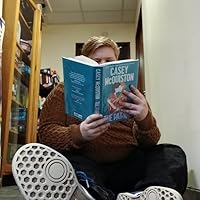
Now in paperback, a personal and impassioned history of the infamous Section 28, the 1988 UK law banning the teaching “of the acceptability of homosexuality.”
On May 23, 1988, Paul Baker sat down with his family to eat cake on his sixteenth birthday while The Six O’Clock News played in the background. But something was not quite right. There was muffled shouting—“Stop Section 28!”—and a scuffle. The papers would “Beeb Man Sits on Lesbian.”
The next day Section 28 passed into UK law, forbidding local authorities from teaching “of the acceptability of homosexuality as a pretended family relationship.” It would send shockwaves through British silencing gay pupils and teachers, while galvanizing mass protests and the formation of the LGBTQ+ rights groups OutRage! and Stonewall.
Outrageous! tells its the background to the Act, how the press fanned the flames and what politicians said during debates, how protestors fought back to bring about the repeal of the law in the 2000s, and its eventual legacy. Based on detailed research, interviews with key figures—including Ian McKellen, Michael Cashman, and Angela Mason—and personal recollection, Outrageous! is an impassioned, warm, often moving account of unthinkable prejudice enshrined within the law and of the power of community to overcome it.
Overall, this was excellent. It's a very chatty, informal history that gives a solid overview of the events and attitudes leading up to Section 28, protests and activism around it, and eventually the repeal. It discusses the effects of Section 28, touching on gay and lesbian teachers and students as well as public opinion. It's definitely an easy read, and at times very funny, but still well-referenced, which to me is ideal. Despite the breezy nature of the book there's extracts from political debates and speeches, leaflets, march slogans and books, all of which give concrete examples in context. A lot of hardcore and quite upsetting stuff is dealt with in a way that makes it far less (emotionally) difficult to read than it could have been, thanks to the serious but amusing way Baker pulls everything together.
My favourite bits by far were the chapters dealing with the lead up to the introduction of Section 28, the passing of it and the protests. What could've been incredibly depressing was often inspiring (the protest section was particularly nicely balanced and showed a wonderful variety of actions that are becoming rarer, and indeed illegal, thanks Tories). The history was fascinating. I know bits and pieces from general interest, involvement in LGBTQ+/bi+ activism and growing up under Section 28, but I learned so much from this book - about education, the law, the political history of the UK, Stagecoach... It really is a case of you don't know what you don't know (until you know it.) This history made me see the present in a new light; it made some things make sense and it gave me hope, which frankly I think is the best possible outcome for any history. Bravo, brava, abseiling and steel band practice all round.
As ever, no book is perfect, although this one does get close. Almost all my issues are tiny niggles or personal quirks, which is impressive. This is just a really great example of a popular history book, at exactly the time it is needed, brilliantly presented.
The one thing I would want to comment on is that almost every time bisexuality is mentioned (very rarely, as the book focusses on gay men and to a lesser extent lesbians, perfectly understandably) the arguments have a tendency to tip over from "extreme homophobic arguments not really backed up by evidence" to "well this did go a little too far." (There were also a couple of things relating to lesbian movements that niggled at me a bit but I think might be better addressed by those who were there, or, y'know, lesbians.) Given the rest of the book I really do want to give it the benefit of the doubt, and it's impossible to avoid anti-bisexual bias in any segment of society so I do genuinely believe this is a combination of accident, coincidence and slight subconscious biphobia (we all have it). It's worth mentioning not so much as a criticism of the book but as a warning to other bi+ people, especially those who like me grew up at least partially under Section 28 and realised during this book to what extent that likely affected all the biphobic and queerphobic bullying they likely experienced. Be aware, be prepared, but it's a tiny portion of a book that is absolutely worth reading.
I'd go so far as to suggest this book should be required reading - it would certainly tickle me if it became required reading (or even suggested, nay, promoted, reading) in schools, much like it tickles Baker to see Section 28 provide inspiration for arts and media around LGBTQ+ people. I strongly believe there is no-one who could not benefit in some way from reading this; the fact it's such a quick and easy read should remove all excuses.
If you're on the fence, borrow it, buy it, demand your public and school libraries stock it if they don't already. It's worth your time.
CW: Homophobia, transphobia, suicide/mental health
One of the most exceptional non-fiction books I've read. Paul Baker clearly has talent for presenting complex and emotionally-stimulating topics in a factual, hard-hitting and heart-warming way - a balance almost impossible to achieve. As a public policy enthusiast I would have gladly devoured Outrageous! as a drier analysis of the development and implementation of Section 28 but Baker beautifully combines the hard, cold facts (which are likely a bit dry and tough-going for the casual reader) with deeply personal stories from the LGBTQ+ activist community and allies for whom Section 28 had a very tangible and personal impact on their lives. I also loved the autobiographical inclusion of Baker's own experiences at the time as a young man questioning his sexual orientation (and eventually coming out as gay) under Section 28 - it's sad, heart-warming, and laugh out loud funny in many places which I absolutely did not expect. Baker's scathing and catty commentary on the events of the 1980s and 90s adds to this even further, setting the tone for an informative but also enjoyable book about a very complex, difficult (and sometimes boring) topic. I have whole-heartedly recommended it to so many people interested in LGBTQ+ history or education policy.
Really important and immensely readable history of Section 28 legislation designed to stop the 'promotion' of homosexuality and the normalisation of 'pretended' LGBT families. The book is well written, the research is thorough without being dry, the authors writing style is engaging as well as informative. I also really liked that the author was inclusive, including stories of how HIV education was being stopped, as well as lesbians who were under increased risk of losing their children in custody battles, to the formation of Stonewall and OutRage!. As someone who lived through those times, it was useful to remember just what it was like to be queer in Thatcher's UK, (very much like what it is to be Trans in today's UK). So much has changed in a short period of time it's easy to focus on that but this book is a vital reminder of understanding where we have come from and what we have survived as a community. Highly recommended.
This should be compulsory reading for any queer person born this century. Only through knowledge of history which is too recent to be considered 'history' can we understand how we got to where we are today. While I do think it's a shame that there wasn't more in the book on the legacy of section 28, this is still being written in schools today, and is perhaps for a historian in another 40 years time. The conversational style made this very readable, and I appreciated the personal touches as they gave me an insight into an earlier generation. This was a fundamentally a hopeful read about the power of activism and campaigning, with some paragraphs that made me want to cry, but many that made me smile.
read for a book club, but i would recommend it to anyone. it is upsetting, and it did make me cry, but it’s told with humour and delicacy and dignity. i’m so grateful to everyone who fought to remove the clause and repeal the section, and to the entire LGBT+ community for being so strong and full of love and hope. it’s very scary seeing so many of the same tactics being weaponised against trans people. we should have learned from the past. but it is not too late to turn things around anyway. i love gay people!!
Comprehensive and thorough, and highly readable! Gave me more insight into why my years at school were riddled with unchecked homophobic bullying. May we never return to those dark days.
The review on the front cover, by Paul Flynn, describes this as "a lovely conversational social history", and that's pretty much what it is. Paul Baker sprinkles this book with his memories from the 80s and 90s, relating the journey of Section 28 to his own personal journey of growing up closeted and anxious, coming out (seemingly to supportive parents, thankfully), and even working as a gay switchboard operator. The effect of this is that this is basically a semi-personal journalistic piece rather than a standard academic history narrative. In some parts it's a boon, likely helping to make the subject matter more relatable/understandable to certain sections of audience (particularly those nostalgic of the late 80s and 90s), but in other parts Baker has a tendency to use this personal touch to simplify or soften the political blow of a society and establishment that is so consistently and so virulently bigoted against LGBT people - and, as Baker briefly (and too softly) mentions at the end, is still actively and dangerously denying the human rights of various groups such as trans people. The result is vicious bigots who took delight in calling gays pedos, groomers, rapists, and necrophiliacs being often portrayed as merely out-of-touch and destined to lose eventually - despite multiple polls showing the public at the time also hated gays, and that the views of our political and media establishment clearly haven't changed as much as Baker suggests based on the constant villification of those not conforming to norms. Indeed, Baker reflects quietly at the end that although he has gained the right to have a stable and loving family with his husband, it was precisely a stable family that conservatives fought for, and the compromise met on gay rights in the UK is a very conservative one; gays can join the status quo as long as they don't rock the boat, but those disgusting queers and transes need to be culled.
Lest that be construed as comedic exaggeration, it is worth reflecting on the high volumes of clearly eugenic articles in every single newspaper and social media sites targeted at queer people. Celebrities and high-ranking politicians from every party have joined in and enjoy a depressing lack of accountability. Clearly, we are in the middle of a new, massive torrent of hatred and bigotry and this simply isn't reflected very well in this book, which should have been well-situated to understand the historical context of it and make parallels between current scare-mongering and that in the (startlingly recent) past. Given the remit that Baker has limited himself too, this isn't a strong critique of the book, but it is a sadly missed opportunity made more regretful by the throwaway comments that suggest he has already reflected on much of this.
So, putting aside what I really wish was in here, what about what is? The topic choices for the chapters are solid and provide a good understanding of the run up to Section 28 (Baker starts the narrative at around 1967, when gay sex is decriminalised, and takes us through some of the rampantly homophobic debates in our ever-nasty bicameral legislature), the protests against it, the effects of living under it, and the process of removing it. Sometimes this structure requires a bit of jumping back and forth chronologically, but it generally works well. There is a lot within to shock those who were lucky enough not to have to think about it too much: the way fairly innocuous children's books and sexual health books were pulled out and lied about in both the Lords and the Commons to show how gays are just vile little perverts seeking to indoctrinate and rape children (some participants in thess debates still wield considerable influence over UK politics); the results of polls taken during the time on whether gay sex is always wrong; the way teachers recorded hate crimes and bullying spiking due to the law and feeling powerless to stop it; the way parents and councils used it as a weapon against gay teachers or those brave enough to try and help gay youth; the similarity of the discourse to that still going on today. Even the familiar faces that pop up throughout give some pause for though - Ian Mckellen and a few other actors out themselves to fight against the bill, famous musicians from bands like Bronski Beats and Chumbawumba join protests and stage charity concerts, meanwhile Thatcher rewards the biggest homophobes by knighting them, Theresa May calls the law "common sense", and Boris Johnson writes nasty little articles for the Spectator about Labour's "appalling agenda" of teaching about those horrible, AIDs-riddled gays to impressionable children. It also seems notable that while gays were uniting against the bill, lesbians were abseiling into parliamentary meetings, and international human rights groups were getting involved in legal disputes, much of the Parliamentary Labour party was still homophobic (and indeed, there was much internal mockery and bigotry targetted against the "loony Left" London branches led by figures like Diane Abbott, Jeremy Corbyn, Bernie Grant and Ken Livingsone that proudly helped fund LGBT groups). Blair was able to avoid repealing Section 28 until his sixth year in office, since naturally the concerns of small-minded pensioners outranks the petty human rights concerns of homos. It's a small consolation that some of those involved in the law's 15-year-long life, like Baroness Young, are (pardon my French) already burning in hell. Baker, as a reasonable and Liberal gay, takes a far more forgiving stance throughout than I'm inclined to.
So, in conclusion, it's a good and much needed social history, not least because LGBT history is still largely forgotten or ignored by both society and the education system. Schools increasingly and rightfully teach elements of Black history (to varying levels of success, some having a bland lesson of MLK then moving on while others properly cover British history and events like Windrush), but few that I have seen have made a proper attempt at any LGBT history - the Stonewall riots might get brought up in form during gay history month, but even this must surely leave students thinking "didn't gay history happen over here too?". I'm sure there's many schools whose strong curriculums will correct me, but the dozen or so schools whose curriculums I've personally inspected all have the same trends and gaps that could begin to be filled by books such as this. I've given it 4 stars, but the issues I take with it (the softness, the informal reflections, a desire for more analysis in parts, a sometimes too-uncritical Liberal perspective) will likely also make it more readable and enjoyable for most, and I do definitely recommend it.
Throughout June, GeekMom celebrates Pride Month with lots of LGBTQ content. Follow the Pride Month tag to find all the content in one space (including LGBTQ content from previous years) and keep checking back for more throughout the month. Today’s book review is Outrageous! By Paul Baker.
Please note: This post contains affiliate links. Trigger Warnings: Homophobia, transphobia, hate crimes, homophobic slurs.
Section 28 was a piece of British legislation that lasted from 1988 to 2003 and banned the “promotion” of homosexuality by local authorities and schools. The impact of the law has been immense with an entire generation of queer youth growing up in an environment made hostile to their very existence. Outrageous! by Paul Baker tells the complete story of the legislation from its origins to its eventual repeal and why the fight still isn’t over.
Told over seven chapters, Outrageous progresses roughly chronologically, beginning in the 1960s with changes to the law that decriminalized homosexual activity between consenting adult men over the age of 21; interestingly, homosexual activity between women has never been illegal in the UK. We get to explore how the press reacted (suffice to say, rarely in a polite and kindly manner) and hear snippets from debates within both the House of Commons and the House of Lords. As the years go by and the specter of HIV and AIDs begins to loom, anti-gay rhetoric increases, and pressure to legislate against the so-called “promotion” of gay lifestyles increases alongside it. It’s this, along with dozens of other factors that are covered here that lead to the implementation of Section 28.
Along with looking at the people responsible for creating the law, a parallel chapter explores those who fought against it. All the now-infamous protests are looked at including the women who invaded the BBC News studios during a live broadcast and those who rappelled down into the House of Lords mid-debate using clotheslines! But alongside these headline-grabbing moments, the book looks at the thousands of other protests that were taking place all over the country both in the run-up to Section 28 being made into law and throughout the time it was on the books. It was this endless barrage of protest and the non-stop work of campaigners who eventually brought about its demise and much of this work is explored. There are many interviews with people who were on the front lines, not least Sir Ian McKellen who helped co-found Stonewall. But not everyone agreed on how best to fight back and this dichotomy is explored too, considering multiple points of view and how it may well have been just that variety that helped the fight keep going.
Finally, Outrageous explores the work that is left to do. This is currently most noticeable on the issues of trans rights with trans people coming under attack in the British press and political circles now more than ever. It’s hard to accept that the same fights are still happening decades after they began, but thankfully a new generation of campaigners and protesters are working tirelessly today, just as their predecessors did in previous eras.
Outrageous is a vitally important book that charts a very specific time in history and ensures that it can never be forgotten. I also very much appreciated that the author acknowledged how much the recorded story of Section 28 and the work against it is framed from a white, cis perspective, and how it is important to make sure that queer people of color are not left out of the story both in the past and the future. Despite the heavy topic, it is written in a surprisingly light-hearted and conversational style, something that helps a lot given the sensitive topics it covers on every page. I’ll admit that I had been worried going into this book, but almost every page is filled with British colloquialisms and even sarcasm and that leads to the feeling that rather than being given a history lecture, you’re instead sharing a few beers with a well-educated friend who is hugely knowledgeable on the subject.
That doesn’t, however, mean that Outrageous is an easy read. The book repeatedly quotes from the press and politicians from the 1950s and on, and some of the language used by them is beyond foul with the worst kinds of slurs and stereotypes being not only uttered but laughed about by those in power. The newspaper headlines were some of the hardest things to read, and I ended up taking a break to read another book halfway through this one because I needed a break from the barrage of grotesque imagery being used. The book refuses to sugarcoat the truth here, and despite it being difficult to read, I appreciated it for doing so because I strongly believe that there are some in the press who would happily print such things today if they believed they could get away with it. Books like Outrageous are necessary to try and prevent history from repeating itself.
I grew up with Section 28. Fun Fact: my entire school life from pre-school to leaving for university happened under its oppressive thumb, and it’s impossible to know how much of an impact it really had on me and the millions of other queer youth who grew up never seeing or hearing our own lives represented in books or other teaching materials. With my own son starting secondary school just last year, it honestly took me aback to see posters for the school’s Gay-Straight Alliance on corridor walls and books prominently featuring queer characters in the library—things that would have been unthinkable just 20 years ago.
Outrageous is a book I would highly recommend to anyone wanting to fight for civil liberties because it shows how easily they can be taken away under the guise of “protecting children.” It frequently makes for uncomfortable reading, but this at least is a story with a happy ending—something we can only help is the case for more marginalized groups in the future.
GeekMom received a copy of this title for review purposes.
Extremely well-written and researched. A weighty topic told with warmth and humour, which makes even the denser political language accessible for anyone. Packed with inspiring stories.
Baker manages to summarise a very complex 15 year long legal battle into a very accessible and fast paced read. Maybe a bit repetitive at the end but overall really enjoyable and engaging.
As a child of the 80's, this book held a great resonance for me and I found its pages equally fascinating, angering, uplifting and soul- destroying.
Paul Baker does an excellent job of describing the lead up to and the creation of Section 28, the most heinous, discriminatory and exclusive piece of legislation against gay Britain. It is tragic to read how gay men were consistently labelled as perverted, lesbian mothers deemed as "not family", gay teachers weren't allowed to be out and gay pupils had no-one to turn to for advice or counsel.
Growing up in the 80's and early 90's, I can distinctly remember Section 28 in full force. Our "sex education" at the end of junior school consisted of a woman giving the girls of the school a talk on periods and providing us with free samples of tampons and sanitary towels! The boys got an extra playtime outside! In grammar school (an all girls school) our sex education was provided by a male teacher (inappropriate much?!) who described sex as when the man puts his penis inside the woman, she then produces a child!! The very little sex education we got was absolutely geared towards heteronormative relationships and procreation! Eugh! Even PSE (personal and social education) lessons avoided any mention of relationships, queer theory, teenage angst.
I love that Paul Baker pores over every aspect of Section 28, from the corrupt power- hungry politicians to the selfless campaigners and activists that fought tooth and nail to get the Section repealed. Shockingly, there was no repeal until 2003 in England (Scotland saw sense before in 2000) which is very very sad.
Frighteningly, I can see traces of hysteria amongst some parents now over the teaching of trans and non-binary inclusivity teaching in schools, and I just hope that this hysteria can be brought into check lest history repeats itself in the form of discriminatory legislation.
Bravo Paul Baker for bringing this dark period of history in to the light.
Really fab, learnt a hell of a lot. If you’re already deep into queer history you might know quite a bit of the stuff but I think all the personal anecdotes, quotes, and interviews definitely make it far more than just a tale of history. Think it is an important read for both people who lived through section 28 and people like me (who get to benefit from all the activists that came before us). Really makes you reflect on how recent this history is and how my own parents were part of the generation affected by section 28 (+ I was born before it was even repealed).
A really interesting history of the story of Section 28 and its impact on the LGBT+ community from 1988 until the present day. I love how Paul Baker includes his own life anecdotes of growing up gay in the 1980s, showing how difficult it was to navigate a world where you were discriminated against just based on who you loved. I am so glad Section 28 is no more! It is shocking that it took 15 years for it to be finally repealed!
Baker's previous book on Polari was good pop-history and I enjoyed this one a lot too, although it is slightly less pop-history and more a chat-with-someone-who-saw-this-happening-and-has-OPINIONS-history. History with snark. Necessary in the circumstances. Baker gets across the seriousness of the fight against section 28 while also appreciating the darkly humorous nature of some of the protests. A very good read.
This was a great book and it taught me a lot as a kid born in 1998, in school in the period between Section 28 and inclusion policies. My only criticism is that the book fails to mention libraries, which in my biased opinion, are such an important part of the Section 28 story!
A colleague from work was kind enough to lend me this book and I was eager to read it since I'm writing my masters dissertation on LGBT+ education in UK schools. In this book, Paul Baker draws on his personal experience as a gay man and utilises a variety of sources to trace the history of Section 28 from its roots to its repeal. It's primarily focused on the political landscape surrounding Section 28 and the activism of the LGBT+ community. It was an informative read and written in an accessible way for the general reader with a reference section which I appreciated (as an academic, there's nothing worse than reading a book like this and then realising that absolutely none of the sources cited are actually referenced).
Personally, I would've preferred if there had been more time devoted to exploring Section 28 after it was appealed but the body of the book is devoted to the build-up to it and then only one final chapter dedicated to what came afterwards. I also found that the book was very biased based on Baker's identity and experience as a gay man. It felt like a book written by a gay man for other gay men; whilst there was mentions of lesbians it was few and far between and bisexual's were practically written out of the whole book despite this clearly impacting bi communities too.
Overall though this is a great informal history of Section 28, which is both informative and insightful, particularly on the topics of politics and activism.
This felt like the perfect read for LGBTQ+ history month, it gave a really important and thorough overview of everything to do with Section 28. The way it was written made it very easy to read and understand. This is such an important read and I really would encourage anybody to read it.
The book was a very interesting read. It shows that there is no need to use very difficult words and constructed sentences to write an academic work. I was not surprised to read about the hatred for things/people there was no real knowledge of. What really hit me was the ignorance and low standards of thinking and speaking by politicians in both the House of Commons and the House of Lords. In other countries there is a sort of admiration for the "oldest democracy" in the world. I think there is no need for that. Politicians in the UK have no higher qualification or standards than in most of the other nations.
Fascinating account of homophobia in UK society, piece of (appalling) law that was Section 28 ban on material "promoting" homosexuality, accounts of people involved, and author's own personal journey.
As a reader I am reminded that the issues haven't gone away. Book bans in the USA. Anti-promotion law in Russia, rise of transphobia in many countries including anti-trans book LGB Alliance getting a stall at 2022 UK Conservative Party conference. Not in the book but the account from the 1980s till the law's repeal feels very much now.
A must read for every lgbt+ person, educator or just citizen!! “ a connection with strangers - between us we lost the battle for Section 28 but we won the war for equality. And it was the moment I became my father’s son - that if you didn’t stand up for what you believed in then you couldn’t believe in yourself.” (Cashman in Baker 2021)
Excellent chatty social history. Really enjoyed how the author framed the obvious tonne of research he did in relation to his own personal history growing up gay in the 80s and 90s
Also abseiling lesbians I salute you and I will never be as cool as you <3
An amazingly passionate book about the history behind section 28 and the incredible people who fought to have it repelled. Details are given about what happened around the debates and Baker's interviews offer an insight into how activists worked to show a light on the intolerances.
This is beautifully written, interesting from start to finish, and also traumatising for someone who lived out their school life under section 28 and is still feeling the impact even today.
Many stories that touch on activist movements can edge into hagiography of failure. A non-violent, funny, dedicated activist is very appealing and it can be tempting to gloryfy them rather then explore what it might have taken to succeed. I do think the relevant chapter of this book begins to tend in that direction: the eye catching desparate protests of the Lords invasion and news event are so much fun after all. The long years of trying to undo Section 28 after it passed into law are described with less relish. But this book sticks it out and pays attention to the effects of the legislation and the activism that eventually turned things around.
I liked this book for its choice of events to discuss and for its follow ups with some of the players in these events. Its analysis of events and ideologies was more of a mixed bag. Perhaps there were more interesting ideas that were cut out in a misguided attempt to make the book frendlier but I somtimes felt unsure how well Baker understood some of the ideologies and conflicts amoung both sides of this moral panic. His occasional editorialsing suggestion that it would have been better if all these radical sex educators hadn't tried to do anything like discuss sex and risk with children seemed odd in a book where he also detailed how often moralist activists and consevative politicians would claim degenerate pornographic content in anything with a plausible title.
I am reading this in the era of undetectable=untransmissable; in the era of a handful of complete remissions for HIV; in the era of gay marrage and adoption. I am reading this in the era of a moral panic regarding gender ideology in schools; in the era of the theory of 'rapid onset gender dysphoria'; in the era of the gutting of the Gender Recognition Act and the Equality Act by the courts and the blatantly discrimanatory removal of trans women from women's spaces. Labour has gone from the fiscally centre left but somewhat socially progressive party that got section 28 removed to a party that seems determined to court the right wherever they can. I can hope that 15 years of luck and work might be enough to create legal equality for trans people, but seeing those stretch ahead amoung all the other dire threats of today does not feel especially hopeful. I appreciate Baker trying to make the end of his book a message of what the future could become, but for all his qualifying it starts to sound like a man who was allowed in to respectable society and doesn't really see the struggle as urgent anymore.
This was a really good book and did a lot to deepen my understanding of Section 28.
Section 28 was a nasty piece of legislation which came into force in 1988 and was aimed at preventing the 'promotion of homosexuality' by local authorities, most notably in schools. As someone who was born in 1988, this legislation was in force for the entirety of my primary school years, until it was abolished in Scotland in 2000 (and not till 2003 in England). The wording of the legislation itself is somewhat muddy - what does it mean to 'promote' homosexuality? Is that even possible? But it essentially amounted to a de-facto banning in schools of any discussion of homosexuality whatsoever. Not only were queer kids denied access to sex education which was actually relevant, but teachers themselves were reluctant to counter homophobic bullying for fear of legal reprisal.
I don't know how different my own life would have been without Section 28, although it would have been great to have learned about LGBTQ people outside of the context of horrible playground slurs. But it's clear that this legislation contributed towards the bullying and alienation many young queer people were already facing. I think a lot of us, whether we know it or not, were shaped by Section 28.
I didn't think I'd enjoy this book as much as I did - my attention span isn't really up to reading minute details of the drafting of legislation or run-downs of who's-who in the House of Lords (although I'm now more convinced than ever that there needs to be an upper age-limit for policymakers), so I thought this might be quite a dry read. But the author did a really great job of both keeping those sections engaging and to-the-point - and there are many familiar names in here - while also discussing the counter-protests and the foundation of groups such as Stonewall, which were established to campaign against Section 28. He does a good job of setting the scene for the introduction of the legislation and contextualising things with a few autobiographical asides, but without overdoing that aspect either. In the later chapters, he goes on to discuss the repeal of the legislation and the impacts and legacy it's left behind.
This was a super engaging and informative book, which does a great job of describing, contextualising, and reflecting on the impacts of Section 28. Essential reading for a better understanding of LGBTQ history in Britain.
I'm not usually drawn to reading non fiction and, although I read a lot of queer literature, I generally read books focusing on queer joy. However, due to it being LGBTQ+ history month, it seemed an appropriate time to educate myself about the past, including the hard parts.
I was pleasantly surprised by how easy and entertaining this book was to read! For such a potentially heavy topic Baker did a great job of interspersing personal anecdotes and pop culture references from throughout the 1970s to 2000s. It made the book feel a lot more accessible and relatable than just focusing on the politics. The tone felt very light and conversational and it was incredibly easy to follow the structure of the book without getting too lost.
I learnt so much reading this book. I truly believe that It should be essential reading for teachers and students. A really good range of influences, themes and impacts were covered that I had necessarily fathomed before now. It really opened my eyes to how shocking the events and attitudes of the past are. Although things aren't exactly perfect today, it made me feel so grateful to all these activists who have fought for LGBTQ rights and the change that has come from it.