Yolanda Alvarez is having a good year. She’s starting to feel at home Julia De Burgos High, her school in the Bronx. She has her best friend Victory, and maybe something with Jose, a senior boy she’s getting to know. She’s confident her initiation into her family’s bruja tradition will happen soon.
But then a white boy, the son of a politician, appears at Julia De Burgos High, and his vibes are off. And Yolanda’s initiation begins with a series of troubling visions of the violence this boy threatens. How can Yolanda protect her community, in a world that doesn’t listen? Only with the wisdom and love of her family, friends, and community – and the Brujas Diosas, her ancestors and guides.
The Making of Yolanda La Bruja is the book this country, struggling with the plague of gun violence, so desperately needs, but which few could write. Here Lorraine Avila brings a story born from the intersection of race, justice, education, and spirituality that will capture readers everywhere.
The Making of Yolanda la Bruja reads like a YA BIPOC call to action, was very chaotic at times, but also filled with teachable moments.
Honestly, I wanted to LOVE this book but in the end it felt insanely long- too long- at least 100 pages less and it would have been better. I wish the editor reeled the author in a lot more because there were so many issues that were covered that at times it felt like the author was going through a checklist of subjects to go over.
I wrote this book, but trust me I'm not being biased when I say this YA is everything :)
Yolanda Noelis Alvarez is a Black Dominican teen Bruja being raised by her Bruja grandmother, Mama Tete, in the Bronx. When a boy enters Julia De Burgos High, her school in the South Bronx, the Bruja Diosas (her guides) begin to send her visions about something being off with him. He's a threat to the safety her school community has managed to create in a world that so easily discards Black and Brown lives. Still, Yo struggles to trust her intuition and the guidance of all that's seen and unseen as she tries to stop him from harming her school community.
Despite the heaviness of this, the moments Yolanda spends with her community push the characters towards growth and joy. Throughout the story, she leans on her best friend, Victory, her (maybe) boyfriend, Jose, her school dean, Mr. Leyva, her chemistry teacher, Mrs. Obi, and all of her friends like Jay, in the Brave Space Club.
There were quite a lot of social issues tackled here. Too many in my opinion. And the way the issues were presented, sometimes like literal lessons out of a history book, was frustrating. Readers, no matter the age, have got to be responsible for doing some work. That was largely missing. Also, the antagonist is just an evil caricature, which means the root of gun violence and racism is left uncovered. It all feels very surface-level.
It's in the blurb, and it was very obvious it was coming, but the ending hit me harder than I expected and I sobbed. As an educator who works with high schoolers, I was emotionally spent by the close of the book. It is a lot to take in and can be triggering. Please consult content warnings.
I did enjoy how Avila wrote about Brujeria and ancestral magic. And I liked the many moments where we could see Yolanda being a normal teenager: sharing a close bond with her grandmother, bickering with her best friend, falling in love for the first time, connecting with her culture, trying to build a bridge between her estranged parents, leading a brave space club at her school. And there was so much care put into the teacher characters (Avila was a k-12 teacher for a decade!). Very humanizing and validating. Those aspects of the book were really heartwarming.
Thank you to the publishers at Levine Querido for the chance to read the eARC copy of this book in exchange for an honest review!
Yolanda Alvarez is a sophomore at Julia de Burgos High who’s also a brujita in training. As she grows more into her role as a Bruja from a long line of spiritual magic, a new student transfers to her school - one that disrupts the community in deeply tragic ways.
This book could have been trauma porn. It could have whittled all of its characters down to the horrific things that happen to them in this novel, in addition to the histories of suffering and oppression many of the cast of characters come from as immigrants, as Black women, as disabled folks, and so many other identities. But it never does. This book is much more interested in how much of a miracle it is that our youth are alive and have a chance to thrive, or that our ancestors and elders survived too much to only pass down pain. It holds so many contradictions - like in the passage where Yolanda is reminds herself that she still has work to do to unpack why her love interest coming to her defense in a physical altercation validated her, despite the fact that she’s her own person well before her relationship with a boy - and explores these nuanced deftly.
To say that I loved this book is an understatement. This book feels like the cafecito por la mañana with your bestie who you haven’t seen in a long, long time. It’s a joy to get to see black youth culture - especially a black Latinx experience - celebrated throughout the novel. It’s a warm hug tinged with pain, longing for a better world, and so much hope. It’s also one of the first novels I’ve read capture the weirdness and grief from the COVID-19 pandemic and its impact on young people. Special shout-out also to this novel for having some of the most tender explorations on Dominican masculinity, fatherhood, and its impact on our novel’s protagonist as a Black girl. (Truly, Junot Diaz who? Don’t know her.)
More over, The Making of Yolanda la Bruja is the book that I wish I could have handed to some incredible young people of color I’ve worked with over the years in the Bronx, but thank the Bruja Diosas we can start giving this book to our young people now. I can’t wait to see what more work we can expect from Lorraine Avila!
Complex. Nuanced. Interesting. Relevant. Timely. I highly recommend this YA text about an Afrolatina sophomore growing up in New York City. The character development was well rounded and characters were dynamic and multifaceted. I’ve seen reviews claiming the author did too much but I would suggest that people who think that don’t know teenagers at all and especially don’t know a lot about what teenagers that identify as Black or Latine/x experience at school.
The writing and overall story had potential ...but some glaring issues that emerged in the first half with the author's choice of character traits/deafness wouldn't allow me to enjoy the book. Yes, we need more window/mirror books, but... the author needed to do more research on partial deafness before adding that trait.
"This is a place where an entire race has oppressed and sat above the rest. On this land, the blood-spills always bubble back up to the surface, and instead of cleaning it, the oppressors constantly cover it with cement."
The Making of Yolanda La Bruja by Lorraine Avila was my first read for Caribbean Heritage Month and it was pure perfection. The story focuses on Yolanda, a deaf Afro-Dominican teenager who is coming into her ancestral power while navigating her own anxieties about feeling that a new white student is a possible threat to her school community. She is wise beyond her years and has a heart for her Bronx community and high school made up of mostly Black and Brown students.
I loved Avila's deep exploration of themes of racism, gun violence, mental health, social and restorative justice, activism, spirituality, disability, feminism & misogyny, white supremacy and colorism and anti-blackness in the Caribbean. Her passion for youth shines through and is evident in the way she tells this story through the perspective of Bronx, NYC teenagers. It's authentic, heartfelt, gut wrenching and emotional. It really highlights how racist institutions fail BIPOC students, create anxieties and fears and silences victims. But Avila still finds ways to show teenage joy, laughter, discovering love, friendship and the ways communities of color pull together and heal.
Avila also does a great job of showing how Black women are not believed, especially if they don't conform to societal standards of behavior & spirituality. Avila celebrates Afro-Caribbean spirituality practices & gives validity to their power in helping communities in very real ways. This book would be a powerful tool in the hands of youth because of how it voices how gun violence in suburban schools has bled into the inner city. It's also a nice reminder of how much teachers care but are limited in what they can do for student safety. I'm left pondering how true social justice would look like if the affected communities were allowed to lead these movements, not the rich & politicians motivated by pandering.
Thanks to @levinequerido for the gifted copy. I highly recommend you go grab a copy.
Esta historia y su protagonista, son uno y lo mismo; y no solo por la fuerza de Yolanda como narradora, capaz de poner sobre la mesa tantos problemas de esta sociedad de una forma tan amena y accesible, sino también porque historia y personaje comparten los rasgos fundamentales que hacen de ésta una gran novela: determinación, respeto por la cultura propia y por lo ajeno, y una fuerte apego a su identidad que no hace concesiones, pero de una forma positiva.
Historias como ésta, donde la violencia y los tiroteos en las escuelas estadounidenses se convierten en el eje de la trama, ha habido y habrá muchas; pero lo que hace que "La Formación de Yolanda la Bruja" sea diferente es su fidelidad a sus raíces y principios, centrándose en las verdaderas víctimas de la situación, que en este caso está profundamente enraizada en el racismo y la discriminación y el privilegio blanco que aquí está siempre tan presente, sin ofrecer excusas para el perpetrador, desde el enfoque de la salud mental y los problemas subyacentes (que, sí, aquí también son notorios, y peor que se va a poner la cosa) de este.
Yolanda es un personaje con mucha fuerza, y el elemento sobrenatural está perfectamente integrado en la historia a través de las tradiciones propias de su cultura y herencia dominicana; pero también es un personaje muy humano, frágil a veces, que se apoya en sus congéneres para enfrentarse a la dureza de su realidad, recuperando la esperanza incluso cuando eso parece empresa imposible.
En este caso concreto, hay que aplaudir también, y mucho, el trabajo de la traductora, por más que tengo que reconocer que la fidelidad a la forma de hablar del personaje, puro dialecto, hace que uno tenga que poner un poco de su parte en las primeras páginas, hasta que se hace con el ritmo y cadencia del habla en esta historia. Por suerte, y dada la fuerte personalidad de Yolanda, la cosa no requiere demasiado esfuerzo.
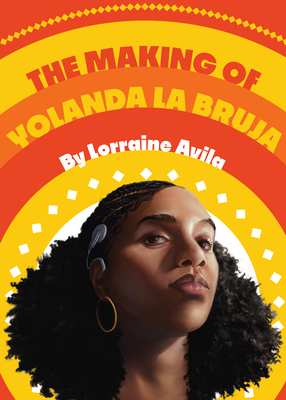
La única pega que le voy a poner a este libro, y es una cosa muy pequeña y muy tonta, tiene que ver con la ilustración de la portada, que representa a Yolanda con tanta fidelidad por lo que respecta a su cabello e implantes, pero prescince por completo de las gafas... y, que queréis que os diga, como alguien que lleva gafas desde los seis o siete años, pues me molesta :P
To say that I loved it is an understatement. She gripped me, from the very first chapter. You get all the feels - from empathy to pain, to joy in this girl’s friendships, relief when she finds it in her to open up and anxiety from her intuition.
The Making of Yolanda La Bruja was a refreshing & authentic story about everything kids in the Bronx actually do have to face in their day to day. While the reality and rawness of it can be overwhelming for some, for me it reads like a love letter to the Bronx and its youth. From the lingo, to the brutally honest and vivid descriptions of her surroundings, down to El Malecon, Yolanda embodies the Afro-Dominican community and never lets us forget it. She confronts the highs and lows, unapologetically, that come from being a young BIPOC girl this day and age and invites us into cultures and traditions that have been washed away or rather, tabooed away from Dominican history. This is definitely the type of story and storytelling that we’ve always looked for in classrooms and never found. It reads the way I tell my friends stories, and the way we actually speak/listen. I just loved it!!!
If you love the likes of Elizabeth Acevedo or Elisabet Velasquez then Lorraine is your girl!
What a HOME RUN a this novel with a beautiful prose and real life issues like living in 2020 as a brown or black person dealing with racism, sexism, violence and overall society.
I highly recommend the making of Yolanda la bruja!
This is a heavy, heavy story about a Dominicana high school sophomore, Yolanda, who is having visions of something terrible happening at her school - all related to the new rich, white politician's son who just started there. Yo has to come to terms with trusting herself and her spirituality while she figures out the best way to help protect her school and those she loves.
This hits on pretty much everything young BIPOC have to grapple with every single day. The weight of being denied their humanity over and over, politicians and rich or privileged folks being allowed to get away with literal murder, the fear of school shootings that all kids must face daily in a place that used to feel safe. It's a lot to put on anyone's shoulders but it's being forced on the shoulders of the young more and more. I think the author did a really great job of expressing this from a young person's point of view, but it felt heavy-handed at times (meaning there were times when just out of nowhere there would be mention of things that weren't relevant to the story at the time). Honestly, it makes perfect sense that Yo would be thinking of these things at all times, but it sometimes reads like stream-of-consciousness and other times it doesn't at all. I hope this makes sense!
This is absolutely an important, relevant, timely, gut wrenching novel. I personally wasn't feeling the writing style, so my experience of it was a 3/5. The substance and appeal to its target audience? 4.5 at minimum. Absolutely putting this in our teen collection and recommending it left and right.
The Making of Yolanda la Bruja by Lorraine Avila is one of the most powerful and necessary books for young adults and really for all of our communities dealing with gun violence and violence in schools that I've read.
Yolanda Nuelis Alvarez is a 10th grader attending Julia De Burgos High in the South Bronx. Yolanda has the gift of sight and has been in training as a Bruja with her grandmother who is raising her, Mama Tete, since she was a young girl. Everyday she is learning more about her gifts, about the Bruja Diosas, and her own unique calling. When she starts having visions about the new white boy, Ben, at school, she is overwhelmed. Mama Tete consults her guides and learns that this is more than an ordinary vision this is part of Yolanda's initiation into the fullness of her spiritual gifts and calling. Yolanda takes this to mean that she must fix the course of events she is seeing related to the darkness around Ben. The only thing is she doesn't quite understand what is about to happen. She has to rely on her own intuition and what she's learned from her mother, Mama Tete, and the elders for her community to be guided at the right time to take the appropriate course of action.
I love how this story address relevant themes of violence in schools and in our communities while still allowing for the voices of young adults and their coming of age experiences to be centered. Yolanda is not only learning about how to use her gifts to help her community, she also falls in love with Jose, bonds with her girls, cracks jokes with her friends, reunites with her Papi when he returns home from being incarcerated and so much more. I truly love this story and I am grateful that it exists in a world where so many young people are growing up without a basic sense of safety.
Thank you to the author and the publisher for the e-arc copy!
I loved the premise of the story, but it was challenging to stay with it until the end. Outside of the main narrative, there were many social issues and themes being tackled. At some points, I was pulled out of the story because of the way the social issues were addressed as an aside rather than woven into the plot. Also, all those issues alongside the ending, left me feeling emotionally exhausted before I even reached the end.
“You know how I live my life, Victory: give everyone a chance until they prove you wrong. And even if they prove you wrong, Mamá says that's why we gifted with community and spirit for—to be able to deal with it.” 🌟🌟🌟🌟🌟 This book is so, so good and I could (and will) talk about it through multiple levels of analysis. But before that, I’m going to accompany this review with a big trigger warning: school shootings are a heavy motif in this book, so if you’re not in a place to read about them then this isn’t the book for you to read right now.
On one level, this is a coming-of-age story for Yolanda. Throughout this book, she grapples with romantic feelings for a cute boy, conflict with her best friend, and belief in herself and her abilities. It reminded me of Kiki’s Delivery Service, but with a protagonist of color.
On another level, this book examines the systems in Yolanda’s life & community that both help and hinder her efforts. When she begins to receive visions about Ben, a transfer student and son of an elected official, she has to figure out how to protect her community from a danger that constantly lurks throughout the story. She tries to fight against her visions and focus on encouraging kindness with Ben, to the confusion and hurt of her friends. She struggles with who to tell about this threat; outside of her family, her premonitions may not carry much legitimate proof.
And this brings up an additional perspective to view her story through: Yolanda has so much pressure on her. She is essentially tackling adult-level problems with teenager-level powers. It’s an apt metaphor for how the burden of caring for others so often falls on women—specifically women of color—to take on the problems of others, even if they have supportive adults (like Yolanda’s grandmother and teachers). There’s so much on her shoulders, more than is fair, but she has her spirituality to guide her through these trials and tribulations.
Overall outstanding book which truly has a piece of my heart. Highly, highly recommend, and I’ll be keeping an eye out for Lorraine Avila’s future writing!
I was drawn to reading this story for a variety of reasons and the thing that was striking all throughout was the author's beautiful story-telling capability. It's as if she married words and phrases so well that it built a rich experience around the main character, Yolanda. Each page I turned I wanted more and more from the characters and plot line and that's exactly what I received. It is a story that bridges together the power of community, tradition, and family.
Yolanda Alvarez is a sophomore at Julio De Burgos High in the Bronx. It has become one of the few places that she's beginning to find her footing in. She's started the Brave Space Club there and is confident that her initiation as bruja, a family tradition, is finally underway. She's has her day one bestie, Victory, and a blooming situation with Jose, the star basketball player at Julio De Burgos. All things are coming together for good until a white boy, Ben, transfers in. It is then that Yolanda begins to have haunting visions of a potential violent event. It is more than just an initiation for Yolanda, she has to go deep into all of her teachings and knowledge of las Brujas Diosas to protect her community from the immediate threat that Ben poses.
The Making Of Yolanda La Bruja sheds light on the intersections of race, ethnicity, class, spirituality, and tradition. It's an excellent read that you definitely will want to get into. Thanks to NetGalley for providing me a copy of this arc in exchange for an honest review.
This was a well-written story of community, spirituality, despair, and hope. Yolanda comes from a long line of brujas beginning from her ancestors in the Dominican Republic. Lorraine Avila was a teacher in the Bronx, and she draws her characters and situations from her own background and from the people she observed during her teaching years. The fictional high school reminds me of Meritt Hutton Jr. High; even though it wasn't in a great neighborhood, was in terrible condition, and had its problems, it still had a feel like "family" and most of the teachers and staff members went out of their way to connect with and help kids. Sadly, I don't think there are many schools like that any more, and it's also sad that so many books written for a YA audience have to include the threat of gun violence. I struggled somewhat with the Spanish and sometimes had to stop and translate a few things because I didn't get the gist, but I liked that it wasn't "dumbed down." That speaks to the struggles so many kids have to understand a language that isn't theirs while they're trying to learn. All in all, I think Avila is a great storyteller, and I would happily read her future work.
My favorite read of the year, hands down. Avila is such a talented writer and I got emotional at multiple points reading this lovely YA debut. Yolanda has such a powerful, unique voice as a narrator. I laughed, I cried, I felt seen and vindicated. The bruja training (and 'woman' training) that Mamá Teté imparts hit a little too close to home. The way that it portrays an under-resourced neighborhood as light and joy and high-functioning community felt very accurate and familiar. The way that Yolanda's ancestral practices and intuition are valued and normalized felt so refreshing and vital. It is the kind of book I would have loved to read as a teen. The kind of book I was yearning for. And any book that calls out Rosalia's cultural appropriation while teenagers discuss W.E.B. Du Bois' double consciousness is going straight to the center of my heart.
With this book, I loved to learn more about brujería and the cultural importance of these beliefs in every day life for a Dominicana. The modern aspects of this book also interested me, from the references to the pandemic, the 2020 protests, and gun violence that plagues the US.
Before reading, I would have liked to know it was about gun violence in school to mentally and emotionally prepare myself. Even just a warning because I have had frightening experiences from gun violence and once an incident where it was serious on college campus, so I was in a bit of anxiety other than feeling the suspense. I was on edge when the issue was escalating and it is a great book that highlights so many aspects of what Black, Indigenous and POC experience.
Overall, a great book!
This entire review has been hidden because of spoilers.
Lorraine Avila hits home sharing the story of a Bronx teen, Yolanda, navigating school, hormones and, most importantly, her cultural manifestations in the form of visions, trusting her instincts and protecting those around her.
The writing is raw and relates easily to the thoughts and feelings we all had in our teen years. Though I didn’t grow up in the Bronx, I had homework to do and boys to crush on and best friends to confide in. I had bullies and those who didn’t sit right with me. Pain in teen years is always difficult to read about and Avila’s piecing of pain together is no smoother to swallow. She writes with pride and emotion felt throughout.
Wow this book was deep and heavy, but the prose was so beautiful. I was so touched at the way Avila showed the depth of the characters and how they navigated trials, tough conversations, and REALLY hard things. Mrs. Obi and Mr. Leyva are the type of educators that I want to be. Although, at the same time I’m probably more like Mr. Ruiz and that’s ok. Doing what we can and holding space for others and their messy lives and emotions is the most important. We’re going to fall short sometimes.
This book is going to be on my mind for a long time!
I’m loving YA! This Afro Caribbean book pulled me in. I fell in love with the characters and even felt a bit sorry for Ben. I needed the message that the book gave about not being responsible to save everyone. The space, community, and characterization in this book was everything. I enjoyed the nods that were given to other books and writers. I can’t wait to read more by this author. I’m an English teacher and can’t wait to share this with my classroom readers.
This book was incredibly moving and devastating at the end. This was a YA story about a deaf psychic Afro-Latina sophomore girl growing up in the Bronx, NY. She is coming into her ancestral power of a bruja, while navigating her own anxieties about the vibes and feelings she’s sensing from a new white male student to the school. This book covers themes of racism, gun violence, mental health, social justice, activism, spirituality, white supremacy and colorism and anti-blackness in the Caribbean.
This story is authentic, heartfelt, and gut wrenching.
This entire review has been hidden because of spoilers.
- a brutal exploration of the effects of gun violence, and how we need to make a change. Yolanda was a protagonist to root for, and you wanted to see her heal. the writing style was easy to read and raw, and it fueled the more intense moments of the story.
The only reason this got a 3 is because I did find the story meaningful—aside from the atrocious deaf rep that made reading this a horrible chore. Yolanda is clearly a hearing character who has been given a cochlear implant (CI) as an eye-catching accessory, not as an actual attempt to provide authentic representation.
First, a note on the cover art: The CI looks like it was improperly placed, which does happen occasionally, but it looks off compared to the more traditional placements. This CI is right above the ear instead of further back, as most are. I’m sure the artist made this decision to make it more visible, but it does look extremely uncomfortable compared to the usual placement. However, learning that the CI was only added later reinforces for me that the character was originally hearing and didn’t become “deaf” until much later. If deafness was a core aspect of Yolanda’s character from the beginning, the artist would have been asked to include the CI from the beginning.
Now, for the character herself. Virtually nothing about this representation is accurate to the deaf experience.
While some deaf readers may appreciate the attempt to include a CI-using character, only an extreme minority may be able to relate to how the CIs and Yolanda’s hearing abilities are portrayed. Yolanda, with the CIs, is a hearing person. What’s the point of having a deaf character if their magical cure-all tech means their deafness has zero impact on the way the character behaves or interacts with the world? It bothers me that Avila is using the CI as an accessory. But a CI is not like a rainbow pin to show LGBTQIA+-ness or allyship that can be put on or taken off without any real effect on the individual. There just doesn’t seem to be any reality to using them.
Yolanda does not experience the world as a deaf individual, just as a hearing person who has to use a particular device to become hearing. If we took away the deafness and CIs, nothing about the story or Yolanda would change at all. In Avila’s Goodreads review, she doesn’t mention deafness as part of her or Yolanda's identity, which only underscores for me that the CIs are used as more of a unique selling point than for authentic rep. Sometimes Avila has Yolanda say or think things about the CIs or about deafness that don’t really make sense. It all comes across as an outsider plopping in some phrases that real deaf individuals use once in a while, without fully understanding what it means. I don’t see any mention of a prelingual CI-using sensitivity reader for this book.
Yolanda is a bilateral (both ears) CI user. She typically hides processors behind her afro, but sometimes doesn’t, and resents being known as “pretty smart and basically deaf girl.” But she does not say what she would rather be known as. It’s clear that she’s a student leader and fairly popular, and no one interacts with her as though she were deaf.
Yolanda seems to be one of those whose hearing is exceptional—practically fully hearing. She can hear warmth and sarcasm in someone’s voice (rare for CI users, since the implants can’t code subtle changes like that), and apparently has no difficulty understanding speech, even whispered, whether it’s English or Spanish. She can hear keys jingling and shoes squeaking, long nails typing on a keyboard in the other room; she can hear and understand music, recognizing most of them immediately. She never streams music through her CIs, which most newer models are capable of (we don't know which model/brand she wears). She does note that too much noise/cacophony overwhelms the processor and hurts her head. But this is true of hearing people, too.
Yolanda has had the CIs for most of her life. She mentions her parents worked hard to get them, which is entirely fair. As a toddler, she considered them her magic ears and didn’t like to take them off. She started taking them off when her parents argued. But, with this background, it doesn’t really make sense to me that she can understand all speech. Deaf people who get prelingual CIs almost never understand all speech (the best are usually around 90% comprehension in ideal conditions--and conditions are almost never ideal), and those who do use CIs highly effectively are most often from affluent white families who could afford years of intensive (one or more hours, five days a week) and often private speech therapy (especially Auditory Verbal Therapy, meaning no speechreading or signing is allowed during sessions), updated processors, etc. Yolanda is explicitly from an overexploited, low socioeconomic community, and repeatedly mentions how much her family sacrifices in order to provide for her and transport her places, etc. Even with all that sacrifice, deaf people from such backgrounds rarely benefit as much from their CIs as those who have the resources to support them. [1] Auditory Verbal Therapy deeply involves family in facilitating listening and spoken language production in children, so Yolanda could just be one of those lucky people to whom it comes easily and who has a great familial support system, but this certainly doesn’t represent the average CI user’s experiences.
At age 5, Yolanda, who had been placed in a mainstream Spanish-speaking class, started teaching her peer Victory Spanish, and Victory taught her English—each their mother tongues. This suggests that Yolanda only learned Spanish. It’s my understanding she was born and raised in the US, which means that her speech and language pathologist, audiologist, etc., (i.e., her auditory and speech habilitation service providers) would all be English speakers who would be working with her in English…So how could she not have already been speaking English?
The vast majority of US doctors and audiologists and SLPs encourage that a deaf child with a CI is exposed to only one language: English. [2] If Yolanda only grew up with Spanish, that means she likely didn’t have much training or follow-up appointments throughout her childhood to ensure her linguistic progress and check whether the CIs needed remapping, access to other children or adults with CIs, etc. Maybe her family ignored the so-called professionals’ advice to only speak English, but the SLPs (mainstream schools usually employ at least itinerant speech pathologists to work with students weekly, whether they are deaf or have a stutter, etc.) would most likely have been monolingual English-speakers.
It also means that for Yolanda to primarily speak Spanish, her family would have had to train her in understanding the sounds she hears with her CIs, which I doubt they would have any expertise in. Just talking to a child with a CI isn’t enough. They need real language support, often involving years of training in order to make sense of what they are perceiving, as well as speech therapy to make sure they are reproducing speech correctly. She would most likely not be learning to speak English from a peer, and unless the teacher(s) at her school were also trained teachers of the deaf, it is not likely she would have had appropriate support in English-learning from them, either. It doesn’t make any sense to me. Which specialists were supporting and facilitating this deaf child’s spoken language acquisition, whether in Spanish or in English, pre- and post-implantation?
Speedrunning some weird/incorrect things:
-She can speechread 100% of Mamá Teté’s speech without the CIs. When she’s suspended, she stops wearing her CIs and shuts herself in her room. Her father leaves notes instead of texting or making her speechread. She yells without her CIs on and doesn’t know (or care) how loud she is. Her dad brings her the CIs and holds them out to her until she relents and puts them on. All this is fine. But, given Yolanda's skills, I wondered why are they not making her speechread, if she’s proven to be 100% successful at this in the past? I guessed that she exclusively speechreads Mamá, since she grew up with her. But nope—at the end she speechreads Papi with no problem, too, even though she's only had brief face-to-face conversations with him for at least several years.
-She puts her CIs on and then gets into the shower…She probably had a shower cap but still, why? Later, when showering and taking a bitter bath, there’s again no mention of removing her CIs. Maybe the author is relying on the reader’s common sense? It’s just odd to me.
-“Sometimes I be thinking this deafness is a gift from my ancestors, from the Bruja Diosas. I don’t have clarity of hearing, and that allows me to cut down on the things I don’t want to be a part of, so I can focus on my power and what I am being shown.” Huh? But if she’s totally hearing with the CIs, as she’s been presented and as she behaves and responds, then what does not having “clarity of hearing” mean? From the fact she’s able to eavesdrops on a conversation in the principal’s office when the door is ajar, and that she goes to the bathroom to wash her face and brush her teeth and still overhears the argument her parents have in her room, Yolanda doesn’t need to supplement her hearing with speechreading at all.
-“He calls me at 10 p.m., when I am half asleep, but I pick up anyway.” So she’s wearing her CIs to bed instead of having put them in the bathroom medicine cabinet, where they were the first morning of the novel she put them on? During the conversation she tucks her hair behind her ears…suggesting she’s not wearing the CIs because she doesn’t have to adjust them.
-Mamá wakes her by rubbing her back. Does she not have a vibrating alarm clock?
-The sounds of the early world vibrate through her body (I’m assuming the train, but there would not be much else to vibrate an entire apartment, aside from the music Mamá is mentioned to be playing once). There is a reason even though CIs are often advertised as a “miracle cure” or a “gift of hearing” that they don’t tout music—because CIs are notorious for not processing music well. “Out of five musical elements evaluated (pitch, rhythm, timbre, sound quality and dynamics), only rhythm was still clear to CI users. Music tends to sound out of tune, the dynamic range (how loud or soft the music is) is limited and the general sound quality is poor.” [3]
-Despite a proven ability to hear 100% of everything with CIs on, Yolanda pretends not to hear someone speaking to her. Sure. Yolanda wants silence, to sit with someone without having to speak…So why not remove the CIs? Deaf gain, baby.
-Adrenaline makes her sense of hearing shut off. Not physically possible because adrenaline deprives the cilia of oxygen, which causes the tinnitus or deafness that hearing people experience. The CIs bypass these cilia entirely, so her hearing wouldn’t be affected. (Admittedly, this is a nitpick, but just an FYI.)
-She passes through a metal detector without setting it off, without hearing a distorted sound, or her CIs shutting off for a moment. While it's possible that the detector had no effect on her CIs, it is something that can happen. Every time I travel with a friend who has CIs, she gets pulled aside by the TSA because her implants set off the machine and she has told me that her CIs glitch when she goes through it.
-When having her hair pulled and struggling against Ben, getting thrown around, the CIs remain firmly attached. Meanwhile, many deaf athletes have to wear headgear to keep their CIs from flying away.
-“The words blow in my ear…” So, not the mic?
-“Because I still have to wear these things to listen…” Um, “still”? As in temporarily until a “real cure” or something comes along? Or until you learn a new way to listen, such as signed language? What?
-At end of the novel, Yolanda mentions having been kicked out of class for yelling at teachers who don’t speak clearly enough for her to understand—and yet she can eavesdrops on private conversations behind doors, hear people arguing rooms away, and understand a televised broadcast from the other room, etc. What made her more realistic inability to understand everything suddenly change? (The answer is nothing, because it’s simply not possible to go from deaf or hard of hearing to fully hearing once you stand up for your right to communication access.)
-I’m actually shocked the author mentions an “accommodation plan” — that is, an IEP. It just mandates that she is kept in areas where she can “hear things clearly,” but given that she can hear everything regardless of the area, it’s functionally useless to her to even have an IEP. In reality, a student with a CI would mostly likely have an IEP that mandated teachers use an FM system, in addition to (or instead of) forcing her to sit in a specific seat, which is often not helpful anyway since teachers often lecture while moving around the room.
Anyway. Yolanda mentions that she charges the CIs. Bonus point! Many authors neglect to have their deaf characters take care of their assistive tech. Too bad this isn't consistent, which is made especially clear to me during the hospital scene.
There's no mention of her CIs at all when she's in hospital, but she clearly has no difficulty communicating with anyone. Yolanda mentions everyone wearing blue masks, but then nostrils flaring and lips pursing—so, no masks? But the doctor gives Yolanda a mask to wear to visit Jay…Is the doc wearing a mask herself or not? If Yolanda had her CIs at the hospital, someone would have needed to bring her charger and keep them charged, and slap them onto her head as soon as her eyelids started fluttering in order for her to just immediately be able to hear upon waking—unless she was speechreading, in which case, how with the masks that were mentioned?
Okay, so after the funeral, Yolanda, José, and Victory join the protest march. Presumably, everyone is masked up, due to C19. Yolanda also explicitly mentions that there is a cacophony—chants, blaring hip hop, the train roaring nearby, laughter. They are ushered into the middle of the crowd, so Yolanda is totally surrounded by all this, no? But she is able to fully understand someone speaking to her, telling her what’s coming up in the march and asking her if she would like to participate in the poetry readings. Come on.
Yolanda stops wearing the CIs at home, so she doesn’t get the everyday ambience of trains, neighbors, and “conversations through the walls”—again showing how magical these devices are that she can actually perceive conversations like that.
Yolanda also wears her CIs on the plane, apparently for the duration of the flight. She leans back and closes her eyes, apparently to take a nap. She can’t just be speechreading her grandmother because she hears the pilot’s announcement, word for word, that they will be landing soon. Some people can fall asleep with CIs on, but not all. Yolanda occasionally falling asleep *while traveling* or just drowsing off once in a while with hers still on is realistic, so that is fine. But CI-users don’t typically keep them on overnight, unless they have a reason to (like a new parent wanting to be alert for a baby’s cry). (I'm remembering her 10pm conversation with José.)
But oftentimes it’s less about falling asleep with them in than there is just no mention of the CIs, and Yolanda behaves like a hearing person with or without them. This is another case where the character was probably hearing in the first draft and became deaf in a later draft, with the author peppering in references to deafness without doing the work to represent the deaf experience. And of course missing places where the CIs and deafness would impact her actions/ability to communicate.
Dealing with racism and colorism are strong themes throughout the book, which is great, but there’s no reckoning with ableism, even though it affects WOC most severely. I’m less upset on this point because Avila herself is not deaf, and she is not telling a deaf story (about a deaf character’s journey of deafness). I just would have really appreciated some realism in respect to the deafness.
Sources: [1] Raylene Paludneviciene & Rachelle L. Harris, “Impact of Cochlear Implants on the Deaf Community.” In Cochlear Implants: Evolving Perspectives, edited by Raylene Paludneviciene & Irene W. Leigh. Gallaudet University Press, 2011. [2] Natalie Jenny Delgado Palacios's 2020 dissertation, "Mis aspiraciones para mis hijos: Latina Immigrant Mothers’ Experiences of Early Intervention with Their Deaf Children," goes into this for Spanish-speaking families with deaf children. [3] Amber Snyder, "THE SOUND OF MUSIC: Making Music Enjoyable for Cochlear Implant Users." NIH Record, July 8, 2022, Vol. LXXIV, No. 14.