

What do you think?

London Belongs to Me
Also known as Dulcimer Street, Norman Collins's London Belongs to Me is a Dickensian romp through working-class London on the eve of the Second World War. This Penguin Modern Classics edition includes an introduction by Ed Glinert, author of The London Compendium.
It is 1938 and the prospect of war hangs over every London inhabitant. But the city simply doesn't stop. Everywhere people continue to work, drink, fall in love, fight and struggle to get on in life. At the lodging-house at No.10 Dulcimer Street, Kennington, the buttoned-up clerk Mr Josser returns home with the clock he has received as a retirement gift. The other residents include the faded actress Connie; tinned food-loving Mr Puddy; widowed landlady Mrs Vizzard (whose head is turned by her new lodger, a self-styled 'Professor of Spiritualism'); and flashy young mechanic Percy Boon, whose foray into stolen cars descends into something much, much worse...
Norman Collins (1907-1982) was a British writer, and later a radio and television executive, who was responsible for creating Woman's Hour on BBC Radio 4, and became one of the major figures behind the establishment of the Independent Television (ITV) network in the UK. In all Norman Collins wrote 16 novels and two plays, including London Belongs to Me (1945), The Governor's Lady (1968) and The Husband's Story (1978).
If you enjoyed London Belongs to Me, you might like Sam Selvon's The Lonely Londoners, also available in Penguin Modern Classics.
'One of the great city novels: a sprawling celebration of the comedy, the savagery, the eccentricity and the quiet heroism at the heart of ordinary London life'
Sarah Waters, author of The Night Watch
It is 1938 and the prospect of war hangs over every London inhabitant. But the city simply doesn't stop. Everywhere people continue to work, drink, fall in love, fight and struggle to get on in life. At the lodging-house at No.10 Dulcimer Street, Kennington, the buttoned-up clerk Mr Josser returns home with the clock he has received as a retirement gift. The other residents include the faded actress Connie; tinned food-loving Mr Puddy; widowed landlady Mrs Vizzard (whose head is turned by her new lodger, a self-styled 'Professor of Spiritualism'); and flashy young mechanic Percy Boon, whose foray into stolen cars descends into something much, much worse...
Norman Collins (1907-1982) was a British writer, and later a radio and television executive, who was responsible for creating Woman's Hour on BBC Radio 4, and became one of the major figures behind the establishment of the Independent Television (ITV) network in the UK. In all Norman Collins wrote 16 novels and two plays, including London Belongs to Me (1945), The Governor's Lady (1968) and The Husband's Story (1978).
If you enjoyed London Belongs to Me, you might like Sam Selvon's The Lonely Londoners, also available in Penguin Modern Classics.
'One of the great city novels: a sprawling celebration of the comedy, the savagery, the eccentricity and the quiet heroism at the heart of ordinary London life'
Sarah Waters, author of The Night Watch
738 pages, Paperback
First published January 1, 1945
About the author
Norman Collins
26 books26 followersNorman Collins born 3 October 1907, died 1982, was a British writer, and later a radio and television executive, who became one of the major figures behind the establishment of the Independent Television (ITV) network in the UK. This was the first organisation to break the BBC’s broadcasting monopoly when it began transmitting in 1955.
Ratings & Reviews
Friends & Following
Create a free account to discover what your friends think of this book!
Community Reviews
Displaying 1 - 30 of 203 reviews
June 25, 2011
Probably my favourite book of all time. At my wedding, my father read out some congratulation cards during his speech. One card reduced me to floods of tears; my parents had signed it from all the characters of this book. It was such a personal and indulgent moment between my parents and me as nobody else recognised the names. It made this book even more special to me. :)

July 18, 2022
I hesitated to start this because of its size (732 pages), but then read Antoinette's review and knew it would have to be taken off my shelf to read immediately. I have quite a few big, thick books waiting, but when I look at them and think that I could read 3 or 4 smaller books in the same time, I pass them up. To my detriment, because they always turn out to be great experiences. I've now decided that these longer novels should be considered "book vacations." I can stop flitting about from place to place and just settle into one big, satisfying novel. Just take it easy and stay for a while.
So I went to #10 Dulcimer Street, to spend some time with the tenants of Mrs. Vizzard's boarding house. Of course, I loved the Jossers right from the start, but Connie and Mr. Puddy, Mrs. Boon and her son Percy, and even Mrs. Vizzard herself took some warming up to. The longer I stayed though, the more I liked them. First impressions are not always right. They all had their troubles of one sort or another, and when misfortune or disaster struck, they helped each other out. This starts at Christmas in 1938, so there was a war looming ahead as well. I did my best to help from the sidelines, but it wasn't much, certainly not enough. Mistakes were made and I could only watch.
I love boarding house novels because such a cross-section of people and situations are presented and it's fun to see how it all turns out. I very much enjoyed my 12 days in Dulcimer Street and will return one day to do it again. It turned out to be a great book vacation, and I may just plan on taking another one shortly.
So I went to #10 Dulcimer Street, to spend some time with the tenants of Mrs. Vizzard's boarding house. Of course, I loved the Jossers right from the start, but Connie and Mr. Puddy, Mrs. Boon and her son Percy, and even Mrs. Vizzard herself took some warming up to. The longer I stayed though, the more I liked them. First impressions are not always right. They all had their troubles of one sort or another, and when misfortune or disaster struck, they helped each other out. This starts at Christmas in 1938, so there was a war looming ahead as well. I did my best to help from the sidelines, but it wasn't much, certainly not enough. Mistakes were made and I could only watch.
I love boarding house novels because such a cross-section of people and situations are presented and it's fun to see how it all turns out. I very much enjoyed my 12 days in Dulcimer Street and will return one day to do it again. It turned out to be a great book vacation, and I may just plan on taking another one shortly.

November 30, 2013
"CRIME AND PUNISHMENT" MEETS "PASSPORT TO PIMLICO" : DOSTOYEVSKY AS AN EALING COMEDY
Every so often some ambitious writer comes up with an epic novel to sum up London for us – Bleak House (1853), White Teeth (1999), Capital (2012) – and filling the gap is this massive delightful soapy sprawl. The introduction tell us that London Belongs to Me (I love that title) is around the top of Division Two as far as novels go :
Today it is mostly forgotten, a cult classic, rather than a staple on the must-read list … although it was introduced to a new generation by retro chic pop group St Etienne with their 1991 track of the same name. It’s a B-novel, epic, but undemanding… near the top of a league of London lite… allowing us to watch its many characters through two years of their lives
He’s not wrong, though the idea that a name-check from St Etienne can spring a novel from out of print hell back into the hands of new eager readers is not especially credible.
Well, it’s outrageous that this novel of maximum fun could ever have been forgotten (it was a big hit in 1945). Norman Collins takes an understated deadpan very English and more than a little sarcastic tone to most of the goings-on, but the love shines through. This is a very specific London from Christmas 1938 to Christmas 1940, from the looming clouds of war to the Blitz. From the humdrum to the life threatening.
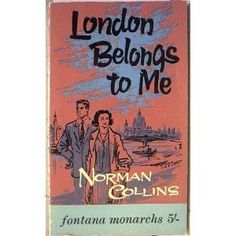
(not really a book cover to thrill me into buying it)
The story follows the lives of the residents of the flats in No 10 Dulcimer Street in great detail. You want to know exactly how people lived, what they wore, what they ate, their furniture (furniture takes up more than a few paragraphs), how they ducked and dived and scraped a living in 1938 – look no further. There are accounts of kinds of fun no one in the West has anymore (“the simple pleasure of going into shops and spending money on something that was unnecessary”). We get a lot about one of the major middle-class obsessions of the time, spiritualism. We get a lot about one of the English obsessions of all time, class consciousness. (How could you not?)
Many novelists make a whole song and dance about portraying the inner brains of their characters. Not Norman. He has the lightest touch. He flits effortlessly from Connie, the aged desperately poor ex-actress, to Percy Boon, the young motor mechanic on the make, whose Dreadful Crime forms the main arc of the novel. He’s really good on the various stages Percy’s all-too-credible self-centredness, from pre-crime, to during crime, to the long consequences of the crime, details of which I should not mention.
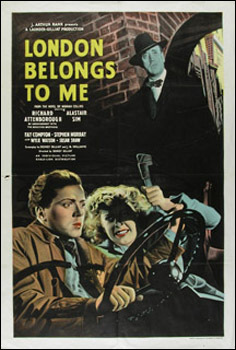
(the bad film version - yes, she is whacking him with a spanner but in the book she's not smiling when she does it!)
I might moan slightly about two niggling lapses, I guess, because if you do get round to reading this (and I hope you do, you’ll love it) you’ll wonder why I didn’t point them out. You’ll be thinking I’ve gone soft.
A BAD THING ABOUT COMEDY WRITING
Dickens likes to give his characters eccentric mannerisms and quirks and then hammer them into the ground so that every time the character appears his quirk never fails to get a mention. For some silly reason Mr Collins does this with two characters (and only two), and it wears out its welcome. One is Mrs Josser – she plays the wife who’s a bit of a battleaxe & so is constantly disapproving of things. She radiates disapproval by doing this thing with her lips :
Mrs Josser drew in her lips and declined to answer. P 113
Mrs Josser drew in her lips, p122 and 267 and 352
Mrs Josser went back upstairs, her lips pursed tightly together p216
Mrs Josser pursed up her lips p 252 and 263
Mrs Josser merely pursed up her lips again p285
(and many more as well)
Even worse, Mr Puddy – he has a nasal problem so his speech, alone in the book, gets written phonetically:
“I hear Mrs Bood’s god”, he said slowly, “Stebbed oud on us. I doad wonder. Berhaps it’s juzzazwell. Berhabs it god too budge for her. Couldn’t stand the straid. Gave me the greeps she did. Good bording.”
You do it once like that and you have to do it throughout the whole novel like that. Funny once, maybe, but not funny the 30th time, like Mrs Josser’s drawn in lips.
BUT THESE ARE TRIFLES
This novel took over my whole week. It must be the longest I’ve finished since Jonathan Norrell and Mr Strange which was years ago. Four stars. Recommended.
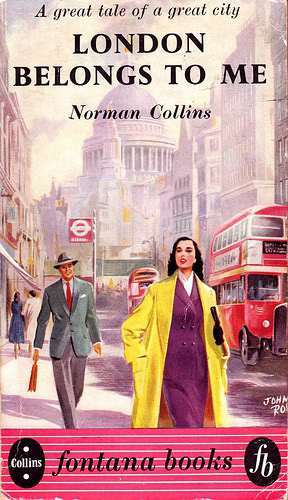
(also not really a book cover to thrill me into buying it)

June 20, 2022
Welcome to 10 Dulcimer Street, to the lodging house owned by Mrs. Vizzard. In this book, we meet the lodgers and follow them over a 2 year period- 1938-1940- the eve of WWII through to the beginning.
For a book that is 738 pages, I never for a second lost interest or wished it would end. In fact, I wish Norman Collins had written a sequel- I wanted more!!
The lodgers are quite a cast of characters. We have the dependable Jossers, the food obsessed Mr. Puddy, the older washed out actress, Connie, the doting mother Mrs. Boon and her son, Percy- a dreamer, who wants to make it big, and Mrs Vizzard, the landlady who falls under the spell of Mr. Squales. When tragedy strikes, the residents pull together and find they can rely on each other.
In the background is London itself and the underlying fear of the impending war. But life goes on and we follow along with all the lodgers and their ups and downs.
I left this novel feeling like I had lived with all these people and been a part of their lives. This is a novel that captures London and its working class and makes them come alive.
Trust me, it’s a long book that flew by! Highly recommended.
I heard about this book from Rachel of Tea or Books podcast/ Booksnob blog. What a fantastic find!
Published: 1945
For a book that is 738 pages, I never for a second lost interest or wished it would end. In fact, I wish Norman Collins had written a sequel- I wanted more!!
The lodgers are quite a cast of characters. We have the dependable Jossers, the food obsessed Mr. Puddy, the older washed out actress, Connie, the doting mother Mrs. Boon and her son, Percy- a dreamer, who wants to make it big, and Mrs Vizzard, the landlady who falls under the spell of Mr. Squales. When tragedy strikes, the residents pull together and find they can rely on each other.
In the background is London itself and the underlying fear of the impending war. But life goes on and we follow along with all the lodgers and their ups and downs.
I left this novel feeling like I had lived with all these people and been a part of their lives. This is a novel that captures London and its working class and makes them come alive.
Trust me, it’s a long book that flew by! Highly recommended.
I heard about this book from Rachel of Tea or Books podcast/ Booksnob blog. What a fantastic find!
Published: 1945

June 18, 2012
I'd just finished reading five novels by Patrick Hamilton (Hangover Square, The Slaves Of Solitude, and the Gorse Trilogy); a biography of Patrick Hamilton (Through a Glass Darkly: The Life of Patrick Hamilton); and a biography of Julian MacLaren-Ross (Fear and Loathing in Fitzrovia: The Bizarre Life of Julian Maclaren-Ross). Reading these books helped me to realise how much I enjoy books about London. Coincidentally Amazon recommended this book to me (and it was a book that I'd not heard of until the recommendation).
Over 700 pages long, London is unquestionably the star of the book. More specifically South London for the inhabitants of a shared house located at 10 Dulcimer Street in Kennington. The book is set in 1939-40 and evokes the era wonderfully. The second world war looms as each of the varied and memorable characters contend with their own lives and preoccupations. Their stories are variously funny, tragic, exciting, interesting, and the interweaving narratives kept me engrossed throughout.
If you enjoy well written stories about London, about Britain in the 1940s, and the vagaries of human nature, then it's hard to imagine you wouldn't enjoy this book. By the end I felt the characters were old friends and I wanted to continue to read about their lives. In a nutshell, I loved it and didn't want it to end.
Over 700 pages long, London is unquestionably the star of the book. More specifically South London for the inhabitants of a shared house located at 10 Dulcimer Street in Kennington. The book is set in 1939-40 and evokes the era wonderfully. The second world war looms as each of the varied and memorable characters contend with their own lives and preoccupations. Their stories are variously funny, tragic, exciting, interesting, and the interweaving narratives kept me engrossed throughout.
If you enjoy well written stories about London, about Britain in the 1940s, and the vagaries of human nature, then it's hard to imagine you wouldn't enjoy this book. By the end I felt the characters were old friends and I wanted to continue to read about their lives. In a nutshell, I loved it and didn't want it to end.

Read
October 9, 2017What an incredible book. A gigantic Dickensian epic about the lodgers in 10 Dulcimer Street, Kennington, in the run up to the Second World War. These are middle class people and down, hanging on by their fingernails in a time before the NHS. You might call it a slice of life novel except at 700pp it's more of a full meal. The stories part and interweave and drop and pick up between characters in exactly the manner of a soap opera and just as addictively, so that the domestic drama of "will Mrs Josser like Doris's fiance's parents?" is as compelling as the storyline of a murder. Someone needs to film this as an eight part series, minimum.
The author was apparently an early pioneer of TV for and about working people, and it shows. The book is clear-sighted and tough minded but never cruel. Everyone's foibles and weaknesses and stupidities are clear, but not condemned: they're all human and there's compassion for everyone. Even the two characters who seem the most ludicrous comic relief are given intensely moving deep POV and powerful story elements.
I also absolutely adore the treatment of the murderer, a toxically selfish and self-centred little shit.
The other incredible thing about this is the setting on the eve of war. It was published in 1945 and the sense of ominous build up, stressed waiting, then the increasing terror of May 1940, Dunkirk, and the Blitz are brilliantly atmospheric, but also extremely realistic in the different ways people deal with the stress--panic, denial, jokes, living from news bulletin to news bulletin, rising to the occasion or looking to exploit it.
I was basically consumed by this book for days, reading it in odd moments to find out what happened to everyone, and now I have the worst comedown because it's over. Gosh, what a book.
The author was apparently an early pioneer of TV for and about working people, and it shows. The book is clear-sighted and tough minded but never cruel. Everyone's foibles and weaknesses and stupidities are clear, but not condemned: they're all human and there's compassion for everyone. Even the two characters who seem the most ludicrous comic relief are given intensely moving deep POV and powerful story elements.
I also absolutely adore the treatment of the murderer, a toxically selfish and self-centred little shit.
The other incredible thing about this is the setting on the eve of war. It was published in 1945 and the sense of ominous build up, stressed waiting, then the increasing terror of May 1940, Dunkirk, and the Blitz are brilliantly atmospheric, but also extremely realistic in the different ways people deal with the stress--panic, denial, jokes, living from news bulletin to news bulletin, rising to the occasion or looking to exploit it.
"You've heard about Hitler's latest?"
Mr Josser shook his head. So far as he and Hitler were concerned they seemed to get along without telling each other anything.
I was basically consumed by this book for days, reading it in odd moments to find out what happened to everyone, and now I have the worst comedown because it's over. Gosh, what a book.

March 17, 2024
What a book! I absolutely adored it.

January 9, 2012
As dusk falls, the Park in the background becomes vast and mysterious, and the gas lamps that light your way along the main paths dwindle into the distance like lanterns in Illyria. But somehow or other it remains London, with the buses that cruise up Park Lane twinkling through the railings, and the air filled with the roar and rustle of innumerable wheels. Yes, it's London all right... Or rather, that's how it was in 1939.Maybe no-one's idea of a five-star book although maybe a four-and-a-half. I can tell when I've really liked something I've read, by the number of excerpts I want to include in a review; what emerges is that an excerpt can tell its own story so much better than a reviewer. "London Belongs To Me" is a clattering, nonstop la ronde of fascinating little excerpts, and a miniature time-capsule as well.
Maybe not so miniature, though. Attempts to define or decode a vast city seem like they come in two sizes, extra-small or enormous. Here we have a huge, rambling, ramshackle tale, a multi-threaded saga of the resilient Londoner as Mr Collins sees him. Not "historical fiction", though, as it was written within a few years of its period. In all --and there's a lot of all there-- the narration wants to emulate a Dickensian universe, complete with the full cast of good-samaritan, kindly-old, bubbly-young, ne'er-do-well and regular-sort.
The targets include, as with Dickens, the politician, the lawyer, the policeman and the chronic liar. But this isn't Bleak House; in the early forties of the novel, Britain is just beginning to gather its keep-calm-and-carry-on wits, and if anything, we've got a sort of Bright House, battered by the fates but soldiering on. Writing in the aftermath of war, the author spares no oppurtunity to connect the dots, illuminated by yet another brief Waterloo sunset, under the unending threat of the Blitz.
"It was a fine pearly evening, and the high upper stories of the building were glowing back at the retreating sun. Even the buses as they darted out from the shadows of the buildings shone with more than their own natural scarlet. A barrage balloon resting idly on its cable was pure gold."
Packed with now-familiar imagery, nearly cliché as it may have become by this time, the crisis unfolding alongside the traditional glories of the past is well rendered, visceral; Collins manages to show the shift in terms of eight or ten characters, whose revolving plot-clusters proceed seamlessly from peace to war.
But the real strength of the writing is in character, where individual trait and quirk are layered through the uncertainty and mood of the times :
"No one in Dulcimer Street knew anything about Mrs. Vizzard's private life. Indeed, at first glance, it seemed that there couldn't be any. But it was there, alright. And pretty highly coloured. Mrs. Vizzard was a Spiritualist.
In the crumbling but imposing building with a wooden notice board outside announcing The South London Spiritualist Movement, she conversed with Aztec princesses and Egyptian priests and Red Indian chiefs. Conversed while the medium groaned and panted, and the table bounced about and shifted itself and luminous tambourines and trumpets drifted over her head, and the odor of violets filled the air and cold winds blew. It was all momentous and terrifying, and somewhere amid the hubbub and the confusion Mrs. Vizzard waited patiently for Mr. Vizzard's voice to come through. After fourteen years she was still waiting."
Satin and tat, threadbare and frayed at the edges. The scale is small, the voicing changes as the episode shifts to the next angle, an adroit mix of interwoven stories that keep the reader enchanted. Collins has advanced considerably in vision & craft since "Penang Appointment", but lost none of the enthusiasm or fizz.
This novel doesn't really capture London, or the War, nor does it try for that. It attempts to capture Londoners, though, in all their likeably persnickety variety, emerging from the dream of peace-time.
But a simple book, with many simple pleasures, all flying through the breach of that non-existent moment between the Everyday and the Everyday At War. What it has going for it is that it rings true.
Whatever the opposite of a 'summer beach-read' may be called, this is certainly it. Pull on a wooly jumper and sit near the grate, the tea is steaming hot, and the scones not too bad for being off the day-old shelf. Guilty pleasure in spades, and at 6oo+ pages, no hasty end in sight.

January 22, 2011
Of all the world’s great cities, London seems to lend itself best to being portrayed as poky and provincial. Not for Paris, sad tales of women struggling to get together enough money to feed the electric meter; not for New York, stories of lonely night-watchmen who are just delighted to have one ring of a stove and some canned food. London is a sprawling city which can easily be made dingy and small (particularly the London of the pre-war years), and this is what Norman Collins’ evocative novel does. ‘London Belongs to Me’ is in many ways an epic tale following many characters over a number of years, but with such a concentration on the little details in life, it still manages to feel triumphantly undemonstrative and British.
The ambitious narrative follows the residents of a South London boarding house: the widowed landlady; a couple and their daughter, a failed actress well past her prime, an overweight widower, another widow with the mechanic son as the apple of her eye and a newly arrived spiritualist. Starting at Christmas 1938, it ends on the same occasion in 1940. As such it takes in the growing threat of Hitler, the start of the War, Dunkirk and the Blitz, all while examining the minutiae of these Londoner’s lives. An actual précis of the plot would be hard to pull off as there’s just so much of it, but it does include young romance, old romance, politics, mental illness, murder, nightclubs, police raids, unsuitable flatmates, breach of promise suits and communion with the dead. There are also a lot of visits to Lyon’s Tea Houses, which I particularly like, as we don’t have those anymore and they do seem a perfect symbol of lost London.
Norman Collins (an author I’ve never encountered before),weaves together these narratives magnificently well, creating believable characters – with both flaws and virtues – and having them deal with life in a way which seems so real, you can barely detect the author’s hand. Not all the plots work (Dr Otto Hapfel, for example, really goes nowhere), but reading this feels like an excellent, empathetic slice of living history.
A film was apparently made in 1947 (with a real filleting of plot, from what I’ve read on Wikipedia), and Thames adapted it in the 70s. But if the BBC are looking round for something to make ten episodes of to fill their Sunday night schedules, they could do a lot worse.
The ambitious narrative follows the residents of a South London boarding house: the widowed landlady; a couple and their daughter, a failed actress well past her prime, an overweight widower, another widow with the mechanic son as the apple of her eye and a newly arrived spiritualist. Starting at Christmas 1938, it ends on the same occasion in 1940. As such it takes in the growing threat of Hitler, the start of the War, Dunkirk and the Blitz, all while examining the minutiae of these Londoner’s lives. An actual précis of the plot would be hard to pull off as there’s just so much of it, but it does include young romance, old romance, politics, mental illness, murder, nightclubs, police raids, unsuitable flatmates, breach of promise suits and communion with the dead. There are also a lot of visits to Lyon’s Tea Houses, which I particularly like, as we don’t have those anymore and they do seem a perfect symbol of lost London.
Norman Collins (an author I’ve never encountered before),weaves together these narratives magnificently well, creating believable characters – with both flaws and virtues – and having them deal with life in a way which seems so real, you can barely detect the author’s hand. Not all the plots work (Dr Otto Hapfel, for example, really goes nowhere), but reading this feels like an excellent, empathetic slice of living history.
A film was apparently made in 1947 (with a real filleting of plot, from what I’ve read on Wikipedia), and Thames adapted it in the 70s. But if the BBC are looking round for something to make ten episodes of to fill their Sunday night schedules, they could do a lot worse.
February 12, 2012
The strength of this book is not really its London setting. It translates readily for anybody living anywhere - particularly in England. Norman Collins observes what makes the English working and middle classes tick with absolutely unerring accuracy, blends in comedy and drama and we have a glorious recipe for success. Dated, yet curiously not dated (do people really change that much? Wasn't the London of the 1930s, with its all night cafes, rather a racier place than many of us live in today?), even the placing of the book in the era 1938-1940, with tremendous historical events influencing the stories, takes nothing away from the urgency of wondering how poor Mrs Vizzard (so tightly buttoned!) is faring with the unscrupulous Mr Squales in Dulcimer Street; how poor Doreen puts up with Doris stealing her boyfriends at the studio flat in Adelaide Road (I jest - of the minor characters, dreadful Doreen is such a favourite of mine!); how poor old Connie will cope with being raided at The Moonrakers; and whether Mr Puddy's food cupboard will hold up.
I re-read this book every five years or so, and never grow bored with it. My only sorrow is that there was no follow-up! How did Mr and Mrs Josser end up? Did Bill survive the war? Did Mr Puddy burst a button (or three!) when he was given his medal for bravery? What happened when Percy Boon left prison?
Those things will never be revealed.
The book is like spending time with old friends, and despite my sadness each time I reach the ending, I shall always make periodic returns to Dulcimer Street.
I re-read this book every five years or so, and never grow bored with it. My only sorrow is that there was no follow-up! How did Mr and Mrs Josser end up? Did Bill survive the war? Did Mr Puddy burst a button (or three!) when he was given his medal for bravery? What happened when Percy Boon left prison?
Those things will never be revealed.
The book is like spending time with old friends, and despite my sadness each time I reach the ending, I shall always make periodic returns to Dulcimer Street.

December 28, 2012
I read London Belongs to Me hot on the heels of Patrick Hamilton's Twenty Thousand Streets Under the Sky and, as with that urban life, it is London that really shines as the star of the book.
Interestingly (at least to me), I live and have lived in the neighbourhoods depicted in both books; Hamilton's Fitzrovia and Collins' Kennington. The suburbs south of the river might be less salubrious than Soho, but they are brought to life with the same colour and, despite the fact that the book depicts life in the 30s, there's still much for a local to recognise in the descriptions - right down to the bus routes, which made me smile.
Anyway, enough comparing the two. It took me quite a while to get into this book and even once I did, I didn't particularly like any of the characters - except poor, put-on Mr Josser.
Connie was an annoying busybody beyond compare, Mrs Josser was mean, Mr Puddy's comedy fat-man voice grated and Percy deserved what he got.
But then... By the time war broke out, I cared deeply for all of them and became increasingly fond of them all. I worried about whether they'd survive the war, I wanted them to be happy and I wanted to hear how their stories ended.
This really is a brilliantly-written book - I'm just annoyed it took me the best part of six weeks to make any progress in it, because I devoured the second half in less than three days!
Interestingly (at least to me), I live and have lived in the neighbourhoods depicted in both books; Hamilton's Fitzrovia and Collins' Kennington. The suburbs south of the river might be less salubrious than Soho, but they are brought to life with the same colour and, despite the fact that the book depicts life in the 30s, there's still much for a local to recognise in the descriptions - right down to the bus routes, which made me smile.
Anyway, enough comparing the two. It took me quite a while to get into this book and even once I did, I didn't particularly like any of the characters - except poor, put-on Mr Josser.
Connie was an annoying busybody beyond compare, Mrs Josser was mean, Mr Puddy's comedy fat-man voice grated and Percy deserved what he got.
But then... By the time war broke out, I cared deeply for all of them and became increasingly fond of them all. I worried about whether they'd survive the war, I wanted them to be happy and I wanted to hear how their stories ended.
This really is a brilliantly-written book - I'm just annoyed it took me the best part of six weeks to make any progress in it, because I devoured the second half in less than three days!

July 20, 2022
In trying to fix one damn spelling mistake I managed to wipe out my previous review. This was the best damn book I ever read. I loved every character. There wasn't a boring moment in this 700+ novel. The subtle humor injected was something else. And when my damn sister pried it out of my damn hands a few hours ago she had to remind me I promised to lend it to her...think that was the only thing that stopped me from starting to read it again.

October 20, 2023
I had high hopes for this Dickensian look at London just before the Second World War broke out but i was kind of dissappointed. You could see where each character was headed long before they got there and it kind of got bogged down a bit. Not a bad book but not a great one either.
July 2, 2014
One of the most purely entertaining novels I've read and enjoyed - it may lack the intellectual or philosophical depth that would qualify London Belongs to Me as a true classic, it has a warmth and belief in humanity that makes it compelling and exciting.
There's also a great cast of characters, ordinary people, who reside at No.10 Dulcimer St in Kennington. Each major character and a fair few minor ones are fully rounded and easy to get hold of - Connie, the ageing actress with a heart of gold and a mischievous sense of adventure, was probably my favourite, whilst the landlady Mrs. Vizzard has a wide snobby streak and (in my head at least) that gorgeous, long-lost 'shabby genteel' accent and manners. But even she is sympathetic, and most of them are, except perhaps for the Nazi spy and deceitful, hilarious Mr. Squales.
Reading some of the other reviews of this novel, I can see those that enjoyed it as much as I did have a great affection for the novel - I can see why. I have it too. And despite it not being a heavyweight, it does pack a punch. This isn't a misty-eyed romance or cosy comedy. There's a hard edge to the humour and towards the end of the novel, some developments that surprised and moved me. In tone, it belongs very much to its time along with Ealing comedies, but like those films it lasts because there is something very British and enduring about it.
The novel ends with people getting on with their lives, happily or unhappily, with the same uncertainty all people being honest would have to own up to. This is a lovable book and for that reason I loved it.
There's also a great cast of characters, ordinary people, who reside at No.10 Dulcimer St in Kennington. Each major character and a fair few minor ones are fully rounded and easy to get hold of - Connie, the ageing actress with a heart of gold and a mischievous sense of adventure, was probably my favourite, whilst the landlady Mrs. Vizzard has a wide snobby streak and (in my head at least) that gorgeous, long-lost 'shabby genteel' accent and manners. But even she is sympathetic, and most of them are, except perhaps for the Nazi spy and deceitful, hilarious Mr. Squales.
Reading some of the other reviews of this novel, I can see those that enjoyed it as much as I did have a great affection for the novel - I can see why. I have it too. And despite it not being a heavyweight, it does pack a punch. This isn't a misty-eyed romance or cosy comedy. There's a hard edge to the humour and towards the end of the novel, some developments that surprised and moved me. In tone, it belongs very much to its time along with Ealing comedies, but like those films it lasts because there is something very British and enduring about it.
The novel ends with people getting on with their lives, happily or unhappily, with the same uncertainty all people being honest would have to own up to. This is a lovable book and for that reason I loved it.

March 31, 2015
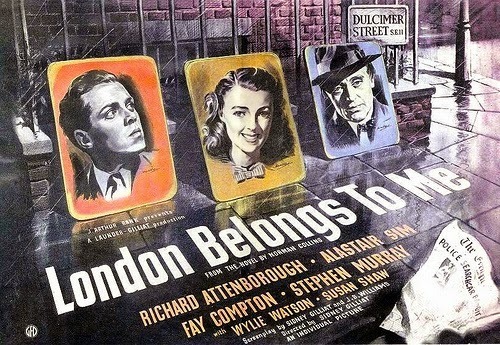
Description: It is 1938 and the prospect of war hangs over London. At the lodging-house at 10 Dulcimer Street, Mr Josser returns home with the clock he has received as a retirement gift. The other residents include flashy young mechanic Percy Boon, whose foray into stolen cars descends into something much, much worse.
 https://www.youtube.com/watch?v=BLcp9...
SE11 equates to today's Vauxhall/Kennington/Oval. Alistair Sims was fab, what with his comb over ending in a kiss-curl.

April 13, 2019
It was a marathon effort to plough through this massive novel but it was so worth it. I'm really going to miss the inhabitants of 10 Dulcimer Street, Kennington.
One observation I would make, though, is that I felt Percy Boon's story really ought to belong to a separate novel. There was certainly enough material to do so and I think it would have been better had that happened.
One observation I would make, though, is that I felt Percy Boon's story really ought to belong to a separate novel. There was certainly enough material to do so and I think it would have been better had that happened.

September 9, 2010
A book chosen solely for its title.
This was written in 1945 and is a sprawling soap opera of a book, detailing the lives of the inhabitants of one london house, the ficional 10 Dulcimer Street.
Collins does a peerless job with characterisation. We know them all, their traits, motivations, desires and fears and he delivers it all with a comic flouish, against the back drop of the second world war.
The house is owned by a widowe - Mrs Vizzard. She is worried about the reputation of the house, whos rooms she lets as she doesnt want to dive into her capital. She finds love with an italian spirtualised cad.
The jossers are the solid centre of the book Usually referred to as Mr and Mrs - we meet them as Mr Josser retires from his city clerk job and half dreams of retiring in the country. But can they part from London. These are the moral core of the book and the sense of neighbourlyness and community emminates from this family.
Mrs Boon and her son, Percy are a bit of the opposite. Percy ending on a murder charge after increasingly getting into a murky world of car theft.
And then two fantastic comedy characters. Mr Puddy with his lisp, happy as long as he knows where his next meal is coming from and Connie, a nightclub cloak attendance, desperately holding onto her looks and fighting off loneliness.
The book has a cinematic feel as the the author talks directly to the reader, inviting him to observe these actions / scenarios.
War moves from rumour to reality and we have the blitz spirit documented. This is wonderful stuff. As are the misunderstanding that happen between characters and scenarios that almist always seem to come with a happy ending.
Effortless to read, great characterisation and a book that shows that society is moving backwards, rather than forwards. The sense of community and quiet working class values is always present in this book.
It really is excellent.
This was written in 1945 and is a sprawling soap opera of a book, detailing the lives of the inhabitants of one london house, the ficional 10 Dulcimer Street.
Collins does a peerless job with characterisation. We know them all, their traits, motivations, desires and fears and he delivers it all with a comic flouish, against the back drop of the second world war.
The house is owned by a widowe - Mrs Vizzard. She is worried about the reputation of the house, whos rooms she lets as she doesnt want to dive into her capital. She finds love with an italian spirtualised cad.
The jossers are the solid centre of the book Usually referred to as Mr and Mrs - we meet them as Mr Josser retires from his city clerk job and half dreams of retiring in the country. But can they part from London. These are the moral core of the book and the sense of neighbourlyness and community emminates from this family.
Mrs Boon and her son, Percy are a bit of the opposite. Percy ending on a murder charge after increasingly getting into a murky world of car theft.
And then two fantastic comedy characters. Mr Puddy with his lisp, happy as long as he knows where his next meal is coming from and Connie, a nightclub cloak attendance, desperately holding onto her looks and fighting off loneliness.
The book has a cinematic feel as the the author talks directly to the reader, inviting him to observe these actions / scenarios.
War moves from rumour to reality and we have the blitz spirit documented. This is wonderful stuff. As are the misunderstanding that happen between characters and scenarios that almist always seem to come with a happy ending.
Effortless to read, great characterisation and a book that shows that society is moving backwards, rather than forwards. The sense of community and quiet working class values is always present in this book.
It really is excellent.

February 26, 2019
I spent the better part of a month with this 700-plus book at the ready, packing it with me as I traveled halfway across the country and back again, reading a few pages every night. I swear it was much more than 700 page, small print, thin paper pages. But as I closed that last page as World War II descends on London, I wished it was even longer. I loved my time with the inhabitants of 10 Dulcimer Street; the hilarious Enrico Squales, who was always looking for ways to make an easy buck; the nasaly Mr Puddy and his love for canned food; Connie and her always wanting to be involved; even Mrs Josser and her constant henpecking. And of course, the biggest character was the city itself, pulling itself together following the Great War, with the worry that another one was coming. Collins's addition of the omniscient narrator, who is our eyes and ears upon the house and its inhabitants, was a brilliant technique.
Carefully-drawn characters living between the two world wars and into the second, this book sparkled despite its eminent gloom.
Carefully-drawn characters living between the two world wars and into the second, this book sparkled despite its eminent gloom.

February 12, 2019
I’m going to miss all the characters I’ve come to know who live on 10 Dulcimer Street. After all, we’ve spent 752 pages together.
I was able to spend time in both a tropical beach heaven and then an epic Seattle snowstorm AND simultaneously be in 1939-40 London for the better part of 2 weeks.
Reading at its finest.
The book is almost entirely about the inhabitants of one building made up of several flats. With London always as place and the eve of WWII always as time.
It was bittersweet to turn the last page.
Highly recommended.
Penguin Classic.
Published in 1945
*I may go up to 5*s if I continue to think about and miss being in this world.
I was able to spend time in both a tropical beach heaven and then an epic Seattle snowstorm AND simultaneously be in 1939-40 London for the better part of 2 weeks.
Reading at its finest.
The book is almost entirely about the inhabitants of one building made up of several flats. With London always as place and the eve of WWII always as time.
It was bittersweet to turn the last page.
Highly recommended.
Penguin Classic.
Published in 1945
*I may go up to 5*s if I continue to think about and miss being in this world.

April 23, 2014
According to the interesting preface in this edition, Norman Collins was the author of sixteen novels and two plays, none of which, save London Belongs to Me, is worth remembering. Which makes the book even more noteworthy because it is a complete gem of a novel in almost every detail.
It is quite Dickensian in scope, centring on one family and the people who are drawn into their social orbit, and it succeeds in providing an account of a city at one moment in its history. The moment is the months between Christmas 1938 and the same festive occasion in 1940. The Jossers, an ordinary family of the lower middle classes, are the central characters, but the house in which they live, 10 Dulcimer Street, Kennington, is the equal core of the story.
We are introduced to the pliable Mr J on the day of his retirement when he is about to take leave of the City firm he has worked in as a ledger clerk for all his working life. He is clearly a nondescript sort of person who will be soon forgotten once he passes out the doors of the office for the last time. But he is on his way home to a family where he has a much more elevated status, and a small circle of neighbours, to whom he is an eminently respectable person.
His home is in rooms rented from the leaseholder of 10 Dulcimer Street, the ever anxious widow, Mrs Vizzard. Wracked by the fear of her incipient old age and the need to extract capital from the rents of her tenants she worries about the reputation of the place, and suspects that all the tenants, save the Jossers, fall below a properly respectable standard. The dread of slipping down a rung from the position of the ‘comfortable’ into the desperate position of the indigent is Mrs V’s obsession.
For the time being the Jossers are keeping everybody afloat. As a counterpoint to Mr J’s sunny amiability, his wife is the keenly watchful matriarch who really holds the family together. Her eyes survey the boundaries of the family’s respectable status, which extend to her son Ted – pride and joy in himself but has rather let the side down by marrying Cynthia, a generic blonde beauty of the age, but whose social status was that of a mere cinema usherette. Ted has the prospect of rising to a better position as a manager in the Co-op, but his Cynthia-besotted status has opened up a vulnerable flank which Mrs J is ever alert to.
Also her own daughter, Doris, is showing inclinations which pose other types of threat. She wants to set up a flat with a girlfriend out in Primrose Hill – a bohemian sort of place where anything could happen. The job of keeping watch is most wearing on the nerves. It is not helped by Mr Josser’s fretting over the inactivity that has been forced on him by retirement, and his desire to take a part-time job as a rent collector.
For the Mrs Josser there is also her brother to worry about – Uncle Henry – a bicycling Socialist greengrocer who is apt to appear on the doorstep at any moment with a fiery sermon on the threats that loom from the deteriorating situation in Europe. Uncle Henry and Mr J are luminaries in something called the South London Parliament which meets weekly to mirror the debates and activities of the government on the other side of the Thames.
Other significant characters are the Boons – mother and her jack-the-lad son Percy. The tale of Percy and the Blonde provides the pace and edge to the story, giving all the denizens of 10 Dulcimer Street to act out their own parts on the stage of life. Then there is Connie, the good-time girl who has gone well beyond faded to become decidedly old. But she remains a part of the night-time economy of London to which she has devoted her life, but now in the humble position of a cloakroom attendant in a nightclub. She moves between a chronic appreciation of the lonely and vulnerable state she has fallen into and a riotous zest for life and a desire to be close to the centre of everything.
There is also Mr Squales, who arrives up one day and takes the hard-to-let back room in the basement, next door to Mrs Vizzard herself. He turns out to be a ne’er-do-well and a chancer, ekeing out an existence as a medium in London’s spiritualist circles. Mrs V, to whom anything less than utterly respectable is so repugnant, is drawn to him in the way that only opposites can be. The sense that villainy is slithering around the corridors of 10 Dulcimer Street is ramped up by the oliveness of Mr S’s complexion – he appears to be a foreigner.
Last of all the Dulcimer Street characters is Mr Puddy – a solitary man in his late middle age who has found his calling in the nightwatchman business. On the margins of all the dramas in the house he nevertheless plays his role with a suite of worries and concerns that seem to revolve around finishing his supper each evening without being interrupted by callers, or, as the War moves into its active phase, bombs falling on the warehouses he had been set to guard.
In the background there is London itself. It is a smaller city in size than the one that exists today, with the feel of the countryside still being just about there in places like Crouch Hill. But it has a larger population, with 8 million crammed into its boroughs. Its clashing cultures of shabby wheeling and dealing contrast with the middle class aspirations of its clerks and secretaries, and not far away are the looming threats of a continent that might sent bombers across at anytime to blow it to pieces. Collins captures it all so well in this vibrant and funny novel.
It is quite Dickensian in scope, centring on one family and the people who are drawn into their social orbit, and it succeeds in providing an account of a city at one moment in its history. The moment is the months between Christmas 1938 and the same festive occasion in 1940. The Jossers, an ordinary family of the lower middle classes, are the central characters, but the house in which they live, 10 Dulcimer Street, Kennington, is the equal core of the story.
We are introduced to the pliable Mr J on the day of his retirement when he is about to take leave of the City firm he has worked in as a ledger clerk for all his working life. He is clearly a nondescript sort of person who will be soon forgotten once he passes out the doors of the office for the last time. But he is on his way home to a family where he has a much more elevated status, and a small circle of neighbours, to whom he is an eminently respectable person.
His home is in rooms rented from the leaseholder of 10 Dulcimer Street, the ever anxious widow, Mrs Vizzard. Wracked by the fear of her incipient old age and the need to extract capital from the rents of her tenants she worries about the reputation of the place, and suspects that all the tenants, save the Jossers, fall below a properly respectable standard. The dread of slipping down a rung from the position of the ‘comfortable’ into the desperate position of the indigent is Mrs V’s obsession.
For the time being the Jossers are keeping everybody afloat. As a counterpoint to Mr J’s sunny amiability, his wife is the keenly watchful matriarch who really holds the family together. Her eyes survey the boundaries of the family’s respectable status, which extend to her son Ted – pride and joy in himself but has rather let the side down by marrying Cynthia, a generic blonde beauty of the age, but whose social status was that of a mere cinema usherette. Ted has the prospect of rising to a better position as a manager in the Co-op, but his Cynthia-besotted status has opened up a vulnerable flank which Mrs J is ever alert to.
Also her own daughter, Doris, is showing inclinations which pose other types of threat. She wants to set up a flat with a girlfriend out in Primrose Hill – a bohemian sort of place where anything could happen. The job of keeping watch is most wearing on the nerves. It is not helped by Mr Josser’s fretting over the inactivity that has been forced on him by retirement, and his desire to take a part-time job as a rent collector.
For the Mrs Josser there is also her brother to worry about – Uncle Henry – a bicycling Socialist greengrocer who is apt to appear on the doorstep at any moment with a fiery sermon on the threats that loom from the deteriorating situation in Europe. Uncle Henry and Mr J are luminaries in something called the South London Parliament which meets weekly to mirror the debates and activities of the government on the other side of the Thames.
Other significant characters are the Boons – mother and her jack-the-lad son Percy. The tale of Percy and the Blonde provides the pace and edge to the story, giving all the denizens of 10 Dulcimer Street to act out their own parts on the stage of life. Then there is Connie, the good-time girl who has gone well beyond faded to become decidedly old. But she remains a part of the night-time economy of London to which she has devoted her life, but now in the humble position of a cloakroom attendant in a nightclub. She moves between a chronic appreciation of the lonely and vulnerable state she has fallen into and a riotous zest for life and a desire to be close to the centre of everything.
There is also Mr Squales, who arrives up one day and takes the hard-to-let back room in the basement, next door to Mrs Vizzard herself. He turns out to be a ne’er-do-well and a chancer, ekeing out an existence as a medium in London’s spiritualist circles. Mrs V, to whom anything less than utterly respectable is so repugnant, is drawn to him in the way that only opposites can be. The sense that villainy is slithering around the corridors of 10 Dulcimer Street is ramped up by the oliveness of Mr S’s complexion – he appears to be a foreigner.
Last of all the Dulcimer Street characters is Mr Puddy – a solitary man in his late middle age who has found his calling in the nightwatchman business. On the margins of all the dramas in the house he nevertheless plays his role with a suite of worries and concerns that seem to revolve around finishing his supper each evening without being interrupted by callers, or, as the War moves into its active phase, bombs falling on the warehouses he had been set to guard.
In the background there is London itself. It is a smaller city in size than the one that exists today, with the feel of the countryside still being just about there in places like Crouch Hill. But it has a larger population, with 8 million crammed into its boroughs. Its clashing cultures of shabby wheeling and dealing contrast with the middle class aspirations of its clerks and secretaries, and not far away are the looming threats of a continent that might sent bombers across at anytime to blow it to pieces. Collins captures it all so well in this vibrant and funny novel.

August 8, 2012
A masterful visualisation of London under the shadow of war, told through a series of interlinked vignettes that follow the lives of the various inhabitants of a south London terrace, the book (Like all of Collin's work) is infused with a light humour based on pitch-perfect observation and a fantastic eye for the most banal details, enthralling throughout and managing the difficult task of making the reader invest the same amount of emotion in a scene about a broken bicycle as a climactic murder trial. Highly recommended.

January 10, 2019
Absolute loved this unpretentious novel about various mostly working class characters making ends meet in the period just before the 2nd World War and a brief period at the start of the war. Although that description makes it sound a bit of a drag, the author has genuine affection for these characters and their foibles and leavens proceedings with light wit

December 23, 2011
Just a slow soap opera. Boring. Should have abandoned it earlier.

April 26, 2026
The British Dostoevsky novel does exist and it’s this one. Slice of life with endless moral nuggets. The human condition has always been and will always be the same.


October 10, 2025
This 1946 novel follows the lower middle and working class residents in a modest apartment building in the South Bank Kennington neighborhood of London from late 1938 to late 1940, i.e., from just before the start of the Second World War to the dark days of the London blitz. While the book has a distinctly Dickensian quality, rather than caricatures, each individual here is full-bodied and convincingly real. At least in the US, this novel seems long forgotten if ever it was appreciated here. I quite loved it and for all the ups and downs recounted — and there are many and very serious ones— it was still a pleasure to dwell for a while with the inhabitants of 10 Dulcimer Street and experience a bit of London in those darkening times.

March 29, 2022
This is a four-and-a-half-star review. London Belongs To Me is an astonishing feat. It evokes an authentic sense of the time and paints late-1930s London with affection - not getting weighed down by detail, but shedding enough light for the reader to get a real sense of the character of the place. The large cast of characters feel real and contribute meaningfully to the tapestry of the plot.
Inevitably for a book of this scale, it has its flaws. The pacing can sometimes be inconsistent, leaving the reader a bit dislocated. Some characters are more developed than others, and one or two feel a bit one-dimensional. Nevertheless, it's a fascinating exploration of London at a pivotal point in its history and is highly recommended.
Inevitably for a book of this scale, it has its flaws. The pacing can sometimes be inconsistent, leaving the reader a bit dislocated. Some characters are more developed than others, and one or two feel a bit one-dimensional. Nevertheless, it's a fascinating exploration of London at a pivotal point in its history and is highly recommended.

February 18, 2011
Spans the time from Christmas 1938 to Christmas 1940 among a group of Londoners living in or associated with a house south of the river in a neighbourhood on the edge between middle-class and working-class respectability. Mrs Vizzard owns the house, lives in the basement, worries about the new tenant, the foreign-looking Mr Squales, and consoles herself with spiritualism; Mr and Mrs Josser live on the first floor with their daughter who wants to move out and room with a friend but doesn't dare tell her mother; Mrs Boon lives in two rooms upstairs and dotes on her selfish, stupid, vain son Percy who's got an eye for the ladies, a love of excitement, and a powerful sense of entitlement; upstairs are Mr Puddy, who lives for his next meal, and Connie, a superannuated nightclub hostess with bleached hair, light fingers, and a canary. Really quite funny at times. Collins has an eye for the absurdities of human behaviour and our tendency to deceive ourselves as to our true motives or intentions. A few things irritated me: I got tired of deciphering Mr Puddy's strangled consonants and I could never like the officious Mrs Josser although I know I was supposed to regard her as the moral centre of the book. But Connie is a wonderful character, and the whole thing is good-natured and likeable. Not a book of major importance, but I enjoyed it.

August 15, 2018
Setting: London, UK; 1938-40. Published in 1945, this is a tale of a motley collection of characters living in a small boarding house in the Kennington area of London as war looms. But no-one really believes it will happen so they just carry on regardless, even when world events out of their control start to impinge on their lives. The characters are full of life and pathos as they each struggle to survive or better themselves. As a reader, I found myself bound up in their very existence and felt all their emotions. It could be said to be a soap opera of the time - mostly day-to-day life but with a few shocking events thrown in for good measure - but it was also a tale of London at the time.
This was another author I was unaware of and probably would have remained so but for Christopher Fowler's Book of Forgotten Authors. Not only did I really enjoy the book but I was also interested to find out about the author - made Controller of Television at the BBC in 1947, his three-year reign saw TV licence numbers rise from 31000 to 656000. He then left the BBC and was instrumental in setting up the new Independent Television Network, which broke the BBC's monopoly.
A fascinating man and a fascinating book - very, very close to awarding this one 5 stars but it will have to be 4.5 stars!!
This was another author I was unaware of and probably would have remained so but for Christopher Fowler's Book of Forgotten Authors. Not only did I really enjoy the book but I was also interested to find out about the author - made Controller of Television at the BBC in 1947, his three-year reign saw TV licence numbers rise from 31000 to 656000. He then left the BBC and was instrumental in setting up the new Independent Television Network, which broke the BBC's monopoly.
A fascinating man and a fascinating book - very, very close to awarding this one 5 stars but it will have to be 4.5 stars!!

April 25, 2014
It seems unfitting to describe this Moby Dick sized novel as a 'slice of life'. 'Slab of life' seems more appropriate, and not just because of its bulk.
London Belongs to Me concerns the tenants of a South London lodging house between Christmas 1938 and Christmas 1940. We are well beyond the halfway point before war is declared. Up until then we are made privy to the lives of one of the most vibrant sets of characters I have ever come across. Our familiarity with their domestic ups-and-downs means that when “the long shadow of war” finally catches up with them, and the young men start disappearing from the streets, it feels like an earthquake.
This is a book which pays many courtesies to its reader. The prose is slick and conversational, but also frequently beautiful. The narrative voice is pally and confiding, sometimes addressing us directly as we peek behind the blackout curtains of Dulcimer Street. The chapters are brief and divided into numbered parts, so we're never more than a page or two from a break, making it perfect for bedtime reading. And even in the story's darkest moments, it is peppered with jokes and shot through with humanity and affection.
This deserves to be far more widely read. Now I have finished it, I miss it.
London Belongs to Me concerns the tenants of a South London lodging house between Christmas 1938 and Christmas 1940. We are well beyond the halfway point before war is declared. Up until then we are made privy to the lives of one of the most vibrant sets of characters I have ever come across. Our familiarity with their domestic ups-and-downs means that when “the long shadow of war” finally catches up with them, and the young men start disappearing from the streets, it feels like an earthquake.
This is a book which pays many courtesies to its reader. The prose is slick and conversational, but also frequently beautiful. The narrative voice is pally and confiding, sometimes addressing us directly as we peek behind the blackout curtains of Dulcimer Street. The chapters are brief and divided into numbered parts, so we're never more than a page or two from a break, making it perfect for bedtime reading. And even in the story's darkest moments, it is peppered with jokes and shot through with humanity and affection.
This deserves to be far more widely read. Now I have finished it, I miss it.
Displaying 1 - 30 of 203 reviews