

What do you think?
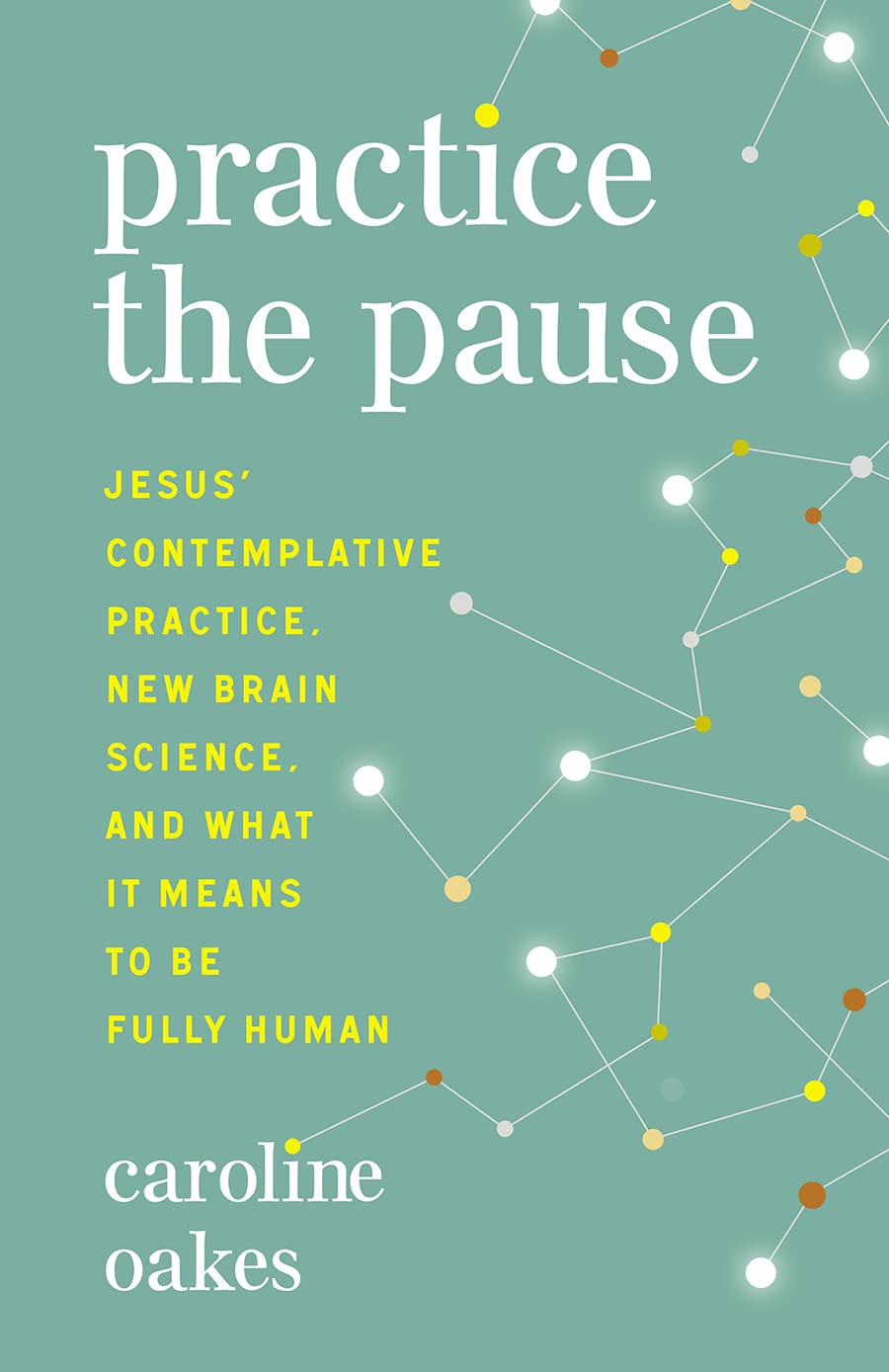
Practice the Pause: Jesus' Contemplative Practice, New Brain Science, and What It Means to Be Fully Human
These days, many of us live in a state of overreactive fight-or-flight response and chronic stress. The demands of modern life pull us in all directions and can often put the meaningful connections in our lives at risk--connections to our deepest selves, to others, and even to God. But there is good news. New developments in brain science have recently proven that an intentional practice of pausing for a few minutes of meditation, prayer, or other contemplative practice actually rewires our brain in ways that make us calmer, less reactive, and better able to see the bigger picture. In Practice the Pause, spiritual director and writer Caroline Oakes offers easy-to-understand explanations of how this new brain science is confirming what every spiritual tradition has been telling us for millennia: by practicing the pause, we become more self-aware and better able to understand others. We become more "God aware." With a refreshing focus on the Eastern Christian understanding of Jesus as a master of wisdom, Oakes shines a spotlight on Jesus's own centering pause practice as a transformative path for personal and social change. We learn that even a seven-second pause practice can move us beyond the fight-or-flight responses of our ego in our daily lives and actually equip us to cultivate the common good in the world.
310 pages, Paperback
Published January 24, 2023
Ratings & Reviews
Friends & Following
Create a free account to discover what your friends think of this book!
Community Reviews
Displaying 1 - 20 of 20 reviews
February 3, 2024
I feel like I’ve been searching for Caroline Oakes’ “Practice the Pause” for most of my adult life. After going to parochial school and serving as a Catholic altar boy, I always felt a strange disconnect between the stories and words of Jesus of Nazareth from the Gospels and what I was hearing from the pulpit and from the western Christian culture I was raised in. Then I heard an episode of This Undivided Life podcast in which Caroline Oakes spoke of her research of eastern wisdom-focused Christianity and the importance of stillness, focus, breathing, and contemplation, and her book “Practice the Pause”. I purchased the book immediately, and it did not disappoint. I found myself nodding and highlighting continuously. Such a refreshing authentic take on Christianity and the messages and actions of Jesus.
October 1, 2023
I read this book for class (my spiritual direction training) and did not love it.
There are nuggets of goodness and the concept is lovely. But it is extremely repetitive (I actually looked up the publisher bc it was edited so poorly I wondered if it was self published). And while I am a big fan of both neuroscience and contemplative practices, it’s almost like the author is presenting what she’s learned as new information, not a conversation that’s been going on for a while (neuroscience)/actual centuries (contemplative practices). Worst: She super skates the line between practices that are transformative because they connect us to God and open us to His transforming presence and “you can transform yourself using these practices” (which she says out right so I guess that’s not skating the line, that’s crossing it.)
The best content are quotes from Father Keating, Richard Rohr, Ruth Haley Barton, Henri Nouwen. I’d recommend going straight to those sources and skipping this.
There are nuggets of goodness and the concept is lovely. But it is extremely repetitive (I actually looked up the publisher bc it was edited so poorly I wondered if it was self published). And while I am a big fan of both neuroscience and contemplative practices, it’s almost like the author is presenting what she’s learned as new information, not a conversation that’s been going on for a while (neuroscience)/actual centuries (contemplative practices). Worst: She super skates the line between practices that are transformative because they connect us to God and open us to His transforming presence and “you can transform yourself using these practices” (which she says out right so I guess that’s not skating the line, that’s crossing it.)
The best content are quotes from Father Keating, Richard Rohr, Ruth Haley Barton, Henri Nouwen. I’d recommend going straight to those sources and skipping this.
April 4, 2023
This book was exactly what I needed, and I wish I could give it 6 stars. It is a refreshing take on Jesus through the eyes of the "East" instead of the "West."
I grew up in a mainline Protestant household in the Midwest, but never truly felt comfortable with "Jesus as Divine Savior" being the only game in town. I have also always been fascinated by brain science and the exploration of what it means to have a conscious. Seeing what white nationalists in America have done to the Jesus Movement led me to spending the past year exploring Buddhism and Eastern philosophy. Through that exploration, I became truly aware of Christian mysticism for the first time in my life.
Ms. Oakes book brilliantly weaves together all of those various threads - Jesus, Eastern thought and brain science - into a very thought-provoking work exploring the fact Jesus was fully human first.
I grew up in a mainline Protestant household in the Midwest, but never truly felt comfortable with "Jesus as Divine Savior" being the only game in town. I have also always been fascinated by brain science and the exploration of what it means to have a conscious. Seeing what white nationalists in America have done to the Jesus Movement led me to spending the past year exploring Buddhism and Eastern philosophy. Through that exploration, I became truly aware of Christian mysticism for the first time in my life.
Ms. Oakes book brilliantly weaves together all of those various threads - Jesus, Eastern thought and brain science - into a very thought-provoking work exploring the fact Jesus was fully human first.

March 4, 2023
As a formerly religious person, I’m not really sure why I picked up this book. I thought it would be more of an academic take on Jesus’ practices. I should’ve expected it to be a Christian book. That being said, I found it very interesting, and I would definitely recommend it to anyone who is trying to enrich their spiritual practices. It was amazing and well-written, and definitely presented a new take on Jesus and His message.

May 14, 2025
I will certainly be referencing the last several chapters of this book again and again. Even pausing while reading certain points to put them into practice in the moment has helped me feel grounded and connected to the Divine within. I am eager to see the transformation that takes place with regularly practicing the pause.
I do wish that the author had gotten to some of her points sooner, as the book felt a bit drawn out and repetitive. I was relieved to see that the ending made reading what, at times, felt like a research paper worthwhile.
I do wish that the author had gotten to some of her points sooner, as the book felt a bit drawn out and repetitive. I was relieved to see that the ending made reading what, at times, felt like a research paper worthwhile.
April 1, 2025
This book is soooo good & has some truly life changing tools. I loved it and will be drawing on it for the rest of my life.
Fav crumbs and lessons:
- cultivating the inner sanctuary of our hearts to commune and be with the Divine in us!
- what it means to die to ourselves repeatedly in the pausing and returning to Jesus example
- “Indeed, these tameion prayer-beyond-Word practices point to Jesus’s times apart as intentional times of restoration, refreshment, re-‘membering’ and re-attunement with the Divine, his source, his center, his ground of being.”
- “the Sh’ma was and remains for Jews the Journey into the highest and deepest realms of the place where God dwells, the way to touch and be touched by God.”
- “First century Jews were very aware of the presence of God in the natural world. In the Hebrew culture, it was understood that one could connect with, and be transformed by, the mystery of God by being in and a part of the natural world.”
- “consider the Divine a verb, a relationship, rather than a noun… suggesting that God is the dynamic intimacy of relationship, a verb of back-and-forth connection, of Love that created everything and connects everything and moves everything forward.”
- “ on the spiritual journey, there is nowhere to go, only perpetual arriving where you already are.”
- “ our centering pause practice reveals our essence, the basic goodness at the core of our being. We become in our outer life, what we already are in our essence, in our true, real self. As you are able to connect your inner contemplated life of God within yourself with your outer life of God within others, and in all things, you will notice you are attuned to and living through a new frequency. A frequency that is Love.”
- “taking time to be with God in silence and solitude is about “ waking to our groundedness, to our rootedness, to our beingness in God. It’s about finding that goodness within ourselves and giving that to the world.”
-“When we catch side of the soul, we can become healers in a wounded world- in the family, and the neighborhood, in the workplace and then political life.”
Fav crumbs and lessons:
- cultivating the inner sanctuary of our hearts to commune and be with the Divine in us!
- what it means to die to ourselves repeatedly in the pausing and returning to Jesus example
- “Indeed, these tameion prayer-beyond-Word practices point to Jesus’s times apart as intentional times of restoration, refreshment, re-‘membering’ and re-attunement with the Divine, his source, his center, his ground of being.”
- “the Sh’ma was and remains for Jews the Journey into the highest and deepest realms of the place where God dwells, the way to touch and be touched by God.”
- “First century Jews were very aware of the presence of God in the natural world. In the Hebrew culture, it was understood that one could connect with, and be transformed by, the mystery of God by being in and a part of the natural world.”
- “consider the Divine a verb, a relationship, rather than a noun… suggesting that God is the dynamic intimacy of relationship, a verb of back-and-forth connection, of Love that created everything and connects everything and moves everything forward.”
- “ on the spiritual journey, there is nowhere to go, only perpetual arriving where you already are.”
- “ our centering pause practice reveals our essence, the basic goodness at the core of our being. We become in our outer life, what we already are in our essence, in our true, real self. As you are able to connect your inner contemplated life of God within yourself with your outer life of God within others, and in all things, you will notice you are attuned to and living through a new frequency. A frequency that is Love.”
- “taking time to be with God in silence and solitude is about “ waking to our groundedness, to our rootedness, to our beingness in God. It’s about finding that goodness within ourselves and giving that to the world.”
-“When we catch side of the soul, we can become healers in a wounded world- in the family, and the neighborhood, in the workplace and then political life.”
January 2, 2023
This book is a must-read for anyone interested in mindfulness, and it is proof that "being mindful" is not just a temporary fad propelled by recent neuroscience discoveries.
With a style that makes readers feel like they are having lunch with Richard Rohr or aother contemplative leader, Caroline Oakes shows us not only that mindfulness has been practiced for millenia, but it is directly connected to the life and teachings of Jesus of Nazareth.
She offers reluctant Christians like me a refreshing take on the spiritual intent of the Gospels, citing multiple references to Jesus's call to discover the kingdom of God within us. More importantly, she shows us that Jesus didn't merely call us to follow him in our worship of God; he called us to begin - and continue - a contemplative practice of our own.
Linking current brain science with ancient wisdom practices, and correcting a key misunderstanding of what it means to "repent", Practice the Pause shows us both *why* to have a contemplative practice and *how* to have one, as well as why and how to make it a *regular* part of our day-to-day lives.
Practice the Pause is inspiring. It is practical. And it will enliven your understanding of what it means to be a spiritual as well as human being.
With a style that makes readers feel like they are having lunch with Richard Rohr or aother contemplative leader, Caroline Oakes shows us not only that mindfulness has been practiced for millenia, but it is directly connected to the life and teachings of Jesus of Nazareth.
She offers reluctant Christians like me a refreshing take on the spiritual intent of the Gospels, citing multiple references to Jesus's call to discover the kingdom of God within us. More importantly, she shows us that Jesus didn't merely call us to follow him in our worship of God; he called us to begin - and continue - a contemplative practice of our own.
Linking current brain science with ancient wisdom practices, and correcting a key misunderstanding of what it means to "repent", Practice the Pause shows us both *why* to have a contemplative practice and *how* to have one, as well as why and how to make it a *regular* part of our day-to-day lives.
Practice the Pause is inspiring. It is practical. And it will enliven your understanding of what it means to be a spiritual as well as human being.
June 7, 2023
Love the content in this book! I'll be thinking/working on these ideas for a long time. Four stars instead of five because the writing was a bit repetitive and I would have appreciated a tighter message.
"And so spirituality and science are, indeed, dancing together. We are now able to understand the compelling psychology of the breakthrough new contemplative neuroscience studies on what ancient religion has taught for thousands of years about the power of contemplative practice to equip us to live into our highest human virtues." (p. 270)
"And so spirituality and science are, indeed, dancing together. We are now able to understand the compelling psychology of the breakthrough new contemplative neuroscience studies on what ancient religion has taught for thousands of years about the power of contemplative practice to equip us to live into our highest human virtues." (p. 270)
February 10, 2023
Mayo Clinic’s teaching on Contemplative Practice
For more than two decades, I have lived with severe chronic pain. Spending one month at Mayo Clinic I took their classes about the connection between our brains neural pathways and contemplative practices (both prayer and/or meditation). Both Mayo Clinic and this book are ecumenical. In Practice the Pause Jesus is an example.
As Caroline Oakes states in Practice the Pause, “We are seeing here why both spiritual leaders and neuroscientists believe the scientific discoveries of this era are a prelude to a spiritual and neurological revolution.… both the gospels and science are showing us the potential of finding short interludes of time to be still, to let go, and to create that nanosecond of pause that can open us to the power of God in us, to transform our lives and the world around us.
Following these practices has rewired my brain and deepened my connection with our Creator. I know this because both my physical and emotional pain have lowered very significantly, and my spiritual growth has risen, for four years now. Caroline Oakes’ book is helping me to take this practice to the next level. This knowledge and the practices are a gift to us as individuals, and a gift to us as a community.
For more than two decades, I have lived with severe chronic pain. Spending one month at Mayo Clinic I took their classes about the connection between our brains neural pathways and contemplative practices (both prayer and/or meditation). Both Mayo Clinic and this book are ecumenical. In Practice the Pause Jesus is an example.
As Caroline Oakes states in Practice the Pause, “We are seeing here why both spiritual leaders and neuroscientists believe the scientific discoveries of this era are a prelude to a spiritual and neurological revolution.… both the gospels and science are showing us the potential of finding short interludes of time to be still, to let go, and to create that nanosecond of pause that can open us to the power of God in us, to transform our lives and the world around us.
Following these practices has rewired my brain and deepened my connection with our Creator. I know this because both my physical and emotional pain have lowered very significantly, and my spiritual growth has risen, for four years now. Caroline Oakes’ book is helping me to take this practice to the next level. This knowledge and the practices are a gift to us as individuals, and a gift to us as a community.
July 30, 2023
This is an excellent book about how Jesus found a third way between fight and flight and how contemplative practices can literally change your brain and make it easier for you to respond to triggering events rather than have a knee=jerk reaction. Drawing on Biblical texts, information from the desert mothers and fathers of early Christianity, and neuroscience, Coates makes a great case for learning to practice the pause.
August 23, 2023
For a while I've been reading books about contemplative practice and books about neuroscience but I've never read a book that combines both, until now. This book is a one-stop shop distilling all the good stuff, both ancient and present, from both disciplines into one place that is great for both the beginner and the seasoned practitioner. If I were teaching a course on contemplative practice, it would definitely be required reading.

February 27, 2024
Reflective & practical. I think I would have loved it more if it was less repetitive. It explores contemplative prayer and how resting in His presence changes our neural pathways, making us less driven by fight/flight responses. And therefore how this shift can create space to choose the third way, and to bring His wholeness into the world. Loved the exploration of Eastern Christian traditions and how Christian mysticism meets neuroscience here.
February 28, 2023
As I read Practice the Pause, I kept thinking “yes!” I have often noticed the parallels in the teachings of Jesus and the tenets of meditation practices. Then she introduces the latest neuroscience studies and practical methods of meditation. It was an informative and inspiring read. I am anxious to try some of these methods in my own practice.
November 24, 2023
I enjoyed the brain science portion of this book and learning how contmplation can literally change our brain's structure and our reactions to stress. I also enjoyed learning about spiritual practices, but did not agree with the author's mix of Christianity and other religions.

October 21, 2024
Interesting and well written but Scripture was used as an afterthought. The idea that all religions lead to God is a premise throughout the book and is certainly not a Biblical view. The author knows a lot about the personhood of Jesus but does not know Him which is a huge difference.

June 23, 2026
This was an in depth look at the practices of Lectio Divina and Centering Prayer and how the benefits of these practices dovetail with what modern psychology and neurology are discovering about our brains.

August 13, 2024
There is some unnecessary repetition in this book but I really appreciate the message and what I learned. Sections Three and Four are most relevant to me.

November 8, 2024
This book will change your life!
July 17, 2025
Thoughtful book.

November 13, 2024
finally got around to finishing this. so refreshed by this theology and by the healing reworkings of orginal language used in the Bible like metanoia for this falsely translated idea of repentance. life changing. at some point though I think also incorporating that much of this research stems from new understandings of mindfulness is important! a bit repetitive towards the end but was so fascinating.
Displaying 1 - 20 of 20 reviews