

What do you think?

Memento Mori #3
Broadway Butchery
The Cold Case Squad of the NYPD is overworked, understaffed, but receiving great press due to star detective, Everett Larkin. His uncanny memory and Holmesian-like skills of deduction have already led to the capture of one serial killer. Now he’s identified a second predator and brought an end to their twenty-plus year reign of terror.
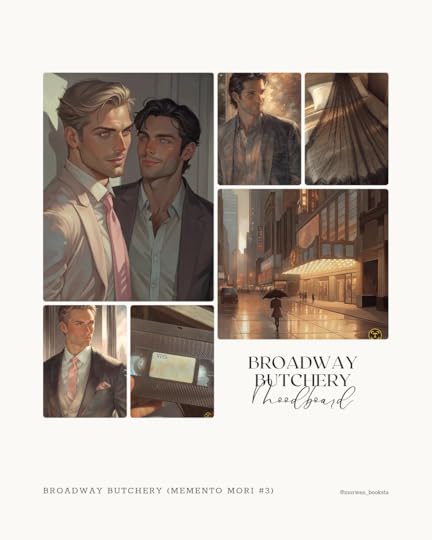
Routine construction at a Broadway souvenir shop leads to the discovery of a mummified woman in the wall. And when Larkin receives a mysterious VHS tape that same night, he knows it’s no coincidence. Expecting a Victorian mourning artifact in this new mystery, Larkin wastes no time turning to former historian and current boyfriend, Ira Doyle of the Forensic Artists Unit for help.
A web of nameless victims, countless suspects, and endless lies drag Larkin and Doyle deep into the gritty past of Times Square, reopening painful wounds and testing the fortitude of their relationship. And all the while, someone is watching, biding their time until they can make Everett Larkin nothing… but a memory.
Routine construction at a Broadway souvenir shop leads to the discovery of a mummified woman in the wall. And when Larkin receives a mysterious VHS tape that same night, he knows it’s no coincidence. Expecting a Victorian mourning artifact in this new mystery, Larkin wastes no time turning to former historian and current boyfriend, Ira Doyle of the Forensic Artists Unit for help.
A web of nameless victims, countless suspects, and endless lies drag Larkin and Doyle deep into the gritty past of Times Square, reopening painful wounds and testing the fortitude of their relationship. And all the while, someone is watching, biding their time until they can make Everett Larkin nothing… but a memory.
311 pages, Kindle Edition
First published June 22, 2023
About the author
C.S. Poe
45 books1,494 followersC.S. Poe is an author of gay mystery, romance, and speculative fiction. She’s a winner of the Next Generation and e-Lit book awards, as well as a finalist of the Lambda Literary award.
She resides in New York City and is a Gilded Age New York historian and board director for the Victorian Society of New York. She loves Romanticism artwork, the films of Buster Keaton, coffee in the morning and whiskey in the evening, true crime, and cats. She’s rescued two cats—Milo and Kasper do their best to distract her from work on a daily basis.
C.S. is an alumna of the School of Visual Arts.
Her debut novel, The Mystery of Nevermore, was published 2016.
cspoe.com
She resides in New York City and is a Gilded Age New York historian and board director for the Victorian Society of New York. She loves Romanticism artwork, the films of Buster Keaton, coffee in the morning and whiskey in the evening, true crime, and cats. She’s rescued two cats—Milo and Kasper do their best to distract her from work on a daily basis.
C.S. is an alumna of the School of Visual Arts.
Her debut novel, The Mystery of Nevermore, was published 2016.
cspoe.com
Ratings & Reviews
Friends & Following
Create a free account to discover what your friends think of this book!
Community Reviews
Displaying 1 - 30 of 519 reviews
February 10, 2025
Relisten 1: Still a banger. Larkin and Doyle will forever be my fav mm couple they own a piece of my soul 💕
_________________________________________________________
Do you know what regret is? It's binging a book while knowing it ends on a cliffhanger and the other book is not out yet 😭😭😭😭😭😭
Can't say enough great things about this series; the mysteries, the clues, the connections, LARKIN AND DOYLE MY LOVESSSS💞💞💞💞 As much as I love toxic drama, I also love healthy relationships with great communication and this is what you get with these two🤧🤧🤧 Not to mention the SLOWBURNNNNN AHHHHHH. Seriously though.. the way I love these two.. I'm concerned for my wellbeing😅😅 I dare anyone to read this series and not fall in love with them.. it's impossible🤧
pls I need to know who the sender is, it's killing me😭 but also never let this series end because what will I do with myself if I don't have Larkin and Doyle to look forward to????
_________________________________________________________
Do you know what regret is? It's binging a book while knowing it ends on a cliffhanger and the other book is not out yet 😭😭😭😭😭😭
Can't say enough great things about this series; the mysteries, the clues, the connections, LARKIN AND DOYLE MY LOVESSSS💞💞💞💞 As much as I love toxic drama, I also love healthy relationships with great communication and this is what you get with these two🤧🤧🤧 Not to mention the SLOWBURNNNNN AHHHHHH. Seriously though.. the way I love these two.. I'm concerned for my wellbeing😅😅 I dare anyone to read this series and not fall in love with them.. it's impossible🤧
pls I need to know who the sender is, it's killing me😭 but also never let this series end because what will I do with myself if I don't have Larkin and Doyle to look forward to????

March 8, 2025
Out of respect to Larkin and Doyle, I feel I need to go through every 5 star I’ve ever given, question myself and every feeling I’ve ever had then lower it, because holy fucking hot dog, I CAN’T PHYSICALLY BREATHE WHEN THESE TWO ARE BEING NICE TO EACHOTHER.
Like they work together, solve crime, take down evil humans, be the baddest of baddies in the detective biz…. All good, amazing, we love them, we live for it, whatever…
BUT THE FUCKING SECOND THEY ARE JUST CO-EXISTING TOGETHER IN ANY MOMENT (them eating an icecream in the park has got to be the fucking cutest scene that’s burned into my head cinema 5eva) I NEED TO GIVE MYSELF FUCKING CPR BECAUSE I DON’T KNOW HOW TO FEEL NORMAL AMOUNTS OF EMOTION
Like how was I lucky enough to exist in a world where fictional men exist and I’m allowed to have a coronary episode over them putting pieces of each others fucked up emotional past puzzle together, seeing the worst inner demons of each other and saying “fuck yeah that’s my human” 😭✨
Doyle still stood in front of him, not Patrick, Doyle…. and wasn’t that something. They had found each other. An affluent private school kid from the upper east side and a poor public school boy barely scraping by in Hell’s Kitchen. Both tormented by abuse and trauma and guilt like a stain that couldn’t be scrubbed away.
They had crossed paths at the most unlikely of intersections, and they’d both known.
Since that moment.
This was different from anything else…
And like the floor was dropping out from underfoot again, like Larkin was weightless again. The remorse that had been once infecting the small undergrowth of beauty in his soul for 18 years, glimpsed the sunshine born from Doyle’s smile. And Larkin felt…. Free.
DOYLE FOR PRESIDENT IDGAF I LOVE HIM 🐀
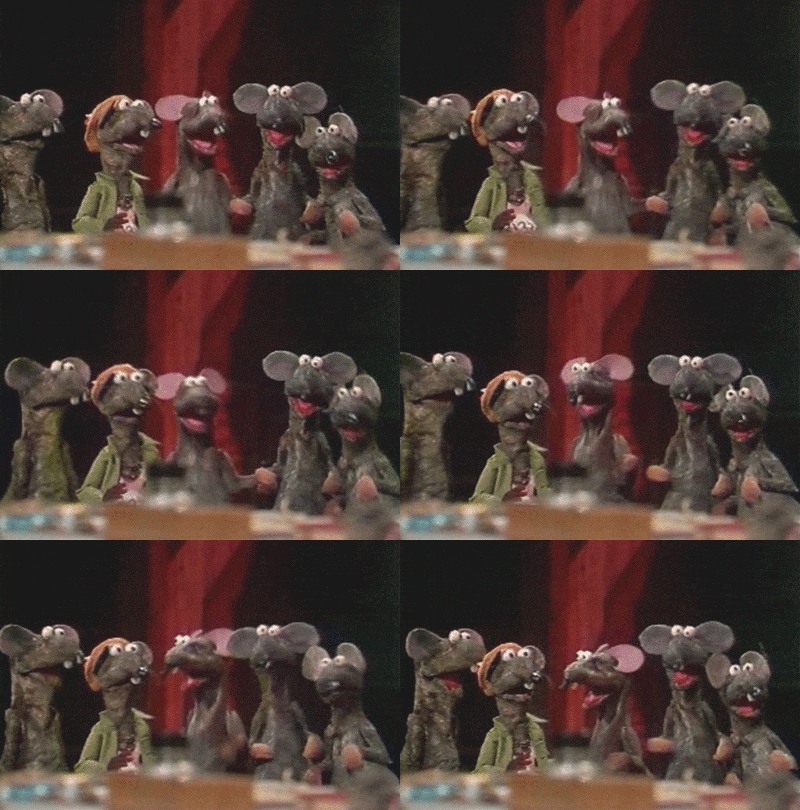
I WILL NOT FEEL AT PEACE UNTIL BOOK 4 IS IN MY GRUBBY LITTLE HANDS.
Like they work together, solve crime, take down evil humans, be the baddest of baddies in the detective biz…. All good, amazing, we love them, we live for it, whatever…
BUT THE FUCKING SECOND THEY ARE JUST CO-EXISTING TOGETHER IN ANY MOMENT (them eating an icecream in the park has got to be the fucking cutest scene that’s burned into my head cinema 5eva) I NEED TO GIVE MYSELF FUCKING CPR BECAUSE I DON’T KNOW HOW TO FEEL NORMAL AMOUNTS OF EMOTION
Like how was I lucky enough to exist in a world where fictional men exist and I’m allowed to have a coronary episode over them putting pieces of each others fucked up emotional past puzzle together, seeing the worst inner demons of each other and saying “fuck yeah that’s my human” 😭✨
Doyle still stood in front of him, not Patrick, Doyle…. and wasn’t that something. They had found each other. An affluent private school kid from the upper east side and a poor public school boy barely scraping by in Hell’s Kitchen. Both tormented by abuse and trauma and guilt like a stain that couldn’t be scrubbed away.
They had crossed paths at the most unlikely of intersections, and they’d both known.
Since that moment.
This was different from anything else…
And like the floor was dropping out from underfoot again, like Larkin was weightless again. The remorse that had been once infecting the small undergrowth of beauty in his soul for 18 years, glimpsed the sunshine born from Doyle’s smile. And Larkin felt…. Free.
DOYLE FOR PRESIDENT IDGAF I LOVE HIM 🐀
I WILL NOT FEEL AT PEACE UNTIL BOOK 4 IS IN MY GRUBBY LITTLE HANDS.

June 19, 2023
I don’t think there’s anything left to say about this series that hasn’t been said before. It’s absolutely amazing and Larkin is one of my all time favorite characters ever. This third installment fits perfectly with the previous ones as in it’s as beautifully written, with an enthralling mystery and a relationship evolution that warms your heart and make you shed a few tears.
I’ve rarely seen a more perfectly matched couple in all the romance books I’ve read, they’re the ultimate soulmates. As usual, the author’s love for her city and for historical details in general shines throughout the book and it’s fascinating, I just can’t get enough of it (I spent a lot of times googling because I wanted to see the things with my own eyes). And here I have to mention something that …not quite bothered me but that it made difficult for me to grasp some ideas and that is that I think this time the author exaggerated just a smidge with the flowery and over complicated writing. I LOVE a good prose and I always complain that we don’t find enough of that in the MM genre but I am not a native English speaker, I do not live in USA (and there are A LOT like me here) so overcomplicated text takes me out of the story because I have to read 2 or 3 times to get the idea. The text felt heavy.. Add to that the heaviness of Larkin’s turmoil , keeping up with a complicated case and some details, terms and customs that only an American would know and there I was , a bit lost and a bit left out. I think a liiiiitle more accesible text would have been more ..inclusive.
This is NOT a complaint and it does NOT affect the book’s quality by any means. This series (and this book) are an absolute MUST for every murder/mystery romance fans out there. Larking and Doyle will always be my baaaaabieees 🥹 . Excellent book !!!
I received an ARC (for which I’m extremely grateful) and this is my honest review .
I’ve rarely seen a more perfectly matched couple in all the romance books I’ve read, they’re the ultimate soulmates. As usual, the author’s love for her city and for historical details in general shines throughout the book and it’s fascinating, I just can’t get enough of it (I spent a lot of times googling because I wanted to see the things with my own eyes). And here I have to mention something that …not quite bothered me but that it made difficult for me to grasp some ideas and that is that I think this time the author exaggerated just a smidge with the flowery and over complicated writing. I LOVE a good prose and I always complain that we don’t find enough of that in the MM genre but I am not a native English speaker, I do not live in USA (and there are A LOT like me here) so overcomplicated text takes me out of the story because I have to read 2 or 3 times to get the idea. The text felt heavy.. Add to that the heaviness of Larkin’s turmoil , keeping up with a complicated case and some details, terms and customs that only an American would know and there I was , a bit lost and a bit left out. I think a liiiiitle more accesible text would have been more ..inclusive.
This is NOT a complaint and it does NOT affect the book’s quality by any means. This series (and this book) are an absolute MUST for every murder/mystery romance fans out there. Larking and Doyle will always be my baaaaabieees 🥹 . Excellent book !!!
I received an ARC (for which I’m extremely grateful) and this is my honest review .

Read
September 23, 2022Buy Links:
Ebook, Paperback, and Audio
audio narrated by Kale Williams
Italian edition
with Quixote Edizioni
coming soon... French edition with Juno Publishing, 09/25/25
Ebook, Paperback, and Audio
audio narrated by Kale Williams
Italian edition
with Quixote Edizioni
coming soon... French edition with Juno Publishing, 09/25/25

October 13, 2023
* ☘︎ :・゚TOP 10 AUDIO 2023 :・゚☘︎ *
5*****
I could listen to this on and on and on for days, maybe even months.
Once again I’m impressed by what Ms Poe has crafted here, character- and plot-wise. That amazing writing and all these details that shows how much research she must’ve done to make this even more fascinating and captivating.
I’m really spellbound, especially by the uniqueness of the two main characters Everett Larkin & Ira Doyle. They def left an imprint on my mind and heart. I don’t have words to describe how much I adore them both. ♡
Not that it had effected my rating in any way but hell left my mind reeling with the details of this cold murder case with all the connections to the first two books. A re-listen prior to starting this one might’ve helped - or even should’ve been advised. *lol
And now, with all the revelations and the cliffy I’m, once again, on the edge of my seat awaiting the next book to come out!!
***********
Memento Mori Series
Book 1 - Madison Square Murders - 5.0 stars
Book 2 - Subway Slayings - 5.0 stars
Book 3 - Broadway Butchery - 5.0 stars
Book 4 - Hudson River Homicides - release 05/24
5*****
I could listen to this on and on and on for days, maybe even months.
Once again I’m impressed by what Ms Poe has crafted here, character- and plot-wise. That amazing writing and all these details that shows how much research she must’ve done to make this even more fascinating and captivating.
I’m really spellbound, especially by the uniqueness of the two main characters Everett Larkin & Ira Doyle. They def left an imprint on my mind and heart. I don’t have words to describe how much I adore them both. ♡
Not that it had effected my rating in any way but hell left my mind reeling with the details of this cold murder case with all the connections to the first two books. A re-listen prior to starting this one might’ve helped - or even should’ve been advised. *lol
And now, with all the revelations and the cliffy I’m, once again, on the edge of my seat awaiting the next book to come out!!
***********
Memento Mori Series
Book 1 - Madison Square Murders - 5.0 stars
Book 2 - Subway Slayings - 5.0 stars
Book 3 - Broadway Butchery - 5.0 stars
Book 4 - Hudson River Homicides - release 05/24

March 19, 2025
This series is literal perfection.
Every book somehow manages to outdo the last, and Broadway Butchery is no exception.
The case this time around was less gruesome (no Ikea tote bags, thank god!) but all the more intricate, intriguing and engaging with layers of complexity that kept me hooked and forced me to think along.
Larkin and Doyle continue to be an absolute masterclass in character development and relationship progression.
Larkin’s sharp wit and deadpan zingers are as ✨flawless✨ as ever, and Doyle - his patience, his warmth, the quiet strength in every glance and every touch - is still the most breathtakingly perfect fictional man to ever exist.
Their communication, their love and devotion, the way they navigate care, intimacy and vulnerability is so beautifully tender, it squeezed my heart until it hurt real good. These two men are so perfect for each other, I could cry just knowing they exist on page.
I will never be over these two. Never.
Now I’m officially in the same boat as everyone else - waiting, impatiently and desperately, for the next book, because I simply cannot get enough of them and I also need to know who the sender is. Any guesses so far?
Reread 7/2025
I’m so very glad I decided to reread this (thanks for the heads up, Jessica! 🧡), not only because it was just as perfect as the first time around but also because there’s A LOT of finer details in this that will for sure become relevant in book 4 and that completely left my goldfish brain since reading it the first time around lol 🐠
Also: I decided to go for the audio this time and I gotta say: Kale Williams is absolutely fucking EXCEPTIONAL in this and I’m now gonna buy the other audios STAT.
I’m wetting my pants with excitement over book 4 dropping next week (how is it still 4 days away?! 😩)
Every book somehow manages to outdo the last, and Broadway Butchery is no exception.
The case this time around was less gruesome (no Ikea tote bags, thank god!) but all the more intricate, intriguing and engaging with layers of complexity that kept me hooked and forced me to think along.
Larkin and Doyle continue to be an absolute masterclass in character development and relationship progression.
Larkin’s sharp wit and deadpan zingers are as ✨flawless✨ as ever, and Doyle - his patience, his warmth, the quiet strength in every glance and every touch - is still the most breathtakingly perfect fictional man to ever exist.
Their communication, their love and devotion, the way they navigate care, intimacy and vulnerability is so beautifully tender, it squeezed my heart until it hurt real good. These two men are so perfect for each other, I could cry just knowing they exist on page.
Doyle had pulled back his sunglasses to rest atop his head—pyrite eyes far too bright—and he stared at Larkin like there was no one, absolutely no one, he’d rather be in love with.
“My facial grammar might be limited,” Larkin said, “my voice might be monotone, and my words might not be very romantic… but your touch is summer mornings and cool sheets and gooseflesh and the ticking of my wristwatch and—and peace.” 😮💨
I will never be over these two. Never.
Now I’m officially in the same boat as everyone else - waiting, impatiently and desperately, for the next book, because I simply cannot get enough of them and I also need to know who the sender is. Any guesses so far?
“I love you,” Larkin said again. “I should have told you last night. I should have told you every night.” Doyle stepped close, his thighs pressed to Larkin’s knees from where he still sat on the stool. His eyes were wet, and the muscles in his neck were tense. Doyle cleared his throat before saying, “I feel like I’ve waited forty years to hear someone say that.” He took Larkin’s face into his hands, affectionately rubbing his smooth jawline. “And I’m so glad it was you.”
ARE YOU ACTUALLY TRYING TO KILL ME 😭😭😭
Reread 7/2025
I’m so very glad I decided to reread this (thanks for the heads up, Jessica! 🧡), not only because it was just as perfect as the first time around but also because there’s A LOT of finer details in this that will for sure become relevant in book 4 and that completely left my goldfish brain since reading it the first time around lol 🐠
Also: I decided to go for the audio this time and I gotta say: Kale Williams is absolutely fucking EXCEPTIONAL in this and I’m now gonna buy the other audios STAT.
I’m wetting my pants with excitement over book 4 dropping next week (how is it still 4 days away?! 😩)

January 23, 2025
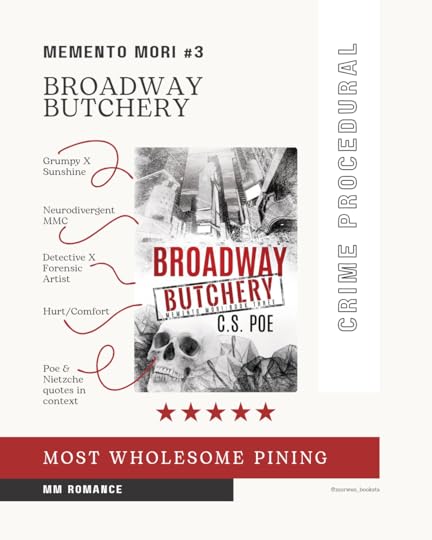
This book is a flavor in your mouth you don't want to wash out, like refusing even dessert cause the main course was too delicious and rare.
It's just a big unique vibe that lives in my head independently of the actual plot —which was really good, but that's not the point 😅.
Ira & Evie are absolute, real-life relationship goals, and it's so freaking wholesome it will give you second-hand feelings of being unconditionally loved and cherished. With cute banter. 😏🫠
It will also give you abandonment issues when you see that last page approaching without a book 4 date announced.
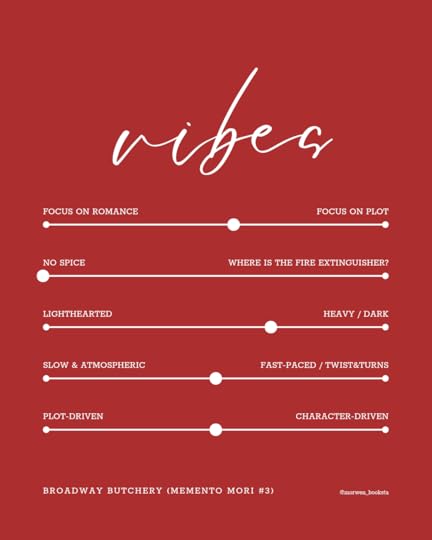
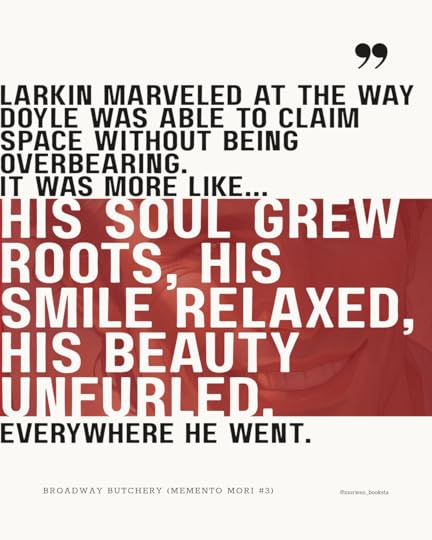
🔖Larkin marveled at the way Doyle was able to claim space without being overbearing. It was more like... his soul grew roots, his smile relaxed, his beauty unfurled.
Everywhere he went.
🔖"My facial grammar might be limited," Larkin said, "my voice might be monotone, and my words might not be very romantic... but your touch is summer morings and cool sheets and gooseflesh and the ticking of my wristwatch and —and peace."
🔖His body was awake, a masterpiece of color— sunflowers bursting from the decay of dandelions, light catching the cut of raw pyrite, brighter and warmer than any campfire, blood pumping in veins thought atrophied, thicker than the innocence of first love could ever hope to be—all of this, just like Wednesday, April 1, at 4:56 p.m., when Doyle had kissed Larkin and made him feel alive again.
🔖Doyle crossed his arms and stated, "For the record, if I ever do something wrong in the future, please remember the night I willingly stood in a dark room, in my underwear, no less, listening to you talk about spiders and ants when you know I hate bugs."
🔖"I love you," Larkin said again. I should have told you last night. I should have told you every night."
"I feel like I've waited forty years to hear someone say that." He took Larkin's face into his hands, affectionately rubbing his smooth jawline. "And I'm so glad it was you."
Larkin murmured, "There's a sense of partnership with you that I've never felt with anyone else—not Noah, not Patrick. And it's not that you make me whole. It's that you make me better. You remind me that I'm alive. I want to be those things for you too."
Doyle unexpectedly burst into tears. He leaned down, kissed Larkin, and said against his lips, "I love you. I love you SO much." Another kiss. "Since the day we met—I knew I was in love."
Larkin thumbed away tears from Doyle's face.
Much like the theme of this book's murders, many of the literary references are wonderfully integrated, and used to further create depth, in a way that they very much make me want to read (or re-read) those works from Poe and Nietzche. Both in relation to Ira & Evie, and to further reflect on human nature and the resulting behavior.
Larkin said, "French novelist, André Gide, utilized the term 'mise en abyme' in his literary theories and criticisms.
It translates to 'placed into abyss,' but Gide was exploring the concept of fictional sequences similar in subject or theme to the work which encloses it—think Hamlet's play within a play.
Hamlet hires a troupe of players to recreate a story of murder and betrayal closely resembling what he knows to have occurred between his uncle and father, as a means of proving his uncle's guilt, seen in the king's response: Give me some light.
However, we can take the 'mise en abyme' concept to a second degree, that of infinite duplication, and this is where Edgar Allan Poe's 'The Fall ofthe House of Usher' is a primary example of a narrative connected to a subnarrative, connected to a subnarrative, so on and so forth. Poe manages this infinite loop by having both Roderick Usher and our unnamed narrator employ multiple storytelling techniques within the unfolding story that resemble the current gloom and ghastly fate the title already promises. And Poe's exploration of duality goes beyond using 'mise en abyme' in this manner, as it's revealed that Roderick and Madeline Usher are twins and their simultaneous deaths bring about the end of their family line—the house of Usher while the literal home— the house collapses upon their untimely deaths.
"The sender has been operating under the guise of 'mise en abyme': a murder within murder. Duality within duality," Larkin explained.
Pre-read
The Empyrean and all its drama is good (and I should hurry up with it), but I'm addicted to this now, and I seek comfort in Ira&Evie's embrace.
So here I am.

June 21, 2023
Wow
If someone had told me before this series that I would enjoy a slow burn, I would have laughed at them, but Everett and Doyle 🥹 they are perfect.
I was really impatient to read this book because I just couldn’t wait to get more of them! As you can guess I’m here for the romance part, and the suspense is just a bonus for me. And that romance!
The relationship development between Everett and Doyle got a big part in the book, and they evolve to build something really special. We get glimpses of Doyle’s past, Everett’s current struggles with the drug addiction and his fight to getting better, while Everett tries really hard to be a better version of himself. They love is mature and clever. They priorities are the same and they loving each other with so much tenderness that it took my breath away. No unnecessary drama, misunderstanding and selfishness, I really like it and I would love to read more books with this kind of relationships.
“Doyle had pulled back his sunglasses to rest atop his head—pyrite eyes far too bright—and he stared at Larkin like there was no one, absolutely no one, he’d rather be in love with.”
The case/cases in this book is huge and twisted, while easily understood when the guys guide us through. I have some suspicion about the main villain, but it’s still few books away to find out for sure.
I enjoyed the philosophical aspect and I love Doyle’s art history lessons.
What can I say, the writing is phenomenal, the case interesting and I already want the next book with them!
I have received an ARC from the Author and I’m leaving an honest and unbiased review.
If someone had told me before this series that I would enjoy a slow burn, I would have laughed at them, but Everett and Doyle 🥹 they are perfect.
I was really impatient to read this book because I just couldn’t wait to get more of them! As you can guess I’m here for the romance part, and the suspense is just a bonus for me. And that romance!
The relationship development between Everett and Doyle got a big part in the book, and they evolve to build something really special. We get glimpses of Doyle’s past, Everett’s current struggles with the drug addiction and his fight to getting better, while Everett tries really hard to be a better version of himself. They love is mature and clever. They priorities are the same and they loving each other with so much tenderness that it took my breath away. No unnecessary drama, misunderstanding and selfishness, I really like it and I would love to read more books with this kind of relationships.
“Doyle had pulled back his sunglasses to rest atop his head—pyrite eyes far too bright—and he stared at Larkin like there was no one, absolutely no one, he’d rather be in love with.”
The case/cases in this book is huge and twisted, while easily understood when the guys guide us through. I have some suspicion about the main villain, but it’s still few books away to find out for sure.
I enjoyed the philosophical aspect and I love Doyle’s art history lessons.
What can I say, the writing is phenomenal, the case interesting and I already want the next book with them!
I have received an ARC from the Author and I’m leaving an honest and unbiased review.

April 17, 2026
Not even Kale Williams, the only reason I bought this series and got this far, can help me finish it. DNF because yes, Doyle deserves better and so do I.

June 30, 2023
4.5 stars
“You touch my arm with only fingertips, and make the hairs stand straight up, and my heart lurches like it’s being resuscitated with an electrical shock. And you’re so quiet and so careful not to wake me, but it still does every time, and I don’t want you to stop because I’ve never felt so safe being touched, but I can’t ever seem to verbalize, before you get up and go on your jog, that there’s nothing more I want than for you to stay in bed just one more minute.”
Larkin & Doyle are just precious together.
Larkin is a hoot as ever and I live for his idiosyncrasies and vicious put downs!
And Doyle is a total sweetheart with hidden depths that will gut you as they are gradually revealed.
The writing is epic; beautiful, lyrical, biting, and funny.
The mystery is a real doozy; indeed, it’s a series of mysteries within a larger mystery.
The slow burn is excruciating though! (more on that soon)
So as you can tell, I loved it. In fact, it was verging into 5 star territory except for one thing, which is usually not a big deal for me at all but ended up annoying me like hell. And that’s the lack of action. Specifically sexy action. Now I love me a good slow burn. In fact they’re my favorite thing to read. But come on! This is book 3 and the MCs still haven’t moved past first base! You need to give me something to work with here lady (C. S. Poe, I’m talking to you here😂) I myself am sexually frustrated at this point! At least give us a blow job. Heck I’ll even settle for a hand job at this stage. Gawd just give us something. Anything.
But otherwise I loved it.
And here’s Larkin in peak burn form shooting down a fuckboy hitting on him:
“Give me one good reason,” Boy Toy countered.
“I’ll give you five.” Larkin raised his free hand and began ticking points off on his fingers. “One, I prefer older men and you’re a fetus. Two, the last time I hooked up in a bunk bed was my freshman year in the college dorms, and I don’t plan to fuck in the same bed you fall asleep eating Fritos in. Three, my tastes are expensive and you can’t afford to iron the wrinkles in my suit coat afterward. Four, you don’t know my name—“
“I have to know your name for a hookup?”
It’d be better than you screaming, ‘Spooky’. Which, by the way, you would, because I always top. Five, and most importantly, I’m in a relationship.”
“You touch my arm with only fingertips, and make the hairs stand straight up, and my heart lurches like it’s being resuscitated with an electrical shock. And you’re so quiet and so careful not to wake me, but it still does every time, and I don’t want you to stop because I’ve never felt so safe being touched, but I can’t ever seem to verbalize, before you get up and go on your jog, that there’s nothing more I want than for you to stay in bed just one more minute.”
Larkin & Doyle are just precious together.
Larkin is a hoot as ever and I live for his idiosyncrasies and vicious put downs!
And Doyle is a total sweetheart with hidden depths that will gut you as they are gradually revealed.
The writing is epic; beautiful, lyrical, biting, and funny.
The mystery is a real doozy; indeed, it’s a series of mysteries within a larger mystery.
The slow burn is excruciating though! (more on that soon)
So as you can tell, I loved it. In fact, it was verging into 5 star territory except for one thing, which is usually not a big deal for me at all but ended up annoying me like hell. And that’s the lack of action. Specifically sexy action. Now I love me a good slow burn. In fact they’re my favorite thing to read. But come on! This is book 3 and the MCs still haven’t moved past first base! You need to give me something to work with here lady (C. S. Poe, I’m talking to you here😂) I myself am sexually frustrated at this point! At least give us a blow job. Heck I’ll even settle for a hand job at this stage. Gawd just give us something. Anything.
But otherwise I loved it.
And here’s Larkin in peak burn form shooting down a fuckboy hitting on him:
“Give me one good reason,” Boy Toy countered.
“I’ll give you five.” Larkin raised his free hand and began ticking points off on his fingers. “One, I prefer older men and you’re a fetus. Two, the last time I hooked up in a bunk bed was my freshman year in the college dorms, and I don’t plan to fuck in the same bed you fall asleep eating Fritos in. Three, my tastes are expensive and you can’t afford to iron the wrinkles in my suit coat afterward. Four, you don’t know my name—“
“I have to know your name for a hookup?”
It’d be better than you screaming, ‘Spooky’. Which, by the way, you would, because I always top. Five, and most importantly, I’m in a relationship.”

November 4, 2023
Edit after reread:
So good. Again I remembered the murder mystery , but I still enjoyed myself relistening to Kale Williams narrating. I know I’m repeating myself, but: go read off if you haven’t yet. It’s no smutfest, but on top of the really good murder mystery, the relationship between Larkin and Doyle is one of the most beautiful, tender love stories I’ve ever read.
Original review:
“Come and find me“ -the sentence that haunts me after devouring the books in this series 😅
Because yes, there’s a cliffhanger of sorts at the end of each book, even though the murder mysteries are more or less standalone.
I just love everything about these books - the mysteries, the writing, the side characters, the narration by Kale Williams, who has become the voice of Larkin in my head. And most of all, ofc, Everett Larkin and Ira Doyle and their unique, absolutely beautiful slow burn romance.
I’ve rarely - if ever - “met” a pair that’s such a perfect embodiment of the term “soulmates”. They’re IT, guys. They’re it.
Let me illustrate that with my favourite quotes from this book:
…
“My facial grammar might be limited,” Larkin said, “my voice might be monotone, and my words might not be very romantic… but your touch is summer mornings and cool sheets and gooseflesh and the ticking of my wristwatch and—and peace.”
…
“I love you,” Larkin said again. “I should have told you last night. I should have told you every night.” Doyle stepped close, his thighs pressed to Larkin’s knees from where he still sat on the stool. His eyes were wet, and the muscles in his neck were tense. Doyle cleared his throat before saying, “I feel like I’ve waited forty years to hear someone say that.” He took Larkin’s face into his hands, affectionately rubbing his smooth jawline. “And I’m so glad it was you.”
…
Larkin murmured, “There’s a sense of partnership with you that I’ve never felt with anyone else—not Noah, not Patrick. And it’s not that you make me whole. It’s that you make me better. You remind me that I’m alive.” Larkin wrapped his hands around Doyle’s wrists. “I want to be those things for you too.”
I mean - come on! If this doesn’t melt your heart, nothing will 🫠
As for the mystery: I kind of guessed a part of it as soon as the character in question made an appearance, but it still took me by surprise, if that makes sense. What I also love about this series: the clever way historical bits and pieces are interwoven with the plot. I find myself googling quite a bit and can now say that I’m an expert on death masks, Victorian mourning attire and the way Times Square looked in the early 1980s 😂
One thing I really need to mention though: I agree with Nicole’s review : while my English is pretty good, I’m not a native speaker, and sometimes the detailed workings of Larkin’s mind were a bit too fast and too complex for me, so I jumped back a few minutes in my audio book and relistened because I didn’t want to miss some important clues.
Other than that, this book (and the characters) is as perfect as it gets ❤️
So good. Again I remembered the murder mystery , but I still enjoyed myself relistening to Kale Williams narrating. I know I’m repeating myself, but: go read off if you haven’t yet. It’s no smutfest, but on top of the really good murder mystery, the relationship between Larkin and Doyle is one of the most beautiful, tender love stories I’ve ever read.
Original review:
“Come and find me“ -the sentence that haunts me after devouring the books in this series 😅
Because yes, there’s a cliffhanger of sorts at the end of each book, even though the murder mysteries are more or less standalone.
I just love everything about these books - the mysteries, the writing, the side characters, the narration by Kale Williams, who has become the voice of Larkin in my head. And most of all, ofc, Everett Larkin and Ira Doyle and their unique, absolutely beautiful slow burn romance.
I’ve rarely - if ever - “met” a pair that’s such a perfect embodiment of the term “soulmates”. They’re IT, guys. They’re it.
Let me illustrate that with my favourite quotes from this book:
…
“My facial grammar might be limited,” Larkin said, “my voice might be monotone, and my words might not be very romantic… but your touch is summer mornings and cool sheets and gooseflesh and the ticking of my wristwatch and—and peace.”
…
“I love you,” Larkin said again. “I should have told you last night. I should have told you every night.” Doyle stepped close, his thighs pressed to Larkin’s knees from where he still sat on the stool. His eyes were wet, and the muscles in his neck were tense. Doyle cleared his throat before saying, “I feel like I’ve waited forty years to hear someone say that.” He took Larkin’s face into his hands, affectionately rubbing his smooth jawline. “And I’m so glad it was you.”
…
Larkin murmured, “There’s a sense of partnership with you that I’ve never felt with anyone else—not Noah, not Patrick. And it’s not that you make me whole. It’s that you make me better. You remind me that I’m alive.” Larkin wrapped his hands around Doyle’s wrists. “I want to be those things for you too.”
I mean - come on! If this doesn’t melt your heart, nothing will 🫠
As for the mystery: I kind of guessed a part of it as soon as the character in question made an appearance, but it still took me by surprise, if that makes sense. What I also love about this series: the clever way historical bits and pieces are interwoven with the plot. I find myself googling quite a bit and can now say that I’m an expert on death masks, Victorian mourning attire and the way Times Square looked in the early 1980s 😂
One thing I really need to mention though: I agree with Nicole’s review : while my English is pretty good, I’m not a native speaker, and sometimes the detailed workings of Larkin’s mind were a bit too fast and too complex for me, so I jumped back a few minutes in my audio book and relistened because I didn’t want to miss some important clues.
Other than that, this book (and the characters) is as perfect as it gets ❤️

October 5, 2023
Reread/Relisten#1: January 2026
yup this is perfection.
Audio: 5 stars, Kale Williams is literally Larkin haha
Book: 4.5-5 stars
These books why oh why must you always end on cliffhangers and book 4 isn’t coming out until May 2024 😭
These books are like watching the BBC Sherlock and I love it. At times I feel dumb with all the connections that Larkin finds from seemingly nothing haha but even with that I love it. There are lots of twists and turns that make it hard to put this down!
I do wish there was a little more romance, but to me even though it’s a slow, slow, slow burn, Ira and Evie are a great match. I love seeing the small intimate moments and how Ira doesn’t rush Evie, they are both communicating and I love to see that!
I can’t wait for book 4, even though I have to wait over 7 months for it to be in my hands! Haha
yup this is perfection.
Audio: 5 stars, Kale Williams is literally Larkin haha
Book: 4.5-5 stars
These books why oh why must you always end on cliffhangers and book 4 isn’t coming out until May 2024 😭
These books are like watching the BBC Sherlock and I love it. At times I feel dumb with all the connections that Larkin finds from seemingly nothing haha but even with that I love it. There are lots of twists and turns that make it hard to put this down!
I do wish there was a little more romance, but to me even though it’s a slow, slow, slow burn, Ira and Evie are a great match. I love seeing the small intimate moments and how Ira doesn’t rush Evie, they are both communicating and I love to see that!
I can’t wait for book 4, even though I have to wait over 7 months for it to be in my hands! Haha

February 27, 2025
Audiobook Re-read
Ahhhhhh this was even better in audio! CHAPTER 12 NEARLY TOOK ME OUT 😭 Once again, Kale Williams did an amazing job bringing Larkin and Doyle to life. The way he makes the emotional scenes feel so real is simply beautiful 🥹
I also have to say that I get immense joy from actually getting to hear Larkin spectacularly drag someone 😂
Original Review
I'm honestly not sure how much more I can love a series than this one 😭 Larkin and Doyle are everything. Sure, the overarching mystery and the case stuff is great too, but LARKIN AND DOYLE. These two have such a special relationship that I feel lucky just to be able to watch it develop. This book though with those confessions of love 😮💨 I tell you what, when someone else's love confessions live rent-free in your head, you know they are good. Every time Larkin and Doyle are together there's such magic between them you can't help but get wrapped up in it and never want it to end. I want everything for them, and I'm dying for the next book just so I can spend a little more time in their world 🥹
The other thing I love about this series is the side characters. Seeing Larkin interact with anyone that's not Doyle (with the exception of Noah) is exceptionally entertaining 😂 Millet and Baxter are a joy and I love every time they pop up. I was excited to find out that Neil first appeared back in Poe's Snow & Winter series, so I'm all kinds of excited to go back and read that now 🤩
Ahhhhhh this was even better in audio! CHAPTER 12 NEARLY TOOK ME OUT 😭 Once again, Kale Williams did an amazing job bringing Larkin and Doyle to life. The way he makes the emotional scenes feel so real is simply beautiful 🥹
I also have to say that I get immense joy from actually getting to hear Larkin spectacularly drag someone 😂
Original Review
I'm honestly not sure how much more I can love a series than this one 😭 Larkin and Doyle are everything. Sure, the overarching mystery and the case stuff is great too, but LARKIN AND DOYLE. These two have such a special relationship that I feel lucky just to be able to watch it develop. This book though with those confessions of love 😮💨 I tell you what, when someone else's love confessions live rent-free in your head, you know they are good. Every time Larkin and Doyle are together there's such magic between them you can't help but get wrapped up in it and never want it to end. I want everything for them, and I'm dying for the next book just so I can spend a little more time in their world 🥹
The other thing I love about this series is the side characters. Seeing Larkin interact with anyone that's not Doyle (with the exception of Noah) is exceptionally entertaining 😂 Millet and Baxter are a joy and I love every time they pop up. I was excited to find out that Neil first appeared back in Poe's Snow & Winter series, so I'm all kinds of excited to go back and read that now 🤩

June 20, 2023
AUDIOBOOK- March 2024: I liked this better the second time around on audiobook!
AUDIOBOOK - October 2023: Great narration to a spectacular series. NOT a standalone! Thanks to the author for the audiobook!
EBOOK - June 2023
Wow! A hell of a lot happens in this book; so much so that I felt a little lost at times. Poe, however gave me time to play catch up and I got there in the end.
It’s hard to talk about this book without revealing spoilers, but I’ll try.
A mummified body takes us back to NYC’s Times Square in the 1980’s. More mysterious notes and mementos come for Larkin. More cold cases that all seem to be connected.
Meanwhile, Larkin is slowly detoxing from his Xanax addiction. Doyle is as patient as ever, but dropping more hints about his past—all of which Larkin expertly stitches together.
This is definitely not a standalone & you wouldn’t go wrong reading the first two books again for a refresher.
This novel had more internal dialogue than past ones & we got to see more of how Larkin pieces clues together.
We are left in a cliffhanger & have to wait to see what outfit Larkin wears to the next murder scene. Can’t wait for the next one!
Thanks to the author for the ARC. All opinions are my own.
AUDIOBOOK - October 2023: Great narration to a spectacular series. NOT a standalone! Thanks to the author for the audiobook!
EBOOK - June 2023
Wow! A hell of a lot happens in this book; so much so that I felt a little lost at times. Poe, however gave me time to play catch up and I got there in the end.
It’s hard to talk about this book without revealing spoilers, but I’ll try.
A mummified body takes us back to NYC’s Times Square in the 1980’s. More mysterious notes and mementos come for Larkin. More cold cases that all seem to be connected.
Meanwhile, Larkin is slowly detoxing from his Xanax addiction. Doyle is as patient as ever, but dropping more hints about his past—all of which Larkin expertly stitches together.
This is definitely not a standalone & you wouldn’t go wrong reading the first two books again for a refresher.
This novel had more internal dialogue than past ones & we got to see more of how Larkin pieces clues together.
We are left in a cliffhanger & have to wait to see what outfit Larkin wears to the next murder scene. Can’t wait for the next one!
Thanks to the author for the ARC. All opinions are my own.

June 20, 2023
Oh, shit. That ending, oh god.
"Broadway Butchery" was absolutely THRILLING. It's, quite possibly, even more complex and intriguing than its predecessors and I can only applaud C.S. Poe for yet another masterpiece.
This series, three books in and two left to go, has become one of my favourites over the last two years: it's complex and mysterious and clever and painful and emotional and subtly romantic.
And its lead, Everett Larkin, is as iconic as you can get: snarky and brittle, damaged and self-loathing, egotistical and guilt-ridden and insecure and absolutely brilliant. He's one of a kind and being in his head, for the third time, was an absolute treat. He is the reason why I love this series so damn much and every single clue we get about his past and the way his mind works makes me only more curious to discover more about him.
So yes, of course, I loved "Broadway Butchery".
The case at the centre of this third installment is so complex: it's intertwined with the previous cases and, of course, with Larkin's mysterious stalker mastermind. The stakes are slowly rising for our favourite Cold Case Detective and every single aspect of the mysteries he's been tasked with solving, here and before, is a clue, fundamentally intertwined with the mysterious sender's identity and every single killer they've thrown in Larkin's path.
The case at the centre of this particular case was as heartbreaking and gruesome and complex as its predecessor: I don't want to spoil anything, but whew, what an emotional, tough ride. The twists were even more twisty, the discoveries even more shocking, and the betrayals even more unexpected. Book one will probably remain my favourite for the moment (I can't help but love the beginning, plot-wise and romance-wise, in any series I read), but I absolutely adored this one too.
Larkin and Doyle shine brilliantly in this book, and weirdly enough, Doyle was the one that broke my heart more this time around.
In some ways, I appreciate getting to know him more (although he remains somewhat a mystery), but in others I kinda kept wishing the focus would turn to Larkin: although he's the narrator, I feel like his past is still an enormous mystery (and yes, because I like angst and angsty protagonists).
I'm sure it will be addressed in the next two books but seriously! What happened with Patrick? Is his murder connected to the sender? Will we ever meet Larkin's infamous parents? Will somebody (I keep hoping for Doyle: sue me, I'm a damsel-in-distress kinda gal) ever bitch-slap Noah? Will we get more Neil and Baxter cameos? *sacrifices firstborn*
Anyway, I loved both of them to bits. Their relationship is growing and witnessing how far they've come, how much care and affection and respect is between them, how much they love each other, was beyond beautiful. Their interactions were gold: Doyle's flirty nature was, as always, hilarious, as were Larkin's snarky rebuttals.
Noah Millet and Lawrence Baxter SHONE as side characters; I don't know how many times I've said this, but god, I cannot wait for Neil's book. I think I'd seriously sell my soul (or some non-vital organs) for it. I loved them, and also, surprisingly and shockingly, I even liked quite a few of the detective side characters too.
C.S. Poe has become one of my favourite authors and this installment is another reminder why I love her writing so much. Each one of her books takes up a special place in my heart, and "Broadway Butchery" is no exception: I loved it to bits, and it broke my heart to bits too.
And that ending. Oh god. How am I meant to wait for the next book now?!
I received an ARC from the author in exchange for an honest review.
"Broadway Butchery" was absolutely THRILLING. It's, quite possibly, even more complex and intriguing than its predecessors and I can only applaud C.S. Poe for yet another masterpiece.
This series, three books in and two left to go, has become one of my favourites over the last two years: it's complex and mysterious and clever and painful and emotional and subtly romantic.
And its lead, Everett Larkin, is as iconic as you can get: snarky and brittle, damaged and self-loathing, egotistical and guilt-ridden and insecure and absolutely brilliant. He's one of a kind and being in his head, for the third time, was an absolute treat. He is the reason why I love this series so damn much and every single clue we get about his past and the way his mind works makes me only more curious to discover more about him.
So yes, of course, I loved "Broadway Butchery".
The case at the centre of this third installment is so complex: it's intertwined with the previous cases and, of course, with Larkin's mysterious stalker mastermind. The stakes are slowly rising for our favourite Cold Case Detective and every single aspect of the mysteries he's been tasked with solving, here and before, is a clue, fundamentally intertwined with the mysterious sender's identity and every single killer they've thrown in Larkin's path.
The case at the centre of this particular case was as heartbreaking and gruesome and complex as its predecessor: I don't want to spoil anything, but whew, what an emotional, tough ride. The twists were even more twisty, the discoveries even more shocking, and the betrayals even more unexpected. Book one will probably remain my favourite for the moment (I can't help but love the beginning, plot-wise and romance-wise, in any series I read), but I absolutely adored this one too.
Larkin and Doyle shine brilliantly in this book, and weirdly enough, Doyle was the one that broke my heart more this time around.
In some ways, I appreciate getting to know him more (although he remains somewhat a mystery), but in others I kinda kept wishing the focus would turn to Larkin: although he's the narrator, I feel like his past is still an enormous mystery (and yes, because I like angst and angsty protagonists).
I'm sure it will be addressed in the next two books but seriously! What happened with Patrick? Is his murder connected to the sender? Will we ever meet Larkin's infamous parents? Will somebody (I keep hoping for Doyle: sue me, I'm a damsel-in-distress kinda gal) ever bitch-slap Noah? Will we get more Neil and Baxter cameos? *sacrifices firstborn*
Anyway, I loved both of them to bits. Their relationship is growing and witnessing how far they've come, how much care and affection and respect is between them, how much they love each other, was beyond beautiful. Their interactions were gold: Doyle's flirty nature was, as always, hilarious, as were Larkin's snarky rebuttals.
Noah Millet and Lawrence Baxter SHONE as side characters; I don't know how many times I've said this, but god, I cannot wait for Neil's book. I think I'd seriously sell my soul (or some non-vital organs) for it. I loved them, and also, surprisingly and shockingly, I even liked quite a few of the detective side characters too.
C.S. Poe has become one of my favourite authors and this installment is another reminder why I love her writing so much. Each one of her books takes up a special place in my heart, and "Broadway Butchery" is no exception: I loved it to bits, and it broke my heart to bits too.
And that ending. Oh god. How am I meant to wait for the next book now?!
I received an ARC from the author in exchange for an honest review.

February 4, 2025
I'm loving this series.
So clever, knowledgeable, and detailed.
I love Larkin and Doyle's relationship.
I listened to these 3 books on audio, and am so glad I did. The narrator did a wonderful job!
So clever, knowledgeable, and detailed.
I love Larkin and Doyle's relationship.
I listened to these 3 books on audio, and am so glad I did. The narrator did a wonderful job!

June 25, 2023
Well, that made my brain hurt. This book was endlessly interesting and written with a high level of intelligence and writing prowess, but my neurons struggled to keep up with all of the characters, murders, associations and references to the previous 2 books. After awhile I started to feel like maybe I'd picked up a book too far above my reading level, but other reviews have eased that worry. The general consensus seems to be that this book was really good, but taxing on the old hippocampus and I couldn't agree more.
Larkin and Doyle continue to be soft and sweet towards each other. It's still early days in their relationship and their day-to-day approach to things seems to be working. These two put the word slow in slow-burn, at least in terms of physical intimacy. I love this for them, though. It makes every touch and every kiss feel special and earned. It was hard not to melt a little each time Larkin battled his stoicism to let Doyle know how he felt about him. And when Doyle counteracted all of Noah's "me" statements, I wanted to simultaneously swoon and kick Noah in his kneecaps for being such a selfish jerk towards Larkin. Larkin is a fascinating character and I loved following his process of deduction, especially when breaking down the nuances of human behavior. His statistical and scientific comebacks against misogyny and homophobia will surely become the stuff of legends within the NYPD, hopefully overriding his less than complimentary nicknames and general lack of popularity among his co-workers. I love the way Doyle not only appreciates, but admires Larkin's idiosyncrasies. And I love that Larkin sees and acknowledges Doyle's talents and refuses to allow people to belittle him or relegate him to his shadow. They're not only an amazing couple, but an awesome team.
In the end, even with the barrage of information and name dropping, I felt like I had a good handle on what happened, who was involved and what we're still waiting to find out. However, if the next book won't be coming out anytime soon, I might need to plan a reread, or at least a quick skim, to jog my memory because there are a lot of layers in play here and I'm not getting any younger, nor do I have total recall like Larkin. There was a reference to Russian nesting dolls in this book and it could be seen as a meta commentary about this series as a whole. A wiki page would be super helpful.
I'm looking forward to seeing how this all comes together, who's behind it and if/how it relates to Larkin's past. I'd also love it if someone would put Noah in his place.
Larkin and Doyle continue to be soft and sweet towards each other. It's still early days in their relationship and their day-to-day approach to things seems to be working. These two put the word slow in slow-burn, at least in terms of physical intimacy. I love this for them, though. It makes every touch and every kiss feel special and earned. It was hard not to melt a little each time Larkin battled his stoicism to let Doyle know how he felt about him. And when Doyle counteracted all of Noah's "me" statements, I wanted to simultaneously swoon and kick Noah in his kneecaps for being such a selfish jerk towards Larkin. Larkin is a fascinating character and I loved following his process of deduction, especially when breaking down the nuances of human behavior. His statistical and scientific comebacks against misogyny and homophobia will surely become the stuff of legends within the NYPD, hopefully overriding his less than complimentary nicknames and general lack of popularity among his co-workers. I love the way Doyle not only appreciates, but admires Larkin's idiosyncrasies. And I love that Larkin sees and acknowledges Doyle's talents and refuses to allow people to belittle him or relegate him to his shadow. They're not only an amazing couple, but an awesome team.
In the end, even with the barrage of information and name dropping, I felt like I had a good handle on what happened, who was involved and what we're still waiting to find out. However, if the next book won't be coming out anytime soon, I might need to plan a reread, or at least a quick skim, to jog my memory because there are a lot of layers in play here and I'm not getting any younger, nor do I have total recall like Larkin. There was a reference to Russian nesting dolls in this book and it could be seen as a meta commentary about this series as a whole. A wiki page would be super helpful.
I'm looking forward to seeing how this all comes together, who's behind it and if/how it relates to Larkin's past. I'd also love it if someone would put Noah in his place.

December 26, 2024
Never has no sex been so sexy!!
I finished this book a few weeks ago but have been procrastinating on this review because I was worried that I wouldn’t do it justice. Let me say right now that my review absolutely, completely and totally won’t give justice to this incredible series but I have to write it anyway because the more people that read it the better, so I am doing the public a service.
Larkin and Doyle, you are an itch and a scratch, a sunburn and aloe, a breakup and Ben and Jerrys, you give the pain and take it away. You are wonderful each on your own and off the charts when together.
“You touch my arm with only fingertips and make the hairs stand straight up and my heart lurches like it is being resuscitated with an electrical shock, and you’re so quiet and so careful not to wake me but it still does every time and I don’t want you to stop because I have never felt so safe being touched but I can’t ever seem to verbalise before you get up and go on your jog that there is nothing more I want than for you to stay in bed just for one more minute.”
Best series of all time, I CAN NOT WAIT FOR THE FOURTH BOOK!!
PS The narration is more than perfection.
I finished this book a few weeks ago but have been procrastinating on this review because I was worried that I wouldn’t do it justice. Let me say right now that my review absolutely, completely and totally won’t give justice to this incredible series but I have to write it anyway because the more people that read it the better, so I am doing the public a service.
Larkin and Doyle, you are an itch and a scratch, a sunburn and aloe, a breakup and Ben and Jerrys, you give the pain and take it away. You are wonderful each on your own and off the charts when together.
“You touch my arm with only fingertips and make the hairs stand straight up and my heart lurches like it is being resuscitated with an electrical shock, and you’re so quiet and so careful not to wake me but it still does every time and I don’t want you to stop because I have never felt so safe being touched but I can’t ever seem to verbalise before you get up and go on your jog that there is nothing more I want than for you to stay in bed just for one more minute.”
Best series of all time, I CAN NOT WAIT FOR THE FOURTH BOOK!!
PS The narration is more than perfection.

February 29, 2024
Broadway Butchery is another great entry to the Memento Mori series. An exciting and intricate plot that made me not want to put it down until I reached the end, paired with a brilliant romance between Larkin and Doyle. The development of their relationship is well done and nicely paced; a slow burn but not too slow. They work so well together, and I can't wait until the next book to be reunited with them on their next case.

June 23, 2023
I don’t have the worlds to explain how much I love Doyle and Larkin

March 13, 2024
These books just keep getting better and better as the mystery deepens and becomes more layered and complex. I loved this one and I’m so glad book four will be here in the near future. Also Everett and Ira have some of the funniest, dry humor banter. It really just hits every time for me.
Whilst I really enjoy Everett as a main character and every book explores a little more of his trauma, history and neurodivergence, this book was really Ira’s. Poor, sweet Ira, who cries when someone finally loves him, who is so charming and so sweet and just trying so hard to be vulnerable about his past and trauma while still being optimistic. I really love him a lot and hope for good things for him.
Also this book is so romantic and I can’t believe they haven’t progressed past kissing (this is very low spice for people who care about that) but the slow build of emotional intimacy that’s being cultivated here is going to make me feral when Everett has recovered enough for them to take their relationship to the next step.
Also Ira music taste has introduced me to a new subgenre of punk called Queercore which I am stoked to have a name for cause I have been unknowingly listening to it for ages 😂 and now can deep dive specific playlists lol.
Whilst I really enjoy Everett as a main character and every book explores a little more of his trauma, history and neurodivergence, this book was really Ira’s. Poor, sweet Ira, who cries when someone finally loves him, who is so charming and so sweet and just trying so hard to be vulnerable about his past and trauma while still being optimistic. I really love him a lot and hope for good things for him.
Also this book is so romantic and I can’t believe they haven’t progressed past kissing (this is very low spice for people who care about that) but the slow build of emotional intimacy that’s being cultivated here is going to make me feral when Everett has recovered enough for them to take their relationship to the next step.
Also Ira music taste has introduced me to a new subgenre of punk called Queercore which I am stoked to have a name for cause I have been unknowingly listening to it for ages 😂 and now can deep dive specific playlists lol.

June 26, 2023
I lack the patience to continue.

September 5, 2023
Such a good book! Just like the previous two- this book had such a good fast paced mystery plot without ever having a dull second. Love all of Everett’s thought processes and he works his way through each case.
This one also had some really sweet moments with Everett & Ira
Read through these books so quickly and now I have to wait for book 4 :(
This one also had some really sweet moments with Everett & Ira
Read through these books so quickly and now I have to wait for book 4 :(

July 29, 2026
Kocham Larkina i jego buty w kolorze magenta. Kocham Doyle'a i jego lampki choinkowe rozwieszone w mieszkaniu. Kocham jak Larkin budzi Doyle'a o 3 w nocy, żeby opowiedzieć mu o pająkach. Kocham jak siedzą na ławce i jedzą lody czekoladowe. No i kocham jak rozwiązują razem zbrodnie sprzed 30 lat.

June 22, 2023
Another strong book in this series! I love Larkin and Doyle and the partnership they’ve created both on the job and at home. The job part is working out perfectly, Doyle understands Larkin and the way he works and Larkin has patience with Doyle and feels understood. The personal relationship is very slow going, with good reason, but they understand where the other is coming from. I cannot wait until they make that breakthrough and fully commit and trust each other, it’s going to be so beautiful and worth the wait!
I have to admit that I got a bit confused with the case, which is tied to the cases in both previous books. There are a lot of names and I had to play catch-up and look at the first book to see if some people were mentioned. Once I could wrap my head around everything it was already around 75% in so I felt like that took away some of my enjoyment of the case and how Larkin was working everything out. That last 25% though was thrilling and I loved it!
I think big strides are being made by both Larkin and Doyle. Larkin is working through his prescription habit, albeit slowly and with a few setbacks, but he still has a lot of guilt to overcome before he can be truly happy with Doyle. Doyle is still not ready to fully open up about his childhood and past but Larkin has figured some things out and the picture is becoming clearer.
I really love this series, even if I become a bit confused, because it does all start to come together. It’s brilliant really and I always learn new things reading Poe’s books. I hope Larkin can overcome his demons because he’s such a special person who deserves love and Doyle is the biggest sweetheart ever who really also deserves true love.
I received an ARC for review
All thoughts and opinions are my own
I have to admit that I got a bit confused with the case, which is tied to the cases in both previous books. There are a lot of names and I had to play catch-up and look at the first book to see if some people were mentioned. Once I could wrap my head around everything it was already around 75% in so I felt like that took away some of my enjoyment of the case and how Larkin was working everything out. That last 25% though was thrilling and I loved it!
I think big strides are being made by both Larkin and Doyle. Larkin is working through his prescription habit, albeit slowly and with a few setbacks, but he still has a lot of guilt to overcome before he can be truly happy with Doyle. Doyle is still not ready to fully open up about his childhood and past but Larkin has figured some things out and the picture is becoming clearer.
I really love this series, even if I become a bit confused, because it does all start to come together. It’s brilliant really and I always learn new things reading Poe’s books. I hope Larkin can overcome his demons because he’s such a special person who deserves love and Doyle is the biggest sweetheart ever who really also deserves true love.
I received an ARC for review
All thoughts and opinions are my own

March 25, 2024
Lots of progress was made on the larger mystery that links all these books together, which I was glad about. Larkin is putting things together, making connections, and closing in on the sender. This is a lot more complicated and intricate than it first appeared, and I'm liking the way it's all falling together. I was surprised, but not really, when I still have my eye on another of Larkin's coworkers. And what gives with the one coworker who is never there? Something's up with that, too.
However, I'm bemused by Larkin being so stupid yet again
Anyone reading this series for the smexy is going to be deeply disappointed. They've yet to do the deed, though not for lack of wanting, and I'm loving it. I'd be perfectly happy if it keeps going like this, but I know others will get frustrated if they don't know going in, so this is your PSA. In addition to that, I'm really loving how they're learning more and more about each other, slowly but surely, and how they show respect and affection with each other. They're both so considerate of each other's limitations and issues.
However, I'm bemused by Larkin being so stupid yet again
Anyone reading this series for the smexy is going to be deeply disappointed. They've yet to do the deed, though not for lack of wanting, and I'm loving it. I'd be perfectly happy if it keeps going like this, but I know others will get frustrated if they don't know going in, so this is your PSA. In addition to that, I'm really loving how they're learning more and more about each other, slowly but surely, and how they show respect and affection with each other. They're both so considerate of each other's limitations and issues.

July 3, 2023
This book was so good that it left me in a slump. I have a one-liner for a review. C.S. Poe needs to hurry up with the fourth book BECAUSE I CANNOT WAIT FOR MORE OF EVIE AND IRA!

June 23, 2023
(reread) It's funny that I remembered this book so differently. I can't put my finger on exactly what it is that makes me hesitate to say I liked this book as much as the first two, but there is something, probably just one teeny tiny thing in the course of the case that makes me want to say it was really, really good, just not as good as books one and two. But that’s really not a bad thing. I still love this series.
———
(23.01.2023)
Honest to god fabulous.
I‘m so damn happy about this series, I cannot put my excitement into words. I mean, I really fucking loved it.
The case was exiting to the point where I simply couldn’t put down the book. The romance between Larkin and Doyle, whilst being one of the slowest slow-burns I‘ve read so far, was incredibly satisfying and especially sweet the time around. And god, the end! I am half mad about the sudden end but now I’m even more excited for the next book which means I cannot really be mad about it.
I really fucking love this series!
———
(23.01.2023)
Honest to god fabulous.
I‘m so damn happy about this series, I cannot put my excitement into words. I mean, I really fucking loved it.
The case was exiting to the point where I simply couldn’t put down the book. The romance between Larkin and Doyle, whilst being one of the slowest slow-burns I‘ve read so far, was incredibly satisfying and especially sweet the time around. And god, the end! I am half mad about the sudden end but now I’m even more excited for the next book which means I cannot really be mad about it.
I really fucking love this series!

June 27, 2023
3.5 stars
The thing is ... it does seem that the mystery will be very much interconnected from book 1 ... and that gives a BIG issue for me because I don't remember ANYTHING from the first two books!! 🙈
I spent most of the time reading this book trying to recall what happened with those names Larkin and Doyle talked about (Niederman who? Regmore who? Who are these people!?!?), and I got ZERO acknowledgment. That totally influenced my reading experience. I wish the cold cases in each book will be more isolated cases (or stand alone) and only slightly adjacent to that OTHER mystery presented to Larkin and Doyle (the ones with the clues and letters) Oh well...
But the relationship developed nicely. Larkin was surely more romantic (or poetic?) than I thought he could be. And we got more tidbits about Doyle's past. Although Doyle MAY be a little too good to be true, like he was specifically made to be the only person understanding Larkin ... but I am up still up for the long run.
The thing is ... it does seem that the mystery will be very much interconnected from book 1 ... and that gives a BIG issue for me because I don't remember ANYTHING from the first two books!! 🙈
I spent most of the time reading this book trying to recall what happened with those names Larkin and Doyle talked about (Niederman who? Regmore who? Who are these people!?!?), and I got ZERO acknowledgment. That totally influenced my reading experience. I wish the cold cases in each book will be more isolated cases (or stand alone) and only slightly adjacent to that OTHER mystery presented to Larkin and Doyle (the ones with the clues and letters) Oh well...
But the relationship developed nicely. Larkin was surely more romantic (or poetic?) than I thought he could be. And we got more tidbits about Doyle's past. Although Doyle MAY be a little too good to be true, like he was specifically made to be the only person understanding Larkin ... but I am up still up for the long run.

September 12, 2025
4.5 ⭐
I desperately want to give this book a 5, but too many little things poke and prod and keep me from pulling the trigger. Maybe I'm wrong, seeing as how I haven't even read the fourth book, but the identity of the "big bad" seems... obvious? I got the sense of it in the second book, and it only got worse with this third installment. I hope I'm wrong, because if I am it feels a little.... easy and cheap, but every little instance of Larkin wondering who his pen pal is feels like I'm being smacked in the face with a wet paper towel.
But Evie and Ira were lovely as ever, so this was an enjoyable ride nonetheless 💕
I desperately want to give this book a 5, but too many little things poke and prod and keep me from pulling the trigger. Maybe I'm wrong, seeing as how I haven't even read the fourth book, but the identity of the "big bad" seems... obvious? I got the sense of it in the second book, and it only got worse with this third installment. I hope I'm wrong, because if I am it feels a little.... easy and cheap, but every little instance of Larkin wondering who his pen pal is feels like I'm being smacked in the face with a wet paper towel.
But Evie and Ira were lovely as ever, so this was an enjoyable ride nonetheless 💕
Displaying 1 - 30 of 519 reviews