

What do you think?

Reckless #3
Reckless 3: Destruir a todos los monstruos
1988. Ethan ha sido contratado para su caso más extraño hasta el momento: encontrar los secretos de un magnate inmobiliario de Los Ángeles. No parece difícil, ¿verdad? Lo que comienza como una inmersión profunda en la vida de un extraño pronto tomará un giro mortal y encontrará a Ethan arriesgando todo lo que aún le importa.
144 pages, Hardcover
First published October 19, 2021
About the author
Ed Brubaker
1,816 books3,115 followersEd Brubaker (born November 17, 1966) is an Eisner Award-winning American cartoonist and writer. He was born at the National Naval Medical Center, Bethesda, Maryland.
Brubaker is best known for his work as a comic book writer on such titles as Batman, Daredevil, Captain America, Iron Fist, Catwoman, Gotham Central and Uncanny X-Men. In more recent years, he has focused solely on creator-owned titles for Image Comics, such as Fatale, Criminal, Velvet and Kill or Be Killed.
In 2016, Brubaker ventured into television, joining the writing staff of the HBO series Westworld.
Brubaker is best known for his work as a comic book writer on such titles as Batman, Daredevil, Captain America, Iron Fist, Catwoman, Gotham Central and Uncanny X-Men. In more recent years, he has focused solely on creator-owned titles for Image Comics, such as Fatale, Criminal, Velvet and Kill or Be Killed.
In 2016, Brubaker ventured into television, joining the writing staff of the HBO series Westworld.
Ratings & Reviews
Friends & Following
Create a free account to discover what your friends think of this book!
Community Reviews
Displaying 1 - 30 of 296 reviews

October 30, 2023
Ethan takes on a corrupt politician and Anna tries to grow up.
Politicians. Blech.
Growing up. Blech.
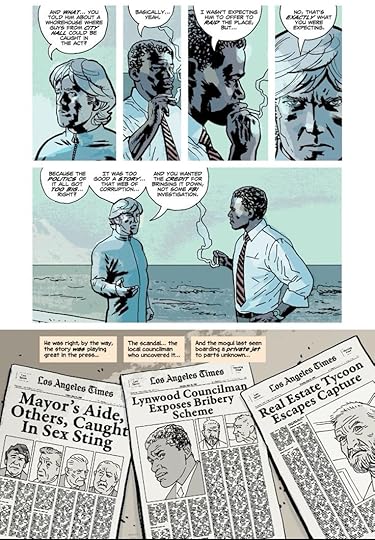
This wasn't my favorite Reckless story. Something was missing or maybe it just seemed a bit like filler. You do get more information about Anna and the way Ethan feels about her.
Does he like her like a little sister or does he like her-like her?
I can't tell.
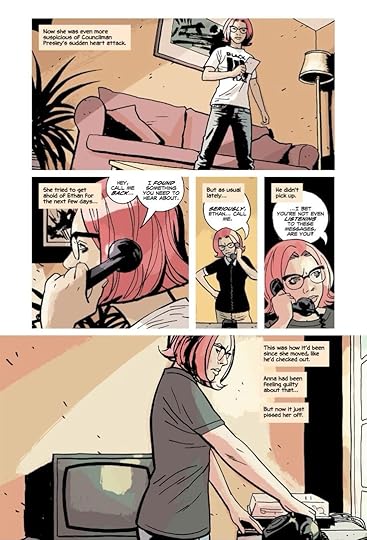
I don't know what it was about this one but...
Ok. Wait.
And now I feel like I've invested too much time pondering this and I should probably just read the next volume.
Because I know I will.
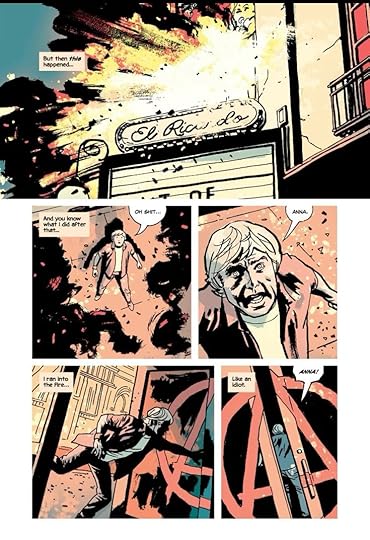
Recommended.
Politicians. Blech.
Growing up. Blech.
This wasn't my favorite Reckless story. Something was missing or maybe it just seemed a bit like filler. You do get more information about Anna and the way Ethan feels about her.
Does he like her like a little sister or does he like her-like her?
I can't tell.
I don't know what it was about this one but...
Ok. Wait.
And now I feel like I've invested too much time pondering this and I should probably just read the next volume.
Because I know I will.
Recommended.

August 12, 2021
A councilman, whose dad was involved with a shady developer shortly before dying in suspicious circumstances, wants Ethan Reckless’ help in bringing down said developer. But Ethan will have to do it without his assistant Anna as she’s decided the private investigation game isn’t her bag anymore. It’s the third Reckless book: Destroy All Interest In The Series!
Three times turns out to be about two times more than Ed Brubaker and Sean Phillips should’ve gone back to the Reckless well - the last book was very middling and this third one is unfortunately plain boring.
There’s way too much stuff here on Anna, who wasn’t an interesting supporting character and proves to be even less compelling in the spotlight. It was all largely irrelevant guff - she’s leaving, then not leaving, she’s got a new boyfriend, she’s had a falling out with Ethan, blah blah blah.
And the main story is equally as forgettable: a cliched “corrupt city officials” storyline that’s remarkable only for being so unimaginative coming from a writer as experienced as Brubaker.
As unengaging as this book is, it’s still smoothly-written and Sean Phillips is dependable as always, though none of his pages really stood out as especially memorable, so this is still a well-crafted comic from a technical standpoint. And the Dirty Diaper Caper was an amusing digression.
I highly recommend the first Reckless book, which is a banger full of action and fun story, almost exactly the polar opposite of this third snoozer of a book, Destroy All Monsters, which I don’t recommend!
Also, is it me or does Ethan on the cover look a lot like a certain ex-president (if they lost the double-chin)…?
Three times turns out to be about two times more than Ed Brubaker and Sean Phillips should’ve gone back to the Reckless well - the last book was very middling and this third one is unfortunately plain boring.
There’s way too much stuff here on Anna, who wasn’t an interesting supporting character and proves to be even less compelling in the spotlight. It was all largely irrelevant guff - she’s leaving, then not leaving, she’s got a new boyfriend, she’s had a falling out with Ethan, blah blah blah.
And the main story is equally as forgettable: a cliched “corrupt city officials” storyline that’s remarkable only for being so unimaginative coming from a writer as experienced as Brubaker.
As unengaging as this book is, it’s still smoothly-written and Sean Phillips is dependable as always, though none of his pages really stood out as especially memorable, so this is still a well-crafted comic from a technical standpoint. And the Dirty Diaper Caper was an amusing digression.
I highly recommend the first Reckless book, which is a banger full of action and fun story, almost exactly the polar opposite of this third snoozer of a book, Destroy All Monsters, which I don’t recommend!
Also, is it me or does Ethan on the cover look a lot like a certain ex-president (if they lost the double-chin)…?

March 3, 2023
"1988 was the year I started to feel old. I was thirty-seven, and every morning I woke up with this kind of dull stiffness, and aching in too many places [from] old injuries . . . The time I got shot, the time I got stabbed, the time I got blown up . . . " -- a nostalgia-free Ethan Reckless, on the very first page
A day or two ago I was happily talking up the grittily slick Brubaker & Phillips Reckless series to a GR friend - as we're in agreement that said dynamic duo can churn out quality crime-drama graphic novels like no one's business - but I had a more restrained or lukewarm feeling after finishing this third volume. It was more (too much?) of a slowburn-type of story this time, with a local political / business corruption plot that seemed a little too familiar if you've read enough books or viewed enough TV / movies, and the signature brutal action scenes were saved for only the final dozen pages. (The striking cover art featuring our irked title character - a former 60's deep cover federal operatitve-turned-troubleshooter for hire in L.A. - taking aim at someone with a .357 Magnum? Sorry, not found between these covers.) However, it is strongly hinted that the developments will lead directly into the storyline of the next edition, so maybe it will seem better in hindsight.
A day or two ago I was happily talking up the grittily slick Brubaker & Phillips Reckless series to a GR friend - as we're in agreement that said dynamic duo can churn out quality crime-drama graphic novels like no one's business - but I had a more restrained or lukewarm feeling after finishing this third volume. It was more (too much?) of a slowburn-type of story this time, with a local political / business corruption plot that seemed a little too familiar if you've read enough books or viewed enough TV / movies, and the signature brutal action scenes were saved for only the final dozen pages. (The striking cover art featuring our irked title character - a former 60's deep cover federal operatitve-turned-troubleshooter for hire in L.A. - taking aim at someone with a .357 Magnum? Sorry, not found between these covers.) However, it is strongly hinted that the developments will lead directly into the storyline of the next edition, so maybe it will seem better in hindsight.

September 7, 2021
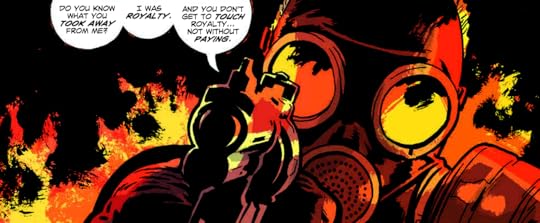
Reckless is back! These volumes seem to be coming out trimonthly, and it's quite something to see how the quality never really drops.
This book feels like it's more dedicated to character building, the better to pull the rug from under us in future volumes, if the ending is to be believed.
What is there left to say? It's Brubaker and Phillips doing Brubaker and Phillips work. By this point, you're either in or you're out.
(Picked up an ARC through Edelweiss)

November 3, 2021
Destroy All Monsters is the title of a rock group, and a 1967 kaiju film. I think this is more a reference to the film than the music (though Brubaker likes music as much as old movies), as the literary pop and pulp culture dude and crime comics writer Brubaker keeps us digging in that literary way. What or who are the monsters here? He does research, and hopes/expects you to do the same to appreciate his work. As with Alan Moore (but more playfully, though just as insightfully, but less obsessively than Moore), he and artist extraordinaire Sean Phillips thoughtfully urge you to see the layers in every panel. Brubaker says he is trying to make sure the Reckless series is a period piece, and this is 1988, south LA, the decades-abandoned Lynwood neighborhood, so he's done his research on the socio-economic scene there, too.
The heart of this particular story is surprisingly sentimental. It’s world-building, coloring in the friendship between Ethan Reckless and Anna. Reckless, a vet, is a kind of fixer. People come to him for jobs they don't want cops to get involved in; they want to find people, sometimes they want revenge. He’s an off-the-grid PI, with his assistant, Anna, who doubles as projectionist at the old movie theater he owns. Usually we get an inventive story, with a couple twists and surprises, but this volume largely focuses on their friendship, two loners coming together over old films. And the work together. She's a little bit girl Friday, she's a little bit Moneypenny, something to ground this wild anti-Bond, this reckless guy.
He's 37, feeling old, and she is 20, so he watches over her in her parade of boyfriends. But as the plot thickens, I like seeing the image of Rear Window they watch as they, mirroring the Jimmy Stewart-Grace Kelly duo, try to see whodunnit. He buys her Judy Garland’s Easter Parade for her birthday (now that’s sentimental!). The next book will be crazy violent, I bet, we're being set up for the fall, but this one establishes them as a coupla softies.
The actual story is not that memorable, bringing down a corrupt real estate developer, ambitious politicians, though it ties to the larger interest that drives much of Brubaker and Phillips’s work: social and economic and racial justice, as one of the “monsters” in this book is a guy that undermines black and Hispanic businesses, a guy helping create the disaster that is south LA, now neglected for decades. So the primary monster for Brubaker is capitalism, rich guys pulling strings to get what they want. No consequences for their actions. The problem is that when you kill one monster there’s another one waiting to take his place.
There’s more than a suggestion that there’s a white supremacist gang operating within the LA police force. Just ask previous LA crime chroniclers Raymond Chandler and James Ellroy whether they think that is far-fetched. I am sure they would be nodding in approval at Brubaker's chronicling this. They've essentially been saying it all along. Corrupt LA cops can’t catch a break from these crime novelists, thank goodness.
I like all the literary/movie/pulp references in this book such as Rear Window, Ethan reading Jim Thompson novels, and one guy, named Runyon, echoes Damon Runyon, a kind of sentimental short story writer of NYC’s down-and-out gamblers and hustlers and petty thieves. Some may see this as just an interlude volume, a set-up for a crazy violent story, as I said, and I think it is, but I thought it was sweet, a change of pace, to show Brubaker's relationship-writing chops. A focus on character. The first of the three Reckless books (so far) is the best, but I think this still showcases the best comics crime writing team ever.
The heart of this particular story is surprisingly sentimental. It’s world-building, coloring in the friendship between Ethan Reckless and Anna. Reckless, a vet, is a kind of fixer. People come to him for jobs they don't want cops to get involved in; they want to find people, sometimes they want revenge. He’s an off-the-grid PI, with his assistant, Anna, who doubles as projectionist at the old movie theater he owns. Usually we get an inventive story, with a couple twists and surprises, but this volume largely focuses on their friendship, two loners coming together over old films. And the work together. She's a little bit girl Friday, she's a little bit Moneypenny, something to ground this wild anti-Bond, this reckless guy.
He's 37, feeling old, and she is 20, so he watches over her in her parade of boyfriends. But as the plot thickens, I like seeing the image of Rear Window they watch as they, mirroring the Jimmy Stewart-Grace Kelly duo, try to see whodunnit. He buys her Judy Garland’s Easter Parade for her birthday (now that’s sentimental!). The next book will be crazy violent, I bet, we're being set up for the fall, but this one establishes them as a coupla softies.
The actual story is not that memorable, bringing down a corrupt real estate developer, ambitious politicians, though it ties to the larger interest that drives much of Brubaker and Phillips’s work: social and economic and racial justice, as one of the “monsters” in this book is a guy that undermines black and Hispanic businesses, a guy helping create the disaster that is south LA, now neglected for decades. So the primary monster for Brubaker is capitalism, rich guys pulling strings to get what they want. No consequences for their actions. The problem is that when you kill one monster there’s another one waiting to take his place.
There’s more than a suggestion that there’s a white supremacist gang operating within the LA police force. Just ask previous LA crime chroniclers Raymond Chandler and James Ellroy whether they think that is far-fetched. I am sure they would be nodding in approval at Brubaker's chronicling this. They've essentially been saying it all along. Corrupt LA cops can’t catch a break from these crime novelists, thank goodness.
I like all the literary/movie/pulp references in this book such as Rear Window, Ethan reading Jim Thompson novels, and one guy, named Runyon, echoes Damon Runyon, a kind of sentimental short story writer of NYC’s down-and-out gamblers and hustlers and petty thieves. Some may see this as just an interlude volume, a set-up for a crazy violent story, as I said, and I think it is, but I thought it was sweet, a change of pace, to show Brubaker's relationship-writing chops. A focus on character. The first of the three Reckless books (so far) is the best, but I think this still showcases the best comics crime writing team ever.

November 14, 2021
Gorgeous, gritty artwork and an excellent anti-establishment, counter culture kind of Travis McGee type lead character. The story covers a lot of interesting background on Ethan Reckless and his (plutonic) relationship with his partner Anna, providing ample opportunity for some introspection as he wallows in despair, lamenting loss of personal connections in his life. This probably should have been the first volume.

October 30, 2021
Its not the best reckless book but its a fun one and not the best from Ed and Sean.
It takes place in the 1980s and tells of the friendship between Ethan and Anna and like how they are growing distant because Anna has got a bf and well other priorities and I love the way they tell the story of Anna and her growing up and all. Plus now they work together on the case of a politician named Issac Presley and how he wants them to take down the guy Gerard Reyner and well the investigation will take them places and growing closer or distant or the revenge coming back to haunt them and the betrayal and all that forms the backbone of this story and whatever will become of Ethan and Anna.
Its a great book for an evening read but storywise not as compelling as the other two but what I like is the momentum of the story and how fast it reads. And I love the evolution of Anna and her inclusion in this story but I would have liked to see some romance between Anna and Ethan.. just having them friends was a disappointment especially considering how close they grew to each other but thats an authors decision. I also liked the social commentary of that era and the conflicts growing at that time and how changes were taking place albeit slowly. The art was good capturing that tone of the late 80s and some references were alright. So yeah good for a one time read!
It takes place in the 1980s and tells of the friendship between Ethan and Anna and like how they are growing distant because Anna has got a bf and well other priorities and I love the way they tell the story of Anna and her growing up and all. Plus now they work together on the case of a politician named Issac Presley and how he wants them to take down the guy Gerard Reyner and well the investigation will take them places and growing closer or distant or the revenge coming back to haunt them and the betrayal and all that forms the backbone of this story and whatever will become of Ethan and Anna.
Its a great book for an evening read but storywise not as compelling as the other two but what I like is the momentum of the story and how fast it reads. And I love the evolution of Anna and her inclusion in this story but I would have liked to see some romance between Anna and Ethan.. just having them friends was a disappointment especially considering how close they grew to each other but thats an authors decision. I also liked the social commentary of that era and the conflicts growing at that time and how changes were taking place albeit slowly. The art was good capturing that tone of the late 80s and some references were alright. So yeah good for a one time read!

November 16, 2021
Ed Brubaker/Sean Phillips’s third graphic novel to feature their new hero, Ethan Reckless, tells the story of how Ethan met his sidekick, Anna, and how he almost fucked that relationship up.
In “Destroy All Monsters”, Reckless is hired by an up-and-coming black councilman who wants him to find dirt on a sleazy real estate developer, which he does, in a big way.
Anna, it turns out, is a natural at private investigations, but she quits when Reckless and her get into a fight about her new boyfriend, who Reckless thinks is a douchebag. She moves out of the old movie theatre and into an apartment on the other side of the 405, which, apparently, in California, might as well be on the other side of the world.
Reckless discovers that he can’t do much without Anna, and Anna starts to realize that Reckless was right about her new boyfriend. Meanwhile, the sleazy real estate developer plans on getting revenge on both of them…
Excellent series. Book 4 comes out in April…
In “Destroy All Monsters”, Reckless is hired by an up-and-coming black councilman who wants him to find dirt on a sleazy real estate developer, which he does, in a big way.
Anna, it turns out, is a natural at private investigations, but she quits when Reckless and her get into a fight about her new boyfriend, who Reckless thinks is a douchebag. She moves out of the old movie theatre and into an apartment on the other side of the 405, which, apparently, in California, might as well be on the other side of the world.
Reckless discovers that he can’t do much without Anna, and Anna starts to realize that Reckless was right about her new boyfriend. Meanwhile, the sleazy real estate developer plans on getting revenge on both of them…
Excellent series. Book 4 comes out in April…

October 18, 2021
A lackluster and half-hearted adventure with an evil real estate developer is tossed in to spice up what really wants to be a character study about the friendship between Ethan Reckless and his assistant Anna. For a guy who claims to be distanced from emotions by an old brain injury, he certainly manages to be petulant and mawkish when Anna begins to drift away from him.
I was so happy when I saw this available on Hoopla this afternoon, but now I'm just disappointed and hoping the next one gets things back on track. (Though the hideous cover previewed here does not bode well.)
I was so happy when I saw this available on Hoopla this afternoon, but now I'm just disappointed and hoping the next one gets things back on track. (Though the hideous cover previewed here does not bode well.)

October 31, 2024
While still an enjoyable and solid read, I felt this volume was the weakest of the three I’ve read so far.
Though a crime story still runs through the plot, this installment seemed more focused on exploring the protagonist’s backstory with his assistant and developing their relationship.
I can see the intention here—likely to strengthen the bond for future storylines—but, for now, it felt somewhat unnecessary, as their strong rapport was already clear.
Looking forward to seeing where this leads!
Though a crime story still runs through the plot, this installment seemed more focused on exploring the protagonist’s backstory with his assistant and developing their relationship.
I can see the intention here—likely to strengthen the bond for future storylines—but, for now, it felt somewhat unnecessary, as their strong rapport was already clear.
Looking forward to seeing where this leads!

October 20, 2021
If I had to be stuck on a delayed train this morning, at least I had a new Reckless book to keep me company. The other reviews so far surprise me a little, but I wonder if it's the introspection and focus on Anna. For me, it was a welcome change of pace to see the vulnerable side of Ethan and the damage that can be done when he trusts. The case was interesting too (for me anyway), especially given the real world research.

March 17, 2022
This third volume of Reckless happens to be a mystery involving a war between shady real estate moguls. But that mystery totally plays second fiddle to what the story is really about, and that’s a focus on Ethan’s relationship with his partner/projectionist Anna, which really serves as the story’s backbone. We also get a backstory about Anna and ultimately it’s pretty touching. Also, the way that Brubaker has been playing with time in these books is proving to add another layer to this overarching tale!

February 13, 2022
A lean, fast-paced thriller and a nice meditation on a certain kind of loneliness.
Brubaker and Philips are one of the few comics teams worth it for me to keep following these days. Can't wait where to see where they go with this.
Brubaker and Philips are one of the few comics teams worth it for me to keep following these days. Can't wait where to see where they go with this.

January 18, 2025
This was another fantastic Reckless story, the plot of this was an interesting mystery that I found satisfying to see unravel but the reason I enjoyed this was mainly seeing Ethan and Anna and the dynamic they have. Looking forward to the next one!

October 27, 2021
A throw-back to the glory days of pulp fiction I was born to late for, when the best authors would churn out masterworks faster than people could read them. Hopefully they keep it up.

November 28, 2024
Apesar de todos os volume de Recksless serem bons, ao ler do volume 1 ao 3, sinto que a qualidade foi só aumentando, ao ponto que essa terceira edição é a minha favorita dos volumes lançados até agora no Brasil. E finalmente, eu descobri o porque das narrações nas histórias, e admito que achei muito interessante a maneira como é feita.
Neste volume, vamos acompanhar Ethan, durante o ano de 1988, em um trabalho que envolve corrupção na politica e área imobiliária de Los Angeles, em que o protagonista precisa investigar um milionário que está fraudando documentos e burocracias para atingir seus interesses particulares.
O que Ethan espera ser apenas mais um de seus serviços de investigação e exposição de corrupção, se torna algo grande, envolvendo falsificação de óbito e até mesmo a polícia da região. Tudo isso, faz com que o peso da trama se torne muito apreensivo e consegue prender o leitor a querer mais a cada página virada. Acompanhar Ethan em cada etapa de seu trabalho e vê-lo sair de situações complicadas é simplesmente genial.
É chover no molhado dizer isso, mas novamente Brubaker e Sean Phillips conseguem entregar uma obra detetivesca, noir e de máfia simplesmente genial. E dessa vez, com um toque adicional de sentimento e amizade, pois nesse volume nos deparamos com a história de Ethan com Anna, o que agrega demais na trama em questão e serve como fio condutor de muitos assuntos discutidos.
Se fosse resumir Reckless, seria como ler algo cheio de camadas, em que cada página fosse uma camada descorda a ser explorada, e com o passar dessas camadas, uma surpresa entre uma e outra lhe aguarda. Agora, citando Joe Hill, que possui texto sobre Reckless, “Brubaker e Phillips são como Scorsese e De Niro dos quadrinhos “.
Neste volume, vamos acompanhar Ethan, durante o ano de 1988, em um trabalho que envolve corrupção na politica e área imobiliária de Los Angeles, em que o protagonista precisa investigar um milionário que está fraudando documentos e burocracias para atingir seus interesses particulares.
O que Ethan espera ser apenas mais um de seus serviços de investigação e exposição de corrupção, se torna algo grande, envolvendo falsificação de óbito e até mesmo a polícia da região. Tudo isso, faz com que o peso da trama se torne muito apreensivo e consegue prender o leitor a querer mais a cada página virada. Acompanhar Ethan em cada etapa de seu trabalho e vê-lo sair de situações complicadas é simplesmente genial.
É chover no molhado dizer isso, mas novamente Brubaker e Sean Phillips conseguem entregar uma obra detetivesca, noir e de máfia simplesmente genial. E dessa vez, com um toque adicional de sentimento e amizade, pois nesse volume nos deparamos com a história de Ethan com Anna, o que agrega demais na trama em questão e serve como fio condutor de muitos assuntos discutidos.
Se fosse resumir Reckless, seria como ler algo cheio de camadas, em que cada página fosse uma camada descorda a ser explorada, e com o passar dessas camadas, uma surpresa entre uma e outra lhe aguarda. Agora, citando Joe Hill, que possui texto sobre Reckless, “Brubaker e Phillips são como Scorsese e De Niro dos quadrinhos “.
May 1, 2024
The best Reckless book so far. The story is centered around Ethan and Anna, their friendship and life developments as they grow older. Ethan always stuck in time, his feelings buried; Anna trying to build new relationships and a future. Their relationship seems to be on the edge, hanging on this fine line that separates their different lives and driving forces. Sometimes we just drift apart and friendships slowly disintegrate, the world gradually changing, our feelings adapting to the new configurations. The way Brubaker writes that is captivating, not in an overly dramatic or apathetic way, but in a balanced and sensible manner that really works for these characters and story. The investigation part of the book is also satisfying in the way it explores the recurring "ghosts of the past" theme in Brubaker's narratives, people trying to run away from their past only to end up entangled in its ramifications. There are also interesting twists and explorations of social and racial problems still relevant today. Despite its focus on character development the main plot still packs a punch. A perfect little tale of friendship and crime.

July 24, 2023
2,5*
The series is getting (too) cosy.
Don’t get me wrong. It’s Brubaker and Phillis so you know it’s above average to start with but it lacks something, something dazzling, to make it really shine.
The main case is basic with a kind of saturday night B-movie ending, all wrapped in the Ethan/Anna distended relationship which didn’t feel very compelling.
Even Sean Phillips’ work seems to have slackened off. Too many pages to draw, probably.
Like I said it’s well done, perfectly enjoyable but not memorable.
The series is getting (too) cosy.
Don’t get me wrong. It’s Brubaker and Phillis so you know it’s above average to start with but it lacks something, something dazzling, to make it really shine.
The main case is basic with a kind of saturday night B-movie ending, all wrapped in the Ethan/Anna distended relationship which didn’t feel very compelling.
Even Sean Phillips’ work seems to have slackened off. Too many pages to draw, probably.
Like I said it’s well done, perfectly enjoyable but not memorable.

November 20, 2022
Tercer volumen de la serie y el que más me ha gustado hasta el momento. La historia vuelve a ser otra cortada con receta (corrupción inmobiliaria; señores mayores atrapados por sus vicios y el chantaje), pero con sus giros, que Anna tenga más presencia y Ethan viva una crisis más verosímil que en las historias anteriores, me ha parecido un thriller mejor tirado. Además Brubaker se permite mostrarnos un vistazo de lo que vendrá, sembrando tensión e incertidumbre. Sigue gustándome mucho el color de Jacob Phillips, la textura y la luz que imprime en cada escena.

November 5, 2021
Yet another brilliant volume of Reckless, and this time it's not the investigation (which is interesting enough, but not particularly shocking), and it's not because of the focus on Ethan, but instead for the focus on Anna and their relationship. It's touching, it's realistic, and in the end it's heartbreaking. Also, I love the continued focus on historical events, and how they influence the narrative.

February 9, 2022
You can read my full review over at No Flying, No Tights but the TLDR: is that this is once again Brubaker and Phillips working at the top of their field producing memorable characters, vivid stories and distinct worlds. Absolutely worth the read.

Read
June 25, 2023De longe o melhor volume de Reckless até agora.
Finalmente descobrimos como Ethan conheceu sua assistente, vemos uma dinâmica maior entre os dois, o cliente que contrata a investigação tem uma dinâmica mais intrusiva pra lidar com o Ethan, e as coisas mudam pra valer, com o Ed Brubaker sem nenhum medo de arriscar no roteiro.
Finalmente descobrimos como Ethan conheceu sua assistente, vemos uma dinâmica maior entre os dois, o cliente que contrata a investigação tem uma dinâmica mais intrusiva pra lidar com o Ethan, e as coisas mudam pra valer, com o Ed Brubaker sem nenhum medo de arriscar no roteiro.

September 23, 2022
I love this series, with the detective who lives in an abandoned movie theater, and the echoes of Travis McGee. Ed Brubaker and Sean Phillips together again? Sign me up. This is one of the stronger stories and mysteries so far.

January 9, 2022
Once again Brubaker and Phillips deliver a nearly unputdownable time piece noir story. I really dig this new series, and was pleasantly surprised to see there will be a 4th volume en route.

June 6, 2022
4.5 stars--Another winner in this insanely engaging period crime drama. You can almost hear the soundtrack playing the moment you open the book.

January 14, 2023
Like Book 1 and 2, this series continues to impress.
I really loved learning much more about Anna, she always seemed interesting but not enough about her to care. Now this volume gives us a better look at her, where she came from, why she's like how she is, and her relationship with Ethan. And when their relationship of mentor or father/daughter comes into question, Ethan must figure out how to repair it while also dealing with a rough case.
The thing I love is this has the mix of hard boil detective style that Brubaker and Phillips are masters of. But you also get some of the most human characters of the bunch. Very much so here, with a lot of the characters feeling like they're in it for the long run. I love the character work so much that the main case almost felt like secondary, and for me, who loves character development, that rocks.
Overall while the case itself isn't as strong as the last one the actual character work was great. Can't wait to read the next one.
I really loved learning much more about Anna, she always seemed interesting but not enough about her to care. Now this volume gives us a better look at her, where she came from, why she's like how she is, and her relationship with Ethan. And when their relationship of mentor or father/daughter comes into question, Ethan must figure out how to repair it while also dealing with a rough case.
The thing I love is this has the mix of hard boil detective style that Brubaker and Phillips are masters of. But you also get some of the most human characters of the bunch. Very much so here, with a lot of the characters feeling like they're in it for the long run. I love the character work so much that the main case almost felt like secondary, and for me, who loves character development, that rocks.
Overall while the case itself isn't as strong as the last one the actual character work was great. Can't wait to read the next one.

February 17, 2024
4.5 stars. I really Locke the Reckless series of books. I’ve said it after every book, but Brubaker and Phillips just do crime so dang well! Great character writing in this one. I especially enjoyed the backstory on Ethan and Anna here.

May 17, 2022
I thought this was an especially strong book in the Reckless series. Some backstory on his relationship with his assistant was welcome and well done. So for me this was the second 5 star book out of three for the series.

December 4, 2021
The format of Reckless is our protagonist, Ethan, telling a sort of memoir about his life and adventures looking back on them all. And, like an old man telling stories always does, he rambles a lot. He would be in a moment, flash back to the main story timeline, then flashback to earlier, constantly, as if he could never decide where he wanted to be. It's not straightforward, but the changing times don't play any cool tricks on the narrative or show any creativity in the artwork. This book was perhaps the most boring of the Reckless series, as the actual crime stuff is downplayed in favour of the personal drama between Ethan and his friend/coworker/more competent sidekick Anna. But their relationship is thin, they're not fun to see interact even at the best of times, and the lack of any real action or mystery makes it hard to stay connected to the story.
Every Brubaker/Phillips book feels like it has some big twist that makes it unique and throws the regular crime/noir narrative in a new direction and while Destroy All Monsters does have a moment that shocks you that moment also has very little impact on the story itself. Maybe if it committed more to the plot and building a more engaging mystery, or committed more to how Ethan and Anna's relationship should be, I would have enjoyed it more.
Every Brubaker/Phillips book feels like it has some big twist that makes it unique and throws the regular crime/noir narrative in a new direction and while Destroy All Monsters does have a moment that shocks you that moment also has very little impact on the story itself. Maybe if it committed more to the plot and building a more engaging mystery, or committed more to how Ethan and Anna's relationship should be, I would have enjoyed it more.

October 31, 2021
Anna, Ethan’s younger punk friend and “sidekick,” has provided a lot of the charming heart of this series, so centering the third book around her makes sense but is a bit of a gamble, too. She could easily be the sort of character who works best as seasoning and not as the main course. Thankfully that wasn’t my experience here, and I loved seeing her (and her friendship with Ethan) flourish in the narrative spotlight. The Phillips duo’s art makes everything look as great as ever.
The 80s LA noir conspiracy angle this time is a bit of a departure from the more exotic inclusions of earlier books, tying in city planning corruption and the very real white supremacist organized gangs that have operated in the LA Sheriff’s Dept for decades now. It’s a bit of “wait, that part’s documented as real?!” history that could always use more awareness, like what the Watchmen series did for the Tulsa massacre. The crime plot is lean and acts more as background for the character-focused story instead of the other way around this time, but it’s still entertaining enough.
The 80s LA noir conspiracy angle this time is a bit of a departure from the more exotic inclusions of earlier books, tying in city planning corruption and the very real white supremacist organized gangs that have operated in the LA Sheriff’s Dept for decades now. It’s a bit of “wait, that part’s documented as real?!” history that could always use more awareness, like what the Watchmen series did for the Tulsa massacre. The crime plot is lean and acts more as background for the character-focused story instead of the other way around this time, but it’s still entertaining enough.
Displaying 1 - 30 of 296 reviews