

What do you think?
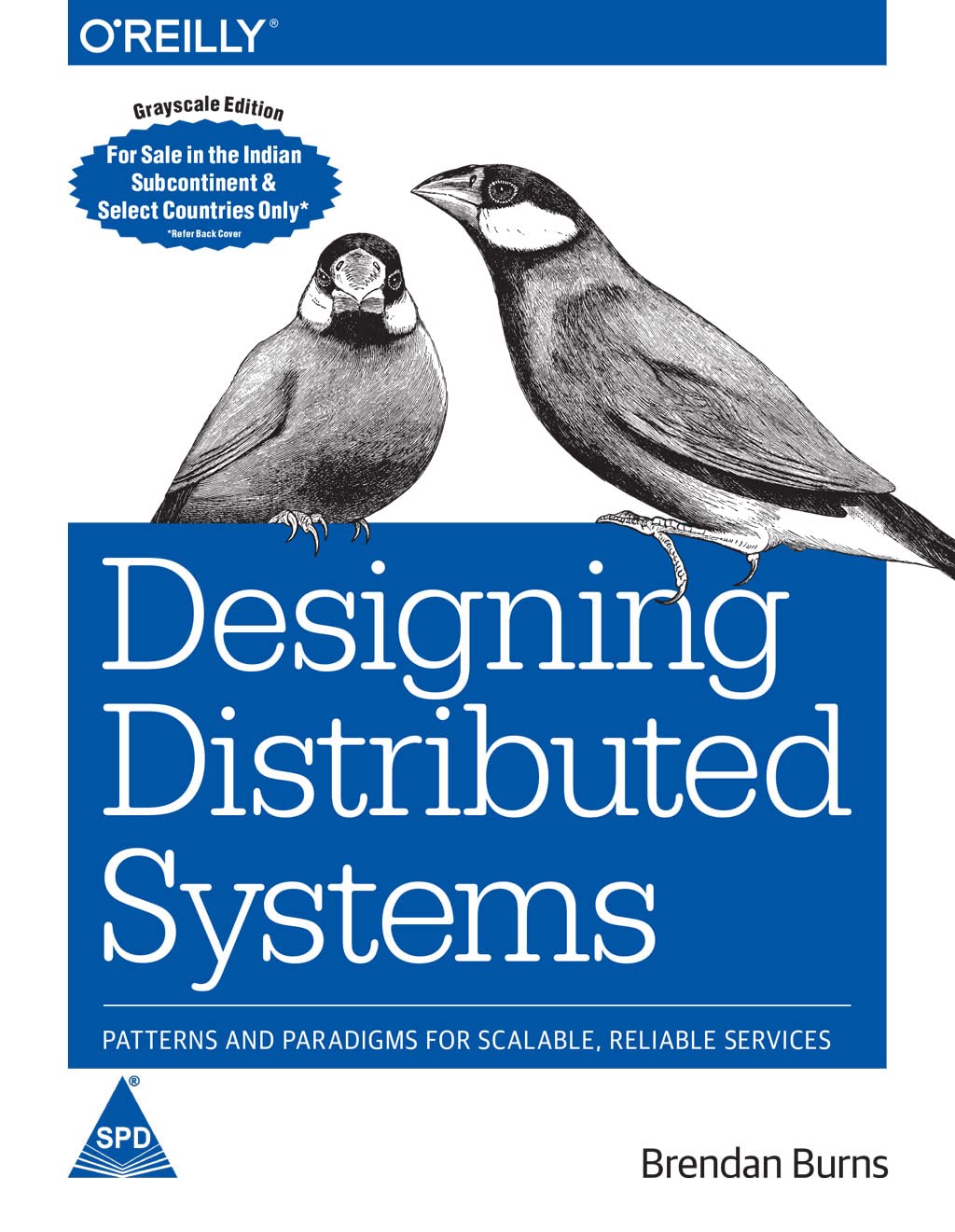
Designing Distributed Systems: Patterns and Paradigms for Scalable, Reliable Services
Paperback
Published August 27, 2018
Ratings & Reviews
Friends & Following
Create a free account to discover what your friends think of this book!
Community Reviews
Displaying 1 - 6 of 6 reviews

November 19, 2025
The author speaks in a sober tone that reflects his long periods of experience and insight. Patterns and techniques such as sidecar, adapter, ambassador, sharding, replication, leader election are explained alongside sample code implementations. Since he is associated with Kubernetes, it is a prominent presence in all examples, which skews the narrative towards container orchestration, making one wonder if the choice is always worth the complexity. The discussion is neither too deep (the gold standard remains Designing Data Intensive Applications by Kleppmann) nor too shallow (as happens in scores of "system design interview" books and blogs). At only around 200 pages, it is a swift read with good takeaways for beginners to scalable and fault tolerant architecture design.

July 7, 2023
Nicely presented. The only thing I missed was that the patterns from the last part should have more comprehensive descriptions with examples how you can implement joining. And comparing to previous parts, this one contains only high level summary.
October 6, 2023
I don't think I can recommend it - although there are some interesting design patterns described there, most of this rather short book is about implementation details, with primary focus on k8s, and a shallow description of the patterns themselves

January 27, 2024
A very useful overview of patterns that can be used to deploy applications to Kubernetes. With lots of example yaml manifests - it's quite practical.
Nothing revolutionary - but I still suggest reading it to fill in all the gaps in knowledge about what and how can be done.
Nothing revolutionary - but I still suggest reading it to fill in all the gaps in knowledge about what and how can be done.

May 15, 2025
Pros:
• Easy-to-follow modular patterns
• Real-world Kubernetes examples
• Great for cloud-native developers
Cons:
• Too shallow for those seeking advanced system design theory
• Kubernetes-focused; limited to that ecosystem
• Easy-to-follow modular patterns
• Real-world Kubernetes examples
• Great for cloud-native developers
Cons:
• Too shallow for those seeking advanced system design theory
• Kubernetes-focused; limited to that ecosystem
February 4, 2025
Totally useless reading and the title is very misleading. You will not find the information about distributed systems in this book.
Displaying 1 - 6 of 6 reviews