The history of European civilization is the history of a certain political institution which united and expressed Europe, and was governed from Rome. This institution was informed at its very origin by the growing influence of a certain definite and organized this religion it ultimately accepted and, finally, was merged in. The institution—having accepted the religion, having made of that religion its official expression, and having breathed that religion in through every part until it became the spirit of the whole—was slowly modified, spiritually illumined and physically degraded by age. But it did not die. It was revived by the religion which had become its new soul. It re-arose and still lives. This institution was first known among men as Republica ; we call it today “The Roman Empire.” The Religion which informed and saved it was then called, still is called, and will always be called “The Catholic Church.” Europe is the Church, and the Church is Europe.
- Taken from "Europe and the Faith" written by Hilaire Belloc
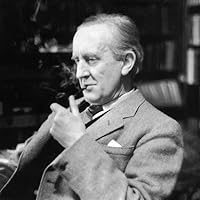
Joseph Hilaire Pierre René Belloc, French-born British writer, is considered a master of light English prose and also widely known for his droll verse, especially The Bad Child's Book of Beasts in 1896.
The sharp wit of Belloc, an historian, poet, and orator, extended across a large literary output and strong political and religious convictions. Throughout his career, he prolifically wrote across a range of genres and produced histories, essays, travelogues, poetry, and satirical works.
Cautionary Tales for Children collects humorous yet dark morals, and the historical works of Hilaire Belloc often reflected his staunch Catholicism and critique of Protestant interpretations. He led advocates of an economic theory that promoted and championed distribution of small-scale property ownership as a middle ground between capitalism and socialism, alongside Gilbert Keith Chesterton, his close friend.
In politics, Hilaire Belloc served as a member of Parliament for the Liberal party, but the establishment disillusioned him. His polemical style and strong opinions made him a controversial figure, who particularly viewed modernism, secularism, and financial capitalism as threats to traditional Christian society in his critiques.
ENGLISH: A good historic support to the assertion that the Catholic Church is the soul of the Western Civilization. However, Belloc's position should be slightly corrected taking into account the work of Christopher Dawson, who I think understood a little better the situation. Anyway, this book provides a great history lesson.
ESPAÑOL: Una buena base histórica para la afirmación de que la Iglesia Católica es el alma de la Civilización Occidental. Sin embargo, la posición de Belloc debe ser ligeramente corregida teniendo en cuenta la obra de Christopher Dawson, quien creo que entendió un poco mejor la situación. De todos modos, este libro es una gran lección de historia.
Belloc takes us through a bird’s eye view of Europe, from the Roman Empire, through the Middle Ages and the Reformation to today. It presupposes a knowledge of the history: he is not detailed, but instead illuminates it and points out the main features and consequences. And he does it very differently than the standard historians from the last two centuries. Very insightful about the past and eerily prophetic about our times; what he wrote a century ago in the last chapter has come to happen and could have been written today.
Under the umbrella theme of Europe and the Faith, here a few main streams of thought.
One of them is the historicity of early Christianity and its connection to Roman Catholicism and I enjoyed Belloc asking the then contemporary early 20th century reader, to take into consideration certain 19th century events to show how close some of the early Church Fathers and the writings supporting Catholic doctrine were to the ministry of Christ. He emphasizes that Rome at this time was secular, skeptical, and curious, and I don't think people do stop to realize that Christianity was spreading in the same era that gave us Lucian. It was not just superstitious and ignorant masses.
Then Belloc disputes the notion of the Roman Empire's Fall and argues that it was simply a transition into different cultures without that much disruption. I first heard this notion in a TV documentary around 2006 so it can't possibly be a very heterodox stance. Yes, there was no abrupt fall of Rome and many of the institutions considered Medieval, like feudalism had Roman precedents. Societal decay had already been severe, and widespread even in the times of the Empire. Government didn't collapse, but became more local, and Belloc emphasizes the role of the Catholic Church which of course took it's diocesean arrangement from the Empire, and I agree that with the argument that the Roman Empire basically became the Catholic Church.
I don't really like how he just almost sweeps the barbarian invasions under the rug though. I don't think he ever says anything objectively false, but he puts too much emphasis on continuity. It's true however that a lot of the barbarians were already connected with Rome, serving in its military, simply wanting the benefits of the Empire without overthrowing the country. Let's remember that Odoacer, the chieftain that overthrew the last Roman emperor still considered himself as serving under the Eastern Emperor.
The last part is about the Reformation and the consequences for Christendom, when Christianity suffers a massive schism. There is a deeply Catholic element as Belloc certainly believes that there was a spiritual element to the conflict, an idea which can only be pursued so far of course, but one that I found fascinating. I think there's an implication that religious decay could happen even without the Reformation. It's the specific combination of related though at times even contradictory elements of individualism, irrationalism, absolutism, and so forth which shaped the modern world into what we know it as. It's a summary of the course of events and the effects which continued to flow even into modern times. The matter is much more detailed in Belloc's How the Reformation Happened.
As usual, Belloc's strength is his engaging style. He always describes historical events as if he was already there and he doesn't like citations. It helps if you're already largely familiar with the events that he describes as well.
This is a good book. I generally agree with Belloc's idea, that the Roman Empire didn't fall, it was just transformed into the Roman Catholic Church, and that the Reformation was a bad thing--Belloc calls it a disaster. But the study of history and especially archaeology have progressed since 1920, so there are some things Belloc can't take into account. He minimizes the barbarian incursions into Europe, for example. While this is done by more modern historians, I think Belloc overstates his case. So I agree with the general idea of the book, if not with some of the specifics. It's a good companion-piece to The Everlasting Man by G. K. Chesterton (Belloc's friend).
Excellent analysis of how the Catholic faith transformed the Roman Empire into the Christendom of the Middle Ages. Many modern historians frame this as a "fall" of the Empire and something new rising to take its place, but Belloc makes a good case for seeing this rather as a gradual transition. He also demonstrates quite persuasively that historians ought to appreciate the precise role of the Catholic Church in those early centuries whether they happen to hold that faith or not. Belloc's view of the relation of the Church to society gives him insights into the sociological (rather than theological) character of the Protestant Reformation. For these reasons, this short and accessible book is well worth the time of anyone interested in European history.
That being said, this work suffers from several deficiencies. Belloc's French influences shine through in his probably too antagonistic view of Germany, as if that country were wholly and irredeemably barbaric. To be fair, however, the German school of history against which he constantly rails in this work, published in 1920, is precisely the racial explanation of history that laid the foundation for Nazism, so he can perhaps be excused for his excess. The modern reader will appreciate how the views Belloc tries to discredit continue to influence the way history is taught in our universities today, so the century between its publication and the present does not render it out-of-date.
Belloc also, as is his custom, makes bold and memorable statements that perhaps do his work a disservice. Saying "Europe is the faith, and the faith is Europe" is in one way an accurate summary of his thesis, but saying this so bluntly in the introduction before a careful and detailed definition of terms can not but alienate some readers.
I highly recommend this work to students of history, whether ancient, medieval, or modern. Even if one disagrees with Belloc's conclusions, his way of framing the narrative will bring new insights to even familiar historical events.
I was drawn to Hilaire Belloc because of his being such an influence on GK Chesterton whose writings I have discovered and love. With this book, Belloc gives a concise history of Christendom in Europe, how it influenced civilization in Europe for good, brought Europe through the decay of the Roman Empire having basically drawn from the Roman Empire all that was salvageable, helped preserve civilization and Christianity through the Dark Ages and then with a re-awakening of true spirituality and truth, rose again to become the engine that drove Europe to greater prosperity and stability. The author sees the Reformation as a "disaster" in the sense that it fractured and splintered the unity of the Church and as a result, it fractured European culture and civilization. Belloc sees the reunification of Europe around the Catholic Church as its only hope for re capturing its moral greatness as well as the greatness of its civilization. This book challenged much of my concept of the Reformation as well as gave me a new appreciation for the role of the Catholic Church in preserving Europe's civilization and culture.
Original take on the Roman fundament of Western culture.
Belloc was a British Catholic writer of French descent. For most of his life he defended the Catholic Church against any wrongdoings or any wrong core assumptions. To Belloc, Catholicism is Western culture – and nothing but Catholicism is Western culture. Islam, Protestantism, atheism, paganism, etc. – to him all these things were fatal or false mistakes. In “The Faith is Europe” Belloc tries to make the reader understand why Catholicism is called *Roman* Catholicism. The Roman empire was not just an expanding empire, it was also a community of people, united by certain values, traditions, institutions, norms, etc.; it was a culture. After the fall of the Roman empire, the Roman culture didn’t just vanish, it lived on in the Roman Catholic Church. Therefore, Belloc’s saying “Europe is the Faith – and the Faith is Europe”. The Church unified European Christendom; European Christendom established itself in the remnants of former Roman provinces, and settled in Western Europe. They were besieged from all sides: Viking raids from the North, Islam from the South and German/Slavic barbarians in the East.
What’s interesting about Belloc’s these is that it’s 1) self-evidently true (when empires fall, its legacy does not vanish completely or mostly), 2) original (Catholicism as the soul of the Roman empire), and 3) overstated. James Russell argues in “Germanization of Medieval Christianity” that Catholicism has been heavily influenced by German paganism and folklore. Other writers have argued that the Roman empire itself became ever more Hellenized over its long existence – much more than the other way around. Modern writers like Nietzsche have argued that Christianity was, in fact, a slave religion, inherited mostly from Judaic culture; Nietzsche hated Christianity because, according to him, it was insufficiently Hellenized/Romanized! I’m no historian, but it makes sense to me that cultures cross-influence other cultures and subsequent (child)cultures. So, sure, some parts of Christianity have their roots in ancient Greece, Judaism, Roman culture, and German paganism. Belloc is right to stress the Roman part.
In the latter chapters Belloc argues against Protestantism; according to him, Protestantism was the first step towards complete secularism and atheism – and it’s hard to argue against that. Protestant countries secularized much faster than Catholic countries. However, Belloc does take some partisan Catholic positions, like linking Germanic/Northern Europe’s Protestant turn to its barbarous non-Roman culture and declaring capitalism to be evil and exploitative. In 2018, it sounds almost too crazy for words to argue Northern Europe to be worse off than Southern Europe, because they turned towards Protestantism. Writers like Max Weber have argued the exact opposite: Protestantism was the cause of North-West European countries’ national successes.
All in all, I give the book 3 stars, but the second part isn’t as good as the first.
The great Hilaire Belloc in his most paradigmatic work. Brilliant, fascinating and profoundly important for healing our troubled culture. For there will be no healing without understanding our roots … the roots of Christendom.
I am hoping to review this book in-depth soon at my own website devoted to Christendom, a website inspired by Belloc in large measure … Lovers of Belloc may be interested in my archive of posts and reviews dedicated to Belloc:
'What is Europe' is a question with a thousand answers. Belloc dismisses almost all as protestant affectations, instead answering that Europe is Rome. First in its Imperial form, then as the Catholic Church.
The Church, far from dissolving Rome, saved what could be saved from exterior and interior enemies, while providing the animating principle behind successive defences against the barbarian. He rejects entirely the idea that Rome was conquered, noting that conquest requires the conqueror to legislate. Barbarians can not conquer civilisation, as the barbarian has nothing to instruct.
The German 'invaders' were universally Roman who conceived of themselves as Roman and who fought at best over military honours or control of certain administrative districts, never to rule in their own right.
The fall of the Roman Empire was instead a collapse of central authority that led to the empowering of small groups of men under palace authorities.
The immense efforts of men in the Dark Ages to preserve the light of civilisation against incursions from all sides led eventually to the flowering of Europe, this time as areas under the control of the descendants of Roman provincial commanders, now known as 'kings' who ruled in their own right, although nominally under the suzerainty of the Emperor.
The enormous power and wealth developed by this virile society led inexorably to its decline, the mind moving from the eternal and immortal to the temporal and sensual. The lowering of the mind led to the corruption of the institutions that they inhabited, an irritation that erupted in the Reformation.
Finally, he notes that the Reformation was near universally the defection of the insufficiently Romanised segments of outer Europe against their more civilised brethren in France, Italy, and Spain. The one exception to this rule was Britain, a Roman province that is unique for being the only area that had to be recivilised after the collapse of central authority, through the Gregorian mission.
The Reformation would have died were it not for this accidental defection, and Britain remains the heart of the wound in Europe, one that continues to fester.
This book goes very nicely with Fimisters on Romanitas. What is Europe? Europe is civilisation, it is the Faith. The two Romes, one temporal, one eternal.
Hilaire Belloc is greatest catholic writer and greatest historian of european history. His writing is so strong, clear, logical and to the point that you can't do nothing but agree with him. Europe and Faith is his finest work. It is about everything, every theme Belloc holds dear. It is about how catholicism shaped Europe after emerging from Judea and spiritualy conquering mighty Roman Empire. He follows that with his explenation of Dark Ages, Middle Ages and horrific protestant reformation. It is mind blowing book. I had a hard time imagining it is more than a century old. It is strong as it was written yesterday. Hilaire Belloc is grratest european writter by far. I recommend his books and can't wait to read more of his work.
Worth-reading -though imperfect- analysis of the end of unified Roman authority in the West. The Mediterranean Civilisation mutated by the influence of the Church, and established the European Civilisation of the Middle Ages. At the end, this Catholic Civilisation suffered "a shipwreck" by the Reformation and specially by the treason of England.
However, the author tries so hard to make the Faith the sole guiding principle of history, that he ignores important demographic and economic factors.
I am far from a Nordicist or a Germanophile myself, but he creates a view of the Germanic Barbarians that is not consistent with the historical records of that period. Being more familiarised with the Goths of Spain, I can tell mixed marriages were not allowed till quite late. Even the conservation of Arrianism among the Germanic peoples (which Belloc mentions, but makes no conclusions) shows a straight will of differenciation from the Roman population. This doesn't contradict the truth stated in this book, that such populations were regarded as vastly superior in culture. Both groups regarded themselves as different, and that strong sense of identity played an important role in the politics of those centuries. Against this, the image presented by the author of the Germanic armies, as some sort of multi-ethnic melting pot (even a multiracial one) with no tribal identities and loyalties, is historically false. He states that the only concern of the peoples of those centuries was religion, a Christian-Pagan thing, which may suit the narrative, but it's far from the truth.
Also, economic factors leading to the depopulation of the cities in the late Roman Empire, and later economic consequences of the Muslim conquest of the Mediterranean, are mostly ignored. I recognice this goes beyond the purpose of this book. But it's hard to make a competent analysis of the transformation of the Mediterranean and urban civilisation of Rome into the European and agrarian civilisation of the Christian Middles Ages if you ignore such things. Futhermore, Belloc is very prompt to economics when it suits him.
In general a quite worth-reading book for a critical person with previous knowledge of the matter. Not a history book.
Very interesting viewpoint. Starts pretty good and then devolves into... I'm not sure what, but definitely more of a rant against the Bible's sufficiency, against capitalism and a defense of feudalism and the Renaissance as the height of human civilization. The Renaissance was pro-christian and the Reformation a return to barbarism? I need to find out if this book was written in response to another treatise and read that. perhaps that would give better context to the case, though there is no recovering the twisted reasoning of the end of ths book.
If the reader isn't catholic I don't think they will be convinced of the author's views but I think every reader- be they catholic or not- will appreciate learning to see how a European catholic would view their own region's history. A useful easy read, especially for those who live in a culture with a non or anti catholic view of history. However it is a very sweeping and generalized history so if the reader has a specific question about Catholic history or is short on time I would recommend it except if read alongside other more in-depth and focused Catholic history books.
This is an awesome treatise on how Europe was formed on the basis of both the Church and the Roman Empire. It corrects some misconceptions I had of how the barbarians took over the Roman Empire--essentially, these gained roles in the Roman Army and later became administrators on the frontiers as the central Roman authority crumbled. Outside barbarian invasions were always defeated--by barbarians who had been assimilated into the Empire.
A very good book to read alongside Belloc's "The Servile State."
The book takes a rather sweeping look at history. He goes through each period selecting certain things to help make his point. He desires for brevity as opposed to unnecessary depth. As for a history book, it would work well in a Western Civ course, especially for those in a home school situation. If I were a parent, I would give this to my child as supplementary reading because it corrects so much erroneous thoughts and assumptions regarding European history.
A rather polemical book about the centrality of the Catholic Church to European culture. In fact, in Belloc's mind the word 'centrality' is too weak: it is synonymity. "The Faith is Europe. And Europe is the Faith." Belloc looks first at the Roman Empire, then the place of the early Church inside that Empire, then the Empire's decline, which is represented by the devolution of central power from the Emperor to local administrators and landowners. Belloc is essentially a continuist, stressing that the barbarians had no desire to destroy the Empire - indeed were usually auxiliaries in its armies. As the central government weakened these men - often the former chiefs of Barbarian tribes as well as the officers of a barbarian legions - became known as reges, as kings. Civil offices which were once the object of election became hereditary rights. Nations formed around powerful landowners and so the political unity of the Empire fragmented into feudal states.
Britain is accorded its own importance within this narrative. Firstly, because it was unique as a former Roman province in having for a time (roughly 450 - 600) been completely cut off from Western Christendom. This was owing to the pirate settlements along its southern and eastern coasts. Belloc labours against a paucity of evidence to prove that there was no conquering or wholesale invasion of Britain by the Anglo-Saxons. That is, until they were Christianised by St Augustine in the early 7th century. He does so in argument against a lot of english-language Protestant history which imagined the English as Teutonic neighbours of the Germanic peoples whose native forms of government - e.g. the hundred, the weregild - would later undergo reflorescence in the 16th century. Belloc wishes to demonstrate that in fact, the Roman ways of civic life persisted during this murky period, and that Britain was never predestined on 'racial' grounds to break from Europe during the Reformation. Because such arguments are no longer made today (or if they are they are not mainstream) the length and vehemence of this chapter now seems slightly superfluous.
Belloc then takes us through the Dark Ages and into the Middle Ages, which he describes as 'a civilisation which was undoubtedly the highest and the best our race has known.' This revivifying of Europe after its long slumber he attributes to three causes: the Normans (in which he indulges in what now sounds like absurd racial science), Pope Gregory VII, and the Crusades. These arguments were difficult to refute because they seemed scarcely to be argued.
We conclude with the Reformation and the curious fate of Britain within it. For, to Belloc, writing in and around WWI, the Reformation was the great cause of all modern day ills. To him, it was the breaking away from European Christendom of those countries which were never deeply assimilated to it: the outer Germanic countries conquered by Charlemagne, Scandinavia etc. Had it been these backwaters alone, Belloc argues that they might have been retaken for the Catholic Church. But Britain, a land which Belloc has argued was properly assimilated into the Empire, was the defining exception. Britain, which by rights should have remained Catholic, but did not, owing to a few genuine radicals and a few obscenely wealthy noblemen and merchants who backed them, defected. This made all the difference. The wound was inoperable. Christendom was irrevocably split.
Belloc writes in an engagingly tendentious way. His tone is of a father wishing very soberly to set his children straight. "Listen, it was like this. No, no, do not pay any attention to what Johnny told you, I have the truth of the matter." Doubtless I would have enjoyed this book more had I already a firmer grasp on some of the material, and were thus able to judge better some of his statements. For example, I see that he perhaps overstates the endurance of Roman life among the native Britons, whom subsequent archaeological evidence shows often reverted to pre-Roman ways of life, as evidenced by the reoccupation of hill-forts.
This was not a fun book to read. I forced myself to continue on. But it was highly informative, nonetheless. I feel smarter for having finished it...but exhausted. Near the end, I wasn't sure if he was praising socialism and condemning capitalism - but then it seemed he was looking for a happy medium and was against greedy, laissez-faire capitalism... although he never mentioned those words. Good history of how England turned Anglo-Saxon under the direction of the Catholic Church. Other bits of history I wasn't aware of. If you're a devout protestant - you might not like this book. But you'll learn something.
Europa no es como nos la pintan. La caída del Imperio romano fue debido a su poder centralizado y la gran extensión territorial del Imperio. El que los bárbaros hayan sido los precursores de las dinastías reales se debe a que el ejército romano con el tiempo fue agrupando muchas fuerzas que venían de los pueblos a las afueras del Imperio. Lo único que se mantuvo fue la Iglesia y cuando las naciones se alejaban de ella, las divisiones empezaban. Belloc hace una gran síntesis de todo este asunto y nos da luces que estaba opacadas por propaganda anticatólica. Me esclarecio en cosas que yo creía correctas y me rectificó en otras.
This book helped me to correct my habit of reading history from the perspective of modern man. He uses the technique of imagining you lived a lifetime during a certain period of time to help see how the end result is not usually foreseen, and a relatively few men can make large changes, sometimes without even meaning to. The unifying of Europe by the Catholic faith is the big thesis, which Belloc convincingly argues. The exact details of how this happened in the various different peoples and places is not discussed, except to some extent regarding England. The extent of this and the role of other factors is also glossed over, but overall it was a good read.
"Old Thunder" wrote this volume shortly after the First World War. I believe it was an attempt to explain the catastrophe by looking back to the breakup of Christendom in the sixteenth century. He makes an admirable case for it. His theme is that Europe is the Catholic Church and the Catholic Church is Europe. If one looks at the chaos enveloping Europe today due to a second Islamic invasion one can see the truth of his theme.
This is my first book by Belloc and consider me now a lifelong fan. The way he writes and tells history like a narrative is enthralling. Very happy to have made my way through this.
The premise that Europe never ceased to be Roman explains so much. It explains the rise of kingdoms, the spread of Catholicism, the ubiquity of Latin. Wonderful book, i wish I'd read it when i was in High School.
Enjoyed this book, but not as much as I had hoped. It was hard to follow at times due to its more dated writing style. I have not read any other Hillaire Belloc. G.K. Chesterton can also take a good deal of concentration, but I enjoy his sharp wit and amazing ability to cut to the heart of an issue more. I didn't find that with Belloc, at least in this book.
Otra joya de Belloc. Un paseo magistral por la historia, desde el Imperio romano, la aparición del cristianismo y la constitución de la Iglesia Católica, a la cual identifica con la civilización propia de Europa, hasta los albores del "aislamiento del alma" con las consecuencias devastadoras que hoy padecemos.
“The Faith is Europe and Europe is the Faith” Short read that covered the general theme of history. I actually found this book to be very good. Wish it was about 50 pages longer to go in a little more detail and add some post reformation info. But it did come out in 1920 so Protestants didn’t go completely off the rails yet.
Well worth the read, however don't expect an easy lesson in history. Belloc presumes you know your western civilization history and then he gives you his interpretation. He presents a point of view based on his devout faithful practice of catholicism, his prejudice against capitalism and his erudite understanding of the present and the past.
The opening statement, Europe is the faith and the faith is Europe, seems audacious in the extreme, but Belloc is a very readable historian and makes an interesting and perhaps important case. He is one of few writers of his time who, along with Chesterton, can truly change the reader's life.