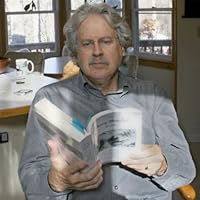
Originally published in 1966 and now recognized as a classic, Norman O. Brown's meditation on the condition of humanity and its long fall from the grace of a natural, instinctual innocence is available once more for a new generation of readers. Love's Body is a continuation of the explorations begun in Brown's famous Life Against Death. Rounding out the trilogy is Brown's brilliant Apocalypse and/or Metamorphosis.
Norman Oliver Brown was an American classicist who is known for his translation and commentaries on the works of Hesiod. A student of Carl Schorske and Isaiah Berlin, he taught classics at Wesleyan University, University of Rochester, and UC-Santa Cruz.
It is said that Walter Benjamin wanted to write a book of quotations, and with this book by Brown, we get an idea of what that might have looked like. Brown is widely read in psychoanalysis, mysticism, religion, mythology, philosophy, political theory and literature, and in this work he juxtaposes quotes from these different disciplines (thus suggesting that they are not really “different,” but alternate ways of looking at the same thing—which resonates with at least one of the arguments that emerges from Brown’s text). Moreover, the book is not formless; it is organized into chapters, each of which has a particular theme. Toward the later chapters, the quotes become more apocalyptic and paradoxical, so there is something in the ordering of the chapters resembling a beginning, a middle and an end—thus, while one may open the book and read pages at random, one may also read the entire book straight through from cover to cover.
Acquired Jan 10, 1981 UNB Bookstore, Fredericton, New Brunswick
A pathetic mash-up of Freudian mythos with classical mythology.
Did you know that by reading my review you are actually castrating the hermaphorditic Jesus Christ? Yes? No? If you can distort your sense of reason to answer yes, then maybe Love's Body has something for you. If not, you probably have no taste for bullshit.
With its apocalyptic and polymorphous leanings and its tip of the hat to innocence, it is easy to see how Love's Body became a mainstay of the sixties.
Some of Norman O. Brown's concerns, such as transcending distinctions and his emphasis on authenticity, expressive freedom and play continue to resonate in some political circles today.
For a more extended profile of Norman O. Brown, by Eli Zaretsky, see
Its message does not seem as urgent, but still it's a worthy extension of Freudian analysis, valuable more for cultural interpretation than for psychoanalysis. If it is viewed as prescriptive, it dates. But as meditations on a range of human activity, it's a treasure trove. I also like how it stops and starts in fits in short condensed paragraphs, almost epigrammatically, somewhat like Minima Moralia, with a more discernible rhythm.
A compilation of Freudisms? Interesting, sign me up.
This book’s strength lies in its positioning of quotes for the reader to connect and draw their own conclusions. However, as the book progresses it starts to get a little more convoluted and I must admit I think I lost the plot a little bit. Will be using it for my final paper on AI tho!
“Nobby” taught an English course at the University of Rochester during my senior year. A big influence, but it seems his renown has faded. An unconventional and talented teacher — complex, vulnerable, and absolutely sincere. He pushed the boundaries, but never lost his balance.
At first I was really annoyed at this book, but I kept pushing through & eventually it clicked for me and I actually started to have fun with the puzzle-like nature of it. That said, I don’t fully agree with Brown’s ideas but an interesting read nonetheless
Reading this book feels like watching your smartest friend descend calmly into schizophrenia. There's some really neat insights and connections made, but it's hard to know what to do with it all..