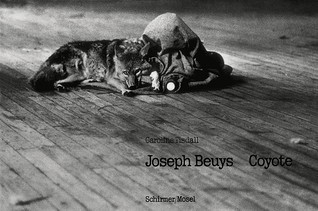
Coyote. I Like America and America Likes Me took place in Ren Block's New York gallery in May 1974: in a room transformed into a cage Joseph Beuys (1921-1986) spent seven days and nights with a wild coyote. The silent dialogue emerg ing from a gesturous interplay between man and animal allegorically revealed the buried possibilities of a dialogue between man and man. Since the early 60s Joseph Beuys staged "actions," ritualistic performances meant to produce the unity of art and life, which Beuys repeatedly proclaimed and sought. Besides his drawings, sculptures, and objects, these actions are the most mysterious, most elusive part of his work. This volume, first published in 1976, is the hitherto only attempt to document a Beuys action in a book. Caroline Tisdall's photographs and her descriptive interpretative essay make Beuys' concepts and his staged symbols visible and comprehensible.
"It's no exaggeration to claim that Beuys' Coyote became one of the best-loved artworks of the late twentieth century," writes Caroline Tisdall in the preface. Maybe. I, myself, knew nothing about this performance piece from 1974 until I came across an exhibit room at Dia:Beacon two months ago that is a sort of stage set alluding to this event. Now I'm fascinated. So I found the photos in this album very satisfying as a record of what Beuys and the coyote did together for three days. But if your reaction to his artwork is "hunh?" I don't think this book will persuade you. I did learn that the coyote's name was Little John. Elsewhere, I read that he came from New Jersey. Why not?