Jack Isidore is a 'crap artist', a collector of crackpot ideas and worthless objects. His beliefs make him a man apparently unsuited for real life and so his sister, an edgy and aggressive woman, and his brother-in-law, a crass and foul-mouthed businessman, feel compelled to rescue him from it. But, observed through Jack's murderously innocent gaze, Fay and Charley Hume are seen to be just as obsessed as Jack. Their obsessions may be a little more acceptable than Jack's but they are uglier. And, in the end and thanks to Jack's intervention, theirs lead to tragedy ...
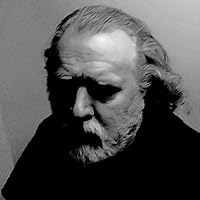
Philip Kindred Dick was a prolific American science fiction author whose work has had a lasting impact on literature, cinema, and popular culture. Known for his imaginative narratives and profound philosophical themes, Dick explored the nature of reality, the boundaries of human identity, and the impact of technology and authoritarianism on society. His stories often blurred the line between the real and the artificial, challenging readers to question their perceptions and beliefs.
Raised in California, Dick began writing professionally in the early 1950s, publishing short stories in various science fiction magazines. He quickly developed a distinctive voice within the genre, marked by a fusion of science fiction concepts with deep existential and psychological inquiry. Over his career, he authored 44 novels and more than 100 short stories, many of which have become classics in the field.
Recurring themes in Dick's work include alternate realities, simulations, corporate and government control, mental illness, and the nature of consciousness. His protagonists are frequently everyday individuals—often paranoid, uncertain, or troubled—caught in surreal and often dangerous circumstances that force them to question their environment and themselves. Works such as Ubik, The Three Stigmata of Palmer Eldritch, and A Scanner Darkly reflect his fascination with perception and altered states of consciousness, often drawing from his own experiences with mental health struggles and drug use.
One of Dick's most influential novels is Do Androids Dream of Electric Sheep?, which served as the basis for Ridley Scott's iconic film Blade Runner. The novel deals with the distinction between humans and artificial beings and asks profound questions about empathy, identity, and what it means to be alive. Other adaptations of his work include Total Recall, Minority Report, A Scanner Darkly, and The Man in the High Castle, each reflecting key elements of his storytelling—uncertain realities, oppressive systems, and the search for truth. These adaptations have introduced his complex ideas to audiences well beyond the traditional readership of science fiction.
In the 1970s, Dick underwent a series of visionary and mystical experiences that had a significant influence on his later writings. He described receiving profound knowledge from an external, possibly divine, source and documented these events extensively in what became known as The Exegesis, a massive and often fragmented journal. These experiences inspired his later novels, most notably the VALIS trilogy, which mixes autobiography, theology, and metaphysics in a narrative that defies conventional structure and genre boundaries.
Throughout his life, Dick faced financial instability, health issues, and periods of personal turmoil, yet he remained a dedicated and relentless writer. Despite limited commercial success during his lifetime, his reputation grew steadily, and he came to be regarded as one of the most original voices in speculative fiction. His work has been celebrated for its ability to fuse philosophical depth with gripping storytelling and has influenced not only science fiction writers but also philosophers, filmmakers, and futurists.
Dick's legacy continues to thrive in both literary and cinematic spheres. The themes he explored remain urgently relevant in the modern world, particularly as technology increasingly intersects with human identity and governance. The Philip K. Dick Award, named in his honor, is presented annually to distinguished works of science fiction published in paperback original form in the United States. His writings have also inspired television series, academic studies, and countless homages across media.
Through his vivid imagination and unflinching inquiry into the nature of existence, Philip K. Dick redefined what science fiction could achieve. His wor
Confessions of a Crap Artist by Philip K. Dick is not a normal, wildly imaginative science fiction offering from one of the most accomplished, innovative and influential science fiction writers of the modern era. It is instead a novel of complicated interpersonal family dynamics. But it is Dick’s voice, his resonate, edgy and unorthodox observant style that lends the book its greater depth.
The reader is frequently reminded of PKD’s penchant for the unusual, and this dicey undertone is what prevents this from becoming an interesting but otherwise pedestrian suburban melodrama. It is the shadows and penumbra of PKD’s schizophrenia that spice this family drama set in Marin County, California in the late 1950s, giving it a delicious and hypnotic tone, like wild Patsy Cline singing a heartfelt ballad, it is the underlying vibrance that makes it great.
Dick’s talent for characterization is in full bloom, the character of Fay Hume, perhaps modeled after Hemingway’s Lady Britt, rivals Dr. Bloodmoney’s Hoppy Harrington as Dick’s most intriguing character. Ultimately this is also an indictment, in Dick’s unique presentation, of middle class bourgeois suburban values in the 1950s.
What else makes this a great read for a reader in 2013 is the Steinbeck-like glimpse of 1950s life in Northern California. This is a time capsule, a surreal glimpse at another age, of my grandparents’ peers in the fullness of life, a generation that younger readers may not know at all.
Reading Divine Invasions: A Life of Philip K. Dick, Lawrence Sutin's well researched biography of Dick makes this even more enjoyable and enlightening because we can see the autobiographical influences from his experiences in northern California in the late 50s and early 60s. This also makes understandable Dick's early intention to write more mainstream books than science fiction as he was certainly capable.
"Science in baffled by the unreason of the hoi polloi. The moods of the mass can't be fathomed, that's a fact." - Philip K. Dick, Confessions of a Crap Artist
Jack Isadore is a bit a lune. He believes in crack-pot theories about the end of the world, has funky obscessions and ticks. He's a couple nuts short of being a fruit cake. Eventually, he ends up living with his rich sister and her husband. With them, Jack discovers he isn't the only crazy one. It seems most people, even those who seem to have "everything" and fit into our reality better, are only a couple inches away from the void.
I went into this book blind. I've read a bunch of other Philip K. Dick novels, but never realized THIS is his only [one of his few]* non-scifi novel[s]. It shares more with Raymond Carver and Jonathan Franzen than it does with Vernor Vinge and Kurt Vonnegut. I liked it, but it was a bit tedious in parts. Dick's ability to capture characters is on point in this book. All the major characters are amazing, especially Jack's sister Fayy Hume and her husband Charley. Wow. I didn't like them, but after finishing this book I felt like I was RELATED to them.
Ero a Milano, a zonzo per le vie di porta Genova e....toh c'è il libraccio che fai non entri? Non vuoi spendere quei pochi euro che ti sei portata appresso perché sapevi già come andava a finire? Compro Favola splatter e confessioni di un artista di merda ( il titolo era un richiamo già così 🤣 poi Dick lo volevo leggere da mo'). Arrivata a casa metto tutto in libreria e ciaone. L'altro giorno in preda ad un senso di angoscia perché non sapevo cosa iniziare a leggere, ho chiesto a mio figlio di scegliere un libro. Guarda un po' e poi mi dice: "oh ma' leggi sto qua è di Cazzo che parla di uno di merda".....15 anni buttati al cesso proprio...vabbé ok leggo Dick.
Credo sia l'unico scritto di P.K. Dick che non parli di fantascienza, androidi, ecc ecc La lettura è stata piacevole, ma non mi ha lasciato molto. Devo leggere "ma gli androidi sognano pecore elettriche?" e quest'anno ci devo riuscire. Comunque anche qui ci sono le pecore, e pure un cavallo, un cane, due bambine, una psicopatica manipolatorice, un autistico, un intellettualone, e uno stupido. Leggerò altro perché il suo modo di scrivere mi piace molto, mi aspettavo forse qualcosa di diverso.
I bought this novel when Timescape, the science fiction imprint of the Pocket Books division of Simon & Shuster, published it in 1982 with "Science Fiction" printed on both the cover and the spine, and with a very nifty Carl Lundgren cover that had an obvious science fiction reader wearing a propellor beanie standing next to piles of science fiction books and model rockets, a dragon, a UFO, etc. I was surprised to find that there isn't any genre content at all, it just has a kind of stereotyped sf fan as one of the characters. He's a socially inept nerd in 1950s California who has to move in with his sister and her husband. It's a very funny (in a very dark black-humor way) story, and a scathing satire about trendy society of the time and place. As the back cover explains, crap-artist Jack Isidore believes that the world is going to end on April 23, 1959, but his sister and her husband, Fay and Charlie Hume, are too busy with adultery, insanity, fantasy and badminton to care. It's a good novel but should come with a trigger-warning about animal abuse. I enjoyed it well enough but would never read it again.
I've never read a book about so many irredeemable assholes before. There really isn't a single character anyone in their right mind would care about here. Children, maybe, but PKD pretty much completely ignores them, milking the assholes instead for all they are worth. It got really hard to read towards the middle, not so much because it was tedious or badly written, but because I wanted to rip the book to shreds every couple of minutes after something some asshole said or thought. I can't imagine how hard it must have been to write. I think PKD could have finished it with an epilogue to the effect of: "And this is why I write science fiction. Because when I think of real people I think of people like these."
I gave it three stars for having the sense to end quickly, for producing very strong emotions in me, and for channeling Yates in places.
A very interesting non-genre fiction piece from PKD which isn't really all that far afield from his vast body of genre fiction, possessing the same kind of schizophrenic undertones and fitting with one of his favorite recurring themes that things aren't what they seem. I found it to be both a deconstruction of post war bourgeois values as well as a rebuke of society's notion of "normalcy", that the people who might seem ordinary on the surface can in fact be far more dysfunctional than those whose quirks and crackpot beliefs are more readily apparent. While drugs and/or aliens are Dick's usual means for bending reality, he accomplishes that here through the deft psychological scheming of the lead female character. One that stands out in Dick's fiction as particularly memorable due to her incredibly shrewd and egocentric cunning.
When I decided to explore the work of PKD with some real concentration, my intent was to focus on his sci-fi titles. But we all know that 'little voice' inside that speaks up from time to time - and mine was saying, 'Hey - you - try one of his mainstream novels for a change.'
So I did. It occurred to me that it might make for an interesting change-of-pace - and, for the most part, it was.
'Confessions...' is the only non-sci-fi Dick book that was published in his lifetime (a number of others finally saw the light of pub. date posthumously). Going into it, expectations were probably on the low side; well, when the word 'crap' is in the title...
But, lo and behold, this joint is funny! I wasn't expecting this much of a flat-out satire. ~ something along the somewhat anarchic lines of novelist / screenwriter Terry Southern (a major collaborator on 'Dr. Strangelove', 'The Loved One', 'Barbarella', 'The Magic Christian', etc.). This particular black comedy vein can have an uncomfortable flow inside it - mainly because, no matter where you look, you're not likely to find a likable character.
~ well, maybe one. Sort of. ~ compared to the others. With some of the others, if you're uncertain, it's best to keep a distance.
Four people, by turns, tell this story: Jack - our hapless, seriously goofball hero; his take-no-prisoners-sister Fay ("Are you sure your sperm doesn't have some sort of sulfuric acid in it?"); her brutish husband Charley; and Fay's easily assimilated lover Nat. There's no plot; it's just these four bouncing off each other - or scratching or cutting, and sparks fly.
The only other character of real significance - which is still minor - is Claudia, the provocative, eccentric leader of the local UFO-enthusiasts group. She's... well, she's about what you would expect, from what I've just said. She's... exotic.
Since the chapters are on the short side, the read is a rather 'breezy' one. ~ until... near the end, things turn tragic, and disturbingly so. So much so that the 'story' is more or less over - and all PKD seems able to do at that point is take care of clean-up detail; squaring away the basics of how the main characters will continue with their suddenly re-arranged lives.
Possessing the feel of a beach book, this is hardly literature. The tone is haphazard; relentlessly zany. I would have preferred it if the progression of things hadn't been summarily curtailed. But... these are all rather desperate characters; designed to make the reader nervous. ~ designed for laughter, but nervous laughter.
Καίτοι έργο του μεγάλου Ντικ, δεν ανήκει στο είδος της ΕΦ, χωρίς αυτό να το καθιστά λιγότερο θελκτικό. Το πνεύμα, η γενικότερη οπτική του βρίσκονται εκεί, κι όσο ξεδιπλώνεται η υπόθεση γίνεται σαφές στον αναγνώστη που έχει ασχοληθεί έστω και λίγο με τον συγγραφέα αυτόν. Οι εμμονές του (ατέλειωτες!) περί εναλλακτικής πραγματικότητας, περί (στρεβλής) αντίληψης του κόσμου, περί ναρκωτικών, ψυχασθένειας και συνωμοσιών που καθορίζουν τη ζωή των ηρώων είναι παρούσες κι εδώ. Μείον τους εξωγήινους και τα λοιπά sci-fi στοιχεία, βεβαίως. Και τέλος, το ιδιαίτερο αφηγηματικό του ύφος, εν πρώτοις λιτό (όπως στους περισσότερους σύγχρονους Αμερικανούς), καθόλου επιτηδευμένο, ιδιόμορφα έξυπνο, τέτοιο που να εξυπηρετεί απόλυτα τον στόχο του. Τα καταληκτικά κεφάλαια του βιβλίου εξαιρετικά, δηλωτικά της μόνιμης πλην εμπνευσμένης σύγχυσης, των αμφιβολιών και των απαραίτητων δαιμονίων ενός δημιουργικού συγγραφέα.
This is a book by Philip K. Dick--but it's not science fiction! So, a little disappointing, but the story is of some interest as it's Dick pointing out--yet again--the absurdity of life. Dick ( born in 1928 in Chicago, IL and died in 1982 in Santa Ana, CA) wrote a series of "mainstream" novels in the 50s that were all rejected. "Confessions of a Crap Artist," written in 1959, was finally published in 1975. Jack Isidore is the "crap artist," so named by his brother-in-law because he's a collector of "crackpot" ideas, such as his belief in a hollow Earth. Unable to support himself, Jack moves in with his sister's family in their farmhouse in West Marin County in Northern California. He then gets involved with a local cult... But, while Jack seems unconnected to reality, it turns out that his sister Fay and her husband Charley are no less closed off to reality--only in a more acceptable way in their 1950s California suburban environment. I give it *** which may be a little harsh. I really prefer PKD's science fiction.
This is an underrated gem. P.K.D. writing from the different perspectives of all the characters in the story is insightful, in that it gives us access into the subtleties of human perception. The story gets treated from varying perspectives and so it gives us the story from several angles. All of the judgments that the characters make about themselves and others are indicative of the judgmental and reasoning factors inherent in the minds of all human beings.
We tend to judge ourselves and others constantly and are always reasoning about our own choices in life. Some of the characters that are viewed as nut-jobs in the story by certain characters get to tell the story from their own perspectives. And in the end it becomes exposed that all of the characters (no matter how socially adjusted they are) carry deep psychological scarring and are in need of psychiatric help.
The most outwardly seeming socially well adjusted rational characters end up making the biggest life threatening and life altering decisions for most of the characters involved. The characters in the story that are considered crazy by the rational ones end up being the least harmful to everyone involved.
P.K.D. is a master writer when it comes to human perception and this is definitely a testament to his analytical and writing powers.
I highly recommend for anyone who is attempting to view the world through several different lenses of perception.
Confessions of a Crap Artist is fantastically well-written novel by Philip K. Dick. A novel of two halves, one of a small-town Californian domestic drama, the other an analysis of post-Roswell paranoia in America, it contains some of Philip K. Dick's best writing. Despite not being one of his popular science fiction tales, this realist novel contains all the philosophical depth, pondering and Freudian insight found in his most popular books.
Δεν είχα ξαναδιαβάσει Φίλιπ Κ. Ντικ. Λόγω του (καταπληκτικού) τίτλου και μόνον, προτίμησα να ξεκινήσω με αυτό, αντί του γνωστότερου και πιο αναγνωρισμένου Ουμπικ. Αποδείχθηκε σωστή επιλογή, κυρίως γιατί πρόκειται για ένα από τα λίγα έργα του Ντικ που δεν είναι Ε.Φ. - που δεν την πολυσυμπαθώ ή, πιο σωστά, δεν την καλογνωρίζω. Διασκεδαστικό και σκοτεινό ταυτόχρονα, με όλες τις αμερικανικές ψυχώσεις της δεκαετίας του '50, ένα οικογενειακό δράμα στην ουσία, με ολίγη από ψυχολογία και εσχατολογία. Μια χαρά.
Well observed and insightful with several LOL moments. Surprisingly relatable and still relevant. Not one of Dick’s better-known works but an easy read and nicely paced.
I actually prefer this to Ubik or any of the sci fi short stories I've read of this guy. What's cool about it is that the whole thing gives you false expectations. I was expecting a story about a wacky conspiracy theorist freaking out the normal people; when it actually asks us what it is to be normal? Is the "crap artist" such an abnormal figure when compared to the other characters in the book? I'm not going to spoil the ending, but suffice to say; the people who say they are 'normal' can be the most fucked up.
you wouldn't think there'd be that much difference between how people thought in the 1950s and now. i mean, it's not like it was the Middle Ages or something.
but it might as well have been, in so many respects.
since you can read the summary above, i won't bore you with it. instead, i'll tell you what's difficult (and also well-done) about this novel.
first off, as a feminist, the misogyny is like a bullhorn in the face. you can't escape it--even the female characters hate themselves in some particularly corrosive ways. the main female character, fay, is a puzzle for a contemporary reader. the other characters clearly want you to see her as merely a manipulative, possibly psychopathic (their diagnosis, not mine) narcissist. (all reported in the most 1950s freudian-analyst terms, which, while sometimes delightfully retro, do make one wish for a long, hot shower after.)
for me this is the central problem of this book: how to see fay? if i accept the 1950s limitations of what women were supposed to be, then perhaps yes, she is manipulative and uncaring. but how else can the powerless be, except manipulative? and who in her life (besides her children) is there really to care for, that cares for her?
so fay is a problem.
her husband, charley, is an interesting sort--he holds all the cards, and yet has convinced himself that he's been victimized by his wife. his thought processes are quite icky but in their way, almost convincing. one could almost agree with him at some points. now that's good writing, scary good writing.
most of the book concerns the dynamic between this husband and wife. it's a narrow focus on two not incredibly appealing people, which can make it rather hard to read sometimes. but Dick does such a phenomenal job of anatomizing the two, of splitting them into facets and then turning each facet in the light, that it is a weirdly compelling read.
which doesn't make it an enjoyable read by any means. i am impressed by Dick's talent and his micro-analytical thoroughness, but i wish he had turned his talents on a more illuminating pair.
This is not a sci-fi novel, despite the hip, design-centric, adroid-esque cover. That cover is complete fucking bullshit.
Anyway, this one's more of a relationship/ family drama. I felt that it was readily apparent in this book that its author was trying to work things out. I don't know if that means it was heavy-handed, or if I've been influenced by what I've heard about PK Dick, but that's that.
There's lots of introspection, and false epiphanies, as well as real epiphanies, and a lot of philosphical or quasi-philospical meanderings about why we do the things we do and how we end up where we are, what quantifies success, what is normal, what is crazy, and what exactly are we responsible for, and how much is it worth. Really, I do think this is a good thing. But sometimes the story suffered for it because I think sometimes these meanderings, these attempts to figure out the puzzle, forced the story in directions not completely natural.
But perhaps the questions posed are more important than the story they came from?
I would give this book 4 stars, but the last 60 pages or so were kind of hard to get thru. The last line of the book is pretty fuckin' great though.
This was the 1st of Dick's "mainstream" (ie. Non-SF) novels to be published. 2nd time around for me and it's not too bad actually.
The "crap artist" of the title is Jack Isidore, a chap who's an obsessive collector of useless objects like bottle tops and also of useless "facts". Today we'd say he's probably on the autistic spectrum.
He's by far the most sympathetic character. His sister is lazy and manipulative, his brother-in-law is a violent, boorish man.
It doesn't turn out well for most of the characters.
This has the usual odd tonal switches which are sometimes a bit jarring but on the whole an enjoyable read
The first non-SF novel by Philip K. Dick that I read, and it completely won me over!
In his usual way of writing, PKD focuses on a very complicated family structure in rural California, in which at first sight nothing really happens, but he is able to guide the reader so eloquently that you cannot stop reading, it is very intense despite no real plot, especially at the beginning. The crap artist is the main protagonist, together with his sister, who are completely different characters, and PKD is able to draw very precise character traits that culminate in a furious ending of the book that should surprise every reader! PKD can always do that!
I knew Little of Philip K .Dick until I started university, but one of the modules on my course in popular culture required us to study Blade Runner, and the book it was based on Do Androids Dream of Electric Sheep. I found some of the popular culture modules mind numbing particularly the philosophy of adorno and horkheimer culture industry for example. However one of the bonus’s that came from the course was discovering Phillip as an author, and I have been a fan ever since. This was a book I had my eye on for sometime, and he does not disappoint.
Jack Isidore is supposed to be the odd ball, the one that’s mad. The out of quilter black sheep, but the reality is he actually has a very sain rational view of the world compared to the other main protagonists. Charlie and Fay Hume, have some quite disturbing flaws in comparison. The way Phillip K. Dick has written the novel in the first person for multiple characters depending on who is narrating in a particular chapter helps to extenuate this.
Personally I found myself cringing and almost feeling physically exasperated at Fay’s motivations and behavior. While in comparison I found Jack’s perspective almost calming and reassuring. It’s also extremely well written, the words just flow of the page into your mind, making it quite a light read. I actually read this in only a matter of days. For that reason it’s probably not one to take on holiday, you would most likely finish before you had even landed.
I had not read this Dick novel previously, and found myself experiencing cognitive dissonance since much of it takes place in rural Marin county, a real place, and much of that action is surreal without being science fictional: no Mars, no radioactive dust, no androids, and yet somehow this is of a piece with novels like "Do Androids Dream of Electric Sheep?" and "Martian Time Slip". As I read and reread Dick, I am becoming persuaded that he is one of the most significant American novelists of the last century.
It's almost like Dick works out all his frustrations with men, women, and marriage in this novel. Really had no idea what to expect, although I was surprised both by the lack of any real science fiction element and by how much I enjoyed it. I think the continuing change of perspective really helped. Hard not to see this as highly autobiographical in some parts, although I don't know enough about his marriages to speak with any authority. Take away: Everybody is a crap artist--it just takes some of us longer than others to come to this realization.
The only "straight" novel of Dick's I've read. It's also one of his best. Reading this you can see that his ability to portray a specific time and place through the intimate portrayal of his character's thoughts and habits is what makes his "out there" novels so great.
'Confesiones de un artista de mierda' es una novela difícil de leer, compleja, que cuesta engancharse a la trama y que pierde tensión dramática en algunos momentos; esperaba más al pertenecer al gran escritor Philip K. Dick. Tiene buenos momentos, ideas punzantes y un gran final, sin embargo, durante toda la lectura, notas que le falta algo. Solo para fanáticos dickanianos.
Entry #17 - Confessions of a Crap Artist (written Mid 1959, published 1975)
Confessions of a Crap Artist contains Dick’s most assured and confident writing yet, at turns both bracing and hilarious. After the disappointing Dr. Futurity, a throwback to Dick’s earlier, clunkier style, this book was a joy to read. This is the only “straight", non-sci-fi novel of Dick’s to be published during his lifetime, and it’s not hard to see why. It’s easily the best of the bunch so far. After making a side trip to Idaho in In Milton Lumky Territory, Dick returns to his favorite setting, the San Francisco bay area, this time in a more rural small-town area. The bulk of the action takes place in the house of Fay and Charley Hume. Fay is the sister of Jack Isidore, the title character, dubbed a “crap artist” by Charley, his brother-in-law. Jack is one of Dick’s best characters, and his chapters are my favorites. Although never explicitly stated by anyone in the book, it’s fairly obvious Charley has some mental problems. He’s clearly obsessive-compulsive. He collects useless junk, like rocks, lengths of string, and the like, and also “crap ideas”. He is an “amateur scientist" who believes the Earth is hollow, that sunlight has weight, and is causing the Earth to become steadily heavier, and most importantly, after falling in with a local group of crackpots, that the world is going to end in about a month, on April 23rd. Jack has no real system of distinguishing fantasy and reality. He believes fervently in anything that’s presented to him interestingly enough. After being charged with shoplifting by a Seville grocer for stealing chocolate-covered ants (after reading about toads in suspended animation), foul-mouthed Fay and her schlub husband Charley decide to bring him to live in their opulent ranch house in the country, thinking it will be good for him. But it soon becomes evident to Jack that Fay and Charley are as troubled as he. For the first time I can recall, aside from possibly a few of his short stories, Dick writes in the first person, in Jack and Fay’s chapters. For whatever reasons, Charley and Nat’s chapters are written in the third person. Dick has perfected his multiple viewpoints technique, and he plumbs the characters’ minds here as he has never before. In effect, Dick is exploring his favorite theme, the nature of reality here, as the world is vastly different for each of the main characters. In some ways, it reminds one of Eye In The Sky in a more literary way. At first, Charley seems like little more than a simple-minded wife-beating lummox. But as we see the world from his eyes, we begin to appreciate him as a fully developed, complex human being. The same goes for Fay, initially seeming like a simply a lazy and manipulative housewife, and for Jack, who initially comes off as a useless screwball. In particular, it becomes obvious that Jack for all his eccentricities, is also a decent person, fair, and honest to a fault. His inability to interact with people socially in any way normally propels the action began with Fay’s reckless affair to the book’s most shocking development, the culmination of Charley’s suffering. Everyone’s a nut. The last chapter, detailing Jack’s epiphany as he calmly awaits the end of the world, is one of Dick’s best passages ever, at the same time humorous and yet sad. Jack may believe in a lot of crap, but everyone around him is as crazy as he is. They hurt the ones they love and they don’t even know why. They lie to each other, and most damningly, they lie to themselves.
My edition: Vintage Books, July 1992, paperback
Up next: “The Man Whose Teeth Were All Exactly Alike”!
"...it doesn't seem to me that I should be the only person who has to bear the onus of believing an admittedly ridiculous notion. All I want is to see the blame spread around fairly."
And thus we have Confessions of a Crap Artist - the novel that makes transparent all of the little insanities that we conceal so well! Obviously, being a Philip K. Dick novel, it's a little out there - even the most normal character, Nathan Anteil, somehow manages to find himself in love with the most conventionally crazy character, Fay. I mean, I get it... but let's just acknowledge that, through Dick's lens, pretty much everyone is nuts, to an exaggerated degree. At least it's humorous.
...though it's also disturbing - certainly not on a level with A Scanner Darkly, but there are several starkly violent moments that managed to shake me up a bit. It's a very different side to Dick's writing - still mocking and strange and funny, but also quite dark.
It's not Dick's finest. It's a fairly disjointed narrative, and it takes some time to get in to the more interesting parts of the novel - I put it down frequently before finally committing to it - but in the end, it provides a fairly unique commentary. I liked it, but it's difficult to recommend. I'd like to give it a 3.5/5, but lacking the option, I'd go with a 3!
Okay, okay, I give up! I just can't read Philip K Dick's "mainstream" fiction. It's too awful. Too boring. Too terrible. Too mundane. This book is supposed to be the best of his mainstream novels, and I gave it a chance, I really did. I made it 81 pages into it, but had to give up. Jack Isidore is supposedly fairly crazy, but it's his sister and brother-in-law, Kay and Charley, who are actually nuts. This is a novel about relationships, but there isn't one redeemable character in it. No one you want to identify with. And it's just drab. Very little actually happens in Dick's mainstream books. They're just so B O R I N G. And to think he's the genius behind dozens of amazing sci fi novels. I know he wanted more than anything to be a mainstream novelist, and for awhile was embarrassed to be a sci fi writer, but God, he should have taken what was given him and left the rest well enough alone. Sci fi is his bread and butter. He just can't write "mainstream." This is the last mainstream novel of his I attempt to read. I own three now and I haven't made it through one. And yet I love his sci fi so much. It's really disappointing. Not recommended, unless you want a good night's sleep.
Told from multiple viewpoints, Confessions of a Crap Artist is one of Philip K Dick’s regular fiction books, as opposed to the science fiction novels and short stories that he is famous for. This book has all the typical connotations found in most of his stories, including a protagonist believing bizarre facts and a deceptive and sly female character.
Jack Isidore, the titular Crap Artist of the story, is a socially awkward man living in his own universe and is captivated by weird bits of information. As he moves in with his sister and her husband, he realizes that the idyllic life of these supposedly sane people is spiraling out of control due to their actions.
Replete with Dick’s trademark amusing sense of humor, this book is an examination of sanity and what it means to be normal in this cruel and insane world. As Jack realizes in the end:
"The whole world is full of nuts. It's enough to get you down."