

What do you think?

The Waste Land: A Biography of a Poem
A New Statesman, Financial Times, Observer, and Sunday Times Book of the Year
“[An] impressive examination of artistic creation.”—Alex Clark, Guardian
A riveting account of the making of T. S. Eliot’s celebrated poem The Waste Land on its centenary.
Renowned as one of the world’s greatest poems, The Waste Land has been said to describe the moral decay of a world after war and the search for meaning in a meaningless era. It has been labeled the most truthful poem of its time; it has been branded a masterful fake. A century after its publication in 1922, T. S. Eliot’s enigmatic masterpiece remains one of the most influential works ever written, and yet one of the most mysterious.
In a remarkable feat of biography, Matthew Hollis reconstructs the intellectual creation of the poem and brings the material reality of its charged times vividly to life. Presenting a mosaic of historical fragments, diaries, dynamic literary criticism, and illuminating new research, he reveals the cultural and personal trauma that forged The Waste Land through the lives of its protagonists—of Ezra Pound, who edited it; of Vivien Eliot, who sustained it; and of T. S. Eliot himself, whose private torment is woven into the seams of the work. The result is an unforgettable story of lives passing in opposing directions and the astounding literary legacy they would leave behind.
“[An] impressive examination of artistic creation.”—Alex Clark, Guardian
A riveting account of the making of T. S. Eliot’s celebrated poem The Waste Land on its centenary.
Renowned as one of the world’s greatest poems, The Waste Land has been said to describe the moral decay of a world after war and the search for meaning in a meaningless era. It has been labeled the most truthful poem of its time; it has been branded a masterful fake. A century after its publication in 1922, T. S. Eliot’s enigmatic masterpiece remains one of the most influential works ever written, and yet one of the most mysterious.
In a remarkable feat of biography, Matthew Hollis reconstructs the intellectual creation of the poem and brings the material reality of its charged times vividly to life. Presenting a mosaic of historical fragments, diaries, dynamic literary criticism, and illuminating new research, he reveals the cultural and personal trauma that forged The Waste Land through the lives of its protagonists—of Ezra Pound, who edited it; of Vivien Eliot, who sustained it; and of T. S. Eliot himself, whose private torment is woven into the seams of the work. The result is an unforgettable story of lives passing in opposing directions and the astounding literary legacy they would leave behind.
543 pages, Kindle Edition
First published December 20, 2022
Ratings & Reviews
Friends & Following
Create a free account to discover what your friends think of this book!
Community Reviews
Displaying 1 - 30 of 63 reviews

Read
January 18, 2024Eliot is, regrettably, the author of some of the poetry I most love in the world. He is not my favourite poet, because, as this extraordinary book makes clear, he was a pretty awful person in many ways: poor friend, terrible husband, largely driven by disgust and despair. Disgust, of course, correlates with bigotry, and this book doesn't shy away from Eliot's antisemitism or attempt to weasel around it (plus very informative on the violent racism of his American home).
The disgust/despair that rendered his interior landscape so broken and ugly also built The Waste Land, a poem that arose out of a broken world full of terrible things, and probably couldn't have been written by someone less fucked up. This book does a really good job of illustrating that world: the political chaos, the ongoing damage of WW1 and the flu pandemic, the Treaty of Versailles already dooming Europe to a second round, the neurasthenia and bed-hopping and general acting out of people staggering under the incredible psychic load of the times they were living through, the uncountable deaths.
If you like The Waste Land, this is revelatory in many ways, few of them flattering. It's got tons on Ezra Pound's editorial interventions, and lots of chewy physical detail of typewriters and manuscripts and fonts. Plus the best explanation of the objective correlative that I've come across: the concept may even stick now.
An excellent book if you want a ridiculously deep dive into The Waste Land or TS Eliot's psyche, which you may well not.
The disgust/despair that rendered his interior landscape so broken and ugly also built The Waste Land, a poem that arose out of a broken world full of terrible things, and probably couldn't have been written by someone less fucked up. This book does a really good job of illustrating that world: the political chaos, the ongoing damage of WW1 and the flu pandemic, the Treaty of Versailles already dooming Europe to a second round, the neurasthenia and bed-hopping and general acting out of people staggering under the incredible psychic load of the times they were living through, the uncountable deaths.
If you like The Waste Land, this is revelatory in many ways, few of them flattering. It's got tons on Ezra Pound's editorial interventions, and lots of chewy physical detail of typewriters and manuscripts and fonts. Plus the best explanation of the objective correlative that I've come across: the concept may even stick now.
An excellent book if you want a ridiculously deep dive into The Waste Land or TS Eliot's psyche, which you may well not.

November 5, 2022
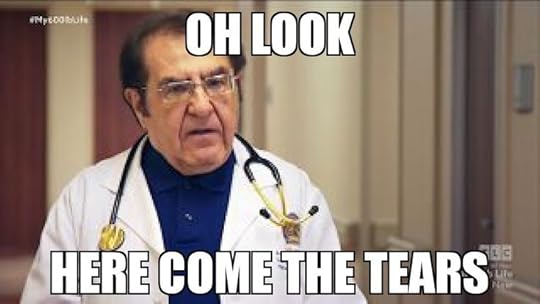
Someone should have sent this book off to see Dr Nowzardan at his clinic in Houston, Texas. You know him from the famous tv show My 600lb Life. He might have been able to get Matthew Hollis to shed a couple hundred Pounds by some expert radical surgery, trimming the walls of fatty tissue and unclogging those silted up arteries and putting a clamp into the whole frankly obese enterprise to stop this exasperating book becoming ever more engorged with microdetail about restaurants, footling arguments, minor publication history, irrelevant holiday itineraries and endless minor illnesses. You may be thinking well all this is relevant to the writing of "The Waste Land", that famous monument of modernism, but most of it is about My 600 Ezra Pound Life (!) (since Eliot and Pound were the Laurel and Hardy of 1920s poetry) and all the other lesser literati that swam around in the same aquarium. For little me, this was how not to write about T S Eliot.
November 19, 2022
A 380 page book with 300 pages of padding.
As with Hollis’s superb book on Edward Thomas, the best bits are all about the heat of composition and editing.
As with Hollis’s superb book on Edward Thomas, the best bits are all about the heat of composition and editing.

January 30, 2023
The Waste Land: A Biography of a Poem by Matthew Hollis.
Give me a clap at Medium (Now with jokes) - https://medium.com/@peterseanbradle/b...
I really want to like The Waste Land. I love some of its parts. I love "April is the cruelest month" and "Consider Phlebas, who was once handsome and tall as you." But I've been handicapped by not being able to understand the damned thing.
Part of the problem is that the search for meaning in this poem is a search for fool's gold. T.S. Eliot never intended the poem to be an integrated, unitary whole. As we learn from Matthew Hollis in The Waste Land: A Biography of a Poem, Eliot wrote the five parts of The Waste Land - I. The Burial of the Dead, II. A Game of Chess, III. The Fire Sermon, IV. Death by Water, V. What the Thunder Said - as independent units, often taking sections from prior unpublished poems to put into The Waste Land. Sometimes, Eliot would strip a section of vast quantities of text.
Another part of the problem is that the poem is deliberately cacophonous. The Burial of the Dead section shifts from voice to voice, creating a kaleidoscopic effect. I think this is the intent as Eliot is communicating that modernity is a jumble of sensory inputs that confuses the modern mind (as of 1920, at least.) In 1920, modernity was funneling the news of the world to the average citizen by movies, radio, and newspapers. Moderns had just gone through a Great War, which was a world war in scope. That war had killed millions. It was followed up by a Great Pandemic that killed millions more on the home front.
In 1920, most people probably thought there was too much information to keep up with. The term "Future Shock" would not be coined until the 1960s by Alvin Tofler, but many people were experiencing Future Shock in the 1920s. (In contrast, in the 2020s, we experience Future Shock but don't notice it or talk about it anymore.)
With that long wind-up, I am here to tell you Hollis's book will not solve the interpretative conundrum of The Waste Land. There are some clues at a pretty high level, at the level of unit structure, for example. For the most part, Hollis does not touch the meaning of individual lines. There is some discussion of our friend Phlebas and whether his Phoenician background is a stand-in for a Semitic antecedent (and therefore alludes to anti-semitism.) We get no insight into summer over why "Summer surprised us, coming over the Starnbergersee" or who "Marie" is.
For me, what this book mostly provided was an introduction to the English literary world in the early 20th century. Hollis's is an encyclopedia. His book is well-written and minutely researched. The main figure of the text is T.S. Eliot, which is not a surprise, but Eliot sometimes seems to get edged out in favor of Ezra Pound. At times, it seems like Hollis's real mission is to re-acquaint the literary world with Pound's importance to the world of literature and poetry.
In the 1910s, Pound was an indispensable man in the English literary world. Pound acted as editor to influential journals. He also acted as a coach and mentor to those with literary talent. Pound discovered Eliot and rued the fact that Eliot was squandering his time as a bank teller at Lloyd's of London. In the 1920s, Pound befriended and found ways to subsidize James Joyce as he wrote Ulysses. During the same time, Pound had one of the two priceless manuscripts of The Waste Land, which he edited with a heavy hand. Pound was responsible for two of the incomprehensible Great Works of the Twentieth Century.
Pound also befriended a young, unpublished Ernest Hemingway:
"When Wyndham Lewis visited from London for the first time, the two men were producing such a noise from within the studio that no one answered the bell; he pushed open the door and found them in mid boxing bout. 'A splendidly built young man, stripped to the waist, and with a torso of dazzling white, was standing not far from me,' Lewis recalled. 'He was tall, handsome, and serene, and was repelling with his boxing gloves a hectic assault of Ezra's. After a final swing at the dazzling solar plexus Pound fell back upon his settee.'33 The young man was Ernest Hemingway, and with Pound he would get on like a house on fire: he had 'a terrific wallop', Hemingway would acknowledge, 'and when he gets too tough I dump him on the floor'.34
Hollis, Matthew. The Waste Land: A Biography of a Poem (p. 318). W. W. Norton & Company. Kindle Edition.
Pound's loyalty to his friends was something that would not be forgotten by some - but not all - of them despite Pound's disgrace after World War II:
"For his friends, said Hemingway and Eliot alike, Pound was both advocate and defence. He found publishers for their writing, review coverage for their books, journals to carry their work; he found audiences for their music and buyers for their art. When they were hungry he fed them, when they were threadbare he clothed them. He witnessed their wills and he loaned his own money, and encouraged in each of them a fortitude for life. 'And in the end,' said Hemingway, 'a few of them refrain from knifing him at the first opportunity.'
Hollis, Matthew. The Waste Land: A Biography of a Poem (p. 319). W. W. Norton & Company. Kindle Edition.
I am always fascinated by the way in which historical figures overlap and act like real human beings. For example, Hollis implies that philosopher Bertrand Russell seduced Eliot's wife, Vivian:
"Russell had been a cuckoo in the nest of the Eliots' short marriage. He had dazzled and spoiled and harried Vivien, and had taken something very precious in the form of the couple's fidelity to each other. The cottage at Marlow would cast a shadow over the marriage until Eliot was able to release himself from the rent entirely in the summer of 1920. By then, the events had triggered in Eliot a despair that was to reach a crisis while he was in the company of Ezra Pound in France in the summer of 1919.
Hollis, Matthew. The Waste Land: A Biography of a Poem (pp. 49–50). W. W. Norton & Company. Kindle Edition.
Eliot had been Russell's student at Harvard.
"Eliot had been an 'extraordinarily silent' postgraduate student in Russell's seminars at Harvard when they met in the spring of 1914, but he made a remark on Heraclitus so good that Russell wished that he would make another.148 On meeting him again in London that autumn, Russell had taken a growing interest in Eliot ('exquisite and listless'), and, in turn, Vivien ('light, a little vulgar, adventurous, full of life'), so much so that by the autumn of 1915, to ease their finances, he had taken the couple in to his flat in Bury Street, London's Bloomsbury.
Hollis, Matthew. The Waste Land: A Biography of a Poem (p. 45). W. W. Norton & Company. Kindle Edition.
This is the kind of detail that rounds out historical knowledge. For example, Hollis mentions Russell's arrest for advocating pacifism, which left Eliot, who was maybe 29 at the time, looking for someone to replace Russell as a tenant in a country cottage.
Vivien Eliot does not come off in the best light. Eliot abandoned her in 1932 but remained married to her until her death in an asylum in 1946. Eliot explained:
"'To her, the marriage brought no happiness,' wrote Eliot. 'To me, it brought the state of mind out of which came The Waste Land.'41
Hollis, Matthew. The Waste Land: A Biography of a Poem (pp. 9–10). W. W. Norton & Company. Kindle Edition.
That has to be some consolation.
This book is a firehose of information. However, I never felt like I got into Eliot's self-understanding. We certainly get information on his personal life, but the overall impression of Eliot is a sense of diffidence. For example, I would have been interested in knowing what Eliot's thoughts were on becoming Anglican. How did that conversion affect him? He seems to have become more conservative and traditionalist as he got older, so it seems that the conversion had meaning to him. But on the whole, I never got any sense of an answer to these questions.
Admittedly, Hollis's focus is on The Waste Land, which means that the time period Hollis is interested in is the same period during which The Waste Land was being formed, approximately 1915–1923. This is going to prevent a lot of reflection on a lot of issues. Nonetheless, Hollis makes space for topics that happen after 1923, such as Ezra Pound's disgrace and rehabilitation.
I like the book, but would I recommend it? And to whom?
I liked the book because I like history, and I got a sense of a slice of history I know next to nothing about, i.e., literary history. That said, large chunks of text meant nothing to me but probably would to someone with more knowledge about "Fusionism" and various poets and writers.
So, I would not recommend this book to someone with a casual interest in the subject. On the other hand, if literature is your bag, then this is a good book for you.
Give me a clap at Medium (Now with jokes) - https://medium.com/@peterseanbradle/b...
I really want to like The Waste Land. I love some of its parts. I love "April is the cruelest month" and "Consider Phlebas, who was once handsome and tall as you." But I've been handicapped by not being able to understand the damned thing.
Part of the problem is that the search for meaning in this poem is a search for fool's gold. T.S. Eliot never intended the poem to be an integrated, unitary whole. As we learn from Matthew Hollis in The Waste Land: A Biography of a Poem, Eliot wrote the five parts of The Waste Land - I. The Burial of the Dead, II. A Game of Chess, III. The Fire Sermon, IV. Death by Water, V. What the Thunder Said - as independent units, often taking sections from prior unpublished poems to put into The Waste Land. Sometimes, Eliot would strip a section of vast quantities of text.
Another part of the problem is that the poem is deliberately cacophonous. The Burial of the Dead section shifts from voice to voice, creating a kaleidoscopic effect. I think this is the intent as Eliot is communicating that modernity is a jumble of sensory inputs that confuses the modern mind (as of 1920, at least.) In 1920, modernity was funneling the news of the world to the average citizen by movies, radio, and newspapers. Moderns had just gone through a Great War, which was a world war in scope. That war had killed millions. It was followed up by a Great Pandemic that killed millions more on the home front.
In 1920, most people probably thought there was too much information to keep up with. The term "Future Shock" would not be coined until the 1960s by Alvin Tofler, but many people were experiencing Future Shock in the 1920s. (In contrast, in the 2020s, we experience Future Shock but don't notice it or talk about it anymore.)
With that long wind-up, I am here to tell you Hollis's book will not solve the interpretative conundrum of The Waste Land. There are some clues at a pretty high level, at the level of unit structure, for example. For the most part, Hollis does not touch the meaning of individual lines. There is some discussion of our friend Phlebas and whether his Phoenician background is a stand-in for a Semitic antecedent (and therefore alludes to anti-semitism.) We get no insight into summer over why "Summer surprised us, coming over the Starnbergersee" or who "Marie" is.
For me, what this book mostly provided was an introduction to the English literary world in the early 20th century. Hollis's is an encyclopedia. His book is well-written and minutely researched. The main figure of the text is T.S. Eliot, which is not a surprise, but Eliot sometimes seems to get edged out in favor of Ezra Pound. At times, it seems like Hollis's real mission is to re-acquaint the literary world with Pound's importance to the world of literature and poetry.
In the 1910s, Pound was an indispensable man in the English literary world. Pound acted as editor to influential journals. He also acted as a coach and mentor to those with literary talent. Pound discovered Eliot and rued the fact that Eliot was squandering his time as a bank teller at Lloyd's of London. In the 1920s, Pound befriended and found ways to subsidize James Joyce as he wrote Ulysses. During the same time, Pound had one of the two priceless manuscripts of The Waste Land, which he edited with a heavy hand. Pound was responsible for two of the incomprehensible Great Works of the Twentieth Century.
Pound also befriended a young, unpublished Ernest Hemingway:
"When Wyndham Lewis visited from London for the first time, the two men were producing such a noise from within the studio that no one answered the bell; he pushed open the door and found them in mid boxing bout. 'A splendidly built young man, stripped to the waist, and with a torso of dazzling white, was standing not far from me,' Lewis recalled. 'He was tall, handsome, and serene, and was repelling with his boxing gloves a hectic assault of Ezra's. After a final swing at the dazzling solar plexus Pound fell back upon his settee.'33 The young man was Ernest Hemingway, and with Pound he would get on like a house on fire: he had 'a terrific wallop', Hemingway would acknowledge, 'and when he gets too tough I dump him on the floor'.34
Hollis, Matthew. The Waste Land: A Biography of a Poem (p. 318). W. W. Norton & Company. Kindle Edition.
Pound's loyalty to his friends was something that would not be forgotten by some - but not all - of them despite Pound's disgrace after World War II:
"For his friends, said Hemingway and Eliot alike, Pound was both advocate and defence. He found publishers for their writing, review coverage for their books, journals to carry their work; he found audiences for their music and buyers for their art. When they were hungry he fed them, when they were threadbare he clothed them. He witnessed their wills and he loaned his own money, and encouraged in each of them a fortitude for life. 'And in the end,' said Hemingway, 'a few of them refrain from knifing him at the first opportunity.'
Hollis, Matthew. The Waste Land: A Biography of a Poem (p. 319). W. W. Norton & Company. Kindle Edition.
I am always fascinated by the way in which historical figures overlap and act like real human beings. For example, Hollis implies that philosopher Bertrand Russell seduced Eliot's wife, Vivian:
"Russell had been a cuckoo in the nest of the Eliots' short marriage. He had dazzled and spoiled and harried Vivien, and had taken something very precious in the form of the couple's fidelity to each other. The cottage at Marlow would cast a shadow over the marriage until Eliot was able to release himself from the rent entirely in the summer of 1920. By then, the events had triggered in Eliot a despair that was to reach a crisis while he was in the company of Ezra Pound in France in the summer of 1919.
Hollis, Matthew. The Waste Land: A Biography of a Poem (pp. 49–50). W. W. Norton & Company. Kindle Edition.
Eliot had been Russell's student at Harvard.
"Eliot had been an 'extraordinarily silent' postgraduate student in Russell's seminars at Harvard when they met in the spring of 1914, but he made a remark on Heraclitus so good that Russell wished that he would make another.148 On meeting him again in London that autumn, Russell had taken a growing interest in Eliot ('exquisite and listless'), and, in turn, Vivien ('light, a little vulgar, adventurous, full of life'), so much so that by the autumn of 1915, to ease their finances, he had taken the couple in to his flat in Bury Street, London's Bloomsbury.
Hollis, Matthew. The Waste Land: A Biography of a Poem (p. 45). W. W. Norton & Company. Kindle Edition.
This is the kind of detail that rounds out historical knowledge. For example, Hollis mentions Russell's arrest for advocating pacifism, which left Eliot, who was maybe 29 at the time, looking for someone to replace Russell as a tenant in a country cottage.
Vivien Eliot does not come off in the best light. Eliot abandoned her in 1932 but remained married to her until her death in an asylum in 1946. Eliot explained:
"'To her, the marriage brought no happiness,' wrote Eliot. 'To me, it brought the state of mind out of which came The Waste Land.'41
Hollis, Matthew. The Waste Land: A Biography of a Poem (pp. 9–10). W. W. Norton & Company. Kindle Edition.
That has to be some consolation.
This book is a firehose of information. However, I never felt like I got into Eliot's self-understanding. We certainly get information on his personal life, but the overall impression of Eliot is a sense of diffidence. For example, I would have been interested in knowing what Eliot's thoughts were on becoming Anglican. How did that conversion affect him? He seems to have become more conservative and traditionalist as he got older, so it seems that the conversion had meaning to him. But on the whole, I never got any sense of an answer to these questions.
Admittedly, Hollis's focus is on The Waste Land, which means that the time period Hollis is interested in is the same period during which The Waste Land was being formed, approximately 1915–1923. This is going to prevent a lot of reflection on a lot of issues. Nonetheless, Hollis makes space for topics that happen after 1923, such as Ezra Pound's disgrace and rehabilitation.
I like the book, but would I recommend it? And to whom?
I liked the book because I like history, and I got a sense of a slice of history I know next to nothing about, i.e., literary history. That said, large chunks of text meant nothing to me but probably would to someone with more knowledge about "Fusionism" and various poets and writers.
So, I would not recommend this book to someone with a casual interest in the subject. On the other hand, if literature is your bag, then this is a good book for you.

April 15, 2024
Outstanding book on Eliot's great poem that strikes a perfect balance between biography (or biographies) and a deep critical dive into the poem itself. I turned to Hollis' book after getting bogged down in Robert Crawford's exhaustive (and exhausting) 2 volume biography on Eliot. (I didn't make it past the half-way mark of volume 1). That said, Crawford is important because he had access to material (via Eliot's wife, Valerie) that other Eliot biographers didn't have. Prior to Crawford's effort, there has never really been an authoritative or authorized biography on Eliot. Valerie Eliot kept a tight rein on what she possessed, and Eliot himself destroyed much of his correspondence. In looking at Hollis' notes, it looks like he used some of what Crawford assembled for volume 1.
But Hollis is his own writer, and one who has a wonderful eye and ear for the nuances in poetry itself, but also with a keen sense of historical context. In his book you will not just get a biography of Eliot, but also of Ezra Pound, Vivienne Eliot (Tom's troubled first wife), Virginia Woolf, and a whole constellation of the times literary stars. (Most of the "action" takes place in 1922.) There is lots of snark, infidelities, literature, and casual anti-Semitism. As the title itself says, it's a biography of the poem itself and how it came to be. T.S.Eliot at the time was working at a bank, working on post World War 1 loans involving reparations and Germany. It was demanding work, and one that left him burning the candle at both ends as he continued to pursue poetry and a criticism in the off hours. He was not prolific, but impactful in his output. Compounding this life was his deterioating marriage with Vivienne and strained relations with his family back St. Louis.
Enter Ezra Pound. Well, actually he was there (in London) all along. Pound is a whirling, often selfless, dervish of activity. He is prolific and he is always ready to champion those writers he feels are on to something new in literature. But what's old is new again. At least the valuable fragments of a wrecked Western civilization when grafted on to a new and revolutionary styles of writing. It is this necessary sense of things that he shares with Eliot, and make him the perfect editor for the Waste Land. When the time comes, he will help to pare down Eliot's initial draft to half its original size. He made the poem better, tighter, more focused. The actual writing of the poem (largely done while Eliot was recuperating from a nervous breakdown), and the editing process by Pound, was (for me at least) exciting to read. Watching the poem's seemingly disparate parts pull together into a unity is cool stuff, some of it quite new to me. For one, the recent death of Eliot's father (with whom Tom was estranged) haunts the poem. But also how Eliot originally envisioned the poem, with its various voices and sections, as a "show" of sorts. I think that sense gets lost after the first 50 or so lines ("He Do the Police in Different Voices") were cut. I actually like that part of the poem, with its drunks and singing and whoring, setting the stage for the more formal "April is cruelest month" of Part 2 (soon to be Part 1). But in poetry in particular, you must murder your darlings. Eliot would still retain that "show" feel for the poem even its final form.
But the creation of the poem itself has many human players. There is of course Eliot himself, a bit strange, always exhausted and sick, Vivienne, also exhausted and sick (and cheating on Eliot). Eliot himself would cheat on Vivienne with rich bright young thing, Nancy Cunard. He never forgave himself for that moral slip. Still, there's a calculating coldness to Eliot. Virginia Woolf mentioned that to Eliot once, and he didn't like it. He knew himself. Later in life, when Vivienne approached him (they were then separated) at an event. He treated her formally, acting as if he didn't know her. She would die (or commit suicide) in a mental hospital in 1947. The other major figure is of course Ezra Pound. At the time of The Wasteland's writing, his star was fading. Some bad reviews, literary feuds, and increasingly gnomic Cantos that few could honestly understand signaled that things were slipping. He would compound this with some bad decisions, eventually leaning into anti-Semitism and fascism. At the end of the book Hollis captures some heartbreaking, moving lines from some of Pound's last Cantos that left me feeling sorry for this important, but very flawed man. The book is, ultimately, a book about a friendship between two poets, and their fusion of thought that would go on to make a great poem. It would soon free Eliot from the bank (and eventually his wife) and allow him to enter fully the world of literature. For Pound, it represented, in the end, his last great moment. Highly recommended for Poetry Nerds.
But Hollis is his own writer, and one who has a wonderful eye and ear for the nuances in poetry itself, but also with a keen sense of historical context. In his book you will not just get a biography of Eliot, but also of Ezra Pound, Vivienne Eliot (Tom's troubled first wife), Virginia Woolf, and a whole constellation of the times literary stars. (Most of the "action" takes place in 1922.) There is lots of snark, infidelities, literature, and casual anti-Semitism. As the title itself says, it's a biography of the poem itself and how it came to be. T.S.Eliot at the time was working at a bank, working on post World War 1 loans involving reparations and Germany. It was demanding work, and one that left him burning the candle at both ends as he continued to pursue poetry and a criticism in the off hours. He was not prolific, but impactful in his output. Compounding this life was his deterioating marriage with Vivienne and strained relations with his family back St. Louis.
Enter Ezra Pound. Well, actually he was there (in London) all along. Pound is a whirling, often selfless, dervish of activity. He is prolific and he is always ready to champion those writers he feels are on to something new in literature. But what's old is new again. At least the valuable fragments of a wrecked Western civilization when grafted on to a new and revolutionary styles of writing. It is this necessary sense of things that he shares with Eliot, and make him the perfect editor for the Waste Land. When the time comes, he will help to pare down Eliot's initial draft to half its original size. He made the poem better, tighter, more focused. The actual writing of the poem (largely done while Eliot was recuperating from a nervous breakdown), and the editing process by Pound, was (for me at least) exciting to read. Watching the poem's seemingly disparate parts pull together into a unity is cool stuff, some of it quite new to me. For one, the recent death of Eliot's father (with whom Tom was estranged) haunts the poem. But also how Eliot originally envisioned the poem, with its various voices and sections, as a "show" of sorts. I think that sense gets lost after the first 50 or so lines ("He Do the Police in Different Voices") were cut. I actually like that part of the poem, with its drunks and singing and whoring, setting the stage for the more formal "April is cruelest month" of Part 2 (soon to be Part 1). But in poetry in particular, you must murder your darlings. Eliot would still retain that "show" feel for the poem even its final form.
But the creation of the poem itself has many human players. There is of course Eliot himself, a bit strange, always exhausted and sick, Vivienne, also exhausted and sick (and cheating on Eliot). Eliot himself would cheat on Vivienne with rich bright young thing, Nancy Cunard. He never forgave himself for that moral slip. Still, there's a calculating coldness to Eliot. Virginia Woolf mentioned that to Eliot once, and he didn't like it. He knew himself. Later in life, when Vivienne approached him (they were then separated) at an event. He treated her formally, acting as if he didn't know her. She would die (or commit suicide) in a mental hospital in 1947. The other major figure is of course Ezra Pound. At the time of The Wasteland's writing, his star was fading. Some bad reviews, literary feuds, and increasingly gnomic Cantos that few could honestly understand signaled that things were slipping. He would compound this with some bad decisions, eventually leaning into anti-Semitism and fascism. At the end of the book Hollis captures some heartbreaking, moving lines from some of Pound's last Cantos that left me feeling sorry for this important, but very flawed man. The book is, ultimately, a book about a friendship between two poets, and their fusion of thought that would go on to make a great poem. It would soon free Eliot from the bank (and eventually his wife) and allow him to enter fully the world of literature. For Pound, it represented, in the end, his last great moment. Highly recommended for Poetry Nerds.

December 29, 2024
'Missing trains is awful' I said. 'Yes. But humiliation is the worst thing in life,' he replied. 'Are you as full of vices as I am?' I demanded. 'Full. Riddled with them. "We're not as good as Keats,' I said. 'Yes we are,' he replied. 'No; we dont write classics straight off as magnanimous people do.' 'We're trying something harder,' he said."
- Woolf and Eliot in the taxi to the theatre in 1921, according to her diary...
A great summation of what increasingly felt like (along with the concurrent and far more fraught publication of Ulysses) an act of literary heroism. Fascinating to read about Vivien and Eliot's relationship and her influence and editorship of the nascent first drafts (and of the scale of his ultimate cruelty to her). Of course Pound comes off as crazy and animated and pure spirit and energy, and his elegy at the close of the book is equally haunting. With him, modernism really does feel like a life or death project, which makes reading about the fortunes of a dozen or so different obscure literary journals somehow almost tense and thrilling.
The best stuff for me was on Eliot's time in Lausanne, in Lake Geneva (eventually to become Léman in Part III), to his self-diagnosis of abolie ("lack of will") and time under the supervision of Dr Vittoz, who would try to teach him the third DA of Part V: control. The influence of this on the poem (abolie can be found in the final "cinereel" montage that closes Part V) is clear, though Eliot never truly found the final peace he was looking for in his personal life. Divorcing Vivien while oversees, he would come to realise that the Hyacinth Girl (Emily Hale) who inspired the "awful daring" lines of Part V was also not the object of his affections, but merely the passion "of a ghost for a ghost".
((((((The main issue of this book is a major lack of close reading of the poem: I needed wayyyyyy more explained to me: about the Buddhist and Hindu influences and where they came from, about the Fisher King etc. There's almost nothing on the pagan works like The Golden Bough that exerted so much influence on the poem, and no explanation of Philomena or Wagner etc (if I didn't know their meaning already I would be left totally nonplussed). Regardless, it's v good as an emotional biography (a written version of that haunting photo of Eliot reproduced within), making engrossing and elegant reading, and great on the casual and horrifying antisemitism of both Pound and Eliot, and how narrowly the poem missed conveying this explicitly)))))
Complimenti you bitch. I am wracked by the seven jealousies.
- Pound to Eliot in Jan 1922, upon the poem's completion...

December 4, 2022
No doubt I was expecting too much from this book. I thought it would be illuminating and enlightening. I thought it would carry over a flavour of one of the greatest poems in the English language. I had to wait until page 226 for it to go into any detailed scrutiny of the object of the biography - The Waste Land. The rest consists of some biographical facts about Eliot, his wife Vivienne, and Ezra Pound, which is interesting. It has reams about their house moves, about the fortunes of the magazines Eliot had something to do with in some way or another, all of which is for scholars and very skippable.
Oh unfair comparison! Having recently read Super Infinite by Katherine Rundell, I know what conveying a poet’s magic in the actual writing feels like. If you want to see this tome beautifully condensed, go to the BBC TV documentary on The Waste Land. There, you will see some of the influences on the poem’s creation.
I noted a few salient and interesting points. Eliot saw productions of The Duchess of Malfi, which he mined for his poem. A great resource was of course Shakespeare’s The Tempest. His relationship with Vivienne also brought riches, fraught though their marriage was. He himself acknowledged that he might not have written with such depth without the pain.
Vivienne’s keen ear for dialogue supplied him with several lines for the poem. Not only that, he acknowledged his need of her as a reader of his first drafts.
There are quotes from Eliot’s essays that are worth reading. He wrote brilliantly about poetry:
genuine poetry can communicate before it is understood.
The poem had a pre- or para-linguistic pulse. He coined phrases like objective correlative and auditory imagination. Objective correlative was much debated. Some people found it made the writing too impersonal. He meant that a poem would have a set of objects, a situation, a chain of events which shall be the formula of that particular emotion that the poet feels and hopes to evoke in the reader. In other words, the feeling itself is not described in so many words but conveyed through other means. He also wrote about the extinction of personality of the writer.
Oh unfair comparison! Having recently read Super Infinite by Katherine Rundell, I know what conveying a poet’s magic in the actual writing feels like. If you want to see this tome beautifully condensed, go to the BBC TV documentary on The Waste Land. There, you will see some of the influences on the poem’s creation.
I noted a few salient and interesting points. Eliot saw productions of The Duchess of Malfi, which he mined for his poem. A great resource was of course Shakespeare’s The Tempest. His relationship with Vivienne also brought riches, fraught though their marriage was. He himself acknowledged that he might not have written with such depth without the pain.
Vivienne’s keen ear for dialogue supplied him with several lines for the poem. Not only that, he acknowledged his need of her as a reader of his first drafts.
There are quotes from Eliot’s essays that are worth reading. He wrote brilliantly about poetry:
genuine poetry can communicate before it is understood.
The poem had a pre- or para-linguistic pulse. He coined phrases like objective correlative and auditory imagination. Objective correlative was much debated. Some people found it made the writing too impersonal. He meant that a poem would have a set of objects, a situation, a chain of events which shall be the formula of that particular emotion that the poet feels and hopes to evoke in the reader. In other words, the feeling itself is not described in so many words but conveyed through other means. He also wrote about the extinction of personality of the writer.

December 22, 2022
A commentary on the making of The Waste Land against the dailiness (and struggles of Eliot’s life). Above all it’s about the incredible collaboration between Eliot and Pound. The rhythm of biography and writing is well handled. But while it is a biographical study, I think at times it gets too “daily” (this hotel, that trip, this illness, that meeting etc) and a wider overview of 20th century modernism is needed. Also, ending with a smattering of quotations from reviews wasn’t satisfactory - even a little summary of the poem’s impact would have been good.

February 7, 2023
Jak už název napovídá, jde o pokus rekonstruovat vznik jedné z nejvýznamnějších novodobých básní, Pusté země (The Waste Land) T. S. Eliota, která loni slavila sto let od svého prvního vydání v časopisu Criterion. Překvapivě čtivou a dobře vyargumentovanou koláž úryvků z Eliotových zápisků, literárněkritických výkladů a interpretací napsal Matthew Hollis, britský básník, editor a autor oceněného životopisu Dylana Thomase. Při práci využil také více než tisícovku dopisů T. S. Eliota adresovaných jeho první lásce a dlouholeté přítelkyni Emily Hale, jež v roce 2020 konečně zpřístupnila Princeton University. I díky nim se dozvíme nejen o sociálním a literárním kontextu vzniku Eliotovy básně, ale i něco o osobním životě samotného autora — o nenaplněnosti jeho manželství s Vivien Haigh-Wood nebo o jeho depresi i pokusech ji léčit, jež ovlivnily i zvukovou stránku celé skladby.
U některých zdánlivě neproniknutelných pasáží básně (kterou autor zařadil na konec knihy) tak můžeme odhalit, že Eliot nebyl ani zdaleka takový misogyn, jak se na první čtení může zdát, a že ani jemu nebyla cizí romantika. Dojde nám například, že „hyacintová dívka“ v prvním zpěvu Pusté země je nejspíš literárním obrazem Emily Hale, kterou osm let po vydání básně vybízel, aby si tyto verše přečetla znovu: „Vždycky budu psát především pro tebe.“ Emily — „my friend“ — ostatně básník oslovuje i v samotném závěru skladby, kdy si čtenáři uvědomí, že její starší české překlady sice znějí zastarale a nezachovávají rýmy, jejich autoři však logiku básně pochopili lépe. Zatímco u Jiřího Valji, Zdeňka Hrona a nově i Petra Onufera čteme o „příteli“, v Pusté zemi Jiřiny Haukové a Jindřicha Chalupeckého i v neúplném překladu Jiřího Koláře a Jiřího Kotalíka jde správně o „přítelkyni“.
U některých zdánlivě neproniknutelných pasáží básně (kterou autor zařadil na konec knihy) tak můžeme odhalit, že Eliot nebyl ani zdaleka takový misogyn, jak se na první čtení může zdát, a že ani jemu nebyla cizí romantika. Dojde nám například, že „hyacintová dívka“ v prvním zpěvu Pusté země je nejspíš literárním obrazem Emily Hale, kterou osm let po vydání básně vybízel, aby si tyto verše přečetla znovu: „Vždycky budu psát především pro tebe.“ Emily — „my friend“ — ostatně básník oslovuje i v samotném závěru skladby, kdy si čtenáři uvědomí, že její starší české překlady sice znějí zastarale a nezachovávají rýmy, jejich autoři však logiku básně pochopili lépe. Zatímco u Jiřího Valji, Zdeňka Hrona a nově i Petra Onufera čteme o „příteli“, v Pusté zemi Jiřiny Haukové a Jindřicha Chalupeckého i v neúplném překladu Jiřího Koláře a Jiřího Kotalíka jde správně o „přítelkyni“.

February 23, 2025
T.S. Eliot is my favourite poet; The Waste Land is his most intriguing work. Matthew Hollis’ biography of both is as fragmentary as the titular work, its narrative only marginally concerning itself with the concepts of place and chronology. It’s a frustrating read, made only more so because it neither fully commits to being a biography of Eliot nor a dissection of the poem. But it’s mesmerising nonetheless.
Hollis doesn’t portray a marble bust of Eliot; his episodes of misogyny and anti-semitism are not paved over but mentioned in the same dulcet tones as all the rest. (The narration of the author, a poet himself, elevates the experience). This is neither pure condemnation nor ‘death of the author, but something else entirely. It reminds me of modern portrayals of Greek gods: sometimes greedy, sometimes cruel, at times just like children, but always majestic. Hollis shows how unhappy Eliot was, an unhappiness endemic in the artists of the period and inexorably mixed with their art. Like Hemingway’s ‘Moveable Feast’, Hollis’ work shows the intertwining of the great literary minds of the century and their inability to remove their personal life from their art. Ezra Pound, il miglior fabbro, who also frequently appeared in Hemingway’s novel, is almost a larger presence in this biography than Eliot himself. It is initially jarring (this should be a biography of Eliot, after all), but it quickly becomes apparent just how central he was to Eliot’s creative genius. Pound is a conductor, directing his orchestra, or he’s a weaver, stretching other poets and writers like threads to (seemingly) create 20th-century European literature. The sword of Damocles hanging over his head – his economic radicalism leading him to fascism – is not glossed over, but it isn’t the purpose of the work either. He is the midwife of the poem: at every digression into Eliot’s past – his dissatisfactory relationship with his father, his Missouri childhood, and his tragically childless marriage – Pound is there to guide his artistic hand. When we eventually get to the titular poem, the lines feel inevitable. His world, their worlds, was made a wasteland, and Eliot just wrote it down.
To go beyond the confines of the book and borrow the work of Anthony Lane, who wrote a brilliant article for the centenary of the poem for The New Yorker (in which he recommended Hollis’ book), the bitter tragedy of Eliot that gave life to The Waste Land would ease towards the end of his life. Lane writes that a few years before Eliot’s death, he presented his second wife, Valerie, with her own edition of The Waste Land. He inscribed it with the line: “She had made his land blossom and birds to sing there.”
What else needs to be said? It’s a damn good poem.
Hollis doesn’t portray a marble bust of Eliot; his episodes of misogyny and anti-semitism are not paved over but mentioned in the same dulcet tones as all the rest. (The narration of the author, a poet himself, elevates the experience). This is neither pure condemnation nor ‘death of the author, but something else entirely. It reminds me of modern portrayals of Greek gods: sometimes greedy, sometimes cruel, at times just like children, but always majestic. Hollis shows how unhappy Eliot was, an unhappiness endemic in the artists of the period and inexorably mixed with their art. Like Hemingway’s ‘Moveable Feast’, Hollis’ work shows the intertwining of the great literary minds of the century and their inability to remove their personal life from their art. Ezra Pound, il miglior fabbro, who also frequently appeared in Hemingway’s novel, is almost a larger presence in this biography than Eliot himself. It is initially jarring (this should be a biography of Eliot, after all), but it quickly becomes apparent just how central he was to Eliot’s creative genius. Pound is a conductor, directing his orchestra, or he’s a weaver, stretching other poets and writers like threads to (seemingly) create 20th-century European literature. The sword of Damocles hanging over his head – his economic radicalism leading him to fascism – is not glossed over, but it isn’t the purpose of the work either. He is the midwife of the poem: at every digression into Eliot’s past – his dissatisfactory relationship with his father, his Missouri childhood, and his tragically childless marriage – Pound is there to guide his artistic hand. When we eventually get to the titular poem, the lines feel inevitable. His world, their worlds, was made a wasteland, and Eliot just wrote it down.
To go beyond the confines of the book and borrow the work of Anthony Lane, who wrote a brilliant article for the centenary of the poem for The New Yorker (in which he recommended Hollis’ book), the bitter tragedy of Eliot that gave life to The Waste Land would ease towards the end of his life. Lane writes that a few years before Eliot’s death, he presented his second wife, Valerie, with her own edition of The Waste Land. He inscribed it with the line: “She had made his land blossom and birds to sing there.”
What else needs to be said? It’s a damn good poem.

October 2, 2024
T.S. Eliot is my favorite poet. The Waste Land is not my favorite Eliot poem, but I was very interested to read this book. I wrote a long paper in college about Eliot's view of women v. Baudelaire's and Dante's and have spent a lot of time with Eliot.
I have now also spent a long time with this book. Am I glad I read it? Yes, yes I am. Did it seem to go on for ever and ever? Also yes. I returned it and checked it back out from the library multiple times. This book needed Ezra Pound to do some ruthless editing.
Also I expected plenty of Pound but I did not expect so much James Joyce and Ulysses. Ugh.
I wish the author had been a little more linear. He jumped around in time which was sometimes confusing. I learned stuff I didn’t know and have forgotten, but mostly I just let the info wash over me, the same way I do when I read The Waste Land. (I agree with Pound on the notes. “Pound didn’t agree about the value of the new notes, and encouraged readers to do as he did – namely, to read without them. ‘The poem is there for the reader,’ he wrote. ‘The notes are for some other species of fauna.’ He was characteristically precise in his evaluation: the notes relied upon the poem, but not the poem upon the notes.” (p. 375))
Still, if you are a fan of The Waste Land you probably should read this book.
I have now also spent a long time with this book. Am I glad I read it? Yes, yes I am. Did it seem to go on for ever and ever? Also yes. I returned it and checked it back out from the library multiple times. This book needed Ezra Pound to do some ruthless editing.
Also I expected plenty of Pound but I did not expect so much James Joyce and Ulysses. Ugh.
I wish the author had been a little more linear. He jumped around in time which was sometimes confusing. I learned stuff I didn’t know and have forgotten, but mostly I just let the info wash over me, the same way I do when I read The Waste Land. (I agree with Pound on the notes. “Pound didn’t agree about the value of the new notes, and encouraged readers to do as he did – namely, to read without them. ‘The poem is there for the reader,’ he wrote. ‘The notes are for some other species of fauna.’ He was characteristically precise in his evaluation: the notes relied upon the poem, but not the poem upon the notes.” (p. 375))
Still, if you are a fan of The Waste Land you probably should read this book.

June 22, 2025
There’s a really interesting story here about the partnership between Eliot and rabidly anti-Semitic war criminal Ezra Pound, about the cultural moment that produced The Waste Land and Ulysses, about catty infighting in Bloomsbury. Unfortunately, it’s buried in irrelevant details, like who Eliot or Pound tried unsuccessfully to have dinner with on a particular night in 1921.

January 9, 2023
I first read The Waste Land in a senior seminar on the poetry of T. S. Eliot in 1972, the fiftieth anniversary of it's publication. We went over the poem line by line. Fifty years later and countless rereadings it is still astonishing and mystifying.

February 16, 2023
so disappointing
if I wanted to read a book about Pound & co I would have, you know, picked up a book about Pound & co - obviously he was decidedly influential when it comes to TSE and TWL but honestly, this book is primarily Pound, and I am so not interested in him/his work/everyone else who had anything to do with Eliot - we don't need to know gossipy details about their personal lives or who thought who was sleeping with that person or whoever or whatever in a volume purporting to be a biography of this great poem
huge slog until part two, and then after a bit, more huge slog and intermittent Eliot
just not enough Eliot (hardly any compared to everyone else, so sad)
*if you're going to bring up Ulysses and John Quinn you better make note of James Brand Pinker
if I wanted to read a book about Pound & co I would have, you know, picked up a book about Pound & co - obviously he was decidedly influential when it comes to TSE and TWL but honestly, this book is primarily Pound, and I am so not interested in him/his work/everyone else who had anything to do with Eliot - we don't need to know gossipy details about their personal lives or who thought who was sleeping with that person or whoever or whatever in a volume purporting to be a biography of this great poem
huge slog until part two, and then after a bit, more huge slog and intermittent Eliot
just not enough Eliot (hardly any compared to everyone else, so sad)
*if you're going to bring up Ulysses and John Quinn you better make note of James Brand Pinker
January 14, 2023
As a person who has read Eliot's The Waste Land back to back multiple times and even looked over facsimile transcripts of he and Pounds notes this book was an absolute joy to read. Now, I will say that it isn't for everyone, in fact, for a lot of people it won't matter, but for those who truly love that poem and love Eliot's work, this book is an incredible contribution to literary studies.
February 4, 2026
“(Come in under the shadow of this red rock),
And I will show you something different from either
Your shadow at morning striding behind you
Or your shadow at evening rising to meet you;
I will show you fear in a handful of dust.”
When I first read The Waste Land, I didn’t think I liked it so much as I appreciated it. I stand by that, though it’s still taking up space in my head months later, so perhaps I do like it; at the very least, I’m interested in it, enough to have read this book to hopefully gain a better understanding of this complex poem. Mission accomplished, though I can’t quite muster a cohesive review, so here are some random thoughts that popped up as I read The Waste Land: A Biography of a Poem
* The author is thorough in not only setting The Waste Land in the context of current events / recent history at the time of its writing, but also demonstrating the impact on the poem of Eliot’s development as a poet, his personal history (all the way back to childhood) and his life leading up to the writing of the poem. Sometimes the author is too thorough in his attempts to set the context, and you get over a page on the details of the finest hotels in Margate circa 1921, when Eliot stayed in that town for a time (though not at the aforementioned finest hotels) whilst recovering from a nervous breakdown of sorts; that level of detail may or may not bother you (the book is, if nothing else, a treasure trove of random trivia)
* Given his approach to detailing how Eliot arrived at a time and mental /emotional place to be able to write a poem like The Waste Land, it was necessary to detail Ezra Pound’s development as a person and an artist in parallel with Eliot’s, as Pound had a significant influence on The Waste Land, and on Eliot himself. While the author didn’t entirely shy away from showing Eliot and Pound for the awful human beings they were, his treatment of them is still somewhat flattering. It’s possible they come across as poorly as they do in this book more because they’re so awful that it’s impossible to sanitise their images without being actively dishonest than because the author was dedicated to a warts and all portrayal of them.
* The description of Gertrude Stein’s reaction to Pound amused me; how tedious must one be, to be described as a “village explainer” (surely an early iteration of “mansplainer”) by a challenging woman who sustained a platonic friendship with Picasso? On the other hand, Pound and Hemingway apparently got along swimmingly, so maybe it’s just that everyone in that artistic orbit was terrible
* I think some readers will be put off by how the author has chosen to structure the narrative. It’s not a linear story that’s told from beginning to end, but rather a series of vignettes that are largely chronological, where the focus shifts between the two writers and occasionally skips back to the past (and with tangents about artists contemporary to Eliot and Pound, like James Joyce). That episodic approach mirrors the poem itself (which I assume is intentional), and for me it works because this isn’t a biography of T.S. Eliot or Ezra Pound, but of The Waste Land. That said, I can see how it would come across as a bit disjointed for some readers (with, again, a fair bit of detail that perhaps could have been done without)
* One reviewer wrote of Eliot’s work “here was a poetry that was tired and bewildered, a grubby verse of endlessly recurring squalor by an author fed up with life…why write verse about it; why not commit suicide?” Literary critics were savage in the inter-war years (maybe they still are and I just didn’t know), though I’m not sure that reviewer was necessarily wrong that Eliot was fed up with life at times. I mean really, aren’t we all, from time to time? In Eliot's own words, "The whole of contemporary politics etc. oppresses me with a continuous physical horror like the feeling of growing madness one's own brain" and "It is rather a horror to be sane in the midst of this; it is too dreadful, too huge, for one to have the comforting feeling of superiority. It goes too far for rage." Same, dude. Same.
* Eliot and Vivien clearly had a troubled marriage, and yet just as clearly he took her feedback on early drafts of The Waste Land seriously. "I have done a rough draft of part of part III, but do not know whether it will do, and must wait for Vivien’s opinion as to whether it is printable.” Their relationship was, in modern language, “complicated”
* I already disliked Pound prior to reading this book so possibly I’m biased, but his insistence on cutesy spellings for random works (“ABSoloootly”, “langwidge”) would make me want to go back in time and punch him in the face, even without the anti-semitism, the embrace of fascism and the treason. It annoys me that such a raging dumpster fire of a human being was instrumental to the development of an objectively excellent work of art
And I will show you something different from either
Your shadow at morning striding behind you
Or your shadow at evening rising to meet you;
I will show you fear in a handful of dust.”
When I first read The Waste Land, I didn’t think I liked it so much as I appreciated it. I stand by that, though it’s still taking up space in my head months later, so perhaps I do like it; at the very least, I’m interested in it, enough to have read this book to hopefully gain a better understanding of this complex poem. Mission accomplished, though I can’t quite muster a cohesive review, so here are some random thoughts that popped up as I read The Waste Land: A Biography of a Poem
* The author is thorough in not only setting The Waste Land in the context of current events / recent history at the time of its writing, but also demonstrating the impact on the poem of Eliot’s development as a poet, his personal history (all the way back to childhood) and his life leading up to the writing of the poem. Sometimes the author is too thorough in his attempts to set the context, and you get over a page on the details of the finest hotels in Margate circa 1921, when Eliot stayed in that town for a time (though not at the aforementioned finest hotels) whilst recovering from a nervous breakdown of sorts; that level of detail may or may not bother you (the book is, if nothing else, a treasure trove of random trivia)
* Given his approach to detailing how Eliot arrived at a time and mental /emotional place to be able to write a poem like The Waste Land, it was necessary to detail Ezra Pound’s development as a person and an artist in parallel with Eliot’s, as Pound had a significant influence on The Waste Land, and on Eliot himself. While the author didn’t entirely shy away from showing Eliot and Pound for the awful human beings they were, his treatment of them is still somewhat flattering. It’s possible they come across as poorly as they do in this book more because they’re so awful that it’s impossible to sanitise their images without being actively dishonest than because the author was dedicated to a warts and all portrayal of them.
* The description of Gertrude Stein’s reaction to Pound amused me; how tedious must one be, to be described as a “village explainer” (surely an early iteration of “mansplainer”) by a challenging woman who sustained a platonic friendship with Picasso? On the other hand, Pound and Hemingway apparently got along swimmingly, so maybe it’s just that everyone in that artistic orbit was terrible
* I think some readers will be put off by how the author has chosen to structure the narrative. It’s not a linear story that’s told from beginning to end, but rather a series of vignettes that are largely chronological, where the focus shifts between the two writers and occasionally skips back to the past (and with tangents about artists contemporary to Eliot and Pound, like James Joyce). That episodic approach mirrors the poem itself (which I assume is intentional), and for me it works because this isn’t a biography of T.S. Eliot or Ezra Pound, but of The Waste Land. That said, I can see how it would come across as a bit disjointed for some readers (with, again, a fair bit of detail that perhaps could have been done without)
* One reviewer wrote of Eliot’s work “here was a poetry that was tired and bewildered, a grubby verse of endlessly recurring squalor by an author fed up with life…why write verse about it; why not commit suicide?” Literary critics were savage in the inter-war years (maybe they still are and I just didn’t know), though I’m not sure that reviewer was necessarily wrong that Eliot was fed up with life at times. I mean really, aren’t we all, from time to time? In Eliot's own words, "The whole of contemporary politics etc. oppresses me with a continuous physical horror like the feeling of growing madness one's own brain" and "It is rather a horror to be sane in the midst of this; it is too dreadful, too huge, for one to have the comforting feeling of superiority. It goes too far for rage." Same, dude. Same.
* Eliot and Vivien clearly had a troubled marriage, and yet just as clearly he took her feedback on early drafts of The Waste Land seriously. "I have done a rough draft of part of part III, but do not know whether it will do, and must wait for Vivien’s opinion as to whether it is printable.” Their relationship was, in modern language, “complicated”
* I already disliked Pound prior to reading this book so possibly I’m biased, but his insistence on cutesy spellings for random works (“ABSoloootly”, “langwidge”) would make me want to go back in time and punch him in the face, even without the anti-semitism, the embrace of fascism and the treason. It annoys me that such a raging dumpster fire of a human being was instrumental to the development of an objectively excellent work of art
Read
July 7, 2024This is a model of how sympathetic, intelligent, criticism and analysis can help us appreciate art.
Hollis has written the life and times of T. S. Eliot's poem, "The Waste Land". It was published in 1922.
He starts in London on November 11, 2018, Armistice Day. Eliot was working at Lloyds Bank in London. He had already published his first volume of poems, "Profrock and Other Observations". "The Love Song of J. Alfred Prufrock" is recognized widely by the new generation of poets as a great poem.
Ezra Pound was a more established poet. He was a compulsive promoter of poets who he supported, and he supported Eliot.
Hollis tracks the two poets lives for the next four years. Eliot struggles with his next big poem. Pound is a whirlwind of poetry, reviews, networking, editing and criticizing.
Eliot's personal life is a mess. He and his wife Vivian have serious money problems. Vivian is unhappy and troubled. She suffers from breakdowns and depression. Eliot is also overwhelmed by life and struggles to go on. Hollis quotes an unintentionally funny line from a letter by Vivian to a friend. "Tom has had a rather serious breakdown. I have not nearly finished my own nervous breakdown yet."
At the same time Pound and Eliot are struggling to do something new in poetry. Eliot believes that the poet's job is to elicit feelings, emotions and moods by describing what he calls an "objective correlative" that evoke reactions. The poet doesn't describe intangibles. He evokes them by describing "objective correlatives" of the intangible. The theory is as abstract as it sounds, and it is probably responsible for more bad poetry than good poetry.
Most discussions of "The Waste Land" discuss how involved Pound was with the poem. Hollis very consciously doesn't get to that famous story until the last quarter of the book. He shows how Pound's edits to "The Waste Land" were a continuation of their relationship, not an aberration.
Pound's worst poetic insult was "Georgian", by which he meant sentimental, rhymed, artificial verse. He told Eliot that he thought the first draft of the "Waste Land" was "Georgian". He said it was "too tum-pum", meaning too rigid in its meter. Most of his many suggested edits made the poem more elusive.
They worked through the poem line by line and word by word. What came out of the process is now considered one of the great poems of the 20th century. There is a good argument that Eliot, who lived and wrote poetry for another 43 years, never wrote a better poem.
This is a brilliant telling of the messy and difficult daily lives that can produce great art. The approach reminds me of Hugh Kenner's. Hollis paints a full picture of Eliot and Pounds' life. They both had complicated families back in America. The politics of avant garde poetry was ridiculous. They worried about the rent and, at the same time, about their individual place in the history of literature.
Neither Eliot nor Pound are particularly sympathetic guys. Pound in his later years was a bad guy. But in 1922 these two passionate poets in the middle of the worries and troubles of two complicated lives, produced a great poem. Hollis argues that, in the end, "the poem was neither Eliot's composition nor Pound's editorial, but a common project, equally imagined, inhabiting each man simultaneously and fully."
Hollis has written the life and times of T. S. Eliot's poem, "The Waste Land". It was published in 1922.
He starts in London on November 11, 2018, Armistice Day. Eliot was working at Lloyds Bank in London. He had already published his first volume of poems, "Profrock and Other Observations". "The Love Song of J. Alfred Prufrock" is recognized widely by the new generation of poets as a great poem.
Ezra Pound was a more established poet. He was a compulsive promoter of poets who he supported, and he supported Eliot.
Hollis tracks the two poets lives for the next four years. Eliot struggles with his next big poem. Pound is a whirlwind of poetry, reviews, networking, editing and criticizing.
Eliot's personal life is a mess. He and his wife Vivian have serious money problems. Vivian is unhappy and troubled. She suffers from breakdowns and depression. Eliot is also overwhelmed by life and struggles to go on. Hollis quotes an unintentionally funny line from a letter by Vivian to a friend. "Tom has had a rather serious breakdown. I have not nearly finished my own nervous breakdown yet."
At the same time Pound and Eliot are struggling to do something new in poetry. Eliot believes that the poet's job is to elicit feelings, emotions and moods by describing what he calls an "objective correlative" that evoke reactions. The poet doesn't describe intangibles. He evokes them by describing "objective correlatives" of the intangible. The theory is as abstract as it sounds, and it is probably responsible for more bad poetry than good poetry.
Most discussions of "The Waste Land" discuss how involved Pound was with the poem. Hollis very consciously doesn't get to that famous story until the last quarter of the book. He shows how Pound's edits to "The Waste Land" were a continuation of their relationship, not an aberration.
Pound's worst poetic insult was "Georgian", by which he meant sentimental, rhymed, artificial verse. He told Eliot that he thought the first draft of the "Waste Land" was "Georgian". He said it was "too tum-pum", meaning too rigid in its meter. Most of his many suggested edits made the poem more elusive.
They worked through the poem line by line and word by word. What came out of the process is now considered one of the great poems of the 20th century. There is a good argument that Eliot, who lived and wrote poetry for another 43 years, never wrote a better poem.
This is a brilliant telling of the messy and difficult daily lives that can produce great art. The approach reminds me of Hugh Kenner's. Hollis paints a full picture of Eliot and Pounds' life. They both had complicated families back in America. The politics of avant garde poetry was ridiculous. They worried about the rent and, at the same time, about their individual place in the history of literature.
Neither Eliot nor Pound are particularly sympathetic guys. Pound in his later years was a bad guy. But in 1922 these two passionate poets in the middle of the worries and troubles of two complicated lives, produced a great poem. Hollis argues that, in the end, "the poem was neither Eliot's composition nor Pound's editorial, but a common project, equally imagined, inhabiting each man simultaneously and fully."

May 18, 2023
3 1/2 stars. Fairly uneven. I would even say that the first third is a disorganized mess, but the essential project is sound: to provide societal, social, and personal context for "The Waste Land." And it mostly does that job. My main quibbles are about disability -- physical and psychiatric -- that Hollis mostly ignores. He's incredibly sympathetic to Tom's recurring physical illnesses and his anxiety and depression while remaining largely unsympathetic to Vivien's, despite presenting some pretty clear symptomology of bi-polar disorder on her part. I'm not saying a literary critic should engage in armchair psychology or medicine, but the undertone of scorn when discussing Vivien is ableist as hell. She was gauche, sure, but she was coping as well as she could entirely without resources or treatment and the patriarchy hated everything she represented: a woman who was loud, brash, dramatic, prone to histrionics, rude, prone to affairs, and not remotely stoic about her ailments.
As far as the litcrit, that's the strength of the book. I cared less about the gossipy social history and far more about the societal context -- which could have been stronger, esp regarding wartime and interwar travel through Europe and how they were affected by the global recession. The political is also very personal, and it seems like a necessary connection that was missed here.
Anyway, not a bad book. The photos were very telling and appreciated. The credit to Ezra Pound and Vivien for being beta-readers extraordinaire was a lovely surprise that I didn't get in college lit courses, although Hollis' evident amazement at what a good beta does -- including crossing out large swathes of text that don't suit the work -- is either precious or naive, I'm not sure which. I hope it isn't evidence of the state of academic editing but it probably is. God knows the printing of "The Waste Land" at the end could have used translations of the Latin and Greek.
The best thing about this book, though, is that it demystifies T.S. Eliot so much. I have a clear picture of him as a nerdy banker who was desperate to please his unpleaseable parents and clung to Ezra Pound as a kind of surrogate authority figure, at least until they switched places. Tom was a mess and it explains a lot. Now I'm torn between seeking out a more detailed biography and focusing on the literature.
As far as the litcrit, that's the strength of the book. I cared less about the gossipy social history and far more about the societal context -- which could have been stronger, esp regarding wartime and interwar travel through Europe and how they were affected by the global recession. The political is also very personal, and it seems like a necessary connection that was missed here.
Anyway, not a bad book. The photos were very telling and appreciated. The credit to Ezra Pound and Vivien for being beta-readers extraordinaire was a lovely surprise that I didn't get in college lit courses, although Hollis' evident amazement at what a good beta does -- including crossing out large swathes of text that don't suit the work -- is either precious or naive, I'm not sure which. I hope it isn't evidence of the state of academic editing but it probably is. God knows the printing of "The Waste Land" at the end could have used translations of the Latin and Greek.
The best thing about this book, though, is that it demystifies T.S. Eliot so much. I have a clear picture of him as a nerdy banker who was desperate to please his unpleaseable parents and clung to Ezra Pound as a kind of surrogate authority figure, at least until they switched places. Tom was a mess and it explains a lot. Now I'm torn between seeking out a more detailed biography and focusing on the literature.

January 15, 2023
This book traces the lives and work of TS Eliot and Ezra Pound between 1919 and 1922 in minute detail, and chronicles every single change of wording to Eliot's The Waste Land during that period. The detail is welcome, but unfortunately the author doesn't seem to know how to write a non-fiction book, and doesn't appear to have had an editor. Here is a sample paragraph:
"Most important of all the visitors to 70 bis would be a young writer without a book to his name , who moved in at number 113 and who was filing columns for the Toronto Star when he met Pound at Shakespeare and Company, early in 1922. When Wyndham Lewis visited from London for the first time, the two men were producing such a noise from within the studio that no one answered the bell; he pushed open the door and found them in mid boxing bout; 'a splendidly built young man, stripped to the waist, and with a torso of dazzling white, was standing not far from me', Lewis recalled. 'He was tall, handsome, and serene, and was repelling with his boxing gloves a hectic assault of Ezra's. After a final swing at the dazzling solar plexus Pound fell back upon his settee.' The young man was Ernest Hemingway..."
Why Matthew Hollis could not begin the paragraph with "Most important of all the visitors to 70 bis would be Ernest Hemingway" is a mystery, and a mystery is what he appears to think he is writing at that point. Elsewhere, sentences are constructed so torturously that is very hard to figure out their meaning, and sometimes he simple forgets to mention important points, for example when he says "...the Liverpool Daily Post and Echo reported falsely that Eliot was benefiting from the scheme to the tune of £800", without ever mentioning what "the scheme" is.
"Most important of all the visitors to 70 bis would be a young writer without a book to his name , who moved in at number 113 and who was filing columns for the Toronto Star when he met Pound at Shakespeare and Company, early in 1922. When Wyndham Lewis visited from London for the first time, the two men were producing such a noise from within the studio that no one answered the bell; he pushed open the door and found them in mid boxing bout; 'a splendidly built young man, stripped to the waist, and with a torso of dazzling white, was standing not far from me', Lewis recalled. 'He was tall, handsome, and serene, and was repelling with his boxing gloves a hectic assault of Ezra's. After a final swing at the dazzling solar plexus Pound fell back upon his settee.' The young man was Ernest Hemingway..."
Why Matthew Hollis could not begin the paragraph with "Most important of all the visitors to 70 bis would be Ernest Hemingway" is a mystery, and a mystery is what he appears to think he is writing at that point. Elsewhere, sentences are constructed so torturously that is very hard to figure out their meaning, and sometimes he simple forgets to mention important points, for example when he says "...the Liverpool Daily Post and Echo reported falsely that Eliot was benefiting from the scheme to the tune of £800", without ever mentioning what "the scheme" is.
Read
January 21, 2026This is a fascinating account of the genesis and composition of Eliot's great poem, combining biography, literary history and personal insight. It also amounts to a summary of the rise of what would come to be known as High Modernism, with considerable material devoted to The Waste Land's editor Ezra Pound as well as other key modernists like James Joyce and Wyndham Lewis (although women writers like HD, Marianne Moore and Virginia Woolf, also important in the development of modernism, are afforded less attention). Hollis is a poet himself (published in fact by Faber, the prestigious institution founded by Eliot) and shows a compelling understanding of the language and imagery of The Waste Land,, demonstrating the way it emerged out a complex interweaving of past literature, the stylistic innovations of modernism (eg. the influence of Joyce's Ulysses) and the psychological crisis Eliot was going through in the years preceding 1922, including the breakdown of his difficult marriage to Vivienne Haigh-Wood.
What the book lacks, however, is any sort of critical scrutiny of High Modernism which would bring it more in line with contemporary perspectives on, for example, the anti-semitism of both Eliot and Pound or what many see as Eliot's cruelly misogynistic treatment of his first wife. As perhaps befits a Faber poet celebrating the magnum opus of his illustrious forebear, Hollis is prepared to take Eliot very much on his own terms and to perpetuate the old-school narratives of Eliot and Pound being heroic "strugglers in the desert" salvaging the remnants of high culture rather than flawed, rather neurotic men of their time whose fractured poems still, nevertheless, deserve our attention.
What the book lacks, however, is any sort of critical scrutiny of High Modernism which would bring it more in line with contemporary perspectives on, for example, the anti-semitism of both Eliot and Pound or what many see as Eliot's cruelly misogynistic treatment of his first wife. As perhaps befits a Faber poet celebrating the magnum opus of his illustrious forebear, Hollis is prepared to take Eliot very much on his own terms and to perpetuate the old-school narratives of Eliot and Pound being heroic "strugglers in the desert" salvaging the remnants of high culture rather than flawed, rather neurotic men of their time whose fractured poems still, nevertheless, deserve our attention.
January 4, 2024
I loved this, but I cannot recommend the book…unless you are deeply concerned about things like the condition of James Joyce’s shoes, which psychiatric hotels Eliot made phone calls from on which sordid afternoons, the frenetic defiance of Ezra Pound’s Charleston steps, and who was (for real) afraid of Virginia Wolf.
I do actually happen to be that nerdy about poetry, so I ended the book with an entirely transformed perspective on Eliot & modernism, wanting more. I can’t imagine there are many of us who will enjoy the immersive experience of such an ignominious pile of information, but for those who do, it will paint a much more robust, impartial, and relatably complex picture of Eliot & his compatriots (especially Vivienne) than anything else yet written.
My one editorial comment/question would be: Since when is the main character of a “biography” not born until the very end of the book? The Waste Land isn’t conceived until maybe 80% through the book and Eliot’s water breaks at the end. This would be more accurately labled a prehistory or an ancestry of The Waste Land, so as crazy as it may sound to say, I actually I wish it had been LONGER.
I would have liked to see the same thorough attention applied to the life of the poem after publication; a fleshing out of how such a mysterious and misunderstood work mind-boggled its way to masterpiece status.
I’m actually hoping Hollis will pick up where he left off and write another whole volume that follows the shift in Eliot’s psyche from The Waste Land, all the way down the road to the head and heartscape of Four Quartets. 🤞🏻🤞🏻🤞🏻
I do actually happen to be that nerdy about poetry, so I ended the book with an entirely transformed perspective on Eliot & modernism, wanting more. I can’t imagine there are many of us who will enjoy the immersive experience of such an ignominious pile of information, but for those who do, it will paint a much more robust, impartial, and relatably complex picture of Eliot & his compatriots (especially Vivienne) than anything else yet written.
My one editorial comment/question would be: Since when is the main character of a “biography” not born until the very end of the book? The Waste Land isn’t conceived until maybe 80% through the book and Eliot’s water breaks at the end. This would be more accurately labled a prehistory or an ancestry of The Waste Land, so as crazy as it may sound to say, I actually I wish it had been LONGER.
I would have liked to see the same thorough attention applied to the life of the poem after publication; a fleshing out of how such a mysterious and misunderstood work mind-boggled its way to masterpiece status.
I’m actually hoping Hollis will pick up where he left off and write another whole volume that follows the shift in Eliot’s psyche from The Waste Land, all the way down the road to the head and heartscape of Four Quartets. 🤞🏻🤞🏻🤞🏻

May 20, 2024
For someone who has spent 50 years with "The Wasteland," reading the biographies, the critical books, even traveling to visit the places where work was done, much of this book is simply refreshing memory (and that's not a bad thing!). But for younger readers, whose educations might not have filled in these blanks, it certainly can serve a purpose.
When Hollis gets into the details of the poem in Part II, the choices Eliot (and Pound) made, and the reasons for them, the book gets more interesting, and certainly becomes more of what I expected from the subtitle. Hollis deals much more with the various traumas of Eliot's life than we worried about 50 years ago. Back then the biographies weren't written yet, and much of that material was suppressed by the Eliot estate. Now it is out, and "The Wasteland" becomes a much more autobiographical poem.
And then, of course, you can't read a 400 page book on one poem and not reread the poem several times. This poem certainly can bear all the rereading I can give it, particularly as new details are provided, new references. And I have to rethink my relationship to this poem. Surprising how many lines I have memorized, and that just comes from rereading over and over again when I was a teenager. Probably the attitudes of this poem -- its despair, its disgust at the modern world -- shaped me as a young reader, and I've spent decades trying to recover from that.
So the Hollis book was a good read, even if I might have wished for more interpretive substance like the last half.
When Hollis gets into the details of the poem in Part II, the choices Eliot (and Pound) made, and the reasons for them, the book gets more interesting, and certainly becomes more of what I expected from the subtitle. Hollis deals much more with the various traumas of Eliot's life than we worried about 50 years ago. Back then the biographies weren't written yet, and much of that material was suppressed by the Eliot estate. Now it is out, and "The Wasteland" becomes a much more autobiographical poem.
And then, of course, you can't read a 400 page book on one poem and not reread the poem several times. This poem certainly can bear all the rereading I can give it, particularly as new details are provided, new references. And I have to rethink my relationship to this poem. Surprising how many lines I have memorized, and that just comes from rereading over and over again when I was a teenager. Probably the attitudes of this poem -- its despair, its disgust at the modern world -- shaped me as a young reader, and I've spent decades trying to recover from that.
So the Hollis book was a good read, even if I might have wished for more interpretive substance like the last half.

July 25, 2026
One might expect a book subtitled 'A Biography of a Poem' to be something like Dorian Lynskey's The Ministry of Truth, on Orwell's 1984, which is split into two parts, one detailing the circumstances of the book's creation, and the other the history of its reception. But what we get here instead is a minutely detailed biography of Eliot's life (and, to a lesser extent, that of Ezra Pound) from the Armistice to mid-1922, and a very brief opening and coda nominally set in 1960. The first long section (up to p. 218) doesn't directly concern the poem at all, except insofar as it details several incidents that may have inspired elements in it; the second long section is a more conventional account of its composition and the famous editorial interventions by Pound. There's almost nothing on its reception beyond a couple of pages of quotations from the initial reviews at the end.
The account of the poem's composition links it, not only to its immediate cultural context, but also to material culture, e.g. the practicalities of writing it on a typewriter, which allowed for a single carbon copy to be made, but otherwise restricted duplication. The pre-publication distribution and editing of the poem was constrained by these limitations. I've not seen this discussed in detail before.
This is very well written throughout, and seemingly extremely well researched, but how much the general reader will want of the detail in the first part is debatable. Three stars for the first section; four for the second.
The account of the poem's composition links it, not only to its immediate cultural context, but also to material culture, e.g. the practicalities of writing it on a typewriter, which allowed for a single carbon copy to be made, but otherwise restricted duplication. The pre-publication distribution and editing of the poem was constrained by these limitations. I've not seen this discussed in detail before.
This is very well written throughout, and seemingly extremely well researched, but how much the general reader will want of the detail in the first part is debatable. Three stars for the first section; four for the second.

Read
March 5, 2026"Did we really need that much information about their travels?" - my professor
So long, and strangely not chronological although it is a biography (trying to be modern like the poem itself?). Still, it was oddly relaxing to read as a break from theory and the actual poem itself. Eliot and Vivien led a pretty miserable life (it seems that they are sick more than they are well). The fact that it took him so long to write this poem was comforting; the fact that he still managed to do it while also keeping a normal job at the bank is less so.
The information about Pound was interesting as I didn't know much about him. I tried for maybe 30 seconds to read one of his Cantos after reading this and failed. This is like one of the few positive things about his life but it is interesting that he was able to bring so many writers together, and even more impressive that so many people let him edit their work so heavily. Otherwise, yeah. His bio speaks for itself.
I am reminded once again that all of these big art and lit movements really were just a lot of heavily inebriated men (and sometimes a few women) (not because they weren't influential but because they weren't let in to the discussions) (sorry had to clarify) talking to one another and that we should just feel better about ourselves and where we are right now. Maybe someday we too will have biographies written about us that include more detail than anyone could ever want.
So long, and strangely not chronological although it is a biography (trying to be modern like the poem itself?). Still, it was oddly relaxing to read as a break from theory and the actual poem itself. Eliot and Vivien led a pretty miserable life (it seems that they are sick more than they are well). The fact that it took him so long to write this poem was comforting; the fact that he still managed to do it while also keeping a normal job at the bank is less so.
The information about Pound was interesting as I didn't know much about him. I tried for maybe 30 seconds to read one of his Cantos after reading this and failed. This is like one of the few positive things about his life but it is interesting that he was able to bring so many writers together, and even more impressive that so many people let him edit their work so heavily. Otherwise, yeah. His bio speaks for itself.
I am reminded once again that all of these big art and lit movements really were just a lot of heavily inebriated men (and sometimes a few women) (not because they weren't influential but because they weren't let in to the discussions) (sorry had to clarify) talking to one another and that we should just feel better about ourselves and where we are right now. Maybe someday we too will have biographies written about us that include more detail than anyone could ever want.

December 15, 2024
This is a niche book on a very niche topic. So if you choose to pick up this 500+ page book about what many think is an inscrutable poem, you're not doing it for a light read. With that caveat in place, the best part of this book is not about the poem, but the intersecting biographies of a subset of writers who defined early 20th-Century modernist writing -- TS Elliot, Ezra Pound, James Joyce, and Virginia Woolf. These stories — how they lived in post-WWI Britain, how they helped (and hindered) each other — was the most interesting part. I came away with a much better understanding of how important Pound was to pushing forward writers like Elliot and Joyce.
The poem The Waste Land doesn’t start to appear until the back half of the book. And here, Hollis goes deep — analyzing drafts, editing notes from Elliot’s wife Vivian and Pound…. Indeed, the most interesting part of this section was how closely Elliot and Pound collaborated, and how much Pound contributed to the final result. But unless you are in (or have survived) a graduate-level English Lit program, the extended troll through all the drafts and dissections of each editing decision goes on too long and becomes a slog.
I thought a lot about this rating — the interesting stories vs. the deluge of editing details. I landed on a 3.75 (rounding up to 4) because, even when grinding through all the minutia, the quality of Hollis’ prose kept me engaged, kept me going to the end.
The poem The Waste Land doesn’t start to appear until the back half of the book. And here, Hollis goes deep — analyzing drafts, editing notes from Elliot’s wife Vivian and Pound…. Indeed, the most interesting part of this section was how closely Elliot and Pound collaborated, and how much Pound contributed to the final result. But unless you are in (or have survived) a graduate-level English Lit program, the extended troll through all the drafts and dissections of each editing decision goes on too long and becomes a slog.
I thought a lot about this rating — the interesting stories vs. the deluge of editing details. I landed on a 3.75 (rounding up to 4) because, even when grinding through all the minutia, the quality of Hollis’ prose kept me engaged, kept me going to the end.

November 27, 2023
A lot of these reviews are about excessive length and detail, and Hollis does go into incredible detail about both the surrounding years and connected relationships that he thinks had an impact on the writing of The Waste Land.
A big argument I've seen about the writing is that this is as much a biography of Pound as it is of Eliot and the poem itself, but since Hollis seems to view editorializing/criticism as equally valuable as writing itself, it makes sense that he wanted to devote equally as much of the book to Pound-as-editor as he did to Eliot-as-creator.
Personally, in the circumstances I read this I needed something days-consuming and analog that was interesting without demanding much mental attention from me, and this suited. I can see how it could be tedious to anyone who wanted to read strictly criticism or a shorter biography of Eliot as he wrote the poem; but if you're a layman to English lit and just want a meandering bio of this poem, you're going to get someone who put a lot of years of work into doing an incredibly detailed biography of the main and many secondary and tertiary players. It's a very long-ranging and dedicated work.
A big argument I've seen about the writing is that this is as much a biography of Pound as it is of Eliot and the poem itself, but since Hollis seems to view editorializing/criticism as equally valuable as writing itself, it makes sense that he wanted to devote equally as much of the book to Pound-as-editor as he did to Eliot-as-creator.
Personally, in the circumstances I read this I needed something days-consuming and analog that was interesting without demanding much mental attention from me, and this suited. I can see how it could be tedious to anyone who wanted to read strictly criticism or a shorter biography of Eliot as he wrote the poem; but if you're a layman to English lit and just want a meandering bio of this poem, you're going to get someone who put a lot of years of work into doing an incredibly detailed biography of the main and many secondary and tertiary players. It's a very long-ranging and dedicated work.

September 17, 2023
In 1922, Eliot's masterpiece of a poem The Waste Land was published, as was James Joyce's masterpiece of a novel, Ulysses. In the DNA of both of these monumental literary achievements was the support and advocacy of the poet Ezra Pound. The Waste Land: A Biography of a Poem is many things. It's a biography of T.S. Eliot and Ezra Pound and a chronicle of their friendship and collaborations. It's the story of the roots and impact of Modernism in literature. It's an accounting of the aesthetic workings of brilliant poets and artists, and the striving of great and profoundly imperfect people to reach beyond the capacities of what had ever been expressed in literature before them. This book is filled with fascinating insights and raging anti-Semites in equal measure, most of the time on the same page and in the very same person.
In 2022, I had the pleasure to attend Ralph Fiennes' reading of The Waste Land on the occasion of the centenary of its publication at the 92nd Street Y. It was a packed and rapt house. The work endures.
In 2022, I had the pleasure to attend Ralph Fiennes' reading of The Waste Land on the occasion of the centenary of its publication at the 92nd Street Y. It was a packed and rapt house. The work endures.
April 17, 2023
A very engaging account of the conception and writing of T.S. Eliot's most famous poem. It begins at the end of WW1, establishes the post-war milieu, and situates Eliot and Ezra Pound in it. The book is as much (even more) a portrait of Eliot and Pound, their friendship, and Pound's impact on the poem. The extent to which Eliot hustled to establish his reputation, and how much Pound generously helped many other poets, I found fascinating. Much of the book deals with the lead-up to Eliot writing the poem, but it is extremely well researched and Hollis keeps the pace going. He presents a lot of research, all referenced, and offers his own literary views at times, but the book really is biographical rather than scholarly in approach. For anyone who wants to learn more more not just about the poem, but about post-WW1 English and American literature, this is well worth reading. Highly recommended.
January 13, 2026
As someone who read, re-read and loved The Waste Land during my university days, this was an inspired gift purchase from a friend. I truly enjoyed my time reading this book, from start to finish. I found it fascinating that there was almost as much biography of the life of Pound as there was of Eliot himself, but that is unsurprising once you realise how much their lives were intertwined.
If I had one small criticism of the book, it would be the complete dead stop on the publication of the poem. Given how much detail and insight Hollis provides in relation to the critical reception of Eliot's previous works (in most cases, lukewarm at best), it would have helped me a lot if he had completed the picture with details of the immediate response from literary critics to Eliot's "magnum opus", and how this changed over time.
But that is to nitpick - I thoroughly enjoyed the time I spent with this wonderful book.
If I had one small criticism of the book, it would be the complete dead stop on the publication of the poem. Given how much detail and insight Hollis provides in relation to the critical reception of Eliot's previous works (in most cases, lukewarm at best), it would have helped me a lot if he had completed the picture with details of the immediate response from literary critics to Eliot's "magnum opus", and how this changed over time.
But that is to nitpick - I thoroughly enjoyed the time I spent with this wonderful book.

April 19, 2023
This is the edition I read but the full title is 'The Waste Land : a biography of a poem'. It is an account of how the poem came to be written, but it is also an account of the relationship between T. S. Eliot and his wife Vivien, and between Eliot and Ezra Pound, who as a person comes across as the most likable of the trio. And it offers a fascinating glimpse of the London literary scene at the close of the Great War and the beginning of the 1920s. It's well worth reading if you like that kind of book and the line-by-line account of the poem and how it came to be is fascinating. Only fault is, it's longwinded...I thought I'd never get to the real meat of the book, the writing of The Waste Land.
Displaying 1 - 30 of 63 reviews