Jump to ratings and reviews
Rate this book

Ραντεβού με τη Λαίδη

Rate this book
«Ήρθα στο Σαποτάλ για να πεθάνω, επιτέλους. Με το που πάτησα το πόδι μου στο χωριό, ξεφορτώθηκα όλα όσα είχα στις τσέπες μου: τα κλειδιά του σπιτιού που εγκατέλειψα στην πόλη, το πλαστικό χρήμα και ό,τι έφερε το όνομά μου ή τη φωτογραφία του προσώπου μου. Όλα κι όλα έχω τρεις χιλιάδες πέσος, διακόσια γραμμάρια όπιο κι ένα τέταρτο της ουγγιάς ηρωίνη, κι αυτά πρέπει να μου είναι αρκετά για να πεθάνω». Ο πρωταγωνιστής ετούτης της ιστορίας αναζητά το αμετάκλητο ραντεβού με τη Λαίδη που έχει τη μορφή άσπρης σκόνης, και κάπως έτσι ξεκινά ένα ταξίδι στην άκρη της νύχτας, στη διάρκεια του οποίου θα συναντηθεί με ανησυχαστικά πρόσωπα, με φαντάσματα νεκρών φίλων, με αναμνήσεις της μεγάλης πόλης που άφησε πίσω του αλλά και με το ίδιο το παρελθόν του. Ο νεαρός Ματέο Γκαρσία Ελισόντο, με ύφος μαυλιστικό που συνεπαίρνει τον αναγνώστη, αφηγείται ένα ταξίδι στην καρδιά του σκότους, την απόκοσμη κατάβαση στην κόλαση ενός εθισμένου που διεισδύει σε ένα μονοπάτι έχοντας έναν και μοναδικό σκοπό, τον οποίο πλησιάζει όλο και περισσότερο. Το λογοτεχνικό ντεμπούτο ενός φέρελπι συγγραφέα.

192 pages

First published November 6, 2019

44 people are currently reading
1480 people want to read

About the author

Mateo García Elizondo

3 books48 followers
Mateo García Elizondo (Ciudad de México, 1987) es licenciado en Letras Inglesas y Escritura Creativa por la Universidad de Westminster en Londres, y cuenta con un posgrado en Periodismo por la London School of Journalism. Ha escrito artículos para medios como National Geographic Traveler Mexico y PijamaSurf. Es guionista del largometraje Desierto (2015, ganador del premio FIPRESCI en el Festival de Cine de Toronto), así como de los cortometrajes Domingo (2013, selección oficial en el Festival de Cine de Morelia) y Clickbait (2018, mejor corto gore en Feratum FilmFest, mención honorífica FICMA 2018).

Su ficción ha aparecido en medios impresos como Epoka Magazine, Revista Alba y Huun. Arte/pensamiento desde México. Vol.1, y su trabajo como guionista de narrativa gráfica ha sido publicado por editoriales como WP Comics Ltd, Premier Comics, Swampline Comics y revistas como Entropy. Una cita con la Lady, publicada por Anagrama en castellano y Feltrinelli Editori en italiano, es su primera novela.

(Fuente: Anagrama)

Ratings & Reviews

What do you think?
Rate this book

Friends & Following

Create a free account to discover what your friends think of this book!

Community Reviews

5 stars
147 (21%)
4 stars
270 (40%)
3 stars
191 (28%)
2 stars
53 (7%)
1 star
9 (1%)
Displaying 1 - 30 of 151 reviews
Profile Image for Eylül Görmüş.
756 reviews4,690 followers
January 21, 2025
Juan Rulfo'nun Pedro Paramo'suna selam çakan bir Beat romanı - sanırım Kız'la Randevu'yu tek cümlede özetlesem böyle derdim.

Öncelikle Mateo Garcia Elizondo'nun kim olduğunu söyleyeyim, zira kendisinin damarlarında kan yerine edebiyat akıyor olabilir. Anne tarafından Kolombiyalı Gabriel Garcia Marquez'in, baba tarafından ise Meksikalı Salvador Elizondo'nun torunu. Elizondo bizim dilimize çevrilmediği için hiç okumadım ama Meksika edebiyatının boom kuşağının en önde gelen yazar ve şairlerinden biri ve çoğu boom yazarının aksine büyülü gerçekçilikten uzak durmuş bir isim. Torun Elizondo omuzlarında büyük bir miras taşıyor ve haliyle bu mirasın ağırlığından hoşnut değil, dedeleriyle anılmak istemiyor, çok anlaşılır, o nedenle bu faslı burada kapatıyorum ve kitaba geçiyorum.

Bir eroin bağımlısının son günlerini okuyoruz kitapta. Kitabın adındaki "Kız", argoda eroin anlamında kullanılan bir sözcük, anlatıcımız kendini öldürmeye yetecek dozda uyuşturucuyu yanına alıp bilmediği bir köye gidiyor, orada ölmeye yatmak üzere bir oda tutuyor, işte tüm bu süreçte zihninden geçenleri ve sayıklamalarını okuyoruz.

Ben aslında böyle halüsinatif metinleri pek sevmem ama Kız'la Randevu'yu sevdim. Metnin Pedro Paramo'yu hatırlatması boşa değil; hikayenin geçtiği El Zapotal köyü, Rulfo'nun Comala'sının bir modern zaman versiyonu gibi. Onun da sokaklarında ölüler dolaşıyor, orada da hayalle gerçeklik iç içe geçiyor. Comala'daki gibi bir şiddet yok belki ama modern zamanın en büyük dehşetlerinden biri olan uyuşturucu ve bağımlılık başrolde, bu açıdan aslında Pedro Paramo'dan daha bize yakın bir hikaye anlattığı ve tam da bu nedenle belki daha ürkütücü. Beat Kuşağı romanlarını hatırlatmasının sebebi de işte bu uyuşturucu meselesi ve bir bağımlının halüsinasyonlarını, gerçeklikten kopup geri gelmelerini bolca okuyor olmamız.

Epeyce depresif ve karanlık bir metin, sonlara doğru anlatıcı gibi biz de gerçeklikle bağımızı yitiriyoruz ki bağımlılık tam da böyle bir şey olduğu için bunu yapması yazara eksi değil artı yazıyor kanımca. Çok iyi yazılmış, güçlü ama zor bir minik kitap. Bir ilk roman olarak ayrıca etkileyici olduğunu da not edeyim.
Profile Image for Henk.
1,197 reviews307 followers
January 23, 2025
Liminality, memory, loss regret over missed chances; this account of a trip by a junkie to the titular village in the middle of nowhere ponders the potential for rebirth and change at any point in one’s life
Then I remember that dying is no easy feat. Inevitable, sure, but not always easy.

A dead-end trip turns into a meditation on what life and death mean. An interesting read, if done many times before. We follow a junkie who is setting out to die, but clearly has not yet come to terms to what this final shot should entail: They don’t understand that I’m not suicidal. I don’t want to kill myself, I don’t even want to die. I don’t want anything at all – I haven’t wanted anything for a long time. My desire’s all dried up. I’m dead in life, that’s all..
In a village far removed from the world he checks in. The setting of Last Date in El Zapotal reminded me a lot of Way Far Away, which I read last month.

Heroin is the lady he seeks the titular last date with, but there is definitely also regret about having sucked a female lover into addiction and death. Any sadness about loss friends is however uncomfortable, and leads to efforts to lose oneself: What I’ve got is called life, and nothing can cure me of that but the stuff I was shooting up five minutes ago.
Lincoln in the Bardo later in the novel comes to mind, and while the conclusion has a bit sweet resolution, indicating potential for rebirth and change at any point in one’s life, I found this an interesting enough read and I would be keen to read more from Mateo García Elizondo!

Quotes:
It’s been a long time since I’ve managed to control the part of my mind that takes logical decisions, although I know it still exists. I know I’ve still got some reason in me, I just don’t really know what governs it.

I need to consider the possibility that I’m alone, really alone, on the verge of death in a ghost town – and delirious to boot, concocting fantasies to keep myself company, to feel like I could be of interest to someone. I’d better get used to the idea that for the first time, this enterprise I embarked on so many years ago – and will never return from – is starting to scare me a little.

I’m not unfamiliar with the sensation of sinking; I’ve done it all my life. I know you never hit the bottom.

There’s no solace or companionship in the voices of the dead. All you hear is their absence

I’ve spent most of my days famished and wretched, ignored by others, my body in a state of partial decomposition. In a sense, death has been my element, my natural state, for quite a while.

Sometimes people are filled with desires they can never satisfy during their lives. Not even death can fix that. Their souls roam the world, trying to sate their hunger, but they can’t. Their bellies are big as mountains, but their mouths are tiny and narrow as pins. They’re condemned to being hungry forever.

In death, we’re really alone. Like in life, only more.

There was a time I would have thought he was ignoring me for being a disgusting junkie, trying to drive me away. Now I know that the living ignore the dead to be left in peace. That’s all. They don’t do it on purpose; it’s a habit they’ve acquired so they can carry on without endless sermons or complaints from them.
Profile Image for Paul Fulcher.
Author 2 books1,956 followers
June 23, 2024
That’s where I live now, that’s what this whole town is: limbo. That’s what heroin is too. You’re halfway between the world of the living and the world of the dead, and neither wants to deal with you.

Last Date in El Zapotal (2024) is Robin Myers translation of Una cita con la Lady (2019) by Mateo García Elizondo. It begins (translation and original):

I came to El Zapotal to die once and for all. I emptied my pockets as soon as I set foot in the town, tossing the keys to the house I left behind in the city, my credit card, anything with my name or photograph. All I've got left are three thousand pesos, twenty grams of opium, and a quarter-ounce of heroin, which had better be enough to kill me.

«Vine a Zapotal para morirme de una buena vez. En cuanto puse un pie en el pueblo me deshice de lo que traía en los bolsillos, de las llaves de la casa que dejé abandonada en la ciudad, y de todo el plástico, todo lo que tenía mi nombre o la fotografía de mi rostro. No me quedan más que tres mil pesos, doscientos gramos de goma de opio y un cuarto de onza de heroína, y con esto me tiene que alcanzar para matarme.»


The opening lines a very deliberate echo of Rulfo's Pedro Páramo's “Vine a Comala porque me dijeron que acá vivía mi padre, un tal Pedro Páramo.” ("I came to Comala because I was told my father lived here, a man called Pedro Páramo" in the translation by Douglas J. Weatherford).

Our narrator has come to El Zapotal for a last date with his "skinny bride", heroin, one he expects, hopes even, to be fatal, having lost many of his friends to the same drug, his dog through neglect and his love, Valerie, to an OD. El Zapotal, founded as an encampment for the lumber trade, really is at the end of civilisation, with the forest fighting back by reclaiming the village:

From what I've heard, the village was founded as an encampment for the lumber trade, because that's all this place has to offer, the only thing of interest.To encourage the expansion of the settlement, the government brought in prostitutes from all over the state, and the outpost started by lumberjacks and whores became El Zapotal. Besides the mostly humble houses, there's a scattering of farms, a couple of sawmills, a chapel, two abandoned haciendas, a convenience store, and a cantina. The dirt road into town exists only for the lumber lorries, laden with amputated trunks, plus the occasional bus, like the one that brought me here. These are the only means of transport into this wasteland, supplying enough beer, cigarettes and Coca-Cola to give the village an illusory air of civilisation.

The town, rather like Comala, exists, particularly in the narrator's mind in a liminal state, with him unclear if the interactions he has are imaginary, if those he interacts with are real or ghosts, and indeed which state he is in:

When your mind is no longer preoccupied with sensation, with seeking pleasure and dodging pain and disgust, there's a void that opens up, and it starts to fill with shadows, fantastical forms sculpted from the residues of sanity that wash up on the shores of consciousness. Your memory falters, and you fall into a spiral of oblivion that corrodes everything your life once was. But some still-active part of the brain recycles everything that's been buried and anaesthetised, turns it all into a kind of perpetual daydream, totally indistinguishable from everyday life. Reality takes on the bizarre texture of hallucination, and your memories of your life and your dreams become more or less indistinguishable: vague, fragmentary, garbled, and absurd.

Myers translation captures this liminal sense perfectly, and in an afterword she explains how she captured the two types of dream in the prose: "oneiric curiosity and nightmarish dread".

While a nod to Rulfo's work, the novel's key inspiration lies in the tradition of beat literature, and that on the experience of drugs in particular, such as William S. Burroughs (see e.g. this Spanish-language interview). More accurately, the author explains his interest in the process of altered consciousness, where near-death experiences and those of certain drugs, allow him to explore the topic.

But that's ultimately the big issue I had with this book - that's probably my least favourite sub-genre of literary fiction, so a reluctant 2 stars for personal taste as not a novel I appreciated at all, while one I would commend in terms of its literary quality amongst its type.
Profile Image for Korcan Derinsu.
584 reviews406 followers
January 24, 2025
Kız’la Randevu bir bağımlının sona doğru çıktığı yolculuğu anlatan bir roman. Bağımlılıkla ilgili metinler hep riskli çünkü hem ajitasyona hem de kolaya kaçmaya çok müsaitler konu gereği. Kız’la Randevu da en çok bu tuzaklara düşmemesiyle kalbimi kazandı. Hayalle gerçek, ölüm ve yaşam gibi iç içe geçiyorlar ve bu belirsiz hal adım adım sona yaklaşan karakterin ruh haliyle çok güzel örtüşüyor. Üstelik okuyucu da bu belirsizlikten nasibini alıyor. Bir karabasan gibi üstüne çöken yolculuğa -az çok ne olacağını kestirse de- ortak oluyor. Bu bir yazarlık becerisi. Hem de bir ilk roman için büyük bir şey. Herkese hitap etmeyebilir ama ben oldukça sevdim.
Profile Image for Alan (on December semi-hiatus) Teder.
2,708 reviews249 followers
July 31, 2024
It's My Wife, It's My Life
Review of the Charco Press paperback edition (June 25, 2024) translated by Robin Myers from the Spanish language original Una cita con la Lady [A Date with the Lady] (November 6, 2019).

I ask the girl why if they're dead, I can see them but they can't see me.
'The dead see only what they damn well please,' she says.
Which is something the living do as well.
- excerpt from "Last Date in El Zapotal."
Last Date in El Zapotal may seem like a book about death, but it's really a book about living. And about (here I am, editorialising flagrantly now) how difficult it is to stop. - excerpt from the Translator's Note by Robin Myers.
The Translator's Note (printed at the back of the book) was actually the first thing that I read from this recent Charco Press book and it probably had a great influence on the way I approached the novel itself. I think most people would otherwise find a book about a heroin addict who has retreated to an obscure village in order to die through the use of his final fix to be not only depressing but rather distasteful.
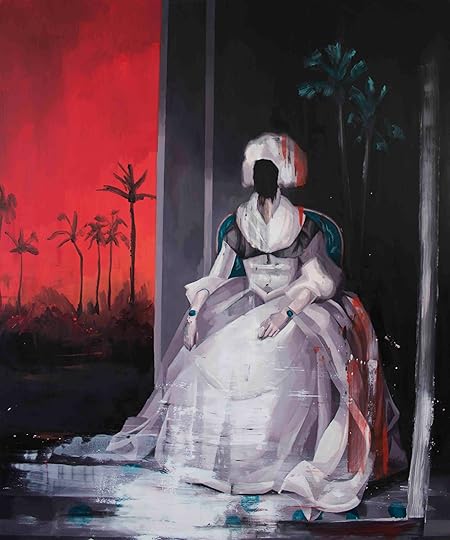
I could appreciate more the hallucinations and the encounters between the living and the dead in this novel, as the rather hapless addict wanders through the village and its outskirts. He even takes on final requests from some of the dead that he encounters. He hovers between both worlds and at some point he makes a crossover which isn't obvious to the reader at first. You could say I read it more as a metaphor for the experience of living. Heroin may be the crutch for the narrator's existence, but each of us have our own crutches, i.e. our reasons for living, don't we? And is it just me or do we not encounter the dead in our own dreams at times?


The painting "This was All Folly" by Tomas Harker, was used as the cover illustration for the original Spanish language edition "Una cita con la Lady" (2019) published by Editorial Anagrama, Barcelona. Image sourced from JacksonsArt.com.

I realize that most would not enjoy the surface subject matter here, but for me it became a 5-star, because I just couldn't stop reading it and couldn't help but be fascinated by it.

Soundtrack
The choice was obvious on this one, and it also provided for my lede header. It is Heroin by Lou Reed as recorded on The Velvet Underground debut album The Velvet Underground & Nico (1967). You can hear the track on YouTube here or on Spotify here.

Trivia and Links
The English language synopsis for Last Date in El Zapotal describes it as "an homage to Pedro Páramo" (1955), which was a novel by Mexican author Juan Rulfo (1917- 1986). You can read more about that novel and its influence at a Wikipedia article here (Note: Plot spoilers).
Profile Image for Jean Ra.
415 reviews1 follower
December 6, 2019

La idea que me hice de esta novela, después de leer por primera vez la sinopsis, hará cosa de dos meses, era que se trataba de una especie de novelización del De-loused in the Comatorium, el disco de The Mars Volta, dónde efectivamente, a través de una imaginación alucinógena y alucinada, se cuenta la historia de Cerpin Taxt, el yonqui chicano que intenta suicidarse en El Paso y eso da pie a ese viaje por mundos a cada cual más extraño e infernal. En cierta forma, Una cita con la Lady, si bien no sigue ese mismo patrón, si comparte el punto de partida.

En verdad se trataría de los personajes del Yonqui de William Burroughs paseándose por la Comala de Pedro Páramo. El protagonista llega al imaginario Zapotal y se encuentra con un pueblo que parece el último agujero del planeta, un lugar empobrecido, de aire fantastmal y decadente. Su propósito es consumir la heroína y el opio que le queda en la reserva y extinguirse en ése, el rincón más olvidado que ha podido hallar. Sin querer revelar mucho más, diremos que hacia el final la historia da un viraje considerable y algunas de las insinuaciones realizadas durante la narración cobran enorme relieve y pasan a primer plano narrativo.

Se trata de la historia de un hombre sumergido en el consumismo más puro, el de la droga, tanto que se autoalimenta de su propio apetito hasta crear un bucle que absorbe todo lo que puede y lo que no, lo excluye y lo aleja. Vamos sabiendo que de sus allegados algunos se hicieron yonquis como él y murireron y los que no, lo abandonaron. En medio de una desolación absoluta, fascinado por ese intenso mundo lisérgico, se planta y decide apartarse y perecer, pues ya no le queda ni intereses ni deseos por nada que exista en el mundo ni impulso vital.

Él se considera algo intermedio entre los vivos y los muertos, un ente que vaga por el mundo sin otro propósito que proporcionarse su amada sustancia. La expresiva escritura de García Elizondo recrea ese ambiente obsesivo y lóbrego, los temas se van reiterando sutilmente con ocurrentes variaciones, de forma que al final la atmósfera del libro logra atrapar hasta el ánimo del lector y contagiarle ese singular tono, tan poco simpático y vitalista.

Se trata de un libro escrito por alguien de poco más de treinta años y en su primera novela publicada. Cómo se sabe, no se trata de un cualquiera, él ha tenido el privilegio de ser nieto de los escritores Gabriel García Márquez y Salvador Elizondo, por lo cuál él ha tenido más fácil el poder iniciarse en el mundo de la ficción, ahora bien, una vez leído este Una cita con la Lady no me cabe duda que él ha sabido demostrar mérito propio y que vale para esto de narrar historias poco convencionales y atrapantes. Han sido dos días de lectura febril. Sin duda sería una gran noticia que alguien como él, un narrador dispuesto a explorar la ficción desde ángulos poco usuales, iniciara con este libro una extensa obra. Yo por lo menos así lo esperaré. Pero por favor, que no me busquen en Zapotal.
Profile Image for Susana.
150 reviews23 followers
June 9, 2021
Vine por las drogas, me quedé por los fantasmas.
Profile Image for Patrizia.
536 reviews164 followers
January 5, 2020
Una voce narrante potente descrive il viaggio di un’eroinomane verso la fine. Ambientato in un villaggio sperduto, in cui nessuno vorrebbe vivere, il racconto si snoda lungo la linea di confine tra vita e morte. Realtà e allucinazioni si alternano, finché diventa impossibile distinguere le une dalle altre e i ricordi si trasformano nel tempo perduto, in una dimensione di tempo sospeso.
Affascinante, poetico e tragico.
Profile Image for David Carrasco.
Author 1 book146 followers
June 21, 2025
¿Y si hablar con la heroína fuera la única forma de seguir vivo unas horas más?

Una cita con la Lady, de Mateo García Elizondo, es la confesión exhausta de un tipo al límite, que ya ha decidido emprender ese último viaje que para él es el fin del camino. Está encerrado en un cuartucho de hotel en el pueblo del Zapotal, el culo del mundo, la última parada de un autobús que tomó sin rumbo, con lo justo para el final del trayecto —una lata con su kit de drogata, sus pipas, sus cucharas y sus arpones, tres mil pesos, veinte gramos de goma de opio, un cuarto de onza de heroína y un cuaderno donde vomitar su testamento—. ”Vine al Zapotal para morirme de una buena vez”. Pero, spoiler, morir no es tan sencillo como él esperaba. Entre náuseas, sudores y recuerdos que revientan sin pedir permiso, pasa las horas con una certeza demoledora: la cita con la Lady —sí, con mayúscula, como reina maldita— se le resiste. Y sin ella, ¿qué te queda? Nada. O peor aún, la conciencia. Esa pesadilla que no puedes pinchar con aguja.

Así que olvida la trama al uso: aquí no hay búsqueda épica ni redención para vender. Solo un tipo —un yonqui sin nombre— atrapado en ese cuarto de hotel que podría oler a todo menos a limpieza, escribiendo en un cuaderno que es a la vez confesionario, diario y probablemente el único amigo que no le juzga —porque, siendo realistas, ¿quién aguanta algo así? Su monólogo es un torbellino de vida rota, cuerpo en huelga y recuerdos que persisten en su mente como el invitado que no se va ni cuando le lanzas todas las indirectas del mundo. Y el Zapotal, ese lugar de mierda, es como un Comala 2.0 para quien ya no cree en fantasmas, pero los tiene igual: fantasmas con mono eterno, que no se van con la dosis más alta ni con el escudo de la indiferencia.

Pero ojo, que no todo es drama llorón ni la novela chapotea en su propia miseria. Hay un humor que se cuela a golpes, una sonrisa torcida que acompaña cada línea y que sabe burlarse incluso del mismo que escribe. Nuestro protagonista no es un mártir, sino más bien un equilibrista torpe que baila con la muerte, pero siempre pisando algún charco de sudor y derrota. Elizondo no se corta un pelo para enseñarnos la miseria sin maquillajes, pero también nos regala esa chispa de sarcasmo que hace que la lectura no se convierta en un suplicio.

Y es que, para lograr ese equilibrio entre miseria y lucidez burlona, hay que tener algo más que agallas: hace falta estilo. Y estilo es justo lo que tiene Mateo García Elizondo, nieto del mexicano Salvador Elizondo y, sí, del mismísimo Gabriel García Márquez. Podría haber tirado de realismo mágico para adornar la historia, pero decidió que mejor apostar por un realismo jodidamente crudo y enfermo.

Porque aquí no hay mariposas que hablen ni abuelas que levitan. Aquí el realismo mágico es menos magia y más pesadilla con malilla crónica, ese aire rulfiano de pueblos muertos que parece decirte que la única fantasía que queda es esperar a que llegue la próxima jeringuilla. Si Juan Rulfo se hubiera ido de rave con William Burroughs, esta sería la resaca eterna que le habría quedado, y de ahí sale esa prosa hipnótica y áspera, que se arrastra como lagartos medio muertos y te golpea con párrafos que supuran calor y descripciones que no pintan, infectan.

Hay frases que lanzan rabia, otras que se quedan a medias, como el propio narrador, exhausto, que no tiene fuerzas para acabar lo que empieza. Pero ojo, que no es fallo, es coherencia pura: esto no es contar una historia, es mostrar sin filtros el descenso de alguien que ya no espera nada, solo aguanta. Y lo consigue con creces: acabas con el estómago revuelto, no por lo que pasa —que es poco—, sino por lo que se siente. Porque aquí lo que importa no es el qué, sino el cómo: el ritmo, el bucle… la voz.

Una voz que se dirige a alguien —¿a nosotros o a ese yo mismo que aún no estaba roto del todo?— en un flujo de conciencia tan contenido que parece hipnótico. Los capítulos son breves, numerados casi con desgana, como el paso cansado de un cuerpo que solo sigue escribiendo porque no tiene otra cosa que hacer. La voz es obsesiva, cerrada como un cuarto sin ventanas, un libro que no lees para seguir una historia, sino para meterte en la cabeza de alguien que pelea con su propio cuerpo, con la madrugada, con el temblor de las manos. Y que, créeme, es mucho más difícil de lo que parece.

Pero llega un momento —inevitable— en que la voz empieza a resquebrajarse. Porque una voz puede sostenerse durante un tiempo… hasta que empieza a sonar como un susurro dentro de una tumba mal cerrada. De modo que llega un punto —y no tarda mucho— en que uno ya no sabe si el narrador está vivo, muerto o en esa zona intermedia donde los fantasmas todavía sudan y los adictos ya no sangran. Hay momentos en que lo que leemos no parecen recuerdos, sino retazos de un delirio que se resiste a apagarse. ¿Es un yonqui escribiendo con el mono subido o el eco de alguien que ya se fue y no se ha enterado? Da igual. En esta novela, la lucidez y la alucinación se dan la mano como dos viejos conocidos que comparten la jeringuilla.

Y claro, en ese delirio sostenido, los demás también empiezan a desdibujarse. Los personajes son un susurro fugaz. No hay desfile ni reparto, solo él —el yonqui sin nombre— y lo que queda de los demás, tamizado por el filtro sucio de sus recuerdos o de su mono. Antiguos colegas que ya están bajo tierra, una chica que tal vez fue real, un perro que tal vez no, o al revés… todos convertidos en sombras que flotan en ese delirio pegajoso. Esto no es una novela coral: es el monólogo de un solo cuerpo, una sola urgencia, una sola espera. Y eso la vuelve inquietante, pero también íntima. No lees para entender al personaje. Aquí el lector no se identifica, se contagia: es como si el libro sudara y fueras tú quien acabara apestando.

Y aunque la voz sea un susurro y el mundo que la rodea un espejismo, no se puede evitar que ciertas sombras literarias asomen la cabeza, ecos literarios que cantan desde el fondo: Bajo el volcán con su descenso autodestructivo bajo el sol latinoamericano, Yo ya no, el cuento de Onetti, con esa voz cansada desde el fracaso, y hasta un poco de El túnel de Sabato, no por la trama, sino por esa claustrofobia mental de la que no hay escape. Otros verán la voz implacable y el aislamiento sin fisuras de El extranjero . Sin embargo, si hay algo aquí es un homenaje a Rulfo y su Comala de Pedro Páramo ; por esa manera de capturar la soledad absoluta y el susurro de los muertos que nunca se van del todo. Pero Una cita con la Lady no copia ni imita a nadie; es más pequeña, seca y despojada. No quiere ser gran novela, quiere ser testamento urgente. Y ahí está su fuerza.

Aunque detrás de esas influencias y ecos, lo que realmente importa es lo que la novela nos cuenta sobre la condición humana. Aquí el tema no es solo la adicción. Es la pérdida del sentido cuando ni siquiera queda el consuelo del escape. La Lady no es metáfora, pero sí símbolo: dependencia, abandono, amor tóxico llevado al extremo. El narrador no la odia ni la maldice; le habla como a una diosa caprichosa que ya no responde. Eso es lo más perturbador. Porque debajo de todo ese temblor, delirio y mugre, hay una tristeza pura. Seca. Como si este hombre supiera que ya no hay sitio para él ni en el mundo ni en su propia cabeza. Pero, como saben todos los que han vivido el infierno de la adicción, el problema no es el viaje, sino el regreso. Y del Zapotal, nadie vuelve. Ni siquiera el que sobrevive.

La novela es breve, pero no la lees rápido. El ritmo es lento, los bucles mentales y la repetición obsesiva están pensados para que el lector sienta el mismo desgaste que el narrador. No es una lectura cómoda ni pretende serlo. Es necesaria si quieres asomarte a un infierno sin fuego, pero con sábanas sudadas y relojes sin pila.

Y cuando llegas al final —ese que no voy a destripar, pero que es tan coherente como inevitable— solo queda permanecer en silencio. Como si tú también hubieras pasado la noche con la Lady. Como si sobrevivieras al mono de otro… pero no supieras si agradecerlo o no.

Y sí. Cinco estrellas. Sin dudarlo. Una cita con la Lady no es perfecta —ni quiere serlo—, pero lo que hace, lo hace con una potencia, una coherencia y un estilo que muy pocas novelas debut logran. No se anda con rodeos, no busca complacer, no disfraza la miseria con moralejas. Es una novela brutal y honesta, escrita con una voz tan bien construida que parece dictada desde el fondo de un pozo: hipnótica, enferma, lúcida.

Cinco estrellas porque este descenso no es gratuito ni decorativo: es una experiencia. Porque no hay impostura, ni sentimentalismo barato, ni heroísmo de cartón. Solo la crudeza de un cuerpo que escribe porque no le queda nada más. Y cuando una historia se sostiene solo con eso —con desesperación, con voz, con lenguaje— es que tiene algo de verdadero.

Cinco estrellas, amigo, porque te arrastra, te revuelve y te deja oliendo a Zapotal. Y eso, créeme, no se olvida.
Profile Image for Amii Feria.
31 reviews
May 7, 2020
Está muy bueno.

Cuenta la historia, narrada en primera persona de un drogadicto que llega a un pueblo (Zapotal) con el claro objetivo de morirse, desde el principio honestamente la atmosfera del lugar te recuerda a Comala, en Pedro Páramo, cuya premisa inicial es semejante: una persona que llega a un pueblito sospechosamente solitario, oscuro y misterioso.

Es una idea original sobre una base ya conocida de la relación entre el mundo de los vivos con el mundo de los muertos en el que los límites físicos no están bien definidos por lo que en ciertos momentos llegan a coincidir de tal manera que nunca sabes bien dónde estás parado.

Se nota muchísimo la influencia de su abuelo, el maestro Gabo, en la narrativa de Mateo que refleja situaciones claras de realismo mágico, destacando la amenidad con la que relata esta historia, el registro oral está muy presente lo que te mantiene siempre entretenida y expectante a lo que va sucediendo.


Profile Image for Rachel Louise Atkin.
1,359 reviews603 followers
August 6, 2024
I really loved this! It’s about a heroin addict who takes the train go a random town with enough heroin left to end his own life, but he ends up getting mixed up with a bunch of drug dealers and strange people who rob him of his stash so he ends up just walking around in a sort of high-limbo waiting to see if he will die.

The way the narrative straddled the line between life and death was fantastic and I found it super easy and enjoyable to read the main character’s voice. The way the afterlife was explored was so clever and how the book tricks you into questioning what is real and what could just be a hallucination because of the drugs is done so well.

I don’t usually like books which are quite hallucinatory but the way this was structured and told was just fantastic and kept you hooked. It was never confusing but always engaging, funny and thought provoking. I really can’t wait to read more from this author because from this book I can tell his writing is completely brilliant.
Profile Image for Yaprak.
514 reviews189 followers
January 19, 2025
Vov! Baba tarafından dedesi Gabriel Garcia Márquez, anne tarafından dedesi Salvador Elizondo olan, 1987 doğumlu Mateo Garcia Elizondo'nun ilk romanı Kız'la Randevu edebiyat dünyasına harika bir ismin kazandırıldığının müjdesi. Gabo'nun torunu olduğu için omzunda çok ağır bir yük olduğunu tahmin ettiğim, röportajlarından anladığım kadarıyla bunun kendisine sık sık sorulmasından sıkıldığını anladığım genç yazar, eroin bağımlısı bir adamın ölüm yolculuğunu anlatıyor. Marquez'e de ilham olmuş Pedro Paramo'nun izlerini görmenin mümkün olduğu eser, uyuşturucu yolculuğu sebebiyle biraz beat esintisi de verdi bana.

Sürprizi bol, konusu itibariyle okuması biraz zorlayıcı olabilen Kız'la Randevu'yu çok sevdim. Mariana Enriquez'i sevdiği yazarlar arasında sayan Elizondo ne yazsa heyecanla takip edeceğim bundan sonra.
Profile Image for Freddy Veloz.
179 reviews24 followers
September 24, 2020
¿Qué pasaría si uno de los personajes jonkis de Burroughs hubiera sido el protagonista de Pedro Páramo? Con esta pregunta podríamos dar una idea bastante buena sobre Una cita con la Lady, primera novela de Mateo García Elizondo que automáticamente lo ubica como un talento para no perder de vista.

La novela arranca de forma muy potente, revisitando el pasado del protagonista y todas las formas en que su vida se fue poco a poco desintegrando a causa de su adicción a la heroína. Algo importante de recalcar es que la obra nunca toma un tono moralista o juzgador con respecto a las adicciones, sólo las muestra en su basto espectro de brutales complejidades, y he ahí el gran acierto de esta obra, con escenas que pueden hacer revolvernos en nuestros asientos pero que muestran la dolorosa humanidad de un grupo de chicos perdidos en su deseo de escapar del mundo.

Sin embargo, a medida que la novela avanzaba la trama pasó a ser cada vez más fantástica y a tratar menos sobre el pasado autodestructivo-marginal del protagonista, lo que desde mi punto de vista debilitó mucho el nivel que venía llevando. No digo que haya sido una mala idea mezclar estas dos temáticas a simple vista tan distintas: marginalidad descarnada y realismo mágico; pero en lo personal me resultó muy distractor y creo que la novela habría sido mucho más potente si se hubiera centrado sólo en la temática de adicciones y deterioro humano. Para el final de la novela sentía que estaba leyendo un libro muy distinto al que había empezado, más cercano a La Divina Comedia que a Less Than Zero.

Aún así, tomando en cuenta que ésta es apenas la primera novela del autor, queda claro que tiene talento y que a medida que lo siga puliendo seguramente producirá obras que desde ya espero con ansias.
Profile Image for Niamh.
240 reviews10 followers
July 14, 2024
charco press do release bangers icl

▪️the concept of this was so interesting to me and it was fleshed out really well for something i feel could have really been hit or miss
▪️i loved the stream of consciousness as it delved into questions of life and love and what truly makes us fulfilled and connected to the world and reality around us
▪️this kind of lost some momentum within the last 40 pages or so but it's definitely worth sticking with as it does pose some interesting ideas worth contemplating

depressing short read = a happy reader
Profile Image for Murat.
609 reviews
April 19, 2025
*Kız: Argoda eroin, sarıkız, beygir..

Dehşet güzel bir kitap. Dehşet ve güzel bir kitap.

Çevirisi ise öyle mükemmel ki, çevirmenden (Roza Hakmen) başka kitaplar okumaya karar verdim.

Bir bağımlı, yanına ölmesine yetecek kadar kız* alır ve randevusu için Meksika kırsalında bir köye, Zapotal'e gider. Daha başka nereye gidebilirdi ki zaten? Belki Comala'ya..

Bu bir ilk kitap.

Mateo García Elizondo, Gabriel García Márquez ve Salvador Elizondo'nun torunu. Bu (bü)yüklerinden daha ilk kitabında kurtulması çarpıcı bir başarı. En azından benim için, o artık "Kız'la Randevu"nun yazarı.

Ölümden öte köy varsa ve dedeleri oradaysa, alnından öperek gururla karşılayacaklardır.

___

not 1: Karanlık şeyler okumaktan hoşlanmayanların uzak durmasında fayda var. (Ölüm, uyuşturucu kullanımı vb.)

not 2: Bu kitaptan önce/kitapla birlikte/kitaptan sonra okunmasında fayda olduğunu düşündüğüm kitaplar: Pedro Páramo, Tibet'in Ölüler Kitabı, Nasıl Yaşarsak Öyle Ölürüz : Değişimi ve Belirsizliği Şefkatle Karşılamak

p.s. Üçü de bir türlü bitiremediğin ve randevu bekleyen kitaplar.. Millete tavsiye edene kadar otur oku.
Profile Image for Chris.
498 reviews24 followers
August 30, 2024
Briefly, I loved this book and I feel a numerical rating doesn't give that justice. This is such a dark, harrowing, bleak look at life, existence, addiction, and death, and all of that resonated with me deeply. I think the book for me hinged more on its final act, and while it was obvious this story only had one place to go in terms of the character's arc, I wish it had gone in a slightly different direction.

I think for me when a book focuses on existential dread or crises, the meaning of life, and even the afterlife, I prefer when it ends on a darker tone, and here I didn't feel that. If you've read A Short Stay in Hell, for me that's exactly the kind of ending I want in a story like this, and that didn't quite happen here. The connecting tissue between the first 100 or so pages and the final 50 could have been strung together better, but these are nitpicks - this is a fantastic novel and I'm super happy I read it. SO many great lines and passages. Giving a 4 here but closer to a 4.25 or 4.5 for my tastes, if you want a look into a sad, dying addict's quest to end his own life and his chronicling of it, this is a great place to see it.

Profile Image for Tuna Turan.
409 reviews57 followers
June 5, 2025
Yaşamla ölüm arasındaki ince çizgide bir adamın son durak arayışı...

İspanyol edebiyatının en sarsıcı romanlarından biri olan Kız'la Randevu, hayattan vazgeçmiş bir adamın, geçmişin izlerini taşıyarak bir dağ köyüne sığınmasını konu alıyor. O bir bağımlı. Yalnız, yorgun, tükenmiş... Fakat ölüm, sandığı kadar kolay; yaşam ise sandığından daha güçlü.

Yazar, varoluşun en karanlık köşelerine sinematik bir anlatımla ışık tutarken, hikâyesini ajitasyondan uzak, derinlikli ve sarsıcı bir gerçeklikle kuruyor. Okuru yormadan, ama derinden sarsarak... Kimi zaman bir sessizlik kadar yoğun, kimi zaman bir çığlık kadar keskin olan bu roman; hayat, bağımlılık, geçmiş ve kaçış kavramlarını yeniden düşünmeye davet ediyor.

Türkçeye kusursuz bir şekilde çevrilen bu eser, modern edebiyatta unutulmaz bir yer edinmeye aday.

Profile Image for Sofia.
86 reviews
August 31, 2025
The main character’s “Lady” is heroin, mine would be Baja blast freeze 💜
Profile Image for Rachel.
480 reviews126 followers
July 3, 2024
A mediation on life and death and the slippery boundary between the two. Our narrator is a junkie who has come to the dead end town of El Zapotal for one last date with his lady—his lady being heroin. One last date and then he’s off to the other side. He’s so deep in his addiction that the pleasures of the earthly realm hold no power over him, they are not enough to entice him to stick around any longer. He’s made it to the threshold of death many times before, but this time he is ready to go all the way.

Writing his experience in his notebook, our narrator hopes to make sense of his last few days and the journey he’ll take from the land of the living to whatever lays beyond. As he wanders through this town in an opium induced stupor, he encounters beings that may or may not be ghosts, some asking for favors, others hoping to guide his passage to the other side.

As the book progresses, the narrator’s (and reader’s) sense of reality becomes distorted, is he still hanging on or has he officially joined the group of specters that haunt this wretched town?

The writing in this book is impressive, though it should come as no surprise as the author is the grandson of both Gabriela García Márquez and Salvador Elizondo. Despite this, I didn’t find myself wanting to pick it up. It’s repetitive and depressing, but so is addiction so I’m sure that’s the point.

I appreciate this book, but I’m glad to be done with it.
Profile Image for Mark Bailey.
248 reviews41 followers
July 9, 2024
Another oustanding read from Charco Press, this time of a heroin addict who goes to a bleak remote village to die.

In El Zapotal, you can see the dead. It's here that the man hires a room to reach oblivion.

Despite death being everywhere, and the grotesqueness and depressing existence of he and the villagers, this is very much about life and what we squander through trivialities and unfounded fear.

Definitely recommend.
Profile Image for José Miguel Tomasena.
Author 18 books542 followers
August 9, 2020
Tiene habilidad para nombrar lo abstracto, que no es menor, y hay ecos de Rulfo, pero me pareció impostada, tremendista. Como si Reygadas hubiera escrito una novela.
Profile Image for Sam Boman.
16 reviews
February 3, 2024
a disturbing, tender, stream of consciousness. life and death! what more needs to be said
Profile Image for Andy Weston.
3,199 reviews226 followers
August 7, 2024
A heroin addict seems to have run out of hope, and in accepting his circumstance journeys to an almost deserted Mexican village to die.
He rents a room in this seedy backwater and prepares one last fix, but is haunted by memories of his past that won’t let go.
He becomes stuck in limbo among the bums of El Zapotal and the ghosts of his past so that neither he, nor we as readers, can tell them apart.
It’s a ghost story of a sort, a horror story, and a fable considering damnation and deliverance. But its brilliance is in its language, translation, and style. I’ve read it compared to Rulfo’s Pedro Paramo, which I can see, and I’d add to that the prose of Bukowski, which several times it put me in mind if.
It’s another excellent find from Charco Press who continue to discover tremendous world literature in translation.

Here’s how it starts..
I came to El Zapotal to die once and for all. I emptied my pockets as soon as I set foot in the town, tossing the keys to the house I left behind in the city, my credit cards, anything with my name or photograph. All I've got left are three thousand pesos, twenty grams of opium, and a quarter-ounce of heroin, which had better be enough to kill me. If not, I'll be too broke to even buy a pack of cigarettes, much less pay for a roof over my head or score some more lady, and then I'll freeze and starve to death out there instead of making slow, sweet love to my skinny bride, just as I've planned.
That should get me through for sure. But I've missed the mark before and I always wake up again. I must have some unfinished business to take care of.
Profile Image for belisa.
1,433 reviews42 followers
February 2, 2025
aslında birkaç gün önce başladım ama yol boyu bitireceğimden emin olmadığım için buraya eklemedim, bu bağımlılık meselesi dinlemekten hoşlanmadığım bir şey, her an bırakabilirdim, bir şeylere bağımlı olmayı anlasam da hayatın dışında kalmak için bağımlı olmayı anlamıyorum, kendilerini anlatmaya çalıştıklarında da samimi gelmiyor...

bağımlısın geriye kalan her şeyi kaybediyorsun, varlığının hiçbir yansıması yok, seni sevenlere bela oluyor, düzelmek için hiçbir şey yapmıyorsun, tek derdin "kız"la buluşmak, çalışmadığın için o "kız"ın parasını bile başkaları vermeli, "kız"a ulaştığında da ne olduğunun farkında değilsin, ölmek istiyorsun ama bir kez daha çekebilmek için yaşıyorsun ve başına gelenleri yazsan millet okumaktan sıkılıyor...

bu kitap nispeten samimi bir anlatıydı sonlara doğru daha dinlenir oldu...
Profile Image for Hulyacln.
987 reviews567 followers
February 11, 2025
‘Hayat bir soğutucuya benzer, zamanın nesneler üzerinde bir etkisi vardır; tırmanıştayken, kopmuşken değerli neyin varsa süt gibi ekşiyip bozulur. Dönüşte tedavi görmüş olsan bile çok önemli bir şeyinin, kolun ya da gözün gibi bir şeyin eksik olduğu hissini yaşarsın, hayata koltuk değnekleriyle devam etmeye mahkummuşsun gibi gelir.’
.
Kendi bedenine veda etmeye hazırlanan kahramanımız nihayet varış noktasına ulaşır ve şöyle der: ‘El Zapotel’e nihayet ölmeye geldim.’ Bundan sonrası anılar, gerçekler, hayaller, yaşayanlar ve ölüler arasındaki yoğun sis bulutu olur. Ne o karar verebilir yaşadıklarının gerçekten mi yaşanıyor olduğuna, ne de biz. Belirsizlikle beraber mekanın ıssızlığına da bulaşırız. Görünür olan tek şey ise sondur.
.
Edebiyatçı bir aileden gelen yazar Mateo Garcia Elizondo, bir bağımlıyı içinde bulunduğu tüm o duygu değişimleriyle anlatabilmeyi başarmış Kız’la Randevu’da. Oldukça karanlık olmasına karşın tek oturuşta bitiveren bir akıcılıkta üstelik.
.
Roza Hakmen çevirisi, Nazlım Dumlu kapak tasarımıyla ~
Profile Image for Rye McKeeby.
27 reviews
April 10, 2025
I was debating between four versus five stars so get ready for the breakdown: I felt the last few chapters were a bit dragged out and over explained the moral a bit, like show don’t tell. Still, it was so dare I say enthralling. I am an absolute fool for any book on existentialism. This truly ended up being one of my fav reads and therefore, I had to stick with my ranking system and give her a fiver. It was beautifully written but I just know that it would be so much better in the original Spanish, which I will be reading asap now. It was hard to read at times I admit, the dude isn’t great… but his perspective was portrayed with such craft and understanding. They say each book read is like a life lived, and this one represented that perfectly to me.
[I am not happy with the titles translation though… I think it should’ve stayed the same >:( ]
Profile Image for Georgia.
197 reviews2 followers
August 13, 2025
Liked the stream of consciousness and how the main straddles between life and death but a bit one note.
Profile Image for Juan Araizaga.
831 reviews144 followers
January 13, 2021
5 días y 184 páginas después. El primer libro del autor que leo del autor. No sabía nada del autor, hasta que lo vi posteado en varias menciones.

Es una narración buena, pero bastante repetitiva, y aunque tiene los capitulos definidos, hay algo que te hace perderte dentro de la misma historia. ¿Aleatoriedad? Bastante, pero que puedes esperar de un adicto a la heroína. ¿Qué puedes esperar de un libro que narra la historia de una persona que solo se quiere destruir y que cree ver muertos?

Todo iba excelente hasta que se hace esa mezcla de las visiones, cosa que no estuvo mal, pero que es terriblemente experimental. A algunos les puede gustar, o funcionar, pero en lo personal siento que fue demasiado ambicioso al querer narrar cosas tan filosoficas (y alocadas) en tan poco.

No es el hecho de que se hayan visto ya decenas de relatos de drogos, ni que sea una escabrosidad parecida a la de otros realismos mexicanos, sino el hecho de que la novela es un experimento que no acaba de completarse.

Sin embargo, me parece una excelente primer novela, habrá que seguir viendo lo que el autor escribe. Y tenerlo cerca. Hubo unas frases excelentes.

No habrá reseña.
Displaying 1 - 30 of 151 reviews

Can't find what you're looking for?

Get help and learn more about the design.