

What do you think?

Endless Flight: The Life of Joseph Roth
The brilliant, mercurial, self-mythologising novelist and journalist Joseph Roth, author of the European 20th century masterpiece The Radetzky March, was an observer and chronicler of his times. Born and raised in Galicia on the eastern edge of the Austro-Hungarian Empire, his life's decline mirrored the collapse of civilised in his last peripatetic years, he was exiled from Germany, his wife driven into an asylum, and he died an alcoholic on the eve of the World War II.
With keen insight, rigor and sensitivity, Keiron Pim delivers a visceral portrait of Roth's internal restlessness and search for belonging, from his childhood in the town of Brody to his Vienna years and his unsettled roaming of Europe. Exploring the role of Roth's absent father in his imaginings, and his attitude to his Jewishness, Roth's biography has particular relevance to us now, not only in the growing recognition and revival of his works, but also because his life's trajectory speaks powerfully to us in a time of uncertainty, fear, refugee crises and rising ethno-nationalism.
With keen insight, rigor and sensitivity, Keiron Pim delivers a visceral portrait of Roth's internal restlessness and search for belonging, from his childhood in the town of Brody to his Vienna years and his unsettled roaming of Europe. Exploring the role of Roth's absent father in his imaginings, and his attitude to his Jewishness, Roth's biography has particular relevance to us now, not only in the growing recognition and revival of his works, but also because his life's trajectory speaks powerfully to us in a time of uncertainty, fear, refugee crises and rising ethno-nationalism.
653 pages, Kindle Edition
Published October 6, 2022
Ratings & Reviews
Friends & Following
Create a free account to discover what your friends think of this book!
Community Reviews
Displaying 1 - 28 of 28 reviews

February 20, 2026
Truly a biography as a biography should be written!
I could not have imagined that there was so much I did not yet know about the life and character of the man that I have considered as my favourite author for quite a number of years now, ever since I fell in love with his Magnum Opus "Radetzky March".
Keiron Pim takes the reader on a beautiful, fascinating, but above all heartbreaking journey through the life of Joseph Roth. The story of a boy from a Jewish shtetl in Galicia, who fought in WW1, reached prominence as the most famous German speaking journalist of his generation and eventually lost it all to booze, poor finances and his own health struggles (mental and physical).
A unique portrait of one of the most interesting and multi-faceted personalities of modern European literature. A brilliant journalist and novelist, but above all a deeply tragic man, Joseph Roth has been placed in many categories: Jew, Austrian, socialist, monarchist, anti-semite, Roman
Catholic and many, many more. With each one of these being a building block of who the man was.
In combination with the amazing portraits being painted of other giants of the interbellum (and thereafter) such as Stefan Zweig, Otto von Habsburg, Józef Wittlin and many others as well as the opportunity to breathe in the spirit of pre-WW2 Berlin, Vienna, Paris and many other places, this biography makes for an unforgettable reading experience for everyone who carries a European spirit in his/her heart.
I could not have imagined that there was so much I did not yet know about the life and character of the man that I have considered as my favourite author for quite a number of years now, ever since I fell in love with his Magnum Opus "Radetzky March".
Keiron Pim takes the reader on a beautiful, fascinating, but above all heartbreaking journey through the life of Joseph Roth. The story of a boy from a Jewish shtetl in Galicia, who fought in WW1, reached prominence as the most famous German speaking journalist of his generation and eventually lost it all to booze, poor finances and his own health struggles (mental and physical).
A unique portrait of one of the most interesting and multi-faceted personalities of modern European literature. A brilliant journalist and novelist, but above all a deeply tragic man, Joseph Roth has been placed in many categories: Jew, Austrian, socialist, monarchist, anti-semite, Roman
Catholic and many, many more. With each one of these being a building block of who the man was.
In combination with the amazing portraits being painted of other giants of the interbellum (and thereafter) such as Stefan Zweig, Otto von Habsburg, Józef Wittlin and many others as well as the opportunity to breathe in the spirit of pre-WW2 Berlin, Vienna, Paris and many other places, this biography makes for an unforgettable reading experience for everyone who carries a European spirit in his/her heart.

July 3, 2023
"The Lord was not so much his shepherd as his accomplice." That smart remark comes on p. 114 of Kieron Pym's fine biography of Joseph Roth, an at times despicable man, misogynistic, controlling, fearful, self-loathing, anti-Semitic (Jewish himself, but drawn to Catholicism), loyal, badgering, suddenly disloyal and raging, an unredeemable drunk capable of writing wonderful prose (that's how it comes across in english translation) with fine insights and obsessed with his lost homeland, the austro-hungarian empire. Pim presents material from various sources in a "biography [that perhaps] has helped its readers to feel they have studied him long enough to draw conclusions." (p. 452)
Roth's last years are sad, but he never cared for his health, despite opportunities and encouragement to do so. His friends admired his talent but were often objects of his cruel words and begging letters. He helped propel his wife into insanity. His personal morality was contradictory and hurtful to himself and others.
This is a highly recommended book. So are Roth's novels and collections of journalism. (The Hotel Years is a book that draws from many years of newspaper writing.) It's the best biography of any writer named Roth I've read in the last couple of years, in part because his life and times were in constant upheaval.
Roth's last years are sad, but he never cared for his health, despite opportunities and encouragement to do so. His friends admired his talent but were often objects of his cruel words and begging letters. He helped propel his wife into insanity. His personal morality was contradictory and hurtful to himself and others.
This is a highly recommended book. So are Roth's novels and collections of journalism. (The Hotel Years is a book that draws from many years of newspaper writing.) It's the best biography of any writer named Roth I've read in the last couple of years, in part because his life and times were in constant upheaval.

September 7, 2023
I’ve read all of Joseph Roth and re-read quite a few. I learned so much from him.
The more Western the origins of a Jew, the more Jews there are for him to look down on,’ he once observed. ‘The Frankfurt Jew despises the Berlin Jew, the Berlin Jew despises the Viennese Jew, the Viennese Jew despises the Warsaw Jew. Then there are Jews from all the way back in Galicia, upon whom they all look down, and that’s where I come from, the lowest of all Jews.’
During the Covid lockdowns, I started drinking of an evening. Just a drink or two, a half a bottle of wine. I started wondering whether or not I was on the road to becoming an alcoholic (at age 76?) Thanks to Keiron Pim’s biography I know I have a long way to go.
The more Western the origins of a Jew, the more Jews there are for him to look down on,’ he once observed. ‘The Frankfurt Jew despises the Berlin Jew, the Berlin Jew despises the Viennese Jew, the Viennese Jew despises the Warsaw Jew. Then there are Jews from all the way back in Galicia, upon whom they all look down, and that’s where I come from, the lowest of all Jews.’
During the Covid lockdowns, I started drinking of an evening. Just a drink or two, a half a bottle of wine. I started wondering whether or not I was on the road to becoming an alcoholic (at age 76?) Thanks to Keiron Pim’s biography I know I have a long way to go.

April 4, 2024
"Tegenwoordig kunnen de verhalen van Joseph Roth, met hun bitterzoete portret van het Habsburgse Rijk waarvan hij het verlies betreurde, lezers op minstens drie niveaus bekoren. Ten eerste houden ze die mythe in stand door de lezer van nu een beeld voor te toveren van een tolerante, multi-etnische beschaving, een soort ideaal toevluchtsoord voor wie even wil ontsnappen aan de intolerantie en verdeeldheid van de eigen tijd. Maar zijn beschrijving van de trauma's die het gevolg waren van het ineenstorting van dat rijk - de opkomst van het nationalisme en de uitsluiting van bevolkingsgroepen, en de daaruit voortvloeiende gevoelens van ontheemding, marginalisatie en buitenstaanderschap - houdt onze huidige wereld juist ook weer een spiegel voor. Roth lokt ons uit de moderne wereld weg om ons er vervolgens weer met de neus op te drukken. Deze unieke combinatie, van vluchten in een gefantaseerd verleden en onverschrokken onder ogen zien van het heden, versterkt door zijn verbeeldingsrijke vermenging van waarheid en verdichting in zowel zijn 'fictie' als zijn 'non-fictie', maakt zijn werk op nog een derde niveau aantrekkelijk: het creëert een verleidelijke mix van spanningen waarvoor we een oplossing verlangen, ook al vermoeden we dat ze onoplosbaar zijn. Een man die zoveel autobiografische elementen zijn romans in smokkelde en zijn reportages zo vaak van dichterlijke glans, erkent duidelijk de grens tussen feit en fictie niet. Bij nadere beschouwing blijkt die grens bij hem vaak te vervagen. Wat is dat voor man, vragen we ons af, die zo'n oeuvre creëert? En tot onze voldoening zien we dan dat het iemand was die landsgrenzen verfoeide, maar wel onwrikbare ethische grenzen had en iedereen verachtte die ze overschreed (ondanks de ontoelaatbare wijze waarop hijzelf soms over de schreef ging, wat dan weer zijn zelfverachting aanwakkerde). Vrijheid van beweging, onverzettelijkheid van overtuiging: dat was de grondslag van zijn ethiek. Roth daagt ons uit om hem te leren begrijpen. En al krijgen we vaak het vermoeden dat dit onbegonnen werk is, wellicht geeft deze biografie lezers toch het gevoel dat ze hem goed genoeg hebben leren kennen om hun eigen conclusies te trekken..."
Deze conclusie van Keiron Pim vat zijn biografie samen: doorheen de verhalen van en biografische elementen van Joseph Roth word je als lezer werkelijk ondergedompeld in diens leef- en denkwereld. Beste boek dat ik dit jaar heb gelezen! Een echte aanrader voor lezers van het werk van Roth.
Deze conclusie van Keiron Pim vat zijn biografie samen: doorheen de verhalen van en biografische elementen van Joseph Roth word je als lezer werkelijk ondergedompeld in diens leef- en denkwereld. Beste boek dat ik dit jaar heb gelezen! Een echte aanrader voor lezers van het werk van Roth.

December 17, 2022
Keiron Pim’s new biography of Joseph Roth, Endless Flight, is a marvelous gift that was long overdue and certainly welcome. Interwoven into the story of Roth’s life are descriptions of the Weimar Republic, this difficult and dangerous period between the two world wars.
The history of Europe between the great wars is the armature upon which rests the complex personality and writings of Joseph Roth. Thanks to books published within the last two decades, Roth is now, rightly, being considered to be one of the great writers of the 20th century. His journalism has been recently published in two collections, translated by Michael Hofmann, mainly from short pieces filed with newspapers around Europe, most notably The Frankfurter Zeitung, with whom he had a long-lasting relationship. Roth drew on the tradition of the feuilleton, short reports no longer than a page.
The historian Carl Schorske described them this way, in Fin de Siècle Vienna: Politics and Culture.
“The feuilleton writer, an artist in vignettes, worked with those discrete details and episodes so appealing to the nineteenth century’s taste for the concrete. But he sought to endow his material with color drawn from his imagination…”
Certainly, and for many reasons, journalists of the decades after the turn of the century, still used the feuilleton to their advantage to captivate and amuse readers. Joseph Roth was one of the most skilled and adept at this method, and his work was in great demand.
Mr. Pim has correctly judged that a critique of Roth’s novels would help to explain this complex period, but also clearly delineate the life and struggles of Roth himself. Roth could never come to terms with his Eastern European heritage; Jewish assimilation into whatever country one would be living in was always a desperate problem, always unresolved, at least for Roth.
The novels, the details and characters of which are described throughout this biography, are crucial to an understanding of the writer. As Mr. Pim points out, Roth’s first book, The Spider’s Web, written in 1923, contained a very prescient warning about Hitler, naming him. The infamous Beer Hall Putsch actually took place shortly after Roth’s book was published. Roth was unwavering in his opposition to the Nazis, and was uncompromising with his friends.
In luminous prose, Mr. Pim describes the contents and plot lines of important books such as The Radetzky March and Rebellion. Roth’s relation to his birthplace, Brody, a small town in what is now Ukraine, was always extremely fraught. In one of his most moving and important books, Job, his descriptions of the town’s inhabitants are most certainly based on real life.
Between 1918 and 1933, roughly the period of the Weimar Republic, Joseph Roth was alive and well - at least in the beginning - and was influenced in many ways by the history of World War I and the artistic trends of the time. Antisemitism had an enormous effect on Roth, as one might expect, but he made many efforts to get away from his ethnicity, even going so far as to lie about it in order to gain Austrian citizenship. He moved to Paris in 1925 and wrote, at first, some of his most moving essays about France. But it didn’t last.
Today Joseph Roth is important, more so now than ever. Keiron Pim has shown us a complicated and disturbing picture of a great writer: a man capable of self-hatred, of great empathy, of self-destructive behavior.
Joseph Roth drank himself to death in Paris, 1939.
The history of Europe between the great wars is the armature upon which rests the complex personality and writings of Joseph Roth. Thanks to books published within the last two decades, Roth is now, rightly, being considered to be one of the great writers of the 20th century. His journalism has been recently published in two collections, translated by Michael Hofmann, mainly from short pieces filed with newspapers around Europe, most notably The Frankfurter Zeitung, with whom he had a long-lasting relationship. Roth drew on the tradition of the feuilleton, short reports no longer than a page.
The historian Carl Schorske described them this way, in Fin de Siècle Vienna: Politics and Culture.
“The feuilleton writer, an artist in vignettes, worked with those discrete details and episodes so appealing to the nineteenth century’s taste for the concrete. But he sought to endow his material with color drawn from his imagination…”
Certainly, and for many reasons, journalists of the decades after the turn of the century, still used the feuilleton to their advantage to captivate and amuse readers. Joseph Roth was one of the most skilled and adept at this method, and his work was in great demand.
Mr. Pim has correctly judged that a critique of Roth’s novels would help to explain this complex period, but also clearly delineate the life and struggles of Roth himself. Roth could never come to terms with his Eastern European heritage; Jewish assimilation into whatever country one would be living in was always a desperate problem, always unresolved, at least for Roth.
The novels, the details and characters of which are described throughout this biography, are crucial to an understanding of the writer. As Mr. Pim points out, Roth’s first book, The Spider’s Web, written in 1923, contained a very prescient warning about Hitler, naming him. The infamous Beer Hall Putsch actually took place shortly after Roth’s book was published. Roth was unwavering in his opposition to the Nazis, and was uncompromising with his friends.
In luminous prose, Mr. Pim describes the contents and plot lines of important books such as The Radetzky March and Rebellion. Roth’s relation to his birthplace, Brody, a small town in what is now Ukraine, was always extremely fraught. In one of his most moving and important books, Job, his descriptions of the town’s inhabitants are most certainly based on real life.
Between 1918 and 1933, roughly the period of the Weimar Republic, Joseph Roth was alive and well - at least in the beginning - and was influenced in many ways by the history of World War I and the artistic trends of the time. Antisemitism had an enormous effect on Roth, as one might expect, but he made many efforts to get away from his ethnicity, even going so far as to lie about it in order to gain Austrian citizenship. He moved to Paris in 1925 and wrote, at first, some of his most moving essays about France. But it didn’t last.
Today Joseph Roth is important, more so now than ever. Keiron Pim has shown us a complicated and disturbing picture of a great writer: a man capable of self-hatred, of great empathy, of self-destructive behavior.
Joseph Roth drank himself to death in Paris, 1939.

August 13, 2023
My note to the author, substituting for a review. (I hate myself when I don’t write a review when I finish a book!)
On Mon, 14 Aug 2023 at 12:33 am, Jane Warner Dukuray wrote:
You received a new message from Jane Warner Dukuray sent via the contact form on keironpim.co.uk.
-------------------------------------------------------------------------
message: Dear Keiron,
Just having finished reading Endless Flight, I wanted to tell you how much I liked it. I have only read a few of his works, but have had an interest in him, in Stefan Zweig, and the interwar period generally. When I read The Radetsky March, I had no real understanding of the meaning of nostalgia for the Habsburgs and how to connect that to the more general loss of European culture. Your biography was so helpful in this regard, and will push me toward more reading about Europe pre-war.
Your portrayal of Roth is so vivid and perceptive. He was impossible and charismatic; even across the gulf of time and culture, I can see myself footing the drinks tab and lending him cash. Much of Roth’s life, his end, and that of Friedl, are just blisteringly sad. In the last few pages, I thought you summarized Roth, his contradictions, the complexities of his experience, and how that reads to us today beautifully.
On Mon, 14 Aug 2023 at 12:33 am, Jane Warner Dukuray wrote:
You received a new message from Jane Warner Dukuray sent via the contact form on keironpim.co.uk.
-------------------------------------------------------------------------
message: Dear Keiron,
Just having finished reading Endless Flight, I wanted to tell you how much I liked it. I have only read a few of his works, but have had an interest in him, in Stefan Zweig, and the interwar period generally. When I read The Radetsky March, I had no real understanding of the meaning of nostalgia for the Habsburgs and how to connect that to the more general loss of European culture. Your biography was so helpful in this regard, and will push me toward more reading about Europe pre-war.
Your portrayal of Roth is so vivid and perceptive. He was impossible and charismatic; even across the gulf of time and culture, I can see myself footing the drinks tab and lending him cash. Much of Roth’s life, his end, and that of Friedl, are just blisteringly sad. In the last few pages, I thought you summarized Roth, his contradictions, the complexities of his experience, and how that reads to us today beautifully.
March 14, 2026
Omvangrijke en boeiende biografie over het turbulente leven van de schrijver Joseph Roth tegen de achtergrond van de ondergang van de Habsburgse dubbelmonarchie en de opkomst van Hitler Duitsland. Ook de complexe relatie van Roth met het jodendom komt uitgebreid aan bod.
Enige nadeel van het boek vond ik de uitgebreide beschrijvingen van de inhoud van zijn boeken, waarvan ik alleen de Radetzkymars gelezen heb. Die beschrijvingen hebben zeker een functie, omdat Roths boeken een sterke relatie hebben met zijn leven en de historische ontwikkelingen van zijn tijd en de biograaf daar ook mooie analyses aan verbindt. Maar het was soms iets te veel voor mij.
Enige nadeel van het boek vond ik de uitgebreide beschrijvingen van de inhoud van zijn boeken, waarvan ik alleen de Radetzkymars gelezen heb. Die beschrijvingen hebben zeker een functie, omdat Roths boeken een sterke relatie hebben met zijn leven en de historische ontwikkelingen van zijn tijd en de biograaf daar ook mooie analyses aan verbindt. Maar het was soms iets te veel voor mij.
November 19, 2022
What a stunning book and achievement this book is. It is about the lost world of what was once Mitteleuropa. It is about the vanished Austro-Hungarian Empire . It is about the world of the Jews who were persecuted and went through the hell of the Nazi hordes, at least in the beginnigg years of their brutal and terror era. It is about an eccentric and mercurial life of Joseph Roth, who led a nomadic life in Europe,travelling to the main capitals of many countries such as Vienna, Paris and Berlin.
His life wsa a constant journey into an abyss, a colossal ride towards the decline of a civilized civilization in Europe. Roth was a tragic figure,in the same way hat his so many characters in his books and hundreds of stories were. He was Born in Galicia and died as an alcoholic in Paris, not before marrying a woman who would go mad and have a tragic death, after having been institutionalized in many mental hospitals in Vienna.
The author of the book offers brief summaries of almost each inportan novel/story written by Roth, who has spent most of his time in hotels, thus mirroring the homeleessness of so many Jews who lived during the 20s and 30s of the previous century. Mr Pim describes Roth's many friends and puts a special emphasis of the friendship and support Roth had received from another tormented soul, Stefan Zweig, who would commit suicide together with his second wife in South America in 1942.
The strong points in this masterpiece of a book are the eccentric life of an almost fatherless and insane father, his education,his restless search for a home which he had never found,plus the many crises of the first half which were part of Europe between 1900-1939.But this book is not only about Roth;it is also about the life of many European intellectuals who were never at home , who wandered aimlessly in search of one. Many committed suicide,many died of hunger and humiliation.
Roth was a man of so many contradictions and Mr Pim managed to dissect this complicated personality in a wonderful way, giving the reader many insights into Roth's life and modes of thinking,
To tell the truth, books like this are very rare these days and it shows how much time, effort and research were invested in this labour of love.
Thus, for me, this is the biography of the year 2022, written by a master storyteller, describing not only Roth but his melancholy world which was part of his turbulent and short life. Readers today connect with the moral clarity of Roth's strong opposition to nationalism, the many refugees and their suffering in the world,the dispossessed, the crisis of identity and the lost grandeur of the past which was and will never be again. Seventy years after Roth's book were burnt, they have made a comback and are part of the canon of the German literary world and many other English-speaking countries.
This book should be on everyone's library,because I am certain that it will not be surpassed by anyone in the next coming years. Kudos, Mr Pim!!
His life wsa a constant journey into an abyss, a colossal ride towards the decline of a civilized civilization in Europe. Roth was a tragic figure,in the same way hat his so many characters in his books and hundreds of stories were. He was Born in Galicia and died as an alcoholic in Paris, not before marrying a woman who would go mad and have a tragic death, after having been institutionalized in many mental hospitals in Vienna.
The author of the book offers brief summaries of almost each inportan novel/story written by Roth, who has spent most of his time in hotels, thus mirroring the homeleessness of so many Jews who lived during the 20s and 30s of the previous century. Mr Pim describes Roth's many friends and puts a special emphasis of the friendship and support Roth had received from another tormented soul, Stefan Zweig, who would commit suicide together with his second wife in South America in 1942.
The strong points in this masterpiece of a book are the eccentric life of an almost fatherless and insane father, his education,his restless search for a home which he had never found,plus the many crises of the first half which were part of Europe between 1900-1939.But this book is not only about Roth;it is also about the life of many European intellectuals who were never at home , who wandered aimlessly in search of one. Many committed suicide,many died of hunger and humiliation.
Roth was a man of so many contradictions and Mr Pim managed to dissect this complicated personality in a wonderful way, giving the reader many insights into Roth's life and modes of thinking,
To tell the truth, books like this are very rare these days and it shows how much time, effort and research were invested in this labour of love.
Thus, for me, this is the biography of the year 2022, written by a master storyteller, describing not only Roth but his melancholy world which was part of his turbulent and short life. Readers today connect with the moral clarity of Roth's strong opposition to nationalism, the many refugees and their suffering in the world,the dispossessed, the crisis of identity and the lost grandeur of the past which was and will never be again. Seventy years after Roth's book were burnt, they have made a comback and are part of the canon of the German literary world and many other English-speaking countries.
This book should be on everyone's library,because I am certain that it will not be surpassed by anyone in the next coming years. Kudos, Mr Pim!!

May 8, 2024
To any reader interested in European culture between the wars, the life of Joseph Roth must hold an unusual fascination. He is born to a Jewish community in a small town at the far reaches of the Austro-Hungarian empire and regards it as a great tragedy when that empire breaks up and various nationalisms replace it. He moves to Lemberg (now Lviv) and then to Vienna, and then the hotels of Europe as a whole become his residence, as he turns into one of the highest paid journalists in Europe, writing mostly for German newspapers. He’s a novelist as well, known both for stories of Jewish life in Austrian Galicia, as in Job, and for his excellent novel about the decline of the Austro-Hungarian empire, called The Radetsky March. While he makes a great deal of money, he is perpetually in debt and falling behind in his contractual agreements for writing books and articles. For he must support both a wife who is in expensive mental asylums in Austria and the family of his mistress, who live with him at a high-class hotel in Paris. Severe alcoholism and a liking for fine hotels and fine food do not help his personal budgeting, and his personality, as well as his treatment of others, is a mix of admirable virtues and notable flaws. He has moved to Paris with the coming to power of Hitler, whom he sees from the start as a uniquely evil man. He is happier in Paris, he claims, for French culture is vastly superior to its German counterpart. Perhaps more oddly, while he is Jewish, he comes to identify very strongly with the Catholic culture of southern Europe and tells an Austrian writer friend, Stefan Zweig, that this identification as a Catholic is becoming stronger in him all the time. (Many of his letters involve begging the much more popular and much wealthier Zweig for money, though he does not respect Zweig’s writing.) One expression of that sensibility is his attitudes toward Austria during the 1930s. Unlike those on the progressive left, he tends to support the conservative Catholic politicians who, loathing both Hitler’s National Socialists and the communists, are attempting to form an Austrian identity that is non-democratic but that uses an attachment to Habsburg history and to Catholicism to contrast itself fiercely with Protestant, Prussian Germany to the north. In 1938, with Hitler at the gates of Austria, he travels to Vienna to try to persuade officials there that the way to keep Hitler out is to invite a Habsburg heir, Otto von Habsburg, back into power. That suggestion, of course, will shortly be irrelevant. Roth dies in Paris in 1940 of complications of alcoholism, with his beloved Austria fully under Hitler's power but with Paris itself not yet taken. This is a truly fascinating life, and Keiron Pim tells it well.
Joseph Roth figures prominently in my book Euroconnections: Literature, Philosophy, Religion, and Sexuality, 1880-1940, which explores connections, coincidences, and chance meetings between European intellectuals in the late 19th and early 20th centuries.

You can read the first chapter of Euroconnections for free at the link below:
https://frankbfarrell.substack.com/p/...
Joseph Roth figures prominently in my book Euroconnections: Literature, Philosophy, Religion, and Sexuality, 1880-1940, which explores connections, coincidences, and chance meetings between European intellectuals in the late 19th and early 20th centuries.
You can read the first chapter of Euroconnections for free at the link below:
https://frankbfarrell.substack.com/p/...
October 31, 2022
It's been many years since I read such a wonderfully vivid, engaging, and sensitive biography. Bravo, Mr Pim!

April 23, 2025
In a preface to a version of Joseph Roth's best-known novel, The Radetzky March, Nobel laureate Nadine Gordimer laments the absence of any creditable biography of the author. Keiron Pim's 2022 biography of Roth, Endless Flight: The Life of Joseph Roth ably repairs this literary slight.
Born in 1894 in the largely Jewish town of Brody, in a region known as Galicia, an area that is presently within Ukraine but was then a far corner of the Austro-Hungarian Empire, Joseph Roth seemed never at home, nor did he ever have a home after leaving Brody.
A wanderer at heart, after fleeing his hometown in pursuit of higher education, Roth lived in various hotel lodgings in Berlin, Vienna & then his ultimate exile in Paris, before dying in 1939, just before the outbreak of WWII.
As he put it, "Nowhere, in no parish or town hall register is there a record of my name or date of birth. I have no home, aside from being at home in myself." In spite of persistent antisemitism, Roth valued the German language & the monarchy of Emperor Franz Joseph above all else, as both seemed to provide a kind of fixity to his peripatetic existence.
Becoming a world-class journalist in Europe, there is little left of his many newspaper articles but his novels, especially The Radetzky March, a book I've just enjoyed reading, have enjoyed a renaissance in readership around the world. This celebrated novel chronicles the demise of the once vast Austro-Hungarian Empire, profiling the emperor & some memorable characters, chief among them 3 generations of the Trotta Family.
 As Keiron Pim phrases it in appraising Joseph Roth:
According to the biographer, after leaving behind his childhood roots, Roth began to see himself as a courtly Viennese, with fancy walking sticks, aspiring to chivalry, kissing hands..."all part of his cultural exit from the lower class, Jewish world of the Brody ghetto." It seems that Roth endeavored always to keep this mask in place.
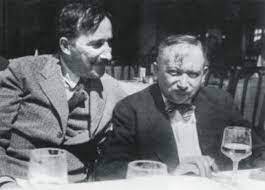
Biographer Pim conveys at length the friendship between Roth and fabled author Stefan Zweig, the latter in his day more celebrated but likewise alienated from his beloved Vienna, fleeing in time to London, then New York & eventually to Brazil, where having achieved safety, he committed suicide along with his wife.
Given an opportunity to flee Nazi oppression, a bewildered & often drunken Roth commented, "I want to die with Europe, here on a street in Paris, in front of this hotel."
Zweig commented that within Joseph Roth there were 3 personae:
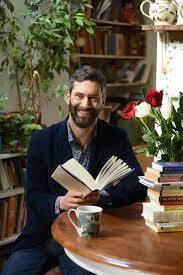
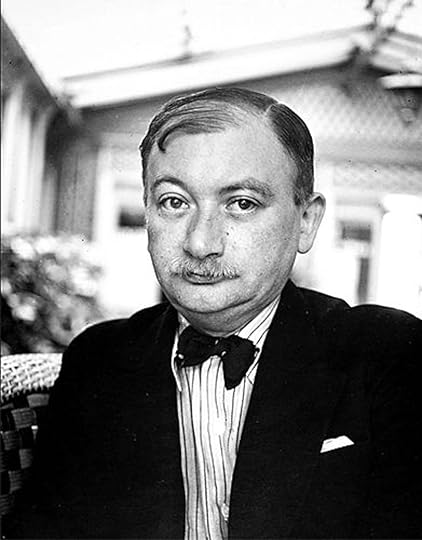
*Within my review are photo images of the biography author, Keiron Pim, that of Joseph Roth and lastly, one of Roth & Zweig together.
Born in 1894 in the largely Jewish town of Brody, in a region known as Galicia, an area that is presently within Ukraine but was then a far corner of the Austro-Hungarian Empire, Joseph Roth seemed never at home, nor did he ever have a home after leaving Brody.
A wanderer at heart, after fleeing his hometown in pursuit of higher education, Roth lived in various hotel lodgings in Berlin, Vienna & then his ultimate exile in Paris, before dying in 1939, just before the outbreak of WWII.
As he put it, "Nowhere, in no parish or town hall register is there a record of my name or date of birth. I have no home, aside from being at home in myself." In spite of persistent antisemitism, Roth valued the German language & the monarchy of Emperor Franz Joseph above all else, as both seemed to provide a kind of fixity to his peripatetic existence.
Becoming a world-class journalist in Europe, there is little left of his many newspaper articles but his novels, especially The Radetzky March, a book I've just enjoyed reading, have enjoyed a renaissance in readership around the world. This celebrated novel chronicles the demise of the once vast Austro-Hungarian Empire, profiling the emperor & some memorable characters, chief among them 3 generations of the Trotta Family.
As Keiron Pim phrases it in appraising Joseph Roth:Across his oeuvre he is a poet of the marginalized, the alienated & the dispossessed: of those who sought refuge after their homelands were destroyed, of those whose fractured lives reflected his own.Roth, almost before anyone else, foresaw the rise of fascism in Germany, especially after Hitler is tried for treason in 1924, soon emerging with an enhanced profile, becoming a figurehead for those who detested the Weimar Republic.
In a time when our social fabric is fraying once more, when displacement, migration & transience are again the norm & ugly reductive nationalism threaten to overpower liberal aspirations, Roth speaks to us with as much urgency & power as he did to those who read him during his brief lifetime. Like Roth himself, his characters strain for agency in a tumultuous world, like birds trying to fly through a gale.
According to the biographer, after leaving behind his childhood roots, Roth began to see himself as a courtly Viennese, with fancy walking sticks, aspiring to chivalry, kissing hands..."all part of his cultural exit from the lower class, Jewish world of the Brody ghetto." It seems that Roth endeavored always to keep this mask in place.
Biographer Pim conveys at length the friendship between Roth and fabled author Stefan Zweig, the latter in his day more celebrated but likewise alienated from his beloved Vienna, fleeing in time to London, then New York & eventually to Brazil, where having achieved safety, he committed suicide along with his wife.
Given an opportunity to flee Nazi oppression, a bewildered & often drunken Roth commented, "I want to die with Europe, here on a street in Paris, in front of this hotel."
Zweig commented that within Joseph Roth there were 3 personae:
a Russian, almost Karamazovian man of great passions but one with a drive to self-destruction; a Jewish person with a bright, uncannily alert, critical prudence; and a third character, the Austrian man, noble & chivalrous in every gesture, obliging, charming and musical. Only this unique mixture explains to me the uniqueness of his being, of his work.Endless Flight: The Life of Joseph Roth stands as an excellent, engaging & even uplifting profile of a rather sad figure in world literature. I recommend Keiron Pim's biography & also The Radetzky March, among other novels by Joseph Roth.
*Within my review are photo images of the biography author, Keiron Pim, that of Joseph Roth and lastly, one of Roth & Zweig together.
April 28, 2026
Niet alleen een biografie van Joseph Roth, maar ook van zijn tijd: het einde van het Habsburgse rijk, de eerste werldoorlog en de opmaat naar de tweede en dan vooral de Weimarrepubliek.
Roth was een Joodse schrijver, die zich ook aangetrokken voelde tot het catholicisme. Hij is geboren in Galicia in het Habsburgse rijk en weet daar prachtig over te schrijven. Begonnen als journalist en stukjesschrijver (we zouden hem nu columnist noemen) ontwikkelde hij zich tot een schrijver van romans. Getrouwd met een weinig zelfstandige vrouw en altijd in geldnood, leefde hij van de ene lening naar de andere. Daarbij een forse drinker, uiteindelijk als alcoholist gestorven. De schrijver, Pim, geeft een goed beeld van Roth en zijn tijd en weet de verchillende romans helder te duiden. Vooral de verhouding Roth/Zweig komt goed uit de verf. Een goede reden om weer eens de romans van Roth te herlezen.
Roth was een Joodse schrijver, die zich ook aangetrokken voelde tot het catholicisme. Hij is geboren in Galicia in het Habsburgse rijk en weet daar prachtig over te schrijven. Begonnen als journalist en stukjesschrijver (we zouden hem nu columnist noemen) ontwikkelde hij zich tot een schrijver van romans. Getrouwd met een weinig zelfstandige vrouw en altijd in geldnood, leefde hij van de ene lening naar de andere. Daarbij een forse drinker, uiteindelijk als alcoholist gestorven. De schrijver, Pim, geeft een goed beeld van Roth en zijn tijd en weet de verchillende romans helder te duiden. Vooral de verhouding Roth/Zweig komt goed uit de verf. Een goede reden om weer eens de romans van Roth te herlezen.
October 7, 2023
Ik hoorde en ontmoette de auteur bij een uitgebreide lezing over en uit dit magistraal werk.
Een krachttoer om over de persoon Joseph Roth, zijn omgeving en omzwervingen, zijn ideeën en werk een werk te schrijven.
Wetenschappelijke degelijkheid en informatieve literaire toelichting worden door Keiron Pim meesterlijk verwerkt.
Een boek dat wel wat tijd noopt om het gedetailleerd te lezen. Maar er zeer van genoten. Mijn drang naar het verder vervolledigen van wat ik nog te lezen heb van Roth is alleen maar toegenomen.
Een krachttoer om over de persoon Joseph Roth, zijn omgeving en omzwervingen, zijn ideeën en werk een werk te schrijven.
Wetenschappelijke degelijkheid en informatieve literaire toelichting worden door Keiron Pim meesterlijk verwerkt.
Een boek dat wel wat tijd noopt om het gedetailleerd te lezen. Maar er zeer van genoten. Mijn drang naar het verder vervolledigen van wat ik nog te lezen heb van Roth is alleen maar toegenomen.

May 8, 2023
Heel gedetailleerde beschrijving van het leven van de schrijver van Radetzkymars, het magistrale verhaal van Trota die de kroonprins redt op het slachtveld en van de ondergang van het Oostenrijkse keizerrijk. Het leven van Roth bestaat uit schrijven, drinken, aan geld proberen te raken om nog meer te kunnen drinken - in Wenen, Berlijn, Parijs, Oostende (!) en Amsterdam. Boeiend leven en boeiend boek!

March 27, 2024
num ano dedicado a tentar ler mais biografias, esta é uma verdadeira pérola. a vida e a obra do escritor são justapostas numa narrativa fluida, sem falhas. e o percurso de roth é mostrado como um retrato da condição humana, de tal forma que por vezes parece estarmos perante uma história da europa nos anos entre as duas guerras. magistral.

December 29, 2022
Prachtig boek, over een fascinerende figuur die als geen ander het MittelEuropa van de 19e en 20e eeuw wist te schetsen. Allerlei personen komen langs, uiteraard ook Zweig, maar vooral de tragiek, het geniale en irritante van Roth zelf

January 26, 2026
Terrific biography, simply terrific. Honest, well-researched, written with love and compassion. Perfect companion not only to Roth works, but a must-have for Zweig, Wittlin and few others.
And also to be taken a the companion to those terrible times...
Fascinating read!
And also to be taken a the companion to those terrible times...
Fascinating read!

December 7, 2022
Ik kan dit boek nog honderd keer lezen
January 8, 2023
A brilliant biography, meticulously researched.
February 1, 2023
Niet onaardige biografie. Beetje ploegen door zware klei. Biograaf is geen stilistisch wonder.

February 16, 2023
Prachtig portret van Joseph Roth, maar ook van de tijdgeest. Opmerkelijk hoezeer deze overeenkomsten heeft met de huidige.

September 17, 2023
Review to follow.

November 22, 2025
Brilliant and very well written tale of an interesting character. Felt similar to I Am Dynamite about Nietzsche but that’s my own fault for reading them close together.
March 21, 2026
This book is a beautiful gift! I enjoyed every minute of it.

January 18, 2026
Op de valreep nog een laatste boekentip van dit jaar: de fantastische biografie van Joseph Roth, 'Eindeloze vlucht', door Keiron Pim (vertaald door Lidwien Biekmann en Frank Lekens). Ik heb dit boek de afgelopen maanden in etappes gelezen. Wat een leven had deze schrijver en wat een eindeloze stroom artikelen en boeken schreef hij in moordtempo. Na zijn tragische dood als alcoholist was ik enigszins triest. Het boek was uit, de schrijver was dood, en nu? Gelukkig vond ik in de bieb nog een mooie aanvulling op dit levensverhaal: 'Zomer van de vriendschap' van Volker Weidermann (vertaald door Roth-expert Els Snick). Over die laatste mooie zomer in 1936 toen alles nog één keer goed voelde voor exilschrijvers als Joseph Roth, Stefan Zweig en Irmgard Keun, samen aan de Belgische kust. En nu wil ik komend jaar naar Oostende ...!
Read
January 25, 2023It could have been the the war in Ukraine or the decrepit state of Russia or steady decline of post Trump USA or persistent and tiresome banality of most of the punditocracy that led me to this biography of Joe Roth. Or maybe because like Mr. Pim , my grandparents were born in what was once the Austro-Hungarian empire. I had read the Radetzky March and a number of Roth's Novellas years ago and was tempted to read more Roth when I discovered a review of this biography in a recent NYRB. I'm glad I did. It is splendid and a bit unsettling Splendid in that we got to travel through most of northern ,eastern and Central Europe with Roth at a time when Austro-Hungary was unraveling. Unsettling in that, pari passu ,Pim details the decay of Roth' physical being. The end was unsettling .
Pim also describes virtually every one of Roth's books and provides vivid portraits of Roth's relatives and friends.We should all be grateful for Roth's vivid accounts of a disintegrating world. It somehow makes our current malaise a little more bearable
Pim also describes virtually every one of Roth's books and provides vivid portraits of Roth's relatives and friends.We should all be grateful for Roth's vivid accounts of a disintegrating world. It somehow makes our current malaise a little more bearable
June 7, 2023
A moving biography of a writer constantly on the move, unknowable even to himself. Pim writes quite beautifully and tells a tragic story without sentimentality but with compassion and intelligence
Displaying 1 - 28 of 28 reviews