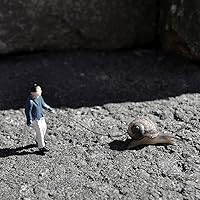
Why do some of nature’s marvels have to wait millions of years for their time in the sun?
Life innovates constantly, producing perfectly adapted species – but there’s a catch.
Many animals and plants eke out seemingly unremarkable lives. Passive, constrained, modest, threatened. Then, in a blink of evolutionary time, they flourish spectacularly. Once we start to look, these ‘sleeping beauties’ crop up everywhere. But why?
Looking at the book of life, from apex predators to keystone crops, and informed by his own cutting-edge experiments, renowned scientist Andreas Wagner demonstrates that innovations can come frequently and cheaply to nature, well before they are needed. We have found prehistoric bacteria that harbour the remarkable ability to fight off 21st-century antibiotics. And human history fits the pattern too, as life-changing technologies are invented only to be forgotten, languishing in the shadows before they finally take off.
In probing the mysteries of these sleeping beauties, Wagner reveals a crucial part of nature’s rich and strange tapestry.
Librarian Note: There is more than one author with this name on GR
Andreas Wagner is Professor in the Institute of Evolutionary Biology at the University of Zurich and an award-winning science writer. He received his PhD from Yale and has held research positions at the Institute for Advanced Study in Berlin and the Los Alamos National Laboratory in New Mexico. The author of more than 150 scientific papers published in leading journals including Nature and Science, this is his first book popularizing his new evolutionary systems research. He lives in Zurich.
2.5 stars rounded up. Such a strange and discombobulated book. I listened to the audiobook over several days and depending on which part I started playing after a listening break, I felt like this at times a popular science book, a business and innovations book, a technical science textbook, a philosophy book, a half-baked linguistics book, or several of those at once. I enjoyed the technical science components most (given that that's my background -- I think about duplicated genes a lot in my work as I have to infer a genetic mutation's interpretation often from homologous genes/proteins). However, I felt that other parts of the book might have been written by ChatGPT run amuck (such as the whole random and baseless discussion about how every English phrase is a metaphor (no), and how this is idea is so profound and interconnected with other fundamental truths of the universe (no).
I was never on the same thought wavelength so it always took me a couple pages into an idea to catch the drift. I read the book, I guess for the conclusion chapter? I really thought and wish the author spent more time on the philosophy of science aspect, but I loved the chapters on bacterial metabolism networks as roads. That research blew my mind that organisms can survive conditions they’ve never been exposed to or are actively poisonous. Finally, there are notes, references, and an index so I will keep this book just for that.
I reviewed this book for New Scientist, calling it "a fascinating argument, told in an engaging and clear style, that reminds us just how creative evolution can be".
Don't read most of this book. The interesting parts happen in chapters 8, 9, and 10. You could skip the rest because it has a tenuous connection with his last few chapters, which was the whole pitch for this book. The last few chapters are really cool and interesting and it talks about how invention human invention, human art, human production of new things sometimes never get a foothold in the greater collective and sometimes become sleeping beauties where they sit for an indeterminate amount of time until they are rediscovered.
Unfortunately, the largest part of this book was too dense and meandered over all sorts of connections that were tenuous at best. There's something to be said for short non-fiction works that break down difficult science for the popular reader. This did not fit the bill.
I think with a more development this idea would be inspiring and intriguing, but as of now, this is not a great read.
This book helped broaden my understanding about how innovations are able to and have flourish though out time. This has never been something I have thought of before nor was it anything that was throughly touched on by professors that I had in college. I personally found it very informative especially in the nature aspect for understanding how the world has come to be as it is today.
[haven't finished] Nature is full of surprises. We cracked the DNA helix, and later new bio-chem technology and faster computers enabled us to sequence genomes: human, chimp, fruit fly, e coli, ... We then sdiscovered genes are just a fraction of the story of our 'hard-wired' nature.
If you enjoy learning about nature at the gene level and are amazed how random changes (mutations) over a billion years. in the codes that determine evolution, you'll find the stories fascinating.
The reason for 4 stars is a quibble about the title and hence the theme running thru the entire book. Wagner says we should be astounded that organisms have 'abilities' that aren't needed until something changes in the environment perhaps 100 million years later. One example is resistance to bacteria organisms have never seen.
Given all the examples Wagner shows us of how evolution favors 'general' solutions to address threats to an organism's ability to reproduce and survive as a species, it seems only natural (!) that general solutions would work in future environments.
Sleeping Beauties by Andreas Wagner explores the idea that evolution often create new functionalities long before they find their purpose. Wagner illustrates this through vivid examples — from grass lying dormant for millions of years before reshaping ecosystems, to bacteria evolving genes that later become crucial for antibiotic resistance. What emerges is a compelling argument that life innovates by exploring possibilities first and discovering their value later. Wagner connects this evolutionary creativity to human innovation, showing how both nature and culture depend on generating new functions before we know what they’re for. The result is a thought‑provoking look at how novelty arises and why latent potential is essential to progress.
Idk why I didn't realize the book is going to be focused on evolution theories when I picked it up from the library, I wanted to read something biology related, and the tag line "the mystery of dormant innovations in nature" intrigued me. I read 40 pages to conclude that this is not something I'm interested to complete.
I was looking for a lot more info about specific animals and plants that go dormant or hibernate. The book also talks about certain technological innovations and art that gained popularity long after their creation. I found it an interesting audiobook background listen. Certain parts reminded me of Malcom Gladwell books.
This book is a good look at evolution in modern populations of plants and animals. The author discusses traits that seem hidden in genetic baggage that manifest it times that are completely unexpected.
Very interesting. The second part was a little easier for my non-science brain to digest, but I appreciate all the work that went into this book and its ideas.
It could have been shorter and more concise. The author strikes me as a quirky university professor who would be an engaging lecturer. It is unfortunate that he was allowed to run amok writing this slightly interesting but completely disjointed book.