

What do you think?

The Dress Diary: Secrets from a Victorian Woman's Wardrobe
*A NEW YORK TIMES BOOK REVIEW EDITOR'S CHOICE*
A revealing and unique portrait of Victorian life as told through the discovery of one woman's textile scrapbook.
In 1838, a young woman was given a diary on her wedding day. Collecting snippets of fabric from a range of garments - some her own, others donated by family and friends - she carefully annotated each one, creating a unique record of their lives. Her name was Mrs Anne Sykes.
Nearly two hundred years later, the diary fell into the hands of Kate Strasdin, a fashion historian and museum curator. Using her expertise, Strasdin spent the next six years unravelling the secrets contained within the album's pages, and the lives of the people within. Her findings are remarkable. Piece by piece, she charts Anne's journey from the mills of Lancashire to the port of Singapore before tracing her return to England in later years. Fragments of cloth become windows into Victorian pirates in Borneo, the complicated etiquette of mourning, poisonous dyes, the British Empire in full swing, rioting over working conditions and the terrible human cost of Britain's cotton industry. This is life writing that celebrates ordinary not the grandees of traditional written histories, but the hidden figures, the participants in everyday life. Through the evidence of waistcoats, ball gowns and mourning outfits, Strasdin lays bare the whole of human experience in the most intimate of the clothes we choose to wear.
A revealing and unique portrait of Victorian life as told through the discovery of one woman's textile scrapbook.
In 1838, a young woman was given a diary on her wedding day. Collecting snippets of fabric from a range of garments - some her own, others donated by family and friends - she carefully annotated each one, creating a unique record of their lives. Her name was Mrs Anne Sykes.
Nearly two hundred years later, the diary fell into the hands of Kate Strasdin, a fashion historian and museum curator. Using her expertise, Strasdin spent the next six years unravelling the secrets contained within the album's pages, and the lives of the people within. Her findings are remarkable. Piece by piece, she charts Anne's journey from the mills of Lancashire to the port of Singapore before tracing her return to England in later years. Fragments of cloth become windows into Victorian pirates in Borneo, the complicated etiquette of mourning, poisonous dyes, the British Empire in full swing, rioting over working conditions and the terrible human cost of Britain's cotton industry. This is life writing that celebrates ordinary not the grandees of traditional written histories, but the hidden figures, the participants in everyday life. Through the evidence of waistcoats, ball gowns and mourning outfits, Strasdin lays bare the whole of human experience in the most intimate of the clothes we choose to wear.
320 pages, Hardcover
First published February 23, 2023
Ratings & Reviews
Friends & Following
Create a free account to discover what your friends think of this book!
Community Reviews
Displaying 1 - 30 of 221 reviews
September 25, 2022
Kate Strasdin was given an unusual book a few years ago: a ledger-style book, a little larger than A4 and covered in magenta silk. It bulged with 2,000 pieces of fabric, pasted to the pages. Each swatch had a terse explanatory note in copperplate writing, often including a date. The earliest date was 1838. Kate had a very rare item indeed: a dress diary, in this case belonging to Anne Sykes (1816-1886).
In the C18th and C19th, clothes were made for the wearer; there were almost no “off-the-peg” dresses, suits, etc.. One would buy a length of material and make it (or have it made by someone else) into clothing, upholstery or curtains. Anne Sykes obtained small fragments of the leftover material from friends and relations for her book. A typical inscription might state “Adam’s vest new on his birthday July 12th 1843.”
Kate Strasdin has carried out a HUGE amount of research since she was given the book in 2016: much of it during lockdown, using online newspapers; websites such as Ancestry and others. We learn about Anne’s life from childhood, through her accompanying Adam on postings to Singapore and Shanghai; to retirement. The author has also researched everyone who features in the book: from Anne’s sister and nieces to neighbours in Singapore and other places where Anne stayed. Strasdin tells us about how the technological developments in the cotton industry impacted the workforce and the consumers; she tries to show us how daunting it was for a young newly married woman to set up home in a foreign country. The pieces of material are simply pegs upon which the author hangs her tales of nineteenth century life.
Any criticisms? I am highly impressed with the way that the author can take a bald fact such as the baptism record for Anne’s cook, Margaret Charnock, in Whitewell, and add colour to it: “Margaret’s childhood was a rural one, growing up in a small hamlet in the Ribble valley, a landscape of rolling hills, stone walls and farmland that existed just beyond the reach of the industrial sprawl to its south. The nearest town was Clitheroe…” However, there were a few occasions where I felt the prose was a little too purple.
The book ends with the author planting a primula at the foot of Anne’s grave in Bispham. Strasdin laments the fact that, although we have seen some of Anne’s clothes and furniture covering, we have no idea what she looked like; whether her marriage was happy; whether she was sad or glad to be childless; why friends no longer feature in the book. I’ll be honest, even reading Anne’s diary via Strasdin’s intermediation, I lamented the same lack of knowing the woman. I am a man in his mid-60s and I don’t know very much about fashion, but even I found the book fascinating. If I am ever in Bispham, I shall put flowers on Anne’s grave too; and thank her for leaving us this intimate record of her Victorian life.
#TheDressDiaryofMrsAnneSykes #NetGalley.
In the C18th and C19th, clothes were made for the wearer; there were almost no “off-the-peg” dresses, suits, etc.. One would buy a length of material and make it (or have it made by someone else) into clothing, upholstery or curtains. Anne Sykes obtained small fragments of the leftover material from friends and relations for her book. A typical inscription might state “Adam’s vest new on his birthday July 12th 1843.”
Kate Strasdin has carried out a HUGE amount of research since she was given the book in 2016: much of it during lockdown, using online newspapers; websites such as Ancestry and others. We learn about Anne’s life from childhood, through her accompanying Adam on postings to Singapore and Shanghai; to retirement. The author has also researched everyone who features in the book: from Anne’s sister and nieces to neighbours in Singapore and other places where Anne stayed. Strasdin tells us about how the technological developments in the cotton industry impacted the workforce and the consumers; she tries to show us how daunting it was for a young newly married woman to set up home in a foreign country. The pieces of material are simply pegs upon which the author hangs her tales of nineteenth century life.
Any criticisms? I am highly impressed with the way that the author can take a bald fact such as the baptism record for Anne’s cook, Margaret Charnock, in Whitewell, and add colour to it: “Margaret’s childhood was a rural one, growing up in a small hamlet in the Ribble valley, a landscape of rolling hills, stone walls and farmland that existed just beyond the reach of the industrial sprawl to its south. The nearest town was Clitheroe…” However, there were a few occasions where I felt the prose was a little too purple.
The book ends with the author planting a primula at the foot of Anne’s grave in Bispham. Strasdin laments the fact that, although we have seen some of Anne’s clothes and furniture covering, we have no idea what she looked like; whether her marriage was happy; whether she was sad or glad to be childless; why friends no longer feature in the book. I’ll be honest, even reading Anne’s diary via Strasdin’s intermediation, I lamented the same lack of knowing the woman. I am a man in his mid-60s and I don’t know very much about fashion, but even I found the book fascinating. If I am ever in Bispham, I shall put flowers on Anne’s grave too; and thank her for leaving us this intimate record of her Victorian life.
#TheDressDiaryofMrsAnneSykes #NetGalley.
August 19, 2023
Although very well written, this was a huge missed opportunity in that the author didn’t include many images of the actual book. It would have added so much more to the experience.
February 23, 2023
So, said my husband, a book about a rich lady showing off her wealth, by pasting scraps of material into a diary, is anyone going to be interested in that?!! How wrong can a person be? It’s a wonderful voyage of exploration into the manufacturing and design of fashion, we are taken through the history of clothing, materials, muslin, cotton, wools and silks, how patterns came into wider usage, Batik prints, screen printing and wood block prints and later woven designs as technology advanced.
Years before ready to wear became the norm, most richer ladies would plan their wardrobe well in advance according to the seasonal calendar of nature, heat meant cool cotton or muslin, and woollen garments for the winter, and the social events of Balls and exhibitions, various reading events and charity functions. Changing clothes two or three times a day, creates much work for a dressmaker, designs and fittings were planned well in advance, a good dressmaker was privy to delicate information about the body of her client and confidences about the state of a marriage and pregnancy for example, made her indispensable. Bolts of cloth were taken to a dressmaker, a pattern was decided upon and therefore there were cutoffs to be pasted into a dress diary.
Anne Burton was the daughter of a Mill owner in Clitheroe in Lancashire, she would have been influenced by the latest designs of material straight from the loom. She married Adam Sykes in 1838. His father designed patterns for printed cloth, a very fortuitous partnership!!
You cannot mention cotton without being reminded of Slavery in Southern states of America. There is much social history explained in these pages, the ending of slavery here was much earlier than in America, the quest to find materials that didn’t involve slave labour, the home grown is best movement, the banning of Calico cloth from India into the UK, the development of acts to prevent child labour and enlightened Mill owners , the development of machines that eased the work burden, but ironically made hundreds of workers unemployed, really, this is a in-depth look at the young fashion industry, a social history of manufacturing of materials and a fantastic read as well.
The section on how to care for clothes brought back memories of wash days at both my Grandmothers homes, mangles, boilers, a bar of green soap that you cut off slivers to add to the boiling water, dolly tubs to agitate said wash, Borax, bleach and blue bags to add whiteness to the laundry. The washing was a pain, the drying was a real chore as well. Make and make do was evidently practiced in both the 1950’s and in Clitheroe late 1800’s, and now is fashionable and practical again.
I loved this book!! I have already planned to buy a copy for a dressmaking friend for her birthday later this year, I can’t wait to see all the fashion plates in colour something my reading device wouldn’t let me do. I think this would be a very welcome addition to any centres that teach Arts and Crafts, and for Social historians.
My thanks to Netgalley and Random House UK/ Vintage publishers for my advance digital copy given in exchange for my honest review. It has been an absolute delight and pleasure to read this novel.
I will leave reviews to Goodreads and Amazon UK.
Years before ready to wear became the norm, most richer ladies would plan their wardrobe well in advance according to the seasonal calendar of nature, heat meant cool cotton or muslin, and woollen garments for the winter, and the social events of Balls and exhibitions, various reading events and charity functions. Changing clothes two or three times a day, creates much work for a dressmaker, designs and fittings were planned well in advance, a good dressmaker was privy to delicate information about the body of her client and confidences about the state of a marriage and pregnancy for example, made her indispensable. Bolts of cloth were taken to a dressmaker, a pattern was decided upon and therefore there were cutoffs to be pasted into a dress diary.
Anne Burton was the daughter of a Mill owner in Clitheroe in Lancashire, she would have been influenced by the latest designs of material straight from the loom. She married Adam Sykes in 1838. His father designed patterns for printed cloth, a very fortuitous partnership!!
You cannot mention cotton without being reminded of Slavery in Southern states of America. There is much social history explained in these pages, the ending of slavery here was much earlier than in America, the quest to find materials that didn’t involve slave labour, the home grown is best movement, the banning of Calico cloth from India into the UK, the development of acts to prevent child labour and enlightened Mill owners , the development of machines that eased the work burden, but ironically made hundreds of workers unemployed, really, this is a in-depth look at the young fashion industry, a social history of manufacturing of materials and a fantastic read as well.
The section on how to care for clothes brought back memories of wash days at both my Grandmothers homes, mangles, boilers, a bar of green soap that you cut off slivers to add to the boiling water, dolly tubs to agitate said wash, Borax, bleach and blue bags to add whiteness to the laundry. The washing was a pain, the drying was a real chore as well. Make and make do was evidently practiced in both the 1950’s and in Clitheroe late 1800’s, and now is fashionable and practical again.
I loved this book!! I have already planned to buy a copy for a dressmaking friend for her birthday later this year, I can’t wait to see all the fashion plates in colour something my reading device wouldn’t let me do. I think this would be a very welcome addition to any centres that teach Arts and Crafts, and for Social historians.
My thanks to Netgalley and Random House UK/ Vintage publishers for my advance digital copy given in exchange for my honest review. It has been an absolute delight and pleasure to read this novel.
I will leave reviews to Goodreads and Amazon UK.

May 15, 2024
The gift of a ledger filled with cloth samples with notations of names and sometimes events sent Kate Strasdin on a journey to discover who had collected them and who were the people who had worn the clothing. The Dress Diary, as she calls it, was created by Anne Sykes. It begins in 1838 with a sample of lace she wore on her wedding day, and a piece of satin from her husband's wedding vest.
Scouring the achieves, Strasdin pieces Anne's history from Lancashire, England to Singapore. Anne's family was in the textile business, and her husband a merchant buying textiles. The fabric samples are gateways to telling the stories of expats abroad, pirates and poisonous dyes, society galas and the life of a lowly cook.
It's a wonderful journey that I enjoyed on so many levels, as history, as fashion history, and as a genological mystery solved.
Scouring the achieves, Strasdin pieces Anne's history from Lancashire, England to Singapore. Anne's family was in the textile business, and her husband a merchant buying textiles. The fabric samples are gateways to telling the stories of expats abroad, pirates and poisonous dyes, society galas and the life of a lowly cook.
It's a wonderful journey that I enjoyed on so many levels, as history, as fashion history, and as a genological mystery solved.
September 7, 2023
There were some interesting facts, but I felt the book was making too much of too little material. Perhaps hearing this on audio was not the right way to read it. I can only hope that in print, the book would have photos of the fabric swatches in color.

January 15, 2024
The thrill of research lies in the small and often unrecognised victories that emerge from hours of trawling through documents - newspaper accounts, passenger manifests and census records, the silent vessels of information that harbour a wealth of detail.
The Dress Diary of Mrs. Anne Sykes (also published as 'The Dress Diary: Secrets from a Victorian Woman's wardrobe') is a historical researcher's dream: a deep-dive into a world detailed only in scraps of fabric from a record journal kept over several decades that often leads down fascinating rabbit holes related to everything from fancy dress balls to cotton production to 19th century domestic servant's clothing.
More often than not, we only learn the creator of the dress diary--Anne Sykes--in tantalizing fragments. A party was held in this year--but we don't know why Anne went or how she felt about it. A woman appears in as a constant in Anne's dress diary for years and then never again, once she moves away. Anne does not record any fabrics from 2 years spent in Shanghai, but we don't know why. And so on.
As someone who relishes historical rabbit holes, I found the diversions Strasdin takes for every topic to be mostly interesting and well-worth the read. However, I can recognize how some readers might feel frustrated, as the book is more often than not about topics other than Anne Sykes herself, and it might feel tiresome. Where the author could not give us Anne, the book seeks to flesh out the carefully cut scraps of fabric by exploring the context in which they existed.
For instance, a vibrant scrap of fabric leads to a chapter about the development of new (and sometimes dangerous) dyes. A scrap of fabric from the Sykes' cook leads to a chapter on what domestic servants might wear. And so on.
One element I wish was a little better developed is the inclusion of copies of some of the dress diary's pages. Very often, I found myself unable to determine exactly which fabrics were being discussed while I was reading the book. I would have liked to have known which fabrics were reproduced in the color pages. I wish there had been a printed description next to each fabric or Figure numbers that could be referenced by the author in the book itself.
Overall, a fascinating rabbit hole of a read, I'm glad to have finally been able to pick it up from the library.
The Dress Diary of Mrs. Anne Sykes (also published as 'The Dress Diary: Secrets from a Victorian Woman's wardrobe') is a historical researcher's dream: a deep-dive into a world detailed only in scraps of fabric from a record journal kept over several decades that often leads down fascinating rabbit holes related to everything from fancy dress balls to cotton production to 19th century domestic servant's clothing.
More often than not, we only learn the creator of the dress diary--Anne Sykes--in tantalizing fragments. A party was held in this year--but we don't know why Anne went or how she felt about it. A woman appears in as a constant in Anne's dress diary for years and then never again, once she moves away. Anne does not record any fabrics from 2 years spent in Shanghai, but we don't know why. And so on.
As someone who relishes historical rabbit holes, I found the diversions Strasdin takes for every topic to be mostly interesting and well-worth the read. However, I can recognize how some readers might feel frustrated, as the book is more often than not about topics other than Anne Sykes herself, and it might feel tiresome. Where the author could not give us Anne, the book seeks to flesh out the carefully cut scraps of fabric by exploring the context in which they existed.
For instance, a vibrant scrap of fabric leads to a chapter about the development of new (and sometimes dangerous) dyes. A scrap of fabric from the Sykes' cook leads to a chapter on what domestic servants might wear. And so on.
One element I wish was a little better developed is the inclusion of copies of some of the dress diary's pages. Very often, I found myself unable to determine exactly which fabrics were being discussed while I was reading the book. I would have liked to have known which fabrics were reproduced in the color pages. I wish there had been a printed description next to each fabric or Figure numbers that could be referenced by the author in the book itself.
Overall, a fascinating rabbit hole of a read, I'm glad to have finally been able to pick it up from the library.

January 12, 2023
It's taken me a while to read this book for various reasons. It's non-fiction, so I've read fiction books whilst I've been reading this book. I don't think it's one you can read from beginning to end at one go, but rather a book to dip in and out of when the fancy takes. However, I did read it in order of chapters, which I think you need to do to get the full picture and to keep up with the timeline.
I found it absolutely fascinating, both the information on so many aspects of Victorian social history, in particular clothing and fashion, but also the author's patience and investigative enthusiasm. The diary is basically made up of swatches of fabric that Anne Sykes put together over quite a number of years. There is practically no text in the diary apart from very short captions and the mention of names, sometimes in relation to whom the fabric belonged to and what item of clothing it was taken from. And yet despite this scant information and absolutely no knowledge of who Anne Sykes was when she first set out, the author has managed to glean enough information from public records to be able to trace the movements of Anne Sykes and her husband over most of her adult lifetime.
One of the other reasons why it has taken me so long to read the book is because apart from Sykes's time in Singapore and then China, her home and her birthplace were in Lancashire, which is where I live. The first part of the book covers the birth of the cotton industry which brought about the start of the Industrial revolution. I live in Oldham where at the height of the cotton industry there were around 400 cotton mills built here. Both my maternal grandparents worked in cotton mills which made this book all the more interesting.
There is just so much information gathered together in one place. The history of cotton, calico, silk, the development of dyeing techniques, as well as descriptions of trading and the politics of the time. I have spent a lot of time myself looking up the beginnings of retail as we know it today. The development of off the peg clothes as opposed to having everything made. How shops such as Kendals in Manchester first began. I didn't know where the term 'mad as a hatter' came from, but I do now.
The book is an absolute treasure trove for anyone interested in the development of fabrics, Victorian social history, and the ultimate demise of cotton and textile manufacturing in the UK. I loved the ending of the book, where the author finds out where Anne Sykes and her husband are buried and visits, leaving a little posy by their grave. A brilliant book, which I highly recommend.
I found it absolutely fascinating, both the information on so many aspects of Victorian social history, in particular clothing and fashion, but also the author's patience and investigative enthusiasm. The diary is basically made up of swatches of fabric that Anne Sykes put together over quite a number of years. There is practically no text in the diary apart from very short captions and the mention of names, sometimes in relation to whom the fabric belonged to and what item of clothing it was taken from. And yet despite this scant information and absolutely no knowledge of who Anne Sykes was when she first set out, the author has managed to glean enough information from public records to be able to trace the movements of Anne Sykes and her husband over most of her adult lifetime.
One of the other reasons why it has taken me so long to read the book is because apart from Sykes's time in Singapore and then China, her home and her birthplace were in Lancashire, which is where I live. The first part of the book covers the birth of the cotton industry which brought about the start of the Industrial revolution. I live in Oldham where at the height of the cotton industry there were around 400 cotton mills built here. Both my maternal grandparents worked in cotton mills which made this book all the more interesting.
There is just so much information gathered together in one place. The history of cotton, calico, silk, the development of dyeing techniques, as well as descriptions of trading and the politics of the time. I have spent a lot of time myself looking up the beginnings of retail as we know it today. The development of off the peg clothes as opposed to having everything made. How shops such as Kendals in Manchester first began. I didn't know where the term 'mad as a hatter' came from, but I do now.
The book is an absolute treasure trove for anyone interested in the development of fabrics, Victorian social history, and the ultimate demise of cotton and textile manufacturing in the UK. I loved the ending of the book, where the author finds out where Anne Sykes and her husband are buried and visits, leaving a little posy by their grave. A brilliant book, which I highly recommend.

April 10, 2024
This really ought to have been more appealing to me than it was - a lot of the chapters dragged, and it indulged in a lot of extraneous information.

July 7, 2026
This is a delightful book about a found diary in the form of scraps of material. The author of the book, a fashion and fabric historian delves into the origin of this scrapbook of fabric and discovers names and places about the owner of the book and owners of the scraps of material. She places this information in the social context of the time and delivers a conjectured history of the fabric scraps. It's an interesting framework for presenting a history of fashion and dress.
March 29, 2024
For a book about historic textiles, I expected more...textiles.
Less feminism and random theorizing about the motivations of a person living in the Victorian era. More facts and fabric, less shoddy fiction.
Also, for a book about the fundamentally visual properties of fabric, there was a shocking lack of pictures.
Less feminism and random theorizing about the motivations of a person living in the Victorian era. More facts and fabric, less shoddy fiction.
Also, for a book about the fundamentally visual properties of fabric, there was a shocking lack of pictures.

April 17, 2025
I really enjoyed this book.
While reading this, I have interrupted my partner to talk about:
1) The Free Labour Cotton Depot (which he pointed out had a somewhat potentially misleading name)
2) Similarities between factors which resulted in the industrial revolution back then and technology innovation today
3) The Calico Act and economic protectionism back then and now
4) How ethical consumerism is not a new thing
5) Victoria and Albert (to be fair, I do this even when not reading this book)
6) How various textile industry related machinery actually works
7) Victorian labour law
8) Removable collars and cuffs originally having a purpose
9)The popularity of leopard print
And then there are all the things that I'd love to read more about but which I decided not to share with my poor partner who has no interest in any of this, really:
1) dress shields
2) laundry identification tags
3) the development of dry cleaning: the garments used to be deconstructed before being chemically cleaned and put back together again...!
4) Darning practice exercises...
5) Victorian mourning protocol
I can't help but think that this book has been grievously misrepresented by its title and cover. There is so much more to this than just reading about dresses!
This book would have benefitted from the illustrations being presented alongside the relevant part of the text, and blown up to a level where the reader would be able to read the handwritten annotations for oneself. I kept hunting through all the samples at everything new fabric reference, just in case I might be able to identify it and see it for myself.
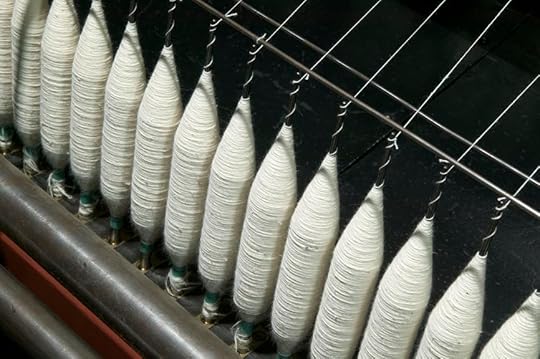
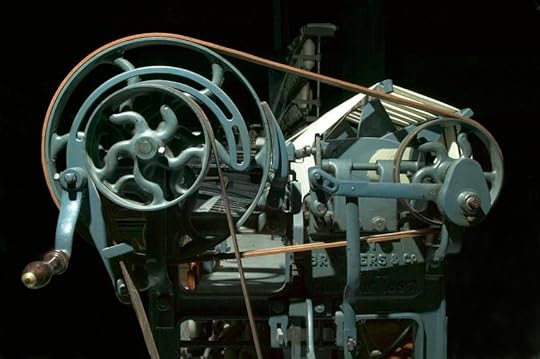
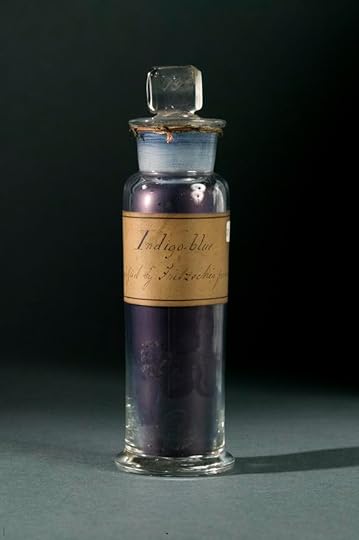
This book ought to be read with breaks to browse The Science Museum's textile industry image archive:
While reading this, I have interrupted my partner to talk about:
1) The Free Labour Cotton Depot (which he pointed out had a somewhat potentially misleading name)
2) Similarities between factors which resulted in the industrial revolution back then and technology innovation today
3) The Calico Act and economic protectionism back then and now
4) How ethical consumerism is not a new thing
5) Victoria and Albert (to be fair, I do this even when not reading this book)
6) How various textile industry related machinery actually works
7) Victorian labour law
8) Removable collars and cuffs originally having a purpose
9)The popularity of leopard print
And then there are all the things that I'd love to read more about but which I decided not to share with my poor partner who has no interest in any of this, really:
1) dress shields
2) laundry identification tags
3) the development of dry cleaning: the garments used to be deconstructed before being chemically cleaned and put back together again...!
4) Darning practice exercises...
5) Victorian mourning protocol
I can't help but think that this book has been grievously misrepresented by its title and cover. There is so much more to this than just reading about dresses!
This book would have benefitted from the illustrations being presented alongside the relevant part of the text, and blown up to a level where the reader would be able to read the handwritten annotations for oneself. I kept hunting through all the samples at everything new fabric reference, just in case I might be able to identify it and see it for myself.
This book ought to be read with breaks to browse The Science Museum's textile industry image archive:

July 26, 2024
Such a fun read! It got me thinking more about the clothes that I wear, and what they say about me and the cultural context in which I live. I would love to see the scrapbook in person.

June 16, 2023
I've been waiting for this book to come out ever since I learned about it from an interview with the author on the Dress: Fancy podcast.
Basically, the author was given an old scrapbook of textile swatches, kept and collected by a random ordinary merchant-class British woman throughout her life, that was ultimately found in a stall in Camden Market. I suppose it's actually a book about material culture and what this artifact of a 19th century life can illuminate and obfuscate.
I gather from the introduction that these books were perhaps not as commonly kept as a written diary but were at least enough of a phenomenon that other clothing textile scrapbooks exist in the collections of other museums. It's wild to think that even if these things were frequently assembled by lots and lots of women, they would have probably been something discarded into the trash by heirs after the deaths of their makers, as not worth keeping. And yet it's clear from this book analyzing the contents of just one extant swatch diary, they indicate so much about the lives of people otherwise invisible in the history as recorded by Western colonialism.
Author Kate Strasdin uses the artifact of the dress diary to explore numerous aspects of the 19th century textile industry, from the Lancashine cotton mills so closely intertwined with Anne's family to the travesty of the global cotton trade built on the backs of the enslaved. She explores innovations in textile weaving, manufacturing, and printing, as well as the artisanal trades such technologies made obsolete. She traces the path of lacemaking from the delicate cottage industry of bobbin lace to the mechanization of machine-lace.
Chapters on early 19th-century dressmakers, tailors and milliners in Anne Sykes' orbit make it clear that garment workers have always been (and continue to be) highly skilled, overworked, underpaid, and mistreated by both their clients and employers. The circumstances are different but I found myself continually reminded of garment-workers' struggles that would arise in the intervening time, from the Triangle Shirtwaist Factory fire to the 21st-century injustices in the sweatshops of Indonesia and Bangladesh.
There's a chapter on Victorian mourning customs (as there are several swatches in the diary captioned for the mourning attire of various people Anne Sykes knew), with fascinating information about how the sartorial expectations of "proper" mourning were codified, marketed, and observed by people at varying levels depending on gender, class, geographic location, etc.
There's also a chapter on fancy-dress balls and Victorian masquerade costume, because there's a swatch from a Dolly Varden costume (according to its caption) that her friend wore to a costume party just after Dickens' Barnaby Rudge came out, when the character of Dolly Varden would have been popularly known. And the author even makes the comparison to contemporary cosplay culture in that section! So fascinating.
A whole chapter focuses on a single, singular swatch from the dress of the Sykes' longtime cook, Margaret Charnock. Strasdin discusses the servant class and the rarity of surviving examples of their clothing, due to the physical labor of their work exacting wear and tear on the garments and the economy of the people who wore them reusing the textiles many times over, most ending in being cut up for rags or wadding. This fabric scrap in Anne's dress diary is an exceptionally rare glimpse into one garment belonging to one working class woman nearly two centuries ago.
As a safety representative and dyeroom supervisor, the chapter I found most engrossing concerns the way the development of aniline dyes in the middle of the 19th century is reflected among the colors of the textile swatches in the artifact. The author explores the intersection between the textile industry, fashion trends, and the developing science of chemistry. and the related topics of sustainability and safe work practices. The touchstone swatches for all of these topics belonged to a flamboyant middle-aged acquaintance, the aptly-named Bridgetanne Peacock, who appears through several years worth of the collection.
This book first came out in the UK under the title of The Dress Diary of Anne Sykes, and was released to the US as The Dress Diary: Stories from a Victorian Woman's Wardrobe. It includes sixteen full-color pages as an insert in the middle of the book, photo reproductions of pages/swatches in the original artifact.
A QR code at the end of the book leads to a webpage containing full-color scans of 16 more pages of textile swatches including some mysteries, people the author was unable to uncover in the historical record at the time of the book's printing.
I wholeheartedly recommend this book to fashion historians, garment makers, sewing history enthusiasts, Mancunians/Liverpudlians and other residents of the north of England, material culture scholars, those researching the history of textiles and the globalization of fashion, and anyone for whom any part of this narrative piques an interest. Well-researched and utterly absorbing.
Basically, the author was given an old scrapbook of textile swatches, kept and collected by a random ordinary merchant-class British woman throughout her life, that was ultimately found in a stall in Camden Market. I suppose it's actually a book about material culture and what this artifact of a 19th century life can illuminate and obfuscate.
I gather from the introduction that these books were perhaps not as commonly kept as a written diary but were at least enough of a phenomenon that other clothing textile scrapbooks exist in the collections of other museums. It's wild to think that even if these things were frequently assembled by lots and lots of women, they would have probably been something discarded into the trash by heirs after the deaths of their makers, as not worth keeping. And yet it's clear from this book analyzing the contents of just one extant swatch diary, they indicate so much about the lives of people otherwise invisible in the history as recorded by Western colonialism.
Author Kate Strasdin uses the artifact of the dress diary to explore numerous aspects of the 19th century textile industry, from the Lancashine cotton mills so closely intertwined with Anne's family to the travesty of the global cotton trade built on the backs of the enslaved. She explores innovations in textile weaving, manufacturing, and printing, as well as the artisanal trades such technologies made obsolete. She traces the path of lacemaking from the delicate cottage industry of bobbin lace to the mechanization of machine-lace.
Chapters on early 19th-century dressmakers, tailors and milliners in Anne Sykes' orbit make it clear that garment workers have always been (and continue to be) highly skilled, overworked, underpaid, and mistreated by both their clients and employers. The circumstances are different but I found myself continually reminded of garment-workers' struggles that would arise in the intervening time, from the Triangle Shirtwaist Factory fire to the 21st-century injustices in the sweatshops of Indonesia and Bangladesh.
There's a chapter on Victorian mourning customs (as there are several swatches in the diary captioned for the mourning attire of various people Anne Sykes knew), with fascinating information about how the sartorial expectations of "proper" mourning were codified, marketed, and observed by people at varying levels depending on gender, class, geographic location, etc.
There's also a chapter on fancy-dress balls and Victorian masquerade costume, because there's a swatch from a Dolly Varden costume (according to its caption) that her friend wore to a costume party just after Dickens' Barnaby Rudge came out, when the character of Dolly Varden would have been popularly known. And the author even makes the comparison to contemporary cosplay culture in that section! So fascinating.
A whole chapter focuses on a single, singular swatch from the dress of the Sykes' longtime cook, Margaret Charnock. Strasdin discusses the servant class and the rarity of surviving examples of their clothing, due to the physical labor of their work exacting wear and tear on the garments and the economy of the people who wore them reusing the textiles many times over, most ending in being cut up for rags or wadding. This fabric scrap in Anne's dress diary is an exceptionally rare glimpse into one garment belonging to one working class woman nearly two centuries ago.
As a safety representative and dyeroom supervisor, the chapter I found most engrossing concerns the way the development of aniline dyes in the middle of the 19th century is reflected among the colors of the textile swatches in the artifact. The author explores the intersection between the textile industry, fashion trends, and the developing science of chemistry. and the related topics of sustainability and safe work practices. The touchstone swatches for all of these topics belonged to a flamboyant middle-aged acquaintance, the aptly-named Bridgetanne Peacock, who appears through several years worth of the collection.
This book first came out in the UK under the title of The Dress Diary of Anne Sykes, and was released to the US as The Dress Diary: Stories from a Victorian Woman's Wardrobe. It includes sixteen full-color pages as an insert in the middle of the book, photo reproductions of pages/swatches in the original artifact.
A QR code at the end of the book leads to a webpage containing full-color scans of 16 more pages of textile swatches including some mysteries, people the author was unable to uncover in the historical record at the time of the book's printing.
I wholeheartedly recommend this book to fashion historians, garment makers, sewing history enthusiasts, Mancunians/Liverpudlians and other residents of the north of England, material culture scholars, those researching the history of textiles and the globalization of fashion, and anyone for whom any part of this narrative piques an interest. Well-researched and utterly absorbing.

August 15, 2025
Kudos to Kate Strasdin for her exemplary work in unpicking the secrets of the diary with minimal written information and during a lockdown. The dress diary of the title belonged to one woman but ironically she is the most shadowy figure in this whole book. Getting to piece together her life occurred through the fabric samples she took from other, more visible women she interacted with. It's a strange, fascinating history not just of the owner of the book but of the Industrial Revolution and the textile industry in the 1800's.

June 14, 2023
A fascinating look at the social history of Victorian times told through a collection of fabric scraps collected by Anne Sykes.
I enjoyed this mix of family and textile history and the ways in which the author tracked down information from the scant details in the diary. The colour plates possibly don't do justice to the original fabrics but a QR code at the end of the book allows access to many more.
I enjoyed this mix of family and textile history and the ways in which the author tracked down information from the scant details in the diary. The colour plates possibly don't do justice to the original fabrics but a QR code at the end of the book allows access to many more.

March 19, 2025
I don’t recall how I stumbled across this, but I definitely liked the idea more than the execution.
The Dress Diary is well-researched and clearly a work created out of a specific passion. I would have considered myself the ideal audience for this sort of book - a historical analysis built around fashion and textiles. I love these types of very specific histories.
Yet this just sort of rolled right by without grabbing my attention. It had insightful moments, but it skimmed over opportunities for heartier historical analysis, instead dipping into conjecture.
A pet peeve of mine is when a piece that really should be an article in some kind of journal tries too hard to work as a book. This can happen through unnecessary added length or lots of suggested possibilities from the writer to fill space. This one suffered from the latter.
I get this was mostly compiled during the pandemic so resources and access may have been limited, but none of the strengths of this work were capitalized on properly.
This gets an extra star just for the quality of dedicated research done, but it really was not enthralling.
Finding out it was originally titled The Dress Diary of Mrs Anne Sykes makes far more sense, because that’s really what this is. I presume the publisher renamed it to garner attention, but that was a major misnomer. I would’ve preferred the honest title since at least then I would’ve gone into this expecting something different.
The Dress Diary is well-researched and clearly a work created out of a specific passion. I would have considered myself the ideal audience for this sort of book - a historical analysis built around fashion and textiles. I love these types of very specific histories.
Yet this just sort of rolled right by without grabbing my attention. It had insightful moments, but it skimmed over opportunities for heartier historical analysis, instead dipping into conjecture.
A pet peeve of mine is when a piece that really should be an article in some kind of journal tries too hard to work as a book. This can happen through unnecessary added length or lots of suggested possibilities from the writer to fill space. This one suffered from the latter.
I get this was mostly compiled during the pandemic so resources and access may have been limited, but none of the strengths of this work were capitalized on properly.
This gets an extra star just for the quality of dedicated research done, but it really was not enthralling.
Finding out it was originally titled The Dress Diary of Mrs Anne Sykes makes far more sense, because that’s really what this is. I presume the publisher renamed it to garner attention, but that was a major misnomer. I would’ve preferred the honest title since at least then I would’ve gone into this expecting something different.

January 25, 2025
L'autrice riceve in dono un diario composto di ritagli di tessuti, attraverso una ricerca storica riesce a rintracciare la creatrice del diario. Attraverso questi scampoli e i registri di viaggi, nascite matrimoni, molti dei nomi che si trovano nel diario vengono ricostruiti. Di molti di loro, invece, non rimane che quel pezzetto di tessuto. Attraverso questa ricostruzione l'autrice ricostruisce anche la storia del tessuto, delle tecniche di tessitura, di colorazione, di produzione e vendita dei capi di abbigliamento lungo tutto l'800, periodo di importanti rivoluzioni e cambiamenti.
Il testo per quanto destinato al grande pubblico non sempre riesce a mantenersi "romanzesco", ma è sicuramente una lettura interessante.
Il testo per quanto destinato al grande pubblico non sempre riesce a mantenersi "romanzesco", ma è sicuramente una lettura interessante.

February 7, 2023
The Dress Diary: Secrets From a Victorian Woman’s Wardrobe by Dr. Kate Strasdin is a wonderful nonfiction and history book that gives us a never before experience into the lives of Victorian women through one woman’s unique journalistic account.
This is a fascinating and beyond amazing look into the life, culture, society, and everyday adventures of a woman in the Victorian era. Through this journey, through this seemingly “normal” scrapbook of materials, swatches, and samples, we learn so much more of the woman behind the artistry, Anne Sykes, and the lives of not only herself and her family, but her friends, acquaintances, neighbors, and society as a whole. A whole world pf women, their respective voices and lives are brought to life, a multitude of windows that allow us to gaze into the hopes, dreams, loves, losses, and souls of so many women that had been looked over and forgotten.
It was just beyond fabulous to learn about such a unique journal and book, and to have the privilege to have the talented author draw us this picture through her writings. I greatly enjoyed and appreciate this experience.
5/5 stars
Thank you EW and Pegasus Books/ Simon & Schuster for this wonderful arc and in return I am submitting my unbiased and voluntary review and opinion.
I am posting this review to my GR and Bookbub accounts immediately and will post it to my Amazon, Instagram, and B&N accounts upon publication on 6/6/23.
This is a fascinating and beyond amazing look into the life, culture, society, and everyday adventures of a woman in the Victorian era. Through this journey, through this seemingly “normal” scrapbook of materials, swatches, and samples, we learn so much more of the woman behind the artistry, Anne Sykes, and the lives of not only herself and her family, but her friends, acquaintances, neighbors, and society as a whole. A whole world pf women, their respective voices and lives are brought to life, a multitude of windows that allow us to gaze into the hopes, dreams, loves, losses, and souls of so many women that had been looked over and forgotten.
It was just beyond fabulous to learn about such a unique journal and book, and to have the privilege to have the talented author draw us this picture through her writings. I greatly enjoyed and appreciate this experience.
5/5 stars
Thank you EW and Pegasus Books/ Simon & Schuster for this wonderful arc and in return I am submitting my unbiased and voluntary review and opinion.
I am posting this review to my GR and Bookbub accounts immediately and will post it to my Amazon, Instagram, and B&N accounts upon publication on 6/6/23.
July 10, 2024
Do not get the audiobook. I listened to the first few chapters then drove to Waterstones to buy a physical copy as there are lots of pictures in it. The book was a charming social sartorial history and I enjoyed it a lot. Some parts were a bit overly romantic and gushy, but given the context of the books creation (pandemic lockdown) I think that’s ok. In an ideal world this book would actually be a short television series as there is sooooo much imagery to contend with I’m not sure a book is the ideal medium for this story. I would love to attend a lecture on it with lots of slides.
The QR code link in the back to the extra material is bust though and I can’t find it online :(
The QR code link in the back to the extra material is bust though and I can’t find it online :(

Did Not Finish
January 18, 2024DNFing a couple chapters in... I'm not feeling it. I enjoy fashion history but definitely prefer visual documentaries over non-fiction. I just couldn't get into this.

June 4, 2026
Fascinating, but also a bit dry. I mean, I am loving learning about one focused piece of history - in the context of so much else that was going on around the world at the time. Iow, Strasdin needed to tell us more than just the diary/log to make this a full-length book, which is great. Learning about Anne Sykes's years in Singapore has been particularly enlightening, to me, about global trade, colonization, etc.
At the same time, I can only read a chapter or so at a time without a break. I think maybe I mostly need to learn how to better read history as I've never before been interested in the genre and so have little experience. Other readers might find it particularly engaging.
The list of Plates is in the back matter, along with the list of Illustrations. I would've preferred captions, but oh well.
Highly recommended if you're interested. I'm quoting a lot, but not nearly all that intrigued or educated me.
"It is not possible to weave the story of cotton into the context of Ann Sykes's life without acknowledging that her comfort came at a terrible human cost." Hence a full chapter, and not just about slavery in the US.
"Much like the fast-fashion practices of the 21st century, which support atrocious working and living conditions in countries far from our uneasy eyes, many people felt there was no alternative, and that the cheapness of the cloth and the lack of a viable alternative forced them to be complicit."
"Impossibly time-consuming the most of the 19th century practices were, when it came to the act of laundering clothes, the imperative that lay behind it was one of value: to value the textiles, the processes and the time required to care for those garments with which we choose to close our bodies.... As 21st century dress practices are revealed as being increasingly unsustainable... [we can learn to] slow down, buy less, repair more and learn once again to cherish the clothing we own."
"Photographs of later 19th century weddings often show a disarming similarity between the dress of the bride and that of the sometimes numerous adult bridesmaids. Their bride-like attire and bouquets of flowers make it difficult to discern the figure of the woman getting married - a curious sartorial choice to the modern eye, but one whose traditional roots stretch as far back as the Roman period. Attendants would dress in clothing that was similar to the bride to act as a distraction, to protect the bride from evil spirits by obscuring her with a phalanx of female protection. On this day, [also], which was both the last of one life and the first of another, the uniformity of their appearance might bind them together in one final unmarried performance of sisterhood."
"Popular mythologies would have us believe that upper-middle-class women in the 19th century wilted gently, casting themselves along a chaise longue, fan in hand, as they experience the world in a kind of passive trance. Their clothing was apparently too impractical, their opportunities too limited, their will too weak. Yet the women who populate the pages of Anne's album prove that this was far from the case. This is not to downplay the very real and awful experiences of women in the world in which they were mistreated and marginalized in countless ways; but to cast them as helpless creatures is to do them a gross disservice."
"These were not colourless people, but ones who lived in an age of technical innovation and fast-paced changes.... They clothed themselves in the brightest of colours and the busiest of patterns - patterns designed in a world of sartorial invention and experimentation that relied on creativity and craftsmanship. These skills still survive in certain parts of the world. India has an artisanal woodblock printing tradition that has transcended the centuries."
"In a sense, Anne's diary is a deconstructed friendship quilt."
"Singer worked to create interchangeable parts for his machines and to mass-produce the components in order to drive down costs.... He might not have invented the sewing machine, but singers certainly know how to sell them, and in the second half of the 19th century his machines not only revolutionized the factory production of clothing, but also precipitated a boom in the home sewing industry."
The book also gives us the history of "read the Riot Act" which I'll leave to you to investigate.
"To dismiss the value of home embroidery is to devalue the labor of generations of women- women like Anne and her peers, who were thoughtful about the contents of their wardrobes and were able to fashion and refashion garments for evening entertainments during a period when it was not feasible to acquire something new for each occasion."
(Ch. 16: 'There are no foreign lands. It is the traveler only who is foreign.' Robert Louis Stevenson, 1883.)
Ok done.
Yes. I am now officially interested in well-written history.
At the same time, I can only read a chapter or so at a time without a break. I think maybe I mostly need to learn how to better read history as I've never before been interested in the genre and so have little experience. Other readers might find it particularly engaging.
The list of Plates is in the back matter, along with the list of Illustrations. I would've preferred captions, but oh well.
Highly recommended if you're interested. I'm quoting a lot, but not nearly all that intrigued or educated me.
"It is not possible to weave the story of cotton into the context of Ann Sykes's life without acknowledging that her comfort came at a terrible human cost." Hence a full chapter, and not just about slavery in the US.
"Much like the fast-fashion practices of the 21st century, which support atrocious working and living conditions in countries far from our uneasy eyes, many people felt there was no alternative, and that the cheapness of the cloth and the lack of a viable alternative forced them to be complicit."
"Impossibly time-consuming the most of the 19th century practices were, when it came to the act of laundering clothes, the imperative that lay behind it was one of value: to value the textiles, the processes and the time required to care for those garments with which we choose to close our bodies.... As 21st century dress practices are revealed as being increasingly unsustainable... [we can learn to] slow down, buy less, repair more and learn once again to cherish the clothing we own."
"Photographs of later 19th century weddings often show a disarming similarity between the dress of the bride and that of the sometimes numerous adult bridesmaids. Their bride-like attire and bouquets of flowers make it difficult to discern the figure of the woman getting married - a curious sartorial choice to the modern eye, but one whose traditional roots stretch as far back as the Roman period. Attendants would dress in clothing that was similar to the bride to act as a distraction, to protect the bride from evil spirits by obscuring her with a phalanx of female protection. On this day, [also], which was both the last of one life and the first of another, the uniformity of their appearance might bind them together in one final unmarried performance of sisterhood."
"Popular mythologies would have us believe that upper-middle-class women in the 19th century wilted gently, casting themselves along a chaise longue, fan in hand, as they experience the world in a kind of passive trance. Their clothing was apparently too impractical, their opportunities too limited, their will too weak. Yet the women who populate the pages of Anne's album prove that this was far from the case. This is not to downplay the very real and awful experiences of women in the world in which they were mistreated and marginalized in countless ways; but to cast them as helpless creatures is to do them a gross disservice."
"These were not colourless people, but ones who lived in an age of technical innovation and fast-paced changes.... They clothed themselves in the brightest of colours and the busiest of patterns - patterns designed in a world of sartorial invention and experimentation that relied on creativity and craftsmanship. These skills still survive in certain parts of the world. India has an artisanal woodblock printing tradition that has transcended the centuries."
"In a sense, Anne's diary is a deconstructed friendship quilt."
"Singer worked to create interchangeable parts for his machines and to mass-produce the components in order to drive down costs.... He might not have invented the sewing machine, but singers certainly know how to sell them, and in the second half of the 19th century his machines not only revolutionized the factory production of clothing, but also precipitated a boom in the home sewing industry."
The book also gives us the history of "read the Riot Act" which I'll leave to you to investigate.
"To dismiss the value of home embroidery is to devalue the labor of generations of women- women like Anne and her peers, who were thoughtful about the contents of their wardrobes and were able to fashion and refashion garments for evening entertainments during a period when it was not feasible to acquire something new for each occasion."
(Ch. 16: 'There are no foreign lands. It is the traveler only who is foreign.' Robert Louis Stevenson, 1883.)
Ok done.
Yes. I am now officially interested in well-written history.

September 15, 2023
Kate Strasdin has published an incredible piece of research in this book, which uses a rare scrapbook of mid-nineteenth-century fabric swatches as the jumping-off point for an exploration of female relationships, social structures, fashion, and upper middle class life. All she had to work with were tens of scraps of cloth, neatly annotated with names—often not even surnames—and sometimes dates and occasions. From this she managed to recreate much about the life and marriage of Anne Sykes, the scrapbook-keeper, and her husband Adam. We learn about fabric design, production, and import and export, but, more interestingly, the motivations behind the choices that women made in their clothing. As a New York Times fashion editor wrote recently, “garments can serve as wormholes to memories that are the building blocks of a life, so wearing them becomes a choice filled with meaning” (Vanessa Friedman, “Post-Pandemic Dressing Finally Takes Shape,” NYT, 14 Sept 2023). Marrying in Lancashire, as his business grew, the Sykeses spent a decade in Singapore, then some time in Shanghai, expanding Anne’s cloth and color aesthetic, but also intensifying her female friendships. Strasdin reminds us that the the purpose of the scrapbook was mainly to capture memories of these occasions and the women who dressed for them, and she has done a laudable job of recreating Anne’s world.

October 16, 2023
I saw a social media post by the author of this book, and really wanted to read this. It took a while until my turn came up at the library, but it was worth the wait!
An acquaintance of the author gave her a book that had been found in a thrift shop, knowing her interest in textile and fashion history. A homemade journal of types, but filled with fabric swatches from the Victorian Era in England, rather than written entries. The fabrics have caption like "Mary's dress for Helen's wedding" and a date, but not much else.
Finally, into the book, the author discovers that it belonged to Anne Sykes, which allows her to not only trace her life through the fabrics, but some of the others mentioned throughout.
This was a fascinating story, or groups of stories, giving insights into time, place, and lives of mostly the industrialist class as it develops in England. What the author was able to learn about Anne, her family, and their social milieu was fascinating. The book is written in a very readable way, though it is a research project report.
I thought it was a good read.
An acquaintance of the author gave her a book that had been found in a thrift shop, knowing her interest in textile and fashion history. A homemade journal of types, but filled with fabric swatches from the Victorian Era in England, rather than written entries. The fabrics have caption like "Mary's dress for Helen's wedding" and a date, but not much else.
Finally, into the book, the author discovers that it belonged to Anne Sykes, which allows her to not only trace her life through the fabrics, but some of the others mentioned throughout.
This was a fascinating story, or groups of stories, giving insights into time, place, and lives of mostly the industrialist class as it develops in England. What the author was able to learn about Anne, her family, and their social milieu was fascinating. The book is written in a very readable way, though it is a research project report.
I thought it was a good read.

December 12, 2023
Strasdin was given a journal with scraps of fabric with brief annotations. Through small clues and lots of research she learned that it had belonged to Anne Sykes, the wife of a Victorian cloth merchant. Anne lived in England, Singapore, and China during her life and the fabrics in her journal reveal her interconnected web of friends and family.
Strasdin uses the bits of fabric as a way of exploring the role of dress in women’s lives, the nature of the cloth industry in Britain, the colonial merchant experience in Asia, etc. I found the book, in the end, surprisingly moving, as Strasdin tries to piece together Anne’s life and explores how one woman’s project of collecting bits of fabric reveals the contours of her life and her relationships. This is a wonderful exploration about how an ordinary life can reveal so much about a cultural time and place and how significant something that is usually taken for granted or dismissed as frivolous can be.
Strasdin uses the bits of fabric as a way of exploring the role of dress in women’s lives, the nature of the cloth industry in Britain, the colonial merchant experience in Asia, etc. I found the book, in the end, surprisingly moving, as Strasdin tries to piece together Anne’s life and explores how one woman’s project of collecting bits of fabric reveals the contours of her life and her relationships. This is a wonderful exploration about how an ordinary life can reveal so much about a cultural time and place and how significant something that is usually taken for granted or dismissed as frivolous can be.

December 18, 2025
Author and fashion historian Kate Strasdin traces the history of fabric swatches found in a scrapbook that dates from the 1840s to the early 1900s.
Strasdin traces the life of the owner through clues found in captions to the swatches, follows fashion trends and designs in fabrics, mostly muslins and silks.
Genealogy and local history, newspapers and news items are mined to bring the swatches to life.
The owner and her husband were born into the textile trades in England, live in Singapore and SE Asia in the 1840s, then settle back into life in England.
If you love textiles, history that traces family and events, or just diaries, you’ll want to read this charming book. And if you can find a lecture by Strasdin, watch it and marvel at the range and scope of her knowledge and her perseverance to dig up every tiny clue.
A nice bibliography follows the text.
Strasdin traces the life of the owner through clues found in captions to the swatches, follows fashion trends and designs in fabrics, mostly muslins and silks.
Genealogy and local history, newspapers and news items are mined to bring the swatches to life.
The owner and her husband were born into the textile trades in England, live in Singapore and SE Asia in the 1840s, then settle back into life in England.
If you love textiles, history that traces family and events, or just diaries, you’ll want to read this charming book. And if you can find a lecture by Strasdin, watch it and marvel at the range and scope of her knowledge and her perseverance to dig up every tiny clue.
A nice bibliography follows the text.

October 27, 2024
⭐⭐⭐⭐, 5
Un libro colto e raffinato, arricchito da illustrazioni e dalle fotografie a colori dei tessuti, che trasporta il lettore in un incredibile viaggio nella storia del costume e in un'affascinante avventura sensoriale tra sete, pizzi, colazioni in campagna e suggestive case coloniali.
Se siete curiosi di conoscere qualche aneddoto o curiosità sui tessuti vittoriano in questo diario ne troverete tanti, con bellissime illustrazioni che vi conquisteranno. Un libro direi elegante con una narrazione avvincente, la trama segreta della vita di una donna raccontata attraverso i suoi meravigliosi abiti
Un libro colto e raffinato, arricchito da illustrazioni e dalle fotografie a colori dei tessuti, che trasporta il lettore in un incredibile viaggio nella storia del costume e in un'affascinante avventura sensoriale tra sete, pizzi, colazioni in campagna e suggestive case coloniali.
Se siete curiosi di conoscere qualche aneddoto o curiosità sui tessuti vittoriano in questo diario ne troverete tanti, con bellissime illustrazioni che vi conquisteranno. Un libro direi elegante con una narrazione avvincente, la trama segreta della vita di una donna raccontata attraverso i suoi meravigliosi abiti

May 14, 2024
I didn’t really know what to expect from this book, but i thoroughly enjoyed every single one of the chapters. Instead of the story of Anne Sykes, it is rather the story of textiles in Victorian England. The different ways of dressing through the day, the invention of new dyes, mourning dress, the calico printing works, … each chapter uses some of the fabrics from Anne Sykes’s book as a starting point to dive deeper into its place in society. Super interesting read, well-written, and extremely engaging for being non-fiction!!
July 7, 2024
This was one of those non-fiction books that I picked up because the premise was interesting, but then worried that I made a mistake. The end result? Yes and no.
This is about a diary-type of book that Anne Sykes put together in the 19th century that contained scraps of fabric from dresses she made for herself and her friends and family. Very little information, if any, is given on the scraps except who the garment was for and for what occasion. The book starts with the author finally finding the scrap that attributes the journal to Anne Sykes and from there, her research begins.
We are given a narrative of the life of Anne Sykes, which follows her clothing samples but also includes historical data with regard to how fabrics and clothing were made and acquired. The tedium of hand sewing and how women were paid to hand sew and what the advent of the sewing machine meant are al part of the story. I found much of this information interesting and eye-opening, sort of history of 19th century fashion from the perspective of a regular person.
The only reason I gave it 3 1/2 stars instead of 4 is that sometimes the story of Anne Sykes or the history of fabric scraps seemed forced. There were certain stories/details I felt weren't necessary and kept the book from moving forward more effectively. I didn't need to know about every scrap of fabric and what it meant/could have meant, and certainly didn't need to read about some of the history included, particularly when it didn't apply to fashion. But that's just me.
Overall, this was good read that made me appreciate what goes into ready-wear a whole lot more.
This is about a diary-type of book that Anne Sykes put together in the 19th century that contained scraps of fabric from dresses she made for herself and her friends and family. Very little information, if any, is given on the scraps except who the garment was for and for what occasion. The book starts with the author finally finding the scrap that attributes the journal to Anne Sykes and from there, her research begins.
We are given a narrative of the life of Anne Sykes, which follows her clothing samples but also includes historical data with regard to how fabrics and clothing were made and acquired. The tedium of hand sewing and how women were paid to hand sew and what the advent of the sewing machine meant are al part of the story. I found much of this information interesting and eye-opening, sort of history of 19th century fashion from the perspective of a regular person.
The only reason I gave it 3 1/2 stars instead of 4 is that sometimes the story of Anne Sykes or the history of fabric scraps seemed forced. There were certain stories/details I felt weren't necessary and kept the book from moving forward more effectively. I didn't need to know about every scrap of fabric and what it meant/could have meant, and certainly didn't need to read about some of the history included, particularly when it didn't apply to fashion. But that's just me.
Overall, this was good read that made me appreciate what goes into ready-wear a whole lot more.

March 6, 2025
This is fascinating in terms of knowing about the fabric, how it was made, how the owner put it together. Lov e d the genealogy aspect of it too. A bit too deep a dive into social history for me, but very well written and very interesting.
June 10, 2025
Rich in history, it is fascinating how facts uncovered by th author's careful research are interwoven ~ literally ~ with this seemingly trivial object that is this "dress diary".
I highly recommend this book to anyone interested in Victorian and fashion history.
I highly recommend this book to anyone interested in Victorian and fashion history.
Displaying 1 - 30 of 221 reviews