Jump to ratings and reviews
Rate this book

What the Taliban Told Me

Rate this book
A powerful, timely memoir of a young Air Force linguist coming-of-age in a war that is lost.

When Ian Fritz joined the Air Force at eighteen, he did so out of necessity. He hadn’t been accepted into college thanks to an indifferent high school career. He’d too often slept through his classes as he worked long hours at a Chinese restaurant to help pay the bills for his trailer-dwelling family in Lake City, Florida.

But the Air Force recognizes his potential and sends him to the elite Defense Language Institute in Monterey, California, to learn Dari and Pashto, the main languages of Afghanistan. By 2011, Fritz was an airborne cryptologic linguist and one of only a tiny number of people in the world trained to do this job on low-flying gunships. He monitors communications on the ground and determines in real time which Afghans are Taliban and which are innocent civilians. This eavesdropping is critical to supporting Special Forces units on the ground, but there is no training to counter the emotional complexity that develops as you listen to people’s most intimate conversations. Over the course of two tours, Fritz listens to the Taliban for hundreds of hours, all over the country night and day, in moments of peace and in the middle of battle. What he hears teaches him about the people of Afghanistan—Taliban and otherwise—the war, and himself. Fritz’s fluency is his greatest asset to the military, yet it becomes the greatest liability to his own commitment to the cause.

Both proud of his service and in despair that he is instrumental in destroying the voices that he hears, What the Taliban Told Me is a brilliant, intimate coming-of-age memoir and a reckoning with our twenty years of war in Afghanistan.

304 pages, Hardcover

First published November 7, 2023

51 people are currently reading
2627 people want to read

About the author

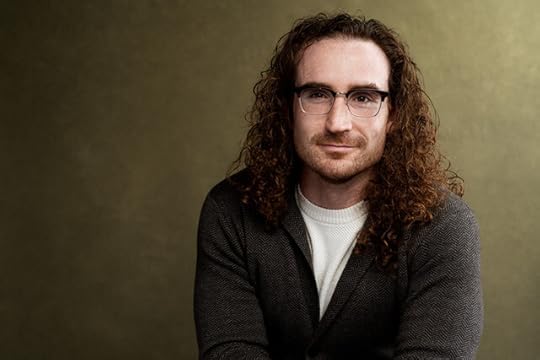
Ian Fritz

1 book19 followers
Ian Fritz was an Airborne Cryptologic Linguist in the United States Air Force from 2008-2013. He became a physician after completing his enlistment. Now, he writes.

Ratings & Reviews

What do you think?
Rate this book

Friends & Following

Create a free account to discover what your friends think of this book!

Community Reviews

5 stars
67 (18%)
4 stars
124 (33%)
3 stars
117 (31%)
2 stars
49 (13%)
1 star
15 (4%)
Displaying 1 - 30 of 73 reviews
Profile Image for Liv L.
27 reviews2 followers
December 29, 2023
First off: This book is mostly worth reading. It is informative and interesting, and Ian Fritz has a strong writer’s voice. Personally I love a distinct first-person voice, and I was also, for the most part, a fan of Fritz’s feisty, casual tone. Nevertheless in rating this book I vacillated between 2 and 4 stars… and sadly, I decided to opt for the lower end.

The second half of the book read like I was getting yelled at or lectured. Despite the flashes of brilliance in Fritz’s storytelling this book seemed to gradually lose its novel-like quality and deteriorate into an increasingly disorganized, repetitive, and dictatorial stream of consciousness. “What the Taliban Told Me” went from being an honest, highly interior story to a soapbox for Fritz to tell, rather than show, his view points. Some of the views are interesting but others are non-cohesive and contradictory, irrational, or just arrogant nonsense. I hope to see more of Fritz’s writing but his style might be better suited to editorializing or blogging than novel-writing, unless he can evolve and grow as a writer.

Furthermore, I didn’t feel there was any real engagement with the Talibs or Afghan people. The book totally lacked any substantial insight into their culture or way of life - in total contradiction to the author’s claims about how connected he felt to them. He cites no conversations with any Afghan people that he actually participated in himself while deployed (not his job, but still) and has little to say in the way of what he actually heard from them besides a small handful of amusing or serious tidbits. It’s the author superimposing his own views and simplistic interpretations onto the average Afghan or Talib’s situation, despite aggressively criticizing Americans who do the same (who are idiots for simply coming to different conclusions than him). I feel he also does this with regard to the experiences of many other American troops, describing them through HIS lens.

I have some other real criticisms of the book but don’t feel like getting into some of other problematic gripes. Overall, there’s some great and important stuff in this book but Fritz’ interiority is exhausting. While I admit his honest recounting of his own mental and physical health issues, as well as his personal moral crises, will be relatable and perhaps cathartic for others who have served, I simply think this was not in alignment with the proclaimed premise of the novel. At the very least, it was not skillfully executed. A more apt title for the book would be “What I Want to Tell You.”
Profile Image for Donna Davis.
1,938 reviews316 followers
March 21, 2024
Ian Fritz was an Airborne Cryptologic Linguist who served with the U.S. Air Force in Afghanistan for five years. Trained in both Dari and Pashto, he became one of only two people that could understand what was being said by all of the people on the ground before and during battle. Following his service, he became a physician and writer. This is his memoir.

My thanks go to Simon and Schuster Publishing and NetGalley for the invitation to read and review. This book is for sale now.

Fritz was in many ways the perfect recruit; his family didn’t have any money, and he was brilliant, which meant that if he was going to have any opportunities, they would most likely come from the U.S. armed forces. He blew through his public school years, as gifted students that aren’t challenged often do.

This is where I long to stand on a big box and yell through a bullhorn: gifted students are at risk children! We must provide them with challenging, interesting curriculum, or they will stop bothering with school. I’ve been saying so for decades, and I’m saying it again right now. So many times educators and school districts assume these kids will automatically be fine. If the student is bored, they use them as unpaid tutors for their peers, which distorts relationships among the students and does nothing to provide the highly capable student with new, interesting material. These kids need different educations from those in the mainstream. Ian’s story is a powerful example of why this is so.

Ian was sent to an elite language training program, and then he was deployed. Initially, the successful flights in which targets were found, identified, and killed—often partly or solely because of his contribution—were exhilarating, but as time went on, he began to feel conflicted. On the one hand, the Taliban were responsible for the horrific, cowardly attacks on American civilians on 9/11, and were therefore a legitimate target. On the other hand, being able to understand what enemy soldiers were saying to one another made him aware that these were normal people, attempting to live their lives and repel the U.S. invaders. It’s hard to hate someone, or to be indifferent to them, when you overhear them discussing their plans for after the day’s fighting is done, or declaring that it’s just plain “too hot for Jihad today.” Sometimes a threat on the ground would be identified, and the Americans wouldn’t realize that this was an error until after the person they’d targeted was dead. And he knew the names of the dead, sometimes hear the survivors below desperately trying to get their comrade to a medic, but then…oh. Too late.

Then there was this culture among others he served with, those not trained in the language and who were therefore able to demonize the targets, howling with laughter at the way a body on the ground could be made to bounce if you shot it at just the right angle. He realized that “no one else had heard, and no one else ever would hear, the simultaneous screams of the JTAC [U.S. officer on the ground] and the Talibs. Or the sudden quiet when the Talibs died.”

Ultimately, he learned that Afghanistan was actually a lot safer without U.S. forces than with them.

As Fritz began to internalize his despair, he grew suicidal, and he knew he had to get out. It’s at this point that he was charged with malingering and cowardice; he would later learn that it was a trend among the linguists serving in this theater.

Fritz is one hell of a fine writer, and the narrative flows smoothly. I was surprised to find that this was a quick read, despite the intensity of the material. Surely there must be other military memoirs relating to Afghanistan, but as he points out, nobody else is writing about this experience, because almost nobody else has done what he has.

For those with the interest and the courage, this memoir is recommended.
Profile Image for Jessica Gramila.
1 review
November 9, 2023
As someone who knew the author personally during his service in AFSOC as a DSO, I was very excited to read this book. Unfortunately, I was left extremely disappointed and upset. The Airborne Cryptologic Linguist community, let alone the 25th Pashto’s are never displayed in public facing media. The opportunity for it to shine in a book, warts and all, was exciting. The failures of the Afghan war have been a raw subject for our military and history, and it deserved to be told. However, this book is full of hurtful historical inaccuracies, leaning into deceitfulness.

On a technical level, the book is riddled with grammatical errors and constant run-on sentences that last 1+ pages. It needed at least a year more of editing and revisions before being published. There were multiple passages that didn’t make much sense, with frequent segways into random angry ramblings and constant profanity. The author will go into extreme technical detail for 2 - 3 pages regarding a weapon, U-boat, or AFSOC procedure, and will then rip into it for the next 4 - 5 pages. Rinse and repeat. It was full of enough angst that it would make J. D. Salinger blush.

There's sadly no personal growth here. There's a constant discourse about a man at the whims of his country's and military's actions - however it amounts to nothing but spite, and minimal personal growth or introspection. I could see glimpses the arguments the author was trying to make about War, meaningless death and his struggles through all of it, but it became so exhausting to engage with any of it after pages and pages of enraged and wrathful writings. At one point in the book, the author revels for pages in the idea of committing libel, doxxing and destroying the career of someone who he felt did him wrong. The final demonstration of "growth" in the final passages is a huge middle finger to anyone and everyone involved in the War, a "you hated me? Well, I hate you too!". Not particularly deep nor insightful.

In regards to historical accuracy, it’s hurtful to see the author take stories of his fellow Airmen and make them his own. Stories that many of these Airmen still now carry trauma to this day. Stories that were passed to him, that he had no right telling as his own.

As mentioned in the book, the author said he went on 6 deployments, but at most, he went on two. The author also writes he had 123 “KIAs”, however there is no record of a killcount that DSOs have. The author placed individuals in places they’ve never been to, let alone deployed to. For example, Ed, a "Big Blue" supporter and mild antagonist in the book, was never deployed to Bagram air base, and was not there in 2011 when OBL was KIA. The author portrayed individuals being emotionally closer to him than they actually were. The author did not take any personal responsibility for his actions in Afghanistan and at Hurlburt, and points the finger at “Big Blue”. The “Brother … It’s too cold to jihad.” is not your story to take credit for. The Parrot SA story was not yours to tell. Repackaging other men's War stories or telling them without their consent is disrespectful at minimum.

While I understand a memoir is a retelling of jumbled memories, and historical inaccuracies are given, dishonesty is not acceptable. While I could go into deeper examples, I’m sure this review would be removed for harassment or attacks against the author.

As a book of a man coming to terms with his Sins in Afghanistan, this is an immature, crudely written memoir, filled with ramblings of someone so angry, everyone is caught in the blast radius. Unfortunate exploitation of his war brothers and a waste of potential.
Profile Image for Mariam.
103 reviews
January 7, 2024
This book was a memoir of a linguist in the Air Force. Its centered around his eventual reckoning of the endless “war” America was fighting in Afghanistan and his own participation in the killing machine that is the US military.

The first half of the book goes in very specific detail about what leads him into the Air Force and his training to learn Dari and Pashto. Then he explains in detail the first time he serves in Afghanistan. Turning point in the story is when he starts to reckon with what his job is and he’s like oh wait! Maybe my fellow air forcers should not be celebrating killing people!

And that’s where the story just becomes absolutely batshit unhinged. He spends the last 100 pages going back and forth between recognizing the harm the US military did to Afghans and being angry he killed people but also supporting the US military. I couldn’t even tell you because it was so hard to follow the mental turmoil. There are some stark contradictions in this book and it seems as though his stream of consciousness was published as is without anyone even editing it.

One of the reviews said this is “the ramblings of someone who is still angry” and I think that is quite accurate.

What probably irked me the most about the writing was the redundant repetition of swears. At a certain point, the swear loses all meaning and emphasis entirely. It gave the sense that the author lacked the capacity to explain his experiences and just used swears as a crutch filler word.

There is literally no significant interaction between the author and Afghans or even Afghan culture or identity as the summary claims. I was hoping for some tea, but “What the Taliban told me” is more of a metaphor for how he feels depressed he went and killed people because he realized America was just occupying the land and exerting power.

I had a hard time getting through this book. It honestly could have been half the length it is. I can’t say I learned something transformative or novel. I guess I got some insight into the thought process of someone who was in the Air Force in Afghanistan.
61 reviews2 followers
Read
February 20, 2024
Harrowingly intense, informative, brave: I began to read because of an interest in the language training programme, then kept on because of his own words and perspectives. “Adrenaline is pretty good at knocking down moral quandaries.” (p. 180)
Profile Image for Joshua.
285 reviews
September 13, 2023
I hated reading Catcher in the Rye in high school because Holden Caulfield didn't know how to describe anything he was feeling without vociferously using expletives. My teacher at the time asked me what his choice of vocabulary said about his character, his fears, and his development, and all of the sudden, I saw the character in a new light.

The author here describes the unique horrors of war that he experienced in Afghanistan. It's hard to "rate" someone's life experience or give it a review (or stars). Where the narrative is overly laced with expletives at times, I can see someone who is still trying to process everything that has happened. Where I began the book hoping to discover a love for Pashtun culture, or the people, or a neatly packaged narrative about lessons learned, I realized that this is not the narrative of war. War destroys everything. And the narrator lives among the wreckage and the aftermath.

If you mashed Catcher in the Rye and All Quiet on the Western Front together and set it in the last 20 years, this is what you get. Except someone actually lived this experience. That is what is heart-wrenching. I hope the author finds peace in his journey.
Profile Image for Ann Marie (Lit·Wit·Wine·Dine).
200 reviews268 followers
February 19, 2024
Thanks to Simon & Schuster Audio and Libro FM (partners) for the gifted ALC.

I don’t read a lot of nonfiction but when I read the synopsis I really wanted to learn more about the author’s journey to become an airborne cryptic linguist and his experience in that position. In that, this book delivered. I was, however, slightly disappointed that I didn’t gain more insight into the Taliban as whole given the title of this book.

While I do think this one was worth the listen, it sometimes felted a little disjointed — at times solid narrative nonfiction, at times meandering and rambling.

I do think that having the author narrate the book was a good choice and helped to emphasize the deep emotions the author felt while recalling his experience.
Profile Image for Cav.
907 reviews205 followers
September 5, 2024
"TO BE ON A GUNSHIP is to be a god..."

What the Taliban Told Me was a mixed bag for me. I generally enjoy books about war, warfare, and the Middle East. Unfortunately, I found much of the writing here to be a bit slow for my picky tastes.

Author Ian Fritz was an Airborne Cryptologic Linguist in the United States Air Force from 2008-2013. He became a physician after completing his enlistment. Now, he writes.

Ian Fritz :
22936133

The book covers the author's time as an Airborne Cryptologic Linguist in the United States Air Force, mostly during his deployment to Afghanistan. He opens the book with the quote above, and it continues below:
"...This is not to say that flying in these magnificent monstrosities provided me with some sort of spiritual moment or religious exaltation. This is to say that to be on a gunship, to carry out its mission, is to feel as powerful as any deity from the pantheons of old. But these gods, like all gods, are not interested in creation. To use the 105, a gun that is loaded with forty-five-pound bullets, a gun that, when fired, causes the 155,000-pound plane it’s mounted on to buck so far to the right that the pilot must actively correct the flight path, is to be Zeus hurling Hephaestus’s bolts. To fire a Griffin missile from an altitude so great that the men on the ground could only know of it in the same moment that it kills them is to be Mars flinging his spear."

Colloquially known as "DSO's," he expands further on his role in the war:
"Being a DSO in Afghanistan meant making life and death decisions (and not or). We could decide who lived, and who died. When we had flown a mission, and done our job right, it was no lie or even an exaggeration to say we had done something that very few other people were capable of doing.
When I did it, I was one of only two DSOs who spoke both Dari and Pashto; there was only one other person on Earth who had received the training I had, who could do the work I did.
Because I experienced all of the things I did in the Air Force at a young age, it might have been impossible for them to be anything but formative.
Because very little else that followed was imbued with the same amount of life and death, other things will always pale in comparison. Or maybe it really was the most important thing I’ve ever done, or will ever do. And so, though everything in this book is true, and most of it is about me, it is not a memoir, as I don’t know how to tell you who I am. Nor is it a war book, as I don’t know how to make you understand war. All this book can do—all I can do—is show you what I was.
I was a DSO.
And this is what I heard."

Unfortunately, as touched on above, I found a lot of the writing to be fairly dry. I am very particular on how engaging my books are, and this one fell a bit short for me.

The author also did the narration of the audio version I have. Sadly, I was a bit disappointed with this, as well. I found that he tended to mumble his way through the book. He speaks in a very monotonous fashion, and I became frustrated numerous times...

There was also quite a large chunk of writing in the latter ~half of the book that extensively detailed the author's inner dialogue surrounding the ethics of his job. I found this to be way too long, and was also becoming frustrated here. I get that his duties in the armed forces left him with some serious mental health issues, but this part read like a long-form journal entry.

******************

What the Taliban Told Me was an interesting historical record, but the delivery left a lot to be desired for me.
2 stars.
Profile Image for Librariann.
1,601 reviews90 followers
July 29, 2023
** I received an ARC of this book from the publisher, because I am a librarian and librarians are awesome**

Yes, I'm reading a lot of memoirs lately. I liked the idea of this one because comparisons to Eugene Sledge can't be all bad. And it was, like Stephanie Land's Class, very easy to read. It was so easy to read that I'm struggling to decipher what it was that prevented it from being a better book, and I think in the end, it wasn't visceral enough. Not in terms of blood and guts and glory, but in terms of navel-gazing dreaminess.

I appreciate any book that explores the futility of American military operations, the awfulness of war, the toll it takes on the human psyche. This book had all of that in spades. The conversational monologue was easy to read, but also strangely detached. Maybe that's how Fritz had to write it, to keep his sanity. Memories are strange, nebulous things, and we lose more swathes of time than we recall in great detail. Perhaps I should appreciate that he didn't make up conversations, that he didn't describe the dings on the inside of the u-boats, that his story provided more of a general "feeling" of his time in Afghanistan than a whole lot of specifics (most of the time, the attack in the field a memorable exception). But it also made it only one type of story. Still a good one, but not a gripping "must read, must recommend" for this librarian.

Definite teen appeal, and will keep in mind for the 8th grade memoir project. (Dick jokes probably prevent this from being added to any curriculum, but it works for a general reading assignment.)
Profile Image for Gail Clayworth.
292 reviews
April 9, 2024
Despite my three star rating, I do think this book was worth reading. It's just that it could have been so much better written, edited and organized. It's really a mixed bag. So what did the Taliban tell him? Two things:
1. We are human.
2. We will outlast you.
That's my take anyway.
What is he trying to tell us, his readers? Hard to say. He seems to want to help us understand a lot of things about what we as a nation were doing in Afghanistan and the toll it took on those tasked with doing it in our name. But near the end he rails at his readers for, among other things, not even wanting to understand. That may be true of most Americans, but nobody would have persevered through this book if they didn't want to understand. The author is understandably angry and traumatized. I don't mean to be the least bit facetious when I say that he probably could have written a better book if he had spent more time in therapy first.
Profile Image for Dennis.
18 reviews
July 4, 2025
I was looking forward to this book to better understand the mindset and thinking of the Afghan people in the conflict. Instead I found, in long run on sentences and with much cussing, the psycho babble of someone who didn’t understand the nature of warfare going in, the conflict itself or people in general. Yes, warfare is about killing people but in my experience (two tours in Vietnam) there were very few , if any, who took any pleasure in it as he seems to think all those around him were doing.
I’m sorry for his trauma. However, reading this was waste of time and energy if you are looking for the Taliban to tell him or you anything. It is all about him and his trials and tribulations. Real and/or imagined.
Profile Image for Max Knoll.
102 reviews1 follower
January 1, 2024
Four stars fails to show the conflict I experienced rating this book. I was an Arabic Linguist with two tours as an X2 in Iraq just a few years before Ian’s deployments to AFG. I must admit, it was nostalgic to read his accounts of the DLAB, DLI, SERE, etc. And I greatly appreciated the way he was able to verbalize some of the conflicted emotions I too felt during and after my service. But his writing style made it seem like he was still trying to prove he’s smarter than everyone else. It was eye-roll provoking on numerous occasions.
Profile Image for Emmet Sullivan.
173 reviews23 followers
December 20, 2023
On the whole it’s pretty good. It’s nice to read a recent, first-hand account of someone who served in Afghanistan who doesn’t claim to be a member of “the most elite unit”, to have participated in “the secret mission”, or to have some “untold story” to tell. It’s also just a slice of the military (airborne cryptological analyst) you don’t really hear much from in terms of memoirs.

I learned a lot about the Air Force, the military more broadly, Afghanistan as a country, and perhaps most interestingly, the languages spoken there. This book asks a lot of really deep, soul-searching questions about what it means to be a soldier, a veteran, an American, and what it means to go to war. It answers some of them, while leaving readers to grapple with the rest.

-1 star for occasionally being a little too casual and bro-y. The author is clearly a smart, articulate guy, but sometimes the prose comes across as if he’s trying to dumb himself down. This takes away from an otherwise interesting, substantive narrative.
2 reviews
November 20, 2023
All I can say is wow! I am a former Airborne Pashto Linguist. I served at a different time but was about the same age as the author when I deployed. This book is extremely accurate at portraying what being an Airborne Pashto Linguist in Afghanistan was like. This book is raw and gritty. The author is great at conveying the thoughts and feelings that many Pashtu Linguist have felt and continue to feel. If you want to truly understand what it was like to be an Airborne Linguist in a place like Afghanistan, this book is for you. For me, the book was funny at times, other times it was hard to read.

This book has helped me reflect on my own experiences how I have tried to come to terms with those experiences. This book must not have been easy to write but I appreciate the author for trying to convey what this mission was like. Definite must read!
Profile Image for Nicole.
533 reviews1 follower
February 10, 2024
Another lack luster memoir. Based on the title, I was hoping to learn about the cultural aspect of the Afghan people but that was not the case. Ian Fritz was an Airborne Cryptologic Linguist in the US Airforce. He recounts his story of entering the Air Force, his training, and his service. The story is jumbled and he is clearly angry. I read a review by someone who claims to have know him during his deployment. They stated he misrepresented the number of actual deployments he had. 🤔Makes you question everything. This book was not for me.

#bestestbookclubever

https://www.instagram.com/bestestbook...
78 reviews
October 16, 2024
I feel like this book is worth reading to understand how some of our military members feel about the Afghanistan war, but not really for understanding the Taliban- which is what the title and description implies it is about. This book has very little to say about the Taliban and a lot to say about the author. Some interesting, some challenging, some rants that are run on sentences for over an entire page long. Seriously. So, worth reading, but still only 2 stars because of misrepresentation of content and frequent poor writing.
Profile Image for Noah.
7 reviews
January 18, 2024
the tone of the book changes dramatically from a story of Fritz’s life and experiences in the USAF to what seems like a disorganized (and lengthy) dismissal of the outside world’s perspectives of war. I did enjoy the book but found the last half to be fatiguing (and not in a good way)
Author 2 books137 followers
Read
March 17, 2024
It's well-written, I'll give it that. You can take what he writes with a pinch of salt. The life of a translator in the middle of war is dull, brutal and everything in-between. This book will be of interest to those who don't know anything about a translator on a war-plane (and Fritz's former superiors).

Interesting Passages:

86-89-91-93-94 of 228

I began to liken it to the notion of a hypothetically very rich, very not white country, let’s call it Audi Sarabia, invading a hypothetically very proud, relatively dysfunctional, very white country, let’s call it Texasstan. You would have then a country that felt they were morally upright, who, on the premise of rooting out terrorists and extremist ideologues, invaded a formerly independent state with a long and storied history of rejecting invaders and upholding their millennia-old way of life. This formerly independent state would have a working constitution, a (semi-) functioning government, and while maybe not everyone who lived under that government agreed with its policies, well, you can’t please everyone.
Now, on invasion, the Audis would say that the government was corrupt (what government isn’t), draconian (a little hypocritical, that, but okay), and guilty of harboring and supporting international threats (people, they mean people). The rest of the world would say, “Well, okay, yeah, those are all true statements, so I guess you have a point,” and would stand idly by while the Audis went in and subverted an established, legitimate government, in order to stand up a puppet state that would blindly support them in their mission. The Audis would set up shop in the major cities and begin the process of looking for their enemies.
But then, who, exactly, are their enemies? Supporters of the old government, that one’s easy. Rebels against the new government, also easy (the Audis prefer rebel to insurgent in this analogy—has to do with that whole submission to Islam thing). Oh, and anyone that members of the new government say is bad, regardless of any proof supporting these claims, and regardless of the fact that it seems strangely convenient that most of the people being named happen to be political opponents, or guys that the members of the new government feel have wronged them (some of them fellow members).
Over the next five to ten years, the Audis continue to build up their presence, continue to raid homes at night, kidnap people, drop bombs indiscriminately, all the while maintaining that these actions are justifiable and for the greater good. Meanwhile, the Texans, who have had their own culture longer than the Audis have had a nation, replete with their own laws and customs, are told that they should be ashamed of this culture, that it’s barbaric and outdated, and that while they don’t necessarily need to convert to the Audis’ religion (this isn’t the Crusades; proselytization is actually illegal under the rules governing the Audis’ military members), they should probably think about joining the rest of the world in modernity.
At some point during all this, a number of Texans find themselves wondering whether the old government—which, admittedly, had its problems—wasn’t preferable. They were violent, yes, but at least they were predictable in their violence. And they didn’t have giant flying bogeymen that went around blowing up weddings or bombing funerals or just generally making violence an everyday part of life. If, then, a number of these Texans begin to feel that they have no choice but to try and fight against the Audis, would that be so unreasonable? And if, once they do start fighting back, their culture and long-standing way of life mean that they fight hard, even fight dirty, wouldn’t this too make some sense?
I spent too many hours and too many words developing this brilliant analogy of mine. It was ham-fisted....If I had tried this shit on a U-boat, I probably would have gotten punched, or at the very least told in no uncertain terms to shut the fuck up.
-------------
It was interesting, the idea that almost ten years after 9/11 we had finally killed our country’s biggest bogeyman, and it was very interesting that we had invaded Pakistan to do it. But I wasn’t, like, happy about it.
-------------
“Dude, we should be celebrating!”
“Why? What will that get you? He [OBL] was an incredible human. He changed the world.”
No more smile. Some redness though.
“Fritz, shut the fuck up.”
“Get out of this room.”
“Wha—”
“Leave!”
-----------
Well-armed Talibs. All around them were Hi-Luxes (Toyota pickup trucks that are seemingly indestructible and therefore the preferred mode of transportation of insurgents worldwide), machine guns, RPGs (rocket-propelled grenades)—you name it, these guys had it.
They also had something no one had ever seen the Taliban with before.
A volleyball net.
There they were, a bunch of Talibs in their man-jammies, surrounded by a metric fuck-ton of serious weapons.
Playing volleyball.
--------
Kalima, or at least the guy who wanted to talk to him, was emblematic of so much of what I was hearing on mission after mission. These men, these Taliban, these guys sitting in the mountains, were bored and tired, but mostly bored. This is difficult to explain in that, while it’s easy for me to tell you this, it’s difficult for us humans to admit that the malevolent can be filled with the mundane. We want our evil to stay evil.

102 of 228

For so many Afghans, a bad day consists of their house getting blown up along with the fifteenth family member they’ve had killed because of this war. It’s not hard to understand why they might want to get back at us for that shit. Or maybe their bad day is when, after having been promised a well, a few foolhardy fuckwits decide to shoot at the Americans in broad daylight, and the Americans decide that everyone in that village can get fucked, the well is off. That’s if we don’t decide to just bomb them, citing “increased Taliban presence.”
-----------
The Taliban had forced our hand. They were responsible for harboring the people who had planned and carried out 9/11. They routinely infringed on human rights, and while maybe we did too, at least we accomplished something when we did it. What were they building? What were they giving the world? Fucking nothing. Killing them, ridding them and their ilk from the face of the Earth was the only way to ensure that no more JTACs got shot, no more girls got acid thrown on their faces, and this war could finally end. The only logical conclusion was that I should, in fact, be mad at the Taliban. Maybe they weren’t completely and utterly evil, but that sure as shit didn’t mean they didn’t need to die.

176-177-179-182 of 228

According to my official Air Force records, I do not have, and in fact have never had, PTSD. Formally receiving this diagnosis would have required an official admission that what I did and saw and heard was in fact traumatic and that it wasn’t normal, which would only have served to justify my reasons for not wanting to go back. You can see why the powers that be wouldn’t want to admit this. And while this diagnosis wasn’t true when the Air Force made it, it might be now. Time doesn’t heal all wounds—some simply can’t be treated—but eventually your mind can bring the edges together, and while the scar is ugly and imprecise, the gaping hole has, finally, closed. These days I can listen to Pashto without breaking out in a cold sweat, get on a plane without thinking about the guns that ought to be attached to it, and talk about war without wanting to curl up in a ball and die. This, then, is understood as meaning that my PTSD has been cured (never mind that curing something that was never supposed to have existed creates some mild metaphysical stickiness).
In the time since I wasn’t diagnosed, the military has embraced a different terminology to attempt to describe the turmoil that I and so many others experienced: moral injury. The idea of moral injury has been around since at least the 1980s, though the explicit term was coined by Jonathan Shay in the nineties, when his work with Vietnam veterans led to his writing Achilles in Vietnam. Today, Syracuse University’s Moral Injury Project not only defines moral injury but attempts to explain why and when it happens:
Moral injury is the damage done to one’s conscience or moral compass when that person perpetrates, witnesses, or fails to prevent acts that transgress one’s own moral beliefs, values, or ethical codes of conduct.
This is a good definition; it is thorough while simultaneously casting a wide enough net to embrace the myriad reasons any warfighter could suffer such an injury. Being a DSO allowed for perpetration, witnessing, and failure. Certainly, my moral code was violated. But I don’t think moral injury fully encompasses just what happened. It’s not that I, along with almost every other Pashto DSO, wasn’t morally injured. We were. But it’s not entirely accurate to say that there was “damage done to [my] conscience or moral compass.” It’s more like, along with the many men I killed, my consciousness was blown the fuck up.
With the exception of spies mythical and real, most warfighters throughout history have not been tasked with killing people they know. Even in our modern wars, in Iraq and Afghanistan, the majority of killing is done by complete strangers.............The most famous of these warriors are drone operators. These men and women face issues that I can’t begin to understand, as the cognitive dissonance that they experience is so strange as to be something out of science fiction. If anything, it seems that their injury is arguably worsened by the moral contradiction of being so far away from the “threat.” These are people who wake up every morning and drive to work like any other commuter. Except, their work is hunting people. They do this work for twelve hours (or more), and at the
end of their shift they head home. Just like any other commuter. Maybe their significant other calls them and asks them to stop and pick up some milk on the way, which they obligingly do, maybe grabbing a candy bar or a six-pack at the same time. And then they sit down to dinner with their loved ones, the memory of the missile they fired five hours earlier destroying a man still playing in their head.
Often, the man that was destroyed by that missile was a target that this drone operator had been following for days or weeks. This work is done to establish what is known as a pattern of life (POL), aka the shit someone does on a regular basis. POL is supposed to help determine whether the things someone is doing or the people someone is meeting are happenstance or more purposeful. Did that guy go talk to a known bomb-maker who also happens to be a tailor just once, like someone who was trying out different tailors might do? Or did that guy go see his “tailor” two or three times a week for a month, all while wearing the same ill-fitting clothing? In the course of this work—sometimes as a side effect, sometimes completely on purpose—one begins to develop an idea of who that target is.
In a New York Times article exploring the effects of this work, of the damage done to the men and women who perform this function, an unnamed drone operator says that his injuries resulted from “cognitive combat intimacy,” a term so apt that I wish his name were published, if only so he could get the credit he deserves for such an accurate neologism. The day in, day out watching of targets, learning about their lives, their habits, their likes and dislikes, results in a strong sense of familiarity, and sometimes, even closeness (a friend of mine who did this sort of work once told me that he and his team could always identify one particular target based on the highly specific porn searches said target made on various devices that he used, which while comical, is indeed also quite intimate). And then, after you’ve come to know so much about this person, in fact because you’ve come to know so much about this person, you kill them.
The work I did was not this in-depth, and nowhere near as detailed (I didn’t hear of any porn searches, though I did learn about a few sexual preferences), and so it could be said, in relation to others like these drone operators, that I didn’t know much about the men I was listening to, not really. The sense of closeness I had with the men I listened to was not a cognitive process, but an emotional one.
----------
U.S. (and many European) fighters are so well equipped, so technologically advanced, so well armored as to be mythical. SEALs, Green Berets, and other special operators are trained to continue moving after they’ve been shot. (I’ve helped them with this training. The rules were that when we, the “bad guys,” got shot, we went down. If they, the “good guys,” got shot, they were supposed to keep advancing until they neutralized us and completed their mission. All of this was done with simulation rounds, but there’s still impact, and the guns we were using were real; they really were getting shot.) The purpose of this training is to impart a psychology of undefeatability. It is singularly terrifying to shoot multiple bullets into what is supposed to be a human and then watch that (alleged) human continue to push forward as if nothing happened to them. Yes, somewhere in the back of your mind you know that they are wearing a bulletproof vest and other pieces of body armor and that these are the things keeping them alive, but that knowledge doesn’t make the six-foot-tall, two-hundred-and-fifty-pound creature coming at you any less intimidating. To kill such a being is to kill a god. I could now see why a Talib might feel entitled to inflate his kill count.
In addition to this sort of allegorical accounting, I wondered if, in a way, they weren’t actually right about how many of us they were successfully killing. At the very least, a lot of us were dying. And I couldn’t help but think, if a warfighter dies because of a war, does it matter if they died on the battlefield? Does it matter if their death is “self-inflicted”? All those men and women who made it out of Afghanistan, only to commit suicide once they were home, are they not casualties of war? Didn’t the Taliban kill them?

Equally disheartening was my newfound understanding of why the Taliban seemed to ignore, somehow discount, our kills. On the missions where I knew we had killed dozens of them, they routinely refused to acknowledge all of the deaths. Some of this was attributable to their haphazard organization; they didn’t exactly have rosters of who was fighting in a given battle, or dog tags to identify unrecognizable corpses. Our jokes about them being immortal had stopped being funny, because now I couldn’t help but wonder if they actually were. They were suffering thousands of casualties per year, which I always heard about, but not once had I been told that the Taliban was growing weaker, getting smaller. It was like we were playing whack-an-Afghan, and every time we managed to hit one, another popped up one wadi over. How many times had we rolled up the same guy, interrogated him, probably tortured him, eventually released him, only to wind up hunting him down again weeks or months or years later? They were constantly replacing themselves, either literally or figuratively, and we had fallen for the trap of thinking of them as interchangeable, thereby placing them beyond the constraints of ordinary humanity, allowing them to become the superhumans they claimed they were. So, while I knew they were dying, I no longer believed they were dead.

106 of 228

OF MY THREE AIR MEDALS, two of them deal with flights from my first deployment. The one that chronologically covers the first half of the deployment says that my “superb airmanship and courage were instrumental to the successful execution of twenty combat missions totaling 191.5 flight hours supporting Operation ENDURING FREEDOM. Constantly operating under the threat of man portable air defense systems and anti-aircraft artillery, Airman Fritz provided real time imminent threat warning, situational awareness and non-traditional intelligence, surveillance and reconnaissance to coalition Special Operations Forces executing critical close air support, armed reconnaissance, infiltration and exfiltration missions. Additionally, Airman Fritz passed twelve imminent threat warnings during missions that included short notice launches in support of troops in contact. Additionally, Airman Fritz was able to warn ground forces of possible mine and ambush locations, ensuring the safe return of ground Special Operations Forces. Airman Fritz and his crew’s efforts also contributed to the elimination of twenty insurgents and detention of twelve enemy fighters including two high value targets.”
The other medal, which chronologically covers the second half of that deployment, says much of the same boilerplate shit about threat warning and types of missions. But it also says that over the course of “131 flight hours” I “passed eight imminent threat warnings” and that I “was able to provide warning to ground forces of a machine gun ambush and insurgents tracking coalition force movements.” Apparently, I further “contributed to the detention of seven enemy fighters including two high value targets.”

182 of 228

You may have noticed, or maybe not, how slippery I have been with the verb to kill:
“I killed.”
“We killed.”
“I helped kill.”
This is no grammatical slip, an inability to keep track of who did what. These variations are there because there was, and is, an argument to be made about my role in any killing, as that’s not how gunships, or Whiskeys, or DSOs work. No single individual is held responsible for the people that our planes kill. It’s a crew effort.

(…..) According to my official records I have in fact killed 123 people. The actual wording is “123 insurgents EKIA” (EKIA = enemy killed in action, so not quite people, but definitely killed). These records don’t say that I was part of a crew that killed these people, or that I supported other people who did the killing, just that I killed those 123 humans. I can’t know, and will never know, if all of these kills belong to me. I do know, and will always know, that I belong to all of them.

215 of 228

I went to the community college near my base to take some pre-reqs, transferred to a university soon thereafter, got my degree, and applied to medical school.

Being a physician was never going to unkill those 123 men. Nothing will.
There is no atonement, because I did nothing wrong; I am no sinner.
And there is no absolution, because I did nothing right; I am the worst sinner.
44 reviews
June 8, 2024
Fascinating capture of the human foibles, pettiness, and hopes of a group typically talked about and shown as a non-descriptive wall of evil. If only the leadership of the U.S. had access to this view into their society before pouring trillions into a hopeless conflict…
Profile Image for Kevin.
226 reviews1 follower
November 13, 2023
"What the Taliban Told Me" by Ian Fritz stands is an intricately woven narrative, sensitively navigating the intricate and mysterious landscape of Afghanistan. From the opening page, Fritz tells a tale that transcends just any account of a conflict-ridden terrain, exploring the unbreakable spirit that defines its people.

This book provides readers with an intimate understanding of the Afghan conflict. Fritz, a seasoned journalist, leaps fearlessly into the heart of the matter, painting vivid portraits of the individuals caught in the crossfire. I felt immersed in the ebb and flow of the nation's struggle for identity.

The depths of the interactions with the Taliban are authentically chilling and enlightening. Fritz manages to convey the complexities of the Afghan narrative, capturing the essence of what the Taliban represents to its people.

I found myself drawn into the intricacies of Afghan culture, history, and the resilience of its people. Fritz's language transported me to the rugged landscapes, bustling bazaars, and the quiet strength that defines Afghanistan.

"What the Taliban Told Me" is an exploration of the human spirit in the face of adversity. Fritz's balances facts with empathy that creates an informative and moving narrative. A variety of stories are within this book that challenge preconceptions and offer a nuanced perspective on a region often misunderstood.

In a world saturated with news headlines, Fritz's fearless pursuit of truth and his unique storytelling make this book an essential read for those seeking a profound understanding of Afghanistan and the human stories hidden within its borders. His insightful exploration peels back the layers of complexity, transcending the headlines and intimately connecting readers with the profound realities of Afghanistan.

To quote Fritz directly, "In the silence between gunshots, you can hear a nation's heartbeat, pulsating with resilience." Read this book. Listen, learn, and, most importantly, empathize with a nation that has faced the tumultuous winds of history head-on.

"A soul-stirring journey into the heart of Afghanistan's untold stories."

"Captivating storytelling that transcends borders and headlines."

"An odyssey of truth, unraveling the complexities of a war-torn nation."

"A poignant exploration of the human spirit amid the Afghan landscape."

"Fritz's fearless pursuit of authenticity illuminates the hidden narratives of Afghanistan."

"Beyond war, a testament to the enduring strength of the Afghan people."

"A must-read for those seeking profound insights into the soul of Afghanistan."

"Evocative prose that captures the essence of a resilient nation's untold tales."

"In 'What the Taliban Told Me,' Fritz weaves a narrative that resonates with the echoes of Afghanistan's silenced voices."
318 reviews
July 31, 2023
"What the Taliban Told Me" by Ian Fritz lays bare the futility of war, particularly the war in Afghanistan. Fritz is clearly a talented writer and many of his memories are searing and impactful. That said, I found some of it to be trite, in particular the continual use of expletives. That just seems like lazy writing. It no longer becomes powerful, it just got boring. There's value in the message of this book, to be sure, but maybe it will hold more appeal for a reader younger than me. Thanks to #netgalley and @simonschuster for the opportunity to preview this book.
Profile Image for Aszur Rollins.
107 reviews
February 29, 2024
Full disclosure I was stationed in Iraq and therefore have a biased lens. I have been exhausted with the books and movies trying to glorify the war. A lot of the time you were bored, waiting, and uncomfortable. This book finally mixes the two things together showing a realistic picture of what it was actually like over there. This interpreter (American and trained at our language school) has done a great job weaving a life story and a war story.
Profile Image for Gunnar Luckoski.
4 reviews
January 31, 2025
An insightful read that voices a language and demeanor many should at least give a chance. No matter your opinion of the war in Afghanistan - it will give you a unique prospective into one veterans eyes of the war. A far less spoken one to be precise.
3 reviews
November 11, 2023
I enjoy war stories as told by the people who lived them.

I purchased the audible version of this book and listened to it over four days. Hearing the author’s story in his own words and intonations makes this story all the better. As an avid audible listener, the narrator's voice and tone are important for being able to get through a book. His is quite pleasant. Five stars, author. You should do more book narration as a side hustle. Seeing mixed reviews, I wonder if the audio version does make a difference in the level of enjoyment.

The first chapter says that this isn’t meant to be a memoir, but I would definitely classify it as one. It is a near-real account of this guy’s personal experience and struggles through his young 20s in a very “grown-up” world. I say near because he is telling this story a decade or so later so there may be a need to massage some memories for flow of content, but it isn’t something I would cry “stolen valor” over. It is remarkable/notable how quickly this young man deteriorated over two deployments. I can’t imagine the stress and anguish he personally and quietly suffered during that time and for years to come. “Morale injury” is putting it lightly.

Things I liked:

Yes, there is swearing, but when delivered in his voice, it comes off as natural and genuine to his story. Swearing doesn’t bother me, but to some readers, it might make you wince.

The author’s citing of public sources when he talks about topics that some might consider sensitive or classified is a nice touch and will hopefully put some readers at ease. I did notice it received the blessing of a DOD publication review.

I enjoyed hearing from an approaching middle-aged man reflecting on some major events that shaped his life in his youth. Too many men don’t actually dig into their issues and seek resolution. If nothing else, I hope getting this down on paper was therapeutic, though to be clear, I did enjoy this bittersweet story immensely.

Things I didn’t like:

Who am I to tell an author what is good, especially about their own experience? Sorry, I have nothing for this section :)
Profile Image for Lena.
150 reviews
April 28, 2024
I'm glad I read this and I think a lot of aspects of this story are extremely important for all Americans, but this was a pretty uneven story in its delivery.

The chapters at the end, specifically Tinnitus and Reaping, felt like essays rather than part of a cohesive book. Unless someone is really interested in the "how" of the story (how he got into the military, how he trained for his specific job, and what a linguistic in the Air Force does, all of which I personally found interesting), I recommend reading these chapters as stand-alone essays. There is a lot of important commentary on how the US perceives its attempts to "liberate" people in other countries while simultaneously suppressing individual freedoms of its own citizens as well as how veterans are used to further certain ideologies. These essays (as I'll call them) would be especially important for the "support our troops" bumper sticker citizens who continue to vote for people who actually don't act in the best interests of veterans.

As you can likely tell, I whole-heartedly agree with the author's stances on the hypocrisy of the US and the military; even still, I felt like he got very preachy despite not having shown the readers enough for his opinions to feel valid. Throughout some of his soapboxing, he sounds almost possessive of Afghans because he got "know them" so well through his listening in on the conversations of the Taliban. After all this is what the title of the book suggests; however, there's never any mention of him actually engaging with any Afghans in real life. Instead, it seems like he formed a parasocial relationship with an entire population based on his listening to the conversations of a small sub-section of the population. No judgement on who he did/didn't engage with, it just felt like a stretch for the reader to fully buy his conclusions without him at least confronting this mismatch head-on.

Profile Image for ♏ Gina☽.
901 reviews167 followers
November 17, 2023
A very intelligent young man who didn't apply himself in high school as he should plus working very long hours at a restaurant found himself joining the Air Force at the age of 18 as colleges were simply not interested. Their mistake.

The Air Force, thankfully, knew a good thing when they saw one and he was off to the Defense Language Institute located in California where he was to learn the two main languages of Afghanistan, Dari and Pashto. In 2011, he became what is called a "cryptologic linguist" and as if that's not hard enough, he's chosen as one of a previous few who can do this on gunships flying low (much too low for comfort) during the war in Afghanistan. His skills make him the best one for the job: identifying people on the ground who are Taliban and who may be innocent civilians.

He does his job well and as he is trained to do. However, what does knowing you have something to do with picking out who needs to be eliminated as an enemy of war, and knowing you are instrumental in their death? Hearing the voices and words makes the enemy another person, albeit a person who may kill you on sight. This is the hard part - living with what you had to do to save innocent lives and help end a long war.

Bravely written and brave in character, this book will open your eyes to what goes on during wartime and in the minds of those who are closest to the action and making huge decisions, often by young people barely in adulthood.

Profile Image for Booknblues.
1,531 reviews8 followers
November 14, 2023
Ian Fritz's memoir What the Taliban Told Me could well be the All Quiet on the Western Front of the Afghanistan War. What it is not is a revelatory tale of what the Taliban thought and said despite the blurb.

Ian Fritz was 18 when he joined the Air Force where he hoped to put his facility with languages to use and receive the benefits from enlisting. As might be expected there is a certain testosterone charged cockiness in his voice. Fritz was a smart kid and he is not afraid to let us know.

The training and the life as a DSO or direct support operator is intriguing and Fritz tells the story well once you accept the late adolescent male voice. But the heart of the story is the falling apart. The PTSD.

Fritz may get into philosophical questions a bit to much for my taste. He also has a tendency toward ranting. But at the end it is his story and how he saw it and how it felt to him.

I appreciate his insight and his honesty. I am inclined to think that there are those who read this and ardently disagree with him.
Profile Image for Bruce Cline.
Author 12 books9 followers
May 11, 2024
This is an interesting introspective look at a person who played a fairly unusual combat role in Afghanistan - that of an Air Force linguist who flew in combat missions aboard C-140 gunships. Speaking Dari and Pashto, the author listened in on conversations of combatants or suspected combatants, relaying tactically useful information both to his own air crew, but also to other air crews, and sometimes to U.S. soldiers on the ground. The book is about his journey to and beyond the Air Force and his ultimately unsettling combat experiences, the toll of killing on his psyche and overall mental well being, the humanization of the people in Afghanistan including those he fought against, and ends in a bit of a rant against war in general. Some reviewers were quite out off by his profanity, but I figure it’s his story and his extraordinarily raw emotions that he has every right to express. While it’s not the best written story, and the author is not a wholly sympathetic character, I found it quite engaging and insightful.
18 reviews1 follower
January 21, 2024
There's something profoundly strange about this book. I was extremely inclined to like it based on its unique vantage point, and I learned and thought a great deal because of it, but at the end of the day, I yearned for substance. Strange as it sounds, I have no idea what the "Taliban Told" Fitz, or what he learned from them, other than the obvious that they are people too. I yearned for something concrete about the humanization of the enemy to hold on to, but the story doesn't appear to have room for anyone in it but the author. There are no Afghan characters, and you don't come away feeling like you understand anyone but the author. He's the only character in his life and everyone else just exists to add a bit of color here and there.

While he is certainly entitled to his bitterness, I found the bitter arrogance of Fitz distracting from the overall story. Essentially, lots of potential, but missed the mark.
Profile Image for Laura Hartmann.
37 reviews3 followers
February 13, 2024
The first 70% was a classic military autobiography, which is to say severely lacking in insight or any meaningful thought because it was so busy being accurate and setting up an ethos for the authors authority which he must have felt he needed in order to be allowed to write the last 30% of the book.
The last 30% was essentially a series of somewhat disorganized essays on why you as an airborne linguist come to know the horrors of taking a life much more intimately than any other soldier, which was a really interesting perspective and the whole reason I picked up the book to begin with.
The author is a good writer but he chose a wrong medium for the things he wanted to communicate. This should’ve been an essay collection ala trick-mirror (also mediocre but a great genre example) or with even more skill maybe even a piece of fiction ala the kite runner.
I want more from this author because of his unique perspective but I don’t want it to be this.
Displaying 1 - 30 of 73 reviews

Can't find what you're looking for?

Get help and learn more about the design.