A seminal work that expands how we talk about the natural world and the environment as National Book Critics Circle Criticism finalist Camille T. Dungy diversifies her garden to reflect her heritage
In Soil: The Story of a Black Mother's Garden, poet and scholar Camille T. Dungy recounts the seven-year odyssey to diversify her garden in the predominately white community of Fort Collins, Colorado. When she moved there in 2013 with her husband and daughter, the community held strict restrictions about what residents could and could not plant.
In resistance to the homogeneous policies that limited the possibility and wonder that grows from the earth, Dungy employs the various plants, herbs, vegetables, and flowers she grows in her garden as metaphor and treatise for how homogeneity threatens the future of the planet, and why cultivating diverse and intersectional language in our national discourse about the environment is the best means of protecting it.
Definitive and singular, Soil functions at the nexus of nature writing, environmental justice, and prose to encourage readers to recognize the relationship between the peoples of the African diaspora and the land on which they live, and to understand that wherever soil rests beneath their feet is home.
Camille T. Dungy (born in Denver in 1972) is an American poet and professor.
She is author of the essay collection Guidebook to Relative Strangers, a finalist for the National Book Critics Circle Award in Criticism, and three poetry collections, including, Smith Blue (Southern Illinois University Press, 2011) and Suck on the Marrow (Red Hen Press, 2010). Dungy is editor of Black Nature: Four Centuries of African American Nature Poetry (UGA, 2009), co-editor of From the Fishouse: An Anthology of Poems that Sing, Rhyme, Resound, Syncopate, Alliterate, and Just Plain Sound Great (Persea, 2009), and assistant editor of Gathering Ground: A Reader Celebrating Cave Canem’s First Decade (University of Michigan Press, 2006). Her poems have appeared in literary journals and magazines including The American Poetry Review, Poetry, Callaloo, The Missouri Review, Crab Orchard Review, and Poetry Daily.
Her honors include fellowships from the National Endowment for the Arts, The Virginia Commission for the Arts, and the Bread Loaf Writers' Conference, Cave Canem, the American Antiquarian Society, and the Sewanee Writers' Conference, and she is recipient of the 2011 American Book Award, a 2010 California Book Award silver medal, a two-time recipient of the Northern California Book Award, and a two-time NAACP Image Award nominee. Dungy graduated from Stanford University and the University of North Carolina, Greensboro, where she earned her MFA. Recently a professor in the Creative Department at San Francisco State University (2011-2013), she is currently a Professor in the English Department at Colorado State University.
I feel conflicted about this one. On the one hand, Dungy's writing is beautiful and she has a strong, distinctive voice. I love a book about a garden, justice, and connection to land! On the other, the book just did not feel cohesive. There were so many long tangents and moments when I was asking myself "wait, did I accidentally switch books??!" For some topics, the connection to her garden was just not made strong enough. I didn't necessarily understand what this book was meant to be and the scope felt far too broad. A solid third of the book felt like reading a bunch of random literature reviews. Even though the book on its own was alright, I felt like it was seriously mis-marketed--this definitely was not a book about a woman's garden (l0l). I personally would have written the synopsis differently.
Overall though, may be an interesting book for those interested in environmental justice and racism.
Thanks to Simon & Schuster for giving me a copy of this book in exchange for an honest review. Shoutout for the gorgeous cover and photos within the book!
Readers who enjoyed World of Wonders by Aimee Nezhukumatathil , Mirrors in the Earth by Asia Suler, and African American Herbalism by Lucretia VanDyke will love Soil by Camille T Dungy. Soil tells the story of Camille's connection to the land, her ancestry and the roots of her passion towards caring for the earth and her own home garden as well as her experiences navigating race and the racial landscape of buying a home in a historically predominately White town in Fort Collins, Colorado.
Camille shares with us her own childhood experiences, the racialized experiences she observed her parents have to navigate through as she came of age, and the racial politics of creating and maintaining your own garden as a Black person in America.
Camille writes: "Part of living successfully in community means accepting that people are always motivated by conflicting needs and desires- much as the blue spruce in the corner of our yard needs many things: root space, and water, and birds who thread between branches to open room where light and air can enter the thicket near the trunk. The spruce needs these things, not in some orderly succession, but all at the same time. For the most part, I have no control over whether the spruce's needs are fulfilled. But I can check the irrigation system to make sure it's not delivering too much or too little water, and I can be careful not to crowd the tree."
Using her mastery of poetic language, Camille provides readers with several metaphors to understand life and the life cycle using the art of gardening and the practice protecting, preserving, and respecting the earth to help us understand nature's importance. The best part is that she shares her reflections and experiences via a pro-Black lens that speaks beautifully to our inherent connection to the land and the importance of reconnecting to it.
Thank you to the author and publisher for the e-arc copy!
What a smart book! I don’t know any other that pulls off such graceful moves from the personal—her gardening—into explorations of racial inequity, from the racism in environmental writing to how it manifests in HOA rules. I learned a ton, both interesting facts like that a black man invented the lawn mower, or that microbes in the soil raise melatonin levels; and also ones that are kind of a bummer, like the fact that the Oxford junior dictionary is cutting lots of nature words in favor of more contemporary, “relevant” vocabulary like broadband, celebrity, etc., which I can sort of understand, but still makes me sad, as it further distances /acknowledges the distance our children live from their natural world
Here are some passages:
"Whether a pot in a yard or pots in a window, every politically engaged person should have a garden. By politically engaged, I mean everyone with a vested interest in the direction the people on this planet take in relationship to others. We should all take some time to plant life in the soil. Even when such planting isn’t easy."
“Harriet Tubman relied on signs and signals communicated by owls and snakes and moss and river currents. Such connections helped her safely conduct herself and others through a dangerous landscape. One made more dangerous by humans-made far more dangerous by humans—than by nature’s wild predations. Dr. George Washington Carver put words to the kind of radical connection on which Tubman relied. “I love to think of nature as an unlimited broadcasting station, through which god speaks to us every hour, if we will only tune in.”
“Maintaining the fantasy of the American Wilderness requires a great deal of work. It requires the enforced silence of women of Black people, Chinese people, Japanese people, other East and South Asian communities, poorer white people, Indigenous people, Latinx people, human children, wolf cubs, other small and large mammals, lives that thrived in wetlands, lives that thrived in gray land prairies, lives that thrived in the desert, flower people, fish people, bird people- the list goes on and on.”
For all who want to reckon with our need for deeper intersectional social-environmental justice and holistic bonds with our more-than-human natural world, especially those who enjoy learning from wise and provocative work by Christian Cooper, Ta-Nehisi Coates, and J. Drew Lanham.
Dungy’s illuminating and visually descriptive metaphors and analogies, e.g.: invasive bindweed, are not to be missed! I greatly appreciate when an author reveals writers who have influenced their writing. She shared a quote in her journal from a 1908 letter Sarah Orne Jewett sent to Willa Cather: "You must find your own quiet center of your life and write from that." And she refers to Leonard Lutwack's 1984 title The Role of Place in Literature about metaphors and images of place in literature.
While I'm not a mother or Black, Dungy's memoir is relatable and validating -- especially speaking of enduring escalated attacks on Black lives and more whose lives are marginalized following backlash and cultural turmoil after Obama's presidency and COVID-19.
I have developed a powerful author crush from listening to Dungy read her own thoughtful words on the audiobook. Notes and highlights from a few of the bookmarks I've saved while listening:
Dungy notes Soil is her family's instruction manual, in part, their deed.
Many of the fruits (watermelon) and vegetables (ocra) we enjoy were first brought here in simultaneous legacies of trauma and triumph. The captive survivors who endured slavery had the foresight to braid seeds in their hair.
Gardeners benefit from touching soil; microbes in soil lower our stress responses and raise serotonin levels.
In summer she keeps potted plants of lemongrass and lemon verbena on the back patio for their natural mosquito-repelling properties.
Referring to www.co2.earth and sharing their quote: 'the world cannot stabilize what it does not watch.' Dungy notes it seems important to see these numbers and begin to know what they mean. And Professor Dungy wants her students to acknowledge the belief systems that may consciously and unconsciously drive actions. "Without interrogating our values, our actions will be impossible to change."
Below is an exact quote from the audio; the punctuation is my best guess without seeing the text. "A 2008 revision of the Oxford Junior Dictionary, a reference book aimed at children ages 7 to 9, removed 50 words including: minnow, muscle, ferret, wren, bloom, sycamore, heron, beaver, lark, magpie, bluebell, buttercup, carnation, clover, crocus, dandelion, lavender, pansy, tulip, violet, and blackberry.
So much Earth-grown language. Language helps us shape our imagination, helps us shape perspective. Language helps us reach toward empathy and understanding. Language helps us learn about history, our place in the now and possibilities for our future -- a future where there may in fact be fewer sycamores, fewer varieties of buttercup, fewer muscles, fewer herons, fewer of what thrives on and what pollinates on clover, fewer beavers, fewer magpies, fewer blooms, or perhaps none at all. How damaging theses omissions could be for the development of the scope of children's imaginations and their connections to the living planet. The lexicographers' defense made a kind of sense. This dictionary contained only about 10,000 words. Language changes; the words children need to navigate the world also change. New words demanded attention the lexicographers explained. Blog, broadband, celebrity, compulsory, vandalism, voicemail, chat room, biodegradable, endangered, cautionary tale, and the already essentially extinct capital B Blackberry. The words that replaced Earth-grown language connected children to commerce, urban living, the human-centered indoor world where many of us spend so much time. Farewell to the day of blooms and bluebells. If I limit my language, the way I articulate my perception of the world. Certain ways of being in the world become impossible."
I look forward to seeing the print book; I understand there are pictures of the garden. The author's illuminating and visually descriptive metaphors will be wonderful to re-visit; I also look forward to talking with others who read/listen to this memoir as soon as possible!
I discovered the author hosts the podcast Immaterial which offers interesting cultural background. "Stories of the materials used in making art are often as thought-provoking and illuminating as the objects themselves. From The Metropolitan Museum of Art, Immaterial examines the materials of art and what they can reveal about history and humanity. Each episode looks at a single material: paper, clay, jade, shells, and others, exploring the qualities and meanings that are often overlooked." https://www.owltail.com/podcast/I2C0z...
This is NOT a gardening book. It is so so much more than that. Part memoir, part reckoning, part reflection, part call to action. As Dungy digs up the earth, she digs into humanity’s relationship with nature and with each other. A must read!
I read this book for one of my book clubs, and probably wouldn’t have picked it up otherwise. It’s nothing personal—I’m just a high-rise dweller with very little interest in gardening. Thankfully, this book is about so much more than that. The writer uses her garden as a lens to talk about a wide range of topics, from the lack of mothers in nature writing to her own familial history. Another reason I liked it is because her writing is incredibly beautiful—her background as a poet definitely shines through, and there are nature poems throughout this book. I remain uninterested in gardening, but this one’s still a gem.
This was really a 2-star read for me but giving it 3 stars because I feel like it could have some value for others. I wanted more gardening insight and less time spent on her writing process. It overall felt disjointed and just didn't work for me.
During the pandemic, Camille Dungy set out to do what she'd been planning for 13 months: turn the lawn of her Fort Collins home into a pollinator garden, filled with native plants.
Initially, she set out to write this book as a modern take on Joan Didion's famous work, but life and reality soon set in. The pandemic, the murders of Black people at the hands of police, wildfires and the ever-increasing rate of the climate crisis, and the cost of living while Black in a majority white town—all these are related to nature, because nature is everywhere and everything and all of us.
This was such a beautiful book, filled with thoughts on what it means to be a Black mother, what it means to find joy and do better, what it means for sustained activism, and how so much of American history has been overlapped by white supremacist lies.
And it's also a book on gardening—about shedding the fear of imperfection and embracing the changes living in nature brings. Of being more connected: to the world around us, to the soil beneath us, to our neighbors, to ourselves.
"Gardens, history, and hope are the same. Though once dearly beloved, if left untended, without anyone’s dedication and care, much will be totally lost."
There are parts of this book that I really loved, but it honestly felt a bit disjointed because the topics of some of these chapters did not feel like they should have been a part of this book. The chapters that focused on creating a local native garden in her yard and talking about racial justice were great. I think this is one worth getting from the library if you love local nature writing for those chapters alone.
The title is misleading; this is about a black mother’s garden but also about Black environmental writers, Black women, Black lives, Black conservationists, pollinators and biodiversity, women writers, mothers, being a working mother during the COVID lockdowns, being Black in a white state, and much more. I loved Dungy’s perspectives and insight and her garden discoveries. I learned a lot.
My difficulty with the book was the writing style. Sometimes the transitions between chunks of text was clunky and sometimes I think she was trying to write lyrically, rhythmically but it didn’t always work for me. Some sections felt disconnected and the differing time jumps was a little hard to follow. She was living in a lot of different places over a lot of years that all overlapped. I don’t always need chronology but I struggled with this one.
But overall Dungy makes me long for my own garden again, my home home and yard. She made me want to move to Colorado and provided great books to read. I love her passion and I do think this would be a great book club or class read. I also would love to take a class with her. She shows the world of publishing that, not unlike other sectors and creative industries, there is so much room for more stories, more voices, more color and diversity in books and poetry than is or has been available.
From my Seattle Times review: Nature writing has been dominated by white, cisgender male writers, which makes Black poet and scholar Camille T. Dungy’s memoir, “Soil: The Story of a Black Mother’s Garden,” especially welcome. “Soil” delves into the tension between race, class and gatekeeping that can happen in nature writing, and even nature itself.
When Dungy and her husband moved to Fort Collins, Colo., they engaged in a seven-year journey to resist their community’s homeowner association restrictions on what residents can plant by diversifying their garden. When monocultures prevail, as Dungy points out, biodiversity gets lost.
Dungy also boldly questions what’s left out of Annie Dillard’s “Pilgrim at Tinker Creek.” While beautiful, this beloved treatise ignores the messiness of daily life and the social justice struggles occurring at the time.
Dungy’s gorgeously observed memoir of cultivation and resistance celebrates nature’s connective power while reflecting on and interrogating the erasure of Black life and contributions to our shared landscape.
Notes: “Whether a plot in a yard or pots in a window, every politically engaged person should have a garden. By politically engaged, I mean everyone with a vested interest in the direction the people on this planet take in relationship to others.” (10)
"Callie is the only Black girl with two Black parents in her 440-student elementary school. This might help clarify my resistance to the kind of suburban American monoculture that the woman in my neighborhood tried to promote via the HOA's yard maintenance code. A culture that--through laws and customs that amount to toxic actions and culturally constructed weeding--effectively maintains homogenous spaces around American homes." (44)
"But if they value their art, women writers, especially women of color, and most especially mothers, must steal their own time to grow such gardens. Heists like these are not easily executed. Even wealthy white women--for whom space for self-actualization has been carved out of the lives and art of women of color and poorer women--struggle to create their own art and gain the respect of power brokers in the art world. Where are the foundational stories of this entitlement--the fully focused life of the artist--being offered to women who place their families as a priority as central to their lives as their artistic achievements? Maybe I didn't see mothers in the canon of environmental literature because it has long been impossible for mothers to write narratives of a world where they can wander alone in the open, pausing long enough to let grasshoppers eat sugar from their hands. Maybe I don't see mothers in the canon of environmental literature because it's impossible for most mothers to create a world where they have nobody to think of but themselves." (72-3)
"When I asked writers and teachers and book-loving friends if they'd read the book about the creek walker lately, initially I wanted to know if they thought Annie Dillard's long 1970s reveries translated to our early-twenty-first-century sense of time. Would a contemporary reader have the patience for a fifty-year-old book's multipage musing on the preening and protective ways of a common but elusive muskrat? 'I can't imagine anyone being interested in that book long enough to finish it,' said my friend. 'Oh! But it's a seminal text,' I insisted. ... In Pilgrim at Tinker Creek, Dillard seemed to seek this alignment. She wrote gorgeous descriptions of the world, but she seemed to just walk and look and think metaphysical thoughts all day. She appears as an individual genius. I kept wondered where her people were. Did she never wash clothes? Did she ever argue--or do anything at all--with her husband?" (84)
"Dillard was twenty-seven when she wrote Pilgrim at Tinker Creek--only five years older than I was when the famous white men of the South and their antipathy toward art that did not reflect their own lives drove me to Mary Cassatt. We were alone--the two of us, so many of us--unseen in the wild dream landscapes of the famous white men. We went outside our homes to find answers to the questions at the center of our lives. Once outside, Dillard celebrated the isolation that sent her there. La la la. Walking through the woods, her pages seem to sing, not a soul to think about but me. The performance feels intentional, like Dillard plugged her ears and screamed, La la la. I'm not listening! In the years just before she wrote Pilgrim at Tinker Creek, white-controlled public schools in Virginia actively resisted federal mandates requiring the enrollment of Black children. One nearby standoff led to the 1968 Supreme Court case Green v. County School Board of New Kent County,which some civil rights historians say desegregated America's public schools far more expediently than 1954's Brown v. Board of Education of Topeka. The Green decision impelled schools in Roanoke, through which the Tinker Creek of Dillard's book runs, to fully integrate by 1970. That same year Cecelia Long became the first Black person to graduate from Roanoke's Hollins College, integrating the institution from which Dillard herself graduated in 1967 (with a BA) and 1968 (with an MA). The writer's husband, Richard Dillard, taught at Hollins. The couple lived just off campus. But Annie Dillard mentions none of these worldly details in her book about the world." (86)
"To systematically exclude the lives of your neighbors from the space of your imagination requires a willful denial of nearly every experience outside your own. La la la. I'm not listening. It's not just her Black neighbors' civil rights struggles that Dillard erased from Pilgrim at Tinker Creek. Such books erase just about everyone. 'Dillard adopts the whole 'man-alone-in-the-wilderness (or in her case pastoral)' trope,' Suzanne added to our thread. 'I mean, Edward Abbey was generally with one of his four wives out there in the desert, but they never show up. It's pure fantasy." (88)
"None of these are accidents: the omission of Black and Brown stories from literature taught in schools set up to serve white people; the condescension my professors conveyed when they considered a Black woman's writing; the absence of stories in canonical environmental prose of women actively engaged in the work of mothering; the prioritization of narratives of solitary men in the wilderness. These conventions are part of a design." (124)
"Maintaining the fantasy of the American Wilderness requires a great deal of work. It requires the enforced silence of women, of Black people, of Chinese people, Japanese people, other East and South Asian communities, poorer white people, Indigenous people, Latinx people, human children, wolf cubs, other small and large mammals, lives that thrived in wetlands, lives that thrived in grassland prairies, lives that thrived in the desert, flower people, fish people, bird people--the list goes on and on." (148)
"Dillard prefers not to think of Pilgrim at Tinker Creek as a meditation on nature. Rather, she considers it a theological treatise. And so perhaps we have in her book an example of the call to see God in all creation. I appreciate that. I have looked for such connection all my life. Part of my drive to think so deeply about the greater-than-human world in direct relationship with my personal and cultural history comes from a desire to construct meaning from and connection with what is beyond me and also what binds me to the rest of the world. It's a spiritual question--and a practical one." (168)
"For us," Dad finished, "there is not separation between the environment and social justice." Living in this body, I can't help but see the devastating implications of the erasures of certain histories. The reason city planners so frequently ran freeways through the Black part of town and not others is because the lives and property of those who lived in that part of town were not valued. The pollution of that indifference persists in the very ground people walk on today. Just as I found it necessary to beautify that patch of dirt in front of the first house Ray and I shared, writing about the environment and discussing social justice are necessary political decisions." (212)
"Naturalists say most of what we noticed during the pandemic shutdowns had been there all along. We just looked more closely that year--and so we saw more birds, more bunnies, more Odonata, more moments of simple, sweet joy. What a blessing." (268)
"When we drove past a police car, her decade-old body tensed until the threat passed. No one in our car had done anything illegal. But she knew the meaninglessness of innocence." (288)
5/2/2023 Happy Book Birthday to this beautiful book!
I enjoyed reading this memoir by Camille. It connects with the type of work I want to do as a researcher, and I was excited to be approved for it.
This memoir explores the connection between humanity and the natural world, specifically the soil beneath our feet. Camille has done a great job highlighting the importance of the environment and its relationship to Black folks. I enjoyed Camille's personal reflections and experiences with the environment and how historical and cultural contexts impacted her relationship with gardening.
Overall, Soil examines how humans have nurtured and damaged the soil over time and how our relationship with the earth is integral to survival. I will constantly pull from this book to use in my research.
Thank you, Netgalley, Simon Books & Camille Dungy, for the gifted eARC and finished copy in exchange for my review.
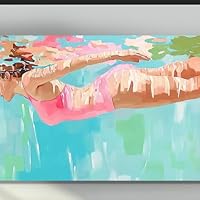
3.5 stars. This book took me a day to process my thoughts, and my review. First off, the cover is probably the prettiest and the most amazing cover I have ever seen. Second, Dungy's writing is just beautiful. When she was in her garden, I was in her garden, smelling the smells, yelling at her husband for doing something different, watching rabbits. I learned a lot about history of many states, gardening, animals, and nature. In fact, my favorite was learning about the trees in our city and why they are mostly male and how it relates to a lot of pollen. I also remember seeing the Sandy Creek Massacre on our drive from Houston to Yellowstone. I was curious, and looked it up to find out the details. We also didn't learn about that in school.
However, I didn't love this book. She's a poet first and foremost. This is a me thing, but when poets write full novels, I don't always enjoy the books. There are too many tangents and just writing on and on and on. This book did not have smooth transitions and cohesive themes in the chapters. Half the time, I didn't know what the chapter was about and how it related to nature. She even asks how Elijah's death in Aurora relates to nature? She gives this small explanation that I didn't get. She starts a chapter about a ranger she has a crush on, and spends the time talking about John Muir. She goes back to that ranger, but it was again, a small explanation. There were other details I felt left out or contradicted what she said earlier and I felt like I missed something.
You will get a sense of history, of nature, of gardens, of race, and of love in this book. And people really love this book. I just wished some of her thoughts were reigned in so each chapter was a cohesive theme. Or maybe I missed it. I would absolutely read another book from her, and again, her writing is beautiful. And OMG that cover. I want the painting on my wall.
This book has left me speechless in its profoundness . In all honesty I cannot do it justice in a review it must be read .The depths to which this poetic and lyrical author uses prose like cycles of nature and as symbols for deeper truths for cycles of violence against people of color in America ..
To this author the Guggenheim grant awarded support with intense depth in their insights regarding race, environment, femaleness , mothering and gardening This book is one that has forever changed my thinking and opened my eyes to the patterns of so many things the overextended majority culture does and the underlying messages it sends . I am carefully trying not to spoil this book in any way . This book is about gardening and yet so much about the magical ability for gardening to heal us when we need it most . I look forward to purchasing my own copy when it is released . Thank you Netgalley for granting me access to an epub file in exchange for an honest review .
Camille Dungy is brilliant. It took me a while to get through this book because her writing is profound. I learned so much about the intersection of gardening and African American history.
This isn’t a book everyone will like. If you aren’t into gardening and nature, you should skip it. If you liked Margaret Renkl’s Late Migrations, you’ll love this.
A favorite passage:
“‘Don’t hurt that tree. Trees are people too.’This is what it means to truly recognize another living being. What it means to love the greater-than-human world.”
Camille Dungy’s suburban garden in Fort Collins, Colorado, is a real garden, and she details its development and its tending, its plants and its other inhabitants. It is also a metaphoric window into her reflections on life and death, struggle and resiliency, history and society. As someone who is fond of gardens, I enjoyed the real garden even when her descriptions of it became catalogs; as for the metaphoric one, it worked for me sometimes but became a little stretched and tired by the end.
Dungy, a writer and professor, received a Guggenheim Fellowship to write this book in 2020—but of course in 2020, none of our lives worked out as planned. Soil admirably captures the malaise and anxiety of that horrible year, but the book suffers from the disruptions she fought her way through to write it. From needing to teach and supervise her child at home every day when she’s supposed to be writing, to the particular agony of being Black in America in that year when police violence toward Black people was so gruesomely in the news, to the drawn-out agony of its fire season for westerners, she faced plenty of challenges. Although her husband lost several family members, the pandemic didn’t loom terribly large in her daily life or her narrative: she had a home to stay in, she and her husband both had jobs they could pursue remotely.
Early in the book, I found a lot of pleasure in the elegant way she would step back from narration of an incident to a broader take on what was happening. whether it’s showing the universal in the particular or simply illuminating a core element of someone’s character, it is deftly done. Telling a story about a chaotic morning when a large load of topsoil is delivered in the middle of high winds, she lets us know in a few words who her husband is. “When I told Ray I didn’t know the proper name for the broken digging tool, he didn’t laugh at me. He accepted the fact that I am still and always learning. . . . By asking the soil delivery man what size tarps he should buy [to cover the soil], Ray made space for someone else’s wisdom in our garden, which is one of the most important keys to survival and success we have learned.” These little moments of opening out the subject matter were often delightful.
She shows awareness of this narrative tactic when she says, “Maybe this is what it means for me—for this Black woman, this mother, the subdivision dweller with a little yard she tends—to say I write about the wide wild world. Maybe it is just a matter of figuring out what can be seen in this light.” Notice how the phrase “what can be seen in this light” develops layers. It’s possibly her greatest skill, but to my ear she overused it. By the end I was tired of waiting for that single metaphoric line to come—to sum up the topic she’s addressing, to show its wider resonances, to take us from the particular to the general. I kind of wished she had used it more sparingly, for the highest-impact moments.
That said, the garden and her work in it make a strong center for the book. Her struggles, setbacks, learning curve are simultaneously worked through and represented in the developing space. It teaches her patience and a path to triumphing over adverse conditions. It gives her a safe haven in a turbulent, dangerous world. It gives her an occasion to delve into the sorry history of greed, exploitation, domination, and destruction that is the history of the West. As a southern California native, I know well the complicated stew of love and pain and anger and loss one experiences in western landscapes. She also captures the pervasive unease that ate into us all during the year 2020, as we were forced to adapt and relinquish and surrender so much, from routines to loved ones to our sense of safety in the world and the belief that we have the ability to plan our lives.
Reading between the lines in the book, I can see that she’s not the type of gardener who systematically plots out a coherent, harmonious landscape; she’s more of a maybe-I-have-time-to-cut-another-bed-today and ooh-that-plant-looks-fabulous-I have-to-buy-it! kind of gardener. Both can create magical garden spaces. But the former type would create a book I’d find more ultimately satisfying, I suspect.
Soil: The Story of A Black Mother’s Garden By Camille T. Dungy
⭐️⭐️⭐️⭐️💫
In 2013, Camille T. Dungy accepts a university position and transplants her family from Oakland, California to the predominantly white community of Fort Colins, Colorado. Her family has history with the town she left when only a toddler. In Soil, Dungy imparts her seven year journey to dig up her south lawn to create a drought-tolerant flower field and haven for pollinators. Like so many passages in her memoir, diversifying her garden reflects her heritage, and is a metaphor for the need to move away from the homogeneity that threatens society and the future of our planet. Soil is a compilation of Dungy’s personal reflections on her life, the history of women and nature focused writing, scientific facts, African-Americans in the diaspora and their connection to the earth, as well as socio-political implications for preserving the planet.
Soil at times reads like a diary and at other times scholarly treatise. The reader will have to be up for both. In its personal and socio-political scope, Soil brought to mind Robin Wall Kimmerer’s Braiding Sweetgrass. A perfect read for Spring!
Look for it - Pub Date 02 May 2023. I’d like to thank @CamilleDungy, @NetGalley and @Simon&Schuster for the gift of this digital arc.
I loved Soil. I think it’s an important book about a black woman’s view of her life, of the environment, of gardening and diversifying it. It’s a memoir but contextualized by history and the unknown future of her daughter, the close calls of being black in America. I was saddened reading the story of dear Elijah McClain and his death at the hands of police in Colorado where Camille Dungy lives. I learned more about what happened and then I thought: why doesn’t someone make a film about these individuals whose lives have been cut down, or just about Elijah? I thank Camille Dungy for deepening my knowledge about this and more. The toxic environmental legacy in Oakland in the black community— a carelessness we see everywhere if we just connect the dots. Think of Flint Michigan. I enjoyed Camille Dungy’s rambling thoughts and her vision of social activism, and her process of gardening. She is a poet. It is worth reading this book. “Every person who finds herself constantly navigating political spaces— by which I mean every person who regularly finds herself demoralized and exhausted by the everyday patterns of life in America—should have access to such a garden.”
If I could recommend any two books in the genre of nature writing, it would be this book and “Braiding Sweetgrass” (Robin Wall Kimmerer). This book is a beautiful exploration of Camille T Dungy’s relationship with her garden, and the book includes expansive discussion of community, racism, history, and Colorado’s flora and fauna. This book expertly asserts that nature writing can be about the everyday relationship to nature, and that someone’s relationship with nature is often inextricable from the contemporary and historical social context. This perspective is vital and it was truly a pleasure to listen to this book.
Very insightful read and very refreshing to normal nature writing. An important voice to be heard and I think it’s a must read for anyone wanting to gain insight in intersectional environmentalism.
This book is both extremely beautiful and important. Dungy writes so poetically about her garden and the earth, while interweaving history of colonialism and discussion of anti black racism. The audiobook was lovely. Recommended.
This book was really spectacular. I almost never purchase books but I saw this in my favorite coffee shop / bookstore in town (shoutout Wolverine Farm Publick House) and was drawn to its title (@uthy). At first, I was thinking of sending it to my soil queen Dr. Vengrai but once I read the blurb and realized (1) it’s not a soil science book (thank god), (2) it was written by a local author, and (3) the plot sounded delightful, I decided to buy it and keep it for myself!!! And I’m so glad I did!!
It’s hard for me to accurately describe the genre of this book. I think the title and description of the book (“Soil: The Story of a Black Mother’s Garden”) don’t really do this delightful, thoughtful, expansive, and beautifully written book justice. It is more prose, or musings, perhaps… semi-autobiographical stories from Dr. Dungy who is (among many other things) a really talented writer, poet, lover of nature, lover of history, professor, Black woman in a white town, and devoted mother/daughter/wife/friend/community member. Throughout this book, you will learn about her life, her experiences, nature in the American West, social and environmental justice, the history of naturalism in the US, and so much more. And!!! And!! This book has beautiful little poems (written by the author) and photos of flower clippings and plants from the author’s garden scattered throughout the book, making this book not only a great read but a really beautiful physical object as well (the cover art is similarly beautiful!). I’m glad to own this book and not have to return it to the library!!
What a treat to read such a lovely book from a local Fort Collins author. I’m so glad I stumbled upon this book!











![Profile Image for laurel [the suspected bibliophile].](https://i.gr-assets.com/images/S/compressed.photo.goodreads.com/users/1645808644i/7494844._UX200_CR0,6,200,200_.jpg)