We love wayward children in literature. Not so much in life.
When Sally Rippin discovered her child was struggling to read, the best-selling children’s author assumed it would sort itself out over time. She couldn’t have been more wrong. Her son’s dyslexia and ADHD went unsupported for years, leaving him further and further behind his peers, and labelled as ‘difficult’ by an education system that couldn’t easily cater to neurodivergent kids. By the time Sally learned how to advocate for her child, it was – almost – too late.
This extraordinary book for parents is about how we learn to read and what can happen if we don’t, through the eyes of a parent who started out by doing everything the wrong way. Through meticulous research, interviews with educational experts and conversations with neurodivergent adults, Rippin shares her brilliant and eye-opening insights into how we can help all kids find the joy in reading, and advocate for them within our schooling system. After all, they say school isn’t for everyone, but if everyone must go to school – then why not?
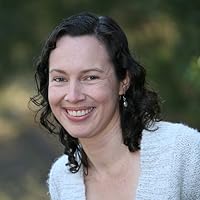
Sally Rippin was born in Darwin, but grew up mainly in South-East Asia. As a young adult she lived in China for three years, studying traditional Chinese painting. Sally has over seventy books published, many of them award-winning, including two novels for young adults. Her most recent work includes the highly acclaimed children’s novel Angel Creek and the popular Billie B Brown books, which became the highest selling series for 6-8 year olds in Australia within the first year of their release. Sally is Australia’s highest selling female author and her Billie B Brown books have sold more than 4.5 million copies in 14 languages. Sally is a popular presenter in schools and at literary festivals both in Australia and overseas and has a regular program on 3RRR interviewing children’s authors and industry professionals. She is a passionate ambassador for the 100 Story Building creative writing centre for marginalized youth and has mentored many emerging writers and illustrators. Recently, she and her partner co-founded Story Peddlers, a hand-made performance tent that packs away into a custom-built bike, with the aim of bringing back the art of the roving storyteller.
Today I come to you with my review of Wild Things by Sally Rippin , which was kindly sent to me by Hardie Grant Books.
As an educator, I'm cautious about picking up books about teaching and learning that are written by people outside the profession. I've experienced a few too many instances of 'teacher bashing' and I like to protect my soul from that harmful rhetoric. However, I can tell you that this book was such a blessing to read and I shed more than a few tears throughout.
Rippin not only manages to empathise with the job of a teacher, but also point out the flaws in the education system. Though we do everything in our power, there is so much more that could be done by our public education sector (and it would take away a lot of the stress educators are under as we try to support everything off our own backs and time, which is physically and emotionally impossible).
I found I read this with a unique perspective, having been an upper primary teacher and now working with the preps. I've seen both sides of the spectrum of diagnoses. Children who slip through the cracks, and working with families to support them on the cusp of high school, compared to students who are flagged and sometimes even diagnosed prior to entering primary school, already receiving external supports, student support group meetings, and adjustments to the learning program. Rippin's son's story could have been any child and is more common than one would like to think. Particularly at the moment as even those parents seeking support for their children are on waiting lists of 6-12 months in the aftermath of continuous lockdowns.
I also applaud Rippin on her research of reading processes and how one learns to read. It is spot on and aligns with best practice. I highly recommend this to any parent who wants to know how to best support their child at school.
Now excuse me whilst I go write up individual learning plans for a large number of my students.
I came to this book as a high school teacher librarian, hopeful that it may give me some tools to help the students in my classes with dyslexia, whether they’ve been formally diagnosed or not. After all, the blurb on the back does read, “Wild Things is about how we can help all kids find the joy in reading…” I really didn’t find much that was helpful on this front, although quotes from a teenage dyslexic have given me a couple of things to investigate further. I think I was expecting an evaluation of the supports that are available but those that I already know of weren’t even mentioned.
This book is strong, however, on presenting a parent’s journey through the very challenging years of her son’s ‘education’. It is therefore very strong in engendering empathy for parents and children in Sam’s situation. It doesn’t hurt at all for teachers to have a better understanding of the perspective of the neurodivergent children in their charge.
Sally Rippin has provided a recommended reading and viewing list for further learning, so perhaps I’ll find more of what I’m after amongst those titles.
It feels odd giving star ratings to a book like this. But I am so glad I read Sally Rippin’s account of her own experience with a child who struggled to learn to read, and her subsequent deep dive into learning to read, and what happens when you don’t. Although I work in education, and consider myself pretty well-versed on the content of this book, I was shocked and challenged, both by some of the flaws, gaps, and inadequacies of early reading instruction in schools, and the complete faith I’ve put into the ‘reading family culture’ approach to child-rearing. I’d consider this critical reading for parents and educators, and it made me realise the privilege I (and my child) have because I (now) know enough about reading instruction and development to be able to ask the right questions, provide the right support and interventions, and advocate where needed.
Interesting enough, but it’s unlikely I would have finished this if I hadn’t been listening to the audiobook.
I read this as I’d hoped to learn strategies of how to teach a child to read and pre-school routines; however, this book is ‘not what it says on the packet’. It’s more accurately 80% a memoir of a mother struggling with her own complexes and ego in learning her son has dyslexia and ADHD.
Thoughts: • This is a deeply personal book about Sally Rippin's experience of raising a neurodivergent child with learning difficulties. It's less about how reading is learned and more about the challenges that come with lack of intervention and support, including the significant impact on behaviour, self-esteem, and mental health. • I didn't read the Billie B Brown series as a kid (I was a couple years above the target age group when they first came out), but it was pretty cool hearing about Rippin's inspiration for the books. • A significant part of it focusses on Rippin's own struggles in coming to terms with her child having dyslexia. Her child was also diagnosed with ADHD, leading to a journey of myth-busting and trying to figure out how her kid's strengths and needs could be supported in the school environment. It's a highly individual story and not intended as guidance for every case, which the author acknowledges. • Key takeaways: Early intervention improves outcomes. Reading does not come naturally like speaking, it is a skill that must be learned. The public education system would benefit hugely from better resourcing. Co-occurring conditions make each case uniquely complex. Without the appropriate support, kids with learning difficulties will develop a limited sense of potential and poor mental health, eventually leading to disengagement from school. Parents of kids with additional needs often blame themselves or question their competence as parents, when their kids require different types of support specific to their individual circumstances.
This was an excellent read and for the people who relate, surely a sorely needed book. The title is slightly misleading - it is less a non-fiction book about how we read and more a memoir from a children’s author who misses her third son’s dyslexia and ADHD. Sally’s journey discovering this and working through how to help her son once she does realise is fascinating. Sally is honest, reflective and thoughtful about this experience, both truthful about her own mistakes and kind to herself about the things she regrets. As a professional storyteller, the narratives are wonderfully written and immersive - though the ‘explainer’ sections are slightly less compelling. Overall, loved it!
Loved this memoir of one of my favorite children’s authors. As a mother, I really appreciated her vulnerability in sharing her story of raising her son, who’s dyslexic and has adhd, and the things she would’ve done differently. Lots of nuggets of wisdom. The audio version is read by author and well done.
A raw and honest experience of parenting and schooling that documents what can happen when a child does not fit into the traditional model of success and the support mechanisms, for various reasons, haven’t been there. Rippin has woven a great deal of research throughout the book that is relevant for parents or those who work with or care for young people, as she has covered a range of ‘red flags’ to look out for in order to seek support and early intervention. I appreciated the extensive list of resources provided and think this text would appeal to parents, those with young people in their lives, teachers, and health workers.
This was mainly the personal journey of Sally with understanding her son’s dyslexia etc. so I didn’t feel like I got what I was seeking from this read.
Wild Things is the kind of book about reading I think everyone should read. Diving into the struggles of someone parenting a child with or someone experiencing a learning difference because of a neurodivergent brain is both enlightening and empathy building. Sally Rippin is the author of the chapter books that turned my girls into avid readers and I was present at the conference she opens her book discussing, so I felt very connected to her story and the tips she shares for what she would have done differently.
Great research and informed real world experiences of neurodivergence in the schooling system. Relatable and empathetic towards the challenges for those working in the Education sector, with the limited resources to support the variety of needs for people who identify as neurodivergent. Rippin gives personal accounts of her family and the realistic advocacy she has done to support the needs of her son.
Written by an incredible children's author, Wild Things is a great read for parents, teachers, and anyone who works with children who may present differently than the traditional norm. As a parent with a behaviorally challenging child I was able to glean many tid bits that I can utilize with his teachers and hopefully get better responses for his schooling. If read with an open mind, this book can be relatable to aspects of parenting, teaching, and all- around communicating with kids.
Great book for anyone who struggles (or who has a child who struggles) with dyslexia and/or ADHD.
As a parent with a child who has dyslexia this book helped me realize what I can do to help my child and that they can absolutely succeed despite being neurodivergent. I got teary-eyed reading some of it because it hit home and helped to know that there are others experiencing similar struggles.
It also brought up some valid insights about our school systems and challenged the why's of some of things that are done in them.
I thoroughly enjoyed reading this book by Sally Rippin about her parenting journey of a child with Dyslexia. It is definitely more memoir then it is a guidebook on how to help someone with Dyslexia, but that is probably what kept me reading it. If you’re interested in stories about parenting a child with dyslexia or a neurodivergent child then I would recommend this book.
Very interesting read, especially for teachers working with students who have dyslexia. It has a simple breakdown of the science of reading, but more delves into the parent's and student's perspective of struggling in a system that is not made for them. I really love Sally Rippin's children's books, so it was interesting seeing the inspiration behind her 'School of Monsters' and other titles series.
This is a book about a children’s author and her journey with her son as she discovers he has dyslexia.
There’s some really good relatable parts of this book and then there’s parts where she loses me. I think it’s maybe because she’s frequently tentative, perhaps too careful and eager to not offend.
Memoirs can be so powerful. This seems... blunted by the author’s self-censorship. Understandably so as she has written a book about a person who she loves… Then again, sometimes she seems to not want to offend anyone whatsoever. Not even the teachers who consistently put her son down every time he showed some interest in academics.
3.5 stars… because I can’t quite decide whether I liked the book or not even though I did value its insight into dyslexia and ADHD and the consequences of not seeking early intervention for your child.
I really wanted to like this book. And expected to with such great reviews. But it’s just so narrow. The expectation that children have to fit into the school system no matter how damaging it is to them lost it for me. Learning and development is so individual and should be treated as such especially for children who are struggling! I see what the author was trying to do here and I see how hard she tried to advocate for her son but upholding systems that aren’t adequately supporting children isn’t the way forward.
This review is actually for the self-narrated Audiobook version (not in Goodreads catalogue at time of this review) ISBN 9781038629760; Published Dec 1, 2022 by Bolinda Publishing Pty Ltd - ABC Audio
This book got so many things right, that it frustrates me to say that I didn't enjoy reading it, or learn anything useful from it. Despite being the right demographic, I am clearly not the actual target audience.
In this autobiographic account, Sally Rippin tells her own story about being the parent of an under-supported dyslexic child. I'm glad that it's her own story of her own experience rather than speaking for her child, but at the same time I wonder if the world needs another lockdown memoir of Privileged white woman? ..because it's quickly becoming one of my least favourite genres.
Readers who are Autistic, ADHD, Dyslexic, Dyspraxic, Dyscalculic etc. will be happy to know that the research the author did for this book relates the experiences of Neurodivergent adults, and is base in the Social Model of Disability. If this wasn't the case I would have easily slipped this book down to a 2 or 1 star read. I'll admit to having a heaping helping of confirmation bias when she relates the most recent scientific theories on brain development, literacy acquisition, and neurology, but unfortunately for me she is talking to points that I am already familiar with.
I'll admit to being frustrated when she oversimplifies some terms (such as Executive Function) so far that they fail to convey any really useful meaning. She refers to "phoneme (word sounds) : grapheme (letter/symbols) correspondence" or phonics, and "images" of words (what educators might refer to as Sight Words, or logographic cue system) in her description of how reading is done and ignores all the other cue systems that happen alongside those in fluent readers. This is not actually a parent focused primer on how literacy works, despite the subtitle of the book.
It was really interesting to me to compare my own experiences of literacy acquisition with the claims she made about it. Much of the description was told from a Neurotypical viewpoint, and from the point of view of a bilingual language learner. My own experience is as an Autistic learner who has also studied some Japanese and Chinese (among others), done courses in teaching literacy, and supported my own Neurodiverse children. Where she recounts the findings of literacy specialists she makes claims of the "unconscious" things that people do while reading, and in my experience I am aware of those things. For me they are not unconscious.. often they are very fast, but it seems that I can see a lot more of what is going on with reading and writing, communication and language than typical folk do.
The author is clearly interested in reaching out to other parents and giving them hope. It's a little hard to turn her experiences into useful strategy for care of a dyslexic child, though. This is a woman who is used to having enough to get by; she refers to having tutors for her son, and having access to educational psychologists. This is well out of reach for most of the parents I know, and though the systems in Australia are similar to those in my country (New Zealand) they are not the same, so any specifics of how to seek help are only ever going to be relevant to readers from her own neck of the woods. Woe betide those who live in countries where there is no "public system" and who have to scrape up the many thousands of dollars they would need for privately funded accommodations. I have made specific requests in various places to have one of my children assessed for Dyslexia (because I can see it, even if it is masked by otherwise brilliant problem solving), only to be told "your child is coping well enough".
I was triggered to rage when she recounted her experience of having her child assessed to rule out ADHD. As a parent who has known for years that ADHD is part of my children's Neurodivergent cocktail (their father is diagnosed), I have had nothing but roadblocks in place when attempting to seek medication for my child. Having come to a crisis point, and after having implemented years of supports informed by decades of living with ADHD teens and adults, I finally applied (twice) to have my child assessed for ADHD. Having passed a screening test ("oh your child is most likely ADHD... Inattentive type") it was a sting to then be rebuffed from having an actual clinical diagnosis because "we think that there would be no benefit in medication because your child is not hyperactive". An entire section of this book tries to sell parents on the idea of medicating their child and listening to offers of help from professionals, when I know it will help mine but I'll have a long fight yet to get access to that medication.
Over the course of the book Rippin mentions many novels and authors of children's books from Pippy Longstocking to Percy Jackson. It would have been splendid if she had investigated how Rick Riordan pronounces his name, because that isn't it. How narrators (mis)pronounce things is one of the frustrations of being limited to Audiobook format due to my visual impairment.
I'll check my privilege if you check yours :P This is a book written with kindness and vulnerability. I hope it will be helpful for other parents and ultimately that their children will thrive.
“The education system we use today was set up over a hundred years ago to service the Industrial Revolution and it has barely been updated since, other then to make it more shameful than ever for a child to fail in an environment that doesn’t meet their needs. The ‘factory model of education’, was created to form docile factory workers willing to obey commands, not independent and unconventional freethinkers.” - Sally Rippin 💜💜💜💜💜 It always feels strange giving a rating to a story about someone’s lived experience but I will forever be grateful for @sallyrippinauthor and her novel “Wild Things”. I will admit I was scared at first to read this as I was worried it would be boring, but also that it would reinforce that my daughter is “behind” and “not normal”. Being the huge reader that I am, I was embarrassed by the fact that my daughter can’t read in grade 3 and might have dyslexia, on top of her diagnosis of autism. But this book helped me to see that my daughter is smart and brilliant in all her own ways, and my embarrassment did not come from her, but rather from the unattainable societal expectations put on children and the unnecessary and untrue blame that is placed on mothers when our children aren’t “up to standard”. Thank you Sally Rippin for writing a book that is so touching and so well researched. Thank you for giving a voice to what mothers like myself (and you) have been feeling and dealing with and thank you for presenting it in such an easy to comprehend way. I devoured this book in a day and feel stronger and more prepared to support my child through her many assessments and therapies and interventions knowing I am not alone. I cannot recommend this book enough! “Accepting that my child had a disability also gave me permission to seek out connections with other parents, who shared advice, comfort and support in real life and in online forums. There is something deeply reassuring in finding other people who share the same struggles as you, and it is deeply humbling to be reminded of how many more challenges so many others face.” -Sally Rippin
I found this book so important for parents and educators! Thr need to connect through a parents empathising eyes supoorts contemporary needs for parents to have more transparency in the schools and belong to the educstion process (beyond parent competition and shaming for diversity). Sally Rippin shares her feeling inadequate and shame , from the opinioms of other parents, at the school gate with us to connect and also question parental and school attitudes. "If everyone must go to school" why simply brush off with "Oh well, school just isn't for everyone".. She asks, "Why not?" This is important because they are our kids and the kids are the future why are they sitting in a classroom labeled "disengaged"? I have children who have struggled with bullying, boredom, Worksheets, and school perspectives. It's a legal requirement to attend school, and my children have questioned that and asked What's it for? My daughter, wisely says, NAPLAN is for the teachers to plan for my learning and then she adds, I am not studying! She, unlike some parents who compete using NAPLAN as a bragging strategy, feels school should be about her and the way she learns. She hasn't found this yet and maths has been an increasing gap that school life hasn't connected her (she's not one to leap). I really appreciated Rippin's references and evidence to support me as a parent looking for more to support my own children. Thank you for the Bug's first day sentiment "I can't do anything..." Empathising with the child in their world is just as important as supporting the parent. The child loses hope in a world they need to feel they belong. Rippin offers us a chance to connect with our children to support their feelings of belonging developing in a competitive, world that feels more like purposeful cruel and neglectful humiliation, than belonging in a place that's warm, kind and friendly like home. Thanks
Sally Lippin's 'Wild Things' offers a poignant exploration into the complexities of raising a child with a neurological disorder, underscoring the importance of compassion, patience, and early intervention. Lippin compellingly argues that denial by parents regarding their child's unique needs can delay crucial support, potentially impacting the child's self-esteem adversely. I concur with the author's emphasis on the significance of recognizing and accepting differences early on to facilitate a smoother upbringing for both the child and the parents. What particularly struck me in the book was the discussion on the role of medicinal interventions in managing certain disorders. While, like Lippin, I harbor reservations about the reliance on pharmaceuticals, understanding their benefits and drawbacks is vital to mitigate potential side effects. The book champions the concept of community in child-rearing, advocating for a supportive network that fosters trust and confidence, irrespective of a child's neurological capabilities. Lippin also delves into the challenges faced by neurologically diverse children in accessing education, highlighting the need for empathy and concerted efforts to make schools more inclusive environments. This aspect of the book resonates deeply, reminding us of the ongoing journey to advocate for these children. In essence, 'Wild Things' sheds light on the trials and triumphs of parenting a child with dyslexia, urging readers to adopt a more informed and open-hearted approach. I believe this book is a valuable read for anyone looking to understand the nuances of neurological diversity in children better.
While browsing in BorrowBox (the new borrow app my library is using for borrowing ebooks & audiobooks), I've come across this one and recognised the author's name from her book which I read recently (Polly and Buster: The Wayward Witch & the Feelings Monster). In this non-fiction book, Sally talks about her experience as a mother of a child with learning difficulties. This is a topic I'm quite curious about, so I had to borrow it straight away. The fact that it's read by the (Australia) author is a super plus for me!!
Sally shares her journey with her younger son, whose problems at school she dismissed early on, until she realised he needed some more specific support. He started being behind his peers in reading, had trouble following classes and became a disruptive kid at school. He was later (almost too late, Sally believes) diagnosed with dyslexia and ADHD. So it's a lot about her personal struggles to be able to help and find the right help in the (Australian) school system, but I've found it a good wake up call book to help parents/carers/teachers recognise early signs of learning difficulties (which might lead to behavioural problems when kids can't follow what's happening in classes). She also shares some of her learnt lessons and advice so that the children can be supported in their journey into independent adults.
I listened to the audiobook on Spotify, but Goodreads isn’t showing an audiobook option. I think it was the way to go because I’m not sure if I would’ve sat down and read the whole book, even though it’s an easy read.
As other people have said, the title is a bit misleading. It’s more of a memoir about Sally’s struggles with her son who has dyslexia and ADHD. It’s directed at parents, and I think it does a pretty good job of summing up some of the Science of Reading and the issues around the way reading has been taught in schools, which fortunately is changing.
As a teacher, it didn’t tell me anything I didn’t already know about how to support these students. Even when she was talking about meetings with her son’s schools, she didn’t really say what she wanted them to do to support him. Obviously early intervention would have been great, but when that doesn’t happen, what does the evidence say about literacy intervention (for dyslexics and others) in high schools?
A lot of the time, parents refuse to accept that their children might have learning difficulties and won’t get them assessed. Maybe if they read this book, they might change their minds, but would they read this book? We definitely need to get the message out there, and in schools we need to assess students’ knowledge and skills in a variety of ways, not essays for the sake of essays.
Wild Things is a book all teachers, librarians and parents should read. Sally Rippin writes with candour and honesty as she draws upon her knowledge as a writer, her research into reading and literacy, and her experience learning to understand her son’s dyslexia and ADHD and his challenges in the school system that failed to support his learning needs.
This book is a memoir, a reflection on Sally’s experiences and journey to understanding her son’s learning needs and how to advocate for him within a schooling system that struggles to adequately support students. Rippin does not stray beyond her expertise, so if you are looking for a guide to differentiation or strategies to employ in the classroom for your students, look elsewhere. But the power for teachers and librarians is this rare insight into a parent’s perspective of learning needs. It is also not a guide for parents on dyslexia, supporting learning to read or the mechanics of reading. It is, however, powerful and emotive and an important perspective in the growing literature on learning needs.
I have purchased a number of copies for my school library teacher reference and parent collection.
I can’t write this review without acknowledging the vulnerability that Sally shows in this memoir. This is a story that should be read by parents, teachers, and anyone who works with children. The way that Sally opens up about the entire journey of helping Sam is quite poignant. This was such a perfect blending of her experience and the research behind reading and reading struggles. As an educator, she made it clear that the challenges of the classroom are seen and she didn’t place blame for the failures of our system.
The recommendations for both parents and teachers regarding how you can create a team effort to help students with learning difficulties were spot on. I wish that I could give this book to every one of my friends and even more so, to those who feel like they have failed in some way because their journey with their child is not exactly as they had imagined.
Thank you Sally for your beautiful words about finding beauty and potential in every child and every journey through school.
Sally Rippin deep dives into much more than how we learn to read, and what happens if you don't, or if you miss crucial milestones. There is depth in exploring interpersonal relationships, self-esteem in our young children and teenagers and how to cope with an educational system that wants to teach only one way.
This book gave some wonderful insight into the struggles faced by parents when their child faces learning differences. I really enjoyed the way that Sally delicately but thoroughly examined what happens to children when their learning trajectory lies outside the "norm". As a parent to a child who is not yet in formal school yet faces his own learning difficulties, so much of this book resonated with me.
I found there were parts I couldn't stop smiling for her son's (and Sally's) successes. There were also times I couldn't stop crying, as a truly empathic response to a parent hurting. This book is an important read for all parents, even if you feel you have it all together. Especially if you feel you have it all together.
I read this book as my children and I love Sally Rippin’s books for kids and my son is about to enter kindergarten. It is a surface level insight to understanding the signs of dyslexia with broad suggestions on how to navigate advocating for your child through the school system. I love Sally’s vulnerability as she shares her struggles, failures, and successes with understanding and advocating for her son. I especially love summary of the tips and take-aways and the list of resources for a deeper dive if you want that she provides at the end of this book. I will definitely be recommending this to everyone I know - I think if you have a child that is about to start school, a child that is struggling within the school system, if you’re a teacher or interact with children on a regular basis, then you should read this book! You never know when this information would be helpful and we (now) know the earlier you can intervene, the better for the child!