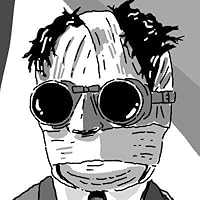
Over the last three decades Jeff Wall has redefined the photographic image in art. His stunning large-scale photographs exude the dramatic power of history painting with utterly contemporary subject matter (everyday scenes from modern life) and materials (colour transparencies in light boxes). Each of his photographic tableaux is meticulously constructed - carefully staged, precisely lit and, since the late 1980s, digitally adjusted - in a process that the artist often compares to cinematography.
Wall has sometimes referred to his photographs as `near documentaries` because they frequently come from scenes he has witnessed in passing and recomposed later. But he also disavows any claims to photographic truth, constructing many of his pictures around works of art and literature, such as the writings of Franz Kafka, Ralph Ellison and Yukio Mishima and the paintings of Hokusai, Delacroix and Caravaggio.
Set in a variety of locales both real and fictional, from Rome to Tijuana, many of Wall’s photographs depict Vancouver, where the artist has lived since birth. With clear-eyed detail they provide a glimpse into moments of social intercourse, private reflection or systemic violence that transcend their setting while maintaining utter fidelity to it. It is a world stripped of spectacle but suffused with humanity, pathos and a touch of fantasy. It is unmistakably the world of Jeff Wall.
Jeff Wall: The Complete Edition features Wall’s entire body of work, from his 1978 breakthrough photograph The Destroyed Room to a suite of recent works seen here for the first time. Accompanying these images is the most comprehensive collection of interviews and essays on his work ever published. Beginning with Thierry de Duve`s authoritative `The Mainstream and the Crooked Path` and concluding with Mark Lewis`s `Jeff Wall: Photographer`, commissioned specially for this volume, these texts examine each stage in Wall`s career, providing unparalleled insight into one of contemporary art`s foremost bodies of work.
In addition, an extensive collection of Wall`s own essays opens a window on the thinking of the famously cerebral artist. A dedicated student of art history, philosophy and contemporary society, Wall is generous and eloquent in his writing. His essay on Manet (`Unity and Fragmentation in Manet`) offers insights into the conceptual and pictorial strategies of the French painter. A meditation on photographic process (`Photography and Liquid Intelligence`) augurs the dramatic shift from chemical to digital that has transformed the medium. A statement on film (`Cinematography: A Prologue`) begins with a careful parsing of that medium`s relationship to time and ends as a reflection on photography`s liberation from its documentary function.
Also included is a full bibliography and a complete chronology of Wall`s exhibitions, which include solo surveys at the Museum of Modern Art, New York (2007), Tate Modern, London (2006), and the Museo Nacional Centro d`Arte Reina Sofía, Madrid (1994), as well as major international group exhibitions, such as the Venice Biennale (2001), the São Paulo Biennial (1998) and Documenta (1982, 1987, 1997 and 2002).
Jeff Wall is a leading contemporary Canadian photographer.
Wall's work is concerned with ideas about the nature of images, representation, and memory. His large-scale photographs appropriate the visual language of advertising in their use of backlit transparencies and large scale. The subjects are “cinematographic” reconstructions of everyday moments, fiction, and art history, which he refers to as “near documentary”. “[Near documentary] means that they are pictures whose subjects were suggested by my direct experience, and ones in which I tried to recollect that experience as precisely as I could, and to reconstruct and represent it precisely and accurately,” he said of his process.
Born on September 29, 1946 in Vancouver, Canada, he received his MA from the University of British Columbia in 1970. Mainly focusing on academia during the following decade, he studied with the famed British historian T.J. Clark at the Courtauld Institute of Art in London. A Conceptual artist and art historian until the 1980s, Wall began creating photographs styled after artists including Hokusai and Édouard Manet as well as novels like the Invisible Man. In 2012, a print of his image Dead Troops Talk (1993) broke auction records at Christie’s and became the third most expensive photograph ever sold at the time.
Today, his works are held in the collections of the Tate Gallery in London, the Art Institute of Chicago, the Hammer Museum in Los Angeles, and the Kunstmuseum Basel, among others. Wall currently lives and works in his hometown of Vancouver, Canada.