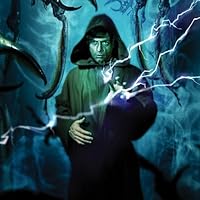
In the aftermath of Star Wars Episode VI Return of the Jedi, the heroes of the Rebellion face new challenges -- and new dangers! Leia must choose between joining a new Republic government or continuing as a warrior for peace! Han Solo and Lando Calrissian find themselves in a tough spot when Chewbacca's family is threatened! Luke Skywalker is haunted by thoughts of his dead father Darth Vader, as he faces another Dark Lord -- and a new foe, the dark lady Lumiya! The Ewoks go to war! The Nagai attack! And it all culminates in a multi-pronged invasion of the planet Zeltros! Plus: Return to the original Marvel years in a special modern story featuring several of the era's fan-favorite characters!
Ann Nocenti is most noted as an editor for Marvel Comics, for whom she edited New Mutants and The Uncanny X-Men. She made her comics writing debut on a brief run of Spider-Woman (#47-50) and subsequently wrote a long run of Daredevil (1st series) #236-291 (minus #237) from 1986 to 1991, directly following on from Frank Miller's definitive Born Again storyline. She also wrote the 1986 Longshot limited series for Marvel, and in the same year produced the Someplace Strange graphic novel in collaboration with artist John Bolton. She wrote "the Inhumans Graphic Novel" in 1988. In 1993, she wrote the 16-issue run of Kid Eternity for the DC Comics imprint Vertigo.
In Incredible Hulk #291, published in September 1983 (cover date January 1984), Ann Nocenti made a cameo appearance, talking to Dr. Bruce Banner, in a history written by Bill Mantlo, drawn by Sal Buscema and inked by Carlos Garzón and Joe Sinnot. That time Ann Nocenti was Assistant Editor for Larry Hama on Incredible Hulk and X-Men.
She is noted for her left-wing political views which, particularly during her run on Daredevil, caused some controversy among some fans who didn't agree with her politics.
She created several popular characters, including Typhoid Mary, Blackheart, Longshot and Mojo, and wrote the 1998 X-Men novel Prisoner X.
Although Nocenti left comic books in the '90s after the industry sales collapsed, she later returned to the field, penning stories such as 2004's Batman & Poison Ivy: Cast Shadows.
In Ultimate X-Men, a reimagination of the X-Men comic, the character Longshot, who was invented by her, has the civil name Arthur Centino. His last name, Centino, is an anagram of Nocenti and a homage to Nocenti. The name Arthur is for the co-creator of Longshot Arthur Adams who was Ann Nocenti's artist on the Longshot Mini Series.
She edited High Times magazine for one year (2004) under the name Annie Nocenti and is the former editor of the screenwriting magazine Scenario.
These Star Wars stories on their own are alright... but as the ending of a 9 year saga and over 100 issues? The Story of Star Wars doesn't get sent off with a bang, it lands with a thud
With this sixth and final volume, The Original Marvel Years comes to a satisfying close, reminding readers why Marvel's first Star Wars comics remain such an important—and wonderfully eccentric—part of the franchise's history. Set in the immediate aftermath of Return of the Jedi, these stories venture into completely uncharted territory, written years before the Expanded Universe had established what happened after the fall of the Empire. That gives the book a refreshing sense of freedom. Leia struggles to define her role in a galaxy at peace, Han, Lando and Chewbacca find themselves embroiled in dangerous new adventures, and Luke is forced to confront both the lingering shadow of Darth Vader and the sinister Lumiya, one of the most memorable villains to emerge from this era. What makes this collection especially enjoyable is its sheer unpredictability. One moment you're reading political intrigue, the next you're watching the Ewoks wage war, then you're plunged into conflicts involving the Nagai and the Tofs before everything builds toward an entertaining, large-scale climax on Zeltros. It's a reminder of a time when Star Wars comics weren't constrained by decades of continuity and could boldly experiment with new species, factions, and ideas. The artwork changes significantly from story to story, reflecting the many creative teams involved. While the visual styles are sometimes inconsistent, they also give the collection a distinctive personality, capturing the energetic and occasionally wild spirit of 1980s Marvel comics. Not every storyline lands equally well, and some ideas feel undeniably dated, but that's part of the charm. These comics occupy a fascinating place in Star Wars history: they bridge the gap between the Original Trilogy and what would eventually become the vast Legends continuity, all while following their own unique creative vision. The modern bonus story at the end is a welcome epilogue, celebrating this forgotten corner of the galaxy and paying tribute to the characters and adventures that kept Star Wars alive in comic form long before the Expanded Universe truly flourished. For readers willing to embrace its nostalgic tone, occasional campiness, and boundless imagination, this final Epic Collection is both a rewarding conclusion and a fitting farewell to Marvel's original Star Wars saga.
My favorite of the original Marvel era collections. I think the last few arcs were some of the best in the entire series. The story around the Nagai and the Tof are cool, and the Nagai felt like precursors to the Vong in the New Jedi Order series.
The special continuation from 2019 was cool as well, though I felt it was trying to hard to tie up so many plot threads in a single oversized issue. The jump from issue 107 to 108 made the drastic difference in the quality of art so apparent. I know many like the old 80s style art, but to me most modern comics just look so much better.
The issue where Luke constructs a red shoto lightsaber to combat Lumiya's whip weapon is one of my favorite moments in the EU. I'd like to give it a super positive rating just for this, however the other issues of this volume are just meh. 3.6/5