

What do you think?

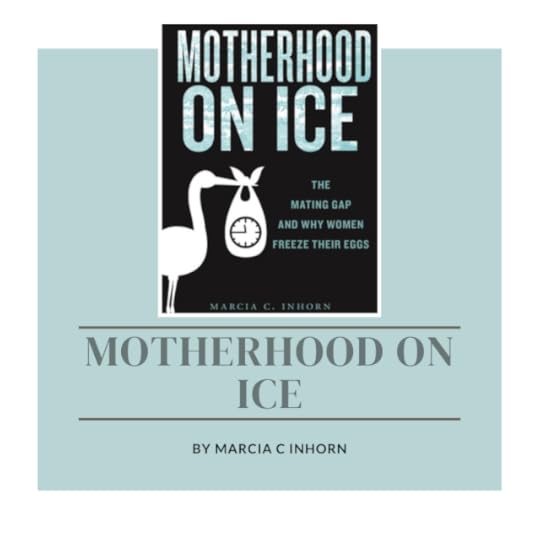
Motherhood on Ice: The Mating Gap and Why Women Freeze Their Eggs
"Why are American women freezing their eggs? Motherhood on Ice answers this question through the stories of more than 100 women who pursued fertility preservation. Egg freezing is women's technological solution to the mating gap-or the lack of eligible, educated, and equal partners who are ready for marriage and parenthood"--
- GenresFeminismNonfiction
352 pages, Hardcover
Published May 1, 2023
Ratings & Reviews
Friends & Following
Create a free account to discover what your friends think of this book!
Community Reviews
Displaying 1 - 26 of 26 reviews

Want to Read
March 1, 2023I’m right in the target demographic on which this book focuses — but I often feel alone in my worries and in my feelings about dating. As far as I know, Inhorn did not intend Motherhood on Ice as a self-help tome, but I have never read a book that made me feel so understood and seen. Reading the experiences of women similarly situated to me was really emotional and gave me a new perspective on my own life while also equipping me with a lexicon to describe things that have historically been hard for me to articulate.

July 3, 2023
An academically rigorous ethnography of 150 women who have frozen their eggs, “Motherhood on Ice” develops a provocative thesis: women don’t freeze their eggs because they want to “focus on their career,” they do so because they have tried and failed to find an adequate partner and are trying to secure a chance at parenthood. This book builds on the concept of the “mating gap” established in texts like “Dateonomics”: the growing gender divide in college graduation rates has created a paucity of educated men in the dating market. This thesis was simultaneously highly validating and extremely anxiety-inducing! I am glad to see Inhorn surfacing this issue for more general attention all the same.
I also really appreciated the chance to follow individual women on their journeys and understand what the egg-freezing process was like. I thought Inhorn was a very compassionate and thorough narrator and I appreciated that this was an academic text first and foremost. So many thoughtful angles were covered, including the roles age, race, job description, expense, cancer diagnosis, relationship status, and more played in the experience.
I appreciated the chance to learn about women’s journeys to get egg freezing benefits (that would automatically be covered if they were married, ugh!) covered by their employers’ benefits, and how isolating it could feel to be the only single woman at an IVF clinic. Inhorn also put out a general call-to-action to make sure to speak to your doctor proactively about fertility, as it is extremely common in the US for doctors to never offer input unless prompted. A lot of women surveyed simply waited too long which was very challenging to read about.
While this was largely a stressful/activating book for me, I’m glad I read it; forewarned is forearmed, and Inhorn’s compassionate voice was the spoonful of sugar that helped the medicine go down!
I also really appreciated the chance to follow individual women on their journeys and understand what the egg-freezing process was like. I thought Inhorn was a very compassionate and thorough narrator and I appreciated that this was an academic text first and foremost. So many thoughtful angles were covered, including the roles age, race, job description, expense, cancer diagnosis, relationship status, and more played in the experience.
I appreciated the chance to learn about women’s journeys to get egg freezing benefits (that would automatically be covered if they were married, ugh!) covered by their employers’ benefits, and how isolating it could feel to be the only single woman at an IVF clinic. Inhorn also put out a general call-to-action to make sure to speak to your doctor proactively about fertility, as it is extremely common in the US for doctors to never offer input unless prompted. A lot of women surveyed simply waited too long which was very challenging to read about.
While this was largely a stressful/activating book for me, I’m glad I read it; forewarned is forearmed, and Inhorn’s compassionate voice was the spoonful of sugar that helped the medicine go down!

August 21, 2024
“The odds are good, but the goods are odd.”

June 8, 2023
I had a keen interest in this book due to a family history of infertility and struggle that I sought deeply to understand, and with it came a pleasant entertaining source of knowledge and a new outlook. It helped disprove some beliefs I had towards egg-freezing, something that, as I am a minority myself, saw as more of a endeavor for white women. It did also, however, help cement some beliefs.
The book is extremely well written, and while the author does use their own expierence a to relate to the interviewee’s or get across some facet of information, their view remains factual and neutral. Something that, as the book goes on, becomes a reprieve to read. The statistics match up, are well researched, and a lot of the womens stories are incredibly validating even as a 25 year old woman who recognizes how hard and twisted the dating market is now.
However; Many of the things women say within this book are tone death, and at times anti feminist. An overarching theme within the book, is that most all participants were wealthy. Though the author does not agree or disagree with any personal standpoints and makes a good job of providing a neutral ground. There are moments where one interviewee inadvertently puts down other women by remarking that alpha males (as the book refers to them) ‘feel like they want an equal but in reality would rather be the dominant partner.’ It heavily implies that a woman who is more comfortable with taking a step back, or not wanting a career, etc etc - is somehow not an equal. Which just isn’t true. Often times, these women inadvertently put other women down within the book due to their lack of good experience with men and fertility - although, it does not outnumber the amount of times classism is shown. Some of the women spoken to speak of ‘inter collar marriage’ with the same disgust someone might have had for interracial marriage in the 1960s, and it is blatantly appalling. ‘Noneducated’ was often mentioned when talking of people of a lower class.
Overall though, most interviewee’s were mature, still honest, but not overly hateful or resentful - and definitely not all classist. These parts of the book provide the most insight, and as it makes up most of the book I would say I highly recommend this as a read!
Thank you to Netgalley and the publisher for a free copy in return for a unbiased review.
The book is extremely well written, and while the author does use their own expierence a to relate to the interviewee’s or get across some facet of information, their view remains factual and neutral. Something that, as the book goes on, becomes a reprieve to read. The statistics match up, are well researched, and a lot of the womens stories are incredibly validating even as a 25 year old woman who recognizes how hard and twisted the dating market is now.
However; Many of the things women say within this book are tone death, and at times anti feminist. An overarching theme within the book, is that most all participants were wealthy. Though the author does not agree or disagree with any personal standpoints and makes a good job of providing a neutral ground. There are moments where one interviewee inadvertently puts down other women by remarking that alpha males (as the book refers to them) ‘feel like they want an equal but in reality would rather be the dominant partner.’ It heavily implies that a woman who is more comfortable with taking a step back, or not wanting a career, etc etc - is somehow not an equal. Which just isn’t true. Often times, these women inadvertently put other women down within the book due to their lack of good experience with men and fertility - although, it does not outnumber the amount of times classism is shown. Some of the women spoken to speak of ‘inter collar marriage’ with the same disgust someone might have had for interracial marriage in the 1960s, and it is blatantly appalling. ‘Noneducated’ was often mentioned when talking of people of a lower class.
Overall though, most interviewee’s were mature, still honest, but not overly hateful or resentful - and definitely not all classist. These parts of the book provide the most insight, and as it makes up most of the book I would say I highly recommend this as a read!
Thank you to Netgalley and the publisher for a free copy in return for a unbiased review.

January 8, 2024
An enjoyable and rigorous read. My only complaint is that in the sections on fertility I was missing the actual data on women's fertility. If one is arguing about how well the reality of women's fertility past a certain age is understood, it seems necessary to me to set a baseline for what that reality is. I was also interested to know more about how effective the egg freezing process was for the women who chose to use frozen eggs, as it seemed most who did were not successful. Still, I understand that may be outside the scope of Inhorn's work. Overall, a great read

Read
June 25, 2024Unlike any of the other reviewers here, I don't have any personal connection to egg freezing. I don't even have the right chromosomes to have eggs. What I did read this book for, then, was to think through some important sociological issues regarding courtship in the 21st century, as the author Marcia Inhorn suggests in the subheading of the "American mating gap." As someone who aspires to work in public policy, shaping the lives of millions of Americans, the question of family formation is extremely important to me.
So the big question is, who freezes their eggs and why? Inhorn spends a lot of time debunking the myth that egg freezing is used to delay childbirth so that professional women could focus on their careers. Rather, the vast majority of egg freezers do so because they are unable to find a suitable partner. The book openly discusses hypergamy, the tendency of women to marry up or to find a partner of equal academic and professional standing. There's just one issue: more women now graduate from college than men do, so a woman that wants to marry a man with similar academic + career credentials is at a disadvantage numbers-wise. This disadvantage leads to many women holding out for a suitable partner and using egg freezing to extend this search for a few more years.
While Inhorn does say that there are good men out there, she does spend a lot of this book blaming men for this mating gap. She basically says that there's nothing wrong with the women that are waiting, but it's that the men are "Peter Pans" or are simply not good enough in terms of credentials for these women. This line of thought is horrible for state of American gender relations, especially as there are voices on the male side that blame women for the dating woes of unsuccessful men. As our society becomes ever more atomized as a result of excessive internet usage and echo chambers, such blame narratives can only drag us down.
But I don't imagine a perfect world. I imagine a world where there are limitations to things. And it is true that men are falling behind educationally and in the workplace. Richard Reeves' book Of Boys and Men: Why the Modern Male Is Struggling, Why It Matters, and What to Do About It would be a good counterpart to this book, and one that humanizes, well, boys and men.
The blame even gets passed onto men of color. Inhorn points out that black women graduate college at twice the rate black men do, so black women who want to marry a black man of equal educational attainment will have a harder time than other races. I suppose one can say it's black men's fault for not getting enough degrees, but the author basically completely ignores interracial dating. Every non-white woman in this book seems to only want a man of the same race, or maybe Inhorn just skipped over the stories of the women that didn't. Inhorn says the black and Latina women are disadvantaged because the men of their race aren't educated enough, but also that Asian and Jewish women are disadvantaged because they have far higher education attainment than everyone else. The narrative is basically that all women are disadvantaged regardless of race, although the author doesn't specifically examine white women as a group.
And what of religion? Inhorn basically says that Catholics generally have religious objections to the procedures, and everyone else is fine with it. That's an oversimplification, and Inhorn herself later talks about how there are many secular feminist objections to egg freezing, IVF, etc., focused on class-based or intersectional critiques.
Speaking of class, the role of money here cannot be understated. This procedure can cost around $30,000, and there is no guarantee that a frozen egg can later even become a baby. There are stories of women in this book who froze their eggs only for all of them to fail, and of women who still couldn't find a partner and either just had to donate their eggs away, destroy them, or become single mothers with the eggs.
Reading this book as a man, I did notice just how bodily equality between the sexes seems out of reach. I am heavily influenced by this essay when it comes these issues: https://americanaffairsjournal.org/20...
The average woman has to go through more bodily pain throughout her life compared to the average man. And this extends to gamete freezing: while sperm freezing is easy and not very expensive, egg freezing is very costly and painful (the needle descriptions in the book shocked me).
Near the end of the book, the author needs the prediction that as the college gender gap gets worse, so will the number of egg freezers. As someone who attended an undergraduate college with a large gender gap, I don't think this kind of future is good for women or for men. It is up to the people who shape public policy to come up with solutions to this issue that don't blame men or women, but work together for everyone's benefit.
So the big question is, who freezes their eggs and why? Inhorn spends a lot of time debunking the myth that egg freezing is used to delay childbirth so that professional women could focus on their careers. Rather, the vast majority of egg freezers do so because they are unable to find a suitable partner. The book openly discusses hypergamy, the tendency of women to marry up or to find a partner of equal academic and professional standing. There's just one issue: more women now graduate from college than men do, so a woman that wants to marry a man with similar academic + career credentials is at a disadvantage numbers-wise. This disadvantage leads to many women holding out for a suitable partner and using egg freezing to extend this search for a few more years.
While Inhorn does say that there are good men out there, she does spend a lot of this book blaming men for this mating gap. She basically says that there's nothing wrong with the women that are waiting, but it's that the men are "Peter Pans" or are simply not good enough in terms of credentials for these women. This line of thought is horrible for state of American gender relations, especially as there are voices on the male side that blame women for the dating woes of unsuccessful men. As our society becomes ever more atomized as a result of excessive internet usage and echo chambers, such blame narratives can only drag us down.
But I don't imagine a perfect world. I imagine a world where there are limitations to things. And it is true that men are falling behind educationally and in the workplace. Richard Reeves' book Of Boys and Men: Why the Modern Male Is Struggling, Why It Matters, and What to Do About It would be a good counterpart to this book, and one that humanizes, well, boys and men.
The blame even gets passed onto men of color. Inhorn points out that black women graduate college at twice the rate black men do, so black women who want to marry a black man of equal educational attainment will have a harder time than other races. I suppose one can say it's black men's fault for not getting enough degrees, but the author basically completely ignores interracial dating. Every non-white woman in this book seems to only want a man of the same race, or maybe Inhorn just skipped over the stories of the women that didn't. Inhorn says the black and Latina women are disadvantaged because the men of their race aren't educated enough, but also that Asian and Jewish women are disadvantaged because they have far higher education attainment than everyone else. The narrative is basically that all women are disadvantaged regardless of race, although the author doesn't specifically examine white women as a group.
And what of religion? Inhorn basically says that Catholics generally have religious objections to the procedures, and everyone else is fine with it. That's an oversimplification, and Inhorn herself later talks about how there are many secular feminist objections to egg freezing, IVF, etc., focused on class-based or intersectional critiques.
Speaking of class, the role of money here cannot be understated. This procedure can cost around $30,000, and there is no guarantee that a frozen egg can later even become a baby. There are stories of women in this book who froze their eggs only for all of them to fail, and of women who still couldn't find a partner and either just had to donate their eggs away, destroy them, or become single mothers with the eggs.
Reading this book as a man, I did notice just how bodily equality between the sexes seems out of reach. I am heavily influenced by this essay when it comes these issues: https://americanaffairsjournal.org/20...
The average woman has to go through more bodily pain throughout her life compared to the average man. And this extends to gamete freezing: while sperm freezing is easy and not very expensive, egg freezing is very costly and painful (the needle descriptions in the book shocked me).
Near the end of the book, the author needs the prediction that as the college gender gap gets worse, so will the number of egg freezers. As someone who attended an undergraduate college with a large gender gap, I don't think this kind of future is good for women or for men. It is up to the people who shape public policy to come up with solutions to this issue that don't blame men or women, but work together for everyone's benefit.

January 3, 2024
This book has eye-opening and useful insights about the motivations and experiences of women considering egg freezing. But it was repetitive and long in places and I wish some of the emails and conversations quoted had been edited more.

November 10, 2024
repetitive and didn’t really get much deeper than the introduction
June 9, 2024
This is a book-length discussion of an interview-based study of women pursuing egg freezing. It reads like the academic work it is, but thankfully not too dry, enlivened by stories and direct quotation of the participants.
There are a lot of participants for an interview study - about 150 - recruited from four clinics. It's heterogeneous in some respects - race, religion - and homogeneous in others - age, sexuality, but most of all wealth and education. Overall, it's a very elite group, with at least some strongly elitist members.
There are a few interesting patterns among the participants. A number pursued egg freezing in the aftermath of a divorce or breakup. I hadn't anticipated that, and it was affecting to imagine these women pursuing egg freezing - a physically and emotionally fraught process - while in the middle of a major life upset. In this section, the author refers to egg freezing as a "technology of despair." Lack of information about fertility is also a theme, despite these women being highly educated and generally "good" patients, seeing doctors regularly. The book has a lot of information about the process of egg freezing and some on related topics, and this information does a service for readers.
There's some casual swatting at men as in need of "fixing." I agree that men tend to be bad partners - thanks, patriarchy - but I was surprised that an academic work would uncritically adopt the same tone as participants tired of dating. I was also surprised that the author positively referenced Date-onomics: How Dating Became a Lopsided Numbers Game, which is iffy quality, and Otherhood: Modern Women Finding A New Kind of Happiness, which is straight up terrible. I did appreciate the reference to The Tragedy of Heterosexuality, which was quite apt.
But my main frustration is that the hook of this book is the finding that participants pursued egg freezing primarily because they couldn't find satisfactory partners...but egg freezing doesn't fix that problem. It buys a few years of time, at quite a high cost. For some women, these extra years will allow them to find an "equal" partner and have a baby, but not for most. The book makes a good case for better fertility education, and it highlights a number of cultural problems, but it does not make a good case for egg freezing.
The author's overall positivity towards egg freezing just doesn't seem warranted when placed next to the demographic numbers around gender and education, or even the experiences of her own sample. Some participants have happy follow up stories about babies, others have lost hope. For the rest it's too soon to tell, but the odds are pretty clearly against them.
There are a lot of participants for an interview study - about 150 - recruited from four clinics. It's heterogeneous in some respects - race, religion - and homogeneous in others - age, sexuality, but most of all wealth and education. Overall, it's a very elite group, with at least some strongly elitist members.
There are a few interesting patterns among the participants. A number pursued egg freezing in the aftermath of a divorce or breakup. I hadn't anticipated that, and it was affecting to imagine these women pursuing egg freezing - a physically and emotionally fraught process - while in the middle of a major life upset. In this section, the author refers to egg freezing as a "technology of despair." Lack of information about fertility is also a theme, despite these women being highly educated and generally "good" patients, seeing doctors regularly. The book has a lot of information about the process of egg freezing and some on related topics, and this information does a service for readers.
There's some casual swatting at men as in need of "fixing." I agree that men tend to be bad partners - thanks, patriarchy - but I was surprised that an academic work would uncritically adopt the same tone as participants tired of dating. I was also surprised that the author positively referenced Date-onomics: How Dating Became a Lopsided Numbers Game, which is iffy quality, and Otherhood: Modern Women Finding A New Kind of Happiness, which is straight up terrible. I did appreciate the reference to The Tragedy of Heterosexuality, which was quite apt.
But my main frustration is that the hook of this book is the finding that participants pursued egg freezing primarily because they couldn't find satisfactory partners...but egg freezing doesn't fix that problem. It buys a few years of time, at quite a high cost. For some women, these extra years will allow them to find an "equal" partner and have a baby, but not for most. The book makes a good case for better fertility education, and it highlights a number of cultural problems, but it does not make a good case for egg freezing.
The author's overall positivity towards egg freezing just doesn't seem warranted when placed next to the demographic numbers around gender and education, or even the experiences of her own sample. Some participants have happy follow up stories about babies, others have lost hope. For the rest it's too soon to tell, but the odds are pretty clearly against them.

November 16, 2023
This book is amazing. Even if you do not care about the subject matter you cannot deny it is very well written, I am very impressed with it. I decided to read this even though I think I am younger than its target demographic because the title intrigued me and because I am a woman who has chosen a long career path for herself, one that will possibly make it difficult for me to find a partner (medicine). That being said, I think this is probably one of the most important books I've read as an adult female in the U.S.
This book goes through every single nuance on the topic of egg freezing and delayed motherhood, like all of them, good, bad, and neutral. I really enjoyed the spectrum of experiences included because it made it REAL. I cried tears of sadness and happiness with the range of stories. Some women sounded bitchy and others sounded sweet. It was a true reflection of the many ways women and motherhood can take place. I loved how the women's stories collectively provided both hope and warning.
This book also confirmed something I have been noticing and while I'm relieved it's not just in my head or the rants with my friends, it's very true that women are getting the short end of the stick with the modern version of family planning. Egg freezing can be an empowering choice, giving women more time and freedom to start families the way they want but it also seems to me as a solution women are taking advantage of (smartly so) in response to the increasing number of men who do not want to step up to the plate. Lots of these women sounded like they had to put their life and dreams on hold because they did not have a partner to pursue this goal.
I know this book was probably intended for women to give them information to make decisions and also to make them feel less alone in their journey but I think it would be good for men to read it too....the mating gap is something they should be aware of and proactive about. Like one of the ladies talked about: you wait for your partner to be ready for kids but "peter pan" men fool around until they're 45 and decide "oh! maybe I do want a family" but then start filtering out prospects so they only seek 20-somethings. What about those 35-40 year old women? It doesn't seem fair.
The author did an amazing job with her study and research and I honestly would read all her books now if they're like this one. I did not care much for egg freezing and was kind of put off by it but after reading this, I can understand the decision women make and am more open to it. I'm also glad I read it before I was 35+ because I think forewarning is forearmed, and this is something for me to keep in mind for my future. :D
https://bookshop.org/a/2968/978147981...
This book goes through every single nuance on the topic of egg freezing and delayed motherhood, like all of them, good, bad, and neutral. I really enjoyed the spectrum of experiences included because it made it REAL. I cried tears of sadness and happiness with the range of stories. Some women sounded bitchy and others sounded sweet. It was a true reflection of the many ways women and motherhood can take place. I loved how the women's stories collectively provided both hope and warning.
This book also confirmed something I have been noticing and while I'm relieved it's not just in my head or the rants with my friends, it's very true that women are getting the short end of the stick with the modern version of family planning. Egg freezing can be an empowering choice, giving women more time and freedom to start families the way they want but it also seems to me as a solution women are taking advantage of (smartly so) in response to the increasing number of men who do not want to step up to the plate. Lots of these women sounded like they had to put their life and dreams on hold because they did not have a partner to pursue this goal.
I know this book was probably intended for women to give them information to make decisions and also to make them feel less alone in their journey but I think it would be good for men to read it too....the mating gap is something they should be aware of and proactive about. Like one of the ladies talked about: you wait for your partner to be ready for kids but "peter pan" men fool around until they're 45 and decide "oh! maybe I do want a family" but then start filtering out prospects so they only seek 20-somethings. What about those 35-40 year old women? It doesn't seem fair.
The author did an amazing job with her study and research and I honestly would read all her books now if they're like this one. I did not care much for egg freezing and was kind of put off by it but after reading this, I can understand the decision women make and am more open to it. I'm also glad I read it before I was 35+ because I think forewarning is forearmed, and this is something for me to keep in mind for my future. :D
https://bookshop.org/a/2968/978147981...

November 19, 2023
A very interesting medical anthropology study on the technology of egg freezing and what it can tells us about shifts in society and emerging thinking on feminism. The work raises a lot of questions about whether an invention is indeed giving people more options, or whether it is a band-aid to broader problems in society that are too complex to address. The author concludes that while it is indeed a good way for those in the 30s to extend their fertility, if they can afford it, however it is not quite the insurance that clinics market it as. Furthermore, in countries like the US where there is a strange practice of directly marketing medical products to patients/consumers, there is also the slight cynicism whether this is a way for the medical industry to prey on anxious women, subtly pressuring them to spend $20-30k to buy a "peace of mind" (since most insurance do not cover it) or not to miss out on motherhood, even if it is not a guarantee to lead to live births, and some of the women who froze their eggs expressed they were not willing to become single mothers by choice if they don't manage to find a viable partner. The technology definitely has its uses though, such as preserving fertility for cancer patients. But it's the way the elective procedure being marketed that I get some qualms about.
In today case, we have more choices thanks to more individual freedom and autonomy plus what technology enabled us to do. Yet, perhaps because of it, we have more anxiety to get it right and a desire to avoid FOMO as a result of of all the choices available. Some of these choices, like egg freezing, can be difficult choices to make due to costs and the invasiveness of the procedure, and people's ambiguity about this emerging technology and their life choices. For some, the ability of exert some control over at least this procedure buys some relief, but I do mistrust how modern capitalism is both trying to make us more anxious (social media designed to jack up the FOMO and serve as a platform for free advertising) and also trying to sell us illusions of control and peace of mind with pricy products like these. True peace of mind ultimately comes from having an internal locus and learning to make peace with the results after we have tried our best, whatever that may involve for the individual.
In today case, we have more choices thanks to more individual freedom and autonomy plus what technology enabled us to do. Yet, perhaps because of it, we have more anxiety to get it right and a desire to avoid FOMO as a result of of all the choices available. Some of these choices, like egg freezing, can be difficult choices to make due to costs and the invasiveness of the procedure, and people's ambiguity about this emerging technology and their life choices. For some, the ability of exert some control over at least this procedure buys some relief, but I do mistrust how modern capitalism is both trying to make us more anxious (social media designed to jack up the FOMO and serve as a platform for free advertising) and also trying to sell us illusions of control and peace of mind with pricy products like these. True peace of mind ultimately comes from having an internal locus and learning to make peace with the results after we have tried our best, whatever that may involve for the individual.

April 18, 2023
I received a copy of this book from the publisher in exchange for an honest review.
I am fascinated with all aspects of assisted reproduction and genetics, but this book focused more on the recent rise among women to embark on a nonmedical (versus "medical" which encompasses fertility threats such as cancer) egg-freezing journey. There was plenty of science but this collection of stories provides insight into societal factors, women's personal motivations, and clinical experiences with egg freezing.
Medical anthropologist and gender scholar, Inhorn has written six books on gender, reproduction, and family life in the Middle East. To create "Motherhood on Ice" she interviewed 150 "American women who have frozen their eggs, mainly because they cannot find a reproductive partner." I was aware of several of the obstacles women face in regard to freezing their eggs but I learned a lot too.
Most shocking info: Israel is "a country always on the cutting edge of assisted reproductive technology development" and in January 2011 they were the first country to move egg freezing by vitrification into clinical practice, with the United States following in October 2012.
A look at the numbers: Five thousand egg-freezing cycles were undertaken by American women in 2013, over 12,000 cycles in 2020, and numbers continue to rise exponentially every year.
Come chat with me about books here, too:
Blog | Instagram
I am fascinated with all aspects of assisted reproduction and genetics, but this book focused more on the recent rise among women to embark on a nonmedical (versus "medical" which encompasses fertility threats such as cancer) egg-freezing journey. There was plenty of science but this collection of stories provides insight into societal factors, women's personal motivations, and clinical experiences with egg freezing.
Medical anthropologist and gender scholar, Inhorn has written six books on gender, reproduction, and family life in the Middle East. To create "Motherhood on Ice" she interviewed 150 "American women who have frozen their eggs, mainly because they cannot find a reproductive partner." I was aware of several of the obstacles women face in regard to freezing their eggs but I learned a lot too.
Most shocking info: Israel is "a country always on the cutting edge of assisted reproductive technology development" and in January 2011 they were the first country to move egg freezing by vitrification into clinical practice, with the United States following in October 2012.
A look at the numbers: Five thousand egg-freezing cycles were undertaken by American women in 2013, over 12,000 cycles in 2020, and numbers continue to rise exponentially every year.
Come chat with me about books here, too:
Blog | Instagram
March 15, 2025
Good sociology study on the reasons why women freeze their eggs and their experiences. A good sample size of 150 women and anecdotes. A major tidbit I found was that women skew much more educated, and that is a major driving the mating gap (systematic patriarchy makes it hard for both educated women and less educated men to date). This problem is exacerbated for black women. I also appreciate the acknowledgment that egg freezing is hard on single women (not enough group support and generally treated quite dismissively in the egg retrieval process). It is ironic that clinics hold the expectation that women would have a partner go with them to egg freezing, when in reality women with partners are probably more likely to freeze embryos (could be a good stat to cite).
I guess it would have been interesting to go deeper into understanding women who freeze their eggs but do not necessarily want children. As someone who is going through this “in case I change my mind”, I suspect many women who are unsure of wanting children would go through this process as well (and that also being a major driver of women not returning to fertilize eggs).
I guess it would have been interesting to go deeper into understanding women who freeze their eggs but do not necessarily want children. As someone who is going through this “in case I change my mind”, I suspect many women who are unsure of wanting children would go through this process as well (and that also being a major driver of women not returning to fertilize eggs).

December 4, 2023
I’ve been recommending this book to so many friends. I am a 30 something, well educated, successful women and this book made me feel validated in so many ways. The conversations I have with my friends about dating seem antithetical to the way my demographic is talked about in media and by older generations. I would love to read a similar book but from men’s perspective.
Apart from feeling seen and validated, I also learned so much about fertility, healthcare, and reproductive education and misinformation. I feel much better informed to make decisions for myself. It was also a great way to talk about this stuff with my boyfriend naturally. It’s easy to think we have time, but these stories were a good reality check.
Apart from feeling seen and validated, I also learned so much about fertility, healthcare, and reproductive education and misinformation. I feel much better informed to make decisions for myself. It was also a great way to talk about this stuff with my boyfriend naturally. It’s easy to think we have time, but these stories were a good reality check.
March 2, 2025
This book explores how successful women in their late 30s can't find a suitable partner so they turn to egg freezing in order to give themselves a few more years of fertility. This book talks about women not being able to find men with similar education levels. I believe a more accurate term is 'success' rather than 'education', however the two are very linked. The 'mating gap' exists because of the increase in women's success which doesn't align with the traditional hetrosexual relationship. This causes a mating gap in very successful women and very unsuccessful men. The author doesn't blame women or men, which differs from the women and men facing the mating gap.

February 9, 2026
Warning: This is a book about social studies, not egg freezing!
If you are looking for information on the egg freezing process, why it might work or not work, what can influence the outcomes, how to optimise for better results both with freezing and using the eggs later, etc, you will not find any of this here. The personal stories of people interviewed are all focused on the social side of things, not on the medical/clinical side.
It appears to be a thorough book, but it reads as a social studies thesis and is useless for those who are interested in egg freezing itself.
If you are looking for information on the egg freezing process, why it might work or not work, what can influence the outcomes, how to optimise for better results both with freezing and using the eggs later, etc, you will not find any of this here. The personal stories of people interviewed are all focused on the social side of things, not on the medical/clinical side.
It appears to be a thorough book, but it reads as a social studies thesis and is useless for those who are interested in egg freezing itself.

October 13, 2023
A must read for women in their early thirties who wish to become (or are thinking of becoming) a mother someday.
I had the opportunity to interview Professor Inhorn about this book and we had a very interesting conversation about educational disparity, relationships and especially fertility, which I believe is a crucial topic that we all need to discuss more openly and frequently with friends and family.
I had the opportunity to interview Professor Inhorn about this book and we had a very interesting conversation about educational disparity, relationships and especially fertility, which I believe is a crucial topic that we all need to discuss more openly and frequently with friends and family.

August 5, 2026
An average ethnography on a really interesting topic. The analysis and data doesnt go as deep or insightful as I'd hoped. The overall finding on how rarely the egg freezing hope eventuated raises interesting ethical questions.

July 7, 2023
Very informative, and as a 30 year old single gal gave me anxiety :)(:

July 17, 2023
This book gives a very glass half empty view on modern dating and fertility.
As a 33 year old woman currently going through the egg freezing process, I wouldn’t recommend.
As a 33 year old woman currently going through the egg freezing process, I wouldn’t recommend.

May 20, 2024
This was an interesting book talking about the reasons women undergo egg freezing. It was very research driven, and at times hard to follow since it referenced tables of data. Overall a good listen!
September 27, 2024
Kind of hard to rate because it's essentially a research presentation but I found the results really interesting.

January 1, 2025
I may eventually write a longer review, but...oof, I have a lot of feelings about this, and that's all I'll say for now.

September 26, 2024
This book is about women’s reproductive journeys and the practice of egg freezing. While there were quite a few anecdotes, I was hoping for an informational read, which I didn’t quite get. It was definitely more academic and theoretical than what I signed up for (almost like a research paper). Nevertheless, the author’s take on why women freeze their eggs (the so called “mating gap”) was interesting and relatable. I just wish it had more to say on the actual process.

July 12, 2026
For a study of 150 women going through egg freezing, the commonalities of their stories are quite surprising. I chaffed at some parts regarding feminism and dating down. Someone can draw the conclusion that women who have reached the highest levels of education would build up elitist views about partners.

November 13, 2024
This is an ethnography about egg freezing, but under the surface, it’s really about dating as an American, college-educated woman.
Inhorn sets out to conduct qualitative research that will answer two questions: why do women freeze their eggs, and are they happy they did it? The dominant media narrative, helped by Bloomberg Businessweek covers and news articles on giant tech companies adding it as a benefit, is that women are putting off motherhood to focus on building their careers.
That couldn’t be further from the truth, Inhorn finds. She recruits her subjects at IVF clinics, and while nearly every woman she interviewed was elite in some way (egg freezing is very expensive!), only one woman was intentionally delaying childbearing for her career. The rest just didn’t find partners they wanted to have children with.
This book focuses on women, but it compliments the many things that have been written about the American male (see: Of Boys and Men by Richard Reeves). Men are falling behind in education and the economy, and maybe as a consequence, family life as well. And so Inhorn tells the story of what this all means for women as they grapple with their finite fertility.
Inhorn clearly admired her interviewees, and they are indeed impressive women. I appreciate how much this book busts myths about egg freezing and IVF as well — so many of these women didnt get the egg counts they were hoping for, or they started too late in life for success. Some got their happy endings, but it paints a full picture of the struggle and risk involved when so many people say things like “oh I’ll just do IVF as a backup plan.”
It’s sort of a random book to pick up, but I would recommend it to any college educated professional woman who is struggling to find a life partner. I think you’ll find it quite validating, even if you’re not interested in reprotech.
Inhorn sets out to conduct qualitative research that will answer two questions: why do women freeze their eggs, and are they happy they did it? The dominant media narrative, helped by Bloomberg Businessweek covers and news articles on giant tech companies adding it as a benefit, is that women are putting off motherhood to focus on building their careers.
That couldn’t be further from the truth, Inhorn finds. She recruits her subjects at IVF clinics, and while nearly every woman she interviewed was elite in some way (egg freezing is very expensive!), only one woman was intentionally delaying childbearing for her career. The rest just didn’t find partners they wanted to have children with.
This book focuses on women, but it compliments the many things that have been written about the American male (see: Of Boys and Men by Richard Reeves). Men are falling behind in education and the economy, and maybe as a consequence, family life as well. And so Inhorn tells the story of what this all means for women as they grapple with their finite fertility.
Inhorn clearly admired her interviewees, and they are indeed impressive women. I appreciate how much this book busts myths about egg freezing and IVF as well — so many of these women didnt get the egg counts they were hoping for, or they started too late in life for success. Some got their happy endings, but it paints a full picture of the struggle and risk involved when so many people say things like “oh I’ll just do IVF as a backup plan.”
It’s sort of a random book to pick up, but I would recommend it to any college educated professional woman who is struggling to find a life partner. I think you’ll find it quite validating, even if you’re not interested in reprotech.
Displaying 1 - 26 of 26 reviews