Poetry. Jehanne Dubrow's book THE HARDSHIP POST was selected by Peter Pereira as the winner of the Three Candles Press First Book Award. It is a haunting and unflinching look at what it means to be a contemporary Jewish woman. Whether a series of portraits about diners, delis and bakeries, ruminations on Jewish holidays, or the devastating and lasting effects of the Holocaust, Dubrow writes with musical and measured lines. Beginning with fairy tales that inform later poems, she cautions that the world can be "a briar patch of thorns / and poisoned fruit, ovens / that open into fire." It is also a book that delights in language, in wonder, and shows that among the horrors we have wrought on each other, there is also love, also beauty, also compassion.
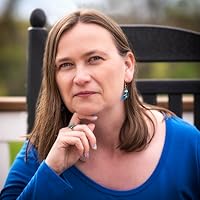
Jehanne Dubrow is the author of nine books of poetry, including most recently, Wild Kingdom (Louisiana State University Press, 2021) and a book of creative nonfiction, throughsmoke: an essay in notes (New Rivers Press, 2019). Her previous poetry collections are American Samizdat, Dots & Dashes, The Arranged Marriage, Red Army Red, Stateside, From the Fever-World, and The Hardship Post. She has co-edited two anthologies, The Book of Scented Things: 100 Contemporary Poems about Perfume and Still Life with Poem: Contemporary Natures Mortes in Verse.
Jehanne's poems, essays, and book reviews have appeared in numerous literary journals, including Poetry, Southern Review, Pleiades, Colorado Review, and The New England Review. Her work has been featured by American Life in Poetry, The New York Times Magazine, The Slowdown, Fresh Air, The Academy of American Poets, as well as on Poetry Daily and Verse Daily. She is the founding editor of the literary journal, Cherry Tree. Jehanne earned a B.A. in the "Great Books" from St. John's College, an MFA in poetry from the University of Maryland, and a PhD in English from the University of Nebraska-Lincoln. In her free time, she is currently earning another MFA—this time in creative nonfiction—from the Vermont College of Fine Arts.
She has been a recipient of the Alice Fay Di Castagnola Award from the Poetry Society of America, the Adrienne Rich Award for Poetry from Beloit Poetry Journal, the Crab Orchard Series Open Competition Award, the Diode Editions Book Contest, the Editors' Prize in Prose from Bat City Review, the Firecracker Award in Prose from CLMP, the Mississippi Review Prize in Poetry, the Towson University Prize for Literature, an Individual Artist's Award from the Maryland State Arts Council, a Walter E. Dakin Fellowship and a Howard Nemerov from the Sewanee Writers' Conference, and a Sosland Foundation Fellowship from the Jack, Joseph and Morton Mandel Center for Advanced Holocaust Studies at the U.S. Holocaust Memorial Museum.
The daughter of American diplomats, Jehanne was born in Vicenza, Italy and grew up in Yugoslavia, Zaire, Poland, Belgium, Austria, and the United States. She lives in Denton with her two Bedlington Terriers, Lola and Bandit, and with her husband, Jeremy, who recently retired from a 20-year career in the U.S. Navy. Jehanne is a Professor of Creative Writing at the University of North Texas.
The Hardship Post by Jehanne Dubrow, published by Three Candles Press, is about the many posts that we take on in life that are in the midst of the fray — whether that is the overseas diplomat in a war-torn country or the descendent of a Holocaust victim. Dubrow’s verse is infused with its own rhythm and even sometimes an internal rhyme, and this musicality penetrates the mind of the reader, bringing to life not only the harsh, and sometimes distant, memories of pain, but the reverberations of that pain decades into the future.
I thought this was a pretty good book of poems-- some striking imagery, some strange music, a decent level of variety in terms of stanza patterns, some emotional heft. I liked it well enough, without being blown away by it.
Some of the primary concerns of the book deal with Dubrow's efforts to connect with her personal and historical past-- the third section is almost entirely given over the Dubrow's time in Poland dealing with the consequences of the Holocaust, and the same themes, expanded to include Judaism (and anti-semitism) writ large, appear in all sections of the book. There are glancing references to diplomacy, how living abroad shaped Dubrow as a young woman. It's all good, but maybe I wasn't quite the reader for some of these preconceptions.
A couple winners, but formally structured but not say-aloudable poems aren't my bag. I found Dubrow from a poem in Moment that felt less rigid, lighter of touch.
In this book, Jehanne Dubrow's poem, characterized by a very traditional prosody of rhyme and meter, investigates her roots, as the poems travel back to Poland and the concentration camps where some of her relatives suffered. Careful not to fall into familiar language and imagery, Dubrow brings to life anguish and desire for transcendence in finely wrought poems that, despite their formal restrictions, break new ground and often surprise and delight.