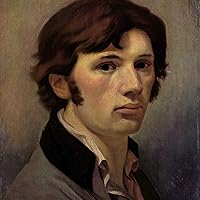
В период с XVIII по XXI век отношение к одиночеству менялось не раз: в нем видели то источник блаженства и самопознания, то опасную патологию, а в последние десятилетия в некоторых странах стали с тревогой говорить о наступившей «эпидемии одиночества». Чтобы понять исторические предпосылки данного социального феномена, историк Дэвид Винсент предлагает взглянуть на него с культурной и социологической точек зрения. Что такое одиночество и чем оно отличается от уединения? Как церковные и государственные институты пытались взять его под свой контроль? Какую роль в формировании новых представлений об одиночестве сыграли секуляризация общества и урбанизация? Книга знакомит с историей многих мест и практик добровольного и вынужденного уединения — от монастырей до одиночных камер, от кругосветных плаваний в одиночку до замкнутых «пузырей», в которые сегодня погружают человека смартфоны и наушники... Дэвид Винсент — историк, PhD, преподает в Открытом университете (OU) и университете Кила.
Librarian note: There is more than one author in the Goodreads database with this name. This profile may contain books from multiple authors of this name.
The title is too grandiose for its content, both in space and in time. A more appropriate title would be "A casual categorization of what people do without company in England, from 18th century on".
Not only you won't find what people think about solitude in other cultures (e.g. "wabi-sabi" in Japan or ascetic philosophy in India and Buddhism), the scope of the discussion in European solitude is also quite limited. The author can spend a lot of words chronicling the history of philately (i.e. stamp collection), fishing, and incarceration system, without really digging deep into the mentality of solitude. Imagine if you open García Márquez's One Hundred Years of Solitude and only find the superfluous description of how often the characters are alone and what they are doing during those time!
The core of the author's concern, it turns out, is the worry and debate over the question of whether solitude is deleterious for human being. So basically there are opinions from both camps, and many points are repeated so many times without reaching any new insight other than the answer everyone knows from the beginning -- case by case, it depends. At least half of the book consists of quotes of other people, and I am not sure if they are really representative regarding to the historical perspective, or just quoted for being corroborative to the author's opinion.
It almost reads like a failed term paper from a student who aimed too large a topic without thinking through in advance.
This is a history of the idea of solitude largely in English language and culture that spans roughly three hundred. The timing of this book could hardly have been better since there are literally millions of people hanging around with little to do and many of them in a state of solitude (or near solitude). The downside of this is that our current bout of mass house arrest (likely to continue for quite a while in the US) is so incredibly weird that it may force a scrambling of some of Mr. Vincent’s fascinating cultural history - or at least a sequel.
To start with, solitude is not a human emotion or characteristic (as opposed to lonliness). Solitude is the state of being separated from other people. That can be a physical separation, an emotional separation, an intellectual separation, or even a technological separation. Moreover, solitude can affect the same person in different ways at different times. The same conditions of solitude can affect different people similarly or differently.
People cope with solitude in different ways. Society has defined solitude differently for different groups of people (husbands versus wives versus children). Should one take long walks individually or in a group? (If one still takes long walks) Technology has a lot to do with how solitude is experienced or coped with. But it is coped with. People balance solitude and communal life and how this occurs has generated entire industries and product classes from nature tours to jigsaw puzzles. Solitude looked at this way is a fairly recent development and closely tied to modernism, industrialization, land enclosures, and the like. It has deeper roots in religion and politics, as well. Is it preferable to pray in secret and individually or is prayer a more communal activity?
I enjoyed the book thoroughly. Mr. Vincent has wide ranging interests and writes wonderfully. It is a straightforward read, although it will not go quickly, since one is prompted to regularly stops and note something that I had not realized before. That is a nice experience.
This is a comprehensive, well researched, if a bit stuffy treatise on solitude that at times veers off course. For me off course means the discussions on imprisonment and solitary confinement. While that information is important, to me it's not solitude but rather forced isolation and punishment. A paragraph or page would have been sufficient. Much of this book is a bit dry. I would have preferred a less academic perspective.
I picked this up at the library on a "New Acquisitions" display and did not go into it with much expectation. I have a fascination with social history. Stripped of the drama of political histories and devoid of the personal touch of a good biography, I tend to avoid the social history in my reading. Yet, I realize its continued importance in understanding the evolution of forms of being and living together (or alone, in the case of this book).
Vincent takes his source material a wide range of accounts of time spent alone. He explores the explosion of hobbies and leisure activities available to the middle-class in modernity and from that argues that time on one's own became an important site for self formation. It's a consideration of a kind of being we rarely think about critically but often find ourselves in, left to our own devices, trying to find something to occupy us. He explores contemporary fears over a 'loneliness' epidemic and why he thinks the concern might be overblown. Rather, he sees solitude as a helpful balm to the myriad difficulties and stultifying aspects of modern living. His chief concern is that our access to solitude is overwhelmingly determined by class and location. The erosion of the welfare state has increased the incidence of loneliness, Vincent concedes, and the burden is placed on those with less means to invent and construct spaces for self-reflection. This leads to thinking of the laboring poor as unable or unequipped to handle time on their own, a moral panic that Vincent observes rearing its head throughout the past three centuries.
As a whole, I found this book engaging and incisive. It is a critical defense on time spent with one's own thoughts. If you have any interest in working-class history, how we've various defined 'solitude,' loneliness,' and 'leisure,' and the political forces that shape these definitions, this book will certainly please. It does get long-winded at times and at its worst feels like a catalog of recreational fads. But, the actual analysis sings and offered me some clarity on why I feel both challenged and reassured by solitude.
A History of Solitude by David Vincent combines delicate theoretical approach about solitude and its various interpretations in past centuries with a carefully selected mosaic of fun historical examples. What were the trends in interpretation of solitude? When it was lauded as cozy haven for a poetic genius and when it was considered dangerous and harmful to society? How people of different social circles experienced solitude? When it was possible? How lonely walks in the nature became popular and how much they influenced the rise of English romantic poetry? Is it possible to find a peace of your own in a big family and what tools and activities could help people to have a good time of their own? What about monasteries, mental hospitals and prisons and their role in the defining the concept of solitude? Lastly don’t forget our virtual era and both its benefits and troubles.
Despite being an academic study this book could be an enriching read for everybody who is interested in history, literature, sociology and culture. It successfully raises a vast array of thought-provoking questions and leaves enough of them behind for reader’s own contemplation. Among other activities well described in the study is a book reading as a form of solitude. It may be an individualistic or a classical family reading in the style of Dickens. The strongest part of this research is how neatly tied are various examples from letters, poems or memoirs with the theoretical approach and how fun it could be to interpret our daily reality in a slightly different way. Personally I wish the book could tackle a bit more the distinction between solitude and loneliness and have more non-English historical examples, but even now it’s a good companion if you want to have a quality time in the company of yourself and your thoughts.
Kind of an interesting historical examination of the social value of being alone. Are we any less solitary sitting on our phones with friends today vs sitting and knitting a hundred years ago? It didn’t really grip me but had some interesting thought experiments.
This was such a disappointment, not at all what I was expecting, would have preferred some examples of real solitude rather than solitude as either recreation or a negative.