

What do you think?
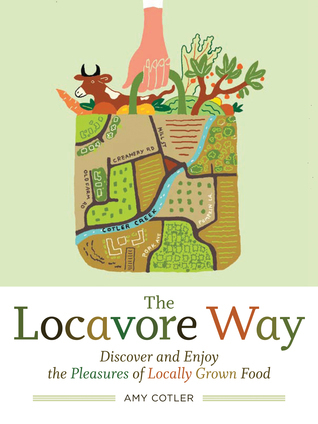
The Locavore Way: Discover and Enjoy the Pleasures of Locally Grown Food
Eating food grown close to home is not only tasty, but comes with great benefits for the health of your family, your local community, and the environment. Learn how and where to find local foods, how to eat locally on a tight budget, what questions to ask at the farmers’ market, and how to grow your own food in small spaces. With shopping tips and simple guides to preparing what’s in season, The Locavore Way makes eating locally as simple as it is delicious.
160 pages, Paperback
First published November 1, 2009
About the author
Amy Cotler
8 books6 followersAmy Cotler has worked as chef, caterer, cooking teacher, food writer and farm-to-table advocate in New York and New England before moving to Mexico. (Although she's often in the US.)
She's the author of several books, including: The Locavore Way: Discover the Pleasures of Fresh Locally Grown Food (Storey Publications); Fresh from the Farm: The Farm to School Cookbook (Massachusetts Department of Education); The Secret Garden Cookbook (HarperCollins); Wrap it Up: Bold and Bright Sandwiches with a Twist (Rivers Press) and One Pot Vegetarian Dishes (HarperCollins).
Ms Cotler has lectured before small and large audiences at numerous venues, including Cornell and New York University, the Annual Chefs Collaborative Summit and the National Restaurant Association Show in New York and Chicago. She's taught cooking, writing and culinary history at many schools, including The Culinary Institute of America and The Institute of Culinary Education. I’m the founding director of Berkshire Grown, an early New England farm to table initiative that has received national recognition.
For six years Ms Cotler worked as the host of four forums on The New York Times on the Web. As a major contributor to Joy of Cooking, and over the course of her career she's developed close to a thousand recipes for that book, as well as for clients and her own books and articles. She's appeared on The Food Network and many public (and private) radio stations.
She's the author of several books, including: The Locavore Way: Discover the Pleasures of Fresh Locally Grown Food (Storey Publications); Fresh from the Farm: The Farm to School Cookbook (Massachusetts Department of Education); The Secret Garden Cookbook (HarperCollins); Wrap it Up: Bold and Bright Sandwiches with a Twist (Rivers Press) and One Pot Vegetarian Dishes (HarperCollins).
Ms Cotler has lectured before small and large audiences at numerous venues, including Cornell and New York University, the Annual Chefs Collaborative Summit and the National Restaurant Association Show in New York and Chicago. She's taught cooking, writing and culinary history at many schools, including The Culinary Institute of America and The Institute of Culinary Education. I’m the founding director of Berkshire Grown, an early New England farm to table initiative that has received national recognition.
For six years Ms Cotler worked as the host of four forums on The New York Times on the Web. As a major contributor to Joy of Cooking, and over the course of her career she's developed close to a thousand recipes for that book, as well as for clients and her own books and articles. She's appeared on The Food Network and many public (and private) radio stations.
Ratings & Reviews
Friends & Following
Create a free account to discover what your friends think of this book!
Community Reviews
Displaying 1 - 22 of 22 reviews

August 20, 2010
Basically, if you decided very suddenly and enthusiastically that you were going to become a locavore, this book would help you figure out things like:
1. shop at farmers markets
2. ask questions at farmers markets
3. grow some of your own food
4. food has a season
5. you can preserve food to eat it outside the season.
seriously, there is probably some kind of market for this book, but i have no idea what it is. anyone I know who gives half a shit about local foods could probably have written this book blindfolded, with both hands tied behind their back, and without a word processor.
but the author's heart is in the right place, and i do think local eating is important even if the word "locavore" is kind of annoying. so if you're clueless, but enthusiastic, by all means, pick this up! Then get a really good, diverse vegetable cookbook, like something Deborah Madison wrote, make some knowledgeable friends (food gardeners, farmers, produce buyers, chefs, etc) in your foodshed, and buy the Ball Complete Book of Home Preserving.
1. shop at farmers markets
2. ask questions at farmers markets
3. grow some of your own food
4. food has a season
5. you can preserve food to eat it outside the season.
seriously, there is probably some kind of market for this book, but i have no idea what it is. anyone I know who gives half a shit about local foods could probably have written this book blindfolded, with both hands tied behind their back, and without a word processor.
but the author's heart is in the right place, and i do think local eating is important even if the word "locavore" is kind of annoying. so if you're clueless, but enthusiastic, by all means, pick this up! Then get a really good, diverse vegetable cookbook, like something Deborah Madison wrote, make some knowledgeable friends (food gardeners, farmers, produce buyers, chefs, etc) in your foodshed, and buy the Ball Complete Book of Home Preserving.

March 24, 2010
About halfway through this book I wondered aloud "How many pages can you use to tell people to visit their farmer's market and maintain a garden?"
That's really all this book is, over and over again. Good stuff for people new to the concept, I suppose, but for anyone who knew what a Locavore was before picking up the book you can probably skip this one.
That's really all this book is, over and over again. Good stuff for people new to the concept, I suppose, but for anyone who knew what a Locavore was before picking up the book you can probably skip this one.

Read
February 5, 2023Skimmed. Maybe helpful if you’d never heard of eating local before but nothing new or all that helpful otherwise. Didn’t seem like a lot of hard research went into the book with a lot of vague semi-factual statements of “local farmers often have more environmentally friendly farming practices” and things that can be true but don’t actually give you a better understanding of agriculture.

April 24, 2011
So you’ve become convinced of the health, taste and environmental benefits of eating local, sustainably raised foods. Now what? This handbook has lots of suggestions and resources to help make the transition to the locavore lifestyle, from how to cook all the weird new foods you’ll be trying to how to become involved in food politics, should you be so inclined. It covers a lot of ground in a fairly superficial way, and there’s a bit too much repetition and filler, but also lots of useful resources listed for seeking out more information.
I read this in ebook format and I would definitely recommend going for the print version, for ease of browsing and referring to specific sections. There are some links included in the ebook, but the ones I tried didn't work correctly.
I read this in ebook format and I would definitely recommend going for the print version, for ease of browsing and referring to specific sections. There are some links included in the ebook, but the ones I tried didn't work correctly.

June 27, 2010
This is a sweet and easy-to-read book that is great for newbies. Totally non-threatening and there's no finger-wagging. Just encouragement and basic advice for getting started on a healthier, tastier, more local diet.
It's a little clunky in that all resources -- websites, agencies, lists of farms, etc. -- are in the back, with the reader regularly directed to look in the "Resources" section. It would have improved the ease of use if they had also been put into the text as they are mentioned.
The recipes look tasty.
Includes a glossary of food-related terms.
It's a little clunky in that all resources -- websites, agencies, lists of farms, etc. -- are in the back, with the reader regularly directed to look in the "Resources" section. It would have improved the ease of use if they had also been put into the text as they are mentioned.
The recipes look tasty.
Includes a glossary of food-related terms.

July 28, 2011
This book is quite basic, but it is a good resource for someone who is interested in local food and where to find it. It also includes recipes, which is always nice. I think my favorite part of the book, as I am not new to sourcing local food but I'm sometimes unsure what to do with unfamiliar vegetables, is the section where the author lists many different types of vegetables and different ways to prepare them. I think I will definitely be using that in the future. I enjoyed reading this and would recommend it for anyone who is new to sourcing local food.

Read
February 18, 2016I picked this book up from the library because I wanted to know more about CSAs. For a person like myself, who grew up on a farm, most of the book's content is common knowledge. However, I was pleasantly surprised to find my hometown (Morgantown, WV) showcased in the farmers' market section.
Although not much of the material was new to me, it is a good place to start for anyone who has never known the joy of really fresh, local produce.
Although not much of the material was new to me, it is a good place to start for anyone who has never known the joy of really fresh, local produce.

Read
December 29, 2011Locavore Way by Amy Cotler, a chef and cooking instructor, provides detailed advice on localizing your eating habits. She includes information on how and where to shop for local food, recipes and ideas for preparation and storage of these foods, tips on eating out, and plans for raising your own food.

December 17, 2011
B An interesting locavore book - I know of this but I wish she'd talk aobut more about how to find local stuff or better options to do when there's not local options near you. Still, inspiring, good ideas, neat book with an admirable way to live.

July 10, 2012
good for beginners and novices. the back sections and resource guides are chockful of great info. it's worth a look just for that. think of this book as a great springboard ready to launch you into a better, healthier future, in which you are smarter and more aware.

September 20, 2012
Anyone interested on the topic will love this book. It is informative and helpful to the newbie and experienced locavore. A multitude of topics are covered here. It's possible to read just one section or all! I love the list of resources in the back.

February 1, 2010
This was a great resource for anyone who wants to eat locally. It was also an easy read and had a fantastic "resources" section in the back.

May 3, 2010
A good book for beginners to eating healthy and locally. It is a bit redundant too. But the resources section in the back is great!

September 4, 2010
This book has made me change the way I eat. I learned a ton of things about how to eat local and how it helps our health and economy. I am committed to eating and shopping this way.

September 29, 2010
I learned a few things, but most of her instruction is intuitive.
April 13, 2011
Nice format. Good book for beginners. Lots of ideas for starting this new way of life.

July 11, 2012
Go to farmer's market. Grow your own food. Support local. That is basically all this book says.

August 5, 2012
Very basic. Better for folks that aren't already familiar with the concept of locavores. Nothing new here for those already aware of this movement.

September 12, 2012
A comprehensive survey and introductory guide to local foods.

March 14, 2013
Basic book about eating locally
May 12, 2016
Nothing new here.

August 24, 2016
2.5. Very preachy and repetitive.
Displaying 1 - 22 of 22 reviews