

What do you think?

Pessoa: uma biografia
O volume definitivo que narra a trajetória de um dos maiores poetas de todos os tempos.
Se levássemos em conta todos os personagens fictícios que povoaram a mente de Fernando Pessoa, o número ultrapassaria a marca dos cem nomes. Ainda que três deles ― Alberto Caeiro, Ricardo Reis e Álvaro de Campos ― tenham se destacado como seus heterônimos mais prolíficos e celebrados, esse dado revela a intensa vida interior de um poeta que foi regido por uma imaginação pulsante e irrefreável.
Ao longo de mais de três décadas, Richard Zenith se notabilizou como um dos mais respeitados especialistas na obra do autor de Mensagem. Em Pessoa: uma biografia, o norte-americano radicado em Lisboa empreende uma pesquisa monumental nos mais de 25 mil papéis deixados pelo poeta, combinando prosa saborosa e vasta erudição.
Finalista do prêmio Pulitzer 2022 e eleito um dos melhores livros do ano por publicações como The New York Times, The Spectator, The NewStatesman, Kirkus Reviews e Publishers Weekly, Pessoa: uma biografia é um tour de force da história cultural e das biografias literárias. Uma verdadeira obra-prima.
Se levássemos em conta todos os personagens fictícios que povoaram a mente de Fernando Pessoa, o número ultrapassaria a marca dos cem nomes. Ainda que três deles ― Alberto Caeiro, Ricardo Reis e Álvaro de Campos ― tenham se destacado como seus heterônimos mais prolíficos e celebrados, esse dado revela a intensa vida interior de um poeta que foi regido por uma imaginação pulsante e irrefreável.
Ao longo de mais de três décadas, Richard Zenith se notabilizou como um dos mais respeitados especialistas na obra do autor de Mensagem. Em Pessoa: uma biografia, o norte-americano radicado em Lisboa empreende uma pesquisa monumental nos mais de 25 mil papéis deixados pelo poeta, combinando prosa saborosa e vasta erudição.
Finalista do prêmio Pulitzer 2022 e eleito um dos melhores livros do ano por publicações como The New York Times, The Spectator, The NewStatesman, Kirkus Reviews e Publishers Weekly, Pessoa: uma biografia é um tour de force da história cultural e das biografias literárias. Uma verdadeira obra-prima.
1160 pages, Paperback
First published July 20, 2021
About the author
Richard Zenith
60 books42 followersRichard Zenith is an acclaimed translator and literary critic. His translations include Fernando Pessoa’s The Book of Disquiet and Fernando Pessoa and Co.: Selected Poems, which won the PEN Award for Poetry in Translation. The recipient of Portugal’s Pessoa Prize, Zenith lives in Lisbon, Portugal.
Ratings & Reviews
Friends & Following
Create a free account to discover what your friends think of this book!
Community Reviews
Displaying 1 - 30 of 87 reviews

October 31, 2024
Would you read a thousand-page biography
Of a person who had no life?
A person who didn't have a real job?
A person who wrote and drank and smoked his life away?
Who never changed the style of his dark suits?
Who went to the beach once and kept his dark suit on?
Who sat at the same tables of the same cafés with the same people drinking the same drinks smoking the same cigarettes day after day?
Who had his moustaches trimmed daily?
Whose eyes disappeared from behind thick glasses?
Who feared women like the plague?
Who preferred men but not carnally?
A person who only ever made love to his own brain?
Who changed his mind like one changes hats?
A nonentity who contained multitudes?
Who was Fernando on Monday
Alexander on Tuesday
Alberto on Wednesday
Alvaro on Thursday
Ricardo on Friday
Bernardo on Saturday
Nobody on Sunday?
A person who saw the universe in a tobacco shop
A Greek portico in the setting sun
A sunflower in a sunflower?
A person who never wrote about himself
But was in everything he wrote?
Who had no opinions about anything
But could see everything from every angle
Feel everything in every way possible?
Who was a conservative experimentalist
A prudish sensualist
A Rosicrucian and a Knight Templar
A one-man military dictatorship for individual freedom
A White Magician
An emperor of the Portuguese tongue
Who could barely complete a single task?
Who would start a poem a letter a story a business venture a plan to take over the world all on the same day
And by sundown all would be shelved incomplete?
A person who died at 47 having only published a slim volume of poems and some articles?
Who left behind some 30,000 scribbled-on pieces of paper in a large trunk?
A person whose name is now on the lips of pretty much anyone who cares about literature?
Whose poetry is tattooed on the flesh of non-virgins?
Whose songs will be sung by sailors yet unborn?
Would you read such a biography?
I would and I have
A month and a half of my life reading about a guy
Who had no life no job no nothing...
And let me tell you something
I would do it all over again
Just not today

August 22, 2021
pessoa could not imagine that his literary dispersion, which faithfully mirrors our ontological instability and the absence of intrinsic unity in the world we inhabit, would make him required reading by the time the next century arrived.richard zenith's biography of the enigmatic portuguese modernist master is mammoth in ambition, scope, and accomplishment. pessoa is a relentlessly engrossing work of the life and times of the heteronymic poet and prose writer. meticulously researched (the book took some 12-13 years to complete) and definitively comprehensive, zenith's biography is itself a work of art (and it must be noted that zenith's erudition and absolutely exquisite vocabulary make every page a delight to read).
whether recounting pessoa's early life, myriad literary plans (most of which never came to fruition), curious temperament and personality, sociopolitical milieu, chronic debt, attraction to mysticism and his ongoing "quest for esoteric truth," excessive drinking, "monosexuality," political leanings — to say nothing of his contextual and critical take on his heteronyms and the writer(s)'s prodigious output — zenith's masterwork is the portrait of an artist as an "absolute individualist." some eight and a half decades after his passing, pessoa refracts its subject's resplendent genius in scintillating detail.
pessoa's writings were, by and large, provisional visual representations of his soul. in fact, he never stopped showing us who he was or was trying to be. his poems and prose pieces were him, his own person, or the bits and pieces of the person, or pessoa, who did not exist as such. his sexual life? his spiritual life? they may be found in his writing, and nowhere else but his writing. there is no secret pessoa for the biographer to reveal.

June 30, 2022
Fernando Pessoa é o meu poeta favorito. Ainda tenho em mim a mesma sensação que tive quando li pela primeira vez um poema dele nas aulas de Português no secundário: wow. Esta pessoa está a escrever exactamente aquilo que eu sinto!! Foi a primeira vez que me vi representada na literatura, foi a primeira vez que percebi não estar sozinha neste caos que é o universo. Tenho muito a agradecer à minha Professora de Português do 12° ano que nos ensinou Fernando Pessoa de uma forma tão bela e tão única.
Apaixonei-me pelo "Lisbon Revisited" à primeira leitura, mas foi com o poema "Aniversário", declamado de uma forma tão bonita pela minha Professora, que eu chorei com um poema. Eu estou ali, naquele poema. Sempre que o leio, volto imediatamente a ser a menina de 17 anos numa sala de aula a ouvir a professora a declamar com emoção. Todas as sensações regressam a mim. Caraças, como é que algo escrito por uma pessoa, que nunca me conheceu, há quase 100 anos pode dizer-me tanto, falar-me tanto à alma, ao ponto de eu me reconhecer nele.
Nos stories do instagram, fui partilhando excertos da biografia e fui fazendo alguns comentários, chamando sempre o Sr. Pessoa de Nandinho. Permitam-me esta intimidade com o Poeta, mas é que olho para o Fernando Pessoa e vejo-me a mim. Revejo-me nele, nos sentimentos e emoções transmitidos nos poemas. Mesmo que o poeta seja um fingidor, que não era verdade no caso do Pessoa, conseguiu escrever e descrever tão bem o que é isto de ser-se humano.
Há muita coisa a dizer sobre esta biografia, mas o principal é que, na minha opinião, este é o grande acontecimento literário de 2022 em Portugal. Que portento de livro!!
Nesta biografia, ficamos a saber que Pessoa era misógino, racista, elitista, defendia uma sociedade baseada em classes, ria-se da ideia de igualdade de género. Mas também ficamos a perceber que tudo isto não passava de uma máscara, uma armadura protectora de quem se sente profundamente deslocado, profundamente só.
Nos agradecimentos, Richard Zenith escreve que "Pessoa nunca poderia ser captado, definido, abarcado. Espero ter escrito um livro que pelo menos ajude o leitor a sentir Pessoa." E é isto que é ler esta biografia: sentir Pessoa. 💙
Apaixonei-me pelo "Lisbon Revisited" à primeira leitura, mas foi com o poema "Aniversário", declamado de uma forma tão bonita pela minha Professora, que eu chorei com um poema. Eu estou ali, naquele poema. Sempre que o leio, volto imediatamente a ser a menina de 17 anos numa sala de aula a ouvir a professora a declamar com emoção. Todas as sensações regressam a mim. Caraças, como é que algo escrito por uma pessoa, que nunca me conheceu, há quase 100 anos pode dizer-me tanto, falar-me tanto à alma, ao ponto de eu me reconhecer nele.
Nos stories do instagram, fui partilhando excertos da biografia e fui fazendo alguns comentários, chamando sempre o Sr. Pessoa de Nandinho. Permitam-me esta intimidade com o Poeta, mas é que olho para o Fernando Pessoa e vejo-me a mim. Revejo-me nele, nos sentimentos e emoções transmitidos nos poemas. Mesmo que o poeta seja um fingidor, que não era verdade no caso do Pessoa, conseguiu escrever e descrever tão bem o que é isto de ser-se humano.
Há muita coisa a dizer sobre esta biografia, mas o principal é que, na minha opinião, este é o grande acontecimento literário de 2022 em Portugal. Que portento de livro!!
Nesta biografia, ficamos a saber que Pessoa era misógino, racista, elitista, defendia uma sociedade baseada em classes, ria-se da ideia de igualdade de género. Mas também ficamos a perceber que tudo isto não passava de uma máscara, uma armadura protectora de quem se sente profundamente deslocado, profundamente só.
Nos agradecimentos, Richard Zenith escreve que "Pessoa nunca poderia ser captado, definido, abarcado. Espero ter escrito um livro que pelo menos ajude o leitor a sentir Pessoa." E é isto que é ler esta biografia: sentir Pessoa. 💙
February 6, 2022
I cannot claim to a Pessoa connoisseur. I read and was quite impressed by The Book of Disquiet in my twenties and enjoyed a small collection of poems by the major “heteronyms” in Dutch translation around that same period (now some 30 years ago). I knew about Ricardo Reis, Alberto Caeiro and Álvaro de Campos, therefore, and I thought it was super cool to not only write original poetry but have another one of your pseudonyms criticize and comment upon it as well.
Before reading this very extensive biography, though (thanks again João!), I had absolutely no idea of just how many Fernando Pessoa’s there have been. Zenith lists no less than 47 (forty-seven!) different Pessoa heteronyms in the opening pages of his book, stressing that this is merely a selection and that he leaves several dozen unmentioned. Some of these heteronyms, like the ones referred to above, authored genuinely original literature, whereas others merely left a few scribbles. For their spiritual father, however, they all fulfilled a deeply rooted need to imagine himself as someone else and then to express that imagined alter ego’s outlook on the world in writing.
Outwardly, this most elusive of poets led a seemingly normal, even slightly dull life. Except for his childhood years when he followed his mother and stepdad to live in Durban, South Africa, he hardly ever set foot outside of Lisbon where he was born in 1888 and died in 1935. He mainly lived off some inherited wealth – a large part of which he squandered on his idea of a publishing house, Olisipo, that never really got off the ground. He spent his days working as an obscure commercial translator handling foreign correspondence for Lisbon merchant houses, drinking too much brandy, and returning home to a quiet room where he spent his nights populating an entire world.
In this doorstopper biography, Zenith brilliantly captures the quiet drama of Pessoa’s double existence. To the outside world, Fernando was just another solitary figure slipping through the Lisbon fog. But behind closed doors, he was assembling a wooden trunk filled with over 25,000 loose pages of poems, philosophical fragments, political essays, astrological charts, and raw drafts of The Book of Disquiet.
Zenith treats the heteronyms not as psychiatric quirks or mere literary stunts, but as an authentic philosophy of self-fragmentation. The biographer recounts the births of these alter egos in real time: Alberto Caeiro, the serene, anti-intellectual pagan shepherd; Ricardo Reis, the formal, Horace-quoting stoic; and Álvaro de Campos, the wild, modern disciple of Walt Whitman. By tracing how these personalities argued with, influenced, and criticized one another, Zenith shows that Pessoa was not just a poet writing poems, but a dramatist creating multiple poetic oeuvres.
However, Zenith never loses sight of the fragile, human core underneath this multitude. He delicately reconstructs Pessoa’s few clumsy attempts at intimacy—most notably his awkward, almost painful courtship of Ophélia Queiroz, the only woman he ever loved (and whom he had heteronym Álvaro de Campos write hostile letters to). I also learned a lot about his deep involvement in the occult, his lifelong battle with depression and heavy drinking, and his subtle, courageous resistance to Portugal's growing authoritarian regime toward the end of his life.
Reading Pessoa: An Experimental Life made me realize that my 20-year-old self had only glimpsed the tip of the iceberg through The Book of Disquiet. Pessoa showed that a handful of Lisbon streets could become, through sheer imaginative force, "a little larger than the entire universe."
Before reading this very extensive biography, though (thanks again João!), I had absolutely no idea of just how many Fernando Pessoa’s there have been. Zenith lists no less than 47 (forty-seven!) different Pessoa heteronyms in the opening pages of his book, stressing that this is merely a selection and that he leaves several dozen unmentioned. Some of these heteronyms, like the ones referred to above, authored genuinely original literature, whereas others merely left a few scribbles. For their spiritual father, however, they all fulfilled a deeply rooted need to imagine himself as someone else and then to express that imagined alter ego’s outlook on the world in writing.
Outwardly, this most elusive of poets led a seemingly normal, even slightly dull life. Except for his childhood years when he followed his mother and stepdad to live in Durban, South Africa, he hardly ever set foot outside of Lisbon where he was born in 1888 and died in 1935. He mainly lived off some inherited wealth – a large part of which he squandered on his idea of a publishing house, Olisipo, that never really got off the ground. He spent his days working as an obscure commercial translator handling foreign correspondence for Lisbon merchant houses, drinking too much brandy, and returning home to a quiet room where he spent his nights populating an entire world.
In this doorstopper biography, Zenith brilliantly captures the quiet drama of Pessoa’s double existence. To the outside world, Fernando was just another solitary figure slipping through the Lisbon fog. But behind closed doors, he was assembling a wooden trunk filled with over 25,000 loose pages of poems, philosophical fragments, political essays, astrological charts, and raw drafts of The Book of Disquiet.
Zenith treats the heteronyms not as psychiatric quirks or mere literary stunts, but as an authentic philosophy of self-fragmentation. The biographer recounts the births of these alter egos in real time: Alberto Caeiro, the serene, anti-intellectual pagan shepherd; Ricardo Reis, the formal, Horace-quoting stoic; and Álvaro de Campos, the wild, modern disciple of Walt Whitman. By tracing how these personalities argued with, influenced, and criticized one another, Zenith shows that Pessoa was not just a poet writing poems, but a dramatist creating multiple poetic oeuvres.
However, Zenith never loses sight of the fragile, human core underneath this multitude. He delicately reconstructs Pessoa’s few clumsy attempts at intimacy—most notably his awkward, almost painful courtship of Ophélia Queiroz, the only woman he ever loved (and whom he had heteronym Álvaro de Campos write hostile letters to). I also learned a lot about his deep involvement in the occult, his lifelong battle with depression and heavy drinking, and his subtle, courageous resistance to Portugal's growing authoritarian regime toward the end of his life.
Reading Pessoa: An Experimental Life made me realize that my 20-year-old self had only glimpsed the tip of the iceberg through The Book of Disquiet. Pessoa showed that a handful of Lisbon streets could become, through sheer imaginative force, "a little larger than the entire universe."

April 6, 2025
Ne kitap ama, ne kitap. Hayatımda okuduğum en iyi birkaç biyografiden biri oldu Richard Zenith'in Pessoa'sı. Bütün Pessoaları anlatan, tüm o parça parça Pessoalardan bir büyük resim çıkarmayı başaran, muazzam bir emek ve sabırla derlenmiş bir metin, büyük, devasa bir iş. Kimi biyografi yazarları teknik bir konu gibi yaklaşır meseleye ve okuru bilgiye boğar, kimisi süjesinin büyüsüne kapılıp duygulardan örer metni - Zenith'in yaptığı işin kusursuzluğu ise bence bu ikisinin dengesini muazzam kurmuş olmasında. Pessoa'ya duyduğu hayranlık her satıra sinmiş ama bu hayranlık yazarın gözünü kör de etmemiş. Ne diyebilirim ki, hem Zenith'e büyük hayranlık duydum, hem Pessoa'ya duyduğum hayranlık katlandı.
Herhalde edebiyat tarihinde biyografisini yazmanın en zor olduğu isimlerin başında geliyor Pessoa. Onlarca heteronim altında bölük pörçük eserler vermiş, büyüklüğü ölümünden çok sonra, sandığındaki Huzursuzluğun Kitabı fragmanları birleştirilince anlaşılabilmiş; gizemli, tuhaf, izini sürmesi ziyadesiyle zor biri o. Ama Zenith başarmış.
Karşımızdaki epeyce kapsamlı bir iş, öyle ki sadece çocukluğunun anlatıldığı bölüm 185 sayfa sürüyor. Fakat gelin görün ki akademik düzeyde bir detay ve titizlikle hazırlanmış bu metin, Zenith'in oyunbaz ve edebî dili sayesinde kendini hiç sıkmadan okutuyor. Genelde yazar biyografilerinde çocukluktan ziyade eserlerini üretmeye başladıkları döneme ve sonrasına daha çok odaklanılır, ancak Zenith bence çok doğru bir tercihle hikayeye en baştan başlamayı seçiyor, Pessoa'nın kendine neden sayısız heteronim üretmeyi tercih ettiğini anlamanın yolu bence de o çocukluktan geçiyor çünkü.
Çok, çok, çok şey öğrendim; hem Pessoa'ya, hem 20. yüzyıl başı Portekiz'ine ve Avrupa'sına, hem dönemin siyasi krizlerine ve dönüşümlerine dair... Pessoa'yı tamamen anlamak mümkün mü bilmiyorum, ama anlamaya bundan daha fazla yaklaşabileceğimi sanmıyorum. Bu sadece bir biyografi değil, bir edebiyatçıya dair yazılmış bir büyük edebî eser.
Kitabı dilimize böyle kusursuz ve hatasız biçimde kazandıran çevirmen Can Sezer ile kitabın editörü Emre Tokcael'e ve tabii ki Everest Yayınları'na da ayrıca teşekkürler. Büyük bir iş sahiden.
Herhalde edebiyat tarihinde biyografisini yazmanın en zor olduğu isimlerin başında geliyor Pessoa. Onlarca heteronim altında bölük pörçük eserler vermiş, büyüklüğü ölümünden çok sonra, sandığındaki Huzursuzluğun Kitabı fragmanları birleştirilince anlaşılabilmiş; gizemli, tuhaf, izini sürmesi ziyadesiyle zor biri o. Ama Zenith başarmış.
Karşımızdaki epeyce kapsamlı bir iş, öyle ki sadece çocukluğunun anlatıldığı bölüm 185 sayfa sürüyor. Fakat gelin görün ki akademik düzeyde bir detay ve titizlikle hazırlanmış bu metin, Zenith'in oyunbaz ve edebî dili sayesinde kendini hiç sıkmadan okutuyor. Genelde yazar biyografilerinde çocukluktan ziyade eserlerini üretmeye başladıkları döneme ve sonrasına daha çok odaklanılır, ancak Zenith bence çok doğru bir tercihle hikayeye en baştan başlamayı seçiyor, Pessoa'nın kendine neden sayısız heteronim üretmeyi tercih ettiğini anlamanın yolu bence de o çocukluktan geçiyor çünkü.
Çok, çok, çok şey öğrendim; hem Pessoa'ya, hem 20. yüzyıl başı Portekiz'ine ve Avrupa'sına, hem dönemin siyasi krizlerine ve dönüşümlerine dair... Pessoa'yı tamamen anlamak mümkün mü bilmiyorum, ama anlamaya bundan daha fazla yaklaşabileceğimi sanmıyorum. Bu sadece bir biyografi değil, bir edebiyatçıya dair yazılmış bir büyük edebî eser.
Kitabı dilimize böyle kusursuz ve hatasız biçimde kazandıran çevirmen Can Sezer ile kitabın editörü Emre Tokcael'e ve tabii ki Everest Yayınları'na da ayrıca teşekkürler. Büyük bir iş sahiden.

November 1, 2025
Eén van mijn langste leeservaringen, zo niet de langste ooit. Ik kreeg het boek vorige Kerst cadeau, maar het duurde meer dan een half jaar voor ik de moed wist samen te rapen om eraan te beginnen. 1000 pagina's Engels in kleine druk ... dat lonkte niet meteen uitnodigend. De zomervakantie zorgde voor de ideale leesomstandigheden (tijd, zon, zin in en verlangen naar Lissabon en Pessoa), maar ik besefte al snel dat ik deze letterlijk en figuurlijk uitputtende biografie niet in één ruk zou uitlezen. Met tussenpozen had ik nood aan andere literatuur. De voorbije twee weken lukte het me echter om er weer waart achter te zetten en plots was het einde daar, wat me behalve opgelucht toch ook weemoedig achterliet; saudade zeg maar.
Fernando Pessoa is een van de vroegste dichters die ik op mijn poëziepad tegenkwam en ik voelde meteen een zekere verwantschap. De manier waarop hij heteroniemen creëerde om de verschillende facetten, gevoelens en overtuigingen die binnen hemzelf werkzaam waren vorm te geven, fascineerde en inspireerde me. De bekendste - Alberto Caeiro, Álvaro de Campos, Ricardo Reis en Bernardo Soares - werden voor mij gaandeweg vertrouwde stemmen in het veelstemmige Pessoa-koor, met Het boek der rusteloosheid van het laatstgenoemde heteroniem als hoogtepunt (en ook een van mijn langste leeservaringen). In het kielzog van Pessoa ontwikkelde ik een liefde voor Lissabon, fado en de Portugese cultuur en nog steeds voel ik het verlangen om ooit Portugees te gaan leren, de mooiste taal ter wereld.
Maar goed, wat wil ik kwijt over deze overweldigende, rijke, moedige biografie van de al jaren in Lissabon wonende Amerikaanse auteur, vertaler en Pessoa-kenner Richard Zenith? Dat hij niet over een nacht is is gegaan, maar er - zo voelt het althans - een leven lang over gedaan heeft. Dat hij op de juiste plaatsen de juiste literaire vergelijkingen en/of tegenstellingen wist te geven, o.a. met Kierkegaard, Whitman, Woolf, Joyce, Eliot, Yeats ... Dat hij me leerde dat Pessoa's leven en werk veel meer politiek geladen en geëngageerd waren dan ik dacht en Zenith terecht veel aandacht en hoofdstukken besteedt aan de woelige politieke wateren waarin Portugal zich toen bevond.
Dat Fernando Pessoa (en zijn zestigtal heteroniemen) ook na 1000 pagina's een uniek, veelzijdig, geniaal, (zelf)kritisch, procrastinaal, gespleten, intrigerend, wonderlijk, twijfelend, poëtisch én prozaïsch, vrijdenkend, betrokken én éénzelvig, kameleontisch, getalenteerd, getormenteerd, tragisch, vrolijk, kindvriendelijk, intellectueel, voelend denkend en denkend voelend, origineel en dus ongrijpbaar personage blijft, zou hij zélf wellicht geslaagd vinden en dat is ook absoluut een verdienste van Richard Zenith die hier een biografische tour de force uithaalt. Ik ga zeker ooit nog eens de podcast en interviews met hem rond Het boek der rusteloosheid beluisteren; En Pessoa's gedichten blijven herlezen.
Fernando Pessoa is een van de vroegste dichters die ik op mijn poëziepad tegenkwam en ik voelde meteen een zekere verwantschap. De manier waarop hij heteroniemen creëerde om de verschillende facetten, gevoelens en overtuigingen die binnen hemzelf werkzaam waren vorm te geven, fascineerde en inspireerde me. De bekendste - Alberto Caeiro, Álvaro de Campos, Ricardo Reis en Bernardo Soares - werden voor mij gaandeweg vertrouwde stemmen in het veelstemmige Pessoa-koor, met Het boek der rusteloosheid van het laatstgenoemde heteroniem als hoogtepunt (en ook een van mijn langste leeservaringen). In het kielzog van Pessoa ontwikkelde ik een liefde voor Lissabon, fado en de Portugese cultuur en nog steeds voel ik het verlangen om ooit Portugees te gaan leren, de mooiste taal ter wereld.
Maar goed, wat wil ik kwijt over deze overweldigende, rijke, moedige biografie van de al jaren in Lissabon wonende Amerikaanse auteur, vertaler en Pessoa-kenner Richard Zenith? Dat hij niet over een nacht is is gegaan, maar er - zo voelt het althans - een leven lang over gedaan heeft. Dat hij op de juiste plaatsen de juiste literaire vergelijkingen en/of tegenstellingen wist te geven, o.a. met Kierkegaard, Whitman, Woolf, Joyce, Eliot, Yeats ... Dat hij me leerde dat Pessoa's leven en werk veel meer politiek geladen en geëngageerd waren dan ik dacht en Zenith terecht veel aandacht en hoofdstukken besteedt aan de woelige politieke wateren waarin Portugal zich toen bevond.
Dat Fernando Pessoa (en zijn zestigtal heteroniemen) ook na 1000 pagina's een uniek, veelzijdig, geniaal, (zelf)kritisch, procrastinaal, gespleten, intrigerend, wonderlijk, twijfelend, poëtisch én prozaïsch, vrijdenkend, betrokken én éénzelvig, kameleontisch, getalenteerd, getormenteerd, tragisch, vrolijk, kindvriendelijk, intellectueel, voelend denkend en denkend voelend, origineel en dus ongrijpbaar personage blijft, zou hij zélf wellicht geslaagd vinden en dat is ook absoluut een verdienste van Richard Zenith die hier een biografische tour de force uithaalt. Ik ga zeker ooit nog eens de podcast en interviews met hem rond Het boek der rusteloosheid beluisteren; En Pessoa's gedichten blijven herlezen.

June 30, 2022
Durante algumas semanas, o meu mundo foi Lisboa no primeiro quarto de século e Pessoa. Pessoa, sempre.
Creio ser impossível não gostar deste último trabalho de Richard Zenith (ouso arriscar classificá-lo como "O" trabalho de uma vida) e as 1200 páginas passam a voar...
Tal como Pessoa com as suas criações literárias, também eu viajei nas páginas do livro.
Obrigada, R. Zenith.
Creio ser impossível não gostar deste último trabalho de Richard Zenith (ouso arriscar classificá-lo como "O" trabalho de uma vida) e as 1200 páginas passam a voar...
Tal como Pessoa com as suas criações literárias, também eu viajei nas páginas do livro.
Obrigada, R. Zenith.

May 15, 2025
What an achievement, and a book that I was sad to finish, in a way. Most bios have a troubling fault or imbalance, but this (like Ampersad's of R. Ellison) seems as good a bio as could be. Informative, judicious quotations, research weaved in so that it organically fits with the rest of the material, and a style that supports all of that plus occasional personal remarks and speculation, where speculation seems appropriate.
It helps that Pessoa is a fascinating, conflicted, chimerical person. I doubt any biographer could capture him in all his heteronyms and guises, but Zenith manages to get across the paradoxes and thinking of Pessoa and Company. You don't need to have read Pessoa to appreciate what Zenith has done.
It helps that Pessoa is a fascinating, conflicted, chimerical person. I doubt any biographer could capture him in all his heteronyms and guises, but Zenith manages to get across the paradoxes and thinking of Pessoa and Company. You don't need to have read Pessoa to appreciate what Zenith has done.

July 27, 2022
"Atento ao que sou e vejo,
Torno-me eles e não eu.
Cada meu sonho ou desejo,
É do que nasce e não meu.
(24 de Agosto de 1930)"
Torno-me eles e não eu.
Cada meu sonho ou desejo,
É do que nasce e não meu.
(24 de Agosto de 1930)"

August 9, 2026
Foi na altura do 9.º ano que fui apresentada a Fernando Pessoa. A professora de Português, quando nos deu a estudar o episódio do Adamastor n'Os Lusíadas, decidiu também mostrar-nos «O Mostrengo», da Mensagem. Ainda hoje me lembro da forma como declamou o poema e do impacto que aquelas palavras tiveram em mim. Foi o meu primeiro contacto com Pessoa e bastou para despertar uma curiosidade que viria a acompanhar-me durante anos.
IV. O MOSTRENGO
O mostrengo que está no fim do mar
Na noite de breu ergueu-se a voar;
À roda da nau voou três vezes,
Voou três vezes a chiar,
E disse: «Quem é que ousou entrar
Nas minhas cavernas que não desvendo,
Meus tectos negros do fim do mundo?»
E o homem do leme disse, tremendo:
«El-Rei D. João Segundo!»
«De quem são as velas onde me roço?
De quem as quilhas que vejo e ouço?»
Disse o mostrengo, e rodou três vezes,
Três vezes rodou imundo e grosso,
«Quem vem poder o que só eu posso,
Que moro onde nunca ninguém me visse
E escorro os medos do mar sem fundo?»
E o homem do leme tremeu, e disse:
«El-Rei D. João Segundo!»
Três vezes do leme as mãos ergueu,
Três vezes ao leme as reprendeu,
E disse no fim de tremer três vezes:
«Aqui ao leme sou mais do que eu:
Sou um Povo que quer o mar que é teu;
E mais que o mostrengo, que me a alma teme
E roda nas trevas do fim do mundo,
Manda a vontade, que me ata ao leme,
De El-Rei D. João Segundo!»
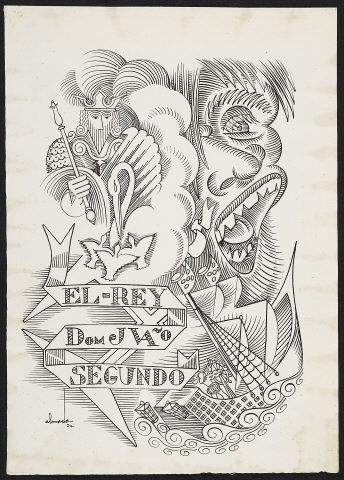
Ilustração a tinta-da-china de José de Almada Negreiros, datada de 1934.
Representação artística para o poema "O Mostrengo", parte da obra Mensagem de Fernando Pessoa.
Colecção do Centro de Arte Moderna da Fundação Calouste Gulbenkian
Mais tarde, no 12.º ano, voltei a encontrar-me com a sua obra. Li tudo o que estava ao meu alcance na época e tornei-me uma admiradora assumida. A complexidade dos heterónimos, a riqueza do pensamento e a singularidade da sua escrita conquistaram-me por completo.
Por isso, quando surgiu a oportunidade de ler Pessoa. Uma Biografia, de Richard Zenith, finalista do Prémio Pulitzer de 2022 na categoria de Biografia, não hesitei. Comecei a leitura a 17 de Novembro de 2024, sem qualquer pressa. Com cerca de 1.200 páginas, este não é um livro para devorar; é um livro para acompanhar, absorver e digerir aos poucos. Em doses homeopáticas.
Ao longo destas páginas, Zenith reconstrói minuciosamente a vida de Fernando Pessoa, desde a infância até à morte, recorrendo a uma investigação impressionante e a um vasto conhecimento da obra e do contexto histórico. Mas o grande mérito desta biografia não está apenas em contar a história do poeta. Está também na forma como nos transporta para a Lisboa da época, para as transformações políticas do país, para as correntes intelectuais da Europa e para um mundo em rápida mudança.
Se a minha admiração pelo escritor se manteve intacta, o mesmo não posso dizer da minha opinião sobre o homem. Já sabia que Pessoa era uma figura excêntrica, contraditória e socialmente desajustada. Esta biografia, porém, revelou-me alguém ainda mais difícil de admirar enquanto pessoa. Arrogante, muitas vezes preconceituoso, frequentemente alheado da realidade prática e, não raras vezes, profundamente irritante.
É precisamente por isso que raramente procuro saber demasiado sobre os autores que leio. Há sempre o risco de encontrar traços de personalidade, opiniões ou comportamentos que entram em choque com os meus valores. Fernando Pessoa não foi excepção. Continuo a considerá-lo um génio literário, mas terminei esta leitura com uma simpatia muito menor pelo homem do que aquela com que a comecei.
Ainda assim, esse desconforto não diminuiu em nada a qualidade da experiência de leitura. Pelo contrário. Zenith evita tanto a veneração cega como a condenação simplista, apresentando um retrato complexo, contraditório e sem concessões de uma das figuras mais importantes da literatura portuguesa.
No final, fiquei com uma admiração renovada pela obra de Pessoa e uma visão muito mais crítica do seu autor. E talvez seja precisamente essa a maior força desta biografia: mostrar-nos que o génio e as fragilidades humanas podem coexistir na mesma pessoa.
Uma obra extraordinária, exigente e indispensável para quem deseja conhecer Fernando Pessoa para lá do mito.
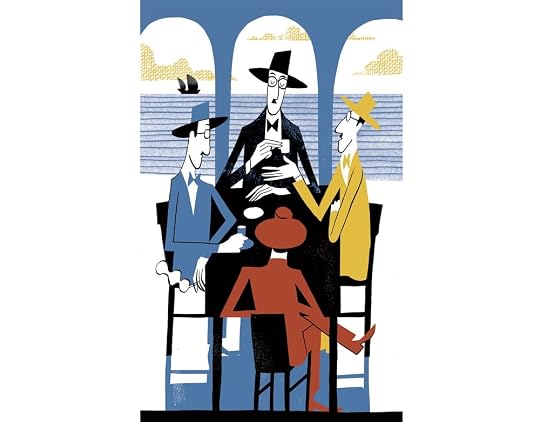
Ilustração é do livro "Fernando Pessoa, o Menino que era Muitos Poetas", escrito por José Jorge Letria e ilustrado por João Fazenda.
IV. O MOSTRENGO
O mostrengo que está no fim do mar
Na noite de breu ergueu-se a voar;
À roda da nau voou três vezes,
Voou três vezes a chiar,
E disse: «Quem é que ousou entrar
Nas minhas cavernas que não desvendo,
Meus tectos negros do fim do mundo?»
E o homem do leme disse, tremendo:
«El-Rei D. João Segundo!»
«De quem são as velas onde me roço?
De quem as quilhas que vejo e ouço?»
Disse o mostrengo, e rodou três vezes,
Três vezes rodou imundo e grosso,
«Quem vem poder o que só eu posso,
Que moro onde nunca ninguém me visse
E escorro os medos do mar sem fundo?»
E o homem do leme tremeu, e disse:
«El-Rei D. João Segundo!»
Três vezes do leme as mãos ergueu,
Três vezes ao leme as reprendeu,
E disse no fim de tremer três vezes:
«Aqui ao leme sou mais do que eu:
Sou um Povo que quer o mar que é teu;
E mais que o mostrengo, que me a alma teme
E roda nas trevas do fim do mundo,
Manda a vontade, que me ata ao leme,
De El-Rei D. João Segundo!»
Ilustração a tinta-da-china de José de Almada Negreiros, datada de 1934.
Representação artística para o poema "O Mostrengo", parte da obra Mensagem de Fernando Pessoa.
Colecção do Centro de Arte Moderna da Fundação Calouste Gulbenkian
Mais tarde, no 12.º ano, voltei a encontrar-me com a sua obra. Li tudo o que estava ao meu alcance na época e tornei-me uma admiradora assumida. A complexidade dos heterónimos, a riqueza do pensamento e a singularidade da sua escrita conquistaram-me por completo.
Por isso, quando surgiu a oportunidade de ler Pessoa. Uma Biografia, de Richard Zenith, finalista do Prémio Pulitzer de 2022 na categoria de Biografia, não hesitei. Comecei a leitura a 17 de Novembro de 2024, sem qualquer pressa. Com cerca de 1.200 páginas, este não é um livro para devorar; é um livro para acompanhar, absorver e digerir aos poucos. Em doses homeopáticas.
Ao longo destas páginas, Zenith reconstrói minuciosamente a vida de Fernando Pessoa, desde a infância até à morte, recorrendo a uma investigação impressionante e a um vasto conhecimento da obra e do contexto histórico. Mas o grande mérito desta biografia não está apenas em contar a história do poeta. Está também na forma como nos transporta para a Lisboa da época, para as transformações políticas do país, para as correntes intelectuais da Europa e para um mundo em rápida mudança.
Se a minha admiração pelo escritor se manteve intacta, o mesmo não posso dizer da minha opinião sobre o homem. Já sabia que Pessoa era uma figura excêntrica, contraditória e socialmente desajustada. Esta biografia, porém, revelou-me alguém ainda mais difícil de admirar enquanto pessoa. Arrogante, muitas vezes preconceituoso, frequentemente alheado da realidade prática e, não raras vezes, profundamente irritante.
É precisamente por isso que raramente procuro saber demasiado sobre os autores que leio. Há sempre o risco de encontrar traços de personalidade, opiniões ou comportamentos que entram em choque com os meus valores. Fernando Pessoa não foi excepção. Continuo a considerá-lo um génio literário, mas terminei esta leitura com uma simpatia muito menor pelo homem do que aquela com que a comecei.
Ainda assim, esse desconforto não diminuiu em nada a qualidade da experiência de leitura. Pelo contrário. Zenith evita tanto a veneração cega como a condenação simplista, apresentando um retrato complexo, contraditório e sem concessões de uma das figuras mais importantes da literatura portuguesa.
No final, fiquei com uma admiração renovada pela obra de Pessoa e uma visão muito mais crítica do seu autor. E talvez seja precisamente essa a maior força desta biografia: mostrar-nos que o génio e as fragilidades humanas podem coexistir na mesma pessoa.
Uma obra extraordinária, exigente e indispensável para quem deseja conhecer Fernando Pessoa para lá do mito.
Ilustração é do livro "Fernando Pessoa, o Menino que era Muitos Poetas", escrito por José Jorge Letria e ilustrado por João Fazenda.

October 5, 2023
Demorou, são quase 1200 páginas e não há propriamente um enredo a puxar pela nossa curiosidade, não que fosse necessário dada a enigmática persona de Pessoa, e, no entanto, algo faltou. Zenith escreve de forma soberba, diria que ao fim de 30 anos a editar e traduzir Pessoa se aproximou muito do seu estilo. Mas esperava mais. Pessoa resulta numa das biografias mais realistas que li, mesmo que Zenith embelese descrições com imaginação, romanceando ações e desejos, fá-lo a partir do interior de um Pessoa que se habituou a conhecer como uma espécie de segunda identidade. No final, o realismo de Zenith dá-nos um Pessoa humano, para mim, demasiado humano. Não queria um herói, não precisava de nos dar o “Super-Camões”, mas o que é uma biografia se não a história que sustenta a razão pela qual a memória perdura?
O livro abre com um Prólogo excecional, com uma escrita irrepreensível lançando toda uma contextualização de Pessoa que nos agarra e faz sonhar, criando expectativas elevadas para o resto do livro. Contudo, assim que se inicia o contar da vida de Pessoa, a história cola-se às ações registadas, praticamente tudo o que é dito parece brotado de algum registo, seja de Pessoa, da sua família, dos jornais, amigos ou outros que com ele conviveram. Impressiona, demonstra um trabalho imenso de pesquisa, percebe-se porque demorou 13 anos a escrever, e mais do que isso, cria um registo que ficará para a posterioridade. Passo a passo, Zenith vai descrevendo tudo o que se conhece sobre o autor, ficando a dúvida se ousou deixar algo de fora, tal o detalhe sempre suportado.
Esta abordagem permite a muitos de nós conhecer melhor o Portugal do início do século XX, o fim da monarquia, o surgimento da República, a sede de renascimento artístico, as influências externas, a relação com a política inglesa e a cultura francesa, os movimentos da elite lisboeta, contudo fica a dúvida sobre quanto disso poderá interessar a não-portugueses. Por outro lado, o detalhe é tanto, existem tantos pontos relevados e discutidos que a figura de Pessoa acaba a perder-se por entre eles. Mesmo toda a descrição dos amigos de Pessoa envolvidos na criação dos vários projetos editoriais e de movimentos artísticos vai a um detalhe tal em que deixamos de ver Pessoa para ver o que era a vida naquele tempo no meio daquelas pessoas. Sendo relevante, e por vezes até interessante, o desfoque acontece. Pessoa nunca sai de cena, mas Pessoa é apenas mais um. Zenith assume um posicionamento profundamente realista, apresenta o homem enquanto homem, mas um livro destes não devia dar-nos apenas o homem, pois não é ele que robustece a imaginação de quem o leu e ousou sonhar com ele.
Zenith parece ter gizado uma missão, dar conta de tudo e todos aqueles em que Pessoa tocou, contudo com isso perdeu a hipótese de ir à essência do que fez de Pessoa a pessoa que fez tantos de nós apaixonar-se pela língua portuguesa. Porque isso não foi feito pelo simples ato de existir, de fazer coisas, de se relacionar com pessoas, de se relacionar com autoridades. Zenith esforçou-se por nos dar acesso a praticamente todas as facetas de Pessoa, não apenas os seus heterónimos, mas especialmente, as da sua personalidade, indo muito para além do que se tem lido como retrato geral do autor. Zenith dedica centenas de páginas aos seus traços mais negativos — o racismo, a misoginia, a homofobia, o alcoolismo, o nacionalismo, as dívidas, tudo rodeado de um enorme inconseguimento. Dito assim, em sucedâneo, parece que se construiu aqui o traço de uma persona-non-grata, contudo Zenith fá-lo com imenso cuidado, desvelando e justificando sempre em cada momento, raramente permitindo que os traços negativos contaminem a aura maior de Pessoa. O detalhe na apresentação destas facetas, com dados e perspetivas múltiplas, é de tal ordem que se torna possível acreditar que Pessoa foi o diabo e o santo, porque que tendo dito/escrito, nada disso terá passado da superfície, parte das suas múltiplas máscaras, nunca tendo tocado a verdadeira essência do Ser de Pessoa.
Ora se todo este mundo de provas e contra-provas serve para manter Pessoa imaculado, acaba fragilizando tremendamente a sua identidade. Ora é uma coisa, ora é outra. Mesmo sabendo que Pessoa passou pela vida exatamente dessa forma, daí os heterónimos. Pessoa foi tudo o que quis imaginar ser, sem nunca o ser, o que em defesa de Zenith, suporta totalmente a sua abordagem. Mas isso não deixa de lhe retirar poder, de cortar a ambição de querer chegar a uma persona interior, ao motor por debaixo de todas aquelas máscaras que nos faz sonhar de todas as vezes que abrimos um livro seu.
A parte final da biografia dá um espaço enorme ao esoterismo vivido pelo poeta, não foi o único, foi uma época terrível para a elite intelectual europeia que se deixou seduzir pela astrologia, espiritismo e sabe-se lá mais o quê. Mas fica-me a impressão de que Zenith tenta nesta parte do friso cronológico elevar a persona além do realismo por via dessas condições esotéricas. Talvez seja uma interpretação errónea minha, mas senti esse forçar do espiritual em Pessoa como a machadada final na depreciação da persona de Pessoa. Percebo a ideia, o mundo do paranormal é uma porta fácil para o incomum, o excecional, mas é também uma porta direta para a incapacidade crítica e analítica, algo que não combina com a agudez dos escritos de Pessoa.
E mais perto ainda da reta final, Zenith remata tudo com o nacionalismo de Pessoa, os seus textos em defesa do Estado Novo, de António Ferro e António Salazar. Não o faz sem mostrar como Pessoa compreendeu a determinada altura que tinha errado, que se tinha enganado totalmente, fazendo uma reviravolta de 180º. Zenith não podia não relatar tal, mas o problema não está aí, surge antes pelo modo como dedicou toda a sua abordagem a mostrar sempre o lado mau e bom, a construir e a elevar sempre o humano simples por detrás do grande poeta, falando do homem comum, esquecendo o artista. Mesmo quando em determinados momentos Zenith dá conta do “génio”, nomeadamente pelas palavras do próprio Pessoa, tal nunca é apresentado como efetivo, parece restar sempre uma sombra, uma dúvida sobre o tamanho dessa genialidade.
Como comecei por dizer, não queria um herói, mas escrever uma biografia é acima de tudo um trabalho de edição da vida de alguém. Quando se resolve nada editar, e a tudo dar o mesmo destaque, surge uma enorme manta de retalhos que dando conta daquilo que uma vida realmente é, não evidencia a pessoa que realmente foi. Todos nós em certas idades dizemos coisas que nunca diríamos passados 10 ou 20 anos, mudamos, crescemos, pensamos coisas negras que nunca diríamos a ninguém e que erradamente escrevemos em diários. Na verdade, somos muito mais do que a capa que continuamente editamos de nós mesmos. E se tudo isso nos pode aproximar daquilo que foi uma vida, as ações e atividades feitas ao longo de 47 anos, nem por isso nos dá uma noção mais completa de quem efetivamente foi, ou melhor, do que verdadeiramente representou e representa. Porque não recordamos tudo e todos, escolhemos quem recordamos, mas mais do que isso, escolhemos como recordar cada uma dessas pessoas que passou por nós. E porque o trabalho do historiador é mais do que descrever, é mais do que desenhar um friso cronológico e preenchê-lo de eventos, é também um trabalho de interpretação.
No final do livro ficou-me o trago amargo de uma biografia que foi ao extremo do pós-modernismo para demonstrar que o ser humano não tem qualquer relação com as clássicas narrativas lineares, ditas “manipuladoras”. Que o ser humano não passa de um conjunto de momentos desencontrados que se vão somando ano após ano, contribuindo para um todo que nunca deixa de ser um amontado de fragmentos. E no entanto, Zenith não deixa de seguir o elemento mais linear de todos, o tempo, sendo na verdade o único vetor consistente que usa para suportar todos aqueles fragmentos. Disse amargo, porque reconhecendo que somos feitos desses fragmentos, aquilo que continua a manter o meu interesse no estudo da narrativa é exatamente o modo como ela, e nós biologicamente dependentes dela, ignora todo esse acaso cósmico para continuar a oferecer-nos estruturas organizadas de informação que servem o exaltar do nosso pensamento e sentir.
Sobre as edições. A versão original foi publicada primeiro em inglês (2021), tendo eu lido pouco mais de metade nessa edição, ainda que na versão áudio com a belíssima narração de Nigel Patterson (42h). O restante foi lido na também belíssima tradução portuguesa dos Telles de Menezes (2022). Passando de uma versão para a outra, fazendo algumas comparações, não senti que nenhuma fosse superior, a qualidade do texto de Zenith mantém-se elevada e a leitura é extremamente fluída. Assim, se a minha crítica acima soa bastante negativa, a leitura do livro não deixa de ser uma mais-valia enquanto experiência, pelo que deixo aqui algumas ligações para outras análises, bem mais positivas, do The Guardian e New York Times.
4.5/5
Publicado com imagens e links no substack, "A biografia fragmentada de Pessoa" https://experiencianarrativa.wordpres...
O livro abre com um Prólogo excecional, com uma escrita irrepreensível lançando toda uma contextualização de Pessoa que nos agarra e faz sonhar, criando expectativas elevadas para o resto do livro. Contudo, assim que se inicia o contar da vida de Pessoa, a história cola-se às ações registadas, praticamente tudo o que é dito parece brotado de algum registo, seja de Pessoa, da sua família, dos jornais, amigos ou outros que com ele conviveram. Impressiona, demonstra um trabalho imenso de pesquisa, percebe-se porque demorou 13 anos a escrever, e mais do que isso, cria um registo que ficará para a posterioridade. Passo a passo, Zenith vai descrevendo tudo o que se conhece sobre o autor, ficando a dúvida se ousou deixar algo de fora, tal o detalhe sempre suportado.
Esta abordagem permite a muitos de nós conhecer melhor o Portugal do início do século XX, o fim da monarquia, o surgimento da República, a sede de renascimento artístico, as influências externas, a relação com a política inglesa e a cultura francesa, os movimentos da elite lisboeta, contudo fica a dúvida sobre quanto disso poderá interessar a não-portugueses. Por outro lado, o detalhe é tanto, existem tantos pontos relevados e discutidos que a figura de Pessoa acaba a perder-se por entre eles. Mesmo toda a descrição dos amigos de Pessoa envolvidos na criação dos vários projetos editoriais e de movimentos artísticos vai a um detalhe tal em que deixamos de ver Pessoa para ver o que era a vida naquele tempo no meio daquelas pessoas. Sendo relevante, e por vezes até interessante, o desfoque acontece. Pessoa nunca sai de cena, mas Pessoa é apenas mais um. Zenith assume um posicionamento profundamente realista, apresenta o homem enquanto homem, mas um livro destes não devia dar-nos apenas o homem, pois não é ele que robustece a imaginação de quem o leu e ousou sonhar com ele.
Zenith parece ter gizado uma missão, dar conta de tudo e todos aqueles em que Pessoa tocou, contudo com isso perdeu a hipótese de ir à essência do que fez de Pessoa a pessoa que fez tantos de nós apaixonar-se pela língua portuguesa. Porque isso não foi feito pelo simples ato de existir, de fazer coisas, de se relacionar com pessoas, de se relacionar com autoridades. Zenith esforçou-se por nos dar acesso a praticamente todas as facetas de Pessoa, não apenas os seus heterónimos, mas especialmente, as da sua personalidade, indo muito para além do que se tem lido como retrato geral do autor. Zenith dedica centenas de páginas aos seus traços mais negativos — o racismo, a misoginia, a homofobia, o alcoolismo, o nacionalismo, as dívidas, tudo rodeado de um enorme inconseguimento. Dito assim, em sucedâneo, parece que se construiu aqui o traço de uma persona-non-grata, contudo Zenith fá-lo com imenso cuidado, desvelando e justificando sempre em cada momento, raramente permitindo que os traços negativos contaminem a aura maior de Pessoa. O detalhe na apresentação destas facetas, com dados e perspetivas múltiplas, é de tal ordem que se torna possível acreditar que Pessoa foi o diabo e o santo, porque que tendo dito/escrito, nada disso terá passado da superfície, parte das suas múltiplas máscaras, nunca tendo tocado a verdadeira essência do Ser de Pessoa.
Ora se todo este mundo de provas e contra-provas serve para manter Pessoa imaculado, acaba fragilizando tremendamente a sua identidade. Ora é uma coisa, ora é outra. Mesmo sabendo que Pessoa passou pela vida exatamente dessa forma, daí os heterónimos. Pessoa foi tudo o que quis imaginar ser, sem nunca o ser, o que em defesa de Zenith, suporta totalmente a sua abordagem. Mas isso não deixa de lhe retirar poder, de cortar a ambição de querer chegar a uma persona interior, ao motor por debaixo de todas aquelas máscaras que nos faz sonhar de todas as vezes que abrimos um livro seu.
A parte final da biografia dá um espaço enorme ao esoterismo vivido pelo poeta, não foi o único, foi uma época terrível para a elite intelectual europeia que se deixou seduzir pela astrologia, espiritismo e sabe-se lá mais o quê. Mas fica-me a impressão de que Zenith tenta nesta parte do friso cronológico elevar a persona além do realismo por via dessas condições esotéricas. Talvez seja uma interpretação errónea minha, mas senti esse forçar do espiritual em Pessoa como a machadada final na depreciação da persona de Pessoa. Percebo a ideia, o mundo do paranormal é uma porta fácil para o incomum, o excecional, mas é também uma porta direta para a incapacidade crítica e analítica, algo que não combina com a agudez dos escritos de Pessoa.
E mais perto ainda da reta final, Zenith remata tudo com o nacionalismo de Pessoa, os seus textos em defesa do Estado Novo, de António Ferro e António Salazar. Não o faz sem mostrar como Pessoa compreendeu a determinada altura que tinha errado, que se tinha enganado totalmente, fazendo uma reviravolta de 180º. Zenith não podia não relatar tal, mas o problema não está aí, surge antes pelo modo como dedicou toda a sua abordagem a mostrar sempre o lado mau e bom, a construir e a elevar sempre o humano simples por detrás do grande poeta, falando do homem comum, esquecendo o artista. Mesmo quando em determinados momentos Zenith dá conta do “génio”, nomeadamente pelas palavras do próprio Pessoa, tal nunca é apresentado como efetivo, parece restar sempre uma sombra, uma dúvida sobre o tamanho dessa genialidade.
Como comecei por dizer, não queria um herói, mas escrever uma biografia é acima de tudo um trabalho de edição da vida de alguém. Quando se resolve nada editar, e a tudo dar o mesmo destaque, surge uma enorme manta de retalhos que dando conta daquilo que uma vida realmente é, não evidencia a pessoa que realmente foi. Todos nós em certas idades dizemos coisas que nunca diríamos passados 10 ou 20 anos, mudamos, crescemos, pensamos coisas negras que nunca diríamos a ninguém e que erradamente escrevemos em diários. Na verdade, somos muito mais do que a capa que continuamente editamos de nós mesmos. E se tudo isso nos pode aproximar daquilo que foi uma vida, as ações e atividades feitas ao longo de 47 anos, nem por isso nos dá uma noção mais completa de quem efetivamente foi, ou melhor, do que verdadeiramente representou e representa. Porque não recordamos tudo e todos, escolhemos quem recordamos, mas mais do que isso, escolhemos como recordar cada uma dessas pessoas que passou por nós. E porque o trabalho do historiador é mais do que descrever, é mais do que desenhar um friso cronológico e preenchê-lo de eventos, é também um trabalho de interpretação.
No final do livro ficou-me o trago amargo de uma biografia que foi ao extremo do pós-modernismo para demonstrar que o ser humano não tem qualquer relação com as clássicas narrativas lineares, ditas “manipuladoras”. Que o ser humano não passa de um conjunto de momentos desencontrados que se vão somando ano após ano, contribuindo para um todo que nunca deixa de ser um amontado de fragmentos. E no entanto, Zenith não deixa de seguir o elemento mais linear de todos, o tempo, sendo na verdade o único vetor consistente que usa para suportar todos aqueles fragmentos. Disse amargo, porque reconhecendo que somos feitos desses fragmentos, aquilo que continua a manter o meu interesse no estudo da narrativa é exatamente o modo como ela, e nós biologicamente dependentes dela, ignora todo esse acaso cósmico para continuar a oferecer-nos estruturas organizadas de informação que servem o exaltar do nosso pensamento e sentir.
Sobre as edições. A versão original foi publicada primeiro em inglês (2021), tendo eu lido pouco mais de metade nessa edição, ainda que na versão áudio com a belíssima narração de Nigel Patterson (42h). O restante foi lido na também belíssima tradução portuguesa dos Telles de Menezes (2022). Passando de uma versão para a outra, fazendo algumas comparações, não senti que nenhuma fosse superior, a qualidade do texto de Zenith mantém-se elevada e a leitura é extremamente fluída. Assim, se a minha crítica acima soa bastante negativa, a leitura do livro não deixa de ser uma mais-valia enquanto experiência, pelo que deixo aqui algumas ligações para outras análises, bem mais positivas, do The Guardian e New York Times.
4.5/5
Publicado com imagens e links no substack, "A biografia fragmentada de Pessoa" https://experiencianarrativa.wordpres...

Read
September 11, 2021On one level, Fernando Pessoa is an even less likely subject for a biography - much less a thousand-page biography - than most writers, which gives you a good idea of the challenge here, since most writers are mighty turgid beings. But Richard Zenith is not only one of the world's foremost Pessoa scholars but also, like his subject, deeply enamored of storytelling. So despite the fact that Pessoa spent a great, great deal of his life nibbling and scribbling (and drinking) in one little room, this big book is quietly but intensely entertaining. My full review is here:
https://openlettersreview.com/posts/p...
https://openlettersreview.com/posts/p...

September 11, 2021
I've been reading Fernando Pessoa for many years. I've owned several collections of his poetry and at one time owned 2 different translations of the fragmentary autobiography considered his masterpiece, The Book of Disquiet. So I was eager for Richard Zenith's huge biography of him. It disappointed me. Not the quality of the biography itself because it's clearly a thorough, balanced portrait of the man and his work. The book is probably much more than I need (or want) to know about Pessoa. As fine as Zenith's book is, he was unable to make him interesting to me. The portrait Zenith painted of the man away from his poetry showed Pessoa without the professional skills or will to become more than he was, a modestly-published but greatly-admired poet. Too private, too shy, too inept at publishing and other business ventures, Zenith has little character to work with and yet, so complete is his research, he makes an enormous book out of him. Even his eccentricities, like his dependence on horoscopes and his interest in the spiritual realm or his use of the many famous heteronyms, the many shards of personality attributed as authors of the writings (a useful description of 47 of them precede the biography itself), once fully-analyzed, become colorless and...well, unusual rather than thought-provoking. Another problem is the comprehensive descriptions of early 20th century Portuguese arts and politics. Most of us aren't steeped in things Portuguese, anyway, once we veer away from Jose Saramago or Antonio Lobo Antunes. So I had trouble relating to the in-depth news of the arts scene and artists around Pessoa. For all the above reasons and more, I didn't get much out of my reading. As biography it's an achievement. I found its subject less interesting than I could have known.
Lately I've been rereading Virginia Woolf's Diaries and recently came to August 1922 when she was reading James Joyce's Ulysses and being disappointed by it for a variety of reasons. I think that one of her comments probably reflects my reception of Zenith's biography of Pessoa: "...so no doubt I have scamped the virtue of it more than is fair."
Lately I've been rereading Virginia Woolf's Diaries and recently came to August 1922 when she was reading James Joyce's Ulysses and being disappointed by it for a variety of reasons. I think that one of her comments probably reflects my reception of Zenith's biography of Pessoa: "...so no doubt I have scamped the virtue of it more than is fair."

December 31, 2024
A minha epopeia de 2024, que consegui concluir mesmo ao cair do pano deste ano!
Uma obra primorosa, mas que, para mim, esmiúça algo em demasia a parte literária...
NOTA - 09/10
Parabéns a mim mesma, porque CONSEGUI!!!
Uma obra primorosa, mas que, para mim, esmiúça algo em demasia a parte literária...
NOTA - 09/10
Parabéns a mim mesma, porque CONSEGUI!!!
September 26, 2023
Um trabalho muitíssimo exaustivo, detalhado, comovente. Aliás, as quatro estrelas têm que ver apenas com a extensão do livro (a meu ver existem certas contextualizações demasiado extensas). O autor leva-nos ao âmago da complexidade de Pessoa; um universo que tem a magia e a ancestralidade de grutas antigas e misteriosas. Para os amantes da obra de Pessoa esta é uma biografia obrigatória. A par da vida do grande Poeta, existe ainda a descrição do Portugal do início do século XX e a menção às principais figuras artísticas e políticas dessa época. Uma obra que requer fôlego mas que vale muito a pena. Estranha-se e depois entranha-se, como diria o Poeta.

August 6, 2021
THE Pessoa book by THE Pessoa guy. Just found that I preferred the biographer to his subject. Zenith is a thoughtful, obsessive, and playful writer. Pessoa is all of those things too, but he’s also a disorganized closet-case with his head in clouds and some objectionable opinions on minorities. Makes an interesting poet, not a thousand pages of biography, which explains why maybe a third of this book is (really interesting) historical context on Portuguese colonialism, the rise of fascism in Europe, and a class history of Lisbon— somewhere I now need to visit.
October 21, 2021
for a reader of Pessoa, this would be an exciting and beautiful book from translator-scholar Richard Zenith. An exhaustive one.

July 27, 2022
“Pouco sabemos sobre o homem. Aí reside a alegoria. Em vez disso, deixou uma pletora de personagens dramáticas bem mais vívidas do que muitas personalidades humanas.”
É a terceira vez este ano que embarco na aventura de conhecer a biografia de grandes escritores. E que aventura foi esta, absolutamente rápida e tão intensa, que nem sequer dei pelo tempo passar. A excecionalidade que foi conhecer a história de Fernando Pessoa, um nome não notável na sua época, que se rodeou de uma áurea de mistério durante muito tempo, tendo-se-nos apenas sido descrito pelas palavras de Gaspar Simões(seu primeiro biógrafo), e cujo conteúdo da sua famosa arca ainda nos traz pistas tão contraditórias e singulares da sua vida. ❤
Um dos maiores marcos da literatura portuguesa, não só como ortónimo, mas também pela diversidade de personagens que fez chegar até nós, leitores. Um génio muito mal compreendido. Até Richard Zenith desencantar a sua vida, desde o dia em que nasceu, 13 de Junho de 1888, até à data da sua morte, 30 de novembro de 1935. ( “I know not what tomorrow will bring”🖤 ).
Este livro faz o retrato não só do génio que Pessoa era, mas também o homem com as suas fragilidades, todos os que impactaram na sua vida , as melhores amigas que foram as palavras e a literatura durante toda a sua existência, deixando-nos um legado literário tão vasto e genial. ❤Da criança de constituição frágil, solitária e de imaginação fértil até ao homem de aparência calma, que não se coadunava com a rotina e se sentia desencaixado no mundo, Fernando Pessoa é, nas palavras de Zenith, um homem com H grande, com todos as suas qualidades e dark sides. Porque Pessoa foi o pacote todo. Racista, xenófobo, machista mas , no mesmo pé, defensor do homossexualismo, do ocultismo, da liberdade individual.
Calcorreamos, com este livro, as ruas de Lisboa, onde Pessoa viajou sem viajar; Durban e outros homens singulares como Winston Churchill e Ghandi; a história da situação política de Portugal e o ambiente caótico que caraterizou a Europa do final do século XIX até aos anos 30; o movimento vanguardista da arte e literatura de Almada Negreiros, Santa Rita Pintor e Mário de Sá Carneiro, companheiros de Pessoa.
Viajamos através das vivências do poeta; as suas aventuras, amizades e até a sua história amorosa com Ofélia Queiroz, a santa paciente que provavelmente nunca amou mais ninguém que o seu Nandinho. Tudo isso feito numa linguagem acessível, absolutamente cinematográfica e com contexto absolutamente compreensível. Adorei a maneira como Zenith terminou os subcapítulos, as frases com que descreve psicologicamente Pessoa de uma maneira assim poética.
“ele usou a escrita não para exprimir passivamente quem era, mas para se estudar experimentalmente, para se transformar e expandir.”
Fez-me rir, escrever imensos, imensos comentários acerca da sua personalidade tão, tão singular mas também me fez admirá-lo. Entender a sua dispersão, o seu fracasso perante os seus inúmeros projetos e, no entanto, ele próprio acreditava na sua fama após a morte, na existência de um quinto Império que levantasse o esplendor da literatura portuguesa. E isso fez-me abalar, a sua opinião convicta na nossa língua, apesar de não concordar com o contexto político do país. Diria que Fernando Pessoa foi um homem português como muitos não foram.
Posso dizer que antes de ler a sua biografia, tinha receio de ler “O Livro do Desassossego”. Agora a minha vontade aumentou mais do que nunca. Assim como conhecer o habitáculo na rua Coelho Rocha, em Lisboa. ❤
É a terceira vez este ano que embarco na aventura de conhecer a biografia de grandes escritores. E que aventura foi esta, absolutamente rápida e tão intensa, que nem sequer dei pelo tempo passar. A excecionalidade que foi conhecer a história de Fernando Pessoa, um nome não notável na sua época, que se rodeou de uma áurea de mistério durante muito tempo, tendo-se-nos apenas sido descrito pelas palavras de Gaspar Simões(seu primeiro biógrafo), e cujo conteúdo da sua famosa arca ainda nos traz pistas tão contraditórias e singulares da sua vida. ❤
Um dos maiores marcos da literatura portuguesa, não só como ortónimo, mas também pela diversidade de personagens que fez chegar até nós, leitores. Um génio muito mal compreendido. Até Richard Zenith desencantar a sua vida, desde o dia em que nasceu, 13 de Junho de 1888, até à data da sua morte, 30 de novembro de 1935. ( “I know not what tomorrow will bring”🖤 ).
Este livro faz o retrato não só do génio que Pessoa era, mas também o homem com as suas fragilidades, todos os que impactaram na sua vida , as melhores amigas que foram as palavras e a literatura durante toda a sua existência, deixando-nos um legado literário tão vasto e genial. ❤Da criança de constituição frágil, solitária e de imaginação fértil até ao homem de aparência calma, que não se coadunava com a rotina e se sentia desencaixado no mundo, Fernando Pessoa é, nas palavras de Zenith, um homem com H grande, com todos as suas qualidades e dark sides. Porque Pessoa foi o pacote todo. Racista, xenófobo, machista mas , no mesmo pé, defensor do homossexualismo, do ocultismo, da liberdade individual.
Calcorreamos, com este livro, as ruas de Lisboa, onde Pessoa viajou sem viajar; Durban e outros homens singulares como Winston Churchill e Ghandi; a história da situação política de Portugal e o ambiente caótico que caraterizou a Europa do final do século XIX até aos anos 30; o movimento vanguardista da arte e literatura de Almada Negreiros, Santa Rita Pintor e Mário de Sá Carneiro, companheiros de Pessoa.
Viajamos através das vivências do poeta; as suas aventuras, amizades e até a sua história amorosa com Ofélia Queiroz, a santa paciente que provavelmente nunca amou mais ninguém que o seu Nandinho. Tudo isso feito numa linguagem acessível, absolutamente cinematográfica e com contexto absolutamente compreensível. Adorei a maneira como Zenith terminou os subcapítulos, as frases com que descreve psicologicamente Pessoa de uma maneira assim poética.
“ele usou a escrita não para exprimir passivamente quem era, mas para se estudar experimentalmente, para se transformar e expandir.”
Fez-me rir, escrever imensos, imensos comentários acerca da sua personalidade tão, tão singular mas também me fez admirá-lo. Entender a sua dispersão, o seu fracasso perante os seus inúmeros projetos e, no entanto, ele próprio acreditava na sua fama após a morte, na existência de um quinto Império que levantasse o esplendor da literatura portuguesa. E isso fez-me abalar, a sua opinião convicta na nossa língua, apesar de não concordar com o contexto político do país. Diria que Fernando Pessoa foi um homem português como muitos não foram.
Posso dizer que antes de ler a sua biografia, tinha receio de ler “O Livro do Desassossego”. Agora a minha vontade aumentou mais do que nunca. Assim como conhecer o habitáculo na rua Coelho Rocha, em Lisboa. ❤

May 31, 2026
A magisterial biography -- epic and intimate and incredibly lucid in exploring the world within Pessoa, and the world he lived within.

November 24, 2021
Vídeo de opinião: https://youtu.be/piw5LRaK1LM

Read
June 29, 2026The unexamined life is not worth living... no... that’s not right... is it, Fernando... the unlived life is the only one worth examining... better... but you never cared much for Socrates, did you... Alcibiades was more suited perhaps to your particular aesthetics. Or was it Gorgias?
The aristocrat against monarchy, the seeker of confirmation, the skeptical occultist, the unaffiliated partisan, the journalist, the militant of inactivity, of solitude, so comfortable with contradictions that even a sophist would be in over his head... afraid of women, while wanting to consume them, being a woman, not with a woman... it was always a different type of possession you were after, their essence ... and you do like to watch, between measuring your family’s skulls and drawing astral charts for the dead... no... for the unborn... no... for the exiles...
Making your failures into laurels, the unfeeling feeler... the feeler of unfeelings...
The goofy, the Ibis, the birther of women, the maimer of women, why do your women limp Fernando... it couldn't be because they lack a middle foot.
The emperor has no clothes, the poet is a feigner... I wouldn't dare (not) say it.
The aristocrat against monarchy, the seeker of confirmation, the skeptical occultist, the unaffiliated partisan, the journalist, the militant of inactivity, of solitude, so comfortable with contradictions that even a sophist would be in over his head... afraid of women, while wanting to consume them, being a woman, not with a woman... it was always a different type of possession you were after, their essence ... and you do like to watch, between measuring your family’s skulls and drawing astral charts for the dead... no... for the unborn... no... for the exiles...
Making your failures into laurels, the unfeeling feeler... the feeler of unfeelings...
The goofy, the Ibis, the birther of women, the maimer of women, why do your women limp Fernando... it couldn't be because they lack a middle foot.
The emperor has no clothes, the poet is a feigner... I wouldn't dare (not) say it.

August 7, 2021
"For Pessoa as for Campos, who in this case served as his creator’s faithful spokesman, the self’s true emotions cannot be intelligibly known, much less expressed, and the self is unreliable, its reality forever fluid, contingent on its changing relations with the surrounding environment. Self-knowledge, or individuality, is, therefore, a matter of attitude, of acting. The great artist, or great anything, is a great pretender."
This is a masterpiece of a biography about a writer who always seems to elude the reader of his true self, despite this fact, Richard Zenith gives an extremely comprehensive look at not just Pessoa's life and mind frame but his social clique and the early 20th-century history of Portugal. No matter how much detail and insight Zenith the reader might struggle to understand Pessoa as a person. He was a writer that can't be explained as simply shy and introverted but as one hesitant to share the full extent of his imaginative and intellectual life. From a young age, he made heteronyms, these fictional personalities based on the many selves of Pessoa, he read the works of Milton, Percy Shelley, and Shakespeare in the original because of his education of the English language in South Africa. He had many languages at his disposal, an active and imaginative mind to become extremely famous in his lifetime like T.S Eliot and James Joyce but Pessoa was a silent genius in a way.
Yes, he did publish some poems but most of his works remained unpublished during his lifetime. He shared his limited but active social with many modernist writers at the same time. Many people encouraged him to publish but he often refused at times or failed to acquire a publisher. Even when one of his works gain recognition in 1934 many critics found him too cerebral and unemotive, mystical due to his interest in astrology and religious cults. He often failed to complete works of fiction and poetry, he refused to have set work hours(he did translations and business letters for a living), get himself in serious debt but didn't he seem panicked at that fact and was never intimate with most of his friends.
In my aim to understand one of my favorite modernist writers,I have come back full circle with a sense that yes I understand him a bit more but he remains alien. His obsession with mystical pracitices, his disregard for ordinary people, and his unwillingness to be practical in most areas of life. In a way, he was all too human, desperate for meaning in a meaningless world, a world becoming secular by the moment, his interest was also shared by WB Yeats and Rilke in his search for religious meaning. I connect to him for I privilege the life of the mind as one of the most things a civilized society can protect if there is no time or money for the life of the mind there is no real freedom, I think he would have agreed with me on that point. I share his love for literature and philosophy, with writers like Percy Shelley and Milton's fascination with language and meaning. The best of writers you have to feel this connection that you both care about the important things of life, a common culture exists among many dead/alive writers and their readers. I hope to reread Pessoa's works(the ones I have access to) and see his works in a new light.
This is a masterpiece of a biography about a writer who always seems to elude the reader of his true self, despite this fact, Richard Zenith gives an extremely comprehensive look at not just Pessoa's life and mind frame but his social clique and the early 20th-century history of Portugal. No matter how much detail and insight Zenith the reader might struggle to understand Pessoa as a person. He was a writer that can't be explained as simply shy and introverted but as one hesitant to share the full extent of his imaginative and intellectual life. From a young age, he made heteronyms, these fictional personalities based on the many selves of Pessoa, he read the works of Milton, Percy Shelley, and Shakespeare in the original because of his education of the English language in South Africa. He had many languages at his disposal, an active and imaginative mind to become extremely famous in his lifetime like T.S Eliot and James Joyce but Pessoa was a silent genius in a way.
Yes, he did publish some poems but most of his works remained unpublished during his lifetime. He shared his limited but active social with many modernist writers at the same time. Many people encouraged him to publish but he often refused at times or failed to acquire a publisher. Even when one of his works gain recognition in 1934 many critics found him too cerebral and unemotive, mystical due to his interest in astrology and religious cults. He often failed to complete works of fiction and poetry, he refused to have set work hours(he did translations and business letters for a living), get himself in serious debt but didn't he seem panicked at that fact and was never intimate with most of his friends.
In my aim to understand one of my favorite modernist writers,I have come back full circle with a sense that yes I understand him a bit more but he remains alien. His obsession with mystical pracitices, his disregard for ordinary people, and his unwillingness to be practical in most areas of life. In a way, he was all too human, desperate for meaning in a meaningless world, a world becoming secular by the moment, his interest was also shared by WB Yeats and Rilke in his search for religious meaning. I connect to him for I privilege the life of the mind as one of the most things a civilized society can protect if there is no time or money for the life of the mind there is no real freedom, I think he would have agreed with me on that point. I share his love for literature and philosophy, with writers like Percy Shelley and Milton's fascination with language and meaning. The best of writers you have to feel this connection that you both care about the important things of life, a common culture exists among many dead/alive writers and their readers. I hope to reread Pessoa's works(the ones I have access to) and see his works in a new light.

December 4, 2023
This is a really difficult book to rate and I think *I* deserve 5 stars for not giving up and having managed to read such a long and detailed (and often repetitive) account of Pessoa's life! It took me about 10 months to read as I picked it up on & off.
On the one hand I learned a LOT about Portugal's politics and social situation in late 19th, early 20th century, about Pessoa's life (I had no clue!), his heteronyms, Orpheu & other artists that crossed his path. But on the other hand, it also bored me to tears with some frequent repetition of Pessoa's trait for procrastination, planning but not execution, his spiritualist sessions, astrology maps...
Generally I don’t like to read translations, but this book was an impossible case. Somehow I thought it would be better to read it in English and have access to Zenith's original text, but with the very few exception of random words or lines, all Pessoa’s poetry in this book has been translated into English (and why not include the original version as well?).
And I've found this comment by Zenith really surprising: ‘Ricardo Reis, who’s as a hard-core monarchist (his last name means ‘kings’)’ - does this mean that all Portuguese people with "Reis" as surname are monarchists?
At some point my feeling was that what Zenith didn’t know, he assumed, created, invented and then wrote. Although I have to give him credit, he did some very very thorough research to put this book together!
Bottom line is that I'm glad I've read this book, but it'll be quite some time (years!) until I pick up another 1000+ pages book!
On the one hand I learned a LOT about Portugal's politics and social situation in late 19th, early 20th century, about Pessoa's life (I had no clue!), his heteronyms, Orpheu & other artists that crossed his path. But on the other hand, it also bored me to tears with some frequent repetition of Pessoa's trait for procrastination, planning but not execution, his spiritualist sessions, astrology maps...
Generally I don’t like to read translations, but this book was an impossible case. Somehow I thought it would be better to read it in English and have access to Zenith's original text, but with the very few exception of random words or lines, all Pessoa’s poetry in this book has been translated into English (and why not include the original version as well?).
And I've found this comment by Zenith really surprising: ‘Ricardo Reis, who’s as a hard-core monarchist (his last name means ‘kings’)’ - does this mean that all Portuguese people with "Reis" as surname are monarchists?
At some point my feeling was that what Zenith didn’t know, he assumed, created, invented and then wrote. Although I have to give him credit, he did some very very thorough research to put this book together!
Bottom line is that I'm glad I've read this book, but it'll be quite some time (years!) until I pick up another 1000+ pages book!

September 5, 2023
"Correcting the proverb 'Better to be alone than in bad company,' he said that for him, an 'absolute individualist,' it was 'better to be alone, even when the company is good.'”

April 28, 2025
The poems were originally written in Portuguese, and I would have preferred them to remain in their original language. As they were translated into English to match the rest of the book, this affect the reading experience and is the only reason for a 4-star rating; otherwise, the book excels in every other aspect.

Read
December 29, 2023Before tackling this behemoth, I'd only read The Book of Disquiet, but I'm quite glad I read it before moving on (as I no doubt will do) to other of Pessoa's works.
There's so much in this comprehensive biography that it defies summary. If you're at all interested though, maybe it will whet your appetite to know that in it we get accounts of how Pessoa's lifelong penchant for writing using heteronyms developed from his childhood love of writing stories about the various figures he put in his hand-built models; how he reacted to the early activism of Ghandhi when the latter was still just a lawyer sticking up for Indian migrant workers in Portugal's African colonies; how he was partly responsible for the 50 year long ban on Coca-Cola in Portugal; how he ended up a lifelong (possibly closeted gay) virgin; how he formed a friendship with Aleister Crowley and helped him execute a massive PR hoax; and how he preached the messianic return of of the 16th century Portuguese king Sebastian.
Of course, these are just some of the particularly intriguing highlights from the strange, remarkable life that Pessoa led. What really matters amidst all this is Pessoa's writing, and Zenith does a splendid job of tracing the stories of his numerous heteronyms and the even more numerous texts he wrote using them. Pessoa began so very many pieces and almost never completed anything - a feature of his personality that he tried but failed to alleviate using many different strategies, among them eroticism, self-isolation, hermeticism, astrology, and quack medical treatments. Thus, Zenith has done admirers of Pessoa an incredible service by giving detailed accounts of numberless fragments and bits of writing scrawled on odd pieces of paper alongside the works that have been compiled through the tireless, no doubt tedious work of Pessoa's editors.
But more than this, Zenith manages to shape the details of Pessoa's life into a highly engaging narrative - no small feat for a man whose outward life was about as adventurous as those of Kant and Kierkegaard. And, Zenith places these details in historical context, teaching readers (like me) who are relatively unfamiliar with the Portugal of the late 19th and early 20th centuries a great deal about the political and cultural developments of the period.
There's so much in this comprehensive biography that it defies summary. If you're at all interested though, maybe it will whet your appetite to know that in it we get accounts of how Pessoa's lifelong penchant for writing using heteronyms developed from his childhood love of writing stories about the various figures he put in his hand-built models; how he reacted to the early activism of Ghandhi when the latter was still just a lawyer sticking up for Indian migrant workers in Portugal's African colonies; how he was partly responsible for the 50 year long ban on Coca-Cola in Portugal; how he ended up a lifelong (possibly closeted gay) virgin; how he formed a friendship with Aleister Crowley and helped him execute a massive PR hoax; and how he preached the messianic return of of the 16th century Portuguese king Sebastian.
Of course, these are just some of the particularly intriguing highlights from the strange, remarkable life that Pessoa led. What really matters amidst all this is Pessoa's writing, and Zenith does a splendid job of tracing the stories of his numerous heteronyms and the even more numerous texts he wrote using them. Pessoa began so very many pieces and almost never completed anything - a feature of his personality that he tried but failed to alleviate using many different strategies, among them eroticism, self-isolation, hermeticism, astrology, and quack medical treatments. Thus, Zenith has done admirers of Pessoa an incredible service by giving detailed accounts of numberless fragments and bits of writing scrawled on odd pieces of paper alongside the works that have been compiled through the tireless, no doubt tedious work of Pessoa's editors.
But more than this, Zenith manages to shape the details of Pessoa's life into a highly engaging narrative - no small feat for a man whose outward life was about as adventurous as those of Kant and Kierkegaard. And, Zenith places these details in historical context, teaching readers (like me) who are relatively unfamiliar with the Portugal of the late 19th and early 20th centuries a great deal about the political and cultural developments of the period.

November 30, 2025
5 mil estrelas, godddamm!

September 8, 2021
Richard Zenith has given us the ultimate biography of this extraordinary poet. In this vast (1000+ pages) book, Zenith provides not only insights into the development of the poet, but also he delves deeply, with intelligent and incisive research, into the historical, personal, sexual, and creative forces of the Portuguese writing and art community that inspired the poet. For anyone not familiar with Pessoa's work, I would recommend 'The Book of Disquiet' to begin. But this biography is so beautifully and compellingly written, that I'd suggest it be by your side as you read Pessoa. It creates a standard that will be hard to match. But more important, it is the ultimate tribute to the poet, in all his strength and fragility; his quirks and desires. I actually felt I was in Pessoa's world. Every page keeps every successive page turning. Remarkable.

August 2, 2023
This book is encyclopedic in its scope and detail. I understand why. Zenith is trying to encapsulate the life of a man whose mind was expansive and multifarious and who lived in tumultuous, changing times. Zenith is generous in offering the reader a thorough grounding in those times - British/Portuguese relations, the Boer War, the end of the monarchy in Portugal, etc. - and I appreciate the attention Zenith pays to people of note who touched even slightly Pessoa’s life - Gandhi, King Ngungunhane. But it got to be too much.
I understand that the childhood years are formative, but unless you’re their mother, people tend to become so much more interesting once they become adults, and that’s when biographies generally hit their stride, too. Zenith lingers in Pessoa’s childhood, tracking his reading, his writing, explaining briefly the juvenalia of the Brontes, the background of Eugen Sandow, author of a book on bodybuilding that Pessoa read, and so much more. I think Zenith loved his subject and relished the wealth of information available to him, but I wish he’d culled it a little more to fine tune his work.
Tracking every idea Pessoa ever had must have been exhausting, and it seems to have resulted in minute, but lackluster, writing on Zenith’s part. There’s a fine art to telling a life story in such a way that you include all the bits without getting bogged down in them, deepening the reader’s understanding without swamping them in minutia. Zenith doesn’t quite manage it, and I found myself skimming swathes of pages and growing to resent Pessoa and Zenith for not being more interesting.
I understand that the childhood years are formative, but unless you’re their mother, people tend to become so much more interesting once they become adults, and that’s when biographies generally hit their stride, too. Zenith lingers in Pessoa’s childhood, tracking his reading, his writing, explaining briefly the juvenalia of the Brontes, the background of Eugen Sandow, author of a book on bodybuilding that Pessoa read, and so much more. I think Zenith loved his subject and relished the wealth of information available to him, but I wish he’d culled it a little more to fine tune his work.
Tracking every idea Pessoa ever had must have been exhausting, and it seems to have resulted in minute, but lackluster, writing on Zenith’s part. There’s a fine art to telling a life story in such a way that you include all the bits without getting bogged down in them, deepening the reader’s understanding without swamping them in minutia. Zenith doesn’t quite manage it, and I found myself skimming swathes of pages and growing to resent Pessoa and Zenith for not being more interesting.
June 3, 2022
Wow! Fernando Pessoa is probably one of the most complex and interesting writers that ever lived! This book is truly a labor of love (it can read rather academic), and it might help if you have some familiarity with Portuguese culture before reading. Pessoa was a poet who wrote under what he labeled "heteronyms..." over 70 of them... as opposed to pseudonyms. His were not just pen names, but characters he developed who had their own birth dates, occupations, astrological charts, styles of writing and philosophies. Creative genius or psychologically troubled? Doesn't much matter... Fernando Pessoa is as unique an individual as you will ever find.
Displaying 1 - 30 of 87 reviews