

What do you think?
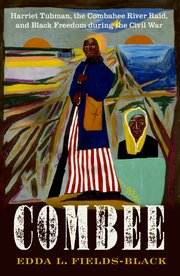
Combee: Harriet Tubman, the Combahee River Raid, and Black Freedom during the Civil War
The story of the Combahee River Raid, one of Harriet Tubman's most extraordinary accomplishments, based on original documents and written by a descendant of one of the participants.
Most Americans know of Harriet Tubman's legendary life: escaping enslavement in 1849, she led more than 60 others out of bondage via the Underground Railroad, gave instructions on getting to freedom to scores more, and went on to live a lifetime fighting for change. Yet the many biographies, children's books, and films about Tubman omit a crucial chapter: during the Civil War, hired by the Union Army, she ventured into the heart of slave territory--Beaufort, South Carolina--to live, work, and gather intelligence for a daring raid up the Combahee River to attack the major plantations of Rice Country, the breadbasket of the Confederacy.
Edda L. Fields-Black--herself a descendent of one of the participants in the raid--shows how Tubman commanded a ring of spies, scouts, and pilots and participated in military expeditions behind Confederate lines. On June 2, 1863, Tubman and her crew piloted two regiments of Black US Army soldiers, the Second South Carolina Volunteers, and their white commanders up coastal South Carolina's Combahee River in three gunboats. In a matter of hours, they torched eight rice plantations and liberated 730 people, people whose Lowcountry Creole language and culture Tubman could not even understand. Black men who had liberated themselves from bondage on South Carolina's Sea Island cotton plantations after the Battle of Port Royal in November 1861 enlisted in the Second South Carolina Volunteers and risked their lives in the effort.
Using previous unexamined documents, including Tubman's US Civil War Pension File, bills of sale, wills, marriage settlements, and estate papers from planters' families, Fields-Black brings to life intergenerational, extended enslaved families, neighbors, praise-house members, and sweethearts forced to work in South Carolina's deadly tidal rice swamps, sold, and separated during the antebellum period. When Tubman and the gunboats arrived and blew their steam whistles, many of those people clambered aboard, sailed to freedom, and were eventually reunited with their families. The able-bodied Black men freed in the Combahee River Raid enlisted in the Second South Carolina Volunteers and fought behind Confederate lines for the freedom of others still enslaved not just in South Carolina but Georgia and Florida.
After the war, many returned to the same rice plantations from which they had escaped, purchased land, married, and buried each other. These formerly enslaved peoples on the Sea Island indigo and cotton plantations, together with those in the semi-urban port cities of Charleston, Beaufort, and Savannah, and on rice plantations in the coastal plains, created the distinctly American Gullah Geechee dialect, culture, and identity--perhaps the most significant legacy of Harriet Tubman's Combahee River Raid.
Most Americans know of Harriet Tubman's legendary life: escaping enslavement in 1849, she led more than 60 others out of bondage via the Underground Railroad, gave instructions on getting to freedom to scores more, and went on to live a lifetime fighting for change. Yet the many biographies, children's books, and films about Tubman omit a crucial chapter: during the Civil War, hired by the Union Army, she ventured into the heart of slave territory--Beaufort, South Carolina--to live, work, and gather intelligence for a daring raid up the Combahee River to attack the major plantations of Rice Country, the breadbasket of the Confederacy.
Edda L. Fields-Black--herself a descendent of one of the participants in the raid--shows how Tubman commanded a ring of spies, scouts, and pilots and participated in military expeditions behind Confederate lines. On June 2, 1863, Tubman and her crew piloted two regiments of Black US Army soldiers, the Second South Carolina Volunteers, and their white commanders up coastal South Carolina's Combahee River in three gunboats. In a matter of hours, they torched eight rice plantations and liberated 730 people, people whose Lowcountry Creole language and culture Tubman could not even understand. Black men who had liberated themselves from bondage on South Carolina's Sea Island cotton plantations after the Battle of Port Royal in November 1861 enlisted in the Second South Carolina Volunteers and risked their lives in the effort.
Using previous unexamined documents, including Tubman's US Civil War Pension File, bills of sale, wills, marriage settlements, and estate papers from planters' families, Fields-Black brings to life intergenerational, extended enslaved families, neighbors, praise-house members, and sweethearts forced to work in South Carolina's deadly tidal rice swamps, sold, and separated during the antebellum period. When Tubman and the gunboats arrived and blew their steam whistles, many of those people clambered aboard, sailed to freedom, and were eventually reunited with their families. The able-bodied Black men freed in the Combahee River Raid enlisted in the Second South Carolina Volunteers and fought behind Confederate lines for the freedom of others still enslaved not just in South Carolina but Georgia and Florida.
After the war, many returned to the same rice plantations from which they had escaped, purchased land, married, and buried each other. These formerly enslaved peoples on the Sea Island indigo and cotton plantations, together with those in the semi-urban port cities of Charleston, Beaufort, and Savannah, and on rice plantations in the coastal plains, created the distinctly American Gullah Geechee dialect, culture, and identity--perhaps the most significant legacy of Harriet Tubman's Combahee River Raid.
776 pages, Hardcover
First published February 13, 2024
Ratings & Reviews
Friends & Following
Create a free account to discover what your friends think of this book!
Community Reviews
Displaying 1 - 30 of 100 reviews

October 30, 2024
There’s an inspiring, heroic tale in this massive book, but it’s all but submerged by encyclopedic documentation of the many people on the periphery of the Harriet Tubman tale. The writer did a commendable research job, and shows flourishes of compelling narrative writing when he returns to Tubman and the raid itself. I just wish there were a more accessible version of this story.

May 24, 2024
5 full enthusiastic stars
This audiobook was made available for me to listen to and review by Dr. Eddie L. Fields-Black, RB Media, and NetGalley.
This is so much more than a history of the Combahee River Raid. This covers the history of the area from colonization until 1863 and beyond. It also goes over the basic laws that governed the Transatlantic Slave Trade and how that functioned on the West African coast as well as in English colonies and later the United States. To label this as 'thorough' does not do it justice. This is unbelievably meticulous. Dr. Fields-Black outdid herself with this. I'm blown away.
This offers a fascinating look at Harriet Tubman and her family, of course. Also, other Black folks of this era and beyond are discussed: Frederick Douglass and Sojourner Truth come immediately to mind. This isn't a biography of Tubman. There already exist at least two very thorough biographies of her, as the author herself points out. This does give some biographical information on other participants in the Combahee River Raid.
This really offers a tremendous education not only on this particular Raid but also how chattel slavery functioned during the Antebellum period full stop.
I pre-ordered this in book form as soon as I read about it, though this review is based on the audiobook. After listening to this, I also ordered a copy from Audible. I look forward to rereading this. This is information dense, and I need to return to it to see what it can add to my own personal studies of US chattel slavery. The information is organized in logical ways, and the narrative flows smoothly.
I highly recommend this for my abolitionist friends as well as my history friends. This offers something for everyone.
Harriet Tubman was amazing. She has been a personal hero of mine my entire life. May she rest in power♥️
The narrator of this history book is Machelle Williams. Her voice is crisp, educated, and relaxed. Her skill with narration makes this feel not at all long or like a history lecture. Well done.
Thank you to Dr. Eddie L. Fields-Black, RBMedia, and NetGalley for the opportunity to listen to and review this audiobook. All opinions and viewpoints expressed in this review are my own.
This audiobook was made available for me to listen to and review by Dr. Eddie L. Fields-Black, RB Media, and NetGalley.
This is so much more than a history of the Combahee River Raid. This covers the history of the area from colonization until 1863 and beyond. It also goes over the basic laws that governed the Transatlantic Slave Trade and how that functioned on the West African coast as well as in English colonies and later the United States. To label this as 'thorough' does not do it justice. This is unbelievably meticulous. Dr. Fields-Black outdid herself with this. I'm blown away.
This offers a fascinating look at Harriet Tubman and her family, of course. Also, other Black folks of this era and beyond are discussed: Frederick Douglass and Sojourner Truth come immediately to mind. This isn't a biography of Tubman. There already exist at least two very thorough biographies of her, as the author herself points out. This does give some biographical information on other participants in the Combahee River Raid.
This really offers a tremendous education not only on this particular Raid but also how chattel slavery functioned during the Antebellum period full stop.
I pre-ordered this in book form as soon as I read about it, though this review is based on the audiobook. After listening to this, I also ordered a copy from Audible. I look forward to rereading this. This is information dense, and I need to return to it to see what it can add to my own personal studies of US chattel slavery. The information is organized in logical ways, and the narrative flows smoothly.
I highly recommend this for my abolitionist friends as well as my history friends. This offers something for everyone.
Harriet Tubman was amazing. She has been a personal hero of mine my entire life. May she rest in power♥️
The narrator of this history book is Machelle Williams. Her voice is crisp, educated, and relaxed. Her skill with narration makes this feel not at all long or like a history lecture. Well done.
Thank you to Dr. Eddie L. Fields-Black, RBMedia, and NetGalley for the opportunity to listen to and review this audiobook. All opinions and viewpoints expressed in this review are my own.
December 26, 2025
Combee
★★★★½
This book should be a limited series. The material is already episodic, and it keeps handing you scenes that feel made for television. Harriet Tubman running intelligence and debriefing refugees. The uneasy experiment of freedom on the South Carolina coast. Ironclads, the most advanced military technology of the time, battling on the rivers while emancipation unfolds in their shadow. It is history with built-in tension and scale.
Some of the most striking moments are smaller and stranger. Abolitionist teachers having children sing songs glorifying John Brown just after his execution captures how quickly belief turns into myth, and how unsettling that process can be. Cultural scenes like ring shouts ground the story in practices of survival and continuity that existed long before Union authority arrived. Together, these moments show freedom not as a clean turning point, but as something contested, learned, and performed.
The backdrop is as compelling as any battlefield. The islands become a test case for what freedom is supposed to look like, with Union officials pushing cotton production while newly freed people focus on growing food and stabilizing daily life. Wages, labor, language, and authority are negotiated in real time, often across dialects that administrators barely understand.
Tubman emerges not as a distant symbol, but as an operator, reading people, managing fear, and making decisions where failure means death or re-enslavement. Liberation here is logistical, psychological, and morally complicated.
Readers should know what they are getting. This is a history book, and it does serious historical work. It moves through pension files, property transfers, and deep dives into primary sources to show how the story is reconstructed. At times that slows the pace. But the payoff is credibility, and when the narrative is in scene, the material is powerful. The research is the spine. The human drama is the meat.
★★★★½
This book should be a limited series. The material is already episodic, and it keeps handing you scenes that feel made for television. Harriet Tubman running intelligence and debriefing refugees. The uneasy experiment of freedom on the South Carolina coast. Ironclads, the most advanced military technology of the time, battling on the rivers while emancipation unfolds in their shadow. It is history with built-in tension and scale.
Some of the most striking moments are smaller and stranger. Abolitionist teachers having children sing songs glorifying John Brown just after his execution captures how quickly belief turns into myth, and how unsettling that process can be. Cultural scenes like ring shouts ground the story in practices of survival and continuity that existed long before Union authority arrived. Together, these moments show freedom not as a clean turning point, but as something contested, learned, and performed.
The backdrop is as compelling as any battlefield. The islands become a test case for what freedom is supposed to look like, with Union officials pushing cotton production while newly freed people focus on growing food and stabilizing daily life. Wages, labor, language, and authority are negotiated in real time, often across dialects that administrators barely understand.
Tubman emerges not as a distant symbol, but as an operator, reading people, managing fear, and making decisions where failure means death or re-enslavement. Liberation here is logistical, psychological, and morally complicated.
Readers should know what they are getting. This is a history book, and it does serious historical work. It moves through pension files, property transfers, and deep dives into primary sources to show how the story is reconstructed. At times that slows the pace. But the payoff is credibility, and when the narrative is in scene, the material is powerful. The research is the spine. The human drama is the meat.

March 2, 2024
This was a fascinating look at two things I knew nothing about: Harriet Tubman’s work with the Union Army in the Combahee River Raid, and her involvement in something called The Port Royal Experiment. The latter was an effort by the union to occupy plantations around the Port Royal area and redistribute the land on those plantations to freed African-American laborers. (Sadly, much of the plantation lands wound up being returned to plantation owners after the war and after Lincoln’s assassination.)
This is a long and very scholarly work, with lots of footnotes and appendixes, so the reading did get a little bit dry at times. However, I learned so many fascinating things from this book—the vast difference between the culture and languages of enslaved Blacks in Maryland versus those in South Carolina; a more in-depth look at abolitionists like John Brown and William Garrison; the story of the prosperous free African-American Forten family in Pennsylvania and the work of Charlotte Forten, who acted as a teacher to many of the freed laborers and their children in the Port Royal Experiment. And last but not least, I learned that Harriet Tubman was even more amazing and fearless than I’d already believed.
What a fascinating and too little known chapter of American history!
This is a long and very scholarly work, with lots of footnotes and appendixes, so the reading did get a little bit dry at times. However, I learned so many fascinating things from this book—the vast difference between the culture and languages of enslaved Blacks in Maryland versus those in South Carolina; a more in-depth look at abolitionists like John Brown and William Garrison; the story of the prosperous free African-American Forten family in Pennsylvania and the work of Charlotte Forten, who acted as a teacher to many of the freed laborers and their children in the Port Royal Experiment. And last but not least, I learned that Harriet Tubman was even more amazing and fearless than I’d already believed.
What a fascinating and too little known chapter of American history!

May 29, 2025
I don’t know what to rate this book. The research and reconstruction of the lives of the people freed in the Combee River raid through their pension applications is amazing and deserving of 5+ stars (not to mention the Pulitzer). The book (or audiobook in my case)… it’s just so slow and dry. For example, listing financial details for land purchases running on for minutes and minutes, or who moved where when, every account of how many people were located here or there, etc. Important work, but maybe not for a mass audience. The biggest take away is how much of a Grade-A badass Harriett Tubman was apart from leading enslaved people north, which alone would make her one of the greatest heroes in American history. I will definitely be reading more about her.

August 16, 2025
This book suffers from an identity crisis. It’s trying to be both the dense, detail-packed result of extensive historical research and a readable, gripping narrative of some of the most heroic acts in our nation’s history. It fails at both. If it’s a document of historical reference, why does the author devote so much space and time to her own ancestors, who are otherwise entirely unremarkable? And if it’s a historical narrative—which is what I had hoped for, and I suspect most other readers had as well—then why on earth does it contain so many minute details from so many documents, illuminating precisely nothing about the narrative and characters we’re trying to care about? Why do we need to know every single name entered by every single slaveholder who filled out a form seeking some kind of compensation—even when those names refer to people about whom we (and the author) otherwise know exactly nothing? Numerous other such details are also included, in tedious, mind-numbing detail. (One of my favorite moments, for its sheer representativeness, is a point in Chapter 17 where she’s listing the various calamities suffered by military personnel we’ve never heard of, and she says “the list could go on.” After which, she goes on. And on. And on.)
There could be a compelling narrative here—probably more than one. But you have to try to unweave them from the tapestry of mixed intentions, and it’s more work than I was willing to do. I ended up hearing a few interesting anecdotes—a few of which might surely have connected together well if they hadn’t been so thoroughly separated by dense patches of meaningless names & details that have no connection to anything else in the narrative.
It’s not worth the time it takes to read, really. If there were an abridged version, that might be, but it would have to be pretty heavily abridged.
There could be a compelling narrative here—probably more than one. But you have to try to unweave them from the tapestry of mixed intentions, and it’s more work than I was willing to do. I ended up hearing a few interesting anecdotes—a few of which might surely have connected together well if they hadn’t been so thoroughly separated by dense patches of meaningless names & details that have no connection to anything else in the narrative.
It’s not worth the time it takes to read, really. If there were an abridged version, that might be, but it would have to be pretty heavily abridged.
January 26, 2025
A Powerful and Detailed Account of Black Freedom Fighters in the Civil War
Combee: Harriet Tubman, the Combahee River Raid, and Black Freedom during the Civil War is a gripping and well-researched historical account that brings to life the heroic deeds of Black soldiers in one of the most defining moments of American history, the Civil War. The book vividly captures the brutal realities of slavery, detailing the unimaginable struggles that Black people endured for centuries and their unwavering determination to risk everything for freedom.
Although centered on the extraordinary life of Harriet Tubman, the book transcends her individual story to illuminate a crucial chapter in American history. It reaffirms the famous notion that history is, in many ways, the biography of great individuals. Tubman, along with other brave men and women, defied the dangers of slave catchers, treacherous landscapes, and the deadly grip of their oppressors, all in the pursuit of liberty.
The author deserves commendation for several reasons. Firstly, the book offers a deeply detailed portrayal of the social and physical conditions of a slaveholding society and how these conditions fueled the struggle for emancipation. Additionally, it provides perhaps the most comprehensive account I have encountered of Black involvement in the Civil War, highlighting their indispensable role in the Union Army. This perspective ensures a balanced historical narrative, presenting the war not just as a governmental and abolitionist effort but as a fight for liberation driven by Black people themselves.
As a historian, the author maintains a clear chronological structure, carefully layering events to create a compelling and coherent narrative. The book’s descriptive depth is remarkable, allowing readers to visualize and experience the historical moments as if they were present.
These qualities make Combee an engaging, informative, and immersive read. Once you start, it is difficult to put down. It is a must-read for history enthusiasts and a valuable addition to the reading list of anyone interested in the Civil War, Black history, or the fight for freedom.
Combee: Harriet Tubman, the Combahee River Raid, and Black Freedom during the Civil War is a gripping and well-researched historical account that brings to life the heroic deeds of Black soldiers in one of the most defining moments of American history, the Civil War. The book vividly captures the brutal realities of slavery, detailing the unimaginable struggles that Black people endured for centuries and their unwavering determination to risk everything for freedom.
Although centered on the extraordinary life of Harriet Tubman, the book transcends her individual story to illuminate a crucial chapter in American history. It reaffirms the famous notion that history is, in many ways, the biography of great individuals. Tubman, along with other brave men and women, defied the dangers of slave catchers, treacherous landscapes, and the deadly grip of their oppressors, all in the pursuit of liberty.
The author deserves commendation for several reasons. Firstly, the book offers a deeply detailed portrayal of the social and physical conditions of a slaveholding society and how these conditions fueled the struggle for emancipation. Additionally, it provides perhaps the most comprehensive account I have encountered of Black involvement in the Civil War, highlighting their indispensable role in the Union Army. This perspective ensures a balanced historical narrative, presenting the war not just as a governmental and abolitionist effort but as a fight for liberation driven by Black people themselves.
As a historian, the author maintains a clear chronological structure, carefully layering events to create a compelling and coherent narrative. The book’s descriptive depth is remarkable, allowing readers to visualize and experience the historical moments as if they were present.
These qualities make Combee an engaging, informative, and immersive read. Once you start, it is difficult to put down. It is a must-read for history enthusiasts and a valuable addition to the reading list of anyone interested in the Civil War, Black history, or the fight for freedom.
June 1, 2025
Oh my god. someone please call an Editor. what happened here is that the author did a lot of excellent primary source research and then couldn't cull it down to an interesting story. And as a result, we have to read every tedious bit of research she did instead of a tight and interesting story. The story about the raid is literally 10% of the book.The rest of the book is preview and sequel. unbelievable.
March 13, 2026
Exceptionally tedious.
There is apparently no detail too small to be left out of this ponderous tome. Do we really need to know that a plantation bride wore 'a gray sport suit' for her wedding or that flooding delayed their trip for one day? Dear oh dear, a whole day - how the course of history was changed by weather....
I gave this a good faith effort, but after about 80 pages of wading through facts and figures I started to skim through sections that didn't seem to have a narrative. I'm pretty sure I wouldn't have made it to the end otherwise. As some other reviewers noted - the text is "mind-numbing".
The book is also littered with errors, which even a non-historian like myself could easily spot. One woman estimates in 1901 that she is about 100 years old, and the author suggests that the war she remembers experiencing as a girl took place around 1760. The author also indicates that Sojourner Truth was born before 1745. As the kids today say, 'your math isn't mathing'. She later states that John Brown was hanged after November 1860. Try again? This is just a small example of the factual errors I noticed, not to mention the innumerable typos and grammatical errors. There's also no sustained timeline, and information leaps about between years, often within the same paragraph. Don't get me started on the repetition - the author should have her 'copy/paste' shortcut permanently disabled. I don't blame the editors or proofreaders in the least. If this is what the final product looks like, I can only shudder to think what condition the submitted draft was in. You couldn't pay me enough to try to shape it into a coherent narrative.
I have no idea who the intended audience is for this book. It is far too dense for a casual reader, but all the errors and lack of organization make it a poor choice as a reference text. Maybe the descendants of all the people mentioned would find it interesting to look up their ancestor in the index and read that particular section. I'd suggest that all that information might be put into a searchable online database for those individuals, rather than scatter it about in a book. If you cut out everything that wasn't directly related to the Combahee river raid, there might be a fairly interesting 250 page book hidden within.
On the other hand, this book did win the Pulitzer, so what do I know? Call me cynical, but I'm guessing the judges just got an executive summary and some excerpts before casting their vote. They certainly didn't read the same book I did!
The author did lots of research and the cover is nice. That's the best I can say.
There is apparently no detail too small to be left out of this ponderous tome. Do we really need to know that a plantation bride wore 'a gray sport suit' for her wedding or that flooding delayed their trip for one day? Dear oh dear, a whole day - how the course of history was changed by weather....
I gave this a good faith effort, but after about 80 pages of wading through facts and figures I started to skim through sections that didn't seem to have a narrative. I'm pretty sure I wouldn't have made it to the end otherwise. As some other reviewers noted - the text is "mind-numbing".
The book is also littered with errors, which even a non-historian like myself could easily spot. One woman estimates in 1901 that she is about 100 years old, and the author suggests that the war she remembers experiencing as a girl took place around 1760. The author also indicates that Sojourner Truth was born before 1745. As the kids today say, 'your math isn't mathing'. She later states that John Brown was hanged after November 1860. Try again? This is just a small example of the factual errors I noticed, not to mention the innumerable typos and grammatical errors. There's also no sustained timeline, and information leaps about between years, often within the same paragraph. Don't get me started on the repetition - the author should have her 'copy/paste' shortcut permanently disabled. I don't blame the editors or proofreaders in the least. If this is what the final product looks like, I can only shudder to think what condition the submitted draft was in. You couldn't pay me enough to try to shape it into a coherent narrative.
I have no idea who the intended audience is for this book. It is far too dense for a casual reader, but all the errors and lack of organization make it a poor choice as a reference text. Maybe the descendants of all the people mentioned would find it interesting to look up their ancestor in the index and read that particular section. I'd suggest that all that information might be put into a searchable online database for those individuals, rather than scatter it about in a book. If you cut out everything that wasn't directly related to the Combahee river raid, there might be a fairly interesting 250 page book hidden within.
On the other hand, this book did win the Pulitzer, so what do I know? Call me cynical, but I'm guessing the judges just got an executive summary and some excerpts before casting their vote. They certainly didn't read the same book I did!
The author did lots of research and the cover is nice. That's the best I can say.

June 7, 2025
This was an outstanding read and the research that went into this work was extensive. There is more to this story than just about the Combahee River Raid but delves into the lives of the slaves and the many people who participated in their escape to freedom. Harriet Tubman was Moses to her people and an important America Heroine. The book goes behind the scenes and details her relationship with John Brown and his band of fearless freedom fighters. I do believe this is an important work and think it deserving of the Pulitzer for a work of non-fiction.

July 12, 2024
If you have ancestors that you’ve wondered about and know they may have lived around the time of this raid or was involved in it, read. This. Book.
If you want a more factual, document-like telling of a part of American history, read. This. Book.
I felt more like I was reading documents than hearing a story but talk about extremely extensive and thorough details pre raid, of the raid and post raid.
The most beautiful part of this novel is the names. Something tells me the majority of the names given throughout are not well known whatsoever and are of the many slaves, freed, fighting Black Americans of this country’s history. Although we hear much about Harriet Tubman, which drew me to the novel in the first place, I felt that a legacy was given to all those named, maybe some for the first time in a public work.
If you want a more factual, document-like telling of a part of American history, read. This. Book.
I felt more like I was reading documents than hearing a story but talk about extremely extensive and thorough details pre raid, of the raid and post raid.
The most beautiful part of this novel is the names. Something tells me the majority of the names given throughout are not well known whatsoever and are of the many slaves, freed, fighting Black Americans of this country’s history. Although we hear much about Harriet Tubman, which drew me to the novel in the first place, I felt that a legacy was given to all those named, maybe some for the first time in a public work.

August 15, 2025
WOW. This is by far the best most moving non fiction I have ever read. Powerful and breathtaking. If you read just one book this year this should be it. These are the kind of history we need right now. This is more than a book on Tubman (BAMF) but on a whole society embracing freedom for the first time. HIGHLY RECOMMEND 5/5

October 29, 2025
Really amazing history and reporting, and a perfect compliment to the South Carolina/Charleston sections of the International African American Museum!
This was literally perfect for many of the questions I had leaving the IAAM: What was life like for freedom-seekers and recently liberated enslaved people in Charleston during and soon after the Civil War? Wait, what happened during the Port Royal Experiment? How did Gullah Geechee culture form? What did Harriet Tubman do as a spy!!?
This also has some info on white people in the Charleston area, including plantation owners - but I appreciated that this book always centered the Black Combee families. I so loved how this has lots of "background" info leading up to and following the Combahee River Raid, because the book presents how all this info is so helpful for understanding these people/families' lives. Especially when the raid was finally described, it was very emotional. Also very cool to have shout-outs along the way regarding how historical research works (and the closing!), and brief mentions of Fields-Black's family history.
This has a straightforward tone/is not "creative nonfiction" but instead reads as a scholarly text that is still pretty approachable for lay people like me (e.g., by repeating some details, by reminding us who different people are). Sometimes, I did wonder if it was a bit dry - but, I appreciate that Fields-Black was simply letting the history speak for itself. And, wow, incredible history! My reading/listening experience was probably enhanced by the fact that I knew almost none of this history. If you already know a lot about the Combahee River Raid, Harriet Tubman, and Charleston area Civil War/Reconstruction, then I'm not sure how much you would love this book/the writing style. For me, though, this was incredible. Also, SO COOL to have experiences like listening to the audiobook mention Goose Creek while I'm driving past the Goose Creek exit!
I listened to this on audiobook, mostly while driving, read by the author: awesome narration! I saw some folks writing that this book can be overwhelming with all of the footnotes and appendices. I'm not sure what differences there are between the audiobook and text (I don't know if footnotes and appendices are included?), but I can say that the audiobook was not overwhelming. Listened at 2x speed and it was really clear.
This was literally perfect for many of the questions I had leaving the IAAM: What was life like for freedom-seekers and recently liberated enslaved people in Charleston during and soon after the Civil War? Wait, what happened during the Port Royal Experiment? How did Gullah Geechee culture form? What did Harriet Tubman do as a spy!!?
This also has some info on white people in the Charleston area, including plantation owners - but I appreciated that this book always centered the Black Combee families. I so loved how this has lots of "background" info leading up to and following the Combahee River Raid, because the book presents how all this info is so helpful for understanding these people/families' lives. Especially when the raid was finally described, it was very emotional. Also very cool to have shout-outs along the way regarding how historical research works (and the closing!), and brief mentions of Fields-Black's family history.
This has a straightforward tone/is not "creative nonfiction" but instead reads as a scholarly text that is still pretty approachable for lay people like me (e.g., by repeating some details, by reminding us who different people are). Sometimes, I did wonder if it was a bit dry - but, I appreciate that Fields-Black was simply letting the history speak for itself. And, wow, incredible history! My reading/listening experience was probably enhanced by the fact that I knew almost none of this history. If you already know a lot about the Combahee River Raid, Harriet Tubman, and Charleston area Civil War/Reconstruction, then I'm not sure how much you would love this book/the writing style. For me, though, this was incredible. Also, SO COOL to have experiences like listening to the audiobook mention Goose Creek while I'm driving past the Goose Creek exit!
I listened to this on audiobook, mostly while driving, read by the author: awesome narration! I saw some folks writing that this book can be overwhelming with all of the footnotes and appendices. I'm not sure what differences there are between the audiobook and text (I don't know if footnotes and appendices are included?), but I can say that the audiobook was not overwhelming. Listened at 2x speed and it was really clear.

Did Not Finish
May 8, 2026This book is great, but it's authoritative which makes it long and dense. I highly recommend reading the intro, it's a great and interesting story. After that I skipped around. The author's expertise is in historic rice cultivation (which is what the raided plantations grew) and she uses it to give a ton of environmental and labor context. That's fun. But the book is context heavy—another reviewer aptly called it "encyclopedic". It pulls all available context, especially lineage, on the Combahee slaves, planters and Tubman. The most electrifying was the political clime on Africa's Gold Coast when their ancestors were sold off. The various debts and purchases of the plantation owner's ancestors were less exciting.

May 25, 2026
Epic. I see the reviews grumbling about the density of the substance here, from the complex web of antebellum markets to the tangled pursuit of postwar restitution, and although I understand that many readers would prefer a leaner narrative, I can only admire the breathtaking, eye-straining, butt-numbing level of research that went into this book. This is vital work here. More than ever, I believe that Harriet Tubman remains one of our greatest national heroes. To see where she fits in this even larger drama is truly something to behold.
July 17, 2025
suffice to say this book was awesome, though if anyone wants to read my notes app paragraphs about it just lmk lol
June 20, 2025
There is so much to admire about Combee: Harriet Tubman, the Combahee River Raid, and Black Freedom during the Civil War by Edda L. Fields-Black. As a historian and an admirer of Tubman, who is without a doubt one of the greatest Americans who ever lived. I approached this book with high expectations, especially since it spotlights a moment in Tubman’s life that is often relegated to the final chapters or footnotes of most biographies. The Combahee River Raid is typically treated as a fascinating anecdote, when in reality it deserves the focused, robust treatment it gets here.
What Fields-Black accomplishes through this book is nothing short of remarkable. Her archival work is rigorous and expansive, relying on pension records, census data, regimental reports, and the oral traditions of Gullah-Geechee communities. The depth of research is staggering and it's clear this was a labor of love, more than a decade in the making. I was particularly struck by her effort to recover and highlight the lives of enslaved men who helped guide Tubman and Union troops through rice plantations they knew intimately, and by the way she restores agency to Black participants who are so often left out of military or strategic histories of the Civil War.
The book's greatest strength is this contextualization. Tubman is at the center, yes, but the broader scope of the raid, including its logistical, agricultural, geographical, and military dimensions, is all explored with equal attention. Fields-Black invites readers to consider Tubman as much more than a brave conductor on the Underground Railroad but rather as an experienced operative, military strategist, and key player in the Union war effort, which is an incredibly important reframing and argument being made in this book.
That said, I do have to ding it slightly, though respectfully, on narrative flow. As is often the case with works published by university presses, the demands of academic rigor sometimes slow down the storytelling. Some chapters felt weighed down by detail that might have been better streamlined for accessibility. I found myself wishing this book had a slimmer, more narratively driven counterpart, something closer to popular nonfiction that could bring Tubman’s raid to a broader audience without sacrificing too much historical substance.
Because here is the truth: this book deserves to be made into a film. There is drama, tension, action, strategy, heroism, betrayal, community, resistance, and freedom, all the essential ingredients of an epic story. That we still haven’t seen a large-scale, big-budget dramatization of Harriet Tubman’s military career is a cultural oversight, and this book could absolutely serve as the blueprint.
Combee is a triumph of research and reclamation. While it might be a challenging read for those unfamiliar with academic history, it rewards the committed reader with a new and deeper understanding of Tubman and of the raid she led. I recommend it to anyone with an interest in African American history, the Civil War, or heroic resistance movements. And I will absolutely be first in line for a theatrical adaptation if anyone in Hollywood is wise enough to pick it up.
For more check out my video:
https://youtu.be/Y5n125SwScM
For more reviews, check out my channel:
http://www.youtube.com/@SpencerReadsE...
What Fields-Black accomplishes through this book is nothing short of remarkable. Her archival work is rigorous and expansive, relying on pension records, census data, regimental reports, and the oral traditions of Gullah-Geechee communities. The depth of research is staggering and it's clear this was a labor of love, more than a decade in the making. I was particularly struck by her effort to recover and highlight the lives of enslaved men who helped guide Tubman and Union troops through rice plantations they knew intimately, and by the way she restores agency to Black participants who are so often left out of military or strategic histories of the Civil War.
The book's greatest strength is this contextualization. Tubman is at the center, yes, but the broader scope of the raid, including its logistical, agricultural, geographical, and military dimensions, is all explored with equal attention. Fields-Black invites readers to consider Tubman as much more than a brave conductor on the Underground Railroad but rather as an experienced operative, military strategist, and key player in the Union war effort, which is an incredibly important reframing and argument being made in this book.
That said, I do have to ding it slightly, though respectfully, on narrative flow. As is often the case with works published by university presses, the demands of academic rigor sometimes slow down the storytelling. Some chapters felt weighed down by detail that might have been better streamlined for accessibility. I found myself wishing this book had a slimmer, more narratively driven counterpart, something closer to popular nonfiction that could bring Tubman’s raid to a broader audience without sacrificing too much historical substance.
Because here is the truth: this book deserves to be made into a film. There is drama, tension, action, strategy, heroism, betrayal, community, resistance, and freedom, all the essential ingredients of an epic story. That we still haven’t seen a large-scale, big-budget dramatization of Harriet Tubman’s military career is a cultural oversight, and this book could absolutely serve as the blueprint.
Combee is a triumph of research and reclamation. While it might be a challenging read for those unfamiliar with academic history, it rewards the committed reader with a new and deeper understanding of Tubman and of the raid she led. I recommend it to anyone with an interest in African American history, the Civil War, or heroic resistance movements. And I will absolutely be first in line for a theatrical adaptation if anyone in Hollywood is wise enough to pick it up.
For more check out my video:
https://youtu.be/Y5n125SwScM
For more reviews, check out my channel:
http://www.youtube.com/@SpencerReadsE...
June 14, 2025
Whew! This is a tome and written for historians. Edda Fields said in the acknowledgements that she wanted to provide the names to all of the enslaved people who were freed and involved with the raid, so that they would finally be recognized and honored. She certainly was successful in doing so by detailing their lives, relatives, children, spouses, homes, work paragraph after paragraph. She also detailed the lives of the enslavers. The detailing really bogged down the narrative for a non historian like myself. However, if someone wanted to learn more about an ancestor who participated in this amazing raid, this would be the source material. The appendices were filled with actual documentation from which she draws her story. There is about 40 pages of pictures/drawings/and maps. This is truly a scholar's delight.

May 23, 2025
I’m really glad I listened to this but it was a slog.
I’m happy to hear more about Harriet Tubman. What a woman and a hero of the fight for freedom for the enslaved peoples of America. It goes further and helps really show that the whole south economy was based on buying and selling enslaved people. Very factual with much reliance on pension documents and files of formerly enslaved people and their families going thru a slow expensive bureaucracy to get recompense for their service during the Civil War. This seems a tedious process to research history and it was tedious to listen to.
The Combahee River Raid was successful because Harriet Tubman served as a trusted point of contact between the enslaved and formerly enslaved people and the US Army. She was a spy for the army, learning about Confederate activities from enslaved peoples and sharing it with the US.
I learned much and am happy to have devoted the time to listen to this book. It was, however, slow going and I often lost the connections between the people the author was researching and the stories of the raids in the book.
I’m happy to hear more about Harriet Tubman. What a woman and a hero of the fight for freedom for the enslaved peoples of America. It goes further and helps really show that the whole south economy was based on buying and selling enslaved people. Very factual with much reliance on pension documents and files of formerly enslaved people and their families going thru a slow expensive bureaucracy to get recompense for their service during the Civil War. This seems a tedious process to research history and it was tedious to listen to.
The Combahee River Raid was successful because Harriet Tubman served as a trusted point of contact between the enslaved and formerly enslaved people and the US Army. She was a spy for the army, learning about Confederate activities from enslaved peoples and sharing it with the US.
I learned much and am happy to have devoted the time to listen to this book. It was, however, slow going and I often lost the connections between the people the author was researching and the stories of the raids in the book.

June 6, 2025
Fascinating topic but the story line was hard to follow.

May 18, 2025
This was a really informative read that was a little dry in places and leaned on the scholarly side. There were some fascinating moments, including the early life of Harriet Tubman, but there was also a lot of information about wills, mortgages and pensions, which was a bit of a slog. Overall, this was a bit of a mixed bag, but those with a real interest in the period can definitely get a lot out of it.
I received a free copy of this book from the publisher in exchange for a fair and honest review.
I received a free copy of this book from the publisher in exchange for a fair and honest review.

May 8, 2025
I listened to the audio edition of this book, so I'm going to fully separate my comments about the content of the book itself from some quibbles about the audio experience to not detract from the brilliant achievement of research and analysis the author has provided us.
The book - *****+
I'm not sure that anyone who hasn't spent a lot of time with 19th century (or earlier) primary sources can fully appreciate what an enormous contribution this book represents to our collective understanding of not only the events of the Combahee River Raid itself, but of Black social structures and culture in the low country and beyond before, during, and after the Civil War. The author rather modestly describes her process in her note at the end of the book, but consider that she had to:
1. Recognize that Harriet Tubman working with the US Army was not the only significant story to tell about the raid (although the book adds new insights to that angle as well).
2. Decide to focus her research on primary sources rather than oral tradition, despite the fact that the sources in question were unindexed, handwritten pension files and loose papers (also handwritten - typewriters were not a thing in 1863) from the estates of long-departed enslaver families.
3. Physically locate, read, transcribe, and index these records, mostly during a worldwide pandemic.
4. Figure out who was who in the records, despite the use of multiple names by almost everyone and the fact that the pension files reflect what the government needed to hear to deem the applicant eligible, even if it included some "partial truths" and the enslavers' papers reflect an attempt to procure the largest possible compensation for their losses.
5. Map out all of the relationships involved despite the previously mentioned challenges.
6. Weave all of this into the existing historical record to provide context and put those involved into the story where they belong.
And then, after all that, she wrote a book that is accessible to a broad audience. This isn't a textbook or reference material. It's like the raid itself is the eye of the hurricane and the book encompasses the arms that spiral out from it. From the ships themselves to the land the enslaved laborers were forced to work; from the transatlantic slave trade to the importance of rice to the South Carolina and US economies; from languages to marriages to basket names to military politics: this is truly an epic. And it's all told with full documentation, no attribution of unknowable feelings or dialogue, and a dedication to honoring the memory of these forgotten events and people.
I will admit to some level of frustration in the early chapters with what I considered to be unnecessary background - but then I remembered that we live in a world where it's considered controversial or dangerous to speak (or write) basic truths about our country's origins and history. Authors can no longer assume that their audience has even the most basic information about slavery, the antebellum south, or even the chronology of the Civil War itself. To have produced this work in this environment only adds to its magnitude.
Now, as for the audio version.....
***
The fundamental problem is that this is not a book that is well-suited to the audio format. The plethora of names of both people and places, the (necessary) skipping around the chronology, and the author's accurate and useful but somewhat-wordy-in-verbal-form language are made to be read, annotated, flipped back and forth through, and quoted. These are not things that are easily accomplished in most audiobook interfaces. There is no good way that I have seen to include footnotes or references in an audiobook (aside from providing them in written form, which rather defeats the purpose of listening), so while I support the decision to not try, it is a loss compared to the written edition.
The narrator generally does a good job with the somewhat repetitive and wordy language (not a criticism - it's just not a style that rolls naturally in speech). However, I'm not sure if there was an error in her script or what, but I have never in my life heard a person substitute Calvary for cavalry so many times in a row. Perhaps she usually narrates religious texts or travel guides to the holy lands. But there is a chapter about the Charleston Light Dragoons that (unsurprisingly) includes the world cavalry dozens of times that I was shocked was not re-recorded. I understand that it's time consuming and expensive to make corrections, but this rose to the point of distracting from the text.
So go get yourself a written copy and a set of sticky notes, and prepare to learn something.
Thank you to NetGalley for the ARC.
The book - *****+
I'm not sure that anyone who hasn't spent a lot of time with 19th century (or earlier) primary sources can fully appreciate what an enormous contribution this book represents to our collective understanding of not only the events of the Combahee River Raid itself, but of Black social structures and culture in the low country and beyond before, during, and after the Civil War. The author rather modestly describes her process in her note at the end of the book, but consider that she had to:
1. Recognize that Harriet Tubman working with the US Army was not the only significant story to tell about the raid (although the book adds new insights to that angle as well).
2. Decide to focus her research on primary sources rather than oral tradition, despite the fact that the sources in question were unindexed, handwritten pension files and loose papers (also handwritten - typewriters were not a thing in 1863) from the estates of long-departed enslaver families.
3. Physically locate, read, transcribe, and index these records, mostly during a worldwide pandemic.
4. Figure out who was who in the records, despite the use of multiple names by almost everyone and the fact that the pension files reflect what the government needed to hear to deem the applicant eligible, even if it included some "partial truths" and the enslavers' papers reflect an attempt to procure the largest possible compensation for their losses.
5. Map out all of the relationships involved despite the previously mentioned challenges.
6. Weave all of this into the existing historical record to provide context and put those involved into the story where they belong.
And then, after all that, she wrote a book that is accessible to a broad audience. This isn't a textbook or reference material. It's like the raid itself is the eye of the hurricane and the book encompasses the arms that spiral out from it. From the ships themselves to the land the enslaved laborers were forced to work; from the transatlantic slave trade to the importance of rice to the South Carolina and US economies; from languages to marriages to basket names to military politics: this is truly an epic. And it's all told with full documentation, no attribution of unknowable feelings or dialogue, and a dedication to honoring the memory of these forgotten events and people.
I will admit to some level of frustration in the early chapters with what I considered to be unnecessary background - but then I remembered that we live in a world where it's considered controversial or dangerous to speak (or write) basic truths about our country's origins and history. Authors can no longer assume that their audience has even the most basic information about slavery, the antebellum south, or even the chronology of the Civil War itself. To have produced this work in this environment only adds to its magnitude.
Now, as for the audio version.....
***
The fundamental problem is that this is not a book that is well-suited to the audio format. The plethora of names of both people and places, the (necessary) skipping around the chronology, and the author's accurate and useful but somewhat-wordy-in-verbal-form language are made to be read, annotated, flipped back and forth through, and quoted. These are not things that are easily accomplished in most audiobook interfaces. There is no good way that I have seen to include footnotes or references in an audiobook (aside from providing them in written form, which rather defeats the purpose of listening), so while I support the decision to not try, it is a loss compared to the written edition.
The narrator generally does a good job with the somewhat repetitive and wordy language (not a criticism - it's just not a style that rolls naturally in speech). However, I'm not sure if there was an error in her script or what, but I have never in my life heard a person substitute Calvary for cavalry so many times in a row. Perhaps she usually narrates religious texts or travel guides to the holy lands. But there is a chapter about the Charleston Light Dragoons that (unsurprisingly) includes the world cavalry dozens of times that I was shocked was not re-recorded. I understand that it's time consuming and expensive to make corrections, but this rose to the point of distracting from the text.
So go get yourself a written copy and a set of sticky notes, and prepare to learn something.
Thank you to NetGalley for the ARC.
August 22, 2025
This is a stunning undertaking, and the level of meticulous research Fields-Black compiled to tell this account of Black freedom during the Civil War is astounding.
As pointed out in the introduction, Combee is much more than a one-off account of the Combee River Raid, and most certainly not a biography of Harriet Tubman. Sourced primarily from post-war pension application archives, Fields-Black offers an overarching perspective over the lower Combee region and culture, the raid itself and events leading up to it, and the lasting impacts of the event (including the formations of the 1st and 2nd South Carolina Regiments and the 8th U.S. Colored Troops). In Fields-Black words, it was an act of “creation and freedom, giving birth to freed people, giving birth to soldiers, and giving birth to more freedom fighters.”
Combee is a vital read for many reasons, but one that stands out especially to me in this current moment is that this book is direct evidence against what many in power are now proponing about U.S. history and Black history. Slavery was that evil, and Black people were willing to die not only to escape it themselves, but to fight for others’ freedom as well.
Tubman’s involvement is significant, especially considering it is possibly the least recognized area of her life and activist work—not only because it goes relatively unacknowledged in history but she wasn’t ever paid for her services to the U.S. government. Yet because of Tubman the Combee River Raid can be considered the largest and most successful slave revolt in U.S. history, and places her next to figures like Tacky, Denmark Vesey, Nat Turner, and Tubman’s own hero, John Brown (though significantly, the aforementioned men all died for their struggles and not only did Tubman survive, but it was largely because of her efforts that there were zero causalities on the Union side).
This book is a remarkable account of the Black struggle for freedom during the Civil War, and a brief look at the continued struggle after the war officially ended and into present day. This is our history and works like these ensure it cannot be erased.
As pointed out in the introduction, Combee is much more than a one-off account of the Combee River Raid, and most certainly not a biography of Harriet Tubman. Sourced primarily from post-war pension application archives, Fields-Black offers an overarching perspective over the lower Combee region and culture, the raid itself and events leading up to it, and the lasting impacts of the event (including the formations of the 1st and 2nd South Carolina Regiments and the 8th U.S. Colored Troops). In Fields-Black words, it was an act of “creation and freedom, giving birth to freed people, giving birth to soldiers, and giving birth to more freedom fighters.”
Combee is a vital read for many reasons, but one that stands out especially to me in this current moment is that this book is direct evidence against what many in power are now proponing about U.S. history and Black history. Slavery was that evil, and Black people were willing to die not only to escape it themselves, but to fight for others’ freedom as well.
“Despite their lack of preparedness, the 8th USCT double quick marched a half mile in the direction of the battle sounds, loaded their guns, and went into battle. Many of the men were initially stunned by the fire power from Confederate units, which came from 3 sides and overlapped their lines. Some initially curled up on the ground to shield themselves. In a short time though, they recovered, and fired their guns they had not been trained yet how to use. They chose to die fighting the enslavers rather than to fall into the Confederacy’s hands and certainly be enslaved or killed.”
Tubman’s involvement is significant, especially considering it is possibly the least recognized area of her life and activist work—not only because it goes relatively unacknowledged in history but she wasn’t ever paid for her services to the U.S. government. Yet because of Tubman the Combee River Raid can be considered the largest and most successful slave revolt in U.S. history, and places her next to figures like Tacky, Denmark Vesey, Nat Turner, and Tubman’s own hero, John Brown (though significantly, the aforementioned men all died for their struggles and not only did Tubman survive, but it was largely because of her efforts that there were zero causalities on the Union side).
This book is a remarkable account of the Black struggle for freedom during the Civil War, and a brief look at the continued struggle after the war officially ended and into present day. This is our history and works like these ensure it cannot be erased.

August 7, 2025
I consume a lot of history written for the general public. I think this deeply researched book is written for historians, but it manages to walk a line that makes it comprehensible to a general reader like me. Do not test me on it, for it is full of details that occasionally seemed to go on endlessly, for the details are what this is about. However, I do absolutely grasp the arc of its message, and that will stay with me.
For starters, I felt surprise and admiration for anyone who finds a new and unexplored topic about the Civil War. It was Fields-Black’s discovery of a rich trove of U.S. pension applications (recently digitized) that gave her the details of many formerly enslaved people. Tracing these people was a painstaking task, but it gives life beyond generality – “Say their names.”
Broadly speaking, this is the story of a corner of coastal South Carolina during the Civil War. The war began there, at Fort Sumter, and the Confederate Army held most of the coast through the duration of the war. However, a small section was captured early by Union forces.
The central event of this book was an audacious raid by Union forces up the Combahee River. This brave foray provided the means of liberation for more than 700 enslaved peoples, carrying them to that small section of Union-held land. These people saw rescue arriving and simply abandoned the rice fields and fled. The rescuing forces, led by Col. James Montgomery, comprised one of the earliest black regiments of the war, whose soldiers had become river pilots and spies
Harriet Tubman is an important part of the story, and she provifes a narrative hook to attract one to the book in the first place. Her exact roles are not fully known, but she arrived in the Union-held Port Royal area because she was trusted by the Union army, and she was trusted by the black people, who had never had any reason to trust a white person. Tubman’s spying is believed to be critical. However, the story is about many enslaved people.
There are excruciating details about the individuals in this story. When I encountered one of those detailed passages, I knew it would be less “interesting,” in the conventional sense of the word. Yet it was also the point. Fields-Black gives flesh to people who are mostly known only in groups. We know that former enslaved people were treated unfairly after emancipation. There are names here, with information about whether they were able to buy a house, whether they married, whether they lived with health issues related to years in the rice fields.
The book is a spectacular achievement.
For starters, I felt surprise and admiration for anyone who finds a new and unexplored topic about the Civil War. It was Fields-Black’s discovery of a rich trove of U.S. pension applications (recently digitized) that gave her the details of many formerly enslaved people. Tracing these people was a painstaking task, but it gives life beyond generality – “Say their names.”
Broadly speaking, this is the story of a corner of coastal South Carolina during the Civil War. The war began there, at Fort Sumter, and the Confederate Army held most of the coast through the duration of the war. However, a small section was captured early by Union forces.
The central event of this book was an audacious raid by Union forces up the Combahee River. This brave foray provided the means of liberation for more than 700 enslaved peoples, carrying them to that small section of Union-held land. These people saw rescue arriving and simply abandoned the rice fields and fled. The rescuing forces, led by Col. James Montgomery, comprised one of the earliest black regiments of the war, whose soldiers had become river pilots and spies
Harriet Tubman is an important part of the story, and she provifes a narrative hook to attract one to the book in the first place. Her exact roles are not fully known, but she arrived in the Union-held Port Royal area because she was trusted by the Union army, and she was trusted by the black people, who had never had any reason to trust a white person. Tubman’s spying is believed to be critical. However, the story is about many enslaved people.
There are excruciating details about the individuals in this story. When I encountered one of those detailed passages, I knew it would be less “interesting,” in the conventional sense of the word. Yet it was also the point. Fields-Black gives flesh to people who are mostly known only in groups. We know that former enslaved people were treated unfairly after emancipation. There are names here, with information about whether they were able to buy a house, whether they married, whether they lived with health issues related to years in the rice fields.
The book is a spectacular achievement.
February 22, 2026
I met the author and saw her give a presentation on this book at at the Seldom Heard History of the Civil War Era Conference in Monterey, CA in May 2025, days before it was announced it won that year's Pulitzer Prize for History. It is fascinating account of not only the Combahee River Raid, in which Harriet Tubman played a leading role in liberating more than 700 slaves, but the historical context leading up to it. Meticulously researched and thorough to a level that might be daunting for some readers, I found it worth the effort. I learned a great deal about Harriet Tubman, the role of freed slaves in the Union Army, the Port Royal Experiment and much more, gaining new insights into the Civil War. I also used it to help plan a drive from Savannah to Charleston via Beaufort and the Harriet Tubman Bridge that now spans the Combahee River. I'm grateful to Dr. Fields-Black for shedding so much light on an underappreciated chapter in US history.
"Harriet Tubman first taught herself the tradecraft of intelligence by liberating herself, then making multiple trips back into a slave state to free scores of family, friends, and community members from bondage on Maryland's Eastern Shore. She debriefed freedom seekers, collected intelligence from her networks, and relayed these Black Dispatches to US Army commanders in the Department of the South. By June 1863, the US military had realized the Black Dispatches were a critical part of their tactical military strategy. Even General Robert E. Lee had to admit less than a month before the [Combahee River] raid that 'the chief source of information to the enemy is through our Negroes.' According to retired senior FBI special agent Rusty Capps, Tubman's 'experiences, common sense, creativity, and courage allowed her 'to conduct operations that are the envy of every modern intelligence professional.' It took more than I50 years, but Tubman's extraordinary military service during the Civil War has finally been seen and appreciated for what it gave to the nation and to those seeking freedom." p518
"Harriet Tubman first taught herself the tradecraft of intelligence by liberating herself, then making multiple trips back into a slave state to free scores of family, friends, and community members from bondage on Maryland's Eastern Shore. She debriefed freedom seekers, collected intelligence from her networks, and relayed these Black Dispatches to US Army commanders in the Department of the South. By June 1863, the US military had realized the Black Dispatches were a critical part of their tactical military strategy. Even General Robert E. Lee had to admit less than a month before the [Combahee River] raid that 'the chief source of information to the enemy is through our Negroes.' According to retired senior FBI special agent Rusty Capps, Tubman's 'experiences, common sense, creativity, and courage allowed her 'to conduct operations that are the envy of every modern intelligence professional.' It took more than I50 years, but Tubman's extraordinary military service during the Civil War has finally been seen and appreciated for what it gave to the nation and to those seeking freedom." p518

September 9, 2025
This very detailed and expansive history centers on the Combahee River Raid of June 1863 in South Carolina, but it also covers the life of Harriet Tubman before, during, and after the raid, and the First and Second battles of Charleston Harbor. Even more importantly, due to the author’s extensive research involving submitted testimony in requests from the widows of US Colored Troops for government pensions, there is a detailed account of many of the 700 - 800 individual enslaved people (including some of the author’s ancestors) who were freed by the Combahee raid. The amount of detail about the freedmen who were enlisted in the USCT, including their subsequent service, their injuries, and their personal lives, is extraordinary. Without this information, the millions of enslaved people are an anonymous mass that we can only think about in some superficial way. Personal stories are what draw us into a situation, as, for example, Ronald Reagan knew when he became the first president to refer to individual citizens whom he had invited to his State of the Union addresses. There is discussion of the horrors of enslavement in the malaria-ridden rice plantations (the wealthiest region in British North America on the eve of the American Revolution) that includes comments that 45 was considered the age at which most enslaved people were no longer able to work, Blacks on rice plantations died at twice the rate of those on cotton plantations, enslaved children started working at age 8 and this was the age at which they were often separated from their parents, most enslaved children who were forced to pound rice did not survive to adulthood, etc. It is not the type of information that makes one wish to replace a monument to Confederate soldiers at Arlington.
This book was quite a slow read. The many mentions of individual enslaved people, their relatives, and testimony related to pension requests at times were less like small stories and more like lists.
This book was quite a slow read. The many mentions of individual enslaved people, their relatives, and testimony related to pension requests at times were less like small stories and more like lists.
September 2, 2024
Combee was a fascinating book to read and its publication could not have been more timely given recent debates about whether and how slavery should be taught in American schools. Edda Fields-Black skillfully juxtaposes and connects historical details from before, during, and after the Civil War to deepen our understanding of the long and difficult journey to Black freedom in America. The book celebrates Harriet Tubman’s courage and innovation and also brings to our attention the contributions and heroism of other lesser known African American men and women who played pivotal (and in some cases, sacrificial) roles in the Civil War. It inspired me to learn more about African Americans who are unsung heroes of the Civil War era and to share what I learn with others.
Notably, Fields-Black gives ample attention to the experiences of both the owners of rice plantations and the people they enslaved as well as to the tensions that existed among abolitionists, military leaders, governmental officials, staff, and volunteers who shaped the Port Royal Experiment and other efforts to integrate Black freedom seekers into American society. In addition, she provides rich details about the challenges African American veterans and their families faced as they tried to build their lives and families after the Civil War.
This is a book you must read if you want to think critically about important lessons we can glean both personally and collectively from slavery and the Civil War or simply want a fresh perspective on the significance and importance of the Civil War that is different from what you likely learned in your history classes. I read it slowly because it stimulated questions I had never thought to ask about my ancestors’ own journey to freedom.
Notably, Fields-Black gives ample attention to the experiences of both the owners of rice plantations and the people they enslaved as well as to the tensions that existed among abolitionists, military leaders, governmental officials, staff, and volunteers who shaped the Port Royal Experiment and other efforts to integrate Black freedom seekers into American society. In addition, she provides rich details about the challenges African American veterans and their families faced as they tried to build their lives and families after the Civil War.
This is a book you must read if you want to think critically about important lessons we can glean both personally and collectively from slavery and the Civil War or simply want a fresh perspective on the significance and importance of the Civil War that is different from what you likely learned in your history classes. I read it slowly because it stimulated questions I had never thought to ask about my ancestors’ own journey to freedom.

March 17, 2025
Harriet Tubman is known mainly for the Underground Railroad. This book focuses on her work in the Civil War, especially the Combahee River Raid where she showed the same courage, leadership and success as she did with the Underground Railroad.
But the book is about more than Harriet Tubman. The author, Edda Fields-Black, researched the lives of the slaves and slave owners in the Combahee River area, including post civil war pension records where freed slaves recounted their civil war experiences as well as legal records such as slave inventories and bills of sales and newspaper and diary accounts of the raid. One result is that at times this reads like a textbook or PHD thesis.
Tubman was a scout for the Raid that freed slaves from so many plantations and not just her own scouting but her talking to escaped slaves who did not necessarily trust the white Union soldiers. The information from the scouting made it possible to navigate the river that went through the rice plantations-Tubman also likely went along on the raid, again showing courage given the consequences if she was to be captured.
The book also recounts the role of escaped slaves in the Union Army and joint efforts by the Union army and Blacks to grow crops and establish settlements during the Civil War. But the highlight is the telling of the daring raid itself. And it is fascinating to read the accounts of the slave owners who told of their efforts to convince or coerce their slaves to flee into the woods with them as the Union army approached--with the slaves always rejecting that, always running toward the Union Army and freedom.
But the book is about more than Harriet Tubman. The author, Edda Fields-Black, researched the lives of the slaves and slave owners in the Combahee River area, including post civil war pension records where freed slaves recounted their civil war experiences as well as legal records such as slave inventories and bills of sales and newspaper and diary accounts of the raid. One result is that at times this reads like a textbook or PHD thesis.
Tubman was a scout for the Raid that freed slaves from so many plantations and not just her own scouting but her talking to escaped slaves who did not necessarily trust the white Union soldiers. The information from the scouting made it possible to navigate the river that went through the rice plantations-Tubman also likely went along on the raid, again showing courage given the consequences if she was to be captured.
The book also recounts the role of escaped slaves in the Union Army and joint efforts by the Union army and Blacks to grow crops and establish settlements during the Civil War. But the highlight is the telling of the daring raid itself. And it is fascinating to read the accounts of the slave owners who told of their efforts to convince or coerce their slaves to flee into the woods with them as the Union army approached--with the slaves always rejecting that, always running toward the Union Army and freedom.
December 14, 2025
"Combee: Harriet Tubman, the Combahee River Raid, and Black Freedom during the Civil War" by Edda L. Fields-Black tells a story that I am confident you have never heard before. We need a ton of background on Tubman on the Eastern Shore of Maryland and the enslaved near the Combahee River to set the deep stage for a historic revolt.
Fields-Black makes a classy move by stressing to readers that the book is not a Tubman biography and recommending two great biographies for those seeking one. I prefer reading those. This book had so much setup that I felt guilty waiting for someone to die. I think that the raid did not start until page 325, and my patience did not.
To turn a negative into a positive, I will read other topics about Tubman. The story could be amazing in different hands. Usually, I avoid responsibility by reading, but I found myself putting this one off. It picks up, surprisingly, after the raid, when Tubman works her magic and rallies the troops. Then, it inspires, but it takes a long time to get there.
It culminates in a celebration of language and individual liberty once all the introductions end, to the point that you feel bad about not enjoying the first part. Once you read the afterword, you will hear about the aftermath and triumphs that do not have the same effect in the main text. It is an odd feeling.
Fields-Black is a Professor of History at Carnegie Mellon and a good one, given the amount of research and detail included. It did not add up to a very entertaining novel for me. She did, however, remind me of how many amazing stories exist from this dark time in your history. I wanted to like it much more.
Fields-Black makes a classy move by stressing to readers that the book is not a Tubman biography and recommending two great biographies for those seeking one. I prefer reading those. This book had so much setup that I felt guilty waiting for someone to die. I think that the raid did not start until page 325, and my patience did not.
To turn a negative into a positive, I will read other topics about Tubman. The story could be amazing in different hands. Usually, I avoid responsibility by reading, but I found myself putting this one off. It picks up, surprisingly, after the raid, when Tubman works her magic and rallies the troops. Then, it inspires, but it takes a long time to get there.
It culminates in a celebration of language and individual liberty once all the introductions end, to the point that you feel bad about not enjoying the first part. Once you read the afterword, you will hear about the aftermath and triumphs that do not have the same effect in the main text. It is an odd feeling.
Fields-Black is a Professor of History at Carnegie Mellon and a good one, given the amount of research and detail included. It did not add up to a very entertaining novel for me. She did, however, remind me of how many amazing stories exist from this dark time in your history. I wanted to like it much more.
November 1, 2025
Exhaustive research and I am exhausted after reading it. Ever more history I didn’t know about. I didn’t know about the early Union success in South Carolina. Mostly limited victories until Grant became General of the Armies is what was emphasized in my US history classes. Not included was the role Black soldiers played in the Union victory and how many fought for their freedom and basically got cheated by President Johnson and congress. How or why Harriet Tubman wasn’t paid for her service with the affidavits of very prominent people which included commanding officers of the Southern Department amazes me. But maybe it shouldn’t. Thinking of the times, the congressional leadership probably wasn’t in favor of recognizing a Black woman leading white troops.
The exhaustion for me was approximately 278 pages before the raid; the colonial history through the republic and the Constitutional affirmation of slavery. The approximately 30 more on the planning and then a short history of the actual raid and other engagements, in FL, and the mustering out and pension files, revealing some information, not as much as Edda Fields-Black had hoped for. I was worn out trying to follow who was enslaved where, by whom, married to and the parent of.
All very important and great history but if I had to take a test, I would be embarrassed. The gist of the events is what I’ll remember and maybe that’s a good thing.
The exhaustion for me was approximately 278 pages before the raid; the colonial history through the republic and the Constitutional affirmation of slavery. The approximately 30 more on the planning and then a short history of the actual raid and other engagements, in FL, and the mustering out and pension files, revealing some information, not as much as Edda Fields-Black had hoped for. I was worn out trying to follow who was enslaved where, by whom, married to and the parent of.
All very important and great history but if I had to take a test, I would be embarrassed. The gist of the events is what I’ll remember and maybe that’s a good thing.
Displaying 1 - 30 of 100 reviews