Describes the exploits and accomplishments of charismatic commander Colonel William Darby and his elite battalion of Army Rangers, from North Africa, to southern Italy, to Darby's tragic death eight days before V-E day and his posthumous honors. 25,000 first printing.
H. Paul Jeffers was an established military historian and author of seventy books. He worked as an editor and producer at ABC, CBS and NBC, and is the only person to have been news director of both of New York City's all-news radio stations. He taught journalism at New York University, Syracuse University, and Boston University.
A serviceable history of the founding of the U.S. Army Rangers in WW2 and the man who led them, William O. Darby. The author describes the genesis of the idea and credits General Lucian Truscott for being the prime motivator in developing a U.S. commando unit modeled after the British Commandos (who were themselves a few years earlier the brainchild of who else? Winston Churchill). The American unit was activated by Truscott as the 1st Ranger Battalion, and placed under the command of Major William O. Darby in June 1942. The term 'Rangers' was selected as their moniker in a nod to 'Roberts Rangers' in the French and Indian War. Training of the initial battalion in Scotland by British Commando officers is described in some detail and as will be seen, this level of training was not sustainable in the meat-grinder of infantry combat that followed. A tour of the major campaigns of the original Ranger battalions follows, including actions in Algeria, Tunisia, Sicily, Salerno, along the 'Gustav Line' and Volturno River valley and finally to Anzio (another Churchill idea) and the battle of Cisterna in which three battalions (1st, 3rd and 4th) were essentially wiped out by German Fallschirmjaeger, Panzer Grenadier and Panzer units. Of 767 men, only 6 returned to U.S. lines and many became POWs. Darby was not relieved per se but returned stateside until very late in the war when he returned northern Italy just in time to be killed a week before the German surrender. If I ever get to Fort Smith, AR I will be sure to visit the little museum they have! The Ranger concept survived and expanded despite the Cisterna debacle and the Rangers at Pointe du Hoc in Normandy were again in the headlines. Of course Ranger training remains an enduring hallmark of U.S. Army achievement and excellence to this day.
An interesting sidebar to the Ranger story told in the book was the attachment of Phil Stern to the Rangers as combat photographer in the initial Algeria landings and several subsequent actions, including Sicily. Stern's photos which appeared in Life, Look and other magazines played no small part in bringing early fame to the Rangers and he later became a 'celebrity' photographer in the 50s to 70s at least (he lived until 2014). I was lucky in the May of 2025 to see an exhibition of Stern's work at the 'Museo Storico dello Sbarco in Sicilia 1943' (Historical Museum of the 1943 Landing in Sicily) in Catania, Sicily. The museum is a must see for any military history buff fortunate enough to visit Sicily!
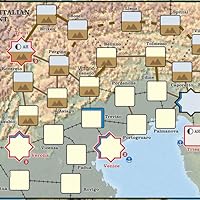
I will say this however, I have read a lot of military history books far more than I show on GR for sure, but I cannot recall one (except this one) that did not have a SINGLE map in the entire book! Really sort of astounding and considering some of the complex descriptions of tactical maneuvering kind of unforgivable. Might have rated the book a 3.5 overall but that is -1 star to 2.5, but I'll round up in honor of the Rangers.
This story is about the founding of one of most iconic units in the history of the U.S. military. The brainchild of General George C. Marshall,implemented by General Lucian K.Truscott,organized and chosen by Col William O. Darby.Based on the British Commandos this story follows the selection process, training and finally the combat record of this unit from North Africa thru Sicily onto the Italian mainland until the destruction of the First and Third battalions by massive German force of tanks and infantry at Cisterna di Littoria. This unit lives on in The 75th Ranger regiment today and is a testament to the legacy of General Darby(Posthumously)that lives on today!!
If you could get a degree in Darby's Rangers this book would be the 101 Intro text for it. Author Jeffers mixes a high level view of the events of war with individual's stories, mostly quoted from other books, of the Ranger victories, and defeats.
As Jeffers notes in his prologue- this book is not intended to be an in depth military analysis... but an exploration for general readers of (William Orlando Darby).
I found it an easy read and good for piquing your interest into reading more on the Rangers.
An interesting tidbit was the naming of the unit. Eisenhower was sensitive to the British and their attachment to their Commandos, while creating a similar unit, in fact initially trained by the British, he had Darby and company come up with an American name, thus the Rangers.
An serviceable and well-paced history of Darby’s Rangers from 1942 to 1944.
Jeffers begins with Darby’s early days and ends with his death at the Po River in 1945. He describes Darby’s assignment to train with British commandos in Ireland, their first battle at Dieppe, and their more successful operations in North Africa and their more mixed success in Italy. He also describes how the unit gained publicity through the photographer Phil Stern, how the Rangers were used as frontline shock troops rather than in unconventional operations, and how the group scattered, with various units serving in the Pacific and northwestern Europe.
For some reason, there are no maps The narrative is a dramatic but a bit uneven, and Jeffers devotes details to trivia like Darby’s high school. You also don’t really get to know Darby as a person.
Would have been much better if the book had included maps showing the Rangers’ movements. This was a 2007 edition so perhaps later reprints include them.
Darby's Rangers were a famous commando unit used primarily at the Italian front during WWII. This well-written, fast-paced history of William Darby and his ranger unit will hold the attention of anyone interested in WWII. We don't read as much about the Italian campaign, and this book fills in a lot of gaps. Darby's rangers led the way in four invasions and fought in twelve major battles. Contemporary press reports put them right up there with the likes of Merrill's Marauders and Doolittle's Raiders, but history tends to overlook the North African and Italian fronts in favor of the more popular recounting of the European invasion and the Pacific war. Worth the read with a lot of information new to me.
This book is a biography of William O. Darby, the first commander of the Rangers. It differs from a general history of the Rangers only by including a couple of chapters of Darby's life before joining the Army and by not covering the actions of Ranger units not directly associated with Darby himself (the action at Point du Hoc in the Normandy invasion, for example).
For readers wanting a more thorough history of the Rangers, I might recommend Robert W. Black's book Rangers in World War II.
This was a new piece of WWII history to me. William Darby was the developer and leader of a new concept for Army soldiers who were highly trained for specialized and difficult assignments. The fought in North Africa, Sicily, Italy and in Europe. Their dynamic leader was killed by a piece of shrapnel just days before VE Day in 1945. Darby’s Army Rangers live on in today’s military, somewhat akin to the Green Berets and the Navy Seals special operations forces.
Most guys in my generation have seen the movie "Darby's Raiders" with a very young James Garner. Readers of European Theater WWII history will read about this early version of the Green Berets. William Darby set the Rangers up as a fast special force to raise hell behind enemy lines before major battles. This disappointing volume reads like a "Boy's Life" version of Darby's life and actions. Each battle is straight forwardly descibed in the simplest of terms with each ; and I mean each, wound and fatality noted. Very pedestrian stuff and not at all satifying.
At times the author went into a little too much detail about units involved in a campaign or operation but not provide as much detail about the actual battle.
But overall this was an excellent account of the Ranges part in North Africa and Italy.
Great story about the early days of the Army Rangers. Also great accounts from those that were there! Great read and will keep any wartime history buff going