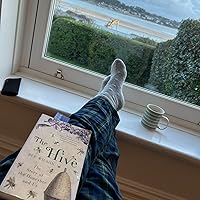
Fourteen centuries ago, Irish saints brought the Word of God to the Hebrides and Scotland’s Atlantic shore. These ‘white martyrs’ sought solitude, remoteness, even harshness, in places apart from the world where they could fast, pray and move closer to an understanding of God: places where they could see angels. Columba, who founded the famous monastery at Iona, was the most well-known of these courageous men who rowed their curraghs towards danger and uncertainty in a pagan land, but the many others are now largely forgotten by history.
In this book, Alistair Moffat journeys from the island of Eileach an Naoimh at the mouth of the Firth of Lorne to Lismore, Iona and then north to Applecross, searching for traces of these extraordinary men. He finds them not often in any tangible remains, but in the spirit of the islands and remote places where they passed their exemplary lives. Brendan, Moluag, Columba, Maelrubha and others brought the Gaelic language and echoes of how the saints saw their world can still be heard in its cadences. And the tradition of great piety endures.
Alistair Moffat is an award winning writer, historian and former Director of the Edinburgh Festival Fringe and Director of Programmes at Scottish Television.
Moffat was educated at the University of St Andrews, graduating in 1972 with a degree in Medieval History. He is the founder of the Borders Book Festival and Co-Chairman of The Great Tapestry of Scotland.
I read a lot of books. Fewer than some. More than others. I've come to expect certain things - peaks and troughs, mounting action and denouement, savages routed, heroes touted, love lost and regained, bad guys, good guys, undetermined guys; sometimes cliché, sometimes quaint, tropes and gropes and the like all tumbling together to form what eclectic fare has become my Goodreads history.
I'm no literary expert, nor do I pretend to have anything more than a reasonable grasp of specificities or requirements of genre. But I know what I like.
From time to time comes a book so beautifully crafted, so nuanced and unashamed to go to those deeper, unexplainable places of angst and ache, anger and anxiety, passion and purity. Alistair Moffat's "Islands of the Evening" was, for me, that book. Part memoir, part travel blog, part history and hagiography, Moffat takes one on a truly remarkable journey into Scotland's distant past. It is carved equally in stone and moss as it is blood and devotion of those white-martyr saints intent on braving the elements in pursuit of union with their God.
Perhaps most notable is how powerfully a man who claims no discernible faith or even belief in any God can write about the God he claims not to embrace. I leave this here where you can decide for yourself.
"Even though churches are emptying and prohibitions are being dismantled, there is an enduring consensus across Europe, in the Americas and elsewhere about decency, good behaviour, about what constitutes right and wrong. Overwhelmingly that consensus was formed by the centuries of Christianity. As doctrine and belief evolved, and as far too much blood was spilled, the Church largely formed our morality...the teachings of the Church have been enormously determinant in the operation of a generally accepted code of conduct both in private and public life."
An atheist wrote this. So, for God's sake (or yours, whatever), read this beautiful book.
Informative and as always, easy and fun to read. More of a history book then I had expected, but it also had loads of sections with AM visiting key places and experiencing them.
I always have similar issues with his way of writing history (presenting things as fact when there's no way of knowing that) but I understand that you need to make a narrative. Then there's small bits here and there that make me raise an eyebrow. E.g
- the Greek words chronos and chairos (why not kairos?) are explained and it is stated that in modern Greek chairos means weather. That's only partially true though, the classical meaning that he gives is still there today.
-In the last chapter there's a section about how Christianity has formed moral conduct and while it's not entirely untrue, it paints Christianity in a way too rosy light. Esp since he states that it has formed over time our ideas of decency and right and wrong, not just in Europe but also '' the americas and elsewhere''. This kind of statement feels like it completely ignores all the shit Christians have done (and I consider myself Christian) and also seems to suggest that other religions don't have similar morality.
But the book is mostly about the long-ago Irish saints and their missions in Scotland, so there's not too much of this.
Enjoyable work that is part travelogue and part ecclesiastical history, Moffat chronicles the coming of the great Christian missionaries, Columba and Marlrubha, and the monk Brendan, to the West of Scotland through visits to some of the most important locations in their missions (Iona, Lismore, and Applecross among them). Moffat’s politics, his references to certain poets, and his insertion of Clearance stories is stock in trade for Scottish nonfiction writers, who seem to belong to the same tiny cultural milieu.
What really set Moffat’s work apart, aside from the subject matter (some but by no means all of which was new), was his integration of Gaelic language into the work. He explains through etymology, through verse, and through place names the significance of Gaelic to understanding a story that often wasn’t written down for centuries, or that has come down to us in fragments.
I couldn’t decide whether his atheism was off-putting or not, though his sincerity and his frankness about discussing his emotions and the spiritual and religious concepts probably made it work where mocking would have been repellant. Still, a religious man would have likely experienced these areas quite differently, so I’ll leave it there.
Frankly this is a beautiful book. It is informative and wonderfully crafted to incorporate natural history and an understanding of the Gaelic language into the authors travels to investigate the legacy of Scotlands early Christian saints.
The author travels to Eileach an Naoimh, Iona, Lismore and Applecross charting the physical remains, known or interpreted history of the saint and how this visit made the author feel - how he reacted to the site.
I feel particularly mean giving only 4 stars, but the introductory chapters looking at the history of monastic seclusion are frankly boring. Likewise I was enthralled by Eileach an Naoimh but less so by the much more accessible other three. I would have liked more focus on the more obscure early Christian sites, for which Scotland has many.
I have always enjoyed Alistair Moffat’s books - I look forward to reading every one. This was a wonderful travel log both in time and space and the thin places. I am lucky enough to have traveled to many of the same sites, and taken in many of the experiences. My memories of Iona, Fingal’s cave, Skye, trains and buses and Americans rings similar. He can so easily transport me back to my memories but also give me much more history of being there. Both now, and 1000 years in the past. I cannot thank him enough for all he does for literature. And I recommend and gift his books to friends.
It was a 4:30 start this morning for my brain …. So I’ve had 3 hours to finish reading this …. Bought in Tarbert on the way to the Islay ferry in June ‘25…. And a very readable mix of history and travelogue about 4 key Celtic Saints and the ancient landscapes and isles they’re linked to …… Lismore now added to ‘must visit’ list
Interesting account of early Christian settlements in the outer Hebrides but I found myself looking up the Islands mentioned on You Tube in order to get an appreciation of the places being described. This is no fault of the Author, and I'm grateful to him for introducing me to such remote islands.
A subject I’d had little interest in, despite my adoration of the West coast of Scotland, but the synchronicity of this popping up on offer whilst I was staying in one of the locations covered was too good to ignore.
Informative and conversational, I’ve bought more titles by the author to enjoy when I’m staying in the locations featured.