Sentinelle che si tengono ben salde ai loro scogli, i fari sono veri e propri monumenti ai segreti del mare e del tempo. Difficile non rimanere affascinati da queste silenziose vedette. González Macías ha voluto inseguire il loro richiamo luminoso fino in capo al mondo per raccogliere le storie di trentaquattro tra i fari più remoti. In questo insolito atlante popolato da eroici guardiani, fantasmi tenaci, personaggi visionari si fanno continuamente incontri eccezionali: con Edgar Allan Poe alle prese con il suo ultimo manoscritto su un faro misterioso, con Nelson Mandela intento a ritrarre il faro di Robben Island, l’isola dove ha vissuto da detenuto per quasi vent’anni, o ancora con Virginia Woolf che da bambina ammira il faro di Godrevy, luogo che avrebbe ispirato uno dei più grandi romanzi del Novecento. I fari suggeriscono spesso immagini di isolamento e inquietudine, eppure da secoli sono un simbolo di dedizione, coraggio e salvezza: lo dimostra questo volume magnificamente illustrato, corredato di carte nautiche e suggestive riproduzioni, che svela piccoli incredibili universi a ogni pagina.
I’m not quite sure what made me want to read a book about lighthouses. But whatever that impulse to request this book was, I’m glad it happened. Because apparently there’s a part of me that’s really fascinated by the idea of these beacons in the dangerous unfriendly waters, the places where lives of their caretakers are always threatened by the surroundings, where solitude can be suffocating by cutting you off from the rest of the world for months at a time and the mind may slowly go insane. These are not the places for the faint-hearted, and are not the peaceful refuges from the world they may seem at the first glance.
And yet there’s stark beauty in these outposts of civilizations aimed to protect lives from danger and deaths, the warning and guiding light in the dark. There’s enough love for them to have people who grew up as children of lighthouse keepers willingly take on these jobs for themselves.
A Brief Atlas of the Lighthouses at the End of the World by José Luis González Macías is a collection of brief pieces about 34 different remote lighthouses as well as some brief one-page anecdotes about them throughout their histories — a blind lighthouse keeper, a young woman saving multiple people from death, cats brought to a small island by a lighthouse keeper annihilating the newly discovered species of birds, a keeper having to share space with his mysteriously deceased colleague, storms and wrecks and deaths — plus some drawings and brief details.
Many of these lighthouses are crumbling, others have been automated, and there are all kinds of modern inventions that have replaced the need fulfilled in the past by these lighthouses — but while they are still standing, they still can show us the strange allure of lonely beauty of these places.
——————
Thanks to NetGalley and Chronicle Books for providing me with a digital ARC in exchange for an honest review.
„Światło na krańcach świata. Mały atlas latarni morskich” to małe dzieło sztuki, z którym obcowanie sprawia niebywałą przyjemność.
Każda latarnia to osobna historia, oniryczna bajka, która bajką tak do końca nie jest. Są czasami mroczne, bywają przerażające, ale też wzruszające i zabawne. Jose Luis González Macías w swoim atlasie snuje opowieści o niedostępnych latarniach. O trudnościach z ich wznoszeniem. O ich ofiarach. Oraz bohaterach.
Tajemnicze znikniecie latarników na Wyspach Flannana. Latarnie, do których dostać się można było jedynie z udziałem dźwigu i małej łodzi. Historia zdjęcia, które wygrało World Press Photo w 1990 roku, a na którym latarnik stoi w progu, kiedy wieżę pochłania gigantyczna fala. Czy udało mu się przeżyć? Są latarnie – wiezienia, miejsca, gdzie trzymano niewolników.
Atlas stworzony przez hiszpańskiego pisarza i grafika jest zaproszeniem do podróży w najdalsze zakątki świata. Do niosących światło latarni, na spotkanie z ludźmi, których dzisiaj już nikt nie potrzebuje, a którzy stali na straży bezpieczeństwa ludzi morza.
Autor z reporterskim zacięciem opisuje te wspaniałe budowle, podaje informacje praktyczne – projektantów, lata budowy, wysokość, zasięg światła oraz uwaga czy jest czynna. Są także dodatkowe, smakowite ciekawostki oraz mapy, które przenoszą nas w te odlegle miejsca.
Una raccolta molto elegante e istruttiva. L'autore ha scritto questo atlante, corredato da storie, disegni e carte nautiche, per spingere il lettere a vivere “un viaggio epico in luoghi e tempi lontani, e che possiate apprezzare tanto quanto me l’isolamento, a volte confortante, a volte tenebroso, che vi offriranno queste pagine.”
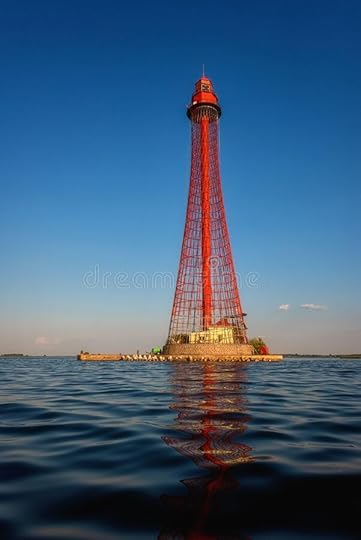
Questo viaggio inizia in Ucraina, con il bellissimo Faro di Adziogol, “INTRECCIATO come un cesto di vimini. Con centinaia di spazi vuoti che si aprono al passaggio del vento.”
Il viaggio prosegue con il Faro di Amédée, in Francia, per passare al Faro di Aniva, in Russia, fino ad arrivare nel Regno Unito con il Faro di Bell Rock. Passando dalla Spagna, fino ad arrivare negli USA e poi in Somalia, facendo sosta anche in Danimarca e in Argentina.
“OGGI ESISTONO TRE FARI IDENTICI situati in diverse parti del globo. Uno sull’Isola degli Stati, eretto da Bronner nella posizione originale di capo San Juan nel 1998, con pezzi fabbricati in Francia. Un altro sulla costa atlantica francese, poggiato su pilastri, davanti alla città di La Rochelle, luogo natale di Bronner. Infine, insieme ad alcuni resti del faro originale, se ne può vedere un plastico in scala naturale al Museo marittimo di Ushuaia. A pochi metri dal faro in capo al mondo, in una teca situata all’ingresso della biblioteca, si trova uno dei due esemplari conservati della prima edizione del romanzo di Verne.”
Questo atlante è un modo per avvicinarsi alle luci dei fari che hanno giudato la rotta di tantissimi uomini di mare, che si sono spente solo quando è stato il fuoco delle guerre a farlo.
Let's not over-complicate this. This is how Brief Atlas of the Lighthouses at the End of the World by José Luis González Macías goes:
1. One page history of a super cool lighthouse 2. Super cool sketch of a super cool lighthouse 3. Super cool metrics about the super cool lighthouse 4. Map showing where the super cool lighthouse is/was which is usually in the middle of nowhere somewhere on Earth
Do you like lighthouses? Of course you do. Read this book.
(This book was provided as an advance copy by Netgalley and Chronicle Books.)
Ta książka jest wspaniale wydana. Charakterystyczne ryciny, mapy, schematy. Do tego dane techniczne i stronicowe opowieści o bardzo różnorodnych latarniach morskich. Cudo!
Większość z nich znajduje się w trudno dostępnych miejscach a także skrywa mniej lub bardziej straszne historie i ludzkie dramaty. Czasem robiłam wielkie oczy, gdy czytałam o tym, co wyprawiali latarnicy w przeszłości a czasem na widok dostępnych w internecie zdjęć.
Kiedyś miałam chęć aplikować na wolontariat w latarnii morskiej, ale jakoś w ostatniej chwili stwierdziłam, że na dłuższą metę mogłabym nie dać rady. Po zapoznaniu się z tą pozycją cieszę się, że nadeszło zawahanie z mojej strony...
Uwielbiam je. Nadmorskie wieżowce zbudowane zanim uznano, że można nadmorski krajobraz upstrzyć wielkimi hotelami czy potworkami w rodzaju Sea Towers w Gdyni. Wybrzeże z latarnią morską wygląda dostojniej i bezpieczniej. Jak pisze Jose Luis González Macías są przedstawicielkami architektury “niemożliwej”, powoli konają, ich blask wygasa, a “ciała kruszeją”.
Przewodniczki dla zbłąkanych i tych mniej zagubionych przypominają raczej o przeszłości, niż patrzą w przyszłość. Z braku potrzeby pielgrzymek do miejsc sakralnych ich odwiedzanie bywa dla mnie - i pewnie nie jestem w tym odosobniony - doświadczeniem całkiem emocjonalnym.
W połowie XIX wieku na Wielkich Jeziorach, stanowiących naturalną granicę między Stanami Zjednoczonymi i Kanadą, przybywało statków, praktyczni administratorzy kolonii postawili na brzegach jeziora Huron sześć prawie identycznych latarnii morskich. Wysokie na 24 metry stożkowe konstrukcje zbudowano z wapienia i granitu, co odróżniało je od innych, skromniejszych budowli, w których dominowała cegła, drewno i beton. Bielone wieże urozmaicono dekoracją z czerwonej farby. Po raz pierwszy w Kanadzie użyto soczewek Fresnela, lżejszych od dotychczas stosowanych. Nic dziwnego, że zespół budowli nazwano "Latarniami Imperialnymi". Najlepiej zachowana latarnia w Point Clark nosi dzisiaj dumne miano "Narodowego miejsca historycznego Kanady", a dom latarnika "dziedzictwa federacji". Bardzo to jest ładne dziedzictwo,
Nie znajdziecie niczego o tej latarni w książce Gonzáleza Macíasa, jak i nie wspomina hiszpański autor o latarniach w Stilo czy na Rozewiu, które również wspominam z dziecięcych wypraw. Ponad trzydzieści wybranych przez niego latarnii opowiada historię handlu, ale i kolonialnego wyzysku. Nierzadko łączono funkcję latarni morskiej i więzienia. W latarni na wyspie Robben, jedenaście kilometrów na północ od Kapsztadu, osiemnaście lat w celi spędził Nelson Mandela, Walter Sisula, Govan Mbeki i Ahmed Kathrada. “Właśnie tam, na zesłaniu, wykuwała się stal i ch przywództwa”. Dzisiaj mieści się tam muzeum poświęcone pamięci ofiarom apartheidu.
Zbuntowani mieszkańcy Somali pod koniec lat 20. XX wieku zaatakowali latarnię morską na przylądku Gwardafuy. Ochrzczona przez europejską prasę “wysuniętym przyczółkiem cywilizacji włoskiej” latarnia została uszkodzona przez rebeliantów. Odbudowaną ozdobiono “fascio littorio” - kamiennym toporem, symbolem faszystowskiego imperializmu. Mimo przemian politycznych i ciągłej wojny w regionie, wątpliwej urody ozdoba wciąż tkwi przytwierdzona do latarni morskiej.
Latarnię morską na Navassie, wyspie nieopodal Haiti, zbudowano w 1917 roku, by oświetlała drogę statkom zmierzającym do Kanału Panamskiego. “Przez piętnaście lat wieżę obsługiwali latarnicy z amerykańskiej straży przybrzeżnej. Nikt nie potrafił jednak wytrzymać zbyt długo upału i duchoty samotnej wyspy”, pisze autor książki i przypomina, że kilkadziesiąt lat wcześniej setki czarnoskórych robotników wydobywało na Navassie guano. Oni też nie wytrzymali i zbuntowali się przeciwko białym nadzorcom. Zginęło ich pięciu, a osiemnastu robotnikom wytoczono procesy o zabójstwo. Proces odbywał się w Baltimore, a robotnicy mieli nawet jednego czarnego obrońcę, Everett J. Waringa, pierwszego czarnoskórego adwokata w stanie Maryland. Trzech robotników skazano na karę śmierci, którą darował im prezydent, Benjamin Harrison. Światła latarni morskiej na Navassie zgasły w 1996 roku. W książce nie znajdziecie części informacji, które tu podałem, bo autor czasem zbyt luzacko prześlizguje się po historiach, które można by było wyciągnąć, by pokazać jak latarnie morskie są doskonałym pretekstem do opowieści o kolonialnej przemocy.
Tak czy inaczej González Macías “Małym atlasem latarni morskich” (tłum. Patryk Gołębiowski) daje nam pretekst do własnych poszukiwań, a może i podróży, choć to drugie w naszych czasach warto przemyśleć. Książka jest pięknie wydana i zadowoli wszystkich, co potrzebuję estetycznego przedmiotu, który opowiada wcale nie radosną historię.
Gražiai iliustruota knyga apie pasaulio švyturius. Kaip pats autorius sako įžangoje, čia ne žinynas, švyturiai atsirinkti pagal lokacijos ar jų/juose įvykusių istorijų įdomumą, ir gal pagal kitus kriterijus patys svarbiausi jon ir nepakliuvo. Tačiau būtent tos asmeniškesnės istorijos davė knygai savito žavesio.
A very very short look at some of the lighthouses in the more remote spots of the world.
Admittedly Macias has never been to any of these and so stories about them come to him secondhand. Nevertheless the stories are interesting and the illustrations/graphics are cool. I'm just gutted this book was so so short (it literally took me half an hour to read).
For anyone wanting a more thorough look at lighthouses, see Seashaken Houses; it is a cool book and much more in-depth as the author goes to visit each lighthouse in turn and there are comprehensive histories of each.
(P.S This review is of a paperback version, looks to be a proof copy)
Recomendación enfática y algo persistente de un peregrino en el camino de Santiago. En su momento no me crea tanto interés, pero no lo olvido. Meses después, me cae en las manos por coincidencia en la librería y de inmediato se que tengo que llevármelo. Este es un atentado peligroso de construir el libro perfectamente irresistible. La edición: encuadernación, materiales de la tapa, de las páginas, los colores, las fotografías, los dibujos, los tipos de letras utilizados, son de una belleza y una delicadeza adictivas. Aún sin haber leído una sola palabra ya sabes que lo quieres en tu biblioteca. Es tan hermoso, oloroso y suave al tacto que uno no sabe bien si ponerle velas y comerselo como un bizcocho o usarlo como almohada por par de meses. Por algo ganó el premio nacional al libro mejor editado del 2020. Y las historias de los faros. Que puedo decir? Son 34 relatos de faros de una calidad narrativa, informativa, de una poesía, melancolía y misterio tan increíbles e inesperados que muchos hay que leerlos como mínimo dos veces. Bueno, una ovación de pie al escritor José luis Gonzales Macías y a la editorial Menguantes por este maravilloso regalo a los amantes de la lectura y los libros!
Lighthouses have always fascinated me and this book was an absolute pleasure to read! This is well-researched and well-written. I enjoyed the drawings and learned alot. I would recommend this to those who enjoy history or anyone who thinks this sounds interesting! Special Thank You to Chronicle Books, José Luis González Macías and NetGalley for allowing me to read a complimentary copy in exchange for an honest review.
Per breve, è breve, mantiene le promesse. Anche le storie dei singoli fari sono brevi, anzi brevissime: una paginetta per uno, un paio di disegni, una cartina, stop. Bella l'idea, ma decisamente scarna, ingolosisce e non sazia.
Colpa mia, chissà cosa mi aspettavo da un "breve atlante", fatto sta che ci sono rimasta un po' male.
Lo cierto es que uno se queda con ganas de leer más. Sabe a poco. Y es que todos los faros, hasta los más diminutos y humildes, tienen una historia detrás. O varias. O muchas. Apetecería conocerlas todas, a ser posible de los miles de faros que vigilan, y han vigilado, esa inmensidad líquida, misteriosa y fascinante.
Taky máte o majácích vlastně dost romantickou představu? Maják jako místo klidu, vln a západů slunce. Ani zdaleka. Kniha vám ukáže pravou historii majáků - místa osamělého, nebezpečného, ale důležitého. Ačkoliv už představu o majácích nemám zkreslenou, nabídku žít na majáku v Austrálii a podávat informace o počasí, fauně a flóře, bych si ujít nenechala.
Další skvělá kniha, díky které procestujete svět z perspektivy majáků.
“There is something beautiful and wild in these impossible architectures.”
Spanish author José Luis González Macías combines his childhood interest in maps with his experience as a graphic designer and publisher in A Brief Atlas of the Lighthouses at the End of the World.
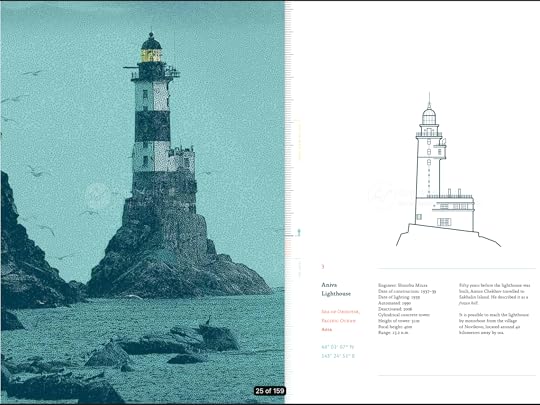
Presenting more than thirty lighthouses across the globe, each is introduced with a lyrical, often somewhat romantic description of the building, its location and history, accompanied by a pointillist image of the lighthouse. This is followed by a chart that indicates the height of the lighthouse as well as the focal plane of its light, alongside an structural rendering, and then a summary which includes details like the GPS location, the engineer in charge of the project, the date of construction, light range and other tidbits of information. A graphic maritime map showing the position of the lighthouse finishes each entry.
I found many of the stories about the lighthouses to be intriguing. Among them; Bell Rock Lighthouse, in Arbroath, Scotland, conceived by the grandfather of the famed Treasure Island author and the oldest lighthouse erected in the open sea that is still standing; The Cabo Blanco Lighthouse in Puerto Deseado Santa Cruz Argentina, lit in 1917, is said to be haunted by the clicking sound of keys after a former light housekeeper died slumped over his typewriter; The Rocher aux Oiseaux Lighthouse off the coast of Quebec was essentially cursed by its first keeper in 1870 who ominously declared no man would last more than ten years without meeting misfortune, and held true for almost the next century; and the pet cat of the first lighthouse keeper of the Stephens Island (or Takapourewa) Lighthouse in the midst of the Cook Strait off New Zealand’s South Island was responsible for the extinction of an entire bird species.
Beautifully written and illustrated, I think this stylish book would make an ideal gift for architects, mariners, history buffs or anyone curious about the world.
Dette er perfeksjon. Forfatteren har gjort en eksepsjonelt god jobb, og verden føltes plutselig litt større. Irriterer meg likevel svært over at oversettelsen har skrivefeil og dårlig setningsoppbygging. Ikke rettferdig for bokens potensial. Likevel en udiskutabel 5-er for meg og vi starter året sterkt.
Vuurtorens hebben iets mythisch over zich. Ze staan, statig en hoog, en stralen vele verhalen uit. Dat is wat ik zie als ik naar vuurtorens kijk, een toren vol verhalen en dankzij dit boek leer je 30 vuurtorens kennen met elk hun verhaal. Verhalen die trouwens enorm uiteenlopend zijn maar allemaal ongelooflijk interessant zijn. Begeleid met tekeningen die ook door de auteur gemaakt zijn, is dit boek niet alleen qua uiterlijk vertoon een parel om in je boekenkast te hebben en te lezen, ook inhoudelijk is dit echt puur genieten. Reis even mee met José Luis Gonzáles Marcías.
LightHouses always capture my imagination. The focus of this book are ones that are in remote places. It shares histories and stories and gives facts like height, dates of construction and how far in nautical miles they can be seen. The drawings are detailed and stylized in blue tones like the cover. I suppose cost is a factor but I was disappointed that actual photos were not part of this book. I have visited many lighthouses in my travels but can only count three in this book on my list. I did appreciate the world map showing where the lighthouses are located.
Een best interessant en leuk boek, maar echt ik kwam er niet doorheen. Ben al 5 dagen bezig (nou ja niet elke dag gelezen omdat ik gewoon niet gemotiveerd was) en vandaag maar besloten gewoon door te zetten en de 20 die ik nog moest te lezen. Nogmaals, echt interessant op punten met veel weetjes en gruwelijke/spannende dingen en ook verwijzingen naar literatuur en ik vond ook de illustraties + extras mooi (al had ik ook graag een foto gezien) maar de vertaling of de schrijfstijl werkte gewoon niet lekker. Het miste gewoon iets. Het verveelde heel snel.
Gustoume o libro, as historias, os debuxos e os mapas peeero eu son unha persoa moi dada a caer no “comecei cun formato e agora teño que mantelo ainda que non sexa o máis idóneo porque ✨aesthetic✨” pero considero que aquí o formato “unha carilla de información por faro” cárgase o libro. Nalgúns porque se nota que non é para tanto e hai que alargar como se poida, noutros porque había moito máis que dicir e acúrtase de mala maneira. Secadra non viña mal priorizar o contido sobre o continente.
What incredible research for a writer that never lived on the Coast, growing up inland in Spain. The way he writes about the individual towers is what is so outstanding in this book! Jose Luis Gonzalez Macias has written this thought provoking study of these different towers. Each has its own remarkable story. This is a well written historical overview of the beacons of light for seafarers. I recommend this book to everyone who loves the oceans of the world.
Iba a recomendar «Breve atlas de los faros del fin del mundo» de José Luis González Macías como una lectura ideal para el verano, pero en realidad lo es para cualquier época y ocasión.
Premio Nacional al Libro Mejor Editado 2020, la belleza de las ilustraciones y las cartas de navegación y la exquisitez de las tipografías y el papel complementan unos textos en los que se mezclan historias reales, leyendas y curiosidades sobre treinta y cuatro faros de todo el mundo.
Construcciones hechas de piedra y ambiciones, de granito y soledad, de hierro forjado y heroísmo que en muchos casos aún siguen operativas, aunque ya automatizadas, y alientan la imaginación e incluso el sueño de que algún día viajaremos a un arrecife del mar del Coral, a la boca occidental del estrecho de Magallanes o a un archipiélago deshabitado de Escocia para comprobar, como el autor señala en el prólogo, que «hay algo hermoso y salvaje en estas arquitecturas imposibles».
Mi ejemplar pertenece a la séptima edición, de enero de este año: es una alegría saber que un libro tan especial no deja de guiar a nuevos lectores por aguas tan fascinantes.
En bok om 34 fyrtårn rundt omkring på verdens utposter kan ligne et snevert litterært prosjekt. Jeg synes det er vidunderlig lesning. Det er en bok om kampen mellom mennesker og naturkrefter, en kamp med høyst usikkert utfall. En bok om stormer, isolasjon, galskap og død. Men også en bok om en majestetisk installasjon som sprer lys og redder liv. En bok som skaper intens reiselyst.
Thanks to the publisher and NetGalley for letting me review this book. The drawings of the various lighthouses were great. I do wish they had photos as well. I enjoy reading a bit of history on what is he each lighthouse. It’s interesting to see how the lighthouses were all designed different. I think most people have it in their mind if how a lighthouse looks.