Jump to ratings and reviews
Rate this book

Sultan: A Memoir

Rate this book
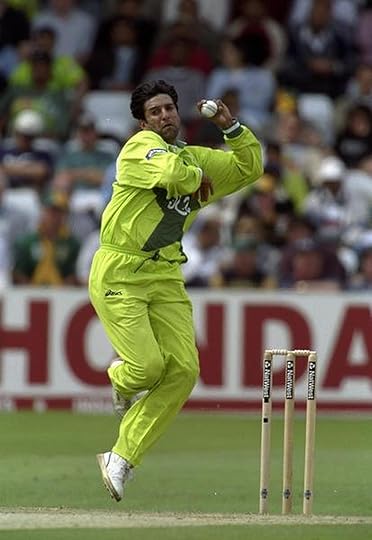
Sultan is the official biography of Wasim Akram, the "sultan of swing", one of the greatest fast bowlers in the history of cricket.

For twenty years, Wasim Akram let his cricket do the talking – his electrifying left-arm pace, his explosive left-handed striking, his leadership and his inspiration. For another twenty years he kept his own counsel about those days, full of drama, controversy and even mystery, in a country, Pakistan, that to outsiders is a constant enigma. Until now.

Sultan tells the story of cricket’s greatest left-arm bowler, and one of its greatest survivors, who was chosen from the streets of Lahore and groomed by Imran Khan to become champion of the world – man of the match in the final of the 1992 World Cup. Along the way were unforgettable rivalries with the greatest of his time, from Viv Richards and Ian Botham to Sachin Tendulkar and Shane Warne. Along the way, too, a backdrop of conspiracy and intrigue over ball tampering and match fixing about which Wasim finally sets the story straight.

But there’s more: Sultan goes frankly into the crumbling and rebuilding of Wasim’s private life, marred by the tragedy of his first wife’s death and the torment of addiction. The result is an unprecedented insight into the life of a cricketer who revolutionised the game with his speed and swing, and a patriot buoyed and burdened by the expectation of one of the game’s most fanatical public.

304 pages, Hardcover

First published November 16, 2022

87 people are currently reading
342 people want to read

About the author

Wasim Akram

24 books6 followers

Ratings & Reviews

What do you think?
Rate this book

Friends & Following

Create a free account to discover what your friends think of this book!

Community Reviews

5 stars
202 (28%)
4 stars
315 (44%)
3 stars
161 (22%)
2 stars
28 (3%)
1 star
2 (<1%)
Displaying 1 - 30 of 75 reviews
Profile Image for Sabahat.
60 reviews77 followers
February 28, 2023
First off, the transliteration and copy editing/fact checking of this book really needed a more deft hand. Akhbaar-e-Watan is written as Akbari-e-Watan, ‘The Cricketer’ is constantly called ‘Pakistan Cricketer’. Landa Bazaar is, kind of hilariously, written as Lambda Bazaar. We are told they used some local word for reverse swing called ‘sibar’ which means the opposite way. I have no clue what word that could possibly be. Another one is about Pakistanis calling Sharjah, ‘har shehar’, which the author helpfully translates as ‘lose’, not even ‘to lose’ or the ‘city of losses’, which in itself would be strange considering it was the city of wins for Pakistan.
One exchange goes like this:
‘Salim aleikum Imran,’ I said haltingly.
‘Wale cum salaam, Wasim,’ he replied
🤣🤣


Wasim says he saw Indian films in the cinema as a child, which is just not possible. Pakistan did not show Indian films in the cinema till he was nearly at the end of his career. He is clearly confusing watching on VHS tapes with watching in the theatre. This is the constant pitfall of books written by goras and published by western publishing houses; there is simply no one to do a real fact check or copy edit. Everyone simply relies on the big name writer.

—-

About the book’s contents: a lot of narration of every single match and series Wasim has played and done well in. At the beginning of the book he sets himself up as a rare outsider in Pakistan’s cricketing fraternity, which, according to him, is infested with insiders like Babar Azam, Usman Qadir, Abdullah Shafique, Azam Khan and Imam ul Haq. This ignores how Babar never benefited from the Akmal brothers, and that at least three of the named players are complete non-entities.
While trying to clear his name re the match fixing scandal, he dwells at length on mutual hatred among everyone in the team, while in the post-cricket section, he talks about his battles with drug addiction, the gulf that opened up between him and Huma thanks to his ‘partying’, which, I suppose, is a euphemism for affairs, and his being a bad father. When it comes to his wives, he comes across as a particular lout. Even the Shaniera bit is discomfiting (with whom I thought he has a better relationship than his first wife), especially when he writes about the long period he left her hanging. I guess one could call it honesty, but it doesn’t seem like he fully understands or acknowledges his behaviour.

Wasim hates a lot of his teammates but none so much as Aamir Sohail and Rashid Latif, and I think he is able to build up a decent case against them. It’s sad to find confirmation here of his antagonistic relationship with Waqar, since I was such a huge Wasim/Waqar groupie as a kid. He clearly loves Imran and acknowledges Miandad’s role in discovering him (Miandad gets the most complex appraisal in the book, as a man who is both great but also insecure, caught in a power struggle with Imran, and then later as a coach unable to let go of his self-perception as someone who should still be out there playing).

The book is insightful about what fame does to you, and how impossible it is to adjust to life post-cricket for someone who is as great as Wasim Akram. By dwelling at length on the dressing room shenanigans and hate, Akram inadvertently casts a positive light on the current Pakistani team and its wholesomeness (may its tribe increase).
Profile Image for Umesh Kesavan.
451 reviews178 followers
January 10, 2023
Gideon Haigh tries to add literary heft to the story of Wasim Akram who is in the mood for some lethal reverse swing. It is no surprise that a book covering Pakistani cricket shines bright when it focuses on the dark spots of match fixing and intra-team bickering. The ace cricketer gets the "Gandhian award for experiments with Truth" for the open admission of his drug habits. It is a pity that the book of a legendary bowler falls flat in the realm of bowling itself : Akram does not dissect his art much and it reads like in between all the off-field controversies, he has somehow earned himself 900 plus international wickets. To decipher the art of Akram's bowling, we may have to wait for a biography of Akram by Gideon Haigh.
Profile Image for Tariq Mahmood.
Author 2 books1,064 followers
July 25, 2023

In reading "Sultan: A Memoir" by Wasim Akram, I couldn't help but feel that he was primarily focused on guarding his personal brand rather than offering an authentic and transparent account of his life. As a fan, this sense of disappointment and disillusionment left me questioning the sincerity of the memoir and its intent.

Throughout the book, it became apparent that Akram was carefully curating his image, ensuring that only the positive and glorifying aspects of his life were showcased. Any potential controversies or challenging moments were conveniently sidestepped or glossed over, leaving me with a feeling of being deceived as a reader.

While I understand the desire to protect one's public image, I had hoped that "Sultan: A Memoir" would offer a more genuine and unfiltered glimpse into Akram's life. Unfortunately, it seemed more like a strategic public relations exercise rather than an honest and introspective journey into the man behind the cricketing legend.

Moreover, the repetitive nature of the memoir made it feel even more like a carefully constructed facade. The lack of depth and emotional vulnerability left me yearning for a more candid and real exploration of Akram's experiences, struggles, and personal growth.

In the end, "Sultan: A Memoir" fell short of my expectations as a reader. It seemed to prioritize protecting Akram's personal brand over providing an open and candid reflection on his life. As a result, I left the book feeling somewhat disillusioned and disheartened, wishing for a memoir that was truly unguarded and authentic.
Profile Image for Anurag Ram Chandran.
91 reviews3 followers
August 17, 2023
Remarkable story, well told. The book really shines when Akram lets loose - delivering reverse-swinging yorkers, revealing the internal working of the Pakistani cricket team, and the politics that came to define its' last few decades. His open admission of his addiction struggles and regrets of not being a better father were also incredibly powerful.

However, I was really hoping that Wasim Akram would reveal more about the art of his bowling - what it felt like to run at the crease, the feel of his quick arm release, and in general how he devised some of the magnificent qualities that made his one of the most feared bowlers in the world. On this front, the book was lacking.

I feel like Waz had a lot to say, finally opening up about all the politics and allegations, and internal struggles. To that extent, I am with him - I hope he got his release and closure. But I do hope he one day writes more about his craft... and I will be one of the first to grab up a copy of the same.
Profile Image for Amit.
243 reviews7 followers
June 10, 2023
It is a good book but not a great autobiography. He has played it safe in the book by sharing things which are in public domain or common knowledge. It is interesting enough to hold interest but not deep enough to keep you feeing wow

He could have shared more about his relationship with international cricketers , friendships fights altercations. Even in family relations he has maintained a distance and not dived deep.

Still a good read .
Profile Image for Thaqib Moosa.
43 reviews7 followers
November 13, 2022
Phenomenal. So easy to read, i started it on Saturday and had it finished by the next afternoon.

Extremely well written, very detailed and we'll researched, and surprisingly and disarmingly honest. The book charts a history of cricket overall, with significant events in Pakistan and the world also brought in. It also shows a glimpse of Wasim Akram's own personal challenges, and some of the ups and downs with the Pakistani cricket team and management.

I appreciated the honesty about the management but also about his own life. It can't have been easy to write and I am sure there will be plenty of backlash.
Profile Image for Asif .
155 reviews15 followers
November 19, 2022
A revealing autobiography

They say often that you should never meet your heroes. Maybe shouldn’t read about them either in ghost written autobiographies either. Wasim, the greatest left arm pacer in history, comes across as an honest, but petty and vain man, self obsessed and a bit of an Uncle Tom. The honesty about his personal life was refreshing though his constant putting down of other Pakistani cricketers for their conduct and moral flaws was a bit boring and repetitive. Worth a read for hardcore cricket fans.
Profile Image for Sufiyan Junaid.
11 reviews
March 3, 2023
What sets Sultan apart from other sports memoirs is the depth of insight it offers into Pakistani cricket culture and the broader social and political context in which Akram played. Akram doesn't shy away from discussing the corruption and nepotism that plagued Pakistani cricket during his career, and he provides a unique perspective on the role that sports can play in shaping national identity.
Profile Image for Sonali Mundle.
9 reviews
January 30, 2023
The book reflects Wasim’s personality- humble, vulnerable and honest. It has a lot of reference to the cricket matches that he’s played and any cricket lover will really enjoy that.

But apart from the cricket trivia/ info, he delves into his childhood, relationships the Pakistani team had with foreign players as well as his own personal rapport with many of them. The vulnerability that I’ve seen in his interviews comes across in the book too- he talks about trying to keep to Pakistani & Islamic culture while being abroad, the highs and lows of being a public figure, his addiction, his extreme love for his first wife but his poor husband traits, his children and finally his second wife from a different nationality trying to settle into the conservative culture he belongs to.

Raw and beautiful.
Profile Image for Dipra Lahiri.
800 reviews52 followers
May 2, 2023
Probably the greatest left arm bowler in the modern age, per many greats of the game. Still maintains the humility even after all these years. Led a tumultuous life, on and off the field, which he speaks about with candor. Gideon Haigh does a fine job, articulating Akram's feelings with precision.
Profile Image for Cam Yaxley.
39 reviews
February 19, 2024
This is a very insightful book into a legend of the game.

The first thing that is clear is the sheer reverence helf for Imran. At points, you could be forgiven for thinking this is a book about Imran rather than Wasim.

Learning about the turmoltuous workings of the BCCP & PCB provides great context for Wasims career.

The part I found most interesting was learning of the cricketing and indeed political relationship between India and Pakistan
5 reviews
November 18, 2022
legend of the game!

What a great read and the insight into Pakistan cricket and culture is priceless. Thanks Waz for the joy you brought to us fans. Greatest bowler Pakistan has produced and perhaps the greatest left arm bowler of all time!
Profile Image for Suhel Banerjee.
186 reviews27 followers
February 10, 2023
Having followed the last quarter of Wasim's career, he was a superstar to our generation. So the first thing that caught me off guard was his idol-worshipping of Imran (whom we just saw lifting the '92 trophy). Completely understandable given the role IK played in Wasim's career and life. The second surprise in this book was how, even after being one of Pakistan's longest serving player (and arguably one of the best ever) the overall feeling was that Wasim was mostly not happy in the team. Of course he loved the sport but never managed to build the kind of relationships and loyalty that it seemed he had, from the outside. He had his close group of friends, but the detractors, including some he considered close was a much longer list. He pulls few punches and names names. He writes very warmly of his first wife and his life in Lancashire, which he seemed to consider more of his home.

The last part of his life, post retirement felt a bit rushed, especially as someone as significant as him going through the addiction problems could have had such great insights for lesser mortals like us. Happy that he's in a happy place finally.
410 reviews194 followers
April 5, 2024
Enjoyed it, especially its insights into the rotten culture of Pakistan cricket, which still persists and spoils many a generational talent. I have always wanted to get to know more of Akram's life and thoughts, especially as he comes across as a gentlemen. The memoir does a good job of the telling, and Gideon Haigh's writing melts into the background, keeping the story centre-stage. Recommended.
Profile Image for Anup Guruvugari.
21 reviews
February 23, 2023
Had very little 'lows' so to speak and is a more glorified version of Wasim's career as one of the greatest fast bowlers the game has seen. Found it engaging since it brought a fair bit of nostalgia when I was reliving the matches that he spoke about
Profile Image for Haris Iftikhar.
24 reviews6 followers
February 9, 2023
Would have given this book 4 stars if there were lesser rants. A good read nevertheless.
Profile Image for Roger.
522 reviews24 followers
January 17, 2025
Wasim Akram. An absolute master of fast bowling, the memory of cricket lovers who have seen him bowl is of his searing late-swinging yorkers ripping out the stumps of hapless batsmen the world over. Captain of Pakistan multiple times, with over 400 test wickets and 500 one day wickets and three test centuries to his name, he is a true champion of the great game.

Sultan is not just a re-hash of Akram's great bowling or batting: in this book he opens up more about the non-playing side of his life - his introduction into the Pakistan team, moving to England and learning a different cricket culture (not to mention culture in general), and the amazing and depressing internecine snake-pit that is Pakistani cricket.

As an Australian cricket afficionado, the parts of the book most fascinating to me were Akram's descriptions of the politics that surround Pakistani cricket....and they are actually politics, as many appointees in cricket administration are made at the behest of the government; and while cronyism has an impact on cricket all over the world, in Pakistan it is taken to extremes - as Akram states in the introduction "[p]atronage has always mattered in Pakistani cricket. The Pakistan Cricket Board chairman is a political appointee; there is a lineage of generals, judges and senior civil servants in the role. From the Mohammads to the Niazis, our game is pervaded by dynasties. Names recur: Ahmeds and Akmals; Rajas and Ranas."

Akram gradually comes to realise what all this means for team cohesion. As he becomes a permanent part of the team, under his mentor (and hero) Imran Khan, he slowly comes to realise that Khan and the other great Pakistan player from that period, Javed Miandad are not friends, but in fact rivals for the captaincy. This "selfishness" for want of a better word, pervades the team. Hierarchy within the players is jealously guarded, cabals are formed to push for positions within the team, favours are granted, players that have "push" within the media or the political sphere may be made captain, or even selected in the team, based on factors other than talent and form.

In fact with all the self-interest and nastiness on display in Wasim's version of events, it's amazing that the Pakistani team was able to function at all, let alone be as successful as they were during the period of his career. Akram explains how during his career he was in or out of favour with the powers-that-be and some of the players, and that every time he was made captain he was instantly undermined by a cabal of players or officials. It wasn't necessarily that they didn't think Akram could do the job, or even that they didn't like him; it was that they wanted the prestige and money that comes from power.

The saddest part about this sorry tale is that the Pakistan cricket team at that time had the talent to be the best in the world. Unfortunately they squandered their time and effort on grasping for the spoils everywhere except on the field of play.

Akram does face up to his demons in this book too - his inattentiveness as a husband and father with his first wife, his addiction, and his naivety which drew him into the ongoing betting scandals that wracked cricket while he was playing (he convincingly shows that he was innocent of any taint of match-fixing).

Akram now spends his time living in Pakistan, England (where he played County Cricket for over ten years), and Australia (where his second wife was born), has come to terms with the death of his first wife, and has written this book (Gideon Haigh has done a wonderful job of assisting here - I'm not sure how much Wasim actually wrote, but it sounds like him all the way through) as a memoir mainly for his children, who didn't see him play, and sometimes wonder why he has six million followers on social media.

A really good cricket memoir, that goes places some others don't go, and doesn't pull any punches.

Check out my other reviews at http://aviewoverthebell.blogspot.com.au
Profile Image for Kaustubh Dudhane.
650 reviews47 followers
May 25, 2023
Vice-captains are a perennial bane of Pakistani cricket. They are seldom supportive, often ambitious, and sometimes mischievous. In all my terms of captaincy, virtually every deputy I had concealed a dagger.


In 1990s, all of us kids used to think that we will become Wasim Akram if we switch our bowling hand from right to left. Just like us, Wasim Akram and Gideon Haigh (both of whom I respect a lot) felt that if they tell us some dressing room squabbles, politicking, back-stabbing and match fixing, we will love the book. Well, in fact, I had found those parts most entertaining and gripping to read. Probably, cricket was not as close to Wasim's heart as those ruined relationships and bitterness about some teammates. I might be wrong but that's what I felt after reading this book.

For example, Wasim bhai loves Imran Khan. Wasim bhai hates Aamir Sohail and Rashid Latif. Wasim bhai loves umm... hates doesn't fucking know about Javed Miandad. It is terribly confusing about the Javed's angle in Wasim's life and career. And there is an honest portion on drugs, "partying", not being there for his first wife. I admire that section. It is brave for Wasim to come out clean on those points.

However, I love reading cricket books which celebrate the joy of playing, watching or discussing the game itself. I love peripheral stuff when it is smartly done and not in a bitter way.
"Of course I would. I had failed as a captain the first time round. I had let the position get to me. I had tried, really, to be someone I wasn't, overcompensating for my insecurities by posing as a disciplinarian, a strong man."
Profile Image for Oneeb.
40 reviews
October 23, 2023
The book can be divided into three parts

1) Imran,Imran & Imran
IK and Javed heavily influenced Wasim and his
decision making however Wasim never stood up to IK and his dictatorial principles e.g asking players to contribute all bonuses and match fees towards his cancer hospital but when Javed asked the same as a coach, Javed was a bad guy. Hypocrisy at its finest.

2) Book was written as an admiration of English culture, people who developed Wasim but very limited influence of Pakistani culture was mentioned. Wasim is a Pakistani but he wished he was British. It seemed as if he was ashamed of his Pakistani nationality. Part of it could be attributed to poor medical family treatments and constant judgement instead of admiration.

3. He spitted hate towards Saleem Malik and Aamir Sohail for accusing him of match fixing but didnt take any ownership of losing 1999 final instead calling it a batting pitch, blaming saeed anwar for not having bats ready etc. Not once did he say" I made a mistake of batting first on a bowling pitch". He doesn't admit his mistakes. He accused Saleem Malik for batting first on bowling pitches in SA but once he did the same thing on 1999 worldcup, he just wanted runs on board on IK advice.

You were either with him or against him.
He is arrogant, stubborn, egotistical person who would never accept his mistakes and either throw others under the bus or play the victim when others accused him of the same thing.
His narcissim was evident with every chapter in the book starting with a quote from some famous cricketer about him. It was less an autobiography and more about self praisal and how he was a victim.

Reading the last few chapters, you do feel empathic for him in terms of what happened to him personally (cocaine, diabetes) and family wise but that is not an excuse for everything else.
Profile Image for Rama.
288 reviews11 followers
February 22, 2024
Wasim is one of my all-time favourite cricketers and, perhaps, the greatest artist of swing bowling the game has ever seen. However, this is badly written and/or edited even with the assistance of someone like Gideon Haigh to rely on. It is clear that Wasim is repulsed by teammates like Saleem Malik, Aamer Sohail and Rashid Latif. However, he comes across somewhat as being reluctant and/or incapable of working toward building bridges between factions that'd formed in the Pakistan national team and fighting for the welfare of his players as a captain. Youth and Pakistani culture (not far removed from India's) were excuses in the 1980s when it seemed like he'd listened to Imran Khan for everything; but his "godfathering" of Imran continued into the 1990s even after Imran's retirement.

Huma's death and her last days, perhaps being part of a traumatic period for Wasim, are just glossed over, and his vulnerable but burgeoning relationship with Shaniera tackled in a reasonably decent manner. However, I'd rather have Wasim's masterly analyses of the batsmen's proclivities while bowling to them and/or insights about the game than his self-incriminations about being a typical "Punjabi man." A memoir has its limitations, I guess...

PS: Like I've always known, he also comes across as truly gracious in dishing out superlatives to his contemporaries unlike someone like Sachin Tendulkar with his subdued and canned statistics-based encouragement.

PPS: Wasim's stats at the end of the book were pointless.
Profile Image for D.A. Cairns.
Author 20 books53 followers
November 4, 2023
Wasim Akram is a modern great of cricket, a bowling all rounder who also captained his team in a long career of many highs and lows. Throughout my years of following the game, the Pakistan team has always been known as remarkably inconsistent: a classic rocks and diamonds situation. They've also been dogged by involvement and implied involvement in match fixing scandals. Politics dominates Pakistani cricket like it does perhaps no other nation.

So I had all this in mind when I began to read Sultan. As expected I got lots of wonderful insights into not only Wasim, the man, but also the game itself, and Pakistani culture. Wasim pulls no punches in his assessment of various people he played with, against, and for, but this honesty is endearing. I found him entirely believable. I also got an exciting snapshot of significant matches in which Wasim played. Recalling seeing many of the moments he described.

What I didn't expect was to learn that he became a drug addict after he finished playing, and that his first wife died in dramatic and heartbreaking circumstances. I was also surprised by the final chapter which was undoubtedly the highlight of the book and brought a tear to my eye.

Although, Sultan suffered from some clunky writing and some awkward phrasing and vocabulary choices, I thought it was excellent and I highly recommend it to sports fans, especially to cricket lovers like myself.
Profile Image for Chaitanya Ramachandran.
8 reviews
May 3, 2023
I found this to be a breezy and riveting read. Wasim Akram pulls no punches in his insider account of the Pakistan cricket team of the ‘90s. Although he dwells a lot on the match-fixing allegations later in his career and claims a sort of innocent ignorance of everything happening around him as a defence - which had me rolling my eyes in a couple of places - that wasn’t the main draw of the book for me. I enjoyed reading what happened in the Pakistan dressing room during many of the iconic tournaments I remember watching as a child: World Cups 1992 to 2003, multiple Sharjah showdowns, the seemingly innumerable cola-sponsored triangular/quadrangular series of the late ‘90s, and the iconic tour of India in early 1999, among many others. As someone who wasn’t old enough to have followed the game in that era, I also enjoyed Wasim’s reminiscences about cricket in the ‘80s, including long-forgotten tournaments like the 1989 Nehru Cup. Wasim’s obvious fondness for the English county game also comes through with a few interesting anecdotes. The book covers all of this material in an entertaining manner, and definitely left me wanting more.
Profile Image for Haris Khan.
13 reviews2 followers
September 21, 2023
I really enjoyed the book. Having found an understanding of the game long after Wasim Akram retired, it was fascinating to finally read the details of some of his most famous exploits and defeats. Many of the stories in the book read like scenes from the movies — Bollywood AND Hollywood, which is definitely a nice insight into the lives of the giants of the game.

The only bone I have to pick with the book is that of the recklessness displayed by the author regarding the names of players and places of Pakistan. They are so widely misspelled that one has to wonder if there was ever an editor that the book was presented to before being sent out to printing.

A fellow reviewer here has very kindly listed the misspellings in their review, should anyone want to check it out for themselves.

Nonetheless, if you are a cricket fan, I think this should definitely be in your TBR.

26 reviews
December 8, 2023
Good account of Pakistan cricket in the late 1980s and 1990s. The author spends a little too much time on his suspicions of his teammates and refuting match fixing allegations, but perhaps that is what Pakistan cricket then was all about. The accounts of cricket are typical to the format and nothing in particular stands out and sections of it end up reading too much like a Wisden account. The last chapter, though, was a revelation as his description of his own insecurities, emotions and feelings as he approached the end of his career and simultaneously lost a loved one, really brought out aspects of his personality and a glimpse into the end of a sportsman's career. I was left wishing that he had taken a similar approach to his story earlier on in the book, as it left me wanting for more.
This entire review has been hidden because of spoilers.
Profile Image for Siddharrth Jain.
142 reviews1 follower
April 29, 2024
“If there is reincarnation, I would want to come back as Wasim Akram” - Allan Border

Wasim is by far the best pace bowler, the cricketing fraternity has ever witnessed. His illustrious career that spanned for nearly two decades is a testament of his grit and passion towards the game. Hailing from the most humble backgrounds of Pakistan to making it the top, has been no mean feat.

But behind all the countless wickets and accolades, is a man who has seen hardship, backstabbing and a perennial doubt from his own fans of being a possible match-fixer.

The writing is an honest open account of all the controversies that surrounded him. He doesn’t shy away from being self-critical to the point of naming and shaming the likes of his teammates in Saleem Malik and Aamir Sohail.

Do read, the Sultan of Swing’s journey, for your all-time greatest team, starts with Akram!

📚
Profile Image for KBS Krishna.
Author 1 book4 followers
May 5, 2023
This is Wasim's David Copperfield, a semi autobiographical novel; with Wasim playing Mr Daisy to Imran as charismatic boy bully Steerforth. Daisy, sorry David, has two wives in this version as well; and does change his vocation. Alongwith everything else, we have Uriah Heep too; except there are far too many, in fact one might say a heap of urea.
But Wasim is no Dickens, and hence, characters come across as not only Dickensian caricatures but also inconsistently evil or/and incredibly naive.
If only Wasim remembered facts, the most important of which is that this is supposedly factual and not fiction.
Alas!
Still reasonably pacy, and unintentionally farcical -- mainly when in anecdotes howlers such as these appear: Alec Stewart is the wicket keeper when Devon Malcolm is bowling, and then Wasim is stumped by Jack Russell of Gooch's bowling. Howzzat? Wasim hopefully knows the answer.
Profile Image for Nishant Bhagat.
411 reviews8 followers
September 20, 2024
I have realised that the way things are, a tell all autobiography is impossible. So you take what you get. Then read a few biographies and piece together what you think is acceptable.

Wasim Akram is a legend of the game. As an Indian cricket fanatic, I had grown up fearing and hating him at the same time. But as I grew older and understood the game and his incredible skill, I appreciated the man a lot more. Then came his commentary and his lovely smile on TV and I was a convert.

As a cricket lover, this book is a must read. Quite compact and to the point. Wasim has used a wide brush to paint his career landscape. Parts are glossed over but understandably so. However, it feels he has been as honest as he could and has strongly pushed his point through.

Highly recommended!
Profile Image for Deepak  Shah.
3 reviews
December 13, 2022
Dil Se - straight from the heart

Totally 'unputdownable'! Brilliant story of an incredible cricketer. Narrated with such honesty, humbleness and simplicity, I sensed I was sitting in front of him listening! His is a story of how to convert the God given gifts with single minded focus and hardwork into a world conquering machine! The insight into Pakistan cricket is amazing; makes you wonder if all that talk about team culture and playing together contributes something towards the victories! If anything it highlights the value of individual genius; something Pakistan cricket continues to unearth with amazing regularity! Sultan of swing highlights this phenomenon...
Displaying 1 - 30 of 75 reviews

Can't find what you're looking for?

Get help and learn more about the design.