

What do you think?

The New Masculinity
From AskMen senior editor and non-binary writer Alex Manley comes The New Masculinity: A Roadmap for a 21st-Century Definition of Manhood, a guide for escaping the shackles of toxic masculinity, unlearning what it means to be a man, and pushing back against the various ways masculinity teaches people to hurt rather than help, and to harm rather than heal. Manley charts a course for a wholly new future of the self that’s neither particularly manly nor particularly masculine, but responsive, invested, and caring.
Having written and edited for a men’s website for seven and a half years, Manley has seen up close how angry, scared, and lonely men are, and how entrenched in a culture war they feel. This book is a guide for unlearning the habits that perpetuate that harm. There are an infinite number of ways to be a person, but to access them fully, men first need to unlearn the restrictions of modern gender roles and the ways society has taught them to shave parts of themselves off until their masculinity comes before their humanity.
Having written and edited for a men’s website for seven and a half years, Manley has seen up close how angry, scared, and lonely men are, and how entrenched in a culture war they feel. This book is a guide for unlearning the habits that perpetuate that harm. There are an infinite number of ways to be a person, but to access them fully, men first need to unlearn the restrictions of modern gender roles and the ways society has taught them to shave parts of themselves off until their masculinity comes before their humanity.
254 pages, Paperback
Published May 9, 2023
About the author
Alex Manley
6 books52 followersAlex Manley was born in Montreal/Tiohtià:ke in 1988 and has lived there ever since. They are a graduate of Concordia University's extremely cursed creative writing program; their essays, fiction and poetry have appeared in numerous print and online publications, including Maisonneuve magazine, Powder Keg, Peach Mag, Grain, Vallum, The Puritan, Carte Blanche and the Academy of American Poets Poem-a-Day feature. They were the winner of the 2012 Irving Layton Award for Fiction, and their first poetry collection, We Are All Just Animals & Plants, was published by Metatron Press in 2016.
Ratings & Reviews
Friends & Following
Create a free account to discover what your friends think of this book!
Community Reviews
Displaying 1 - 30 of 59 reviews

November 10, 2022
I'm really excited for this book to be out in the world. I don't think it's perfect by any means, but it represents something I believe in very deeply, something I think a lot of people need to hear, and something that I find sorely lacking on bookstore shelves (and in the culture at large) at the moment. More than anything, I hope it helps the people I wrote it for: young men. I hope it helps them make sense of the world, helps them to better understand gender, and helps them avoid the bear trap of traditional, old-school masculinity.

July 12, 2023
Wow, this was amazing! I know it's geared to men, but I feel like anyone could pick this up and walk away with something new. Alex does not stray away from difficult or awkward topics, but rather jumps head first into them. It would be a fabulous resources for teens/young adults or parents raising teens/young adults (of any gender).
Showing people you can be wh0 you want regardless of the assumptions made about your gender. In fact, it is said in here, that if more people spoke up/smashed the expectations put on gener, there would be a lot of people following them through the glass.
Favourite quote:
"The enemy isn't men. It's the toxicity that exists within traditional masculinity. Your family members, dating app matches, classmates & coworkers don't want eunuchs' they just want considerate, caring humans that they can feel confident won't ruin their lives. Won't become violent, possessive or cruel."
My only issue was that the foot notes were not available in a companion document so I could refer to them whenever I wanted. Instead they were included at the end of the audio book all in one go.
Much love to NetGalley & ECW Press Audio for my DRC.
Showing people you can be wh0 you want regardless of the assumptions made about your gender. In fact, it is said in here, that if more people spoke up/smashed the expectations put on gener, there would be a lot of people following them through the glass.
Favourite quote:
"The enemy isn't men. It's the toxicity that exists within traditional masculinity. Your family members, dating app matches, classmates & coworkers don't want eunuchs' they just want considerate, caring humans that they can feel confident won't ruin their lives. Won't become violent, possessive or cruel."
My only issue was that the foot notes were not available in a companion document so I could refer to them whenever I wanted. Instead they were included at the end of the audio book all in one go.
Much love to NetGalley & ECW Press Audio for my DRC.

May 18, 2023
listen, I’m not the target audience here and I STILL found this deeply compelling, useful, and honestly very funny! Manley combines personal experience and professional experience (aKA working at ASK MEN DOT COM for like a decade) into something that feels like your older brother’s arm slung comfortingly over your shoulder after you lose a soccer game. In some ways this is a call to build your gender into something that serves you, and in some ways it’s a call for tenderness and vulnerability in the service of building and growing relationships, both platonic and romantic, and in some ways it’s like someone very smart and cool has taken you by the chin and gently but firmly said: do you REALLY want to be beholden to these systems of violence and power? Focus up. You can be better than that, so why not try it? The lessons in this book were useful to me in understanding where men are coming from, a lot of the time, and also personally helpful (as a once-teenager who often said she was NOT LIKE OTHER GIRLS and also often said PAIN IS TEMPORARY AND CHICKS DIG SCARS, unironically) in ousting, or beginning to oust, the remnants of toxic masculinity that seep into a lot of personal identity-making regardless of gender. Whew! Anyway it’s great. Frankly, I dare all of the men in my life to read it. And you best believe I’ll be keeping an eye on those goodreads reviews to see who actually follows through 👀👀👀

June 7, 2023
The best parts of this book are the references and quotes from other books.

June 14, 2023
I found The New Masculinity: A Roadmap for a 21st-Century Definition of Manhood by Alex Manley to be very informative! A must read! I’m not the intended audience for this book but I still learned a lot from it. This book is especially for young men but also for everyone. I loved the format in which each chapter is a “rule” for men of what they should/shouldn’t do. Some adult topics are discussed. It gave me some insight into how men are growing up and navigating life. I enjoyed the casual and humorous tone of the writing. It was nice that Alex included anecdotes from their life.
Thank you to ECW Press for my gifted review copy!
Thank you to ECW Press for my gifted review copy!

August 22, 2023
A great read for people wondering where men and masculinity stand in a world of shifting gender politics. The New Masculinity is thoughtful, necessary and one of the few egalitarian texts written specifically as a guide for young men.

April 28, 2023
yes i am a little biased. BUT!! i loved this and recommended it to others while i was still in the process of reading. a fascinating and thought-provoking investigation of what masculinity is and what it could be. truly for everyone — just as alex hopes, i believe that there is something to be gained by every kind of person who reads this book. alex weaves anecdotal experience with theory in a way that makes theory accessible for the reader less experienced with it, and receives hearty nods of agreement from the reader who recognises their well-selected excerpts (im the latter btw. some GREAT sources cited in here). as someone who just finished a thesis on femininity and domesticity i of course greatly appreciated alex’s quoting Friedan towards the end, and the positioning of contemporary masculinity in parallel with Friedan’s midcentury feminine mystique. alex explores broader subjects such as gender expression and challenging power dynamics as well as more specific ones, like why you, as a man, should put something in your butthole at least once. some laugh out loud quips in here, as well as many wise and extremely quotable musings. great stuff!

September 13, 2023
A solid catalog of the ways in which classic masculinity can shortchange or harm men and the people around them, plus ideas for uprooting it. The conversational style makes this pretty approachable and relatable. I’d recommend this for young adults or those who are just beginning to think about what it means to be a man.
May 12, 2023
"But men weren't taught that. They were taught that they are the hero. The protagonist. The central character. The one. The boy who lived. The son who could bring balance to the force"
I've long struggled with growing up in a world with an increasingly toxic version of masculinity. It is a force strong enough that we need to take pause and actively reflect on it to move out of the current. I really wasn't sure what to expect with The New Masculinity, but Northey has taken smaller concepts of what a man does not do and flipped them on their heads.
"The masculinity we're familiar with is not an ideology of creativity or newness, it's an ideology of rejection and retreat"
Northey is also very vulnerable in the book, sharing personal anecdotes of their own experiences with these concepts and growth, prova look into how the reader may get there too.
The New Masculine does not solve all the issues with modern masculinity, but chips away at core facets of a toxic masculinity to give space for reflection on a new masculinity. Although marketed as a guide for boys and young adults, I found this personally both extremely poignant and continually relevant to my life.
Highly recommend a read.
I've long struggled with growing up in a world with an increasingly toxic version of masculinity. It is a force strong enough that we need to take pause and actively reflect on it to move out of the current. I really wasn't sure what to expect with The New Masculinity, but Northey has taken smaller concepts of what a man does not do and flipped them on their heads.
"The masculinity we're familiar with is not an ideology of creativity or newness, it's an ideology of rejection and retreat"
Northey is also very vulnerable in the book, sharing personal anecdotes of their own experiences with these concepts and growth, prova look into how the reader may get there too.
The New Masculine does not solve all the issues with modern masculinity, but chips away at core facets of a toxic masculinity to give space for reflection on a new masculinity. Although marketed as a guide for boys and young adults, I found this personally both extremely poignant and continually relevant to my life.
Highly recommend a read.

July 24, 2023
The New Masculinity by Alex Manley
Is valiant.
We follow many chapters based on archaic notions of what a man cannot do. Manley then explores why men should do such things back by various other thinkers, studies and real life examples.
Chapter titles include: real man doesn’t get friendzoned; tough men don’t need to see a shrink ; you're not a real man if you let a woman talk down to you.
It’s an interesting tactic to take, but it is in its conception a book written for cis young men, trying to explore what being a man is. It’s more of a guide, trying to present an alternate view of what is currently present via the Andrew Tates/ Fox News of the world.
What was fascinating was when Manley filled Jordan Pearson’s own words against him, exploring a more complete way to be strong.
A chapter I found fascinating was about orgasms. It specifically spoke about the Orgasm Gap of cis, hetero-women. It was fascinating. The position of someone being “such a straight alpha man that they can’t make a woman orgasm.” And that it would be weak to try. Manley explores taking a set back, and almost following the “women come first” model. A notion many need to follow, and the best in bed already do.
This book is for anyone interested in gender studies, philosophy of masculinity and sexes, or interested in the backlash of feminist movement.
Is valiant.
We follow many chapters based on archaic notions of what a man cannot do. Manley then explores why men should do such things back by various other thinkers, studies and real life examples.
Chapter titles include: real man doesn’t get friendzoned; tough men don’t need to see a shrink ; you're not a real man if you let a woman talk down to you.
It’s an interesting tactic to take, but it is in its conception a book written for cis young men, trying to explore what being a man is. It’s more of a guide, trying to present an alternate view of what is currently present via the Andrew Tates/ Fox News of the world.
What was fascinating was when Manley filled Jordan Pearson’s own words against him, exploring a more complete way to be strong.
A chapter I found fascinating was about orgasms. It specifically spoke about the Orgasm Gap of cis, hetero-women. It was fascinating. The position of someone being “such a straight alpha man that they can’t make a woman orgasm.” And that it would be weak to try. Manley explores taking a set back, and almost following the “women come first” model. A notion many need to follow, and the best in bed already do.
This book is for anyone interested in gender studies, philosophy of masculinity and sexes, or interested in the backlash of feminist movement.

July 12, 2023
Thank you #NetGalley and @ECWAudio for the ALC
I am not the target market for this book as I am not male and I do not identify or present as masculine, however I am a wife, a sister, a daughter, a coworker and a friend so I was very interested. Manley is attempting to take their career as a writer for a website that marketed itself to CIS men combined with research to build a guide book to help challenge the version of masculinity that results in toxic behaviors and limits relationships. It was an interesting read, but I have read many of the arguments in this book before, but with a feminine byline… maybe if it has a male name the target males will finally listen.
This book is structured based on what American society has historically told men not to do or not to be, and then pushes back on each of these ideas. Maybe it is because I did not have these pressures as a CIS straight woman, but sometimes the structure felt a little reductive. Manley also chooses to use a lot of bro-language including slurs. The language at first felt like a way to connect and dismantle problematic ideas, however over the course of the book this becomes more and more cringy. There is a line that an author needs to walk when using these phrases and terms. There is an argument that it is highlighting problematic behavior, but because many of these phrases are centered on misogyny and homophobia the original power starts to wear off, leaving only a series of jokes that seem to punch down from the top of the American identity power structure.
This book also heavily focuses on sexuality and sex, which makes sense when discussing the heart of rape culture in the US and how to address it. Except that at points the focus of the authors on physicality seems a little over the top, again, I am not the target market, so I’m not sure if it is my own discomfort or if it is an actual problem. I will leave that up for discussion.
I am not the target market for this book as I am not male and I do not identify or present as masculine, however I am a wife, a sister, a daughter, a coworker and a friend so I was very interested. Manley is attempting to take their career as a writer for a website that marketed itself to CIS men combined with research to build a guide book to help challenge the version of masculinity that results in toxic behaviors and limits relationships. It was an interesting read, but I have read many of the arguments in this book before, but with a feminine byline… maybe if it has a male name the target males will finally listen.
This book is structured based on what American society has historically told men not to do or not to be, and then pushes back on each of these ideas. Maybe it is because I did not have these pressures as a CIS straight woman, but sometimes the structure felt a little reductive. Manley also chooses to use a lot of bro-language including slurs. The language at first felt like a way to connect and dismantle problematic ideas, however over the course of the book this becomes more and more cringy. There is a line that an author needs to walk when using these phrases and terms. There is an argument that it is highlighting problematic behavior, but because many of these phrases are centered on misogyny and homophobia the original power starts to wear off, leaving only a series of jokes that seem to punch down from the top of the American identity power structure.
This book also heavily focuses on sexuality and sex, which makes sense when discussing the heart of rape culture in the US and how to address it. Except that at points the focus of the authors on physicality seems a little over the top, again, I am not the target market, so I’m not sure if it is my own discomfort or if it is an actual problem. I will leave that up for discussion.

July 16, 2023
You don’t have to be male or raised-male to identify with parts of this book. And it also helps explain a bit more about the male-identifying people in your life and why they act the way they do, especially when they are trying to do/be better.
As a cis woman who occasionally finds herself in male-dominated work spaces (specifically the construction trades), I struggle with my self-confidence in the face of the overly confident men (who often end up have less or similar expertise… ). It’s hard not to second guess one’s knowledge or ability when confronted with the seemingly absolute confidence exuded by so many male counterparts.
But then I read about how an oil rig had to TEACH its male employees that it was OK to ask for help or instruction rather than causing an accident or injury by being unable to admit their perceived weakness/ignorance…
If I was rich I’d buy a bunch of copies of this book and leave them in strategic locations in the hope they’d be picked up by someone who could use the information inside.
As a cis woman who occasionally finds herself in male-dominated work spaces (specifically the construction trades), I struggle with my self-confidence in the face of the overly confident men (who often end up have less or similar expertise… ). It’s hard not to second guess one’s knowledge or ability when confronted with the seemingly absolute confidence exuded by so many male counterparts.
But then I read about how an oil rig had to TEACH its male employees that it was OK to ask for help or instruction rather than causing an accident or injury by being unable to admit their perceived weakness/ignorance…
If I was rich I’d buy a bunch of copies of this book and leave them in strategic locations in the hope they’d be picked up by someone who could use the information inside.

September 21, 2023
I think the people that need to read this book won't, and the people that read this book are probably mostly "the choir." I'd say it's essential reading for young men, say teens and 20-somethings, and maybe even moreso for those from small towns, rural areas, conservative spaces, etc. I can't say I didn't learn anything, and will probably also give this a relisten in the future. The discussion of living as non-binary was informative and helpful for me in gaining a broader understanding. Anyway, highly recommended for everyone but especially young men.

November 8, 2022
Okay I'm totally biased because I fact-checked this book, but TNM is such a thoughtful & incisive exploration of gender dynamics and modern masculinity. Alex weaves research and personal history with heaps of humour, openness, and insight, and they have a clear sense of their audience. This is a guide for any reader who is curious and invested in unlearning the restrictive (and often harmful) narratives we're taught about our identities. Pre-order this one ASAP!

October 4, 2023
I was given the option to read this book for class and I must say, I was definitely not disappointed.
This book really hits all the points in understanding the issues and stigmas surrounding gender and sexuality in the 21st century. The author explains their points in a way that is very easy to follow, so if you're someone who steers clear of overly complex academic works, fear not! They also illustrate their points using relevant (and often funny) examples that I found were very powerful in supporting their arguments.
Fantastic read!
This book really hits all the points in understanding the issues and stigmas surrounding gender and sexuality in the 21st century. The author explains their points in a way that is very easy to follow, so if you're someone who steers clear of overly complex academic works, fear not! They also illustrate their points using relevant (and often funny) examples that I found were very powerful in supporting their arguments.
Fantastic read!

July 27, 2023
Masculinity 101 🥱
June 11, 2024
What does it mean to be a man?
Things have changed.
There were no blaring sirens or flashing beacons to herald the change, nor were there thunderous drums or resounding trumpets to announce it, yet a discernable shift has indeed occurred.
Traditional notion of masculinity is no longer celebrated.
Men now find themselves operating within progressively narrower boundaries.
It is now inappropriate to overtly appreciate naked bodies—unless the subject is a man.
Boasting about dismissing a one-night stand from your dwelling is frowned upon—unless the ejected one is a man. Making sexist jokes is no longer socially acceptable—unless the butt of the joke is a man. Comedians now walk on eggshells making fun of any social group—unless the target is straight man.
The rise of feminism has propelled women’s causes and meticulously influenced societal paradigms for well over a century, leaving an indelible mark on homes, schools, and workplaces. Ubiquitous terms like “mansplaining”, “male privilege”, “manspreading” have permeated the cultural lexicon, accompanied by rallying slogans like “The Future is Female”.
Meanwhile, society hasn’t exactly been that friendly towards men. Men, are now facing widespread criticism, ensconced in a nuanced environment, grappling with the tension between traditional masculinity being labelled as toxic and a society in flux.
Society looks at statistics, and ask “What is man?”
Then data tell us, they’re a section of the population that commits the overwhelming majority of rapes. The overwhelming majority of murders. The overwhelming majority of arson. The overwhelming majority of violent crime. As a group, men are dangerous. If men were any other group a race, a religion, a linguistic group, a nationality and acted like this, it’s hard to not fear them. But if you’re a man, as you are reading what was written, you’re probably wondering “What the hell did I do to get lumped in with those morons? I’m just living my normal life.”
If you’re a man, the repetitiveness of this criticism and confusing landscape might understandably evoke a sense of weariness. If I was a man, I’d be confused and angry. There is relentless criticism on the toxicity of masculinity, but no proposed solution or clearly defined suggestions. “What then should masculinity look like in the 21st century?”
Ok before we get into the book. I just want to say that I have mixed feelings about this read, I don’t agree with, not the accuracy of information, rather the way information is conveyed in this book, and I will elaborate later, I though, however, still find the value in sharing this book.
The New Masculinity is a book that serves as a nuanced guide, facilitating the liberation from the confines of toxic masculinity. It invites a deliberate process of re-evaluating ingrained stereotypes about manhood, while encouraging a transformative stance against the harmful aspects that masculinity can perpetuate—favoring benevolence over harm and healing over hurt. The author’s intention is to articulate a path leading towards a future self-characterized not by rigid notions of manliness or masculinity but defined by qualities of responsiveness, sincere investment, and compassionate engagement.
With a background of seven and half years in writing for AskMen.com, the author intimately observes the anger, fear, confusion, and loneliness experienced by men, coupled with their sense of entrenchment in a pervasive culture ar. As a result, the author, Manley, decided to unfold the book through a tapestry of lighthearted anecdotes and hilarious essays, seamlessly blend cultural critique with creative non-fiction. While urging men to fundamentally reassess conventional perspectives, each chapter delves into activities historically eschewed by men, such as wearing makeup, crying in front of friends, walking away from a fight, being friend zoned, seeking therapy, or play with one’s butthole.
I appreciate the author’s reminder that there was a historical era when “manly” and “masculine” did not share synonymous connotations, they coexisted in distinct realms. Nowadays, these two seems to be viewed interchangeably in people’s lexical imaginations. Historian Gail Bederman elucidates that people at the 20th century were under no such confusion. During that era, “manly” and “masculine” denoted vastly different traits and, as a corollary, vastly different men.
To be “manly” connoted nobility—self control, responsibility, character, integrity and familial care. To be “masculine”, however portrayed a more primitive image—an animalistic essence characterized by brute force, toughness, machismo, height, muscle, and physical prowess.
So, what is masculinity? Is it more manly or more masculine? Can we or should we redefine masculinity in a contemporary context?
Overall, it was intended to be a lighthearted read, yet the author did remind the readers that this is not the time to take the tranquilizing drug of gradualism, this is an urgent, pressing matter. The angry men….the massive shooters, were also once infants, tiny, cherished adored beings, brimming with promise as they explored life. Over time, the promises unraveled, a gradual disintegration that ultimately culminated in the emergence of individuals who became capable of violence. If we don’t heal this wound that the whole society is responsible of causing, the present and future awaiting us will be men confused about their role in society going forward, angry to the point of cruelty, and society splintered into factions.
Time to talk about what I dislike about this book. I really don’t want to do this as this book is well-intentioned and ambitious….but I have to do this. I have issues with the way information is being conveyed. With the men blaming tones, this book is certainly a lot more palatable to the female audience despite claiming the aim is to reach male readers. The tone mostly tries to negate what men has been taught so far solely because of men, and how men need to treat women better. Something is lacking. If we are claiming that women also take part in pushing forward civilization, then this massive reflection should also involve women. Have we also been too harsh to men? Have we demanded equality meanwhile still place unfair financial expectations on men? Have we explicitly said that we love men to express themselves but when they start sharing their trauma, we find them being too sentimental? Have we said that men need to find us beautiful regardless of our shape and form, but they have to be 6 ft tall?
I concur with the author’s observation of the prevalent anger among men; it is however imperative to recognize that some women, too, experience their share of frustration while men don’t reflect stereotypical traits of toxic masculinity. Questions such as “Why men don’t try anymore?” “Shouldn’t a man be blah blah?” “Man are not like man anymore!” It would be beneficial if the book places more emphasis on engaging with women, shedding light on how they could have also inadvertently pushed toxic masculine expectations on men. If the objective is to guide young boys in treating women with greater respect, instead of a lot of singular aim of finger pointing at men, it is equally important to incorporate sections to guide young girls on fostering improved interactions with men. Because we have to admit that, a lot of the times men behave the way they do have a lot to do with how they want to be perceived and accepted by not just society, but by women.
Overall, as a female reader, I still find this book readable. The intention is admirable, personal stories I find amusing. It certainly opens up my interest in reading more gender study related books. Read at your own discretion.
Things have changed.
There were no blaring sirens or flashing beacons to herald the change, nor were there thunderous drums or resounding trumpets to announce it, yet a discernable shift has indeed occurred.
Traditional notion of masculinity is no longer celebrated.
Men now find themselves operating within progressively narrower boundaries.
It is now inappropriate to overtly appreciate naked bodies—unless the subject is a man.
Boasting about dismissing a one-night stand from your dwelling is frowned upon—unless the ejected one is a man. Making sexist jokes is no longer socially acceptable—unless the butt of the joke is a man. Comedians now walk on eggshells making fun of any social group—unless the target is straight man.
The rise of feminism has propelled women’s causes and meticulously influenced societal paradigms for well over a century, leaving an indelible mark on homes, schools, and workplaces. Ubiquitous terms like “mansplaining”, “male privilege”, “manspreading” have permeated the cultural lexicon, accompanied by rallying slogans like “The Future is Female”.
Meanwhile, society hasn’t exactly been that friendly towards men. Men, are now facing widespread criticism, ensconced in a nuanced environment, grappling with the tension between traditional masculinity being labelled as toxic and a society in flux.
Society looks at statistics, and ask “What is man?”
Then data tell us, they’re a section of the population that commits the overwhelming majority of rapes. The overwhelming majority of murders. The overwhelming majority of arson. The overwhelming majority of violent crime. As a group, men are dangerous. If men were any other group a race, a religion, a linguistic group, a nationality and acted like this, it’s hard to not fear them. But if you’re a man, as you are reading what was written, you’re probably wondering “What the hell did I do to get lumped in with those morons? I’m just living my normal life.”
If you’re a man, the repetitiveness of this criticism and confusing landscape might understandably evoke a sense of weariness. If I was a man, I’d be confused and angry. There is relentless criticism on the toxicity of masculinity, but no proposed solution or clearly defined suggestions. “What then should masculinity look like in the 21st century?”
Ok before we get into the book. I just want to say that I have mixed feelings about this read, I don’t agree with, not the accuracy of information, rather the way information is conveyed in this book, and I will elaborate later, I though, however, still find the value in sharing this book.
The New Masculinity is a book that serves as a nuanced guide, facilitating the liberation from the confines of toxic masculinity. It invites a deliberate process of re-evaluating ingrained stereotypes about manhood, while encouraging a transformative stance against the harmful aspects that masculinity can perpetuate—favoring benevolence over harm and healing over hurt. The author’s intention is to articulate a path leading towards a future self-characterized not by rigid notions of manliness or masculinity but defined by qualities of responsiveness, sincere investment, and compassionate engagement.
With a background of seven and half years in writing for AskMen.com, the author intimately observes the anger, fear, confusion, and loneliness experienced by men, coupled with their sense of entrenchment in a pervasive culture ar. As a result, the author, Manley, decided to unfold the book through a tapestry of lighthearted anecdotes and hilarious essays, seamlessly blend cultural critique with creative non-fiction. While urging men to fundamentally reassess conventional perspectives, each chapter delves into activities historically eschewed by men, such as wearing makeup, crying in front of friends, walking away from a fight, being friend zoned, seeking therapy, or play with one’s butthole.
I appreciate the author’s reminder that there was a historical era when “manly” and “masculine” did not share synonymous connotations, they coexisted in distinct realms. Nowadays, these two seems to be viewed interchangeably in people’s lexical imaginations. Historian Gail Bederman elucidates that people at the 20th century were under no such confusion. During that era, “manly” and “masculine” denoted vastly different traits and, as a corollary, vastly different men.
To be “manly” connoted nobility—self control, responsibility, character, integrity and familial care. To be “masculine”, however portrayed a more primitive image—an animalistic essence characterized by brute force, toughness, machismo, height, muscle, and physical prowess.
So, what is masculinity? Is it more manly or more masculine? Can we or should we redefine masculinity in a contemporary context?
Overall, it was intended to be a lighthearted read, yet the author did remind the readers that this is not the time to take the tranquilizing drug of gradualism, this is an urgent, pressing matter. The angry men….the massive shooters, were also once infants, tiny, cherished adored beings, brimming with promise as they explored life. Over time, the promises unraveled, a gradual disintegration that ultimately culminated in the emergence of individuals who became capable of violence. If we don’t heal this wound that the whole society is responsible of causing, the present and future awaiting us will be men confused about their role in society going forward, angry to the point of cruelty, and society splintered into factions.
Time to talk about what I dislike about this book. I really don’t want to do this as this book is well-intentioned and ambitious….but I have to do this. I have issues with the way information is being conveyed. With the men blaming tones, this book is certainly a lot more palatable to the female audience despite claiming the aim is to reach male readers. The tone mostly tries to negate what men has been taught so far solely because of men, and how men need to treat women better. Something is lacking. If we are claiming that women also take part in pushing forward civilization, then this massive reflection should also involve women. Have we also been too harsh to men? Have we demanded equality meanwhile still place unfair financial expectations on men? Have we explicitly said that we love men to express themselves but when they start sharing their trauma, we find them being too sentimental? Have we said that men need to find us beautiful regardless of our shape and form, but they have to be 6 ft tall?
I concur with the author’s observation of the prevalent anger among men; it is however imperative to recognize that some women, too, experience their share of frustration while men don’t reflect stereotypical traits of toxic masculinity. Questions such as “Why men don’t try anymore?” “Shouldn’t a man be blah blah?” “Man are not like man anymore!” It would be beneficial if the book places more emphasis on engaging with women, shedding light on how they could have also inadvertently pushed toxic masculine expectations on men. If the objective is to guide young boys in treating women with greater respect, instead of a lot of singular aim of finger pointing at men, it is equally important to incorporate sections to guide young girls on fostering improved interactions with men. Because we have to admit that, a lot of the times men behave the way they do have a lot to do with how they want to be perceived and accepted by not just society, but by women.
Overall, as a female reader, I still find this book readable. The intention is admirable, personal stories I find amusing. It certainly opens up my interest in reading more gender study related books. Read at your own discretion.

October 21, 2025
Writers like Manley believe you can explain away something like inceldom. You can't. In fact a significant factor in the radicalization of misogynistic young men is condescending junk like this, which only appeals to the kind of person who has already internalized what Manley is trying to communicate. Young men have valid concerns and it would behoove us to address them seriously rather than guilt them and tell them how "good" they have it. Alex: they don't have it good. Young men are flagging behind in every metric you could imagine. The more you condescend to them, the more reason they have to hate you, because you're refusing to address their concerns seriously and you treat them like they're petulant children and lecture them. This isn't coalition building, this is isolating.
Even then, I hope to God this was just written to cash a quick cheque, because, if not, the observations in here, regardless of Manley's condescending tone and direction, are just wrong-headed, and often reveal a rather gross misunderstanding on the author's part -- maybe I'll get into it another time, as my bus is presently stopping. The chapter on "pop music" is as embarrassing as it is revealing.
Even then, I hope to God this was just written to cash a quick cheque, because, if not, the observations in here, regardless of Manley's condescending tone and direction, are just wrong-headed, and often reveal a rather gross misunderstanding on the author's part -- maybe I'll get into it another time, as my bus is presently stopping. The chapter on "pop music" is as embarrassing as it is revealing.

July 6, 2023
Very approachable and compelling guide for young men to challenge the traditional role/box of masculinity they've been expected to fill. It includes some anecdotal experiences from the author, but also some great sources and quotes to back up this quest to unlearn harmful lessons and messaging from our childhood/teenage years. I wish this text was more readily available when I was younger, and while it's more of a primer rather than a deep dive into the topic, but still worth it.
Might make a good father's day gift *wink
Might make a good father's day gift *wink

July 4, 2026
Review by Irwin Ashish Coelho
5/5 🌟
What exactly is masculinity? Is it about having a warrior mindset all the time, baring your teeth and getting ready for a tussle, should the situation demand one? Is it about being 'alpha' and taking charge in situations where it is probably best to step back and take a breather? Picture jilted lover Shahid Kapoor in Kabir Singh with anger issues. He loves to vent it out by punching and kicking people, leaving them bruised and bloddy. He also resorts to alochol as a salve and approaches drugs for problem-solving as one would approach Tiger Balm for a headache. Is this (toxic) masculinity?
Among many other topics, the author discusses incels (single, vindictive men who are repulsed by (and blame) women for their problems); anti-feminist positions such as Men Going Their Own Way (MGTOW); how men find it difficult to become vulnerable when interacting with other men while women pour out their feelings with other women to feel lighter; and how fewer men seek therapy and end up with more problems (because the general sentiment among men is to offer the impression of strength/invincibility) compared to women. He also disabuses us of some of the patriarchy-borrowed notions that have prevailed over time, much to the disadvantage of women and non-binary people.
Do I become less of a man if I wear a pink-coloured t-shirt or shirt? Do I become more effeminate if I refuse to keep a moustache and a thick beard? Do I become more manly if I hide, say, symptoms of pain and do not visit a doctor, shrugging away concerns saying, 'Bah, it's nothing'? Who brings about these gendered expectations? Whom do we borrow them from? Are societal conditioning and group think curses?
It can be difficult to negate conditioning and undo years of pre-conditioned notions that have accumulated over time. It can be equally difficult to unlearn maladaptive thought patterns. But 'unlearn' is what an individual must do if they are to welcome new strains of thought that might not accord with their old views. The author flips the narrative on some deeply ingrained notions that have spilled over from patriarchy such as real men don't wash the dishes, tough guys don't listen to pop music, a real man should never walk away from a fight and a real man never cries in front of his friends. He shows why these exhortations can prove destructive and put men at a disadvantage.
Feminist Chimamanda Ngozi Adichie couldn't have put it better. She says, 'We do a great disservice to boys in how we raise them. We stifle the humanity of boys. We define masculinity in a very narrow way. Masculinity is a hard, small cage, and we put boys inside this cage'.
And here's what feminist bell hooks says in her book The Will to Change: Men, Masculinity, and Love: 'Learning to wear a mask is the first lesson in patriarchal masculinity that a boy learns. He learns that core feelings cannot be expressed if they do not conform to the acceptable behaviors sexism defines as male. Asked to give up the the true self in order to realize the patriarchal ideal, boys learn self-betrayal early and are rewarded for these acts of soul murder'.
5/5 🌟
What exactly is masculinity? Is it about having a warrior mindset all the time, baring your teeth and getting ready for a tussle, should the situation demand one? Is it about being 'alpha' and taking charge in situations where it is probably best to step back and take a breather? Picture jilted lover Shahid Kapoor in Kabir Singh with anger issues. He loves to vent it out by punching and kicking people, leaving them bruised and bloddy. He also resorts to alochol as a salve and approaches drugs for problem-solving as one would approach Tiger Balm for a headache. Is this (toxic) masculinity?
Among many other topics, the author discusses incels (single, vindictive men who are repulsed by (and blame) women for their problems); anti-feminist positions such as Men Going Their Own Way (MGTOW); how men find it difficult to become vulnerable when interacting with other men while women pour out their feelings with other women to feel lighter; and how fewer men seek therapy and end up with more problems (because the general sentiment among men is to offer the impression of strength/invincibility) compared to women. He also disabuses us of some of the patriarchy-borrowed notions that have prevailed over time, much to the disadvantage of women and non-binary people.
Do I become less of a man if I wear a pink-coloured t-shirt or shirt? Do I become more effeminate if I refuse to keep a moustache and a thick beard? Do I become more manly if I hide, say, symptoms of pain and do not visit a doctor, shrugging away concerns saying, 'Bah, it's nothing'? Who brings about these gendered expectations? Whom do we borrow them from? Are societal conditioning and group think curses?
It can be difficult to negate conditioning and undo years of pre-conditioned notions that have accumulated over time. It can be equally difficult to unlearn maladaptive thought patterns. But 'unlearn' is what an individual must do if they are to welcome new strains of thought that might not accord with their old views. The author flips the narrative on some deeply ingrained notions that have spilled over from patriarchy such as real men don't wash the dishes, tough guys don't listen to pop music, a real man should never walk away from a fight and a real man never cries in front of his friends. He shows why these exhortations can prove destructive and put men at a disadvantage.
Feminist Chimamanda Ngozi Adichie couldn't have put it better. She says, 'We do a great disservice to boys in how we raise them. We stifle the humanity of boys. We define masculinity in a very narrow way. Masculinity is a hard, small cage, and we put boys inside this cage'.
And here's what feminist bell hooks says in her book The Will to Change: Men, Masculinity, and Love: 'Learning to wear a mask is the first lesson in patriarchal masculinity that a boy learns. He learns that core feelings cannot be expressed if they do not conform to the acceptable behaviors sexism defines as male. Asked to give up the the true self in order to realize the patriarchal ideal, boys learn self-betrayal early and are rewarded for these acts of soul murder'.

June 18, 2024
4.5, really. A book aimed at helping teen/young men navigate gender and how to be men (and what "men" are, exactly), but still an interesting, accessible read for anyone else. If you've got a young man in your life, though, this is a great book to shove at them.
Anyone who's already read up on the basics of feminism will find a lot of similar ideas here, about gender as a construct and how it harms both men and women in different ways by restricting choice, leading you into harmful behaviors, and sometimes causing us to victimize each other. Deconstructing toxic masculinity is the goal here, and it does that in a very accessible way: by breaking down things that men "just don't do" and showing how life can be better if you DO do those things. And it's not just "be nice to women" or "get in touch with your feelings" (though those are covered). It's also: ask for help, go to the doctor if you need it, test out weird sex things and see if you like them, and learn how to care for your body.
All sometimes basic stuff, but still, every now and then the author would lay something out in a simple line and I'd sit there blinking. "Masculinity is a belief system" was one. "If women in your life haven't told you about [being assaulted], it's not because it's not happening: it's because they don't trust you." was another. Also discussions about how "being a man" is also partly about being a mature adult (something that is sometimes forgotten nowadays), and about how women are gaining in the spheres of education and academic success and the increasingly scarce good jobs, which might start a dangerous trend of men shying away from success because it's a "woman thing". It's interesting to hear the author, who wrote for AskMen.com for a long time, discuss these things from the inside, as it were.
Anyone who's already read up on the basics of feminism will find a lot of similar ideas here, about gender as a construct and how it harms both men and women in different ways by restricting choice, leading you into harmful behaviors, and sometimes causing us to victimize each other. Deconstructing toxic masculinity is the goal here, and it does that in a very accessible way: by breaking down things that men "just don't do" and showing how life can be better if you DO do those things. And it's not just "be nice to women" or "get in touch with your feelings" (though those are covered). It's also: ask for help, go to the doctor if you need it, test out weird sex things and see if you like them, and learn how to care for your body.
All sometimes basic stuff, but still, every now and then the author would lay something out in a simple line and I'd sit there blinking. "Masculinity is a belief system" was one. "If women in your life haven't told you about [being assaulted], it's not because it's not happening: it's because they don't trust you." was another. Also discussions about how "being a man" is also partly about being a mature adult (something that is sometimes forgotten nowadays), and about how women are gaining in the spheres of education and academic success and the increasingly scarce good jobs, which might start a dangerous trend of men shying away from success because it's a "woman thing". It's interesting to hear the author, who wrote for AskMen.com for a long time, discuss these things from the inside, as it were.

August 13, 2025
Not worth the time. Manley doesn't offer anything new on the conversation around masculinity unless you've been living under a rock, and/or have been completely off of social media or pop culture in the past decade. And they even mention in the beginning that the book is geared towards (or better for? I can't be bothered to go back and double check) people who are newer to the conversation, but honestly even then this barely scratches the surface.
Manley mentions that they used to work for a men's advice/lifestyle/etc website, and this book reads like that. There is no finesse to writing what could be an educational- and academic-leaning book. Not that it has to be a textbook, but I had wrongly assumed that there would be more interesting article/research references. Instead, it's NYT articles, Raising Cain, and The Feminine Mystique. Like... really? Dig a little deeper! Even people brand new to the subject matter can understand things that aren't so base level (and dated, tbh).
I can't be bothered to go through all my grievances, but I'm going to end with this: there was an hour and twelve minutes left on the audiobook, and every single citation was read. Every. Single. Citation. INCLUDING LINKS. Over an hour of someone reading website links, down to saying "h, t, t, p, s, colon, forward slash, forward slash" I turned that sh*t off so fast, like don't piss me off after I spent hours getting through a mediocre book.
edit: also, it's so cringy to rate your own book 5 stars.
Manley mentions that they used to work for a men's advice/lifestyle/etc website, and this book reads like that. There is no finesse to writing what could be an educational- and academic-leaning book. Not that it has to be a textbook, but I had wrongly assumed that there would be more interesting article/research references. Instead, it's NYT articles, Raising Cain, and The Feminine Mystique. Like... really? Dig a little deeper! Even people brand new to the subject matter can understand things that aren't so base level (and dated, tbh).
I can't be bothered to go through all my grievances, but I'm going to end with this: there was an hour and twelve minutes left on the audiobook, and every single citation was read. Every. Single. Citation. INCLUDING LINKS. Over an hour of someone reading website links, down to saying "h, t, t, p, s, colon, forward slash, forward slash" I turned that sh*t off so fast, like don't piss me off after I spent hours getting through a mediocre book.
edit: also, it's so cringy to rate your own book 5 stars.

September 21, 2023
It is a short piece of literature, but it is very impactful to a person who identifies as a gay Asian male.
The way I read this book is that the concept of "masculinity" has not changed over the past couple of decades or so, as everything else outside of this world of being "macho" has evolved and adapted into the world we live in today. Some of the topics the author brings to light are things I notice in my personal life. One major thing I would repeatedly say is "the typical Asian male", has a sense of "patriarchy", that there is only one right way to do something, yet growing up with two parents (and becoming a single partner household in college) made me realized that men have a choice to act a certain way, and I chose to follow the footsteps of what was engrained from my mother (the feminine side of life) and understand that everything shouldn't be done by one person, it should be a shared responsibility in order to make a household/relationship work.
Other topics that the author mentioned, I kind of glazed over as I personally feel like I'm already practicing it in my everyday life, but at least it's nice to know that I'm not just being the odd one out, more that I've learn to evolve my definition of what a masculine person should beahve.
The way I read this book is that the concept of "masculinity" has not changed over the past couple of decades or so, as everything else outside of this world of being "macho" has evolved and adapted into the world we live in today. Some of the topics the author brings to light are things I notice in my personal life. One major thing I would repeatedly say is "the typical Asian male", has a sense of "patriarchy", that there is only one right way to do something, yet growing up with two parents (and becoming a single partner household in college) made me realized that men have a choice to act a certain way, and I chose to follow the footsteps of what was engrained from my mother (the feminine side of life) and understand that everything shouldn't be done by one person, it should be a shared responsibility in order to make a household/relationship work.
Other topics that the author mentioned, I kind of glazed over as I personally feel like I'm already practicing it in my everyday life, but at least it's nice to know that I'm not just being the odd one out, more that I've learn to evolve my definition of what a masculine person should beahve.

April 29, 2023
Why should your brief, precious time on this earth be so drab, and bland, and so undermoisturized?
As a lesbian and a misandrist (KIDDING), I'm not the target audience for this book. However, I still wholeheartedly endorse this book's ideas.
This is kind of a progressive answer to Jordy Pete's infamous 12 Rules for Life-- a sort of manifesto / rule-book for young men with advice ranging from "form intimate friendships with other men" to "play with your own butthole." Manley is very earnest in recounting their life experiences and cites amazing sources (many of which are feminist canon), while remaining empathetic to and understanding of the intended audience.
I sincerely hope this book does well, and not only because I'm acquaintances with its author. The project is extremely ambitious, and while the cynical feminist in me suspects this book might not be enough to convert, say, an established Andrew Tate disciple, I think The New Masculinity would be a great thing to hand a young man who isn't yet initiated into the world of raging misogyny. At the very least, isn't it great to have an alternative to that?
As a lesbian and a misandrist (KIDDING), I'm not the target audience for this book. However, I still wholeheartedly endorse this book's ideas.
This is kind of a progressive answer to Jordy Pete's infamous 12 Rules for Life-- a sort of manifesto / rule-book for young men with advice ranging from "form intimate friendships with other men" to "play with your own butthole." Manley is very earnest in recounting their life experiences and cites amazing sources (many of which are feminist canon), while remaining empathetic to and understanding of the intended audience.
I sincerely hope this book does well, and not only because I'm acquaintances with its author. The project is extremely ambitious, and while the cynical feminist in me suspects this book might not be enough to convert, say, an established Andrew Tate disciple, I think The New Masculinity would be a great thing to hand a young man who isn't yet initiated into the world of raging misogyny. At the very least, isn't it great to have an alternative to that?
July 11, 2023
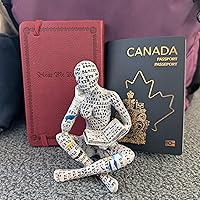
I 100% recommend this book. It’s written for men, which I appreciate. I’m raising 4 boys, and once they’re older I definitely would like to recommend this book to them. This book is much needed in today’s society.
Most books I’ve tried to read on masculinity are from a religious perspective, healing from the religious teachings, or so macho in nature (aka Jordan Peterson) that it leads to unhealthy and damaging masculinity.
He normalizes the spectrum of masculinity. He challenges men to open themselves to embrace parts of themselves that others call feminine. But what are they missing out on by not exploring their full selves? What is the world missing out on by men not being allowed, or allowing themselves, to be their full spectrum selves?
The narration was excellent and engaging. This author is from my home province (Quebec, Canada!), which is a fun side note.
Many thanks to NetGalley for the advanced audiobook to review!
Most books I’ve tried to read on masculinity are from a religious perspective, healing from the religious teachings, or so macho in nature (aka Jordan Peterson) that it leads to unhealthy and damaging masculinity.
He normalizes the spectrum of masculinity. He challenges men to open themselves to embrace parts of themselves that others call feminine. But what are they missing out on by not exploring their full selves? What is the world missing out on by men not being allowed, or allowing themselves, to be their full spectrum selves?
The narration was excellent and engaging. This author is from my home province (Quebec, Canada!), which is a fun side note.
Many thanks to NetGalley for the advanced audiobook to review!

June 19, 2023
Loved this approachable, insightful, and generous book. I was surprised by how explicitly it was written for young men, and loved how thoughtful and caring it was in the way initiated and explored different conversations with them. It did a great job of walking the line between being inviting and validating of men's experiences, and really critical of masculinity and social norms. Most of all, despite being extremely readable, I've been thinking about it constantly as I consume media and interact with various men in my life. There's a lot to learn here for everyone, and I was grateful for the insights it gave me about my relationship with my own masculinity and the toxic ideas I cling to that shape my identity as a woman. It's a very timely, important book and unlike anything I've read before. I hope that it finds its way into the hands of the people who need it most.

July 26, 2023
Thanks to NetGalley and the publisher for the ALC of this audiobook!
I have a lot of thoughts on this book. On one hand, I thought it was great, and much needed in the discourse. On the other hand, there were a few cursed references that made me cringe. But as I did so, I realized I’m not the target audience for this book, it’s specifically and explicitly targeted for young men. So maybe those cursed references (some famous men set as examples to emulate) would still be useful to approach them? I know I need to separate myself somewhat from the pov.
Another note: going into reading this book, I expected a commentary akin to Liz Plank’s “For the Love of Men”. But it was specifically speaking to teenaged and young-adult men. I don’t quite feel like the cover is going to entice the target crowd. It’s beautiful, it just gives off “trendily academic” to me (exactly my cup of tea).
I have a lot of thoughts on this book. On one hand, I thought it was great, and much needed in the discourse. On the other hand, there were a few cursed references that made me cringe. But as I did so, I realized I’m not the target audience for this book, it’s specifically and explicitly targeted for young men. So maybe those cursed references (some famous men set as examples to emulate) would still be useful to approach them? I know I need to separate myself somewhat from the pov.
Another note: going into reading this book, I expected a commentary akin to Liz Plank’s “For the Love of Men”. But it was specifically speaking to teenaged and young-adult men. I don’t quite feel like the cover is going to entice the target crowd. It’s beautiful, it just gives off “trendily academic” to me (exactly my cup of tea).

August 11, 2023
This nonfiction guide for pre-teens and teens has potential to be a game-changer.
The principles outlined (in a very teen-accessible voice) are powerful, and it wasn’t until I was looking deeply at my own areas of privilege that I realized how harmful patriarchy is, even to those who benefit from it.
The same principles will also be called radical by some, and rightfully so. It is radical to call into question these very basic tenets of our society. Radical and necessary.
My challenge with this book and the reason I didn’t rate it higher is not unique to non fiction. It probably just needs to be shorter, fewer personal anecdotes. I also acknowledge I am not the target demographic for this book. I valued the research, footnotes, and the values. Less so the anecdotes.
NetGalley ARC
The principles outlined (in a very teen-accessible voice) are powerful, and it wasn’t until I was looking deeply at my own areas of privilege that I realized how harmful patriarchy is, even to those who benefit from it.
The same principles will also be called radical by some, and rightfully so. It is radical to call into question these very basic tenets of our society. Radical and necessary.
My challenge with this book and the reason I didn’t rate it higher is not unique to non fiction. It probably just needs to be shorter, fewer personal anecdotes. I also acknowledge I am not the target demographic for this book. I valued the research, footnotes, and the values. Less so the anecdotes.
NetGalley ARC

January 2, 2024
DNF 35%
How do I begin. I am not the intended audience. I think men (might?) benefit from this book? Though at this point I don't know if it would help or harm them.
This book mostly try to negate what men has been taught so far, mostly a lot of misogynistic views and how to treat women better. I personally always thought that these things are a given but perhaps not?
While I think books like these are important, the way the topic was presented in this book just rubs me the wrong way. It feels like a book written by incels that have changed their ways and are preaching the new them to the world. Just gives off a lot of holier than thou feelings. Ambitious as it may be, this book was a no for me.
Blog: http://literaturesandmovies.com
How do I begin. I am not the intended audience. I think men (might?) benefit from this book? Though at this point I don't know if it would help or harm them.
This book mostly try to negate what men has been taught so far, mostly a lot of misogynistic views and how to treat women better. I personally always thought that these things are a given but perhaps not?
While I think books like these are important, the way the topic was presented in this book just rubs me the wrong way. It feels like a book written by incels that have changed their ways and are preaching the new them to the world. Just gives off a lot of holier than thou feelings. Ambitious as it may be, this book was a no for me.
Blog: http://literaturesandmovies.com

July 10, 2023
4.5+ stars
This was an excellent book. I wasn’t entirely sure of the direction it was going at first, but my concerns were quickly assuaged, and the book as well as its organization, collections of anecdotes, and references were intriguing. I always love when I’m reading a new non-fiction text that cites the work of other writers and researchers who I admire; always a good sign. I appreciate what the writer created here and hope they will continue to write more in the future. This book about gender is one that everyone (but especially cis men) should consider exploring.
An ARC of this book was provided by the publisher via NetGalley in exchange for an honest review.
This was an excellent book. I wasn’t entirely sure of the direction it was going at first, but my concerns were quickly assuaged, and the book as well as its organization, collections of anecdotes, and references were intriguing. I always love when I’m reading a new non-fiction text that cites the work of other writers and researchers who I admire; always a good sign. I appreciate what the writer created here and hope they will continue to write more in the future. This book about gender is one that everyone (but especially cis men) should consider exploring.
An ARC of this book was provided by the publisher via NetGalley in exchange for an honest review.
Displaying 1 - 30 of 59 reviews