'Brilliant' SUNDAY TIMES 'Compelling and unnerving' SPECTATOR
**A NEW STATESMAN Book of the Year 2023**
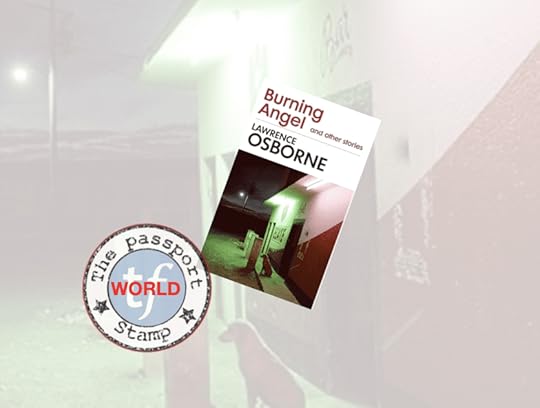
This first collection of stories by Lawrence Osborne perfectly showcases his talent for tension, atmosphere - and characters out of their depth
A naïve young linguist sent to the forests of Irian Jaya is manipulated into betraying her mission by a ruthless and disturbed pastor. A deaf girl hired as a maid by a wealthy New York couple turns the tables on her obliviously abusive employers and answers blackmail with blackmail. A psychiatrist treating a girl in rural England becomes ensnared in a love affair that threatens to destroy her career; while a young couple on holiday in Oman accidentally witness a killing, which leads to their being hunted as well. An entomologist at a remote hotel in the Andamans survives a tsunami and uses a dead body to further her study of ants.
Collected here for the first time, Lawrence Osborne's stories, like his novels - 'elaborate and intricately plotted dances macabres' (The Times) - feel like nightmares set against calmly and meticulously observed backgrounds. With their nods to Daphne du Maurier and Roald Dahl, these nine long-form stories explore characters lost in the shadowed borders between the mundane, the fantastical and the violence of the natural world.
Lawrence Osborne is the author of seven critically acclaimed novels, including The Forgiven (now a major motion picture starring Ralph Fiennes and Jessica Chastain), and Only to Sleep: A Philip Marlowe Novel, a New York Times Notable Book and nominated for an Edgar Award, as well as six books of nonfiction, including Bangkok Days. He has led a nomadic life, living in Paris, New York, Mexico, and Istanbul, and he currently resides in Bangkok.
A great collection of short stories in which Osborne introduces us to unfamiliar locations and their inhabitants and characters who, for all manner of reasons, make rash decisions. Each story generates a feeling of unease as the consequences of those decisions rebound on the men and women who have taken them. Subtle, absorbing and sinister.
When you want more Lawrence Osborne, no other author will do. Short stories for a deep dive into psychological manipulation and violence committed by all the best people.
A promising, if uneven, collection with major achievements and minor inconsistencies
My first ever Osborne read, as part of my new trip down anthology lane. An engaging experience this was.
Osborne utilizes the omniscient narrator throughout all shorts, thereby sacrificing emotional depth for plot finesse. An apt choice considering the artistic nature of several shorts in the collection (ambiguous endings, imagery et. al). Various genres and themes are blended in ideal proportions, adding nuances and delightful touches to each tale.
An additional note before proceeding with the review: There has been a recent rise in purple prose criticism; that is, denouncing various works as being "purple prose" in writing - cliched, boring and overly complex, drawing attention to the writing instead of the narrative. I strongly believe that these naysayers should abstain from Oates-esque process-oriented arthouse narratives and restrict themselves to Patterson-esque objective-oriented commercial novellas. Creative freedom should apply to all authors, and especially in artistic works - It is the journey that takes precedence over the outcome. Finding beauty in the ordinary, chaos in the order and uniqueness in the original are the cornerstones of art, thereby paving the way for beautiful imagery and extensive descriptions of locations, people et. al. Should readers view this as "flowery", they should thus avoid such works. The reason for this note is because of my fear that Osborne's works, this in particular, may be subject to such undeserving criticism.
1. Ghost - 2.5 / 5 A rather underwhelming opening short, Ghost borrows heavily from Dahl's collection Deception in it's core plot points - An American financier recently retrenched from his role is offered a mysterious new position and several interesting events follow suit. Indeed, the major pull factor of Ghost is the veil of intrigue it creates, especially in the first half. Unfortunately, the two halves are extremely disjointed and the second half (in particular, the climatic portions) are unable to do justice to the well-plotted first half. Visual imagery is commendable though suppressed in favor of commercial elements. Pacing is rather hindered due to the length of the short (this is one of the thickest shorts in the deck at 60 pages). The commentary on US-China relations and the ensuing impacts on individuals and small communities does not land too well either. In short, the plot itself has little potential but deserves praise for the suspenseful build-up portions though Osborne loses hold over the narrative in its complexities and subtleties.
Pig Bones - 4 / 5 A marked improvement over its predecessor, Pig Bones follows a naive linguist in Irian Jaya who is deceived by a ruthless pastor. The sensory descriptions are terrific here; the Irian tribes, jungles and their way of life all come to life through striking visual imagery. There is also a continued air of suspense and intrigue, and the climatic portions deliver well. Though it may appear 5 or even 10 pages too long, this experimental feature is indeed a great success.
Blood Eclipse - 3.5 / 5 A strange but enticing amalgamation of fantasy horror and romantic drama, Blood Eclipse is all about a psychiatrist who treats an extraordinary girl in rural London with shocking consequences. Character development is a major win here and the narrative is well-pillared by rigorous pacing and well fleshed-out imagery. Perhaps the only drawback would be the ambiguous ending which could have been replaced for a proper closure. Irrespective of this, another major arthouse experimental victory for Osborne.
The Boatman - 3.5 / 5 What I found most grating about The Boatman is the title - it appears rather unsuitable as the titular character serves an insignificant, if unclear, role in the tale. What I found most fascinating however, in this tale of a couple witnessing a murder in Oman, is the viewpoints it introduces courtesy of the omniscient narrator and the thrills it builds up and never lets go of till the climax. Again, imagery is well described but more than the arthouse elements, the commercial elements (fast-moving sequences, backstabbing characters, short length) are the real attractors here.
Camino Real - 2 / 5 The weakest of all shorts, Camino Real is an aimless drift much like its protagonist who is ensnared in a dangerous situation. Imagery is suppressed here in favor of a slow burn character-driven narrative but the character itself is an uninteresting and dry one. The only respite would be the shorts length in an otherwise meaningless existence.
The Wave - 4.5 / 5 My favorite of this deck, The Wave is a major success on all accounts. It comprises mostly of arthouse elements and rivels in its existence. The slow burn narrative is propped up by striking glorious imagery (the best in this collection) and the character-driven plot points are a treat to enjoy. It also introduces insightful commentary on the lives of researchers and how loneliness can give rise to depression and even madness. The titular Wave here is a trigger, setting off a chain of events and the tsunami sequence in this short is by far one of the best I have read. Emotional depth, characterization, sensory description, thrilling narration - The Wave has it all. The only minor inconsistency would be its sluggish pace at times; easily forgivable. A must-read, and I will not divulge any more details.
White Gods - 4 / 5 A suspenseful narration with elements of werewolf horror fantasy, White Gods revolves around a rich family on holiday and the horror that ensues when the 12 year-old daughter commits a major religious error. The narrative is taut and masterful in building up tension, and the cliffhanger-esque ending is a beautiful touch. A fascinating and well-executed horror short, though its pacing could be improved.
Burning Angel - 3.5 / 5 At last, the titular short. Burning Angel is an exciting cat-and-mouse plot revolving around blackmail, and the excitement and intrigue carries over from the first half to the second beautifully. The raw prose works magnificently here as it displays how twisted and cruel the main character is. Commercial in nature with some artistic touches here and there, though the climatic portions are rushed and unsatisfactory.
All in all, this collection has a set of highs and a set of lows but it is well-written as a whole and the shorts flow well too. Highly recommended!
P.S. I would like to read Osborne's full-length novellas too, to investigate how he merges artistic and commercial elements together.
Osborne is my new favorite writer. He's lean, mean and the stories never go where you think they will. My favorite in this set is Camino Real but I have a soft spot for depictions of Mexico. Here's a taste:
"'Let's get some huevos rancheros first. I always eat hard and fast in the morning.'
They went to a place two blocks down from the hotel. The windows looked over a gully filled with wild flowers and the back of an abandoned slaughterhouse. Mendes ordered for both of them. He could see Angel was broke and mangy. They ate eggs and salsa and churros caked in sugar and cafe de olla in metal pots, with cinnamon sticks poking through the lids. It was the best breakfast Angel had consumed in a while. His clarity returned and his muscles began to hum."
A superb collection of unsettling stories about people confronted with loneliness, hostile environs, and moral quandries. Osborne is the master of atmosphere, leading the reader deep inside exotic settings to witness helplessly, with horror and fascination, as powerful conflicts play out to inevitable conclusons.
One of these days I will learn my lesson. I can't count the times I have bought a book or music, or gone to see a film on the basis of an excellent five star review, only to be totally underwhelmed and wonder if I've bought the wrong book/music/film.
Burning Angel is yet another such experience. Bought due to a brilliant, irresistable review, then after the first few stories, I had to force myself to read the remainder.
There are moments or characters in each story that do grab the attention and deserve praise. But they are too few and they usually come to nothing.
The main problem for me - I like stories with a beginning - a middle - and conclusive ending. The current trend seems to be for stories that just meander to an 'open' ending where nothing is finalised.
I find this style lazy. It short changes the reader and expects us to finish the authors job for him/her. No thank you.
The seven newspaper reviews on the back cover all praise the book to the heavens. Maybe it's just me ?
Hooray. Although a few of these stories are a few years old, thankfully I've enjoyed this authors writing again after a couple of duds. Hope for the future then!
«Viaggiarono tra le risaie sorvegliate da bufali d’acqua, finché rispuntò il mare con l’esplosione del tramonto del sole all’orizzonte. Erano vicino all’albergo statale Turtle Cove di Aerial Bay. Tamanu orlavano una spiaggia di coralli e la strada arrivava fino all’acqua. Le case erano contornate di piccoli roseti dove crescevano rigogliose le nipa, e avevano ingressi con fini tettoie di paglia. Le piante di haritaki delimitavano i giardini, da cui i bambini silenziosi come statuine li guardavano passare».
Conoscevo Lawrence Osborne per i suoi ottimi romanzi, penso a “Nella polvere“ che forse è il suo più noto, eppure nei racconti riesce a essere uno scrittore perfino migliore, forse perché il racconto costringe a un lessico più accurato, a una tensione più alta in poche relative pagine, i nove racconti vanno dalle 20 alle 50 pagine. A 65 anni Osborne pubblica la sua prima raccolta (è del 2023), ora tradotta ottimamente da Mariagrazia Gini. Verrebbe da dirgli, Osborne continua col racconto finché ti va.
Quello che dà il titolo al libro, “L’angelo in fiamme”, è un magistrale esempio di irrequietezza che sale e svia fino alle impressionanti pagine finali - un architetto a Manhattan che decide di prendere una tata, con problemi di udito e di parola -, ma ce ne sono alcuni più brevi, almeno quattro, perfino più perfetti nella misura, nella forma e nel contenuto, brevi trattati antropologici. Penso a L’onda, Ossa di maiale, Luna di sangue, Gli dèi bianchi. L’onda è la storia di un‘entomologa che cerca falene in un’isola indiana, Aerial Bay, sola, frustrata per una vita di ipotetici successi che non arrivano, conosce una famiglia del luogo, con i loro figli e altre persone in un lussuoso Hotel, fino a quando uno tsunami scompagina tutto. In alcuni racconti ci sono pagine, anzi immagini, indimenticabili per esatta tetraggine, direi. In un altro, Luna di sangue, ambientato in una cittadina inglese piuttosto asfittica, una ragazzina 16enne, geniale e solitaria, ha problemi con i genitori e in generale con la gretta gente del posto, viene convocata da Londra una psicologa per cercare di dirimere il caso. Tra le due nascerà una complicità a suo modo eccitante, fino a quando…
In questi racconti più che la loro natura cosmopolita, essendo ambientati in ogni dove, Oman, New York, Mongolia, Hawaii, Nuova Guinea, India, Inghilterra, ciò che li accomuna è la natura fallace e allo stesso tempo vitale dell'immaginazione, ogni personaggio prende più cantonate nel tentativo di capire l’altro, nel tentativo di capire la situazione che stanno vivendo, la natura delle cose, una semplice ape che non si sa se esista o è frutto di fobie può essere un motivo di discordia fra una coppia di fidanzati. Splendido il racconto Ossa di maiale, nel quale un’antropologa approda in un villaggio della Nuova Guinea per studiare i loro usi e costumi, qui incontrerà un sacerdote che lucra sulle credenze della gente del luogo, sui guaritori, sui loro amuleti.
Questa è la scena in cui l’antropologa viene invitata al capezzale di una donna morente: «Nel pomeriggio il grammofono fu trasportato nella capanna della donna malata e Cassidy lo seguì. L’interno della capanna era immerso nell’oscurità. Al soffitto erano appese ossa di animali: tibie e femori di lucertole, maialini, roditori, minuscoli teschi di scimmie, che battevano l’uno contro l’altro al passaggio dell’aria corrente tra le fessure delle assi di bambù».
These stories are penned by Lawrence Osborne, whom Metro describes as “The bastard child of Patricia Highsmith and Graham Greene“. I am delighted when he publishes a new book because his stories are always dark and have a terrific sense of place.
There are nine stories in this collection which take the reader to Hong Kong, Papua New Guinea, The Peak District, Oman, Mexico, The Andamans, Hawaii, Mongolia and New York City.
Burning Angel is the last story and the best has been left until last. A couple of rich Manhattanites take a young woman with hearing difficulties under their wing, to act as maid and nursemaid to the baby that will be born shortly. The husband Edward is an architect and has built an incredible duplex on the 27th floor in the city, a dwelling that is inspired by Japan, and the author makes it sound like a wonderful property. It’s just a shame that the people who inhabit it are such grim, self-referring individuals. That, though, is typical of the author and he really doesn’t usually choose charming characters to populate his stories, they all have quirks and motivations that bring the story to life.
The opening story set in Hong Kong – Ghost – is a good opener and kept me enthralled, and another particularly memorable for me was also the story set in Oman.
The author is really gifted at evoking the different settings, he immerses his readers into the culture and physical environment in a way that few other writers achieve. He can add texture, colour and an authenticity to locale that really bring the sense of place to full and vibrant life.
The first novel I read by Lawrence Osborne was The Forgiven – set in Morocco – which really kicked off my interest in his storytelling. In 2021 it was adapted into a very colourful and gripping film starring, among others, Jessica Chastain, Ralph Fiennes and Matt Smith. Osborne really deserves to be widely read, his style of writing is a great example of #literarytourism.
I read this book primarily because I was attracted to its cover, much in the same way you might start a relationship with a complete stranger purely based on physical attraction. Both are not entirely without merit and may lead to something new and exciting, but frequently end in disappointment.
In this case, the stranger turned out to be extremely well travelled, with Osborne's collection of short stories being set in different countries around the world. One of my favourites, 'The Boatman', incidentally involves a couple who is purely together because of physical attraction though I won't reveal how this plays out on their holiday in Oman. I also enjoyed the eponymous 'Burning Angel' about a deaf live-in nanny who turns the tables on her employers.
So did the book live up to its cover? Sort of. The stories were all as dark, menacing and exotic (though perhaps not brooding) as the cover suggests. They were also perfectly readable and interesting. There were some faux pas like the somewhat naf regional accent in 'Blood Eclipse'. The stories weren't exactly multi-layered and deep - this stranger is a creature of dark simplicity. The stories also relied on plot rather than outstanding writing, which means that Osborne couldn't quite get away with the weaker ones.
Overall though, I did quite enjoy this collection, and on this occasion my attraction to the cover might actually lead me to try a second book by Osborne, who I hadn't even heard of before. It's unlikely to be the literary love of my life but it's a second date, if you will.
Lawrence Osborne è lo scrittore perfetto per allietarci le vacanze estive: sempre elegante, sempre esotico, sempre avventuroso, cinematografico ma raffinato, leggero quanto basta per farci evadere dal quotidiano - ma, per via dell’eterno conflitto di classe che è il suo tema preferito, e d’una discreta finezza psicologica, mai troppo leggero, mai superficiale. A volte difetta di verosimiglianza, ma nel complesso glielo si perdona, tanto è delizioso farsi trasportare dai suoi libri. Questi sono racconti, e sono legati da un fil rouge che lascio al lettore (se avrà cura di non leggere la quarta di copertina) il piacere di scoprire.
Erring on the side of generosity perhaps (it's Christmas Eve!), it's probably a 3.5 for me. The short stories are amazingly imaginative and each one is unique - more so than other collections of short stories I've read. They're very creepy and menacing. The reason for the 3.5 and not 4 is because after a few stories, although all quite different from each other (locations, types of characters etc), as a reader you know that what starts out as a mundane story is going to become pretty awful. But you don't necessarily know how!
Long short stories of 20 - 50 pages, all but one in 'exotic' locations with a emphasis on sense of place as well as the macabre. Osborne is a very good writer but I prefer his novels especially The Forgiven. In the short stores there s a sense that characters are only there for something bad to happen to them, rather than their individual worth. Having said that he is a very good writer with shades of Graham Greene in his sense of place and importance of working lives.
Took me forever to read because the qualities of the stories are inconsistent. Some like the last two were fabulous with a masterful tension built up. Others are too fantastical for their own good and distract me with their mixed up logic. On the whole, I’d say I enjoyed though.
this book was very hard to get through. the stories didn’t really make sense and felt more like a compilation than a short story collection. however, i appreciated the author being skilled at creating setting.
A writer who knows his short-story craft. The stories keep you on the edge of your seat. The story itself drives everything further, takes a development. After reading some mediocre collections, this one hit.
Osborne is an excellent writer. His development of a sense of place is superb. Thestories in this collection need good concentration to see where he is going!
An interesting collection of stories, often involving lone travellers. I enjoyed reading them - they were dark with a twist at the end (I'm not sure I got all of them!)