

What do you think?

Great Hatred: The Assassination of Field Marshal Sir Henry Wilson MP
THE IRISH TOP 10 BESTSELLER
A gripping investigation into one of Irish history's greatest mysteries, Great Hatred reveals the true story behind one of the most significant political assassinations to ever have been committed on British soil.
“Heart-stopping . . . The book is both forensic and a page-turner, and ultimately deeply tragic, for Ireland as much as for the murder victim.” - MICHAEL PORTILLO
“Gripping from start to finish. McGreevy turns a forensic mind to a political assassination that changed the course of history, uncovering a trove of unseen evidence in the process.” - ANITA ANAND , author of The Patient Assassin
“Invaluable.” IRISH TIMES
“Intelligent and insightful.” IRISH INDEPENDENT
On 22 June 1922, Sir Henry Wilson - the former head of the British army and one of those credited with winning the First World War - was shot and killed by two veterans of that war turned IRA members in what was the most significant political murder to have taken place on British soil for more than a century. His assassins were well-educated and pious men. One had lost a leg during the Battle of Passchendaele. Shocking British society to the core, the shooting caused consternation in the government and almost restarted the conflict between Britain and Ireland that had ended with the Anglo-Irish Treaty just five months earlier. Wilson's assassination triggered the Irish Civil War, which cast the darkest of shadows over the new Irish State.
Who ordered the killing? Why did two English-born Irish nationalists kill an Irish-born British imperialist? What was Wilson's role in the Northern Ireland government and the violence which matched the intensity of the Troubles fifty years later? Why would Michael Collins, who risked his life to sign a peace treaty with Great Britain, want one of its most famous soldiers dead, and how did the Wilson assassination lead to Collins' tragic death in an ambush two months later?
Drawing upon newly released archival material and never-before-seen documentation, Great Hatred is a revelatory work that sheds light on a moment that changed the course of Irish and British history for ever.
A gripping investigation into one of Irish history's greatest mysteries, Great Hatred reveals the true story behind one of the most significant political assassinations to ever have been committed on British soil.
“Heart-stopping . . . The book is both forensic and a page-turner, and ultimately deeply tragic, for Ireland as much as for the murder victim.” - MICHAEL PORTILLO
“Gripping from start to finish. McGreevy turns a forensic mind to a political assassination that changed the course of history, uncovering a trove of unseen evidence in the process.” - ANITA ANAND , author of The Patient Assassin
“Invaluable.” IRISH TIMES
“Intelligent and insightful.” IRISH INDEPENDENT
On 22 June 1922, Sir Henry Wilson - the former head of the British army and one of those credited with winning the First World War - was shot and killed by two veterans of that war turned IRA members in what was the most significant political murder to have taken place on British soil for more than a century. His assassins were well-educated and pious men. One had lost a leg during the Battle of Passchendaele. Shocking British society to the core, the shooting caused consternation in the government and almost restarted the conflict between Britain and Ireland that had ended with the Anglo-Irish Treaty just five months earlier. Wilson's assassination triggered the Irish Civil War, which cast the darkest of shadows over the new Irish State.
Who ordered the killing? Why did two English-born Irish nationalists kill an Irish-born British imperialist? What was Wilson's role in the Northern Ireland government and the violence which matched the intensity of the Troubles fifty years later? Why would Michael Collins, who risked his life to sign a peace treaty with Great Britain, want one of its most famous soldiers dead, and how did the Wilson assassination lead to Collins' tragic death in an ambush two months later?
Drawing upon newly released archival material and never-before-seen documentation, Great Hatred is a revelatory work that sheds light on a moment that changed the course of Irish and British history for ever.
480 pages, Paperback
Published August 1, 2023
Ratings & Reviews
Friends & Following
Create a free account to discover what your friends think of this book!
Community Reviews
Displaying 1 - 20 of 20 reviews

April 20, 2022
I will openly admit that I knew virtually nothing about the historical events of this book before reading it, but author Roman McGreevy brings both the assassination, and the characters involved, to life so vividly that I feel saddened that I have finally come to the end.
On the 22nd of June 1922, the retired Field Marshall Sir Henry Wilson MP unveiled a WWI memorial at Liverpool Street Station. He had spent four years as the Chief of Imperial General Staff (CIGS) and, when he left the position, he was elected as MP for North Down in Northern Ireland. Ironically, Wilson was an Irishman who considered himself British, whilst his two assassins considered themselves Irish, but were not born there… In fact, Wilson objected strongly to the Anglo-Irish Treaty, negotiated with Sinn Fein in December 1921, seeing the Irish Free State as a betrayal and a surrender to the IRA.
Following the ceremony, on that day in 1922, Wilson had an appointment at the House of Commons and went home to change. He was met by Joe O’Sullivan, a clerk who had a wooden leg and Reginald ‘Reggie’ Dunne. Both were committed members of the IRA, and they assassinated Wilson as he arrived at his house.
This book follows the events of those day, gives a biography of the three men involved, and asks why the assassination was ordered, and by who, as well as looking at the ramifications of the murder and the aftermath. In fact, McGreevy compares this assassination to the shooting of Archduke Franz Ferdinand, suggesting that it changed Irish history and the Irish Civil War. Having read this, I agree that the events were momentous and feel McGreevy gives a balanced, but extremely gripping, account of what happened. I received a copy of this book from the publisher, via NetGalley, for review.
On the 22nd of June 1922, the retired Field Marshall Sir Henry Wilson MP unveiled a WWI memorial at Liverpool Street Station. He had spent four years as the Chief of Imperial General Staff (CIGS) and, when he left the position, he was elected as MP for North Down in Northern Ireland. Ironically, Wilson was an Irishman who considered himself British, whilst his two assassins considered themselves Irish, but were not born there… In fact, Wilson objected strongly to the Anglo-Irish Treaty, negotiated with Sinn Fein in December 1921, seeing the Irish Free State as a betrayal and a surrender to the IRA.
Following the ceremony, on that day in 1922, Wilson had an appointment at the House of Commons and went home to change. He was met by Joe O’Sullivan, a clerk who had a wooden leg and Reginald ‘Reggie’ Dunne. Both were committed members of the IRA, and they assassinated Wilson as he arrived at his house.
This book follows the events of those day, gives a biography of the three men involved, and asks why the assassination was ordered, and by who, as well as looking at the ramifications of the murder and the aftermath. In fact, McGreevy compares this assassination to the shooting of Archduke Franz Ferdinand, suggesting that it changed Irish history and the Irish Civil War. Having read this, I agree that the events were momentous and feel McGreevy gives a balanced, but extremely gripping, account of what happened. I received a copy of this book from the publisher, via NetGalley, for review.

July 3, 2022
In a decade of centenaries for modern Irish history, none is more poignant and tragic than that of the civil war of 1922-23, an event which continues to shape the the politics of the present and the national psyche. Ronan McGreevy, historian and Irish Times reporter, has published this timely account of the people and events surrounding the assassination of Field Marshal Sir Henry Wilson on June 22 1922, the match which lit the tinderbox that was to engulf Ireland in civil war.
Although in retrospect the Irish civil war seemed inevitable, in fact it wasn’t. As McGreevy eloquent puts it, there is nothing inevitable in history; it is replete with moments of danger when protagonists are compelled by random events into actions that lead to catastrophic and unintended consequences. The assassination of Wilson was one such moment, a light to a powder keg that, had it not been sparked, could have seen the civil war avoided altogether. His assassination was Ireland’s ‘ Sarajevo moment’.
The assassination itself is the event at the center of a broad tapestry sketched by the author which takes in the seminal events of the first 25 years of Irish 20th Century history. He fills the telling of the main tale with nuggets of information along the way that are pure gems. This is genuinely one of those books where you will acquire and retain historical facts to be remembered.
At the center of the story itself is Sir Henry Wilson, MP, Field Marshall, former chief of the Imperial general staff. History has been unkind to Wilson, an arch-unionist and imperialist, a soldier whose foray into political life was clumsy and dangerous at the same time. Wilson’s personal family history was rooted in southern Irish Unionist traditions of church, family and duty. He couldn’t see beyond this to the traditions and aspirations of his fellow Catholic nationalist compatriots whom he held in contempt, labeling them as the ‘murder gang’. Sadly, his skills as a military leader who was one of the leading masterminds behind the successful campaigns of World War I have been overlooked, partially due to the inept skills of a former biographer. Wilson’s memory fades in comparison to the reputation of his Anglo-Irish compatriots such as Roberts, French, Kitchener and the Duke of Wellington.
The supreme irony which McGreevy brings forth is that Wilson was Irish, identified strongly with the country of his birth but had an undying loyalty to the a British crown. His assassins on the other hand were English-born, served in the British army in WW1, but identified with a nationalism for a country they had scarcely visited.
McGreevy conducts meticulous research into the backgrounds of Wilson’s assassins, Dunne and O’Sullivan, delving into letters, documents, archives and other previously unexplored original material. One cannot help but feel that the radicalization of the two English-born assassins holds in parallel the local-born Islamist terrorists of today who strike at the heart of their adopted countries.
At the heart of McGreevy’s work is his forensic historical whodunnit to try and establish just whose orders Dunne and O’Sullivan were acting on when they shot Wilson. After a meticulous description of Dunne and O’Sullivan’s life and times in London, he leaves his 4 possible conclusions to the very last chapter of the book. He rightly discounts the first 3 of these theories - that the assassins acted alone, acted on the orders of the anti-treaty forces holed up in the 4 courts in Dublin ( whose blame for the deed by Churchill / Lloyd George ignited the civil war), or that the order to kill Wilson was an old pre-treaty one never rescinded. That then leaves Michael Collins .. most probably, the author concludes, Collins ordered or approved the shooting. As well as his obvious hatred for Wilson, he viewed him as a dangerous but potentially influential nuisance whose aim was to embroil Britain in a renewed war in Ireland. But just like the circumstances surrounding Collins’ own death exactly 2 months later, we shall never know. As an avid student of Irish history I have often answered the question ‘ which dead leader would you most like to meet with and talk over dinner ?’ Without hesitation, my answer is always Michael Collins. His unknown role in the assassination of Sir Henry Wilson and the great impact of that event on Irish history as brilliantly laid out in this book reaffirms that choice.
Although in retrospect the Irish civil war seemed inevitable, in fact it wasn’t. As McGreevy eloquent puts it, there is nothing inevitable in history; it is replete with moments of danger when protagonists are compelled by random events into actions that lead to catastrophic and unintended consequences. The assassination of Wilson was one such moment, a light to a powder keg that, had it not been sparked, could have seen the civil war avoided altogether. His assassination was Ireland’s ‘ Sarajevo moment’.
The assassination itself is the event at the center of a broad tapestry sketched by the author which takes in the seminal events of the first 25 years of Irish 20th Century history. He fills the telling of the main tale with nuggets of information along the way that are pure gems. This is genuinely one of those books where you will acquire and retain historical facts to be remembered.
At the center of the story itself is Sir Henry Wilson, MP, Field Marshall, former chief of the Imperial general staff. History has been unkind to Wilson, an arch-unionist and imperialist, a soldier whose foray into political life was clumsy and dangerous at the same time. Wilson’s personal family history was rooted in southern Irish Unionist traditions of church, family and duty. He couldn’t see beyond this to the traditions and aspirations of his fellow Catholic nationalist compatriots whom he held in contempt, labeling them as the ‘murder gang’. Sadly, his skills as a military leader who was one of the leading masterminds behind the successful campaigns of World War I have been overlooked, partially due to the inept skills of a former biographer. Wilson’s memory fades in comparison to the reputation of his Anglo-Irish compatriots such as Roberts, French, Kitchener and the Duke of Wellington.
The supreme irony which McGreevy brings forth is that Wilson was Irish, identified strongly with the country of his birth but had an undying loyalty to the a British crown. His assassins on the other hand were English-born, served in the British army in WW1, but identified with a nationalism for a country they had scarcely visited.
McGreevy conducts meticulous research into the backgrounds of Wilson’s assassins, Dunne and O’Sullivan, delving into letters, documents, archives and other previously unexplored original material. One cannot help but feel that the radicalization of the two English-born assassins holds in parallel the local-born Islamist terrorists of today who strike at the heart of their adopted countries.
At the heart of McGreevy’s work is his forensic historical whodunnit to try and establish just whose orders Dunne and O’Sullivan were acting on when they shot Wilson. After a meticulous description of Dunne and O’Sullivan’s life and times in London, he leaves his 4 possible conclusions to the very last chapter of the book. He rightly discounts the first 3 of these theories - that the assassins acted alone, acted on the orders of the anti-treaty forces holed up in the 4 courts in Dublin ( whose blame for the deed by Churchill / Lloyd George ignited the civil war), or that the order to kill Wilson was an old pre-treaty one never rescinded. That then leaves Michael Collins .. most probably, the author concludes, Collins ordered or approved the shooting. As well as his obvious hatred for Wilson, he viewed him as a dangerous but potentially influential nuisance whose aim was to embroil Britain in a renewed war in Ireland. But just like the circumstances surrounding Collins’ own death exactly 2 months later, we shall never know. As an avid student of Irish history I have often answered the question ‘ which dead leader would you most like to meet with and talk over dinner ?’ Without hesitation, my answer is always Michael Collins. His unknown role in the assassination of Sir Henry Wilson and the great impact of that event on Irish history as brilliantly laid out in this book reaffirms that choice.

May 22, 2022
On 22 June 1922, Sir Henry Wilson, former soldier, former head of the British army, valued advisor to the Cabinet during WWI, & recently elected MP, was assassinated by Joseph O'Sullivan & Reggie Dunne. Wilson was shot several times on his own doorstep & many of his neighbours saw the two men running from the scene & gave chase. Wilson succumbed to his injuries, & when the two men were apprehended, they were arrested & charged with murder. Although they were both born in England & had served in the British army, they were adamant that it was done for the freedom of Ireland.
Wilson himself was born in Ireland (before it was partitioned in 1921), his family were Protestant landowners, & he considered himself Anglo-Irish. He was a supporter of the governing of Ireland remaining under British control & the British Empire as a whole. He seems to have been a divisive character, even to his friends, with his public persona more brusque & uncompromising than his private words especially towards Ireland, & his rhetoric could be inflammatory. This led to Wilson being held responsible, in the eyes of some Irish Nationalists, for the behaviour of the Black & Tans (those recruited into the Royal Irish Constabulary during the War of Independence) even though he was not responsible for them. None of this excuses murder of course, but may explain why he was targeted.
I found this a fascinating read as, although I hail from the UK, I was very young when the IRA bombings in the late 1980s & 1990s were occurring, & although I vaguely remember hearing about them, the whole history behind what was happening was not something I looked into. This book puts the Ireland & Britain of the 1920s into context, i.e. The Irish War of Independence & the Irish Civil War which followed. O'Sullivan & Dunne were both hanged for their part in Wilson's murder, but there are still questions over whether they acted alone or on orders from someone higher up. There is evidence that Dunne was in the London IRA & that discussions over potential targets for assassination had been discussed. Was Wilson one of them? How involved was Michael Collins in the whole affair?
The author gives detailed biographies for both Wilson & his assailants to ascertain what led up to the assassination & the wars that followed. I think the author does a great job of examining the evidence whilst keeping a balanced approach. Reading this has helped fill in the gaps in my knowledge about both Irish & British early twentieth century history & the ramifications we still see occasionally today. Recommended for anyone interested in the history between Ireland & Britain.
My thanks to NetGalley & publishers, Faber & Faber, for the opportunity to read an ARC.
Wilson himself was born in Ireland (before it was partitioned in 1921), his family were Protestant landowners, & he considered himself Anglo-Irish. He was a supporter of the governing of Ireland remaining under British control & the British Empire as a whole. He seems to have been a divisive character, even to his friends, with his public persona more brusque & uncompromising than his private words especially towards Ireland, & his rhetoric could be inflammatory. This led to Wilson being held responsible, in the eyes of some Irish Nationalists, for the behaviour of the Black & Tans (those recruited into the Royal Irish Constabulary during the War of Independence) even though he was not responsible for them. None of this excuses murder of course, but may explain why he was targeted.
I found this a fascinating read as, although I hail from the UK, I was very young when the IRA bombings in the late 1980s & 1990s were occurring, & although I vaguely remember hearing about them, the whole history behind what was happening was not something I looked into. This book puts the Ireland & Britain of the 1920s into context, i.e. The Irish War of Independence & the Irish Civil War which followed. O'Sullivan & Dunne were both hanged for their part in Wilson's murder, but there are still questions over whether they acted alone or on orders from someone higher up. There is evidence that Dunne was in the London IRA & that discussions over potential targets for assassination had been discussed. Was Wilson one of them? How involved was Michael Collins in the whole affair?
The author gives detailed biographies for both Wilson & his assailants to ascertain what led up to the assassination & the wars that followed. I think the author does a great job of examining the evidence whilst keeping a balanced approach. Reading this has helped fill in the gaps in my knowledge about both Irish & British early twentieth century history & the ramifications we still see occasionally today. Recommended for anyone interested in the history between Ireland & Britain.
My thanks to NetGalley & publishers, Faber & Faber, for the opportunity to read an ARC.
June 23, 2026
The book tracks the lead up to the killing of Field Marshal Sir Henry Wilson, a man who had the sort of reputation that makes enemies multiply fast. He strutted across the British military and political scene, he advised governments, enraged governments, and collected grudges.
Ireland in the early 1920s was a pressure cooker wearing a trench coat. The treaty had been signed, which meant everyone was furious for entirely incompatible reasons. The new state was trying to be born while being strangled by its own midwives. London watched nervously, Dublin seethed creatively, and various factions employed violence as a civic duty.
Into this carnival strolled two IRA veterans, Reginald Dunne and Joseph O'Sullivan, who had enough wartime trauma and political conviction to power a small city. They believed Wilson was not only a symbol of British rule but a very practical obstacle to the future they wanted. Whether this belief was accurate, exaggerated, or a tragic misfire is part of the tension the book milks with scholarly precision.
We follow how these two men reached their decision, how Wilson made himself such a lightning rod, and how the political world on both islands swirled with suspicion, hope, fear, propaganda, and mutual resentment.
The book pieces together motives, myths, and messy truths. It digs into the conflicting statements left by the assassins, the public fury, and the private panic in London. It shows how a single act became ammunition in a conflict already overloaded with symbolism. And all of this is presented against the tragic backdrop of two governments trying to look in control while barely controlling their staplers.
You get political theater, military ego, revolutionary improvisation, and the grim misery of ordinary people hoping history will follow logic. What you do not get is a tidy moral mesage.
The book is sharp, patient, and impressively researched. It presents the assassination as the center of a storm and then walks you through every frantic gust blowing around it. The author clearly spent years spelunking through letters, diaries, police files, cabinet minutes, and every other document that humans insist on hoarding. You feel the weight of that work on every page, and it gives the story an authority that never feels pompous.
It is a dense story that frames Dunne and O'Sullivan as products of a world where politics, identity, and violence were tangled together. The book lets the facts bruise you slowly.
You see how men convince themselves that one act will reshape history. You also see how states react with fear, opportunism, or righteous fury when confronted with a crisis they did not anticipate. There is an ongoing lesson here about symbolism taking precedence over reality. Wilson becomes less a man and more a screen onto which every faction projects its own anxieties.
Political violence still sprouts from conviction wrapped in confusion. Governments still misread movements until they panic. People still mythologize public figures beyond recognition. The book shows that history is not a sequence of wise decisions but a collection of improvisations made under pressure by people who were not nearly as clever as they hoped.
The book is well worth the time. It demands attention, but it pays you back with a deeper understanding of a moment when two islands were trying to reinvent themselves while stumbling over the ghosts they created.
How eagerly modern Ireland repeats the same symbolic theater it once paid for in blood. The book shows how slogans, gestures, and moral certainty were mistaken for strategy, with catastrophic consequences. Today, Irish politicians strike righteous poses against Israel, flirt with cultural boycotts, and wrap themselves in performative outrage, as if history were a costume rack. In doing so, they betray the very lesson the book keeps hammering home, that symbolic violence and moral exhibitionism age badly and usually land on the wrong people.
Current Irish political currents feel like watching a bunch of folks argue over which shade of historical grievance to hang on the wall while the wallpaper peels everywhere else. You have a centre right coalition of Fianna Fáil and Fine Gael resurrecting old rivalries in name only as they bicker over speaking rights and create record numbers of junior ministers with all the urgency of a committee trying to decide on biscuits for a meeting.
All of this unfolds against a backdrop of cost of living pains and claims of rushed legislation, so it feels like everyone is shouting about the ghosts of the past while real problems pile up like unread files on a civil servant's desk.
Wilson became a screen for grievance, just as Israel now does, and once again Jewish lives and Jewish rights are treated as acceptable collateral in someone else's moral drama. It is the same old habit of confusing gesture with justice, only now it comes with press releases against parks named for Irish rabbis and a Eurovision voting scandal instead of pistols on a London streets.
The hypocrisy writes itself. Movements with a long record of sanctifying bombings, purges, and the polite euphemism of making an island pure suddenly discover a refined horror of terrorism when Jews are involved. People who spent decades dreaming out loud about eradicating Protestants from Irish life now lecture the world about apartheid with the confidence of born again ethicists. In the book, assassins cloak violence in moral necessity and convince themselves history will thank them, and the echo today is hard to miss. The language has been laundered, the targets updated, but the habit remains the same. Declare yourself righteous, label others monstrous, and pretend the bodies on your own side never counted.
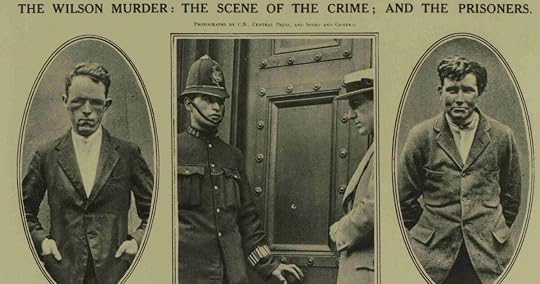
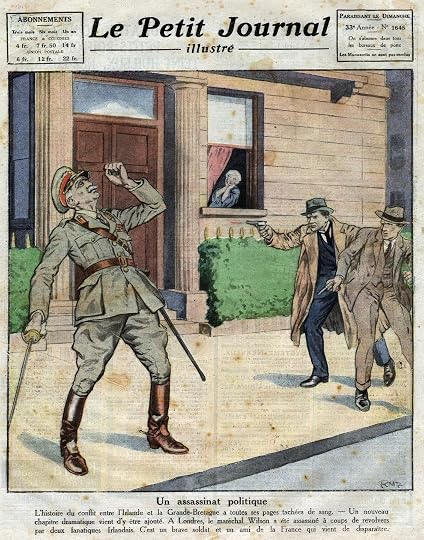
❤️ 🇮🇱
Ireland in the early 1920s was a pressure cooker wearing a trench coat. The treaty had been signed, which meant everyone was furious for entirely incompatible reasons. The new state was trying to be born while being strangled by its own midwives. London watched nervously, Dublin seethed creatively, and various factions employed violence as a civic duty.
Into this carnival strolled two IRA veterans, Reginald Dunne and Joseph O'Sullivan, who had enough wartime trauma and political conviction to power a small city. They believed Wilson was not only a symbol of British rule but a very practical obstacle to the future they wanted. Whether this belief was accurate, exaggerated, or a tragic misfire is part of the tension the book milks with scholarly precision.
We follow how these two men reached their decision, how Wilson made himself such a lightning rod, and how the political world on both islands swirled with suspicion, hope, fear, propaganda, and mutual resentment.
The book pieces together motives, myths, and messy truths. It digs into the conflicting statements left by the assassins, the public fury, and the private panic in London. It shows how a single act became ammunition in a conflict already overloaded with symbolism. And all of this is presented against the tragic backdrop of two governments trying to look in control while barely controlling their staplers.
You get political theater, military ego, revolutionary improvisation, and the grim misery of ordinary people hoping history will follow logic. What you do not get is a tidy moral mesage.
The book is sharp, patient, and impressively researched. It presents the assassination as the center of a storm and then walks you through every frantic gust blowing around it. The author clearly spent years spelunking through letters, diaries, police files, cabinet minutes, and every other document that humans insist on hoarding. You feel the weight of that work on every page, and it gives the story an authority that never feels pompous.
It is a dense story that frames Dunne and O'Sullivan as products of a world where politics, identity, and violence were tangled together. The book lets the facts bruise you slowly.
You see how men convince themselves that one act will reshape history. You also see how states react with fear, opportunism, or righteous fury when confronted with a crisis they did not anticipate. There is an ongoing lesson here about symbolism taking precedence over reality. Wilson becomes less a man and more a screen onto which every faction projects its own anxieties.
Political violence still sprouts from conviction wrapped in confusion. Governments still misread movements until they panic. People still mythologize public figures beyond recognition. The book shows that history is not a sequence of wise decisions but a collection of improvisations made under pressure by people who were not nearly as clever as they hoped.
The book is well worth the time. It demands attention, but it pays you back with a deeper understanding of a moment when two islands were trying to reinvent themselves while stumbling over the ghosts they created.
How eagerly modern Ireland repeats the same symbolic theater it once paid for in blood. The book shows how slogans, gestures, and moral certainty were mistaken for strategy, with catastrophic consequences. Today, Irish politicians strike righteous poses against Israel, flirt with cultural boycotts, and wrap themselves in performative outrage, as if history were a costume rack. In doing so, they betray the very lesson the book keeps hammering home, that symbolic violence and moral exhibitionism age badly and usually land on the wrong people.
Current Irish political currents feel like watching a bunch of folks argue over which shade of historical grievance to hang on the wall while the wallpaper peels everywhere else. You have a centre right coalition of Fianna Fáil and Fine Gael resurrecting old rivalries in name only as they bicker over speaking rights and create record numbers of junior ministers with all the urgency of a committee trying to decide on biscuits for a meeting.
All of this unfolds against a backdrop of cost of living pains and claims of rushed legislation, so it feels like everyone is shouting about the ghosts of the past while real problems pile up like unread files on a civil servant's desk.
Wilson became a screen for grievance, just as Israel now does, and once again Jewish lives and Jewish rights are treated as acceptable collateral in someone else's moral drama. It is the same old habit of confusing gesture with justice, only now it comes with press releases against parks named for Irish rabbis and a Eurovision voting scandal instead of pistols on a London streets.
The hypocrisy writes itself. Movements with a long record of sanctifying bombings, purges, and the polite euphemism of making an island pure suddenly discover a refined horror of terrorism when Jews are involved. People who spent decades dreaming out loud about eradicating Protestants from Irish life now lecture the world about apartheid with the confidence of born again ethicists. In the book, assassins cloak violence in moral necessity and convince themselves history will thank them, and the echo today is hard to miss. The language has been laundered, the targets updated, but the habit remains the same. Declare yourself righteous, label others monstrous, and pretend the bodies on your own side never counted.
❤️ 🇮🇱
February 15, 2024
Sir Henry Wilson was the Chief of the Imperial General Staff of the British Army in WW1. It capped off a distinguished military career. He was from a well to do Anglo-Irish family in County Antrim. He was a strident nationalist. He was involved with the near mutiny when English soldiers refused to enforce the Home Rule bill against Ulster Protestants.
After the war he led the resistance inside the army to resist Irish independence and to arm and protect Ulster protestants. In 1922 he retired from the miliary and was elected to Parliament. He was a leader of the anti-independence cause. He always referred to the Southern Government as "a gang of murderers."
On June 22,1922 he was shot six times and killed on the front steps of his London home by two members of the IRA, Reginald Dunne and Joseph O'Sullivan. England was shocked. His funeral was a huge event. It triggered a crackdown in Ireland and was a memory that lingered for years.
McGreevy has used the assassination of Wilson as a way to tell the story of the foundation of the Irish state. He describes the lives of Wilson and his two assassins. Wilson's family is a model of the stubborn problem of the Anglo-Irish who viewed Ireland as their country. In Dunne and O'Sullivan, he shows us two undistinguished young men with no real future who become intoxicated by the glory of being part of something bigger than they are.
The assassination occurred during the Civil War in Ireland between the pro-treaty forces lead by Michael Collins and the anti-treaty forces led by Eamon de Valera. It was a brutal affair with atrocities on both sides.
The question of who ordered the assassination of Wilson has been argued from then to now. McGreevy discusses the four possibilities.
Did Dunne and O'Sullivan act on their own?
Was this an operation ordered by the anti-treaty forces to undermine the treaty?
Was it an order by Michael Collins before the treaty that was never rescinded?
Was it ordered by Michael Collins after the treaty?
I will avoid spoilers and simply say that he makes a persuasive case for his pick.
This is a well written and well researched approach to understanding the bloody and messy founding of the Republic of Ireland.
After the war he led the resistance inside the army to resist Irish independence and to arm and protect Ulster protestants. In 1922 he retired from the miliary and was elected to Parliament. He was a leader of the anti-independence cause. He always referred to the Southern Government as "a gang of murderers."
On June 22,1922 he was shot six times and killed on the front steps of his London home by two members of the IRA, Reginald Dunne and Joseph O'Sullivan. England was shocked. His funeral was a huge event. It triggered a crackdown in Ireland and was a memory that lingered for years.
McGreevy has used the assassination of Wilson as a way to tell the story of the foundation of the Irish state. He describes the lives of Wilson and his two assassins. Wilson's family is a model of the stubborn problem of the Anglo-Irish who viewed Ireland as their country. In Dunne and O'Sullivan, he shows us two undistinguished young men with no real future who become intoxicated by the glory of being part of something bigger than they are.
The assassination occurred during the Civil War in Ireland between the pro-treaty forces lead by Michael Collins and the anti-treaty forces led by Eamon de Valera. It was a brutal affair with atrocities on both sides.
The question of who ordered the assassination of Wilson has been argued from then to now. McGreevy discusses the four possibilities.
Did Dunne and O'Sullivan act on their own?
Was this an operation ordered by the anti-treaty forces to undermine the treaty?
Was it an order by Michael Collins before the treaty that was never rescinded?
Was it ordered by Michael Collins after the treaty?
I will avoid spoilers and simply say that he makes a persuasive case for his pick.
This is a well written and well researched approach to understanding the bloody and messy founding of the Republic of Ireland.

July 13, 2022
This is a most interesting narrative of the assassination of the former Chief of the Imperial General Staff turned Ulster Unionist British MP Sir Henry Wilson in 1922. Wilson was a controversial character whose life and career in the British army has been extensively covered in several academic and non-academic works. Here the emphasis is more about Wilson's two killers, Dunne and O'Sullivan. McGreevy recounts their lives, their war service and their role in the IRA.
It is an open question as to who ordered Wilson's murder. Circumstantial evidence points to some culpability on the part of the chairman of the Irish Provisional Government, Michael Collins. There is no doubt that Wilson's trenchant views on Irish affairs and his support for the Unionists, made him a target for Republicans, even if he were not directly involved in the establishment of the Special police forces in Northern Ireland.
McGreevy describes the appalling terror and reprisals that occurred in Northern Ireland in the 1920-22 period - something which has often not received the attention it deserves against the better known story of the Anglo-Irish conflict. The book is important for this reason alone.
Well paced, informative and reasonably argued, this is an important book about a sensational event which had big ramifications for both parts of Ireland.
It is an open question as to who ordered Wilson's murder. Circumstantial evidence points to some culpability on the part of the chairman of the Irish Provisional Government, Michael Collins. There is no doubt that Wilson's trenchant views on Irish affairs and his support for the Unionists, made him a target for Republicans, even if he were not directly involved in the establishment of the Special police forces in Northern Ireland.
McGreevy describes the appalling terror and reprisals that occurred in Northern Ireland in the 1920-22 period - something which has often not received the attention it deserves against the better known story of the Anglo-Irish conflict. The book is important for this reason alone.
Well paced, informative and reasonably argued, this is an important book about a sensational event which had big ramifications for both parts of Ireland.
August 11, 2023
A very good book. Clearly explains the centuries-long bitter and violent history that has existed between the United Kingdom and Ireland both in the south and subsequently, and with further accentuation, in Ulster.
The assassination in 1922 of a southern Irish man who rose to the highest position of Field Marshal in the UK military, by two British-raised Irish young men who served in the British army in the 1st world war. is the act which sets the scene. Both young men hanged for this. The book illustrates the extensive cynicism and manipulation of the two assassins as questions were asked as to whether they acted unilaterally or under orders and if so, whose orders. Such questioning seems to undermine the sacrifice of the two young who appeared to accept their fate with stoicism and faith and also seems unimportant relative to the increased loss of life and strife on both sides, partly as a result of their act. The book also provides some insights into the bitter civil that took place between anti-treaty and pro-treaty Republican Ireland. In sum, a sobering book which explains why everything should be done to keep the peace between and within all the communities of Ireland. A good read.
C. Charles Okeahalam
Johannesburg, RSA
September 19, 2025
Ronan McGreevy weaves together the tangled plot behind Henry Wilson’s assassination with a vivid portrait of Wilson as both soldier and politician. How the assassins are almost completely forgotten in the confusion of who ordered what is compellingly told.
What makes the book stand out are the insights into Ireland’s turbulent landscape in the 1920: Britain’s almost 60,000 troop presence, Wilson's push for a autumn surge of 20-30,000 additional troops, the more the strain on the IRA with 3,000 imprisoned & dwindling arms, and even Michael Collins’ striking but ultimately abandoned 1920 plan to assassinate leaders such as Lloyd George and Arthur Balfour during Terence McSwiney’s 74-day hunger strike. (Collins only called it off at the end of 1920 when he considered who he would need to sit down and negotiate with). A sharp and illuminating account of a fraught moment in Anglo-Irish history.
What makes the book stand out are the insights into Ireland’s turbulent landscape in the 1920: Britain’s almost 60,000 troop presence, Wilson's push for a autumn surge of 20-30,000 additional troops, the more the strain on the IRA with 3,000 imprisoned & dwindling arms, and even Michael Collins’ striking but ultimately abandoned 1920 plan to assassinate leaders such as Lloyd George and Arthur Balfour during Terence McSwiney’s 74-day hunger strike. (Collins only called it off at the end of 1920 when he considered who he would need to sit down and negotiate with). A sharp and illuminating account of a fraught moment in Anglo-Irish history.

September 23, 2025
As the author posits, the assassination of Field Marshal Sir Henry Wilson MP on 22nd June 1922 was Ireland’s Sarajevo moment. The spark that lit the powder keg of the Irish Civil War.
I was vaguely aware of it beforehand but was much more familiar with the very heavily fictionalised re-telling of the incident familiar to viewers of Peaky Blinders.
This is a well told story, I tore through the last three hundred pages in a day.
If I had one quibble, some of the chronological jumps could confuse a person unfamiliar with the wider background.
Nevertheless, recommend.
I was vaguely aware of it beforehand but was much more familiar with the very heavily fictionalised re-telling of the incident familiar to viewers of Peaky Blinders.
This is a well told story, I tore through the last three hundred pages in a day.
If I had one quibble, some of the chronological jumps could confuse a person unfamiliar with the wider background.
Nevertheless, recommend.
December 3, 2025
An interesting book, and quite thorough on the background of both the individuals and the overall movement.
I would have given 4 stars but I felt the organization of the book was hard to follow - lots of jumping around in time and space and it took more work to get through it than I might have liked.
In McGreevy's defense it's a very complex set of organizations and events, but it was harder going than I hoped.
I would have given 4 stars but I felt the organization of the book was hard to follow - lots of jumping around in time and space and it took more work to get through it than I might have liked.
In McGreevy's defense it's a very complex set of organizations and events, but it was harder going than I hoped.
September 23, 2022
A very readable take on a little known political murder in the 1920s. Whilst detailed and one would hope historically accurate, the author at times shows his colours and gets a tad too one-sided in things. You can try as hard as you like to justify murder, but it remains murder on both sides of the fence. Nonetheless very interesting subject connected with the Irish Civil War.

January 24, 2023
Meticulously-researched and insightful account of an incident I hadn't known a lot about. Timeline is occasionally confusing, and it sometimes feels like the importance of the assassination is being overstated. But a rewarding read. Final pages when the author lets his own feelings take centre-stage are well done and, to a degree, moving

March 9, 2023
Slightly too long and strays away from it’s core subject: the killing of Wilson. Overall not a bad book, but tended to be repetitive and that took me out of the overall reading experience since it could have made its point with about 100 or so fewer pages
December 18, 2023
If you have never read a book about the troubles in Ireland, this is not the one. This book is like a 400 level college course. Great information but way into the weeds. Start with something on the Easter uprising or Michael Collins, then try this one.
January 11, 2026
engrossing
A fascinating read about the assassination of Henry Wilson. The story behind the assassins and of Wilson show the motivations of people around that time. Well written and researched book.
A fascinating read about the assassination of Henry Wilson. The story behind the assassins and of Wilson show the motivations of people around that time. Well written and researched book.
June 23, 2026
Brilliant and enlightening
A fascinating insight into the most turbulent years in modern Irish history. Well researched and written. This book is full of characters well known and less well known who helped shape modern Ireland and the hatreds that motivated them.
A fascinating insight into the most turbulent years in modern Irish history. Well researched and written. This book is full of characters well known and less well known who helped shape modern Ireland and the hatreds that motivated them.
August 17, 2022
An interesting insight into a chaotic time in British and Irish history, let down by the author allowing his own personal sympathies to cloud the narrative.

May 12, 2026
4.25
Audiobook
An assassination and the deep divisions of 1920s Ireland explored via this assassination
Audiobook
An assassination and the deep divisions of 1920s Ireland explored via this assassination

May 13, 2022
I must admin that I know nearly nothing about the even that brought to Irish civil war and this book was an excellent way to learn something more.
The author does an excellent job in giving a balanced account of what happened and the always keeps the attention alive.
Highly recommended.
Many thanks to the publisher and Netgalley for this ARC, all opinions are mine
The author does an excellent job in giving a balanced account of what happened and the always keeps the attention alive.
Highly recommended.
Many thanks to the publisher and Netgalley for this ARC, all opinions are mine
July 21, 2023
I have been interested in modern Irish history for many years but because of this heavily researched and well written book I now know so much more. I found out about the depth of feeling in What might be described as Irish London and the depth of conflict in the north of Ireland. This book confirmed my opposition to assassination as a political act for many reasons, but especially because it creates martyrs, a fact compounded by capital punishment.
Displaying 1 - 20 of 20 reviews