John Mitchel, Irishman, lawyer, journalist, activist and politician, is a complex character. Charged with treason in Ireland and tried by an English judge he was snuck off mainland Ireland on the day he was charged to avoid a breakout and rebellion. He was transported initially to Bermuda, then to South Africa and then to Van Diemen’s Land where as an Irishman he was supported by many and given a ticket of leave. He soon became a farmer and activist and was eventually secreted out of Australia to the USA, where it was felt he could be more active for the Irish cause.
A powerful voice and force for Irish nationalism who also found himself, after landing in the US, supporting the ownership of slaves. This was partly driven by living through the Irish famine. He believed Irish workers were worse off than slaves, neither fed or paid in currency for their work. And partly seeing the absolute adherence to capitalism and the pursuit of wealth in New York. People were dying in horrific industrial and transport accidents in front of those getting wealthy and no heed was paid.
To support her husband through all the charges against him, Jenny Mitchel, when she too could have been punished for airing her beliefs on Irish nationalism, publicly supported his campaigns. She also packed up her many children and followed her prisoner and convict husband to a number of different continents to continue to support her husband and their beliefs.
Tom, a proud Irishman and descendant of convicts on his maternal and paternal sides, disagrees with many of Mitchel’s beliefs and behaviours and has to wrestle with these conflicts in the novel. As ever, Tom Keneally surprises readers and takes on new and challenging characters and ideas.
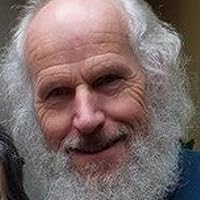
Thomas Michael Keneally, AO (born 7 October 1935) is an Australian novelist, playwright and author of non-fiction. He is best known for writing Schindler's Ark, the Booker Prize-winning novel of 1982, which was inspired by the efforts of Poldek Pfefferberg, a Holocaust survivor. The book would later be adapted to Steven Spielberg's Schindler's List (1993), which won the Academy Award for Best Picture.
Often published under the name Tom Keneally in Australia.
Life and Career:
Born in Sydney, Keneally was educated at St Patrick's College, Strathfield, where a writing prize was named after him. He entered St Patrick's Seminary, Manly to train as a Catholic priest but left before his ordination. He worked as a Sydney schoolteacher before his success as a novelist, and he was a lecturer at the University of New England (1968–70). He has also written screenplays, memoirs and non-fiction books.
Keneally was known as "Mick" until 1964 but began using the name Thomas when he started publishing, after advice from his publisher to use what was really his first name. He is most famous for his Schindler's Ark (1982) (later republished as Schindler's List), which won the Booker Prize and is the basis of the film Schindler's List (1993). Many of his novels are reworkings of historical material, although modern in their psychology and style.
Keneally has also acted in a handful of films. He had a small role in The Chant of Jimmie Blacksmith (based on his novel) and played Father Marshall in the Fred Schepisi movie, The Devil's Playground (1976) (not to be confused with a similarly-titled documentary by Lucy Walker about the Amish rite of passage called rumspringa).
In 1983, he was made an Officer of the Order of Australia (AO). He is an Australian Living Treasure.
He is a strong advocate of the Australian republic, meaning the severing of all ties with the British monarchy, and published a book on the subject in Our Republic (1993). Several of his Republican essays appear on the web site of the Australian Republican Movement.
Keneally is a keen supporter of rugby league football, in particular the Manly-Warringah Sea Eagles club of the NRL. He made an appearance in the rugby league drama film The Final Winter (2007).
In March 2009, the Prime Minister of Australia, Kevin Rudd, gave an autographed copy of Keneally's Lincoln biography to President Barack Obama as a state gift.
Most recently Thomas Keneally featured as a writer in the critically acclaimed Australian drama, Our Sunburnt Country.
Thomas Keneally's nephew Ben is married to the former NSW Premier, Kristina Keneally.
This is my seventeenth Tom Keneally book. I do like his historical works. I have met him on a couple of occasions, and like many authors, he is a delightful person. He gives true meaning to that term, a gentleman.
Like 99% of Australians, I had never heard of John Mitchel until I started this book and did some quick research. The book tells of Irishman Mitchel’s membership of anti-English organisations and his subsequent authorship of an anti-English journal that led to his deportation to Tasmania, then his journey to America where he supported the Confederacy and expressed pro-slave ownership principals. Eventually he returns to Ireland, is elected to the House of Commons but was denied occupancy in this parliament.
Keneally takes the reader on a detailed and personal journey of Mitchel’s illustrious life. Where history finishes and fiction starts is a blurred line. Nevertheless, Keneally has written a rollicking tale where the reader gains an understanding to the turgid times and the great philosophical questions of the time.
In Mitchel's entry in Wikipedia there are only four lines about his time in Van Dieman’s Land, known at the time, and soon to become Tasmania.
I had a vague understanding of the effect that the Great Irish Famine had on the country and the English's appalling contribution to the starvation and death. Witnessing the famine firsthand made Mitchel a strong nationalist and a hater of the English. Keneally mentions the amount of legislation that the British parliament passed to inflict further suffering on the Irish.
Mitchel is eventually arrested for his writings, and he is exiled to Tasmania. His wife, Jenny, and the children follow. The family live a fairly normal life in Van Dieman’s Land but the wish to be free of the English motivates him to leave there and head for America.
John Mitchel escapes from Tasmania with his family following closely. They sail to America where he is greeted as a hero. They settle in New York in the 1850s where John takes up the editorship of a newly established newspaper. It is at this point that he gets involved in the burning issues of slavery. In this position he expresses a defence of slavery in the antebellum South. Mitchel argued that the industrial worker and peasant in Ireland was worse off than the Negro slave. When reading this I wondered if Mitchel has suffered from “cancel culture”. Keneally deals with this contradiction in Mitchel's views.
Nevertheless, Mitchel's view of slavery was in accordance to many others at the time. Sadly, racist views are still held by many Americans and by many throughout the world today. I believe, like many twenty-first century racist, he was unable to empathise or see the POV of the slave or today, the subject of racial abuse. He saw the Negro slave as inferior.
I also found it interesting that he was a Presbyterian, not a catholic. One interesting scene is when Mitchell meets with the Russian ambassador to encourage the Russians to invade Ireland as a means of getting at the British.
The role of his wife Jenny is of paramount importance in his and his family’s successes.
The book ends with Mitchel purchasing a farm where he can live in isolation with his family.
The real story for Mitchel and his family continued. I am not sure why Keneally ended his novel at this point in Mitchel’s life.
An interesting read, it added another plank in my knowledge of Australia and Ireland.
From Tom Keneally another epic read. Keneally is a descendant of Catholic Irish convicts transported to Australia which perhaps gives him some empathy into the life of John Mitchel for which this story is about. The reader is taken to the heart of Ireland during the potato famine and the further injustices served upon the Irish peoples by the English. The English had poor opinions of the Irish, thinking them slothful, lazy and producing large families for which they could not provide for.
The book inspired me to do a little of my own research into John Mitchel. Tom Keneally has written an agreeable account of this man, concluding his life while in America but this leaves the reader to pursue more about him for which investigations reveal that he had to leave his adopted country eventually returning to Ireland.
John Mitchel was a remarkable man, but also a hypocrite, one who condemned the English for the brutality to his people but one who condoned the use of slaves when he settled in America. Two of his sons fought under the Confederate Flag. His wife did not agree with his sentiments and never had a slave in the household.
Mitchel was a journalist, author, activist and politician. In an article in 1845 he pointed out the failure of the potato crop, and warned landlords that pursuing their tenants for rents would force them to sell their other crops and starve. In 1846 he again wrote of the impending catastrophe caused by the potato crop failure and that millions of Irish would be condemned to a death by starving.
The read begins with Mitchel and his friend Meagher heading off to the Comeragh Mountains where they knew a little hamlet existed. Arriving at the hamlet they discover all are dead, dead through starvation. This is Mitchel's first real encounter of the plight of his countrymen.
Mitchel's own paper, the United Irishman came under the scrutiny of the House of Lords and consequently he was arrested and tried for seditious libels for which the sentence of Treason Felony was transportation.
While not treated as a common criminal, rather, he was treated as a gentleman, a comfy room, books, wine from the captain's table and a manservant, the English were nervous that a rescue may take place for which he was heavily guarded. After suffering from severe bouts of asthma on a prison hulk in Bermuda he was re-embarked to South Africa and then for the convict settlement of Van Diemen's Land where he joined other Young Irelanders transported for their failed uprising.
When his friend Meagher made his escape from Tasmania to America Mitchel was determined to follow. His wife and family had made the arduous journey from Ireland to be with him. (Extraordinary was his hold on his wife Jenny to make this voyage, almost to the Antarctic rim). Their lives were peaceful with relative freedoms but Mitchel was not a settled man and was determined to get to New York aided by Patrick Smyth of the New York Irish Directory. Once again Jenny and the family packed their belongings to follow him. The Mitchel's arrive in New York where they are reacquainted with family that had already settled there along with Meagher.
The read describes Mitchel's life in America, dragging on a little but it doesn’t reveal that in time he is asked to leave the country due his political views. With the American Civil War over his views were not agreeable to his adopted country, his insistence that slavery was good and made good economics for which he compared to the plight of the Irish working in dangerous workhouses, factories or futile farming.
In 1865 he was arrested for his views and written articles in the New York Daily, it was thought he was conspiring to assassinate the President and was interned at Fort Monroe. His release was procured by the newly formed Fenian Brotherhood, for which was successful on the basis he left America. He went to Paris acting as the Brotherhood's financial agent.
He thought little of the President making insulting remarks regarding President Lincoln which did nothing to endear him to Americans.
On returning to Ireland he ran for the position as Member for Parliament but the Irish Parliamentary Party were dubious about endorsing him. However, declared a felon he was ineligible. Not to be dissuaded, he ran as an Independent Nationalist and for which in a Bi-Election won eighty percent of the votes.
Mitchel is remembered for his involvement in radical nationalism and for his many written articles.
This entire review has been hidden because of spoilers.
I love Thomas Keneally and I'm a keen amateur historian, with an especial interest in Irish history. I was therefore excited to come across this study of John Mitchell, the Young Irelander and his exile in Australia and America. Many writers seem to get even better as they age. But in Keneally's case that does not appear to be the case. And the "faction" school of writing which he represents is not a suitable vehicle for analysing a terribly flawed man. If this was intended as a historical study that is not clear -there are no historical references and it was confusing - in the case of dialogue, for example, as to what was actually said and what was made up. Mitchell is both an enigma and an embarrassment - he was a revolutionary, from the northern Protestant dissenter tradition. He was principled and fearless, deeply affected by witnessing Ireland's Great Famine but he also had odious views on slavery, believing blacks to be racially inferior to whites, and therefore suitable slaves. It is no use pretending such views were commonly held by Irish dissidents at that time. In Belfast, for example a successful boycott of sugar products was implemented as a protest against the slave trade and Mary Anne McCracken, sister of revolutionary leader Henry Joy McCracken protested against slavery on the city docks deep into old age. Exploiting slaves was not compatible with the Enlightenment and the United Irish tradition. The book is ponderous and dull and contributes little to understanding Mitchell and his mindset. And by giving the impression that his views were widely shared by his Irish contemporaries Keneally misleads.
Fanatic Heart by Thomas Keneally offers an impressively researched and richly layered portrait of John Mitchel, the fiery Irish nationalist whose life was as complex as it was controversial. Keneally dives deep into Mitchel’s ideological battles, personal contradictions, and the turbulent historical context that shaped him. The depth of research is undeniable, and Keneally succeeds in portraying Mitchel as a compelling, if polarizing, figure.
However, the narrative often feels overly drawn out. The prose leans toward the long-winded, with passages that seem to prioritize exhaustive detail over narrative drive. As a result, the book occasionally loses its momentum, making it a challenging read at times.
I was also hoping for more insight into the Irish Famine—a pivotal backdrop to Mitchel's radicalization. While it’s certainly addressed, it doesn’t receive the depth of focus I expected, particularly given its central role in shaping both Mitchel’s views and Irish history as a whole.
In sum, Fanatic Heart is a valuable read for those interested in Mitchel or Irish nationalism, but its dense structure and missed opportunities may leave some readers wanting more.
I can imagine Tom sitting around a campfire recalling the deeds of his ancestor, John Mitchel and his wife Jenny. He tells of the horrors of the Irish famine and the struggles of the Irish people against the English landlords. According to this account, Mitchel had a much better time as a convict in Van Dieman's Land that many others. Tom did not agree with all of Mitchel's ideas, especially in regard to the American slave trade.
A retelling of the life and exploits of Irish patriot John Mitchel, with a particular focus on his time in exile on Van Diemen’s Land. John Mitchel, Irishman, lawyer, journalist, activist and politician, is a complex character. Charged with treason in Ireland and tried by an English judge he was snuck off mainland Ireland on the day he was charged to avoid a breakout and rebellion. He was transported initially to Bermuda, then to South Africa and then to Van Diemen’s Land where as an Irishman he was supported by many and given a ticket of leave. He soon became a farmer and activist and was eventually secreted out of Australia to the USA, where it was felt he could be more active for the Irish cause. A powerful voice and force for Irish nationalism who also found himself, after landing in the US, supporting the ownership of slaves. This was partly driven by living through the Irish famine. He believed Irish workers were worse off than slaves, neither fed or paid in currency for their work. And partly seeing the absolute adherence to capitalism and the pursuit of wealth in New York. People were dying in horrific industrial and transport accidents in front of those getting wealthy and no heed was paid. To support her husband through all the charges against him, Jenny Mitchel, when she too could have been punished for airing her beliefs on Irish nationalism, publicly supported his campaigns. She also packed up her many children and followed her prisoner and convict husband to a number of different continents to continue to support her husband and their beliefs. Tom, a proud Irishman and descendant of convicts on his maternal and paternal sides, disagrees with many of Mitchel’s beliefs and behaviours and has to wrestle with these conflicts in the novel. As ever, Tom Keneally surprises readers and takes on new and challenging characters and ideas.
For a historical novel of some 550 pages based on fact, it ends rather abruptly in a happy ever after with Mitchel settling in Tennessee.It leaves out his involvement in the American Civil War on the Confederate side and his imprisonment in Fortress Monroe for his continued denunciation of the Union.
Ireland in the 1840s and Van Diemen’s Land are brilliantly evoked by Keneally’s descriptive prose and Mitchel’s escape from the penal colony reads like a boy’s adventure story.
Keneally brings to life a host of quirky characters surrounding Mitchel including the flamboyant Meagher and the eccentric Speranza who later became the mother of Oscar Wilde.He even manages to convey the individual and unique personality of each of Mitchel’s children.The strength and loyalty of Jane Mitchel are evident throughout the book.
While it is clear that the book is well researched, it could have done with some fact checking.Robert Holmes is described as ‘being married to the daughter of Robert Emmet ‘ and as ‘the sort of barrister they called for some reason a ‘stuff gownsman’ ‘ He was in fact the husband of Robert Emmet’s sister Mary Anne Emmet. The reason for the nomenclature ‘stuff gownsman ‘ is readily discoverable - in the 19th century ,a junior barrister was called a ‘stuff gownsman’ because his robe was made of wool unlike a Q.C. who was called ‘a silk gownsman’ because his robe was made of silk.
I enjoyed this book, especially the section in Van Diemen’s Land. The characters were a bit lifeless. Most interesting bit was how the Irish independence movement interacted with the abolitionist one
Set in a fascinating period of history dealing with the starvation, the potato famine and contentious issues such as Irish oppression and injustice leading to forced transportation to Australia and later migration to the New World. John Mitchel led some life.
John Mitchel is one of the most celebrated of Irish rebels. in the midst of the dreadful famine of the 1840's, his exhortations to his country-men to stand up against the British were as controversial as they were compelling. Charged with treason felony, he was transported to Van Diemen's Land, courtesy of a law passed in Westminster specifically to silence the charismatic minister's son.
Jenny Mitchel, when she too could have been punished for airing her beliefs on Irish nationalism, had publicly championed her husband's campaigns, with a diverse crew of supporters including Thomas Meagher and Jane 'Speranza' Wilde, future mother of Oscar. Devotedly, Jenny packed up their children, and followed her prisoner and convict spouse across the continents, to continue to support the cause of Ireland with boundless love and passion.
In this vivid reimagining of Mitchel's life, Tom Keneally, proud Irishman and descendant of convicts on his maternal and paternal sides, confronts some of the biggest conflicts of our time: slavery, industrialism, dispossession of land and famine.
Tom Keneally has written a historical fiction that will challenge contemporary views of the Irish patriot John Mitchel. He admits in the book’s introduction that the work grapples with the difficulty of making sense of Mitchel’s seemingly opposing views on liberty, freedom, support for slavery and the racial inferiority of African Americans. Keneally asserts that “it is indeed peculiar the way a book will try to force itself on you … force itself to be written.” This work is not an apologist’s view of Mitchel. The author makes it quite clear that he holds Mitchel’s racial views as abhorrent. The fascination for Keneally is his “imaginative passion” for the “young Irelanders” who as convicts, were transported to Australia in the years around the height of the Irish Famine of the nineteenth century. The “Fanatic Heart” of John Mitchel is a compelling work that unpacks elements of his life that provide complex richness for a nuanced less binary view of this man. One can easily identify with the young lawyer John Mitchel in Ireland overtaken by the injustice, the unfairness of British laws, the raw exploitation of the Irish and their plight ravaged by famine as “heavy-laden ships .. [with food] all sail for England”. Consumed and driven by his commitment to justice within Ireland he became one of many who were convicted and transported to British colonial prisons. First to Bermuda and then finally to Van Diemen’s Land, Mitchel demonstrates his stature and humanity while incarcerated. Tom Keneally writes sensitively of Mitchel, as he portrays his personality, friendships, interactions and his love for his wife Jenny from their early courtship to when they are reunited in the penal colony. It's the writing of John Mitchel’s personal life that is the most moving. The book is not a biography in fictional form. Rather, the author becomes an observant guide for the reader, “walking with” the protagonist John Mitchel. As we discover more from our “guide”, the reader has a unique position as a privileged observer. In using this literary device, Keneally releases the reader from the need to sit in judgment of John Mitchel. Following his escape from Van Diemen’s Land and settlement in the USA, Mitchel develops his most contentious views that led him to espouse support of slave owners and his support for the Confederacy. The book address this by taking us through John Mitchel’s views in the context of the author’s research and accounts of interactions. Each part of this complex account became a small dramatic event leaving the reader to make of it what they will. Keneally expands upon each of these episodes in the context of Mitchel's beliefs as an Irish patriot. Throughout the text, Tom Keneally leads us to the fundamental question, what is ultimately driving John Mitchel? Overwhelmingly Mitchel is a person of great passion, a man of immense and committed heart, a fanatic heart, that we can only struggle to appreciate.
A interesting read about a fascinating character who influenced three continents. At its best in the story of the privations of John Mitchel in Ireland and Tasmania, the portrait painted in this “faction” treatment of a man who loved his country and despised English rule, is sympathetic. It probably reaches its highest points in describing his time as a “gentleman convict” in Van Diemans Land and the honesty and honour of his plan to escape. The escape itself is breathtaking and continued to enhance the image of his loyal wife Jenny. It’s the American part of Mitchel’s life - the last third of the book - which is a little uneven and ends as though his life is settled in the southern backblocks after expressing a complex view of slavery, opposed to the abolitionists in New York who had so supported Mitchel’s escape from the British. In fact, his life and trenchant support of slavery continued for more than a further twenty years after this book ends. He sacrificed two of his sons to the South in the American Civil War and wrote and spoke volumes on the righteousness of slavery. In the end, he was elected and rejected to the British parliament in his final years, returning to his earlier themes of Irish rule but being ruled ineligible as a convicted felon. I found this ingenious of Keneally, telling us of his support of slavery but neglecting an explanation of the extent, especially as Mitchel is seen as a key apologist of behaviour and policies which lacked humanity and destroyed lives unjustly, a view he held for the majority of his life. The writing itself is of Keneally’s usual high standard, engaging you in the storytelling and impressing in style and quality. It must have been effective as I certainly found it easy to have a strong distain for John Mitchel and an admiration for his wife.
This entire review has been hidden because of spoilers.
I usually like Tom Keneally's novels but this one is a bit of a plod. It feels like reading a history text book, and truth be told, I'm content with a broadbrush knowledge of Irish nationalism, and am not really very interested in the details of the lives of particular identities. I'd rather spend my reading time reading novels that extend my knowledge of other histories that I know little about.
I'd be interested if the characters are lively but alas, the ones in this novel aren't; and I'd like it if the dialogue sparkles but alas, it doesn't; and I wouldn't want to stop reading if the plot romps along, but alas, this one wades through a swamp of historical detail.
I realise it might become more interesting once Mitchel (sic, one 'l') gets transported to Australia but his views about slavery are apparently abhorrent and although Keneally is painting an authentic picture of a complex man, meh, I just didn't want to read any more.
This is the story of John Mitchell, a solicitor and journalist, who should have been the first president of Ireland had the 1848 rebellion proved successful. We follow his journey from Ireland to his transportation to Van Dieman's Land, his daring escape across Nicaragua to eventual settlement in the USA. all with his formidable wife and six children. We meet various fellow revolutionaries, convicts, and Oscar Wilde's indominable mother and experience the trauma that will soon split the USA as the issue of slavery will set the nation at war with itself. Unfortunately he did not favour the abolitionist cause and justified slavery (which doesn't go down to well these days, his statue in Newry has faced some criticism from the Black Lives matter folk). Epic story told in epic proportions told by the expert historical novelist that is Tom Keneally.
Keneally is a great storyteller. I learned so much whilst reading this book, without any detriment to the storyline. The Irish famines, treatment of the Irish by Britain, transportation, convict resettlement in Van Diemen's Land, nineteenth century US - slavery, abolition, underground railway, the life and times of John Mitchel. What could have been just a well-researched history lesson became a vivid account of the life of this celebrated Irish rebel - warts and all. What an amazing life! And what an amazing woman was his wife Jenny who followed him from Ireland, to the isolated life of a ticket-of-leave convict in Van Diemen's Land, to New York to finally settling in the foothills of the Appalachian Mountains in Tennessee. A remarkable story beautifully told.
Keneally is one of my favourite writers, and there's plenty here to enjoy. I wasn't sure about the tone throughout though, almost as if it's written in the style of the 19th century periodicals Mitchel contributed to. As a Waterford man, I really enjoyed the characterisation of our hero TF Meagher. The Tasmanian prison/idyll was also a fascinating setting. Michel's defence of slavery in the last chapters is recorded without too much judgment, but remains shocking. The same night I finished the book I watched the Ed Sullivan documentary on Netflix, and it was striking to hear Sullivan firmly place his Irish heritage in alliance and solidarity with the civil rights movement. Mitchel didn't see it that way. he should have.
Being of Irish decent only 2 generations back and having lived in Ireland at one stage, I thought I'd really enjoy this book but I'm afraid I couldn't finish it. I got to page 345 before I decided I couldn't force myself to push on. I read the last two pages to get the gist of the end so am shelving it as "read". There were parts I enjoyed, like Mitchel's journey from Ireland to Van Diemen's Land but I feel the whole story could have been told in 150 pages. This is the first book I haven't actually been able to finish in a long time.
John Mitchell’s Thesis: It is taken for granted, perhaps it should not be, that every advance in machines is for the better and is servant to greater happiness of humankind; where is the evidence? Is humankind happier than it was 30 centuries ago? Carlisle: Machines have taken human destiny out of the hands of the individual and even those of god.
How very apt those sentences are today in the age of tech oligarchs and their ability to transcend nation states, global institutions and governance and unfettered ability to wipe out the labour market.
What a slog! I skimmed quite a bit as the plodding prose with its many repetitions was elevating my blood pressure. One newspaper review described its sparkling prose. Well … there were some great passages - the descriptions of starving people, the dying and dead were appropriately, vividly gruesome - but there was also a great deal of stodgy, unnecessarily detailed writing. And that repetition! Where was the editor?
I found it a bit dry and slow moving. It was an historical novel with a great deal of history about the relationships between the Irish, English and Americans. I would have preferred a lot more about the characters' story rather than the history of the times. Probably a good, well written book all the same but only 5/10 for me. I didn't read it all. I got to Page 70 of about 400 and then skipped to the end.
Being a fan of this author's novels I'd expected to enjoy this one more than I did. I think the main problem for me was that the degree of minutiae included from his considerable research too often distracted me from fully engaging with the developing story. I did finally get to the end, but only because I ended up reading it in stages over a period of a week!
It was interesting to read, but there are many Young Ireland figures with lives as complex and as interesting. Why the author chose John Mitchel, the only one to become an ardent supporter of slavery in the US has confused me. The book conveniently ends it’s narrative just prior to this.
Very good. It took me a long time to finish it. It’s one of thos Tom Keneally books that are dense in content. Every chapter seems worth 4, but very interesting so that you do want to complete it.
This is an awful book. Given the author’s reputation and the subject matter in which I have an interest, I took a chance and shelled out £20 for a hardback copy. Big mistake. There is no plot, no storyline and little or no point and the writing is really bad. Boring beyond belief. If ever a book deserved to be burned this is it. A painful read, what was the author thinking? This is the literary equivalent of The Blair Witch Project. Boring and pointless. Don’t do what I did. Don’t waste your time or your money on it, life is too short.