

What do you think?

Big John's Secret
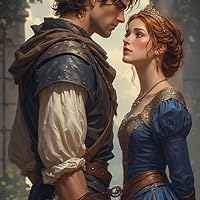
In 1215, in England, John learns the name of his father whom he has never known, and with the hopes of finding him, he travels to the Holy Land for the Fifth Crusade in the service of Sir Alwyn.
230 pages, Paperback
First published November 15, 1962
About the author
Eleanore Myers Jewett
15 books10 followersEleanore Myers Jewett grew up in New York City and loved it, but spent every summer in Cape Ann, Massachusetts, where she was a member of a "summer gang" much like that in Cobbler's Knob. An old sea captain used to take them all out sailing, and she liked best to sit in front of the mast, reveling in the motion of the boat and the long sweep of the blue sea.
After she grew up she taught for four years before she married a doctor and moved to upstate New York. She has two married daughters and three grandchildren.
After she grew up she taught for four years before she married a doctor and moved to upstate New York. She has two married daughters and three grandchildren.
Ratings & Reviews
Friends & Following
Create a free account to discover what your friends think of this book!
Community Reviews
Displaying 1 - 16 of 16 reviews

February 7, 2022
Yes indeed, Eleanore M. Jewett's 1962 historical fiction middle grade novel Big John's Secret has been a both engaging and entertaining reading experience (and one that both my adult self and my inner child have very much both appreciated and enjoyed and with my inner child definitely also regretting that I did not encounter Big John's Secret as a younger reader, for Big John's Secret would most definitely have been right up my proverbial reading alley when I was a teenager and really into Mediaeval and in particularly of course British history).
And without giving away too much information (too many spoilers) regarding the specific plot and thematics of Big John's Secret (except to say that by the end of the novel, Big John has successfully completed his quest and also realises that the world is good and revenge not really something to strive for), I have to say that first and foremost and most importantly, I very much appreciate how the author, how Eleanore M. Jewett has captured a successful and authentic feeling of historical time and place, that she brings late 11th and and early 20th century England and the so-called Holy Land, the areas around Acre and Jerusalem delightfully and realistically to life (but also without too much textual violence, without too much gruesomeness and indeed even when Eleanore M. Jewett is describing the battles and warfare of the Fifth Crusade). And with said Fifth Crusade firmly in mind, I also really do find it majorly textually refreshing that in Big John’s Secret the Saracens are not generally depicted by Jewett as inherently negative, as potentially evil and horrid, but as worthy enemies who are often even depicted and shown as being considerably more forgiving and less one-sidedly “anti” than the Crusaders often deport themselves towards and against their Muslim adversaries (it certainly makes me smile and it also makes me appreciate that while the violence that generally and consistently inhabited the Middle Ages is not ever being denied or explained away in Big John’s Secret, there is also and happily no glorification of or of revelling in bloodshed and carnage for Eleanore M. Jewett).
However, as an adult reader, there are two minor issues with Eleanore M. Jewett’s writing for Big John’s Secret which does tend to bother me a trifle as an adult reader (albeit I also do think that I would not necessarily have even been aware of these bones of narrational contention if I had read Big John’s Secret when younger, when a teenaged reader). For one, there is in my humble opinion a few potential problems with pacing, such as for example the start and the ending of Big John’s Secret rather feeling a trifle too rushed, but with the middle part of Big John’s Secret getting just a bit bogged down in minutiae and kind of textually slowing down so much so as to almost become somewhat dragging and tedious. And for two, while for middle grade and young teenaged readers, the lack of character depth encountered in Big John’s Secret (where all of the featured persons both primary and secondary do not really present all that much nuance and are generally rather on the surface) is pretty much insignificant, my adult self definitely and certainly rather misses more more developed and emotionally deep characters (but yes, that for reading by the so-called intended audience, Big John’s Secret rates with four stars and is highly and warmly recommended).
And without giving away too much information (too many spoilers) regarding the specific plot and thematics of Big John's Secret (except to say that by the end of the novel, Big John has successfully completed his quest and also realises that the world is good and revenge not really something to strive for), I have to say that first and foremost and most importantly, I very much appreciate how the author, how Eleanore M. Jewett has captured a successful and authentic feeling of historical time and place, that she brings late 11th and and early 20th century England and the so-called Holy Land, the areas around Acre and Jerusalem delightfully and realistically to life (but also without too much textual violence, without too much gruesomeness and indeed even when Eleanore M. Jewett is describing the battles and warfare of the Fifth Crusade). And with said Fifth Crusade firmly in mind, I also really do find it majorly textually refreshing that in Big John’s Secret the Saracens are not generally depicted by Jewett as inherently negative, as potentially evil and horrid, but as worthy enemies who are often even depicted and shown as being considerably more forgiving and less one-sidedly “anti” than the Crusaders often deport themselves towards and against their Muslim adversaries (it certainly makes me smile and it also makes me appreciate that while the violence that generally and consistently inhabited the Middle Ages is not ever being denied or explained away in Big John’s Secret, there is also and happily no glorification of or of revelling in bloodshed and carnage for Eleanore M. Jewett).
However, as an adult reader, there are two minor issues with Eleanore M. Jewett’s writing for Big John’s Secret which does tend to bother me a trifle as an adult reader (albeit I also do think that I would not necessarily have even been aware of these bones of narrational contention if I had read Big John’s Secret when younger, when a teenaged reader). For one, there is in my humble opinion a few potential problems with pacing, such as for example the start and the ending of Big John’s Secret rather feeling a trifle too rushed, but with the middle part of Big John’s Secret getting just a bit bogged down in minutiae and kind of textually slowing down so much so as to almost become somewhat dragging and tedious. And for two, while for middle grade and young teenaged readers, the lack of character depth encountered in Big John’s Secret (where all of the featured persons both primary and secondary do not really present all that much nuance and are generally rather on the surface) is pretty much insignificant, my adult self definitely and certainly rather misses more more developed and emotionally deep characters (but yes, that for reading by the so-called intended audience, Big John’s Secret rates with four stars and is highly and warmly recommended).
July 6, 2012
Absolutely exhilarating!!! :D The author shows great skill in storytelling as she weaves a tale of a young hero learning what is is to be a page boy and a knight, seeking out his father, and going to the Crusades.
John is a very tall and strong young man. All his life he's lived with Old Marm in a hut, working as a peasant on Sir Eustace's land and. But all along he's known there was more to his story...where did Old Marm get such a beautiful sword from? And why is she teaching and training him in courtly mannerisms - what need would a peasant have to learn how to serve a knight? Why all these lessons with Father Gregory? John slowly begins to unravel the story of his past bit by bit. Soon he is asked to join a company of knights on their way to the last Crusades. Now John's adventures can really begin!
"We are all sinners in the sight of God. Forgive and forget - completely.
Life is too short, too full of pain, too full of wrong, for you or me to add one bit to the sum of it." (p.203)
I found nothing at all I disliked except maybe an itty bitty little thing you might nick-pick at here and there but nothing serious at all. :) A good clean book with a great tale and lot's of lessons to be learned! It's not going to be an "ultimate" favorite but most definitely a re-read down the road.
"Trust God, my son, with whatever troubles you, and all will be well..."
John is a very tall and strong young man. All his life he's lived with Old Marm in a hut, working as a peasant on Sir Eustace's land and. But all along he's known there was more to his story...where did Old Marm get such a beautiful sword from? And why is she teaching and training him in courtly mannerisms - what need would a peasant have to learn how to serve a knight? Why all these lessons with Father Gregory? John slowly begins to unravel the story of his past bit by bit. Soon he is asked to join a company of knights on their way to the last Crusades. Now John's adventures can really begin!
"We are all sinners in the sight of God. Forgive and forget - completely.
Life is too short, too full of pain, too full of wrong, for you or me to add one bit to the sum of it." (p.203)
I found nothing at all I disliked except maybe an itty bitty little thing you might nick-pick at here and there but nothing serious at all. :) A good clean book with a great tale and lot's of lessons to be learned! It's not going to be an "ultimate" favorite but most definitely a re-read down the road.
"Trust God, my son, with whatever troubles you, and all will be well..."

June 9, 2021
Big John is a boy with unusual size and strength. But it's his desire to heal things which makes him stand out. Living in a time and place where he's expected to become a knight and kill those whose belief differed from his own, he's faced with many moral decisions which make him question his life's purpose.
I'll admit, going on a Crusade to kill the 'Infidels' felt cringy to me at first. This is a book written at a time when history was very much written by the winners (or least generally from a very white, Christian viewpoint. But as this story developed, I was pleased to see several questions raised about the perceptions of others, and the acceptance of differing belief systems.
There was a lot to this book. With so much to choose from (quest to find father, friendships, doing what's 'right' vs. doing what's easy) I was glad to see this author somehow kept a balance which lead to a fairly satisfying conclusion, even if a bit rushed and maybe a touch too good to be true. Still, this was interesting to read and more enjoyable than I expected when I picked it up.
I'll admit, going on a Crusade to kill the 'Infidels' felt cringy to me at first. This is a book written at a time when history was very much written by the winners (or least generally from a very white, Christian viewpoint. But as this story developed, I was pleased to see several questions raised about the perceptions of others, and the acceptance of differing belief systems.
There was a lot to this book. With so much to choose from (quest to find father, friendships, doing what's 'right' vs. doing what's easy) I was glad to see this author somehow kept a balance which lead to a fairly satisfying conclusion, even if a bit rushed and maybe a touch too good to be true. Still, this was interesting to read and more enjoyable than I expected when I picked it up.

March 1, 2025
Good but not great. I felt this took a very circuitous route and did not benefit from the extra mileage in its 19 chapters. The story follows John's service to four English knights, then takes him on crusade to Acre and Jerusalem, where he finds himself serving at least two more masters, then to Damietta before heading home. There are a few additional side trips, including a stay in the foggy fens that is only about a day but seems more like a month.
I feel like Jewett drops the ball on several secondary characters - we are first introduced to Sir Eustace, who then is left in chapter 4, and even when John returns to his village, we only hear about Eustace and do not encounter him again. We meet Sir Walter Warenne, who decides in chapter 3 to take John to be his page. Things are settled for a bit until chapter 8 when Sir Alwyn (whom we meet in chapter 6) becomes John's master. After a bit of excitement, John travels with Sir Alwyn to the Holy Land, but they are separated in battle, and John ends up prisoner of the Saracen Nur-Aslan. Sir Alwyn shows up again briefly, but by this time John has met up with a monk of some renown and travels with him to Damietta to petition the Sultan. At the end of everything it is mentioned that John will travel home with Sir Walter. These characters have the potential to be major figures, but Jewett keeps abandoning them and moving on to new ones. It's not very satisfying.
The author does a little better with Father Gregory, who teaches John and cares for him when he returns to his village. But she does worse with John's friend Reynold, who is very close to him from chapter 4 up to chapter 15, but then is never seen again. There is also Tostig, the enemy-turned-friend, who plays a significant role in chapters 5 to 8, but who is virtually absent (though present) all the way up to chapter 15. Jewett does remember these two boys and claims that John will see them again, but we certainly don't as readers.
There is a big emphasis on how Christians and Moslems share the same God, and the Saracens are portrayed mostly as kind and compassionate. I didn't feel that either religion was portrayed in any significant depth, and certainly there was no serious discussion of similarities or differences, just a warm fuzzy vagueness.
Illustrations by Chapman (who also illustrated Jewett's The Hidden Treasure of Glaston) were satisfactory but not outstanding.
I feel like Jewett drops the ball on several secondary characters - we are first introduced to Sir Eustace, who then is left in chapter 4, and even when John returns to his village, we only hear about Eustace and do not encounter him again. We meet Sir Walter Warenne, who decides in chapter 3 to take John to be his page. Things are settled for a bit until chapter 8 when Sir Alwyn (whom we meet in chapter 6) becomes John's master. After a bit of excitement, John travels with Sir Alwyn to the Holy Land, but they are separated in battle, and John ends up prisoner of the Saracen Nur-Aslan. Sir Alwyn shows up again briefly, but by this time John has met up with a monk of some renown and travels with him to Damietta to petition the Sultan. At the end of everything it is mentioned that John will travel home with Sir Walter. These characters have the potential to be major figures, but Jewett keeps abandoning them and moving on to new ones. It's not very satisfying.
The author does a little better with Father Gregory, who teaches John and cares for him when he returns to his village. But she does worse with John's friend Reynold, who is very close to him from chapter 4 up to chapter 15, but then is never seen again. There is also Tostig, the enemy-turned-friend, who plays a significant role in chapters 5 to 8, but who is virtually absent (though present) all the way up to chapter 15. Jewett does remember these two boys and claims that John will see them again, but we certainly don't as readers.
There is a big emphasis on how Christians and Moslems share the same God, and the Saracens are portrayed mostly as kind and compassionate. I didn't feel that either religion was portrayed in any significant depth, and certainly there was no serious discussion of similarities or differences, just a warm fuzzy vagueness.
Illustrations by Chapman (who also illustrated Jewett's The Hidden Treasure of Glaston) were satisfactory but not outstanding.

October 5, 2017
School read. I read this over that last few weeks and just finished it today (I forgot to add it earlier... Oops.. :))

June 23, 2021
Very fun adventure story.
March 6, 2016
“Big John’s Secret” written by Eleanore M. Jewett is an outstanding book for all to read. It is about a peasant boy named John who joins the crusaders in the Fifth crusade and fights off the invading Muslims in Acre and Damietta, fallen territories from the Holy Lands. While he is fighting he also is on a quest to find his father who was a knight in the fourth crusade who was captured and imprisoned. He meets new friends like squires, his master Sir Alwyn, and St. Francis of Assisi who teaches him that the crusade is a response to the Muslim’s wrong doings, but if you are to convert, you must do it out of love.
“Big John’s Secret” written by Eleanore M. Jewett is an exciting, terrific adventure book. It grasps the reader’s attention immediately and makes the reader want to continue reading the story. It is mostly about the life of a Knight in the 5th crusade, which is very interesting in my opinion, and combat. It possesses the literary elements of adventure, and suspense. It is a very lively book filled with detail on the landscape, the characters, and what life was around that time period. It discusses their attitudes and point of views on certain topics at all times, and their personal feelings. Also this book, from a catholic point of view is very solid. The fifth crusade did happen at this time period and it was a response for the Muslim uprising. It talks about St. Francis of Assisi and his method in evangelizing the Islam religion. This book is amazing in every way.
I would recommend this book to those who love adventure, and historical fiction. It is a fun, and exciting tale about the life of a crusader. The age appropriate for reading this book would probably be 7th grade and up.
“Big John’s Secret” written by Eleanore M. Jewett is an exciting, terrific adventure book. It grasps the reader’s attention immediately and makes the reader want to continue reading the story. It is mostly about the life of a Knight in the 5th crusade, which is very interesting in my opinion, and combat. It possesses the literary elements of adventure, and suspense. It is a very lively book filled with detail on the landscape, the characters, and what life was around that time period. It discusses their attitudes and point of views on certain topics at all times, and their personal feelings. Also this book, from a catholic point of view is very solid. The fifth crusade did happen at this time period and it was a response for the Muslim uprising. It talks about St. Francis of Assisi and his method in evangelizing the Islam religion. This book is amazing in every way.
I would recommend this book to those who love adventure, and historical fiction. It is a fun, and exciting tale about the life of a crusader. The age appropriate for reading this book would probably be 7th grade and up.

July 5, 2010
Crusaders and castles. Squires and knights. While previewing this book for our childrens’ upcoming school year, I was swept away with delight into the Medieval world of chivalry and feudalism. Jewett gets across the feel of the times well, from 12 year old John’s perspective. Brought up by an herb woman, he gradually learns the truth of his family. The favor or neglect of a lord made all the difference in those times, and John is noticed and taken on by a nobleman going on the Fifth Crusade with Lord Warren. Looking for his father all the way, he fights, is captured, learns of Muslim hospitality and customs, and finally joins up with St. Francis of Assisi, as he takes the Gospel directly to the Sultan himself. (The story is fictional, except for the Crusade, and St Francis with the Sultan.)
I appreciated how Jewett wove important life lessons into the story – virtues that knights and peasants alike, and all noblemen of character must learn. John needs patience throughout, knowing when to act and when to wait. Perseverance in your pursuits is paramount. The desire for vengeance must be put away just as diligently. Being a glamorous knight isn’t the only high calling in the world.
Besides these life lessons, it’s just a good story of a boy growing to be a man, finding his identity, his father, and his place of vocation in the world. I give this one a solid 4 stars.
I appreciated how Jewett wove important life lessons into the story – virtues that knights and peasants alike, and all noblemen of character must learn. John needs patience throughout, knowing when to act and when to wait. Perseverance in your pursuits is paramount. The desire for vengeance must be put away just as diligently. Being a glamorous knight isn’t the only high calling in the world.
Besides these life lessons, it’s just a good story of a boy growing to be a man, finding his identity, his father, and his place of vocation in the world. I give this one a solid 4 stars.

October 22, 2017
Big John has lived all his young life with an elderly healing woman called Old Marm. She has a secret about him that she refuses to tell, the secret of who his parents were and where they are now.
When chance takes him out of the life of a serf and into the position of page, Marm dies, leaving him only a clue as to his parentage.
Big John's quest takes him on a crusade to the Holy Land, and finally to the palace of the Sultan.
Excellent historical fiction, geared towards a younger audience, but it is meticulous enough to be of interest to adults as well.
When chance takes him out of the life of a serf and into the position of page, Marm dies, leaving him only a clue as to his parentage.
Big John's quest takes him on a crusade to the Holy Land, and finally to the palace of the Sultan.
Excellent historical fiction, geared towards a younger audience, but it is meticulous enough to be of interest to adults as well.

February 27, 2020
I love this book. gives me the excitement of John's emotions throughout the book!!
May 18, 2020
Excellent book that takes place during the time of the Crusades.
January 30, 2024
Great book. Well written, full of adventure and history and faith in Jesus Christ. I would read this aloud to my kids, ideally around age 10, but anywhere in the 8 to 12 yr range.

Want to Read
June 11, 2025SM

February 13, 2014
I recently got out a bunch of children's historical fiction to pre-read for my younger siblings.
This one,probably for 8 year olds, is a rather generic story. I've read much better stories set in that time period (early 13th century)
The plot of the book centres around John's search for his father...but the climax isn't very exciting and the book culminates too quickly and easily.
Also, near the beginning there is an herb woman (which I am not against) who 'dreams true' (which I am against) and the villagers are viewed as ''cruel'' because they think of her as a witch.
The book also has to do with the crusades, which are a confusing topic in themselves. I think the author also was in favour of peace between the moslem and ''Christians''.
Anyway, it's just a not very well written book. (kind of like this review ;) )
This one,probably for 8 year olds, is a rather generic story. I've read much better stories set in that time period (early 13th century)
The plot of the book centres around John's search for his father...but the climax isn't very exciting and the book culminates too quickly and easily.
Also, near the beginning there is an herb woman (which I am not against) who 'dreams true' (which I am against) and the villagers are viewed as ''cruel'' because they think of her as a witch.
The book also has to do with the crusades, which are a confusing topic in themselves. I think the author also was in favour of peace between the moslem and ''Christians''.
Anyway, it's just a not very well written book. (kind of like this review ;) )

August 26, 2015
Another excellent historical novel for youth by this author with political intrigue setting the stage, this time the English barons' demands of King John (though the Magna Carta itself is not mentioned). Well-drawn characters (and literally well-drawn illustrations), travel to Venice, Acre and Damietta, Egypt, the Knights Templar and the Hopitallers (Knights of Saint John) a quest, medieval medicine and superstition are all packed into this exciting story.

June 11, 2021
I read this as part of Heart of Dakota’s World Geography curriculum. This was a rollicking, fun, interesting story. Thoroughly enjoyed it.
Displaying 1 - 16 of 16 reviews