

What do you think?

X-Gender #2
X-Gender Vol. 2
LIFE IN THE TIME OF COVID-19
Covid-19 has hit Japan, and Asuka is struggling. Not only has the serialization of X-Gender been delayed due to the virus, the closure of Poker Face and other bars means they’ve lost access to their community. Can they find a way to stave off the loneliness, while also dealing with their fear of getting sick?
Covid-19 has hit Japan, and Asuka is struggling. Not only has the serialization of X-Gender been delayed due to the virus, the closure of Poker Face and other bars means they’ve lost access to their community. Can they find a way to stave off the loneliness, while also dealing with their fear of getting sick?
160 pages, Paperback
First published June 13, 2023
Ratings & Reviews
Friends & Following
Create a free account to discover what your friends think of this book!
Community Reviews
Displaying 1 - 30 of 34 reviews

October 31, 2023
This series sputters to a halt as the author brings it to an end for lack of ideas of things to write about.
Asuka Miyazaki meanders through 21 short little chapters touching on topics in a scattershot fashion, skittering between ideas even within the chapters. There's a lot about the COVID-19, but like the other topics it's all anecdotal stuff with no insight or even a strong authorial voice. They do the cliched, "I don't have an idea for this chapter" entry as well as a random book report for Kokoro by Natsume Sōseki. Mixed in with nattering about cosmetics are some more interesting chapters about gender identity, suicide, and antinatalism, but digging for those nuggets is tiresome.
The book ends bleakly as Miyazaki discusses euthanasia and their suicidal ideation.
If this hadn't been the final volume, this is definitely where I would have stopped reading the series.
Asuka Miyazaki meanders through 21 short little chapters touching on topics in a scattershot fashion, skittering between ideas even within the chapters. There's a lot about the COVID-19, but like the other topics it's all anecdotal stuff with no insight or even a strong authorial voice. They do the cliched, "I don't have an idea for this chapter" entry as well as a random book report for Kokoro by Natsume Sōseki. Mixed in with nattering about cosmetics are some more interesting chapters about gender identity, suicide, and antinatalism, but digging for those nuggets is tiresome.
The book ends bleakly as Miyazaki discusses euthanasia and their suicidal ideation.
If this hadn't been the final volume, this is definitely where I would have stopped reading the series.

June 24, 2023
Interesting. Some really resonate parts, some challenging. I heavily underline everything I said in my review for vol1 and add a big bright content warning sign. I appreciate this creator sharing their experience.

May 3, 2024
This is a 2.5 star review rounded up to 3 because the parts I liked, I really liked, and because I like the author and want to give them a hug, although that would probably not be welcomed. Here are three interesting things that I did learn a little bit about, which made the book worth the read and made me glad I stuck with it to the end.
1. Antinatalism -- Roughly explained, Antinatalism is the belief that things would be better if humans were not born. Note, X-Gender Vol. 2 does not explore "Natalism," which is a philosophy espoused by, among others, evangelical, Christian-nationalists, who believe a better world will result from populating the world with more people just like themselves. Humble, eh?
2. Next the author explored three main ideas on death, and dying peacefully and with dignity: (a) Euthanasia - in which the doctor injects the patient with a lethal drug, ending the patient's life, (b) Physician-Assisted Suicide - in which the doctor prescribes a lethal drug, which the patient administers to themselves, ending their life, and (c) Suspension of Life Sustaining Treatment, or failure to commence them. I also learned about additional challenges when considering mental illness as the primary motivator for hastening the end of life, as opposed to physical ailments, illnesses and diseases. There are also assisted-suicide groups in some European countries (Dignitas and LifeCircle), which may even allow foreigners to travel into, say Switzerland, to join an assisted-suicide group.
3. Another new concept to me was "Collective Unconsciousness," which apparently has been around for some time and is part serious and part occult, even back to the time of Carl Jung. The idea is that humans share a collective unconsciousness which is sort of like a library of the collective memories of humankind. It can explain why similar ideas, mythologies, religions, etc. can pop up in different parts of the word that have no contact with each other, at the same time. It's more of a fun concept than anything, even its practitioners acknowledge. People also like to explore when one person dreams in detail and with accuracy about a place or event they have never personally visited or otherwise learned of, such as dreaming of flying over an area and developing an accurate aerial view despite having no conscious knowledge of the area. Cool, mind-bending stuff.
These items were three small sections of the book that I found interesting and enjoyed learning more about. Most of the rest of the book didn't do much for me, but I think it was cathartic for the author, who is a person that has and is suffering a lot, and for that, I am so sorry and hope that they find peace here or in the hereafter.
1. Antinatalism -- Roughly explained, Antinatalism is the belief that things would be better if humans were not born. Note, X-Gender Vol. 2 does not explore "Natalism," which is a philosophy espoused by, among others, evangelical, Christian-nationalists, who believe a better world will result from populating the world with more people just like themselves. Humble, eh?
2. Next the author explored three main ideas on death, and dying peacefully and with dignity: (a) Euthanasia - in which the doctor injects the patient with a lethal drug, ending the patient's life, (b) Physician-Assisted Suicide - in which the doctor prescribes a lethal drug, which the patient administers to themselves, ending their life, and (c) Suspension of Life Sustaining Treatment, or failure to commence them. I also learned about additional challenges when considering mental illness as the primary motivator for hastening the end of life, as opposed to physical ailments, illnesses and diseases. There are also assisted-suicide groups in some European countries (Dignitas and LifeCircle), which may even allow foreigners to travel into, say Switzerland, to join an assisted-suicide group.
3. Another new concept to me was "Collective Unconsciousness," which apparently has been around for some time and is part serious and part occult, even back to the time of Carl Jung. The idea is that humans share a collective unconsciousness which is sort of like a library of the collective memories of humankind. It can explain why similar ideas, mythologies, religions, etc. can pop up in different parts of the word that have no contact with each other, at the same time. It's more of a fun concept than anything, even its practitioners acknowledge. People also like to explore when one person dreams in detail and with accuracy about a place or event they have never personally visited or otherwise learned of, such as dreaming of flying over an area and developing an accurate aerial view despite having no conscious knowledge of the area. Cool, mind-bending stuff.
These items were three small sections of the book that I found interesting and enjoyed learning more about. Most of the rest of the book didn't do much for me, but I think it was cathartic for the author, who is a person that has and is suffering a lot, and for that, I am so sorry and hope that they find peace here or in the hereafter.

June 17, 2024
People complain that this is all over the place but Asuka tells the audience that it’s going to be this string of chapters about topics that she finds interesting and their anecdotal take on it. This style is a little different from their first volume because they cannot go out in person (due to COVID) to mine for content. So whereas I kind of liked the ‘visual essays’, I found Asuka to be whiny and they come off as somewhat transactional in their friendships/interactions with others. It seemed that they were very insistent about it being in person interactions even though they mention social media, long phone calls, and emails as other ways they have enjoyed communication and interaction. It rankles me as it is inconsistent, illogical, annoying, rigid, controlling, and reminds me of the ‘immaturity’ that annoyed me in the first volume. Ugh I feel like I’m being too tough on them. Especially since they talk about their mental health (anxiety and trauma for sure, I forget if they mentioned by name/specifics).
I appreciate Asuka for talking about subjects that are often considered morbid and/or pessimistic. I thought the topic of euthanasia was interesting. The one about lookism* was simplistic but maybe that’s because it’s a simple message: be kind, or at least don’t be cruel.
*Asuka used the term lookism — I mentally replaced it with the concept of ‘body positivity’, they’re similar terms, but lookism is its own concept. Well it’ll be good for me to read more about both of them.
Other sections are lighter, like looking for mascara, cute things, and clothes. I don’t like makeup but I liked that these and other moments spoke to gender euphoria.
I also want to recognize Asuka’s growth in that they apologized at the end of the volume for their stark or extreme language in the first volume. I’m impressed.
But there was also a part early on that felt like Asuka was policing women’s bodies, and that was an ick for me. They drew themself on the train looking at a woman’s modest cleavage (or at least it was nowhere near ‘scandalous’) with the thought bubble I wish she would cover up with an expression that read as mad.
I appreciate Asuka for talking about subjects that are often considered morbid and/or pessimistic. I thought the topic of euthanasia was interesting. The one about lookism* was simplistic but maybe that’s because it’s a simple message: be kind, or at least don’t be cruel.
*Asuka used the term lookism — I mentally replaced it with the concept of ‘body positivity’, they’re similar terms, but lookism is its own concept. Well it’ll be good for me to read more about both of them.
Other sections are lighter, like looking for mascara, cute things, and clothes. I don’t like makeup but I liked that these and other moments spoke to gender euphoria.
I also want to recognize Asuka’s growth in that they apologized at the end of the volume for their stark or extreme language in the first volume. I’m impressed.
But there was also a part early on that felt like Asuka was policing women’s bodies, and that was an ick for me. They drew themself on the train looking at a woman’s modest cleavage (or at least it was nowhere near ‘scandalous’) with the thought bubble I wish she would cover up with an expression that read as mad.

August 19, 2024
This volume was not for me. Glad the series is finished, cause I would’ve been dropping it after this anyway. 😅 It is really unfocused, and it’s clear the author had a hard time figuring out what to do with their series after COVID started and never really found a path forward.
I also *really* was not a fan of the frequent romanticization of suicide and pro-euthanasia/antinatalism stance.
I also *really* was not a fan of the frequent romanticization of suicide and pro-euthanasia/antinatalism stance.

January 31, 2025
This volume was beat up by COVID, and unfortunately just dissolves into the author's rumination. Nothing new is said about gender unlike the last volume, just extremely sad pontification on suicide and isolation. It's all quite unpleasant. As much as I like the author and wish them the best, I also wish this volume went a different direction, pandemic or no.
November 12, 2025
I...Don't know how I feel about this book? Like, it was good but was NOT what I was expecting. Plus it was scrambled, we would be on one topic one page then something entirely different in the next? And how did it start talking about assistive suicide at the end?! Idk...
February 3, 2024
2.5/5
March 9, 2025
This felt like the writer just constantly crashing out over the different things in their life. But it talked about ideas I haven't thought about before, so I don't hate it.
August 6, 2023
I want the best for Asuka Miyazaki, I really do. But this volume was (understandably for reasons discussed) ALL over the place.. I basically made myself read through it till the end, wanting it to be over. They touched on some interesting topics, but I felt like I was getting constant whiplash.
I gave it a shot. Miyazaki says this was the final volume. So I gave it what I could but now it’s over.
I gave it a shot. Miyazaki says this was the final volume. So I gave it what I could but now it’s over.

January 9, 2026
All the trigger warnings. All of them.
The Covid-19 pandemic hits and Asuka Miyazaki is stuck inside. So instead of navigating queer culture, all they can do is ruminate. Which is apparently bad. In addition to their identity issues, they suffer from depression, anxiety, and death ideation. The worst part is they're writing a gag manga and literally say they hope people can find humor in their suffering.
I just want to give this poor person a hug.
The Covid-19 pandemic hits and Asuka Miyazaki is stuck inside. So instead of navigating queer culture, all they can do is ruminate. Which is apparently bad. In addition to their identity issues, they suffer from depression, anxiety, and death ideation. The worst part is they're writing a gag manga and literally say they hope people can find humor in their suffering.
I just want to give this poor person a hug.

January 30, 2024
This volume was kinda all over the place, which was understandable since it was stated several times in the story itself that the Covid pandemic is what halted the “main story” feel of this autobiography. This volume also had a noticeably darker tone to things, since it was discussing a lot of the mangaka’s mental health and even the topic of euthanasia.
Overall though, this was still an enjoyable read.
Overall though, this was still an enjoyable read.
August 16, 2023
I enjoyed volume 1, but this volume was kind of all over the place. I couldn't really tell what they wanted to talk about or why. On a personal note, I hated the sections on antinatalism. I had such a hard time understanding that philosophy and why people adhere to it.

October 17, 2023
Though it's called "X-Gender" and continues from the first book about being agender, this volume is actually mostly about COVID-19! (hence docking a star, but keep reading for specifically why)
The reason is explained in the book: Miyazaki had intended to only make the one volume, but the manager and editor gave the go ahead to do a second volume. AND THEN COVID HIT. OOPS.
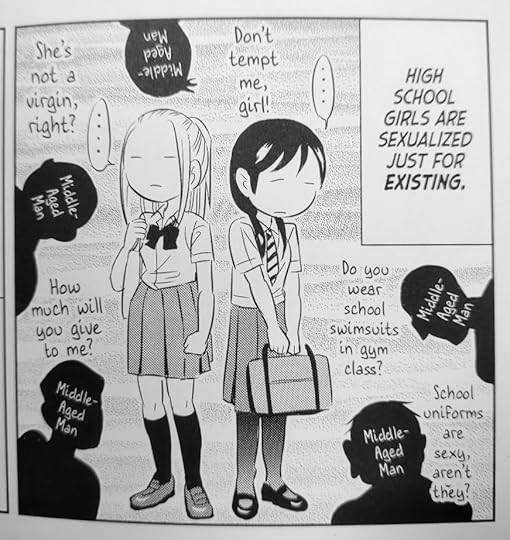
It's still a good book, if heavy. Miyazaki writes about death, depression, anxiety, and dealing with prejudice toward people with women bodies:
There are long sections dealing with the philosophy behind death, including anti-natalism, suicide, and euthanasia (as relates specifically to Miyazaki's outlook as formed by relatives' painful deaths). There are shorter parts that are just "whatever" because Miyazaki's editor said, "Just write about something related to your interests" (perhaps keeping in mind COVID and all). The final chapter is an account of why there's a volume 2, why volume 2 is the last, and the complicated emotions that went into making both volumes, mostly anxiety related to Miyazaki's disabilities and feelings of inferiority.
Overall, it's not as good a read as the first volume, but it's definitely an important chapter in history, it feels like, especially since this is autobiography. It's understandable that most fiction would skip over including COVID, especially if it would interrupt the planned narrative, but that makes it more interesting when the narrative DOES include COVID, or more important that (auto)biography includes it when it feels like too many people want to forget it ever happened (failing to learn from what COVID meant to humanity in the first place).
Recommended if you liked the first volume, but understandable if you don't like this one despite that.
The reason is explained in the book: Miyazaki had intended to only make the one volume, but the manager and editor gave the go ahead to do a second volume. AND THEN COVID HIT. OOPS.
It's still a good book, if heavy. Miyazaki writes about death, depression, anxiety, and dealing with prejudice toward people with women bodies:
There are long sections dealing with the philosophy behind death, including anti-natalism, suicide, and euthanasia (as relates specifically to Miyazaki's outlook as formed by relatives' painful deaths). There are shorter parts that are just "whatever" because Miyazaki's editor said, "Just write about something related to your interests" (perhaps keeping in mind COVID and all). The final chapter is an account of why there's a volume 2, why volume 2 is the last, and the complicated emotions that went into making both volumes, mostly anxiety related to Miyazaki's disabilities and feelings of inferiority.
Overall, it's not as good a read as the first volume, but it's definitely an important chapter in history, it feels like, especially since this is autobiography. It's understandable that most fiction would skip over including COVID, especially if it would interrupt the planned narrative, but that makes it more interesting when the narrative DOES include COVID, or more important that (auto)biography includes it when it feels like too many people want to forget it ever happened (failing to learn from what COVID meant to humanity in the first place).
Recommended if you liked the first volume, but understandable if you don't like this one despite that.
May 31, 2024
Note: This is a collective review for both Volume 1 and 2.
On a base level, I appreciate the bluntness and how zany this manga series can get. People should be more frank about periods and sex and gender weirdness.
But a biographical work with someone so grating is just... draining. I think the mangaka is trying to be self aware and even includes bits where several friends call them out on being fairly awful but it just keeps happening. We can talk about the merits of unlikable protagonists but when reading an autobiographical work that sort of meanders through random but similar events and thoughts it justs gets tired.
I appreciate the chance to read a perspective completely unlike my own from another nonbinary person and a chance to reflect on my own flaws through Asuka's own very, very unapologetic exploration of self but I found myself more irritated at their own constant mixture of arrogance and self hatred. Like, you can't judge everyone in the world for being not like you while also not liking yourself much... and then write multiple series about it.
I didn't want growth from the author, like write your truth, but if all they were gonna do is highlight some very basic stuff about being nonbinary (VERY basic) maybe they didn't have to do this whole series.
Again, I appreciated the openness and kinda grotesque exploration of the body that I think women/nonbinary people/nonbinary women might avoid. I like that I actually did learn a lot about the Japanese bar scene/meet up scene for LGBT people. I liked the art style, though sometimes it got hard to tell people apart and what was a time jump. I liked the honesty and the bits about death.
But the perspective of someone SO hateful just really bogged it down, even potentially relatable moments. There were so many moments where I was ready to nod along til something new and judgmental was thrown in and it made me reflect on myself and my problems.
On a base level, I appreciate the bluntness and how zany this manga series can get. People should be more frank about periods and sex and gender weirdness.
But a biographical work with someone so grating is just... draining. I think the mangaka is trying to be self aware and even includes bits where several friends call them out on being fairly awful but it just keeps happening. We can talk about the merits of unlikable protagonists but when reading an autobiographical work that sort of meanders through random but similar events and thoughts it justs gets tired.
I appreciate the chance to read a perspective completely unlike my own from another nonbinary person and a chance to reflect on my own flaws through Asuka's own very, very unapologetic exploration of self but I found myself more irritated at their own constant mixture of arrogance and self hatred. Like, you can't judge everyone in the world for being not like you while also not liking yourself much... and then write multiple series about it.
I didn't want growth from the author, like write your truth, but if all they were gonna do is highlight some very basic stuff about being nonbinary (VERY basic) maybe they didn't have to do this whole series.
Again, I appreciated the openness and kinda grotesque exploration of the body that I think women/nonbinary people/nonbinary women might avoid. I like that I actually did learn a lot about the Japanese bar scene/meet up scene for LGBT people. I liked the art style, though sometimes it got hard to tell people apart and what was a time jump. I liked the honesty and the bits about death.
But the perspective of someone SO hateful just really bogged it down, even potentially relatable moments. There were so many moments where I was ready to nod along til something new and judgmental was thrown in and it made me reflect on myself and my problems.

June 21, 2025
The second volume of "X-Gender" has a different feel to it than the first, most likely due to the COVID pandemic during which it was written. The chapters are more numerous and often shorter than in the first volume, and their topics range more widely, as Miyazaki admits that they were struggling to think of more things to say about their gender while living in isolation.
Moreover, a handful of topics introduced in this volume were a little too dark for my tastes. Miyazaki writes about edgy classic literature that doesn't appeal to me, antinatalism, and euthanasia. It's interesting to hear their perspective on these topics, but I often felt like that "Kids, could you lighten up?" meme from "The Simpsons." I think that if Miyazaki and I were to meet, I would strike them as a gratingly optimistic person, and they would strike me as an uncomfortably pessimistic one.
The series ends without much fanfare or a sweeping conclusion, which is fine by me, because how do you go out with a bang for such a slice-of-life manga? Still, if I were to recommend this series to someone, I would say that the first volume is essential; the second one, not so much.
Moreover, a handful of topics introduced in this volume were a little too dark for my tastes. Miyazaki writes about edgy classic literature that doesn't appeal to me, antinatalism, and euthanasia. It's interesting to hear their perspective on these topics, but I often felt like that "Kids, could you lighten up?" meme from "The Simpsons." I think that if Miyazaki and I were to meet, I would strike them as a gratingly optimistic person, and they would strike me as an uncomfortably pessimistic one.
The series ends without much fanfare or a sweeping conclusion, which is fine by me, because how do you go out with a bang for such a slice-of-life manga? Still, if I were to recommend this series to someone, I would say that the first volume is essential; the second one, not so much.

January 10, 2024
Rating: 3.5 stars
I have conflicted feelings regarding X-Gender because I find Miyazaki both irritating as a narrator and also incredibly relatable (what does that say about me, eh?) . But I do think this lacks narrative structure and would be way more readable with a structural overhaul.
Given how heavily volume 1 and, to a lesser extent, Volume 2 talk about sex I was surprised to read that they were considering they might be aromantic asexual; although though speaking as an asexual i don't think it's all that uncommon to go through a phase of feeling you needed put on a overcompensating performance of allosexuality/romantic feeling before coming to terms with your own asexuality and I suspect that's what happened with Miyazaki here.
All in all I preferred it to volume 1, but the ending massively peters out when Miyazaki runs out of things to say and, on account of that, I'm sceptical about how they felt the need to write a third volume in the series.
I have conflicted feelings regarding X-Gender because I find Miyazaki both irritating as a narrator and also incredibly relatable (what does that say about me, eh?) . But I do think this lacks narrative structure and would be way more readable with a structural overhaul.
Given how heavily volume 1 and, to a lesser extent, Volume 2 talk about sex I was surprised to read that they were considering they might be aromantic asexual; although though speaking as an asexual i don't think it's all that uncommon to go through a phase of feeling you needed put on a overcompensating performance of allosexuality/romantic feeling before coming to terms with your own asexuality and I suspect that's what happened with Miyazaki here.
All in all I preferred it to volume 1, but the ending massively peters out when Miyazaki runs out of things to say and, on account of that, I'm sceptical about how they felt the need to write a third volume in the series.

November 22, 2023
This author IS insufferably annoying.
Her artwork is amazing. But she has very rigid views due to inexperience and ignorance. For example, marriage, or her crushes having sex (hetero), bc she gets angry to think about them penetrated, ALTHOUGH ITS ONLY HER that feels that way, and often ignores how others think. I really, really hope it’s a translation thing, but since she addresses her last book, I don’t think there is. Also, she quotes fictional characters as evidence to the way she thinks, but THEY AREN’T REAL PEOPLE.
Americans talk about Euthanasia all the time. It’s even legal in at least one state. Also see: Dr. Jack Kevorkian, who was in the news for 5 years because he was locally putting people to “sleep”.
Here’s a thought: think of your life from the view of someone your age dying from cancer and not getting the chance to live.
I’m just going to stop bc I’m angry.
Her artwork is amazing. But she has very rigid views due to inexperience and ignorance. For example, marriage, or her crushes having sex (hetero), bc she gets angry to think about them penetrated, ALTHOUGH ITS ONLY HER that feels that way, and often ignores how others think. I really, really hope it’s a translation thing, but since she addresses her last book, I don’t think there is. Also, she quotes fictional characters as evidence to the way she thinks, but THEY AREN’T REAL PEOPLE.
Americans talk about Euthanasia all the time. It’s even legal in at least one state. Also see: Dr. Jack Kevorkian, who was in the news for 5 years because he was locally putting people to “sleep”.
Here’s a thought: think of your life from the view of someone your age dying from cancer and not getting the chance to live.
I’m just going to stop bc I’m angry.

July 25, 2024
It's crazy how people repeatedly tell Asuka to "stop lumping everyone else apart from you together" and to try to view them as holistic people and they're like ???? and proceeds to ignore that. That's what makes them such an unbearable protagonist of an autobiography, because they refuse to see anyone else as "real" and "whole" as they.
It also bothers me how they see other women as sexual objects, like when a girl she liked starts seeing a man they get caught up in how she "lets him put his penis inside her" and how that troubles her. Maybe look inward and stop thinking about peoples private sexual lives? But this is much smaller aspect of the manga.
It also bothers me how they see other women as sexual objects, like when a girl she liked starts seeing a man they get caught up in how she "lets him put his penis inside her" and how that troubles her. Maybe look inward and stop thinking about peoples private sexual lives? But this is much smaller aspect of the manga.

Read
September 21, 2023I'm not really sure how to rate this so I'm not going to. Because of covid, this is much more a collection of individual chapters that stand on their own, than a flowing storyline. Most of the chapters were very interesting; there is a depth of knowledge being shared in a concise way. Jumping from one to the next was sometimes jolting. I would have liked it better having just read one chapter at a time.
November 14, 2023
I think this volume suffers from a lack of coherence compared to the first one. It's expected given that Miyazaki lost access to their community and couldn't write about gender exclusively. Still, a lot of the chapters feel disjointed or repetitive in some sense.
I'd like to re-read Vol 1 to compare if that volume was actually organized more coherently. Miyazaki also apologizes in Vol 2 for some potentially hurtful discussion of subject matter in Vol 1, so I'd like to revisit that.
I'd like to re-read Vol 1 to compare if that volume was actually organized more coherently. Miyazaki also apologizes in Vol 2 for some potentially hurtful discussion of subject matter in Vol 1, so I'd like to revisit that.

January 1, 2024
Part memoir, part essay. This more heavily explores death, on top of continuing themes of sexuality and gender from volume 1. This was very hit-or-miss (parts were quite good, other parts were not so much). This also felt more disjointed than the previous volume

May 14, 2024
Did not finish. Made it about 2/3 of the way before giving up. Extremely boring take on an interesting topic. I even liked volume 1, bit this just didn't do it for me. They even write a couple chapters on not knowing what to write, which is a cardinal writing sin IMHO. Avoid.

May 27, 2024
[Reviewed by a Nonbinary person] So... reading volume 2 (again as someone who is a version of X-gender: non-binary) I was hoping for a change of mentality or growth, but alas I was wrong 😑. Covid is the beginning of the end if not only the author’s social life in the beginning, but also maybe their manga career? It’s just overall annoying. They make people like myself look bad. I know there are cultural differences to consider, but after reading a book recommended by my therapist about emotional immaturity, this person is rating high on the scale of immaturity. You get a bit farther into the book and I liked one perspective about people wearing whatever they wanted; I agree with that.

But it’s not like it’s without strife. The mother is clearly unwilling to understand their gender, but the author accepts the disrespect with too much ease for my comfort.

Somewhere around page 33 they admit to getting desperate to write in the state of the Covid pandemic. It seems telling since the future of its publication for the manga has ceased to exist it seems. Talk about breaking the 4th wall...
Ugh, then they met a weirdo gun-fanatic at 14. It’s so bizarre... I guess because gun violence is high in America, but the author is literally fawning over this guy like gross.

I read on further to which their friend had made it clear that the author imposes themselves onto others and lmao yes... not only so, but I have a literal friend who has these tendencies at times too. I don’t think by any means they are bad people; it’s just that it’s lacking some level of empathy to know how it may come off to others or make others feel. It’s giving, “what I want is more important, and I’m not willing to compromise” type of energy. Le sigh... as I continue to read, I learn about their beginning mangas: one is a hip-hop manga that keeps saying “yo” in it like us Black people say that religiously. Like what year is this. And then the second was about this couple constantly trying to commit suicide?? I like dark humor too but goddamn! Both are utter travesties in my humble opinion. However, I will say I did feel empathy for the author about the whole “you have not met the right man” and “you need a baby to be happy” bullshit. That plagued me during my twenties and I already knew I felt different within. So much that I didn’t have a name for it yet until my thirties now as someone who is non-binary. People think they know what’s best for you and yet they don’t venture to see what’s beyond their small patch of astro turf. Sad really.
Page 72 exclusively makes me feel both bad and irate at how Japan treats folks like those in the Non-Binary umbrella. It’s interesting that the author got a 1 ⭐️ for the content rather than their behavior as a human being in terms of approach to dating for example. I also feel sympathy for them for the fact that they got hurt because of the level of ignorance people have to gender. Gender is a social construct. Also if referring to sex, there are intersex people; we need to stop acting like they don’t exist. What do you classify their gender? People are really ignorant, specifically straight and/or Cis people who feel superior and find bliss in their ignorance. This, unfortunately, made me give a pity star for the manga because of this to be generous. It does suck.

“Determined Not to Commit Suicide” was oddly relatable in a way that only people perhaps that have childhood trauma could understand. I do get how annoying the author is being about it because it’s just constantly a perpetual cycle and nowhere is a therapist being mentioned to temper this thought pattern. Though growing up for me with terrible parents I had suicidal ideation A LOT. I was in constant anxiety. Though the author makes it seem more like a joke than a serious revelation that shows vulnerability but also something to shrug off. That’s a big no-no for me, especially as a graduate psych major. Disappointed.
The Antinatalism story is honestly pure bullshit. I get they are suffering constantly and everyone for this movement is basically like nobody more should be born, but I’d bet everything that’s it’s based on them needing therapy due to trauma. They quote great MEN and they have all the answers to this particular situation, when in patriarch societies those same men like to restrict women and what they can do with their bodies. Or they just don’t take any responsibility for their offspring. It’s quite ridiculous quite honestly. Also don’t get me started on the highly ridiculous glorifying of suicide. Like can we NOT make others who suffer from depression and suicidal tendencies get more of a push off the proverbial cliff? How on earth is this supposed to be funny? I like dark humor too but goddamn this is awful.

The sleep section I can get onboard with. I’d even push to say that they are experiencing astral projection. I do like the idea of a collective consciousness. I wish it’d be better to help the humans here love and understand one another but hey lol. I’d also branch to say that there are windows into other dimensions of ourselves when we sleep in parallel universes.
Would not recommend this book to others in the non-binary spectrum nor allies. Would I read volume 3? Is it even going to come out in English?

But it’s not like it’s without strife. The mother is clearly unwilling to understand their gender, but the author accepts the disrespect with too much ease for my comfort.

Somewhere around page 33 they admit to getting desperate to write in the state of the Covid pandemic. It seems telling since the future of its publication for the manga has ceased to exist it seems. Talk about breaking the 4th wall...
Ugh, then they met a weirdo gun-fanatic at 14. It’s so bizarre... I guess because gun violence is high in America, but the author is literally fawning over this guy like gross.

I read on further to which their friend had made it clear that the author imposes themselves onto others and lmao yes... not only so, but I have a literal friend who has these tendencies at times too. I don’t think by any means they are bad people; it’s just that it’s lacking some level of empathy to know how it may come off to others or make others feel. It’s giving, “what I want is more important, and I’m not willing to compromise” type of energy. Le sigh... as I continue to read, I learn about their beginning mangas: one is a hip-hop manga that keeps saying “yo” in it like us Black people say that religiously. Like what year is this. And then the second was about this couple constantly trying to commit suicide?? I like dark humor too but goddamn! Both are utter travesties in my humble opinion. However, I will say I did feel empathy for the author about the whole “you have not met the right man” and “you need a baby to be happy” bullshit. That plagued me during my twenties and I already knew I felt different within. So much that I didn’t have a name for it yet until my thirties now as someone who is non-binary. People think they know what’s best for you and yet they don’t venture to see what’s beyond their small patch of astro turf. Sad really.
Page 72 exclusively makes me feel both bad and irate at how Japan treats folks like those in the Non-Binary umbrella. It’s interesting that the author got a 1 ⭐️ for the content rather than their behavior as a human being in terms of approach to dating for example. I also feel sympathy for them for the fact that they got hurt because of the level of ignorance people have to gender. Gender is a social construct. Also if referring to sex, there are intersex people; we need to stop acting like they don’t exist. What do you classify their gender? People are really ignorant, specifically straight and/or Cis people who feel superior and find bliss in their ignorance. This, unfortunately, made me give a pity star for the manga because of this to be generous. It does suck.

“Determined Not to Commit Suicide” was oddly relatable in a way that only people perhaps that have childhood trauma could understand. I do get how annoying the author is being about it because it’s just constantly a perpetual cycle and nowhere is a therapist being mentioned to temper this thought pattern. Though growing up for me with terrible parents I had suicidal ideation A LOT. I was in constant anxiety. Though the author makes it seem more like a joke than a serious revelation that shows vulnerability but also something to shrug off. That’s a big no-no for me, especially as a graduate psych major. Disappointed.
The Antinatalism story is honestly pure bullshit. I get they are suffering constantly and everyone for this movement is basically like nobody more should be born, but I’d bet everything that’s it’s based on them needing therapy due to trauma. They quote great MEN and they have all the answers to this particular situation, when in patriarch societies those same men like to restrict women and what they can do with their bodies. Or they just don’t take any responsibility for their offspring. It’s quite ridiculous quite honestly. Also don’t get me started on the highly ridiculous glorifying of suicide. Like can we NOT make others who suffer from depression and suicidal tendencies get more of a push off the proverbial cliff? How on earth is this supposed to be funny? I like dark humor too but goddamn this is awful.

The sleep section I can get onboard with. I’d even push to say that they are experiencing astral projection. I do like the idea of a collective consciousness. I wish it’d be better to help the humans here love and understand one another but hey lol. I’d also branch to say that there are windows into other dimensions of ourselves when we sleep in parallel universes.
Would not recommend this book to others in the non-binary spectrum nor allies. Would I read volume 3? Is it even going to come out in English?
This entire review has been hidden because of spoilers.

June 21, 2024
This felt very disconnected and more like reading a depressed person's stream of conscious. Dealt less with gender and more with mental illness which is fine but not what was expected. There's an entire chapter on human euthanasia. It was a depressing read.

October 18, 2025
This volume was not what I expected... I learned about some heavy topics with regard to death and suffering. I hope the author finds peace and that this making this work found them some sense of purpose and fulfillment. That said, save for a few moments, admittedly it's not a work I enjoyed for the most part.

April 20, 2026
Not sure why this was published as a sequel to X-Gender. It’s mostly a collection of random stories and trains of thought. It was really weird to go from reading a chapter about different types of mascara to a chapter about euthanasia? So all over the place and I’m not too sure what the point was.

December 20, 2023
It felt a bit chaotic at times. But I'm glad I read it.
January 7, 2024
INTERESTING TOPICS ACTUALLY.. .a pretty unique series

May 27, 2024
For someone who is a part of the LGBTQ+ community, they certainly judge others within the same community that are different than them.
Displaying 1 - 30 of 34 reviews