In June 1943, seventeen-year-old Bharati ‘Asha’ Sahay, a headstrong Indian teenager living in Japan during the Second World War, decides to join the Rani of Jhansi Regiment of the Indian National Army after meeting Subhas Chandra Bose. She starts to jot down her thoughts in a diary, and thus begins one of the most significant personal accounts of the Indian freedom movement.
Together with her father, Anand Mohan Sahay–a close companion of Bose–and others committed to the cause of Indian independence, Asha forges a path that takes her from war-torn Tokyo to the jungles of Thailand. She learns how to hold a rifle and shoot the enemy, and she discovers what it means to be a patriot fighting for the liberation of a country she has no memories of but carries deep in her heart.
Written in Japanese between 1943 and 1947, and translated into English for the first time by Tanvi Srivastava, The War Diary of Asha-san is a memoir of courage, honour and love, by a young girl who must grow up quickly in the midst of war.
Its books like these which highlights the cumulative efforts of many unknown brave hearts, who dedicated their lives for the nation.
This is the diary of Asha-san, written originally in Japanese, translated once in Hindi, and then this English version which assimilates the previous translation, synchronizes the dates and facts, and renders it in an easily consumable form. Gives a first-hand account of her multiple interactions with Netaji. There are day to day life bits, some beautiful colored inset frames, and her dedicated efforts and struggles to devote her entire life for the freedom cause.
Kudos to the translator for making this diary accessible, with apt references and footnotes.
“Flaring planes, both American and Japanese, engaged in a duel to death. Watching the scene unfold, we, too, wish, to hoist ourselves onto the burning cinders and cry with joy. They say war is a catastrophe. But those brave hearts who fight for their nation–be it to win or die–are divine.”
It is an amazing memoir, of one of the many INA soldiers, who fought or atleast enrolled to the INA with their very own will, to fight for the freedom of India from brutal British rule. They have given their families apart, left their youth and forget their elderly age but prepared themselves to take-on the British assaulters upfront. Non-violence can pave a way to politics and get higher positions in a country, but freedom must have to be snatch from the hands of British, who spoiled the Education, culture, values, societal harmony and future of Indians. In nutshell, we happened to had lost both our glorious past and its takeaways and promising future, which could have been built over that powerful, knowledgeable past.
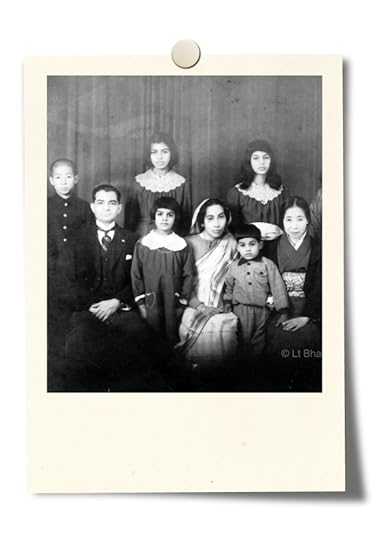
Lt. Bharati ‘Asha’ Sahay Choudhry had written down her whole life happenings, in regard to the struggles of her parents to her own life, which was left on cliffhanger amid the Independence movements. Born in Japan and educated, but valued in the colors of Indian culture with the teachings of patriotism were not just the part of her upbringing but also the result of her genes. In her own words, which I would like quote directly from her memoir reflects this clarity of her mind on her own submission for the India’s freedom struggle. Brought-up in a war torn Japan, she saw relatable events from her eyes directly and heard the same about India. ‘I can see the seedlings of patriotism rising in these children. They know they must endure all kinds of difficulties for the country. Other than the education we’ve received from our parents, we have also received Japanese education, which focuses immensely on patriotism and nationalism. Today, we are ready to make every sacrifice for our country. Those who do not have national consciousness are the equivalent of hollow puppets, following instructions mindlessly.’ Her Father (Anand Mohan Sahay), Mother (Sati Sen) and Uncles (Satya Sen and others, maternal-side) were all involved in the struggles of Independence with only one motive, to make India Free from the brutal clutches of British Raj. This memoir tells a lot about the patriotism of the Indians, who irrespective of the geographical areas, spreaded all over the world, were only working together in one direction. Every aspect of her life, through this autobiographical memoir, depicted the perspective of the people, even outside India, about how they felt and looked upto, with respect, towards ‘Netaji’ Subhas Chandra Bose. A man who earned respect all over the world and became the biggest pain for British, resulting eventually the fear of losing their control over India and their whole army. Man, who single-handedly collaborated Germans and Japanese to stay along with INA in its efforts to overthrown Crown’s lap dogs, whose invasion of India started with the camouflage of trade and ended in looting the complete wealth of India and making Britain flourish which even till now is enjoying and good economy. Whereas, when they entered India, whole Europe was struggling with the source of having a proper amount of wealth, which could make each of their citizens fed a proper three times meal. India’s GDP was 1/3rd of the world’s alone, when British invaded India under the façade of traders.
Asha-san, a name with which she was known among her close and distant acquaintances, Bharati was named by her parents with the sense of their hope to make their ‘BHARAT’ (India) would be free one day. She had made notes of her life’s major events in Japanese and later after Independence with help of her teachers and parents translated the same in Hindi, based on which, this English translation (done by her Daughter-in-law) is. Her Hindi-diary was published in 70s in the magazine Dharmyug (Dharmyug was a Hindi pictorial weekly, published by The Times of India Group (BCCL) from year 1949 till 1993). Her evaluation of the time was from her young perspective of a teenager but tells a lot about her understanding of the critical times as some matured person because she was purely involved with her parents to do whatever it took for the freedom struggle. Inspired by Netaji, she asked him to let her enrolled in INA and he approved her request. Netaji had and aura that people’s lives revolved around him. He not only inspired Asha but many prior to her to fight and die in the name of their nation’s freedom. He even traveled as far as Germany and Japan and complete South-Asia to gather support and strength against British but unfortunately, his own India’s top leaders of congress, who held positions after his resignation, had gone against him. Nehru alone made British assault and killed many freedom fighters. Coming from the family of one such freedom fighter, I knew his ill traits. Same was with Gandhi, who instead of being an action man like antagonist Nehru, played psychological games more by changing people’s mind and make them go softer towards British and those Muslims who were wanted to disintegrate Bharat into India and Pakistan. If it would have been for Netaji, who if got support from within his own nation by Congress leadership, he would have made India Free, atleast 3 more years prior to 15th August 1947. He singlehandedly, made Germany agree to support his cause and made Japanese Empire to release Indian prisoners of war who were fight under British rule to build Azad Hind Government and India Nation Army. Brought South-Asian countries together against British regime, be it Japan and China, or Saigon, Singapore, Burma and Thailand. He made soldiers of INA trained. He developed an Independent government to which Japanese Empire transferred power of the Islands of Andaman and Nicobar, without and fuss and fight, but with grace and goodwill.
Nevertheless, fate has its own written infernos and thus Bharat got its division in the hands of those three leaders who got both positions and titles. Jinnah became the Father of Pakistan and its first Prime Minister. Gandhi called by congress sycophants, the father of the Nation of India, which was nowhere written and will never be accepted & document in any official documents. Moreover, Nehru, the biggest culprit, followed by Gandhi, became Independent India’s first Prime Minister; however, he had already taken oath under the flag of British Crown in September 1946. Hitherto, the condition created by these 3 leaders affecting the growth, both economic and social, of India and disrupting the societal and mental harmony in not just India for majoritarian Population but also affecting the geopolitical environment in a worst manner in complete South Asia.
Asha-san is an inspiration for the youth of India even today. For coming-of-age generations, it is a learning that no matter what luxury and name-fame you get, be always prepare to save your nation from anti-national elements within and enemies outside India.
The War Diary of Asha-san is a gripping memoir that documents Lt Bharati 'Asha' Sahay Choudhry's journey from war-torn Tokyo to the jungles of Thailand and, finally, to India as a member of the Rani of Jhansi Regiment.
Asha's diary entries provide an intimate insight into her psyche, revealing her courage, determination, and self-doubt. The book's three parts take the reader through different stages of Bharati's journey, from joining the RJR to undergoing rigorous training and preparing for battle to visiting her long-lost relatives in India.
What sets this book apart is its perspective on the Indian independence movement from the point of view of a young woman who was part of the armed struggle. The author's writing is straightforward, honest, and direct, making it a must-read for anyone interested in Indian history, military history, or individual bravery and perseverance memoirs. Tanvi Srivastava's excellent translation makes the book a smooth and engaging read.
"The urge to fight echoes in our heads. Losing hope is the first sign of defeat. Without hope, devotion, and diligence, no effort will be successful." - Asha-San, The War Diary of Asha-San
Lt. Bharati "Asha" Sahay Choudhry was born in Japan, in 1928, and joined the Rani of Jhansi Regiment of the Indian National Army at the age of seventeen. Her original diary was written in Japanese during the Second World War. She translated it into Hindi with the help of her parents and her Hindi professor. This diary was later masterfully translated from Hindi to English by @tanvisrivastava_a.
I feel very fortunate to have come across this gem of a book! This book is a reminder of the countless sacrifices that our freedom fighters made for our country's independence! But more importantly, it is an account of the role of militant women in our nation's independence. This is a memoir of hope, courage, honor, and love.
Asha, the eldest daughter of Indian expatriate freedom fighters living in Japan, had to grow up quickly amidst war and along with her parents, fought for India's independence. This book is a first-hand account of her humongous efforts, dedication, and role in our nation's freedom struggle. It's a beautiful, deeply moving, and inspiring memoir! I loved reading about Asha's love for Japan and its culture. And I equally loved reading about her love for India and her quest to fight for its independence. It was inspiring to read about the exceptional leadership of Netaji Subhash Chandra Bose. His extraordinary efforts and leadership were one of the key factors behind Asha-San joining the Rani of Jhansi Regiment of the Indian National Army.
The first time I read this title, it reminded me of one of my favorite books, The Diary of A Young Girl, Anne Frank. She too grew up amidst war and used to jot down her thoughts in her diary. And just like Anne Frank's Diary, this book too has become one of my favorite and treasured books!❤
This is a deeply moving narrative originally penned in Japanese as the war diary of Japanese-born Bharathi Sahay Choudry, between June 1943 to August 1947. The ‘scraps of paper and frayed notebooks’ of the original diary were lost, but she recollected it in Hindi after the war — It was serialised in 1971 and compiled as a book after, which was republished in 2011. This English translation (2022) is by Asha’s grand-daughter-in-law, Tanvi Srivastava, a writer, who embarked on research to triangulate the chronology, and who incorporated notes by Asha in 2018. So the book I read had taken a long journey through many dedicated souls to arrive in my hands.
It is certainly an education for the post-colonial reader, who will be struck by the outrage suffered to rouse the very strong feelings of patriots in the independence movement of India. It was fanned by the rousing exhortations of Subhas Chandra Bose, who personally accepted Asha into the Rani of Jhansi Regiment of the Indian National Army. Her parents, as Indian expatriate freedom fighters, supported their elder daughter’s decision to enlist in the INA and to make her way to IndoChina to join the attack on British India, by way of Burma.
Asha’s relationship with her Japanese hosts and her thoughts on the war is an important and often overlooked perspective when considering the Fall of Singapore which has other strong perspectives. The final independence effort of the Indians began by the 1920’s, so the Japanese agitation against Western colonial powers in the. Pacific served up natural allies. Asha also shed’s light on the impact of the 21 Oct 1943 proclamation in Singapore of the provisional government of Azad Hind (Free India) by Subhas Chandra Bose. She is an exceptional individual by any measure, and her youthful aspiration during these events is clear. I was struck by her interaction with Kamikaze pilots who were being unleashed to foil what was by then the overwhelming force of the awakened giant.
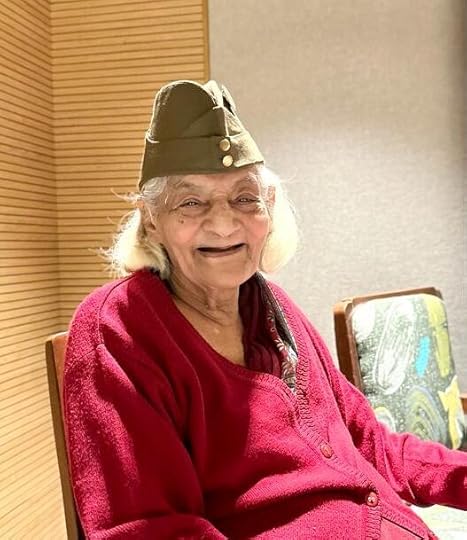
The INA incursion towards India would be beaten back, but Aza Hind, the INA and the freedom movement had laid a clear path to independence. Asha is still alive and living in Patna, India. There’s video of her chatting in Japanese on YouTube which is fascinating to watch, reflecting the spirit of hard earned unity.
Patriotism is a bad word in India nowadays. Patriots are considered at par with jingoists, fanatics, right-wingers, and nationalists. Liberal India lives in the conjured world of universal brotherhood and a world without borders. While Patriotism might be passe today, at one time not so long ago it was a powerful idea that motivated hundreds of thousands of ordinary Indians to stand up against one of the most oppressive forces in history: British colonialism. Reading the diary of Asha-San, a teenager who was willing to sacrifice her life to free her country of British rule, is to rediscover a magic that our jaded generation has long lost. There was a simplicity in the patriotic passion of those years that this diary captures. It was a time of intense hope so utterly unlike our times. The fire had been lit by the charismatic Netaji Subhas Bose whose clarion call ‘Give me blood, and I will give you freedom’ had electrified Indians wherever they lived. Asha-San had grown up in Japan where her father Anand Mohan Sahay (a close compatriot of Netaji) had settled in the 1920s after fleeing from British India. She and her siblings had been raised by their Bengali mother, Sati nee Sen, niece of Deshbandhu Chittaranjan Das, in very difficult conditions, especially once the war came to Nippon. One passage reads: “On our way to college, there is an attack, and we rush into a trench. Looking up, we see a throng of American B-29 bombers hovering over us. We call them mosquitoes – because they make a buzzing sound on approach and are smacked down to the ground like pests. Here they come, swarm after swarm, their propellors slicing the thin air. Two Mosquitoes and one Japanese airplane are on fire. They glide smoothly towards the ground, one after the other. The Japanese pilot, sun glinting against his green wings, waves his handkerchief, bidding farewell to the world. Taking leave from the red sky and the white earth, he becomes a martyr.” Another day and more Mosquitoes: “As soon as I return home, the siren begins to howl – bo-bo-bo-bo. The enemy pilots have reached the periphery of Tokyo. In a few minutes, carpet-bombing will begin. Snatching the bag of priceless rice along with a first-aid kit and a helmet filled with cotton, I rush to the trenches with Tulu. The Mosquitoes arrive soon after, dual sirens screeching around us. Bombing begins almost immediately…The spectacle is truly entertaining: imagine thousands of needles piercing the sky, a tapestry, a theatre like no other. Cinder and fire. Flaring planes, both American and Japanese, engaged in a duel to death.” Food is scarce, Japan is losing the war and Netaji’s Indian National Army (INA) too has suffered a severe defeat at the battle of Imphal. It is the spring of 1945 and Netaji and his followers are gradually preparing to rise from the ground again to fight the British. Asha-San, then just seventeen, volunteers to join the INA’s Rani Jhansi Regiment. She takes a train along with her father passing through destroyed cities and after a journey of several weeks, including a long pause in Formosa (Taiwan), stopovers in Saigon and other places, finally reaches the INA camp in Thailand where Netaji is camping after retreating from Manipur. Here begins a new chapter of her life, military training and hopes of marching into India. But the British are slowly closing in and even their camp comes under air attack. While she trains at the camp, at the end of summer comes the news that America has dropped atom bombs on Japanese cities killing millions. Netaji rushes to Tokyo and dies on the way in an air crash. A few days later, Americans barge into their camp to arrest their officers and soldiers. It is all over for the INA. Netaji’s ashes are carried to Tokyo by Colonel Habib ur Rahman and Shri AS Ayer and taken to Asha-San’s house where her mother is present. Asha-San’s mother recalls: “At the beginning of September, a car suddenly stopped in front of our house. I went outside and saw Colonel Habib, Shri Ayer and Rama Murti standing there. Habib Bhai said: ‘Sister, I have brought Netaji. What shall I do with him?’ I said: ‘For Netaji and for those who loved him, the door of the Sahay house is always open.’ They all came inside. Habib Bhai placed the urn in the showcase of our living room. We lit incense sticks and paid our respects…On 18 September, we took Netaji to Renko-ji Temple…Nachiappan had the good fate of carrying Netaji’s ashes to Renko-ji in his hands. At noon, our silent procession left home and we walked three kilometres to Renko-ji temple…Renko-ji’s main priest, Rev. Mochizuki, and six other priests performed the last rites together. I requested Rev. Mochizuki to keep Netaji’s ashes safely till someone comes from India. He pledged that no one would be permitted to touch the urn.” That urn still sits in Tokyo’s Renko-ji temple. Many Indian dignitaries including Pundit Jawaharlal Nehru have visited the temple but no one has brought the ashes back. Even the memories of those patriotic times have faded. Asha-San’s little diary however will remain a powerful reminder of those sad but heady days. Indranil Banerjie 2 November 2022
There are many warriors who have contributed to India's Independence. Some are known to us while many are unknown to us. But everyone has a story.
This is the story of Bharati 'Asha' Sahay, a lieutenant in the Rani Jhansi Regiment of Indian National Army. This book was her diary!
Asha Sahay is the daughter of Anand Mohan Sahay and Sati Sen Sahay, who dedicated their whole lives to India's freedom struggle. Both her parents adored and revered Subhash Chandra Bose and had immense faith and belief in his ideology and ability to make India free from colonial rule. As a result, Asha Sahay too considered him god-like figure.
Asha Sahay meets Netaji in Japan and decides to become a soldier to contribute in making India become free. Thus, she joins Rani Jhansi Regiment under the leadership of Subash Chandra Bose.
Thereafter, begins her journey as a soldier in a completely new unsafe world away from home with an undefeated spirit and dreams in eyes to see India free!
This is the story of patriotism, courage, selflessness, bravery, sacrifice, struggle, pain, unity, dreams, faith, belief and freedom.
It is a significant read for every Indian. I definitely recommend it!
T an H are close friends, and it had always been fascinating to hear about their grandmom fighting for the Indian National Army under Netaji. So, couldn't wait to read the 'war-diary' that Asha-san penned down in Japanese at that time, and its indeed an intensely moving and inspiring account.
Asha-san was born in Japan to lifelong freedom fighters, and grew up there in entirety. But the fire for India's freedom struggle burned bright inside her and she joined the Rani Jhansi regiment of the INA at just 17 - such was the example set by her parents and the charismatic leadership of Netaji. The first half of the diary is set in Japan, and you get a first-hand account of the country reeling under the devastation and demands of the second world war. There are numerous stories of Japanese 'kamikaze' soldiers serving their nation passionately and walking into their deaths with pride & valour, while women ran households with determination in times of extreme austerity. Asha-san then moved to training as a soldier in Thailand and Singapore, unfortunately at a time when INA suffered a spate of losses in the harsh terrain and weather of Myanmar/India border forests, with Netaji's untimely & horrific death bringing an end to the revolution. Asha-san's biggest remorse, she reiterates multiple times in her diary, is that she couldn't get the honor of being at the battlefront shooting down British soldiers and slashing their throats with her rifle bayonet. But India's independence was round the corner, and the diary ends with Nehru ensuring all the valiant patriots make their way home to India finally, to a rousing welcome.
A huge shoutout to Tanvi, who does a fantastic job with the translation to English. In fact, it never felt like a translation at any point - she has captured Asha-san's emotions, musings and accounts in a consistent and engaging manner. The direct encounters with and anecdotes of Netaji underline the legend of the man, giving goosebumps. The visual prose is spot-on as well - I could well imagine a snowy Japanese town ripped apart by periodic bombings, her tumultuous flight via Taiwan under the enemy's warcrafts, and the regiment singing "kadam kadam badhaye jaa..." as they marched on to liberate India.
Get a fresh insight into India’s pre-independence history and the role of Netaji’s Indian National Army with “The War Diary of Asha-San” by Lt Bharati “Asha” Sahay Choudhry, translated by Tanvi Srivastava and published by Harper Collins in 2022.
The book is laid out in three parts over 291 pages including approximately 100 pages of helpful additional explanatory notes, character sketches, photographs and supplementary information. The laborious tasks of translating and chronological coherence have been done painstakingly by the translator, while clarifying variations from and maintaining the sanctity of the Hindi version.
The war diary, in itself makes one marvel at the patriotism existing in the family and the motivation towards the freedom struggle. The book also offers interesting insights into the Japanese way of life and their cultural practices. Of particular interest is the ethos of a soldier that is imbibed so well by Lt Asha-San and multiple manifestations of this are evident throughout the diary. Numerous philosophical musings in the diary such as “the state of war means being fine and not fine at the same time” would appeal to the reader. The diary is a fine read of “stories woven together with threads of hope and despair”. The description of the warrior code and rituals of Japanese soldiers is an aspect that resonated with the soldier in me. The description of the stoic acceptance of impending death by the Kamikaze pilots is amazingly portrayed in the diary. The turn of events precluded the author’s exposure to active combat; however, this does not in any way undermine the moving story of the turbulent times and strife covered in the war diary.
This War Diary as a first-hand account is a brilliant memoir which vividly portrays the role of women in our freedom struggle. It also provides valuable insights into the leadership of Netaji Subhas Chandra Bose as seen by an impressionable young mind.
This book, brings to life portions of our history that we would do well to know more about.
A deeply moving first hand account of the patriotic fervour of the Azad Hind movement led by Netaji Subhash Chandra Bose seen through the eyes of an idealistic teenager (whose parents were freedom fighters and closely associated with Netaji) as she travelled from Japan via Formosa(Taihoku/Taiwan) to Thailand to join the Rani Jhansi Regiment of Azad Hind Fauj. The diary documents the dramatic impact of saga of Netaji and Azad Hind Fauj on the Indian populace in the aftermath of the Second World War. Originally written in Japanese during the pre and during World War years, the author had translated in Hindi in which language the publication first appeared. Subsequently, the diary has been translated into English by her granddaughter-in-law and also edited to reflect correct dates after referencing with other accounts of similar events. The author still lives in Patna as a feisty 96 year old with razor sharp memory of events of yesteryear. To me, especially absorbing were the accounts of her interaction with Netaji, account of Netaji’s fatal accident, his treatment and death at the Taiwanese hospital, cremation of the body and the transport of his ashes to Japan to be kept temporarily at the author’s residence before being finally interred at the Renkoji Shrine. Also absorbing was the accounts of the Kamikaze pilots and the author’s interaction with them in Taihoku before they flew on their respective final missions. I would recommend this book highly to those interested in the history of Indian independence, World War II in the Asian theatre or about War diaries in general.
Translation into English of the war diary kept by one of the trainees in the Rani Jhansi Regiment of the Indian National Army. The diary of a young woman (17-18 years old) who is a daughter of a powerful minister in the Indian government in exile.
The diarist - Asha-san - grew up in Japan, the daughter of Indian expatriates/exiles in Japan. She desires to join the Indian National Army - made up of defecting officers and troops from the British Indian military who were prisoners of war of the Japanese.
What I liked about the book: It conveyed a sense of being there.
What I disliked about the book: I understand that these words were written by an impressionable, unquestioning 17-year old. But it bothered me that she saw the world as so black-and-white (often literally - referring to British and American troops derogatorily as "gora" (white). There is very little questioning of the compromises being made by her own side. No questioning whether the allying with Germany was such a good idea to begin with. Or whether the Japanese were such benevolent occupiers of lands in SE Asia. Or whether Hiroshima was the reason why the INA gave up the struggle (fact check: INA's retreat in Burma began a lot earlier than that and the war in Burma was lost much before Aug 1945). Or who or how the expensive flights that the author and her dad took across Asia were funded.
This gem of a book is a reminder of the countless sacrifices that our freedom fighters made for our country's independence! But more importantly, it is an account of the role of militant women in our nation's independence. This is a memoir of hope, courage, honor, and love.
Asha, the eldest daughter of Indian expatriate freedom fighters living in Japan, had to grow up quickly amidst war and fought for India's independence along with her parents. This book is a first-hand account of her humongous efforts, dedication, and role in our nation's freedom struggle. It's a beautiful, deeply moving, and inspiring memoir!
In 1943 Kobe, a fifteen-year-old about to begin army life began a diary. The diary, written in Japanese, of course, was translated and published in English in 2023. There is much that is remarkable in the journey of that diary: It was written by a girl, Bharati “Asha” Sahay, an Indian who lived in Kobe with her parents, and the army she was to join was the Indian National Army (INA), led by Subhash Chandra Bose, that fought alongside the Japanese Imperial Army against the Allied forces in the Southeast Asian theatre.
Fortunately, Asha’s mother retrieved the first part of the diary that Asha had left behind in Japan when she joined the INA. Asha-san managed to assemble most of the scraps of paper she had written on during her INA years. She completed a BA in Hindi when she returned to India and settled in Patna. After she translated the diary into Hindi, it was serialised in the influential Hindi magazine Dharmayug in 1973 (when Dharamvir Bharti, a leading writer, was its editor) and published in book form in 1987. Years later, Tanvi Srivasta married Asha’s grandson, and was looking for a writing project. Inspired by an article Jhumpa Lahiri wrote on translation as a means of learning to write, Srivastava settled on translating Asha’s diary. With Harper Collins publishing it eighty years after Asha first put pen to paper, the world is lucky to have this addition to the relatively small body of work on the Rani of Jhansi regiment. This 2023 edition’s tenuous journey to publication matters because what it brings to light is a diary that is remarkable in many ways.
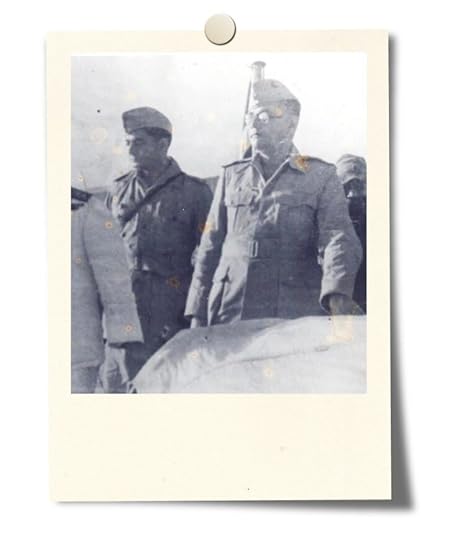
Among these is the staggering cast of characters Asha-san meets on her journey from Kobe to Patna. Not least of them, of course, is Bose himself, who says to her mother in Bengali, after issuing an order to her father, ‘If you have any hair oil, send it across.’ Asha’s mother asks Bose if he will admit her two daughters to the Rani of Jhansi Regiment (RJR). When Bose says they look delicate, Asha speaks what seem to be her first words addressed directly to him: ‘We can fight. We can also die for our country.’
The RJR women were told that they would serve as infantry women, and trained as if they would (though some writers, like Vera Hildebrand, have pointed out defects in their training). They never did see action, but they earned a unique place in history.
Through Asha-san’s eyes, we meet her Rani comrades and their officers, and Bose himself. Bose’s extreme heroism in accompanying the Ranis on their retreat from Burma features in her story. We also meet Kamikaze pilots who are about to fly on their final mission. At many points, we are reminded that Nehru spoke and acted for the INA soldiers who surrendered at the end of WWII.
Asha’s sister had the Muslim name of Riziya; the name was suggested by a Muslim friend of her father’s who gave his own daughter the Hindu name of Jaya. Such was the ethos of some sections of the Indian freedom movement. Ironically, it is the legacy of other sections (the Muslim League and the Jan Sangh, precursor to today’s RSS-BJP axis) that prevailed over everything that the INA and the RJR staked their lives for.
This book is a delightful addition to the small body of work on RJR. Above all, what shines in it is the unadulterated innocence of a young girl: “I was young and impatient when I joined the RJS; I yearned to pick up a rifle and march straight to Imphal… Little did I realise that the journey was as important as the destination…” “Who was I? A homesick teenager who only wanted her mother? Or an eighteen-year-old who had sworn to fight till her dying breath?”
Not surprisingly, she resents the "pretence and fabrication" in Indian attitudes towards women, when she “returns” to India, the country she took up arms for without ever having seen it.
The launch of this book that survived against all odds has generated some interest in Asha-san’s incredible journey. You can see her singing a patriotic song in 2023; and here is an interview (also in 2023) by The Print. Asha-san's story deserves a wider and more global audience.