The Nice Guy Who Finished First is a remarkable story of Rahul Dravid's illustrious career in international cricket that commenced in 1996. It tells the tale of a young man who has succeeded in his chosen profession through an ardent faith in the three 'D's of dedication, discipline and determination.
The biography reconstructs the incidents and events that have contributed to making Rahul Dravid one of the greatest cricketers to have played the game, and an epitome of grace, humility and commitment to his team's cause. It is a tribute to a role model who refused to rest on his laurels, and remained as intense in his quest for perfection as he was when he started out.
Rahul Dravid's moments of triumph are described, as also are his trials and tribulations. The book narrates the epic battle, one that he eventually won, to break free of the stereotypes that haunted him in his early years at the international level. His efforts to emerge from the intimidating shadows cast by his teammates and contemporaries are illustrated in great detail. This book highlights the physical, mental and of course, technical attributes that have elevated Rahul to legendary status.
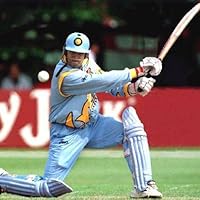
In this honest endeavour to recount the story of Rahul Dravid, the author is assisted by reminiscences for this mentors, seniors, teammates and even opponents, all of whom witnessed the making of a cricketing legend form close quarters. Then, there are the photographs, some of the best ever, which showcase, quite literally, the genius of one of the India's all-time greats.
It covers the Rahul Dravid's entire career from 1996 till 2005. This book felt like collection of match reports. Book does give little insights of Dravid but not in detail. There are few moments which will give you goosebumps. One time read. We as fans still awaits a comprehensive biography on this legend.
The language is classy and sophisticated to match up, as it were, to reflect Rahul Dravid's own character! The author's style and the organisation of the content of the book is like a thriller novel, which makes you want to go on reading without keeping the book down to find out what possibly (in detail) could have happened next to appear so artistically in this Biography.
The study of word phrases involving the use of the word "character" pertaining to all sports-persons in general and Dravid in particular was one of my covert intention behind reading a book on sports. I found ample of it in this book, in the narrative as well as in the various quotes by the members of the cricket fraternity that have been juxtaposed intelligently along with the narrative in this book. I guess it made me enjoy it even more. Repeatedly the author reminds us of Dravid's humility, especially when it is brought to our notice time and again how Dravid's achievements and successes are often left un-highlighted and unsung due to different reasons and yet he stands quietly but confidently. "Of course, it wasn't as if he wasn't used to it", the author explains. (p.96)
This book is as much a history, though utterly brief, of the cricket team of India and its fixtures and results between 1996 and 2004, as it is a personal history of Rahul Dravid's cricketing career of the same period. And for the first time, while reading this book, I became aware of the nuances of style and techniques used by cricketers - both batsmen and bowlers - that are very subtle for someone who does not understand cricket to register how such nuances are understood by the players and selectors to make important decisions in tackling any player or even comment on the players game and abilities and habits.
What all goes on in a professional's life is understood from a philosophical point of view on reading a book like this. Vandalism caused by public due to poor performance of the national team shows how a professional player does not just play for pleasure or recreation, like most non-professional sports-persons or casual players. In addition to that a professional's life is affected by the responsibilities set on him by the charms of the game that moves the whole nation. The responsibility is of giving pleasure and entertainment to all those who watch him play.
Another thing that kept me interested was the way that this book shows and not just tell us about Dravid. Dravid proved that team and nation is above the individual self. With his extra role as a wicket-keeper. The comment form his team-members (both players and non-players) has revealed that he has not once complained of the extra burden. On the contrary, being an optimist, he has viewed this additional responsibility as an opportunity to improve on his batting capabilities. Wicket-keeping, Dravid reckons, improved his focus on the individual ball and thus improved his batting too.
Going ahead, what kept me entangled with pages of Rahul Dravid's Biography were other things too. Why does one player dominate another at one point of time and get dominated at other time by the same has much to do - if not everything - with his state of mind. The stronger ones state of mind is the more dominating one becomes. That is why no matter what changes the other antagonist player brings to his style, it is the stronger mind that prevails/dominates in that situation. And to make one's mind strong one needs constant practice not just at the action level but in particular at the mental level.
In addition to this what I think the author brought out very clearly was how we could learn to carry oneself past the tougher patch (as much as in life as in cricket) in an honourable and yet tough manner is the way of a victor, through Dravid's life story. Dravid's consistent hard-work and dedication towards his team, as a statement by Moin Khan (p. 151) suggests, did not only help him become a great player and a wonderful human being but also helped others in his team to achieve similar results. This shows how someone's goodness and hard-work can lay the ground for others' greatness, especially those people's greatness.
Repeatedly it has been emphasised in this book that it is the focus on each individual ball that is important for a player's success. What it leaves for us to understand is that, in life, it is the focus on each present moment that will help us be successful; not worrying about the future. Also it is best to remember only that instances form the past which help us become better in our present and completely leave behind the riff-raff that makes our past.
Is it not sincerity and hard-work, coupled with consistency that is essential to achieve success? And is all this not just required at the level of either action or thought but at both? Perhaps, Rahul Dravid displayed them to a degree much greater than most ordinary people like us. In fact, we could say that his display of these qualities in combination has been among the best that mankind could achieve. And surly, that is the reason why he made it not just to the Indian Cricket team but also to the top of it.
A highly entertaining and learning experience is what this book provides. But since it was written many year prior to when Dravid declared his retirement from his international career, one obviously feel that such a great book should have been written when it could have covered more about this "nice guy who finished first".
"Nice Guys, they say, finish last. In an extraordinary career, Rahul Sharad Dravid proved otherwise."
This sentence by the author summarising Dravid's niceness, his achievements, career highlights and his constant presence for Indian Cricket is beautifully substantiated throughout the book starting from the very first ball of his International Innings in England to his retirement in 2012.
What I loved about the book- a level of objectivity in depicting Rahul's rough patches and trying to keep both Indian Cricket and Rahul Dravid's career going simultaneously for us to understand his mindset, crux of his innings and the role he has played to be called " Great Wall of India".
What I did not like about the book- continuity was a key issue for me with many abrupt stop and start points, making a tad bit difficult to follow. Also, a good summary page with important series of Dravid and his runs of different cricket seasons could have supplemented the commentary of his performances.
Highly recommend it to Indian cricket enthusiasts and specifically to Rahul Dravid Fans, because this is a book that you will treasure deeply, right upto the very last word of the book. :')
This book is about Rahul Dravid's Cricketing journey, his matches, his performances, his successes, his failures, and his exit from the game. And, that's that!
As much as I was looking to read this biography of Rahul Dravid, I ended up rather disappointed after reading it!
It was an extremely shallow narrative of the life of such a profound cricketer.
For someone who grew up watching cricket in the late 90s, it was merely a commentary of matches put together with some other information here and there.
What I was hoping for, reading the title especially "The nice guy who finished first", was how Dravid's efforts were not always over-shadowed by the performances of his contemporaries - Sachin/ Laxman/ Ganguly / Sehwag, which happened more often than not during the same matches. But I couldn't really find the justification for the same. Even after reading the book, I just feel he never really got his due.
The writer barely mentioned anything about some of the most controversial topics in Indian cricket: match-fixing scandal - "Hansiegate", Dravid's declaration in Multan test,2004 with Sachin batting at 194*, Greg Chappell's appointment as the coach and how it led to the differences in the team - which were a huge part of what team was going through in the late 90s and early 2000s.
This could have been a great book, had it included the input of the very man this book is based on.
I would recommend this book to A) People who want to relive the memories of the matches Dravid played, his efforts towards the game, and during the matches. B) People who absolutely don't know anything about Dravid and would like to know about why he's THE gentleman of this game.
This is certainly not the right book for people who want to know about Dravid's journey to Cricket - his early life, personal life, how he dealt with failures and successes, and life beyond cricket…
Anyone looking for a descriptive biography of an Indian cricketer - my recommendation would be 281 and beyond by V.V.S. Laxman.
And, my search for a book which will do justice to one of the finest batsmen and humans to play this game continues…
This book is about my childhood favourite. I started following cricket from 1999 onwards; started badly rooting for Dravid since the 2004 purple patch. While the initial pages were informative they lacked a deeper qualitative feel. Broadly more of a chronological piece on how the career panned out. But as the pages go by, the nostalgia kicks in. Sehwag my other favourite test batter- who was the vice captain during Dravid's tenure- had many nice things to say. I loved his admiration for Dravid, a very different personality but they did great together for the test team.
Few lines from the retirement announcement conference in Bengaluru - "My approach to cricket has been reasonably simple. It was about giving everything to the team, it was about playing with dignity and it was about upholding the spirit of the game. I hope I have done some of that. I have failed at times but I have never stopped trying. It is why I leave with sadness, but also with pride."
This is more of a statistical and anecdotal recollection of matches played by India from 1996-2005 (with special focus on the subject) rather than a biography with unique insights. Yet,the book holds appeal for any ardent cricket fan who has grown up relishing the highs of Kandy 2001,Leeds 2002,Adelaide 2003 and Multan 2004.
For a deeper understanding of The Wall,an interview by Rahul Bhattacharya in the first print issue of the Cricinfo Magazine will suffice even as we keep waiting for a proper biography written by someone of the calibre of,say,Siddharth Vaidyanathan or Rohit Brijnath.
It's a rundown of the first 10 years of Dravid's career. Not so much a biography, though it'll be a fun read for a 90s cricket fan as it goes into details of the important matches.
This book gives you a complete onlook upon his career spanning from 1996 to 2005, with a prelude on his first class career too, alongside ofcourse the Indian cricket's history during that period, in a very interesting and gripping tone, capturing the man's highs, giving you a clear insight on his virtues and traits that took him through those days of match winning and match saving knocks, while highlighting those innings' tactics and solid batsmanship displayed by him, using his orthodox technique and the three traits of discipline, dedication and determination alongside his ability to stay rock solid at the crease tiring the opponent's bowlers.
Also the book gives us a picture of the sort of lows at times, indeed making you know how he bounced back from his troughs too. Though this book lacks detail about his personal side, this book is certainly a enjoyable read for me making me to feel nostalgic in most parts, as I myself had seen those matches live on tv making me to reminisce those good old days. I'd suggest this book to all cricket enthusiasts and to you budding cricketers (which would certainly do a world of good for you ppl) and to anyone who wants a worthy time pass.
As mentioned in the other reviews, this book is a collection of facts and opinions, from the experts of field, compiled together in a chronological order. It didn't give any insights about the personality or motivations which made Rahul Dravid so endearing to all his fans. Most of the information presented in the book is something that is already available in the public domain. So, although I liked it for its compilation, it's nothing insightful.
The author has just written the scoreboard of each match in the book. I don’t know what exactly was the purpose of this book but i felt like i am just reading the scores of each player in the matches during Rahul’s career. Had a lot of expectations but being a sports fan, i didn’t like reading the book at all. Left it in the middle.
Rahul Dravid: The Nice Guy Who Finished First is a biography that highlights his cricketing career right from the early Ranji trophy days for Karnataka to the point where he is appointed as the coach for India 'A' and India Under-19 team. All the ups and downs are thoroughly mentioned with no blame game being played, true to the subject of the biography.
Although I was aware of most of the incidents, this book showcased the inside story of those incidents. The real-time anecdotes by the teammates, coaches, managers and the media are my favorite parts of the book. Parts, where Rahul silenced his critics with just his bat, were written very eloquently.
I was surprised to notice that the nickname "The Wall" is not mentioned even once in the entire biography. And I was totally expecting romanticizing Rahul Dravid's connection with English grounds and his impeccable performances there. Not much light has been thrown over the Greg Chappell issue with Indian cricket team. Summing up, I liked this book and I am sure it would be the same for my fellow cricket fans.
This is more of a statistical account of Rahul Dravid's career, with facts, figures and numbers. You seldom get a view of Rahul Dravid beyond the 22 yards. Sophisticated language. Quotes and excerpts make the plot interesting.
Read it and you cannot stop revering the protagonist, Rahul Sharad Dravid.
I think that the book was amazing! I really enjoyed the description of his overall career because it was very intriguing. This book is an autobiography which explains his life, his up's and down's. I would really recommend this book for cricket lovers, I feel, this is one of the best cricket books you could read.
A brilliant and nicely written account of the man who defined "solidarity of batsman-ship". There are accounts of Dravid's struggles and defining moments in becoming an all time great of Indian cricket. The stories fall in the timeframe starting Dravid's debut in 1995 till around 2005-06. A brilliant read about the life of a man who never ceases to be an inspiration!
I wanted to learn more about his formative years as a cricketer and the book disappointed there. For someone who has been moved many a time by Rahul's wonderful knocks on the field, I found the book lacking in emotion and intensity. An accurate recollection of his career, nevertheless and a good read.
A very well written, factual book about Rahul Dravid! Perfect for all cricket lovers and delightfully peppered with anecdotes about Rahul, related by contemporaries, friends and family. An enjoyable read! My only grouse was that the cover could have been designed better.
I expected it to be good but I am not satisfied with the content of the book. Wanted it to give more insight about his personal life rather than just "Commentary" copied and pasted. A person like Rahul Dravid does not expect this kind of Biography.
"The wolf who lived for the pack" - Harsha Bhogle This book provides few moments which every cricket fan will relate to. However it fails to give detailed insights into Dravid's life. This biography provides summary of matches that we have watched and lived. As always, Rahul Dravid deserved better.
There is so much intensity about Rahul Dravid. The book does not bring out that intensity though. Still, the book presents a lot of things about the very reserved man. Decent read.
Only okay. It is a story of Indian cricket as much Dravid's. There are a few goosebumpy moments though like the Headingly test and the New Zealand series.
For a kid born in the 90s and grew up watching cricket, this book serves the purpose as the perfect tonic for nostalgia to kick in. Re-lived a lot of moments from yesteryears.
Note: This book is a 3.5 at best but my bias and huge love for the subject of the book push me to increase my rating.
I always believed that Rahul Dravid like Mahatma Gandhi, Nehru or Albert Einstein is an institution everyone should learn from. His psychology, discipline and approach to the game require deep study and reflection to see how we can draw from them for our personal and professional lives. With that pursuit in mind I picked up this book in a chance visit to Title Waves, Bandra in Mumbai.
While this book is a breezy read it barely scratches the surface of what really we should take away from Dravid and his life. Like other reviews have noted this felt like reading a summary description of each match played by Dravid and the Indian team from 1996 to 2012. One could well be reading this from the Sportstar magazine or the cricket pages of The Hindu and Times of India. There is very little of commentary from Dravid himself but a few anecdotes shared by his colleagues which are perhaps sourced from their old interviews or their own biographies. It did not appear like many of them were subsequently interviewed to create a fluid narrative for this book.
What sparkles for the book is the ease of reading with a few patches of brilliance in reconstructing the events of a few of the matches most notably Dravid's debut and some of the matches he went on to score 200+ in Test matches. In contrast some of his tougher phases especially the 2007 World Cup debacle have been rushed through. Even a few of the images seem grainy in parts and not reconstructed well suitable for modern non-fiction books.
While I may have powered through the book cause of my love for Dravid and the easy nature of the read, its not a book I might come back to anytime. The world deserves a much better book on Dravid perhaps an autobiography by the man himself and at least one by a professional biographer who can examine the depth of the subject from multiple lenses. The Ram Guha fan in me hopes that he could write one for his fellow Karnataka citizen.
Until then for Dravid lovers like me this will remain one of the few books we have.
The book is a journey of Rahul Dravid's career and Indian cricket, from around the time he broke onto the scene, till his retirement from the longest format of the game. A fitting tribute to the man, commonly known as "The Wall", who stood against the test of time with batting prowess unmatched. Personally I have always seen him as probably the most technically sound batsman ever, and as someone who the team could rely on. The book walks the reader through the tournaments that India played during Rahul's tenure with the team. It also highlights notable performances from other members of the team including Sachin, Sourav, Sehwag, Kumble, Azhar, Jadeja, and so on. The writer focusses on the skills and qualities that made Dravid the formidable batsman that he was, and the team player who kept wickets and adapted across the batting order. It was heartwarming to see the writer focus on the fact, right at the beginning, of Rahul's greatness being shadowed to an extent by the presence of the great Sachin Tendulker and the growth of "careless" and attractive cricket as the years rolled on. The writer also fills the book with anecdotes, ranging from team members to cricket administrators/sports psychologists. What the book misses out, to an extent, is a look into Rahul's life outside cricket and deeper insights into Rahul's personality and habits, as well as a sneak peek into family and personal life. Overall, I would recommend this book to everyone who loves Indian cricket, and of course, to everyone who is a fan of "The Wall"