

What do you think?

The Inner Life
The Indian Sufi master Hazrat Inayat Khan (1882–1927) was the first teacher to bring Sufism—Islamic mysticism—to the Western world. His teaching was noted for its stirring beauty and power, as well as for its applicability to all people, regardless of religious or philosophical background. This book gathers together three of Inayat Khan's most beloved essays on the spiritual life from among the fourteen volumes of his collected works:
• "The Inner Life": Inayat Kahn's sublime portrait of the person whose life is a radiant reflection of the Divine
• "Sufi Mysticism": in which the author identifies and shatters the common misconceptions about mysticism to reveal its true meaning
• "The Path of Initiation and Discipleship": What it means to set out on the spiritual path and how to find and maintain the right relationship with a teacher
• "The Inner Life": Inayat Kahn's sublime portrait of the person whose life is a radiant reflection of the Divine
• "Sufi Mysticism": in which the author identifies and shatters the common misconceptions about mysticism to reveal its true meaning
• "The Path of Initiation and Discipleship": What it means to set out on the spiritual path and how to find and maintain the right relationship with a teacher
192 pages, Paperback
First published January 1, 2009
About the author
Hazrat Inayat Khan
312 books286 followersHazrat Inayat Khan (Urdu: عنایت خان ) (July 5, 1882 – February 5, 1927) was an exemplar of Universal Sufism and founder of the "Sufi Order in the West" in 1914 (London). Later, in 1923, the Sufi Order of the London period was dissolved into a new organization formed under Swiss law and called the "International Sufi Movement". He initially came to the West as a representative of classical Indian music, having received the title Tansen from the Nizam of Hyderabad but soon turned to the introduction and transmission of Sufi thought and practice. His universal message of divine unity (Tawhid) focused on the themes of love, harmony and beauty. He taught that blind adherence to any book rendered any religion void of spirit.
Ratings & Reviews
Friends & Following
Create a free account to discover what your friends think of this book!
Community Reviews
Displaying 1 - 23 of 23 reviews

Read
May 9, 2015This book is a description. I see it more as a description than a map, set of instructions, self-help piece, motivational work, or personal account. I found myself agreeing with things I've discovered for myself on one page, and then on the next encountering descriptions that brought out curiosity as to whether they were accurate — not that I assume otherwise beforehand — and what I could do to confirm for myself.
I like the refrain that Sufis are rooted in the material world and realize the fullness of their spirituality by paradoxically engaging deeply with the world to transcend it.
pg 117
The Sufi Order is mainly an esoteric school. There are three principal esoteric schools known in the East: the Buddhist school, the Vedantic school, and the Sufi school. The two former use asceticism as their principal means of spiritual advancement; the peculiarity of the Sufi school is that it uses humanity as its chief means to the same end. In the realization of truth the Sufi school is no different from the Vedantic or the Buddhist, the Sufi presents truth in a different manner.
pg 61
People say that a mystic is someone who dreams and who lives in the clouds; my answer to this is that the mystic stands on earth, but his head is in heaven.
I like the refrain that Sufis are rooted in the material world and realize the fullness of their spirituality by paradoxically engaging deeply with the world to transcend it.
pg 117
The Sufi Order is mainly an esoteric school. There are three principal esoteric schools known in the East: the Buddhist school, the Vedantic school, and the Sufi school. The two former use asceticism as their principal means of spiritual advancement; the peculiarity of the Sufi school is that it uses humanity as its chief means to the same end. In the realization of truth the Sufi school is no different from the Vedantic or the Buddhist, the Sufi presents truth in a different manner.
pg 61
People say that a mystic is someone who dreams and who lives in the clouds; my answer to this is that the mystic stands on earth, but his head is in heaven.

February 26, 2024
This book is a treasure beyond words, a rare gem that has profoundly touched my soul. Its pages hold a power that had a huge impact on me. I felt as though my very essence was vibrating with its energy, quite literally. I guess that’s what happens when you don’t read the book with your mind but feel it deeply with your heart. Now, it stands by my bedside like a Bible. So, if you've reached a certain point in your journey, this book may be the best thing that could happen to you on the way.
August 27, 2010
I just love this book. In this book Hazrat Khan elequently and clearly illustrates spiritual experiences a person may have during his/her quest to return to God.

January 5, 2012
One of the greatest books ever written about the path.
August 10, 2009
Thoughtful writing that can only be digested in small pieces at a time -- so much better than today's "self-help" theology, (i.e., "The Power of Now" by Eckhart Tolle).

October 17, 2010
Truly an illuminated one...providing a most detailed map of living a spiritual life, answering my deepest needs as a seeker.
Three powerful essays in one book. Subhana 'Llah.
Three powerful essays in one book. Subhana 'Llah.

March 22, 2024
My heart is so full, dripping in love and gratitude for this book. My soul feels seen and held, inspired and guided, uplifted and empowered. I am reminded again of the wholeness within and without, of the beauty and magic that lies inside of us, always, and that is reflected back to us, always; the oneness with all, the divinity of all. This book and I, we share the same essence.

June 21, 2010
I have read this many times. Good spiritual writing.

March 8, 2013
Great introduction to Sufism for the western initiate.

April 4, 2023
This dude was massively responsible to delivering Sufism to the west. He was deeply philosophical and loved music. An ok book. Not as philosophical as some of the other heavyweights out there but worth a read no doubt. Here are the best bits:
To serve God one must sacrifice the dearest thing, and I sacrificed my music, the dearest thing to me. Now, if I do anything, it is to tune souls instead of instruments, to harmonize people instead of notes. If there is anything in my philosophy, it is the law of harmony: that one must put oneself in harmony with oneself and with others. I played the vina until my heart turned into the same instrument. Then I offered this instrument to the divine Musician, the only musician existing. Since then I have become His flute, and when He chooses He plays His music.
Only patience can endure. Only endurance makes great; the only way of greatness is endurance. It is endurance which makes things valuable and men great.
the Prophet Muhammad taught his disciples that the greatest debt every man had to pay was to his mother, and if he wished his sins to be forgiven he must so act through life that at the end his mother before passing from this earth would say,
"I have forgiven you the debt." There was nothing a man could give or do, neither money nor service, which would enable him to say, "I have paid my debt"; no, his mother must say, "I have forgiven you that debt."
The one who has gone so far forward can never go backwards, but by joining them he takes them along with him, onward.
The Sufi Sarmad, a great saint who lived in Gwalior, was asked by the Emperor Aurangzeb to attend at the mosque, for it was against the rules of the time that anyone kept away from the regular prayers, which took place in the mosque of the state. Sarmad being a man of ecstasy, living every moment of his day and night in union with God, being God-conscious himself, perhaps forgot, or refused; a certain time of prayer or a certain place for prayer to him was nothing. Every place to him was a place of prayer, every time was a time of prayer; his every breath was a Prayer. As he refused to attend prayers he was beheaded for going against the rules which were made for everyone. The consequence was the downfall of the whole Mogul Empire,
In the Our'an it is said that God has taught man by the skill of His pen. And what does that mean? It means that to the man who lives the inner life, everything that he sees becomes a written character and this whole visible world a book. He reads it as plainly as a letter written by his friend.
That person shows the nature of the deer, which runs away at the flutter of a leaf, for the person becomes sensitive and convinced of the disappointing results that come from the limitation and changeableness of life in the world.
for the first lesson that one learns from love is: I am not, you are.
For just as two eves are needed to make the sight complete and two ears are necessary to make the hearing complete, so it is the understanding of two points of view, the opposite points of view, which gives a fuller insight into life.
A shah of Persia used to sit up at night for his vigils and prayers. And a friend who was visiting him wondered at his long meditations after the whole days work. "It is too much," he said, "you do not need so much meditation." "Do not say so," was the answer, "you do not know. For at night I pursue God, and during the day God follows me.
The mystic says: whether it be agreeable or disagreeable, if you are in a certain situation, make the best of it; try to understand how to deal with such a situation. Therefore a life without such understanding is like a dark room which contains everything you wish: it is all there, but there is no light.
Truth is like a piano, the notes may be high or low, one may strike a C or an E, but they are all notes. So the difference between ideas is like that between notes, and it is the same in daily life with the right and the wrong attitude. If we have the wrong attitude all things are wrong, if we have the right attitude all things are right.
Truth reveals itself, therefore the Persian word for truth is khuda, which means self-revealing, for this word unites God with truth.
but there is a way of teaching which is called Tawajoh and this way of teaching is without words. It is not external leaching; it is teaching in silence.
"This friendship, this relationship which is brought about by initiation between two persons is something which cannot be broken, it is something which cannot be separated, it is something which cannot be compared with anything else in the world; it belongs to eternity."
To serve God one must sacrifice the dearest thing, and I sacrificed my music, the dearest thing to me. Now, if I do anything, it is to tune souls instead of instruments, to harmonize people instead of notes. If there is anything in my philosophy, it is the law of harmony: that one must put oneself in harmony with oneself and with others. I played the vina until my heart turned into the same instrument. Then I offered this instrument to the divine Musician, the only musician existing. Since then I have become His flute, and when He chooses He plays His music.
Only patience can endure. Only endurance makes great; the only way of greatness is endurance. It is endurance which makes things valuable and men great.
the Prophet Muhammad taught his disciples that the greatest debt every man had to pay was to his mother, and if he wished his sins to be forgiven he must so act through life that at the end his mother before passing from this earth would say,
"I have forgiven you the debt." There was nothing a man could give or do, neither money nor service, which would enable him to say, "I have paid my debt"; no, his mother must say, "I have forgiven you that debt."
The one who has gone so far forward can never go backwards, but by joining them he takes them along with him, onward.
The Sufi Sarmad, a great saint who lived in Gwalior, was asked by the Emperor Aurangzeb to attend at the mosque, for it was against the rules of the time that anyone kept away from the regular prayers, which took place in the mosque of the state. Sarmad being a man of ecstasy, living every moment of his day and night in union with God, being God-conscious himself, perhaps forgot, or refused; a certain time of prayer or a certain place for prayer to him was nothing. Every place to him was a place of prayer, every time was a time of prayer; his every breath was a Prayer. As he refused to attend prayers he was beheaded for going against the rules which were made for everyone. The consequence was the downfall of the whole Mogul Empire,
In the Our'an it is said that God has taught man by the skill of His pen. And what does that mean? It means that to the man who lives the inner life, everything that he sees becomes a written character and this whole visible world a book. He reads it as plainly as a letter written by his friend.
That person shows the nature of the deer, which runs away at the flutter of a leaf, for the person becomes sensitive and convinced of the disappointing results that come from the limitation and changeableness of life in the world.
for the first lesson that one learns from love is: I am not, you are.
For just as two eves are needed to make the sight complete and two ears are necessary to make the hearing complete, so it is the understanding of two points of view, the opposite points of view, which gives a fuller insight into life.
A shah of Persia used to sit up at night for his vigils and prayers. And a friend who was visiting him wondered at his long meditations after the whole days work. "It is too much," he said, "you do not need so much meditation." "Do not say so," was the answer, "you do not know. For at night I pursue God, and during the day God follows me.
The mystic says: whether it be agreeable or disagreeable, if you are in a certain situation, make the best of it; try to understand how to deal with such a situation. Therefore a life without such understanding is like a dark room which contains everything you wish: it is all there, but there is no light.
Truth is like a piano, the notes may be high or low, one may strike a C or an E, but they are all notes. So the difference between ideas is like that between notes, and it is the same in daily life with the right and the wrong attitude. If we have the wrong attitude all things are wrong, if we have the right attitude all things are right.
Truth reveals itself, therefore the Persian word for truth is khuda, which means self-revealing, for this word unites God with truth.
but there is a way of teaching which is called Tawajoh and this way of teaching is without words. It is not external leaching; it is teaching in silence.
"This friendship, this relationship which is brought about by initiation between two persons is something which cannot be broken, it is something which cannot be separated, it is something which cannot be compared with anything else in the world; it belongs to eternity."

June 27, 2024
“The person who makes God his Beloved, what more does he want? His heart becomes awakened to all the beauty there is within and without. To him all things appeal, everything unfolds itself, and it is beauty to his eyes, because God is all-pervading, in all names and all forms; therefore his Beloved is never absent. How happy therefore is the one whose Beloved is never absent, because the whole tragedy of life is the absence of the Beloved, and to one whose Beloved is always there, when he has closed his eyes the Beloved is within, when he has opened his eyes the Beloved is without. His every sense perceives the Beloved; his eyes see Him, his ears hear His voice. When a person arrives at this realization, then he, so to speak, lives in the presence of God; then to him the different forms and beliefs, faiths and communities do not count. To him God is all-in-all; to him God is everywhere. If he goes to the Christian church or to the synagogue, to the Buddhist temple, to the Hindu shrine, or to the mosque of the Muslim, there is God. In the wilderness, in the forest, in the crowd, everywhere he sees God.”
― Hazrat Inayat Khan, The Inner Life
Sufi Message Volumes, Centennial Edition
The Inner Life By Hazrat Inayat Khan (Shambhala Publications)
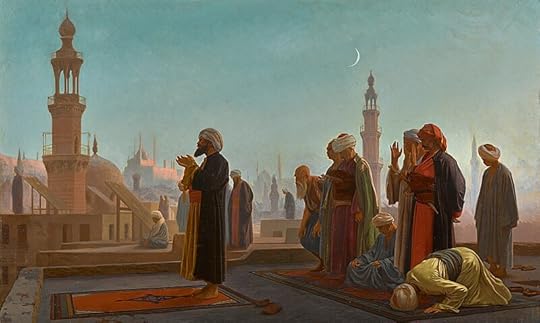
Evening Prayer, Cairo (1865) by Jean-Léon Gérôme
― Hazrat Inayat Khan, The Inner Life
Sufi Message Volumes, Centennial Edition
The Inner Life By Hazrat Inayat Khan (Shambhala Publications)
Evening Prayer, Cairo (1865) by Jean-Léon Gérôme

October 5, 2024
The book articulates that the primary objective of this inner journey is to move away from egotism and toward a realization of unity with all beings. Khan asserts that true spirituality is not an escape from materiality but rather a transformation of one’s perception, leading to greater compassion and understanding.
Khan emphasizes that the journey toward inner life begins with preparation. He outlines the importance of cultivating a belief in God and respecting one's spiritual guides. This preparation is essential for aligning oneself with the spiritual path, as it sets the foundation for deeper exploration and understanding. Khan discusses the need to fulfill one’s obligations in life as a prerequisite for spiritual advancement. He posits that neglecting duties to others can hinder spiritual growth, as these responsibilities are intertwined with one’s spiritual evolution.
Khan categorizes different types of spiritual souls, illustrating that each individual's journey is unique yet interconnected. This classification serves to remind readers that while paths may differ, the destination remains the same: unity with the divine.
"The Inner Life" by Hazrat Inayat Khan offers profound insights into Sufi philosophy and practice. It serves as both a practical guide and a philosophical treatise, encouraging readers to embark on their own journeys of self-discovery and spiritual awakening. By intertwining personal responsibility with spiritual growth, Khan provides a holistic framework that remains relevant for contemporary seekers. His teachings invite individuals to explore their inner landscapes while maintaining an awareness of their roles in the broader tapestry of existence.
Khan emphasizes that the journey toward inner life begins with preparation. He outlines the importance of cultivating a belief in God and respecting one's spiritual guides. This preparation is essential for aligning oneself with the spiritual path, as it sets the foundation for deeper exploration and understanding. Khan discusses the need to fulfill one’s obligations in life as a prerequisite for spiritual advancement. He posits that neglecting duties to others can hinder spiritual growth, as these responsibilities are intertwined with one’s spiritual evolution.
Khan categorizes different types of spiritual souls, illustrating that each individual's journey is unique yet interconnected. This classification serves to remind readers that while paths may differ, the destination remains the same: unity with the divine.
"The Inner Life" by Hazrat Inayat Khan offers profound insights into Sufi philosophy and practice. It serves as both a practical guide and a philosophical treatise, encouraging readers to embark on their own journeys of self-discovery and spiritual awakening. By intertwining personal responsibility with spiritual growth, Khan provides a holistic framework that remains relevant for contemporary seekers. His teachings invite individuals to explore their inner landscapes while maintaining an awareness of their roles in the broader tapestry of existence.

November 10, 2023
I just came to know of this book through a video talk of my guide and as I searched about Hazrat Inayat Khan and his book, I could connect with some of the teachings. As I started reading this book, the one immediately caught me is this:
"Besides this preparation one needs a vehicle, a vehicle in which he journeys. That vehicle has two wheels, and they are balance in all things. A man who is one-sided, however great his power of clairvoyance or clairaudience, whatever be his knowledge, yet he is limited, he cannot go very far, for it requires two wheels for the vehicle to run. There must be a balance,—the balance of the head and the heart, the balance of power and wisdom, the balance cf activity and repose. It is the balance which enables man to stand the strain of this journey and permits him to go forward, making his path easy. Never imagine for one moment that those who show lack of balance can ever proceed further on the spiritual journey, however greatly in appearance they may seem to be spiritually inclined. It is only the balanced ones who are capable of experiencing the external life as fully as the inner life ; to enjoy thought as much as feeling, to rest as well as to act. The centre of life is rythm, and rythm causes balance."

May 21, 2018
Khan's "Universal Sufism" has nothing to do with Sufism and nothing to do with Islam. This goofball is one of the earliest examples of an Indian 'guru' packaging vague New Age garbage as a 'mystical' 'eastern' religion and convincing lots of Westerners to give him money. Avoid at all costs.

July 2, 2019
Great overview of Sufism by the recent era bestower of Sufism to this hemisphere. Not about knowledge, but about devotion to the ideals of love and goodness, nor about worship of some distant God, but a dance with the Beloved, Khan's Sufism elucidated by one who lived and WAS his ideal.

June 3, 2024
beautiful, poignant, direct- some of the most clear and accessible Sufi teachings. his essays for becoming initiated/beginning as a mureed were especially well written. a reminder and an embrace. grateful i was able to read this finally

December 30, 2022
Surprisingly, I was not so impressed
Read
November 4, 2024Not for me

Read
May 30, 2025ya3

March 28, 2026
This book landed like knowledge that was quiet, peaceful, and soft- more like an inner knowing that was being remembered rather than a radical new concept to intellectualize with the thinking brain.


April 8, 2008
Perfect!
January 20, 2009
just began this book, and already remembering why Sufi's are the mystics of faith.
Displaying 1 - 23 of 23 reviews